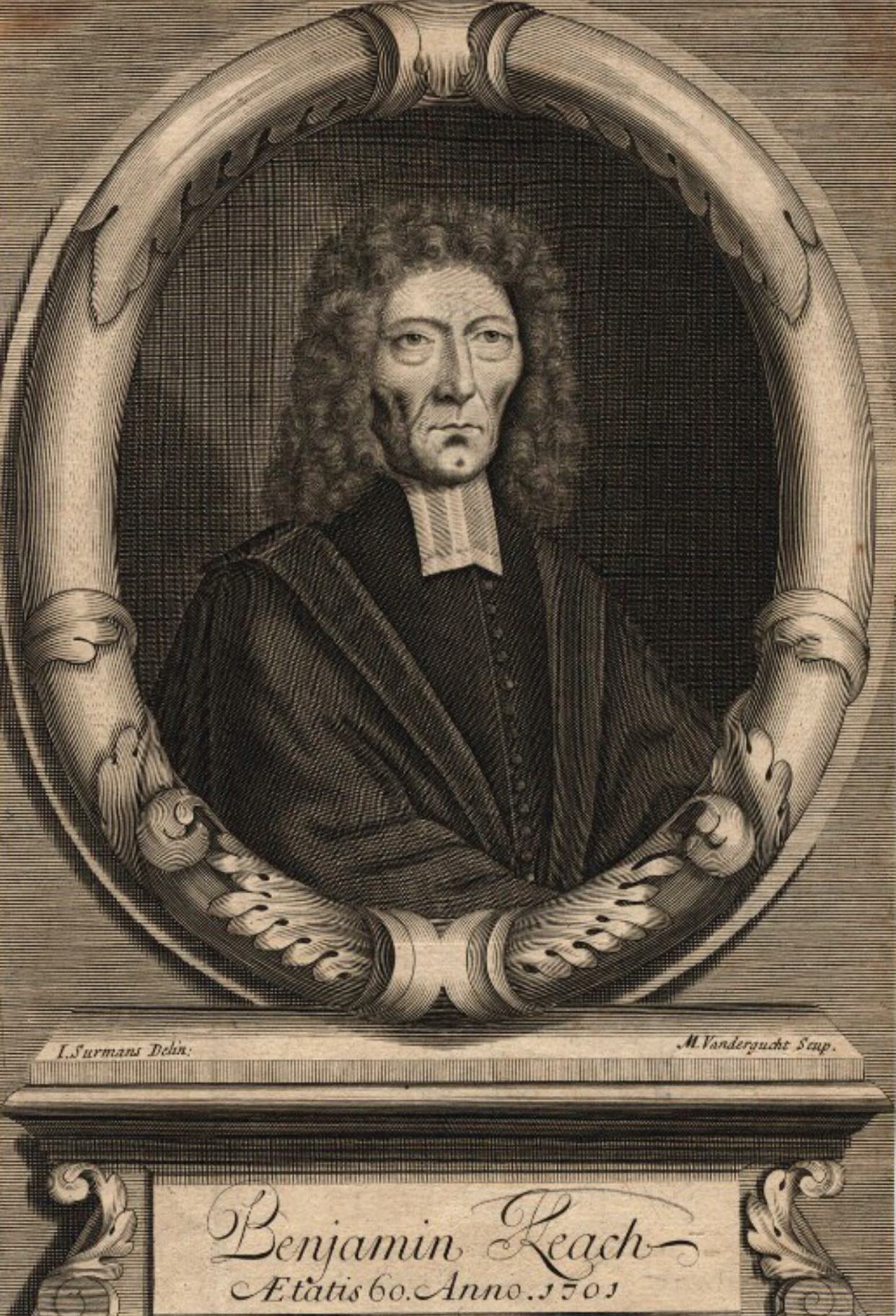
In "Affliction Compared to Clouds," Benjamin Keach explores the theological concept of afflictions as metaphorically represented by clouds. He argues that just as clouds can obscure sunlight, God's providential dealings can obscure His presence and purposes, rendering understanding difficult for believers. Key Scripture references include Psalm 97:2, Job 38:37, and Job 23:9-10, which illustrate that afflictions are numerous and can be burdensome, yet they are ultimately under God's sovereignty. These clouds symbolize both trials and the hiddenness of God's work, prompting believers to seek refuge in Him amidst their afflictions, reinforcing the Reformed doctrine of God's providence and control over all circumstances.
Key Quotes
“Clouds and darkness are round about him.” — Psalm 97:2
“The calamities of God's people are many, innumerable evils compass me about.” — Reference to Job 34:19
“God's works and ways are hid from us so that we are not able to see him nor look up to behold what he doeth.”
“Sometimes God hides himself on the left hand from a people.” — Reference to Job 23:9-10
What does the Bible say about affliction?
The Bible portrays affliction as a means through which God exercises His people, often symbolized by clouds that obscure His presence.
Additionally, Scripture points to the fact that affliction can lead to spiritual growth and deeper reliance on God. Romans 8:28 assures us that all things, including afflictions, work together for good to those who love God and are called according to His purpose. This encourages believers to look beyond their immediate circumstances, knowing that these clouds, or afflictions, can bring about a greater revelation of God’s mercy and grace in their lives.
How do we know God's providence is true?
God's providence is evidenced by His sovereign control over all events, assuring believers that He works all things for their good.
Moreover, God's providence is often revealed through testing and affliction, described metaphorically as clouds that obscure our vision but are under His control. Job 23:9-10 illustrates Job’s struggle to see God's hand in his afflictions, yet he ultimately affirms God's sovereignty. This narrative reinforces the idea that God, though seemingly hidden, is actively working in the lives of His people, orchestrating events to fulfill His perfect will.
Why are afflictions important for Christians?
Afflictions play a crucial role in spiritual development, fostering dependence on God and deepening faith.
Furthermore, God's design in permitting afflictions relates to both temporal and eternal perspectives. While clouds may seem dark and daunting, they serve a divine purpose, reminding Christians of their need to rely on God alone. In moments of darkness, believers often discover deeper intimacy with God, akin to the experience described in Psalm 97:2, where clouds and darkness surround Him, illustrating His sovereignty amidst affliction. Through these experiences, Christians grow in faith and are equipped to comfort others in their trials.
AFFLICTION COMPARED TO CLOUDS
"Clouds and darkness are round about him." &c., Ps 97:2.
"A day of Clouds," Joe 2:2.
"How hath the Lord covered the daughter of Zion, with a cloud, in his anger?" La 2:1.
Clouds are a moist vapour, exhaled from the earth and sea by the sun, and condensated by the cold in the middle region, and carried by the winds up and down, called the bottles of heaven; which God, saith one, doth fill with wine and vinegar, with mercy or wrath.
By Clouds and darkness are meant Afflictions and dark providences, under which God oftentimes exercises his own people.
PARALLELS
I. Clouds are many, "Who can number the Clouds in wisdom?" Job 38:37. So the calamities of God's people are many, innumerable evils compass me about, many are the Afflictions of the righteous.
II. Clouds are said to be round about the Almighty, nay, "thick Clouds are said to be a covering to him," Job 22:14, and yet he dwelleth in the light, which no man can approach unto. Now when God is said to dwell in darkness, or to have Clouds and darkness round about him, it shows that God's works and ways are hid from us; so that we are not able to see him, nor look up to behold what he doeth: God's providences are like Clouds, they obscure or hide God's counsel and way of his working from us; he is in the Clouds though we see him not, those Clouds and darkness which are about him do not hinder his sight of us, though they hinder our sight of him.
III. Clouds are of different lands, some are said to be thick and very black, when others have a kind of thinness in them, and are, as Mr. Caryl notes, as it were, transparent; some are more gross and opacous, quite hindering and intercepting our sight of things beyond them: so some of God's dispensations are dark, very dark, and others more bright; some are so dark and gloomy, such black and thick Clouds are over us, that we can see no light, we cannot see through them, no seeing things beyond them; when others are not so dark, they are like light Clouds, the mind of God may he seen and plainly understood in them. Job was covered with thick darkness, he understood not the reason why God contended with him, he had quite lost sight of the Almighty; "I go forward, but he is not there, and backward, but I cannot perceive him; on the left hand, where he doth work. I cannot behold him; he hideth himself on the right-hand, that I cannot see him," Job 23:9-10. But it was his mercy, God was hid on the right-hand: for sometimes he hides himself on the left hand from a people.
IV. Clouds make the day dark, dull, and people very melancholy: so some of God's dismal providences make the dispensation in which we live very dark and uncomfortable, and fill us with trouble and sorrow.
V. Clouds are at the commandment of God, he covers the heavens with them, and again dissipates and scatters them at his pleasure: so all the troubles and calamities that attend a people or nation, are brought upon them by the ordering and overruling hand of God's providence: is there any evil in a city and I have not done it? "Who gave Jacob for a spoil, and Israel to the robbers? Did not the Lord?" &c., Isa 42:24. And then he again, sometimes in an unexpected manner, scatters all the thick Clouds in a moment, making the day clear, serene, and comfortable.
VI. Clouds sometimes grow thicker and thicker, threatening a dismal storm of thunder and hail, causing all that are in the field to hasten home: so the dispensations of God's judgments sometimes are such, that all God's people fear a dreadful storm, will come upon them; and then those who have strayed abroad and estranged themselves from God, begin to look about them, and hasten home apace, to take sanctuary in God.
VII. Clouds cover the face of heaven; many vapours gathering together rise up and darken the sun, and keep us from the comfortable aspect thereof: "I will cover the sun with a Cloud." The same word that is used for a Cloud, doth signify a multitude: so Clouds, as Mr. Greenhill observes, sometimes signify a multitude of men, a multitude of enemies, as it was prophesied concerning Nebuchadnezzar's army, and of the great Gog, "Thou shalt ascend, and come like a storm, and shalt be like a Cloud to cover the land."
VIII. Clouds are so swift, that they are irresistible; they pour out the rain, and none can let them: so the enemies and other troubles, come sometimes in upon God's people, that there is no stopping them.
IX. Clouds are such plain emblems of misery and Affliction, that the Hebrew word XXX for a Cloud, signifies also calamity: so the day of the Lord's wrath in scripture is set out by Clouds frequently: "That day is a day of trouble and distress, a day of darkness and gloominess, a day of Clouds and thick darkness."
Now the reasons why God brings Clouds and darkness upon his people, are many, which I must pass by.

Comments
Your comment has been submitted and is awaiting moderation. Once approved, it will appear on this page.
Be the first to comment!