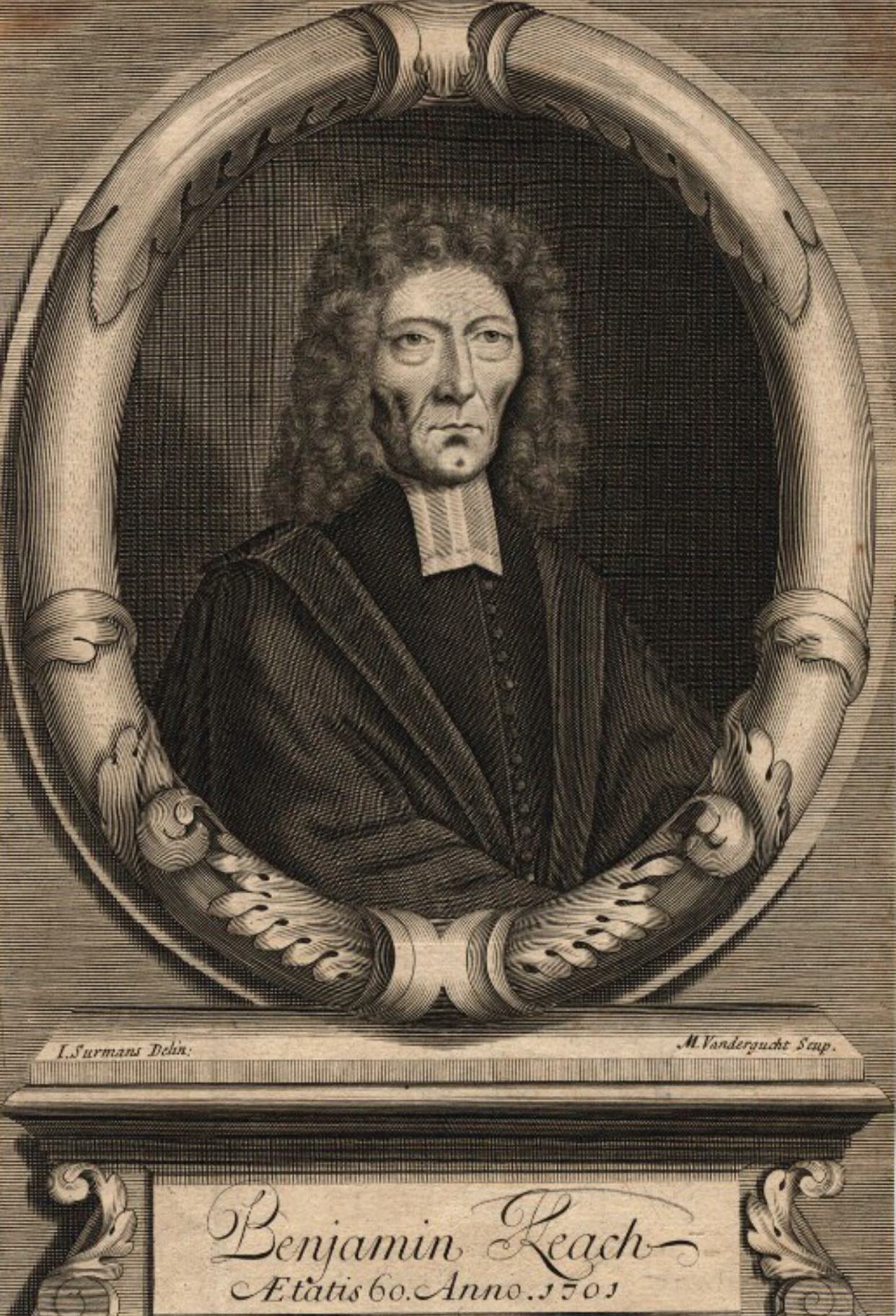
The main theological topic addressed in Benjamin Keach's article "Godliness Compared to a Trade" is the nature and practice of godliness as an essential vocation for Christians. Keach argues that, similar to a trade, godliness requires proper training, a foundation of grace, and an understanding of spiritual commodities (e.g., faith, love, joy). He utilizes various Scripture references such as Hebrews 3:1, 1 Timothy 4:7, and 1 Timothy 3:16 to support his points, illustrating the mysterious nature of godliness and its requirements for active engagement. The practical significance of this metaphor highlights the necessity for Christians to actively cultivate their faith, maintain a close relationship with Christ as their mediator, and recognize the mystery surrounding their spiritual calling, thus ensuring growth in their godliness.
Key Quotes
“Godliness is the occupation of every true Christian it is that which he hath been trained up in it is that which he exerciseth and daily employeth himself about.”
“Without a stock of the truth of grace and work of regeneration no man can follow the Trade of Godliness to make any saving earnings of it.”
“He that would drive a Trade to gain by it or thrive upon it must follow it closely he must make it his chief business nothing will be done in it to purpose without diligence.”
“The preaching of the Gospel was accounted by the learned Greeks but foolishness.”
What does the Bible say about godliness?
The Bible describes godliness as a trade or calling that every true Christian is to actively pursue.
Hebrews 3:1, 1 Timothy 4:7, Acts 24:16
How do we know the mystery of godliness is true?
The mystery of godliness is affirmed in Scripture, emphasizing its revelatory nature as understood through the Spirit.
1 Timothy 3:16, 1 Corinthians 2:7-8
Why is pursuing godliness important for Christians?
Pursuing godliness is vital for Christians as it leads to spiritual growth and communion with God.
1 Timothy 6:6, Matthew 6:33
GODLINESS COMPARED TO A TRADE
"Wherefore, holy brethren, partakers of the heavenly Calling, consider the Apostle and high-priest of our profession, Christ Jesus," Heb 3:1.
THE profession of godliness is in this, and divers other Scriptures, compared to a Trade or calling; and it is a very fruitful aud profitable metaphor.
PARALLELS.
I. A Trade or calling properly is that art, craft, or occupation, whereunto one hath been trained, or wherein he exerciseth and employeth himself, whatever it be, whether handicraft, or merchandizing, &c. Now Godliness is the occupation of every true Christian, it is that which he hath been trained up in, it is that which he exerciseth and daily einployeth himself about. "Herein do I exercise myself," Ac 24:16. "Rather exercise thyself unto Godliness," &c., 1Ti 4:7.
II. A man, when he first sets up a Trade, hath, or ought to have, a stock suitable to what it doth require, in order to the well-managing of it, or otherwise he is not like to do good of it; for the want of a convenient stock hath ruined and utterly undone many new beginners: so every Christian ought to see, when he first begins to profess Godliness, what stock he hath, I mean, what grace, what faith, what love to God, and to his neighbour, what experiences of a thorough change; for without a stock of the truth of grace, and work of regeneration, no man can follow the Trade of Godliness, to make any saving earnings of it.
III. A man that sets up a Trade, ought to know the nature, worth, and value of those goods and commodities his calling leads him to Trade or deal in, or else he may be quickly cheated, and run out of all, by buying counterfeit goods, or bad ware: so every Christian must know what goods he is to trade spiritually in, as also the nature and excellency of them. Now the heavenly commodities are these, faith, love, peace, long-suffering, gentleness, goodness, meekness, temperance, pardon of sin, communion with God, joy in the Holy Ghost, &c. Now he ought to know all these things, the true from the counterfeit.
And next unto the graces of the Spirit, and the other excellent and rare things he deals in, there are the ordinances of the Gospel, the nature and usefulness of which he ought also to understand, and not to be deceived about them, lest he take the traditions of men for Christ's institutions.
IV. A man who sets up a Trade, ought also to know who he is to deal or Trade with; so ought every Christian; and that is God, through the Mediator Jesus Christ; for without him there is no Trading to heaven. It is by him we believe in God, by him we come to the Father. Christ is a saint's only Correspondent; he receives all our prayers and duties, and makes returns of mercies.
V. A man who begins a Trade, ought to he well instructed, and to know every particular art and mystery in it: some Trades or professions are hard to learn, they are full of mystery, and very intricate; and if they understand them not, or are not crafts-masters therein, they will never live comfortably of them, as experience commonly showeth: so every Christian ought to learn the mystery of Godliness; this heavenly calling is not easily learned; there is no Trade that is more mysterious than the Trade or art of Godliness, as we shall fully evince, and make appear,
1. By plain texts of Scripture.
2. By arguments and demonstrations drawn therefrom.
As to the first, see these Scriptures: 1Co 2:7, "But we speak the wisdom of God in a mystery, even the hidden wisdom," &c., compared with Ro 16:25; Eph 1:9; 3:3-4; Col 1:26; 1Ti 3:16, "Without controversy great is the mystery of Godliness; God manifest in the flesh," &c. Godliness is twofold, 1. The doctrinal part. 2. The practical part.
A mystery is a thing hidden, hard to find out, that which few understand, which lies not open to the sight and apprehension of men. Many arts used amongst men are full of mystery. If a man goes into a chemist's shop, possibly he may see there several extractions of minerals, hut he may not know how he extracted those spirits, nor doth he understand the nature and operation of them, that is a mystery. There are divers other curious arts and devices very hard to learn, they are so mysterious; but all come short of these heavenly mysteries. The mysteries of Godliness are exceeding great.
1. These things are hidden things from the eyes of men. See Mt 11:25. The Gospel is read daily, every man hath the history of it in his house; but alas! very few understand it; it is a mystery; it is not known, but hy such only who feel its power, and blessed effects and operations of it upon their hearts.
2. The Gospel, and great things of Christianity and Godliness, are the rare contrivance of God's eternal wisdom, and therefore full of mystery. "If any man thinks he knows any thing, he knoweth nothing as he ought to know," 1Co 8:2. These things are not easily found out.
3. The history of the Gospel, and principles of Christianity and Godliness, could not he known without revelation; had not God afforded us the written Word, what should we, or could we have known of these mysteries? What do the heathen know of them, that have not the holy Scripture? Joh 20:31; Ro 16:25-26. Doth the light within discover the incarnation, birth, life, death, resurrection, ascension, and intercession of Jesus Christ? Doth that teach the mystery of faith and regeneration? It is true some have affirmed, that they should have known all things the Gospel reveals, if they had never had the written word: but how false that is, appears to all; and they themselves have been silenced, by putting one question to them, which is this: it is said in Joh 20:30, "Many other signs did Jesus, in the presence of his disciples, which are not written," &c. Now let them show us what those other signs were: but alas! they can tell us nothing hut what the Scripture relates; neither had we or they known them but by the record thereof.
That which we have the history of, and yet cannot understand, or make our own, unless the Spirit of God opens and explains it to us, is a great mystery: but we cannot understand the mystery of religion and Godliness, without the Spirit's teaching explanation: Ergo, &c. As the history must be revealed by the written word, so the mystery must he revealed by the Spirit: "For what man knoweth the things of a man, save the spirit of a man, which is in him; even so the things of God knoweth no man but the Spirit of God," 1Co 2:11.
4. That which needs or requires several gradations and mediums, to open and explain it from time to time, is a great mystery: but the Gospel, or mystery of Godliness, requires such several gradations and mediums, to open it unto the children of men. (1.) God under the law revealed these things by divers sacrifices, washings, and other rites, whilst persons remained in their nonage. (2.) It requires the use of divers earthly similitudes, to open and explain it to the understanding of men. God is compared to a Father, to an Husbandman, to a Judge, to a Creator, to a Portion, to an Householder, &c. Christ, to a Lamb, to Light, to an Husband, to a Vine, to a Shepherd, &c. The Spirit is compared to the Wind, to Oil, to Water; and grace, to seed, to gold tried in the fire, &c. The mysteries of religion and Godliness are so hard to understand in their own nature, that God condescends to open them up to us by earthly things: in this God shows what children we are, and how difficult it is for us to understand these things. And though they are thus explained, yet how little is it that we are able to understand of them! Now that which the children of men are not able fully to take in, or comprehend, though God makes use of the best mediums he in his wisdom sees good to make use of, is a great mystery: but the children of men are able to take in but little of the mysteries of the ' Gospel, notwithstanding these gracious mediums God is pleased to make use of:" Ergo, &c.
5. That which the children of men are not able to take in or receive the knowledge of at once, but when God sees necessary to discover by degrees, little and little, notwithstanding all those proper and fit medicines he condescends to make use of, is a great mystery: but the mysteries of the Gospel, and Godliness, God sees the children of men, notwithstanding all those mediums he is pleased to make use of, cannot take in or receive at once, but that there is need for him to open and discover them by degrees, by little and little. Ergo, It is very mysterious, so vast a depth, so great a light, so strange a mystery is this mystery, that God reveals it now a little, and then a little. Adam had the first discovery of it: "The seed of the woman shall break the serpent's head," Abraham had more of it made known to him; Moses had a greater revelation of it than the prophets: And then John Baptist, who saw more than all that went before him, and upon that account was called the greatest prophet that ever arose amongst them that were born of women; and yet he saw but a little of this great mystery, comparatively to what those saw who were in the kingdom of heaven, viz., the Gospel-church, after the death and resurrection of Jesus Christ, Lu 7:28.
6. That which all the wise men of the world, merely by all their natural wisdom, arts, and sciences, could never find out, nor arrive at the true knowledge of, is a great mystery: but all the wise men in the world, merely by all their arts and sciences, and human learning, could never arrive to the true knowledge of Christ, and real Godliness: Ergo, the principles of true Godliness, and the mysteries thereof, are out of the reach of mere human reason: though not against or contrary to reason, yet they lie above reason: reason must stoop to faith in these things. The Gospel is called wisdom, as opposite to the wisdom of men; and the apostle saith positively, that it was wisdom in such a mystery, that none of the princes of this world knew. Nay, the Spirit, says one, jeers all the learned of the world in this very thing, because of their gross ignorance. Where is the scribe? Where is the wise? Where is the disputer of this world? "Hath not God made foolish the wisdom of this world?" Hence the preaching of the Gospel was accounted by the learned Greeks but foolishness, 1Co 1:18,20. Natural men may understand natural religion; but true Godliness consists in the light of divine truth, and in the life of grace, God manifesting himself in the light of truth, and working the life of supernatural grace by his Spirit in the heart. True Godliness doth not consist in the knowledge of the letter of the Gospel. A natural man may have the historical or notional knowledge of the Gospel and Christianity, he may arrive to the most exact understanding of things as far as letters and words can express them; that is, he may know the true sense and meaning of things in the Gospel, according to what either the history, or tenor of such words will import, and know the grammatical sense of words, better than many true Christians: But this is not the spiritual and true knowledge of religion and Godliness; for that consists in the saving and experimental knowledge of God, and Jesus Christ. The mystery of the Gospel, and power of Godliness, is the discovery of God's glory in itself, and the working of it gloriously in the soul; it lies not in the bare expression, or knowledge of words, nor in the external form of profession of these words; but it lies in the divine glory of God, which is wrapped up in these words, and the gracious conformity, disposition, and affections of the soul to these things. It is an easy matter to confess Jesus Christ to be the Son of God, and to read the scriptures, to pray, &c. but to see the mystery of that glory which is in this, that Christ is God's Son, and to have the powerful influences of it upon the heart, whereby the soul is brought into the image or likeness of Christ's death and resurrection; this is a mystery.
7. That which the most wise and knowing in the same art or mystery, can reach or understand but part of, must needs be a great mystery; as suppose a school-master, nay, the ablest in the world, who professes to know and teach such and such an art or mystery, is forced to confess, he sees and knows but little of it, or sees but in part, it is so hard and difficult to find out; all would conclude, that art or science was a mystery indeed: But so it is here; for the holy apostles, who had as great a knowledge of these mysteries as any ever had in the world, nay, we may modestly conclude, a greater, yet they declare, they knew but in part, and saw but in part, they saw comparatively, but a little way into these mysteries, "For we know but in part. Now we see through a glass darkly.--Now I know in part," 1Co 13:9,12--Ergo, these are great mysteries.
8. That which the holy angels desire to pry into, nay, look into with the greatest earnestness and desire imaginable, and are contented, the better to understand, to learn of the Church; and yet, when all is done, do admire, and stand, as it were, astonished at, is a great mystery: but the angels do pry into these mysteries with the greatest earnestness, and are contented to learn of the Church, that they may the better or more fully understand them, and after all, stand and wonder, to behold the depth of this grace, of this love, and the strangeness of this mystery. Ergo, The Gospel, or doctrine of godliness, is a great mystery. Now to make this argument good, pray consider these texts of scripture, 1Pe 1:12, "Which things the angels desire to look into." The word, desire, signifies the utmost coveting or longing after a thing which a man cannot be without: "Desire to look into," paraxuyai, this word signifies bowing down to pry heedful and narrowly into a thing. 1. The angels are greatly taken with this mystery, with this grace and love in Jesus Christ, manifested to fallen man; they look and pry into it, according as it was typified of them, by the placing of the Cherubims looking down towards the mercy seat, Ex 20:2. That they are content to learn of the Church, see Eph 3:10, "To the intent, that now unto the principalities, and powers in heavenly places, might be known, by the church, the manifold wisdom of God." 3. That they after all stand as it were amazed, and wonder at the depths, see 1Ti 3:16.--"Seen of angels," wfqh, it is not meant of. a bare sight, but a sight which astonishes the understanding, "And takes up the heart: "He was seen with admiration and wonderment:" Thus Dr. Sibbs.
9. That which the glorified saints shall admire, when they arrive to a perfect knowledge, must needs be a great mystery: but the glorified saints shall admire at the mystery of this grace and love, in the day of Christ, nay, it will be the matter of their wonder to all eternity. See 2Co 1:10. Therefore the doctrine of Godliness is a great mystery.
10. This will be further manifest, by considering wherein the greatness of this mystery doth consist.
First; Now the mystery of Godliness principally consists in the person of Christ, God manifest in the flesh, Paul determined to know nothing so much as "Christ, and him crucified," 1Co 2. When we know Christ better, we shall understand this mystery better: Christ is the mystery wrapt up in all the Gospel, he is the scope of all the Scripture, the pearl hid in the field; every line is drawn to him, as the proper centre; all the types and shadows point to him, and all the promises run in him. Jesus Christ is really and truly God, and yet very Man, God and man in one person, and is not this a mystery? (1.) Is it not a wonder, that a woman should compass a Man? (2.) That he that made the world, should be born of a woman! (3.) That the Ancient of days should become a child of a day old! (4.) That blessedness itself should be brought under a curse for sinners! "Christ was made a curse for us, as it is written, cursed is every one that hangeth on a tree," Ga 3:13. (5.) That he that was the heir of all things, heir of both worlds, should be laid in a manger; (6.) That he who was God over all, should have no where to lay his head! (7.) That he should become poor, who was so rich, and by his poverty made others rich! Is not this a mystery? (8.) He by dying destroyed death; and unless he had died, we could not live; and by death he brought us to life! (9.) And is it not a mystery, that a person should be capable to die, and yet by his own power raise himself up again from the dead? (10.) Is not this a mystery, that the physician should die to cure his patient, nay, and unless he die, the sin-sick soul could not live; and that his blood should be the balsam? Is it not a great mystery, that the offended Saviour should suffer to free the offending sinner.
11. Is it not a mystery, that the nature of man should be so joined to the divine nature of God, that both should make but one Christ? and that our nature should be exalted above the nature of the angels, that man should sit at God's right hand, that man should he very God, and God very man, in one person? O how great is the mystery of Godliness!
12. Is it not a mystery, that Christ suffered according to the decree and determined counsel of God, and yet the Jews did wickedly in putting him to death? Ac 2:23; 4:28.
Secondly: The mystery of Christianity appear to be great, 1. In God's casting off the Jews who followed after righteousness, and in calling the Gentiles, who followed not after righteousness! That God should not be found of them that sought him, and be found of them that sought him not! (2.) That God should choose poor and contemptible ones into his service, and reject the wise, the noble, and the learned! and that, by weak things he overcame the mighty, and by folly confounded the wisdom of this world!
Thirdly; There is a great mystery in election, in justification, in sanctification, in renovation, &c. Nay, what branch or part of the doctrine of Godliness is not lull of mystery?
Fourthly; There is a mystery in every grace:
I. In faith: as, (1.) That a sinner should believe, i. e., go out of himself, and be carried above himself, to believe things impossible to man's sense, and above his reason; that he should seek for justification by the righteousness and obedience of another! for a man, as one would think, to have a great deal of holiness, and good works, and yet to throw it, as it were, all away, and be dead to it in point of trust and dependence! Is not this a mystery? (2.) To believe, when every thing is opposite to it; to work for life, and to oppose some sin, a natural man is ready to do; but to believe in Christ for life and holiness, to rely upon his doings, his works and merits, this the heart of man is averse to; nay, and Satan opposeth it, the world mocks at it, and accounts it foolishness. (3.) That a man should believe, and not see, nay, believe, as Abraham did, "in hope against hope."
3. There is a mystery in love, that a man should love him with an endeared affection, with a superlative love, whom the world can see no beauty in: nay, thus to love him, whom their natural eyes never beheld, nay, love him, who is able to make great, and save from all misery, and yet suffers his people, and best beloved ones, to lie amongst the pots, and to be hated and persecuted in the world, and to appearance, to be of all men the most miserable! A saint knows the reason of these things, but it is a mystery to others. The love of Christ turns the affections another way, it drives, as it were, Jordan back, it makes the waters ascend, and run up hill. Is it not a mystery, to see a saint, who hath a hundred, nay, it may be five hundred a year, a gracious wife, many sweet and lovely children, enjoying much health, and living in all prosperity; yet if he hath lost the light of God's countenance, or Christ be withdrawn from him, he is cast down, and greatly distressed and afflicted in his spirit, and crying out, Ah! what is all that I possess, since I want the love of Christ, the presence of Christ? What is an estate, and no Christ? Wife and children, and no sight of Christ? Christ, saith he, is all to me, and all is nothing without him. This is a mystery to carnal hearts, they wonder at it: nay, to see a man, that hath all the comforts of the world, expose himself to cruel mockings, loss of goods, to imprisonment, and death itself for Christ's sake, is a strange thing to worldly men, they think the man is mad, it is a mystery to them, &c.
Fifthly; The effects and operations of grace and godliness are a mystery.
(1.) That God should make men wise, by teaching them to become fools, 1Co 3:18.
(2.) That the way to become rich, very rich, eternally rich, is to become poor: this is a mystery, yet this mystery is taught us in the person of Christ. David was a king, and very rich, yet cries out, "I am poor;" he was poor in spirit. This poor man cried, "There is that maketh himself rich, yet hath nothing; there is that maketh himself poor,' and yet hath great riches," Pr 13:17.
(3.) That the way to have all, is to lose all: and that a man gains most, when he loses most: is not this a mystery?
(4.) That men must die to live, or that the way to live is to die; nay, that God Mils by making souls alive, and yet by that killing and death, brings them to life: and is not this a mystery? Sin must die, and we must die to sin: "Sin revived, and I died," Ro 7:11, yet by that death he revived, and lived. A man must die to self, or he can never live himself.
5. God makes men blind by giving sight, and turns that darkness into light; and is not this a mystery?
(6.) The way to honour and exaltation, is to be abased, and suffer ourselves to be trod upon; this is opened also in the person and life of Christ. To enjoy God's favour is first to bear his seeming frowns. And many such life mysteries there are in godliness.
Sixthly; There is a mystery in ordinances, which those who follow this trade should understand, a mystery in baptism, a mystery in the Lord's supper. But these things I cannot enlarge upon for want of room.
Use 1. Let all take heed they do not slight or reproach these mysteries.
2. Let them not think to understand them in their own fleshly wisdom.
3. Let them labour to get the power and operation of them upon their hearts, and then they will esteem them, and say, there is a truth in what we affirm and teach.
VI. He that would drive a Trade to gain by it, or thrive upon it, must follow it closely, he must make it his chief business, nothing will be done in it to purpose without diligence. So every Christian, who would gain by the Trade of Godliness, must keep close to it, he must follow it day and night, and manage it wisely, throughout all his other affairs. Godliness must be followed without intermission, it must be every day's work; the head, heart, hands, feet, time, strength, discourse, contrivance, must be taken up about it. No man can thrive in Godliness, if his heart be not in it. When thy hand is in the world, thy heart should be in heaven. '
VII. He that drives a Trade with discretion, must take heed he runs not too far in debt, and that he keeps his books carefully, or else he may soon run out of all: so must a Christian take heed he run not far in debt. Debts will be contracted: "In many things we oifend all:"but be sure to see these debts paid, lest the creditor come on a sudden upon thee. "If any man sin, we have an Advocate," &c. 1Jo 2:1. Renew repentance every day, and labour after fresh acts of faith; keep thy accounts even with God, observe the mercies thou receivest from him, and be sensible of thy faults and miscarriages.
VIII. There is no man that follows a great Trade, but ought to see he hath a stock sufficient to trust; he that cannot trust, in some callings, shall have but a poorTrade: so a Christian must be careful to get a good stock of faith and experience; for if a saint cannot trust God, he will never make any earnings of Godliness. It is true, it behoves a Trader to take heed whom he trusteth; So it behoveth a Christian; he must not trust his own heart, nor in his own righteousness, nor put too much confidence in princes. We can never trust men too little, nor God too much.
IX. A man that would follow a Trade to advantage, must be much at home, and keep his shop, and, as the proverb is, his shop will keep him; but he that is more abroad than at home, will seon come to beggary: so a saint must be much at home, and keep his own heart well. Some professors are more abroad, spying faults in other men, than they are in taking notice of their own.
X. A man that drives a Trade, ought to take heed he get not behind-hand, and instead of getting, lose by his trading: so ought a saint to take heed he go not backwards instead of going forwards, and lose instead of gaining. "Thou hast lost thy first love. Remember from whence thou art fallen, and repent," Re 2:4-5.
XL Some men trade upon other men's stocks, as factors, stewards, &c. And such Traders are Christians, they trade upon Christ's stock, they regulate their affairs by Christ's advice, they drive on Christ's interest. All that saints have is their Master's money, and it behoveth them to lay it out, that it may bring in the most increase. Remember all your graces, gifts, and temporal goods too, are the Lord's.
XII. Some Trades require great layings out; and if a man is sparing in his layings out, he must expect his comings in will be accordingly: so the Trade of Godliness requires great layings out. A Christian, who will not lay out his strength, time, and parts, and what he hath, for God, will never grow rich in faith and Godliness.
XIII. Quick returns are the life of a Trade, and animate a man in his calling and business exceedingly: so quick returns do enliven and greatly encourage a Christian, when he finds God answer his prayers, as the promise runs, "Whilst they speak I will answer," &c., Isa 65:24.
XIV. Some men grow very rich by a Trade: so some Christians grow very rich in faith and experience, by Godliness. See the Church the City of God,
INFERENCES.
I. THIS may inform the saints what they undertake, when they enter upon the work and business of Godliness, they must look upon it as their chief and principal calling.
II. How are many men deceived! they pursue the world as their chief business, and mind religion and Godliness, when they have nothing else to do, in. Be exhorted, Christian, to follow thy calling; dost thou want motives?
1. Consider, it is an honourable and ancient Trade; Christ Jesus himself was of this profession, Godliness was his chiefest business; all the saints and worthies of old followed this calling.
2. It is the best Trade and calling in the world: "For the merchandize thereof is better than the merchandize of silver, and the gain thereof than fine gold," Pr 3:14. Heavenly things are rare things, things of great worth. (1.) They cost dear, viz., the price of Christ's most precious blood. (2.) They are durable riches. (3.) what precious things are pardon of sin, peace with God, union and communion with God I What a rare thing is heaven! is not a crown worth trading for?
3. Consider who you trade with, and that is the great God, through Jesus Christ.
4. You have a faithful correspondent, one that ever lives to make intercession for you.
5. You have goods upon easy terms; "Ask, and you shall receive," "Come, buy wine and milk without money, and without price," Isa 55:1
6. It is the most profitable Trade: "Godliness with contentment is great gain. It is profitable unto all things, having the promise of the life that now is, and of that which is to come," 1Ti 6:6; 4:8.

Comments
Your comment has been submitted and is awaiting moderation. Once approved, it will appear on this page.
Be the first to comment!