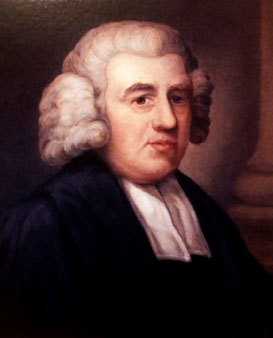
John Newton's "A Word to Professors in Trade" addresses the moral and ethical responsibilities of Christians in trade, particularly regarding the sin of engaging with smuggled goods. Newton argues that such practices violate Scriptural commands, notably the teachings that call Christians to render unto Caesar what is due (Romans 13:7; Matthew 22:21). He emphasizes that adherence to these commands is not only a civic duty but an essential aspect of obedience for those who profess faith in Christ. The article highlights the detrimental effects of smuggling on society and the individual, cautioning that participating in such activities compromises spiritual integrity and evokes God's judgment. Newton's insights serve as a corrective to the moral laxity in trade among professing Christians, underscoring the importance of integrity and reliance on God's provision for true success.
Key Quotes
“Give everyone what you owe him. If you owe taxes, pay taxes; if revenue, then revenue.”
“It is plain that these injunctions are universal and binding under all civil governments as such.”
“The blessing of the Lord makes rich, and for lack of this, we see many rise early, take late rest, and eat the bread of carefulness to no purpose.”
“If you are indeed a child of God and will persist in this path after admonition received, be assured your sin will find you out.”
What does the Bible say about cheating in business?
The Bible commands honesty in all dealings, emphasizing that theft or dishonesty offends God's law.
Romans 13:7
How do we know the importance of integrity in trade?
Integrity in trade is crucial as it reflects one's obedience to God's commandments and the witness of Christ.
James 2:8
Why is it sinful to buy smuggled goods?
Buying smuggled goods is sinful as it contributes to injustice and undermines the livelihoods of honest traders.
Jeremiah 22:13
How should Christians respond to financial temptations?
Christians should resist financial temptations by prioritizing obedience to God and relying on His provisions.
1 Timothy 6:10, 2 Corinthians 12:9
Dear Sir,
It is suspected (or, rather, it is too certainly known), that, among those who are deemed Gospel professors, there are some people who allow themselves in the practice of dealing in prohibited, smuggled goods, to the injury of the public revenue, and the detriment of the fair trader. The decisions of the word of God, upon this point, are so plain and determinate, that it is rather difficult to conceive how a sincere mind can either overlook or mistake them. The same authority which forbids us to commit adultery or murder, requires us to "render unto Caesar the things that are Caesar's." "Give everyone what you owe him: If you owe taxes, pay taxes; if revenue, then revenue." These precepts enjoin no more than what the common sense of mankind pronounces to be due, from subjects and members of society, to the governments they live under, and by which they are protected.
But the obligation is greatly enforced upon those who acknowledge themselves the disciples of Christ, since he has been pleased to make their compliance herein a part of the obedience they owe to himself. And it is plain, that these injunctions are universal and binding, under all civil governments, as such; for none can justly suppose, that tributes exacted by the Roman emperors (under whose dominion the first Christians lived), such as Tiberius or Nero, had the sanction of our Lord and his apostles on account of their peculiar equity.
The vending of smuggled goods, or the buying them, if known to be so, is likewise injurious to the fair trader, who, conscientiously paying the prescribed taxes, cannot afford to sell so cheap as the smuggler, and therefore must expect the fewer customers. In this view, it offends the royal law of "doing to others as we desire that they should do unto us." The force of this argument may be easily felt, by anyone who will honestly make the case his own. Without any fancy reasoning, people may know in a moment that they would not like to be put to this disadvantage. It is therefore unjust (that is sinful, and utterly unfitting a professor of religion) to purchase smuggled goods, even in small quantities, and for family use.
As for those who, being in trade themselves, make this practice a branch of their business, and, under the semblance of a fair reputation, are doing things in secret which they would tremble to have discovered, being afraid of the tax collector, though not of God; I can only pray, that God may give them repentance: for it is a work of darkness, and needs it. Transactions of this kind cannot be carried on for a course of time, without such a series and complication of fraud and baseness, and for the most part of perjury likewise, as would be scandalous, not only in a professed Christian, but in an avowed infidel.
It should be observed likewise, that there is hardly any set of men more lost to society, or in a situation more dangerous to themselves and others, than the people who are called smugglers. Frequent fighting, and sometimes murder itself, are the consequence of their illicit commerce. Their money is ill gotten, and it is generally ill spent. They are greatly to be pitied. The employment they are accustomed to, has a direct tendency to deprive them of character and the privileges of social life, and to harden their hearts and stupefy their consciences in the ways of sin. But for whom are they risking their lives and ruining their souls? I would hope, Reader, not for you, if you account yourself a Christian. If you, for the sake of gain, encourage and assist them, by buying or selling their goods, you are so far responsible for the consequences: you encourage them in sin; you expose them to mischief.
And have you so learned Christ? Is this the testimony you give of the uprightness of your hearts and ways? Is it thus you show your compassion for the souls of men? Ah! shake your hands from gain so dearly earned. Think not to support the cause of God with such gain; he hates robbery for burnt-offering. Think it not lawful, or safe, to put a farthing of it into your treasury, lest it secretly communicate a moth and a curse to all that you possess: for it is the price of blood, the blood of souls. If you are indeed a child of God, and will persist in this path after admonition received, be assured your sin will find you out. If the Lord loves you, he will not allow you to prosper in your perverseness. You may rather expect, that, as a little rotted corn is sufficient to spoil the whole heap to which it is laid, so money thus obtained will deprive you of the blessing and comfort you might otherwise expect from your lawful acquisitions.
If you are determined to persist, in opposition to Scripture, to law, to equity and humanity, you have doubtless, as I suppose you a professor, some plea or excuse with which you attempt to justify yourself, and to keep your conscience quiet. See to it, that it be such a one as will bear the examination of a dying hour. You will not surely plead, that "things are come to such a pass, there is no carrying on business upon other terms to advantage!" Will the practice of the world, who know not Christ, be a proper precedent for you, who call yourself by his name? That cannot be, since his command is, "You shall not follow a multitude to do evil." That the truth and power of his grace may be manifested, he is pleased to put his servants into such situations, that they must forego some seeming advantages, and suffer some seeming hardships, in their worldly connections, if they will approve themselves faithful to him, and live in the exercise of a good conscience. He promises that his grace shall be sufficient for them. It is the blessing of the Lord which makes rich; and for lack of this we see many rise early, take late rest, and eat the bread of carefulness, to no purpose. And I believe, integrity and diligence in business, with a humble dependence upon his Providence, are the best methods of thriving even in temporals. However, those who lose for him are in no danger of losing by him. They may be confident of so much as he sees best for them; and they shall have his peace and blessing with it. But if, when you are placed in a state of trial, the love of the world is so powerful in your heart that you cannot resist the temptation of enriching yourself by unlawful means, you have great reason to fear you have not his Spirit, and are therefore none of his.

Comments
Your comment has been submitted and is awaiting moderation. Once approved, it will appear on this page.
Be the first to comment!