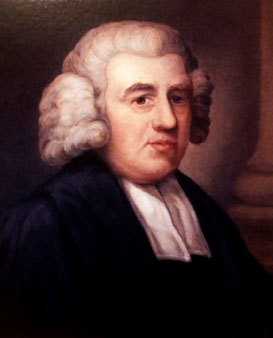
The article "The City Was Pure Gold" by John Newton explores the eschatological vision presented in Revelation 21:10 and its implications for the state of glory that believers will experience in heaven. Newton discusses the enigmatic description of the city, particularly the phrase "the street of the city was pure gold, as it were transparent glass," and reflects on how this imagery points to a future state where the limitations of human understanding and perception—represented by gold and glass—will be harmonized. He argues that the current struggles with sin and imperfect knowledge will cease in glory, allowing believers to fully comprehend divine truth and enjoy perfect communion with God. Newton emphasizes the assurance believers have in Christ, who fulfills every need and hope, ultimately guiding them to eternal union with Him. This discussion underscores the Reformed doctrines of total depravity and the grace of God, reminding readers that while human knowledge is flawed, God's revelation in Christ provides the necessary remedy for spiritual shortcomings.
Key Quotes
“In that happy world the beauties and advantages which here are divided and incompatible will unite and agree.”
“Confusion and darkness will not follow us into the world where light and order reign.”
“If we are guilty—He is our Righteousness; if we are sick—He is our infallible Physician.”
“He knows our frame; he remembers that we are but dust and has engaged to guide us by his counsel.”
What does the Bible say about the city of God?
The Bible describes the city of God as a place of pure gold and perfect glory, as seen in Revelation 21.
Revelation 21:10-21
How do we know the concept of glory is true?
The concept of glory in the Christian faith is rooted in God’s promises and is affirmed through scripture.
Revelation 21:10-21, Romans 8:18-23
Why is understanding the effects of sin important for Christians?
Understanding the effects of sin is crucial for recognizing our need for grace and the transformational power of Christ.
Romans 7:21-25, Ephesians 2:8-9
April, 1770
My friend,
Glorious things are spoken of the city of God, or (as I suppose) the state of glory, in Rev. 21:10 onwards. The description is doubtless mystical, and perhaps nothing short of a happy experience and participation, will furnish an adequate exposition. One expression, in particular, has I believe puzzled wiser heads than mine to explain: "The street of the city was pure gold, as it were transparent glass." The construction likewise in the Greek is difficult. Some render it, pure gold, as transparent as glass. If our reading is right, we must understand it either of gold, pure, bright, and perspicuous as the finest transparent glass (for all glass is not transparent); or else as two distinct comparisons —as splendid and durable as the purest gold, as clear and transparent as the finest glass.
In that happy world, the beauties and advantages which here are divided and incompatible, will unite and agree. Our glass is clear—but brittle; our gold is shining and solid—but it is opaque, and reveals only a surface. And thus it is with our minds. The powers of the imagination are lively and extensive—but transient and uncertain; the powers of the understanding are more solid and regular—but at the same time more slow and limited, and confined to the outside properties of the few objects around us. But when we arrive within the veil, the perfections of the glass and the gold will be combined, and the imperfections of each will entirely cease. Then we shall know more than we can now imagine! The glass will be all gold. And then we shall apprehend Truth in its relations and consequences; not (as at present) by that tedious and fallible process which we call Reasoning—but by a single glance of thought, as the sight pierces in an instant through the largest transparent body. The gold will be all glass.
I do not offer this as the sense of the passage—but as a thought which once occurred to me while reading it. I daily groan under a desultory, ungovernable imagination, and a palpable darkness of understanding, which greatly impede me in my attempts to contemplate the truths of God. Perhaps these complaints, in a greater or less degree, are common to all our fallen race, and exhibit mournful proofs that our nature is essentially depraved. The grace of God affords some assistance for correcting the wildness of the imagination, and enlarging the capacity of the mind; yet the cure at present is but palliative; but before long it shall be perfect, and our complaints shall cease forever. Now it costs us much pains to acquire a pittance of solid and useful knowledge; and the ideas we have collected are far from being at the disposal of judgment, and, like men in a crowd, are perpetually clashing and interfering with each other. But it will not be so, when we are completely freed from the effects of sin. Confusion and darkness will not follow us into the world where light and order reign. Then, and not until then, our knowledge will be perfect, and our possession of it uninterrupted and secure.
Since the radical powers of the soul are thus enfeebled and disordered, it is not to be wondered at that the best of men, and under their highest attainments, have found cause to make the acknowledgment of the Apostle, "When I would do good—evil is present with me!" But, blessed be God, though we must feel hourly cause for shame and humiliation for what we are in ourselves; we have cause to rejoice continually in Christ Jesus, who, as he is revealed unto us under the various names, characters, relations, and offices, which he bears in the Scripture, holds out to our faith a balm for every wound, a cordial for every discouragement, and a sufficient answer to every objection which sin or Satan can suggest against our peace. If we are guilty—He is our Righteousness; if we are sick—He is our infallible Physician; if we are weak, helpless, and defenseless—He is the compassionate and faithful Shepherd who has taken charge of us, and will not allow anything to disappoint our hopes of heaven, or to separate us from his love. He knows our frame, he remembers that we are but dust, and has engaged to guide us by his counsel, support us by his power, and at length to receive us to his glory—that we may be with him forever!

Comments
Your comment has been submitted and is awaiting moderation. Once approved, it will appear on this page.
Be the first to comment!