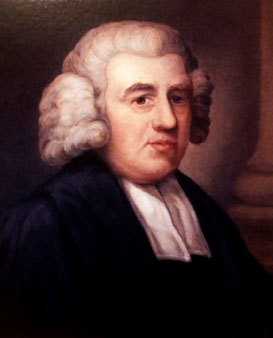
In "On Faith, and the Communion of Saints," John Newton addresses the profound theological topic of faith as it relates to the believer's communion with Christ and fellow saints. He argues that the assurance of salvation and growth in faith are inseparable, hinging on a proper understanding and reception of the revelation of Jesus in Scripture (John 16:14; 2 Corinthians 3:18). Newton emphasizes that neglect of Scripture and prayer, as vital means of grace, leads to spiritual decline and that fidelity to divine light received is crucial for spiritual growth (John 14:15-24). The doctrine of the communion of saints is also significant, as it stresses an ongoing spiritual connection among believers, encouraging them in prayer and mutual support, which ultimately strengthens individual faith and community life within the Church. These insights highlight the importance of diligent means of grace and the rich fellowship among believers both earthly and heavenly in the journey towards ultimate glorification.
Key Quotes
“If our apprehensions of him were nearly suitable to the characters he bears in the word of God, doubts and complaints would cease.”
“With these we might be happy in a dungeon or in a desert, but nothing will compensate the neglect of these.”
“It raises a dark cloud and hides the Sun of Righteousness from our view, and until he is pleased freely to shine forth again, we can do nothing.”
“Though the company is large yet there is room—many mansions—a place for you—a place I trust for worthless me.”
What does the Bible say about faith?
The Bible teaches that faith is a gift from God that leads to salvation and enables believers to trust in Jesus Christ as their Savior.
Ephesians 2:8-9, Romans 10:17
How do we know that the doctrine of communion of saints is true?
The doctrine of the communion of saints is affirmed in Scripture, emphasizing the spiritual connection among all believers, both on earth and in heaven.
Hebrews 12:1-2, Romans 12:4-5
Why is prayer important for Christians?
Prayer is essential for Christians as it fosters a personal relationship with God and strengthens their faith.
John 16:14, Philippians 4:6-7
Dear Sir,
In compliance with your request, I freely give you my sentiments on the particulars you desired: your candor will pass over all inadvertencies, when I give you such thoughts as offer themselves spontaneously, and without study. If the Lord is pleased to bring anything valuable to my mind, I shall be glad to send it to you; and I am willing to believe that when Christians, in his name and fear, are writing to one another, he does often imperceptibly guide us to drop "a word in season;" which I hope will be the case at present.
The first object of solicitude to an awakened soul, is safety. The law speaks, the sinner hears and fears: a holy God is revealed, the sinner sees and trembles; every false hope is swept away; and all earnest inquiry takes place, "What shall I do to be saved?" In proportion as faith is given, Jesus is discovered as the only Savior, and the question is answered; and as faith increases, fear subsides, and a comfortable hope of life and immortality follows.
When we have thus "a good hope through grace," that heaven shall be our home, I think the next inquiry is, or should be, How we may possess as much of heaven, along the way, as is possible? in other words, How a life of communion with our Lord and Savior may be maintained in the greatest power, and with the least interruption that is consistent with the present imperfect state of things? I am persuaded, dear Sir, this is the point that lies nearest your heart; and therefore I shall speak freely my mind upon it.
In the first place, it is plain, from Scripture and experience, that all our abatements, declensions, and languors, arise from a defect of faith; from the imperfect manner in which we take up the revelation of our Lord Jesus Christ in the Scripture. If our apprehensions of him were nearly suitable to the characters he bears in the word of God; if we had a strong and abiding sense of his power and grace always upon our hearts; doubts and complaints would cease. This would make hard things easy, and bitter things sweet, and dispose our hearts with cheerfulness to do and suffer the whole will of God; living upon and to him, as our wisdom, righteousness, sanctification, joy, and supreme end, we should live a heaven upon earth. The face of the question is therefore a little changed, and amounts to this, What are the means to increase and strengthen our faith?
I apprehend, that the growth of faith, no less than of all other graces, of which faith is the root, is gradual, and ordinarily effected in the use of appointed means; yet not altogether arbitrary, but appointed by him who knows our frame; and therefore works in us, in a way suited to those capacities he has endued us with.
I. If faith arises from the knowledge of Christ, and this knowledge is only contained in the word of God—it follows, that a careful, frequent perusal of the Scriptures, which testify of him, is a fit and a necessary means of improving our faith.
II. If, besides the outward revelation of the word, there must be a revelation of the Spirit of God likewise, whose office it is "to take of the things of Jesus, and show them to the soul," by and according to the written word (John 16:14; 2Co. 3:18); and if this Spirit is promised and limited to those who ask; then it follows likewise, that secret prayer is another necessary means of strengthening faith. Indeed, these two I account the prime ordinances. If we were providentially, and not willfully, restrained from all the rest, the word of grace and the throne of grace would supply their lack: with these we might be happy in a dungeon, or in a desert; but nothing will compensate the neglect of these. Though we should be engaged in a course of the best conversation, and sermons, from one end of the week to the other, we would languish and starve in the midst of plenty, our souls would grow dry and lean, unless these secret exercises were kept up with some degree of exactness.
III. Another means to this purpose, is faithfulness to light already received; John 14:15-24, especially John 14:21. It is worth observation, that faith and fidelity, the act of dependence and the purpose of obedience, are expressed in the Greek by the same word. Though the power is all of God, and the blessing of mere free grace; yet if there is any secret reserve, any allowed evil connived at in the heart and life, this will shut up the avenues to comfort, and check the growth of faith. I lay very little stress upon that faith or comfort which is not affected by unsteady walking.
The experience of past years has taught me to distinguish between ignorance and disobedience. The Lord is gracious to the weakness of his people; many involuntary mistakes will not interrupt their communion with him; he pities their infirmity, and teaches them to do better. But if they dispute his known will, and act against the dictates of conscience, they will surely suffer for it. This will weaken their hands, and bring distress into their hearts. Willful sin sadly perplexes and retards our progress. May the Lord keep us from it! It raises a dark cloud, and hides the Sun of Righteousness from our view; and until he is pleased freely to shine forth again, we can do nothing; and for this perhaps he will make us wait, and cry out often, "How long, O Lord! how long?"
Thus, by reading the word of God, by frequent prayer, by a simple attention to the Lord's will, together with the use of public ordinances, and the observations we are able to make upon what passes within us and without us, which is what we call experience, the Lord watering and blessing with the influence of His Holy Spirit, may we grow in grace, and the knowledge of our Lord and Savior; be more humble in our own eyes, more weaned from self, more fixed on him as our all in all, until at last we shall meet before His throne.
The communion of saints—another point you desired my thoughts upon—is the great privilege of all the children of God; they may be separate from each other in body, and yet may daily meet at the Throne of Grace. This is one branch of the communion of saints, to be present in spirit to each other. Sharing in common of the influences of the same Spirit, they feel the same desires, aim at the same objects, and, so far as they are personally acquainted, are led to bear each other upon their hearts in prayer.
It has often been an encouragement to me in a dark and dull hour, when rather the constraint of duty than the consideration of privilege has brought me upon my knees, to reflect how many hearts, and eyes, and hands, have been probably lifted up in the same moment with mine: this thought has given me new courage. O what a great family our Father has! And what David says of the natural is true of the spiritual life: (Psalm 104:1-35). "These all wait upon you, that you may give them their food in due season. What you give them, they gather: you open your hand, and they are filled with good." Then I particularly think of those who have been helpful to me in time past; the seasons of sweet communion we have enjoyed together, the subjects of our mutual complaints, etc. Where are they, or how engaged, now? Perhaps this moment praying or thinking about me. Then I am roused to make their cases my own, and, by attempting to plead for them, I get strength to pray for myself.
It is an encouragement, no doubt, in a field of battle, to know that the army we belong to is large, unanimous, all in action, pressing on from every side against the common enemy, and gaining ground in every attack. But if we derive fresh spirits from considering our friends and associates on earth, how should we take fire if we could penetrate within the veil, and take a view of the invisible world! We would not then complain that we were serving God alone. Oh the numbers, the voices, the raptures, of that heavenly multitude! Not one complaining note, not one discordant string. How many thousand years has the harmony been strengthening, by the hourly accession of new voices!
I sometimes compare this earth to a temporary gallery or stage, erected for all the heirs of glory to pass over, that they may join in the coronation of the Great King; a solemnity in which they shall not be mere spectators, but deeply interested parties; for he is their husband, their Lord; they bear his name, and shall share in all his honors. Righteous Abel led the van—the procession has been sometimes broader; sometimes narrowed to almost a single person, as in the days of Noah. After many generations had successively entered and disappeared, the King himself passed on in person, preceded by one chosen harbinger: he received many insults on his passage; but he bore all for the sake of those he loved, and entered triumphant into his glory.
He was followed by twelve faithful servants, and after them the procession became wider than ever. There are many yet unborn who must (as we do now) tread in the steps of those gone before; and when the whole company is arrived, the stage shall be taken down and burnt.
Then all the chosen race shall meet before the throne,
Shall bless the conduct of his grace, and make his wonders known.
Let us then, dear Sir, be of good courage: all the saints on earth, all the saints in heaven, the angels of the Lord, yes, the Lord of angels himself, all are on our side. Though the company is large, yet there is room—many mansions—a place for you—a place, I trust, for worthless me.

Comments
Your comment has been submitted and is awaiting moderation. Once approved, it will appear on this page.
Be the first to comment!