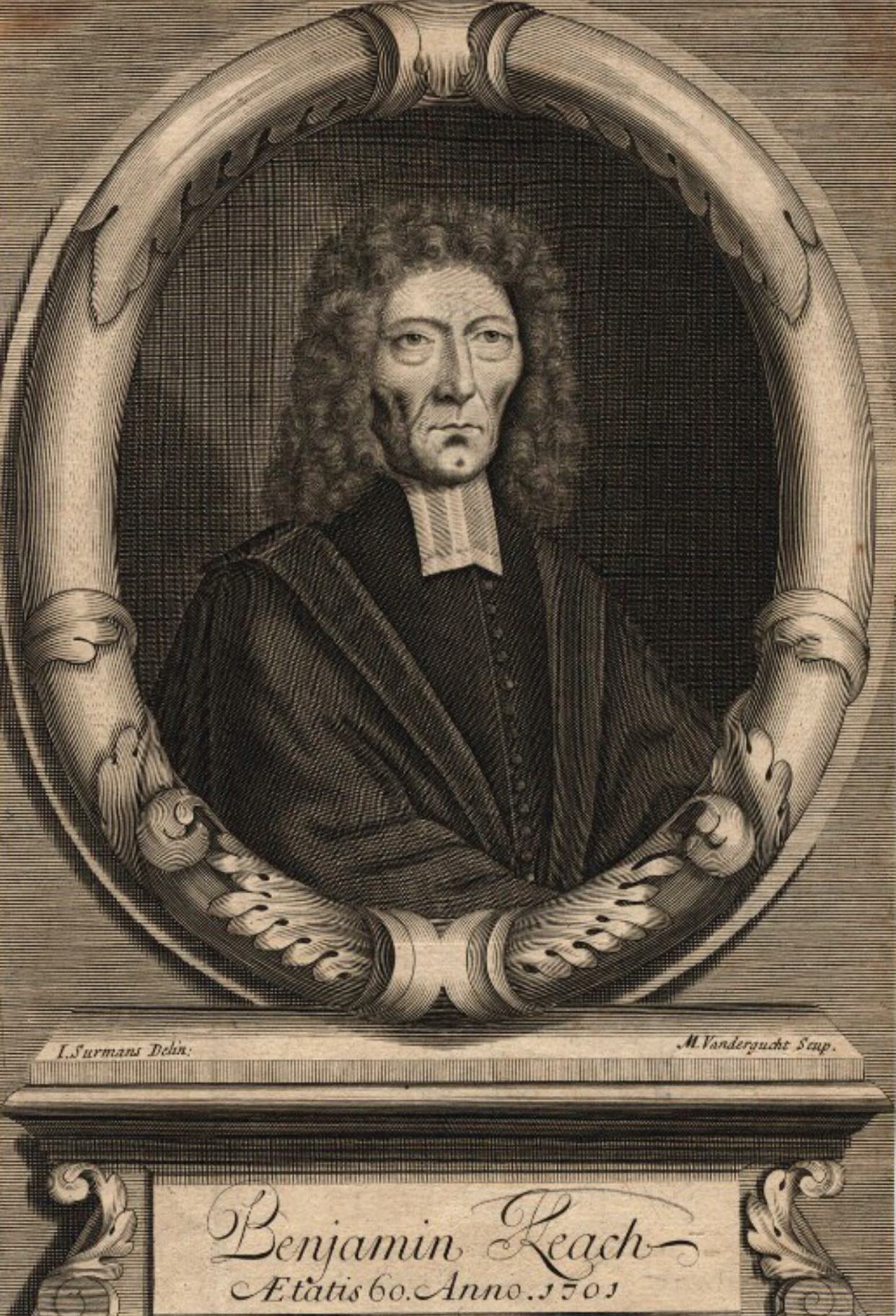
The article "Affliction Compared to a Rod" by Benjamin Keach explores the theological implications of suffering and affliction as divine discipline. Keach argues that afflictions serve a dual purpose: they are both painful and necessary for spiritual correction, aligning with the Reformed belief in God's sovereign governance over suffering. He references Scriptures such as Job 9:34, Psalm 89:32, and Hebrews 12:10, emphasizing that affliction is akin to a rod used by a father, aimed at refining believers rather than condemning them. The key takeaway is that such trials are meant to bring about growth and holiness in the believer's life, reflecting God's loving correction rather than wrath. Recognizing this allows Christians to endure suffering with a greater understanding of its purpose, prompting self-examination, submission, and humility before God's will.
Key Quotes
“Affliction is called a Rod in regard of the hand that useth it... God deals with his people as a father with his children in chastising them.”
“It is not for his pleasure but our profit that we might be partakers of his holiness.”
“A wise man under the Rod will... commune with his own heart to find out the cause of God's anger.”
“Let us from hence also learn to submit to the Rod and not strive and struggle with God.”
What does the Bible say about affliction and its purpose?
The Bible teaches that affliction serves as God's rod for correction and growth, intended for the ultimate good of believers.
Hebrews 12:10-11, James 1:2, Proverbs 29:15
How do we know that God's discipline is a sign of His love?
God's discipline, as portrayed in Scripture, is evidence of His love, as He treats believers as His children.
Hebrews 12:6, Lamentations 3:33
Why is it important for Christians to accept afflictions?
Accepting afflictions is crucial as it cultivates patience, spiritual growth, and a deeper trust in God.
James 1:2-4, Romans 8:28
AFFLICTION COMPARED TO A ROD
"Let him take his Rod away from me"Job 9:34.
"I will visit their transgressions with a Rod,"Ps 89:32.
"Hear ye the Rod,"&c. Mic 6:9.
THE Rod hath divers acceptations.
1. The word XXX shabat, is taken sometimes strictly, for a bow or sprig growing from the stock of a tree, because a Rod or staff is made of a bough of a tree.
2. It signifies a sceptre, the sceptre of a king, an emblem of power, &c. And because in ancient time, as the learned observe, they were wont to make sceptres of such Rods, and all sceptres have the form or shape of a Rod; therefore the original expresses the Rod and the sceptre by the same word. Ge 49:10. "The sceptre, shabat, the Rod shall not depart from Judah,"&c. This sceptre, saith Mr. Caryl, denotes two things. 1. Authority to judge or command, (2.) Power to correct or punish.
3. The word sometimes refers to ecclesiastical or spiritual discipline, or censure of the Church,"Shall I come with a Rod,"&c.
4. The word is often used in Scripture to signify punishment or correction, because correction is often given with a Rod, and therefore to be under the Rod, is to be under punishment or Affliction, &c. "The Rod and reproof give wisdom," Pr 29:15. There is a divine Rod of chastisement for the godly, and an iron Rod of wrath and vengeance for the wicked. And in this sense the words are to be taken in the above cited texts.
PARALLELS.
I. A Rod puts to pain, if it be sharply laid on; it makes a person to smart, and cry out &c. So Afflictions are grievous and painful to flesh and blood; they wound and pain the outward man, whilst the inward man takes pleasure in them: "I take pleasure in infirmities in reproaches, in persecutions, in necessities, in distresses for Christ's sake," 2Co 12:10. Yet in another place the same apostle saith, "No Affliction for the present seemeth to be joyous, but grievous,"Heb 12:11. As the spirit would not do those evils which the flesh would and doeth; so the flesh would not endure those evils of sorrow and Afflictions, which the spirit gladly yieldeth to. As a believer delights in the law of God after the inward man, when the flesh is vexed and troubled at it: so he delights in the Rod after the inward man, when his corrupt part is most impatient and unquiet under it, "Rejoice when ye fall into divers temptations,"Jas 1:2: that is, into divers Afflictions. The flesh hath its sense, and feels smart; but the spirit is armed with faith, which overcomes the smart. Afflictions were not so much as a Rod, if they did not pain and make smart; and we are not so much as Christians, if we cannot bear the smart with patience, &c.
II. A Rod is used to correct, not to kill. "Affliction is called a Rod, in regard of the hand that useth it; a sword is in the hand of a judge, and a Rod in the hand of a Father. God deals with his people, as a father with his children, in chastising them. When we offend him, he doth not take a sword in his hand to slay us, but a Rod to scourge us."
III. A Rod is used by a father when no other means will reclaim the child: so God never afflicts his people, but when he sees there is need of it, he seeing no other means will do. "He doth not willingly afflict nor grieve the children of men," La 3:33
IV. A father hath divers Rods; if one will not do, and make the child bow and submit, and humble himself, another shall: so God hath divers Rods; as sometimes corrects with the Rod of sickness, losses, crosses, &c. Sometimes with the Rod of poverty, sometimes with the Rod of desertion; and sometimes he uses the wicked in his hand, as a Rod to afflict and chasten his own people, which is one of the worst of God's Rods; and therefore David chose rather to fall into the immediate hand of God, than to be scourged with the Rod of the enemy. The Assyrian is called the Rod of God's anger, Isa 10:5.
V. In using the Rod, the tender father always designs the good of the child: so God in afflicting and chastening his people, designs their great good; "It is not for his pleasure, but our profit, that we might be partakers of his holiness,"Heb 12:10.
INFERENCES.
1. LET those Christians who are under the Rod, confess they have deserved it: he hath not punished us according as our sins have merited at his hands.
II. Let us from hence also learn to submit to the Rod, and not strive and struggle with God. O how uneasy are some men and women under affliction. 0, I could bear, saith the soul, any thing but this. Alas! is.it necessary that thou shouldest choose thine own Rod? God will correct us with that Rod he pleases, according to his good pleasure it must be, for the degree and kind of it too; and are you troubled at the Rod, at this Rod? It may be you had rather God should afflict you some other way; but God sees this is the best, and no other will do the work upon your hearts. It may be, if we had committed some other sins, and not such and such a sin, we should have been corrected but with such and such Rods, and not with this which seems most cross and grievous to us.
III. Let us labour to find out what God speaks to us by the Rod; let us search and try our ways, La 3:40. Many times we may find out our sin by the punishment of it.
IV. Let us confess our faults when we are under the rod: God hearkens to hear what we say: "Against thee only have I done this thing, and in thy sight," Jer 8:6; Ps 51:4.
Quest. Some may say, why does God use the Rod?
Answ. I. Because believers are his children: fathers will look after the good of their children. To spare the Rod, may be the ruin of the child, Pr 22:15.
2. Because the sins of God's own people are grievous in his sight. "You have I known above all the families of the earth, and therefore will I punish you for your iniquities,"Am 3:2.
VI. Hear the Rod: "The Lord's voice crieth to the city, and the man of wisdom shall see thy name. Hear ye the Rod, and who hath appointed it."
1. The man of wisdom is one that fears God, Pr 9:10. A holy man is a wise man, and a sinner is a fool; holiness is the best wisdom, and wickedness is the greatest folly.
2. He that escapes the greatest evil, and chooses the greatest good, is a man of wisdom.
3. He that prefers the good of his soul before the good of his body, is a man of wisdom,
4. The man of wisdom will hear the Rod. (l.) He will commune with his own heart, to find out the cause of God's anger, the cause of Affliction. (2.) He will tremble at God's judgments. (3.) He will justify God under the Rod. (4.) He is one that finds out God's name in the Rod: He finds out anger in the Rod, mercy in the Rod, wisdom in the Rod, power in the Rod, faithfulness in the Rod, &c.
5. A wise man under the Rod will endeavour to turn away and pacify the anger of God.
There is, it appears, a voice in the Rod, which a wise man strives to understand. (1.) There is a chiding voice in the Rod. (2.) And not only so, but in some Rods an amazing voice. (3.) A threatening voice. (4.) An awakening voice. (5.) A convincing voice. (6.) There is an humbling voice in the Rod.
Quest. Why do so few men and women hear and understand the voice that is in the Rod?
Answ. 1. Because the Affliction or judgment perhaps is general, it is hard for men to make special and particular application of common calamities.
2. Because men are more subject to look to secondary causes in the Rod, than to the immediate hand of God.
3. Because men are so heedless and insensible, they will not trouble themselves to find out the voice that is in the Rod.
4. It is because men are so full of other business, that they have not time to hearken to God's Voice in the Rod.
5. It is because they do not see any present effects of God's hands; he is lothe to strike: "How shall I give thee up, Ephraim:" &c.

Comments
Your comment has been submitted and is awaiting moderation. Once approved, it will appear on this page.
Be the first to comment!