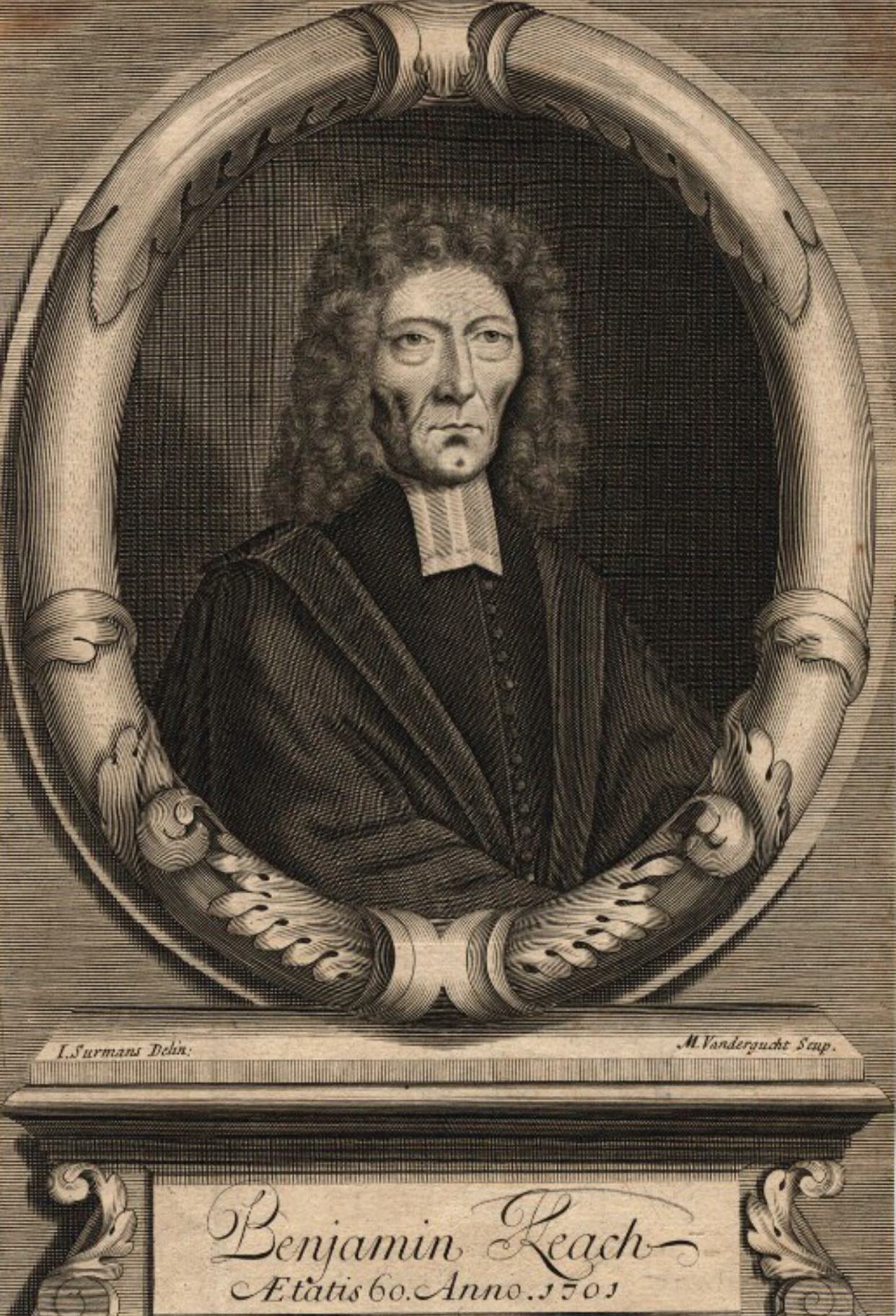
In "Affliction Compared to Darkness," Benjamin Keach explores the theological implications of affliction through the lens of darkness, illustrating how it serves as a metaphor for spiritual desolation and divine judgment. He presents key arguments highlighting that darkness—both literally and metaphorically—represents not only a state of alienation from God but also a consequence of divine absence and judgment. Scripture is heavily referenced, including Isaiah 8:22, Lamentations 3:2, and John 12:35, which support his assertions about the nature of darkness in relation to affliction and spiritual peril. The significance of this teaching lies in its encouragement to believers, emphasizing that while afflictions may seem overwhelming, the light of God can dispel darkness, leading ultimately to hope and restoration.
Key Quotes
“Darkness is nothing else but a privation of light... it hath no cause in nature but is the consequent of the sun's absence.”
“Some Afflictions threaten death upon God's people and upon his concerns and interest in the world...”
“Let Darkness be never so great yet God can soon expel it and bring forth light in the room of it.”
“Light is sown for the righteous and gladness for the upright in heart.”
What does the Bible say about affliction?
The Bible likens affliction to darkness, emphasizing its discomfort and spiritual implications.
Furthermore, the concept of darkness serving as a metaphor for affliction highlights its significance in the Christian life. For the believer, it is essential to recognize that spiritual darkness can obscure the path to salvation and truth, much like natural darkness prevents one from seeing. Believers are warned in John 12:35 to 'walk while you have the light,' indicating the urgency of seeking God's presence amidst trials. This recognition of affliction underscores the need for reliance on God's grace, as He is the ultimate source of healing and comfort, turning darkness into light as stated in Psalm 97:11.
Isaiah 8:22, Psalm 88, John 12:35, Psalm 97:11
How do we know that God uses affliction for good?
Scripture affirms that God turns our darkness into light, signifying His redemptive purpose in afflictions.
Additionally, the trials faced during afflictions serve various purposes in the believer's life. They refine faith, create perseverance, and ultimately lead believers toward the fulfillment of God's redemptive plan. Romans 8:28 reassures us that all things, including our afflictions, work together for good for those who love God. Therefore, hardships bring about a greater reliance on God and demonstrate His sovereign hand in orchestrating our lives for His glory and our eternal good.
Psalm 30:5, Isaiah 45:7, Psalm 97:11, Romans 8:28
Why is understanding spiritual darkness important for Christians?
Understanding spiritual darkness is crucial for Christians to recognize their need for God's light and guidance.
Moreover, understanding spiritual darkness equips believers to combat sin and temptation effectively. Just as darkness can obscure one's path and lead to stumbling (John 12:35), so can sin create barriers between individuals and their relationship with God. This awareness compels Christians to seek God's word, prayer, and fellowship with other believers as essential means to navigate life's difficulties and remain anchored in His light. By acknowledging the negative implications of spiritual darkness, believers are encouraged to maintain vigilance in their spiritual lives, fostering a deeper commitment to live in accordance with His will and purpose.
Ephesians 5:8, John 12:35
AFFLICTION COMPARED TO DARKNESS
"Behold trouble and Darkness" &c., Isa 8:22.
"And brought me into Darkness" &c., La 3:2.
"A day of Darkness," &c., Joe 2:2.
DARKNESS is taken properly, or metaphorically.
1. Properly; Darkness is nothing else but a privation of light; it is no positive creature, it hath no cause in nature, but is the consequent of the sun's absence.
2. Metaphorically, or improperly; it signifies divers things: (1.) The state of nature, or unregeneracy, or deep alienation from the life of God; "Ye that were sometimes Darkness,"&c., Eph 5:8,11. (2.) Several sins wherein wicked men live. (3.) Desertion. (4.) The grave. (5.) Hell. (6.) Afflictions.
Note. Afflictions, calamities, and spiritual desertions, may be compared to Darkness.
PARALLELS.
I. Darkness is a judgment; thick Darkness was one of the plagues of Egypt; so some calamities and severe Afflictions are brought upon a people or nation, as a just and dreadful judgment of God.
II. Natural Darkness is occasioned by the absence of the sun, and obscurity of the other luminaries of heaven. So some Afflictions and calamities are occasioned by the absence of the light of God's word, and hiding of his face. When the Gospel is taken away from a people, that people is presently involved in thick Darkness, which is a most sore and fearful judgment.
III. Darkness is very uncomfortable, it is a dolesome thing to have no light. So to be under some Afflictions, especially desertion is the most uncomfortable state in the world.
IV. Darkness causeth a man to lose his way, and wander about, and exposeth him to many dangers. So spiritual Darkness causes a man to stumble. "Walk whilst thou have the light, lest Darkness come upon you; for he that walketh in Darkness, knoweth not whither he goeth,"Joh 12:35. "Give glory to the Lord your God, before he cause your feet to stumble upon the dark mountains; and whilst you look for light, he turn it into the shadow of death,"Jer 13:16.
V. There are degress of Darkness; Darkness, and thick Darkness, and the blacknessof Darkness, &c. One degree of Darkness may attend the day; a day may be dark, but not like the Darkness of the night; and some nights are darker than others, as experience' shows. And hence we read of Darkness, and of the shadow of death; "Though I walk through the valley of the shadow of death, I will fear no evil," &c. Ps 23:4; that is, the greatest Darkness and evil that can befal a godly man. The shadow of a thing in scripture, saith Mr. Caryl, denotes the power of a thing; and to be under the shadow of a thing, is to be under the power of it. To be under the shadow of the Almighty, is to be under the power of the Almighty, &c. To be under the shadow of death, is to be under the power and reach of it. Though I may be so near death, that it may seem to others to be really death, and that it is impossible to escape death, yet will I fear no evil. Some Afflictions threaten death upon God's people, and upon his concerns and interest in the world, and Christians may seem to be, under the influence of death. The influences of death, are those fears, and doubtings, divisions, distractions, and vexations of heart and mind, cries and confusions, which usually accompany or prepare the way for death, "Let Darkness and the shadow of death stain it," &c., Job 3:5; that is, such Darkness as dwells with death, such Darkness as fills the house of death, the grave. Such Darkness as this, Heman complained of; "I am accounted with them that go down into the pit, &c.; free among the dead, like the slain that lie in the grave, whom thou rememberest no more, and they are cut off by thy hand. Thou hast laid me in the lowest pit, in Darkness, in the deep. Thy wrath lieth hard upon me, and thou hast afflicted me with all thy waves, Selah," Ps 88:4-8. He seemed to be under the greatest Darkness, so sorely deserted, that he saw no light, he sat in, the very shadow of death, viz., deadly darkness, thick Darkness, stifling Darkness, such as in deep pits and mines under the earth, where vapours and noisome damps do many times strike men with death, in the most deplorable state and condition imaginable. It is one thing to have some Afflictions, and some doubtings of mind and spirit; another thing, to be in these great deeps of Affliction and desertion.
VI. No natural Darkness is so thick and dismal, but God can make it worse; he hath power over the Darkness, as well as over the light; "I form the light, and create Darkness; I make peace, and create evil. I the Lord do all this,"Isa 45:7. So no Affliction or sorrow is so grievous, but God can make it much greater. Though we may be in Darkness, nay, in night Darkness, yet this Darkness may increase more and more, to a perfect night of Darkness. "I will punish you yet seven times more for your sins."
VII. Darkness is more grievous to such as have enjoyed much light, than to a man that was born blind; for one that hath had his perfect eye-sight, and hath known how sweet a thing light is, how sad and lamentable is it for him to lose his sight, or to dwell in Darkness! So it is more grievous to a Christian, who hath lived in a land of light, and hath long enjoyed the sweet favour and light of God's countenance, to be deprived of all spiritual light and comfort, than it is to a person, who never knew how sweet divine light, communion with God, and the blessings of the Gospel are.
VIII. Let Darkness be never so great, yet God can soon expel it, and bring forth light in the room of it. So it is easy with God to turn our night of sorrow and Affliction, into light, joy, and a good day.
IX. Darkness is many times mixed with light, so that it is hard to say which is most, the light or the Darkness. So sometimes it is with a people, or particular soul. "But it shall be one day, which shall be known to the Lord, not day, nor night. But it shall come to pass that at evening time it shall be light," Ecclesiastes 14:7. It shall be dark; but at even-time, that is, when thicker Darkness is looked for, and suddenly, expected, instead of that, there shall be light. God grant it may be thus with his poor Church in England.
INFERENCES.
I. Bless God for light. O what a sad thing it is to be in Darkness, either to be deprived of the happy fruition of the light of God's countenance, or of the light of God's word and ordinances!
II. Work whilst you have light, lest Darkness come upon you. Is not England threatened at this time with a night of Popish Darkness.
III. But however, there is comfort to the godly: though their day may be clouded, and darkness may invade them, yet it will be light again. "Light is sown for the righteous, and gladness for the upright in heart,"Ps 97:11. Light is like seed hid under the clods, but it shall sprout, and spring up gloriously in a little time.
1. It is sown in the purposes and decrees of God: He hath purposed and decreed to give light to the righteous, and joy and gladness to the upright in heart.
2. It is sown in the glorious attributes of God.
3. It is sown in the faithful promises of God.
4. It is sown in the faith and prayers of the people of God. There is a plentiful stock of seed sown in this respect, and it shall in due time spring up; the prayers of the saint's fallen asleep, are not lost.
5. Light, and a good day, is sown in all the sufferings of the saints; if we suffer with him, we shall also reign with him.
6. Light and gladness is sown as it were hi the horrid wickedness of the ungodly. "Was not light and gladness sown for the Israelites, in the sins of the Amorites? (1.) In the sin of self-confidence the seed may be said to be already sown, "Behold I sit a Queen, and shall see no sorrow,"Re 18:7. (2.) In the sin of blasphemy. (3.) In their treachery and deceit. (4.) In their bloody cruelty.

Comments
Your comment has been submitted and is awaiting moderation. Once approved, it will appear on this page.
Be the first to comment!