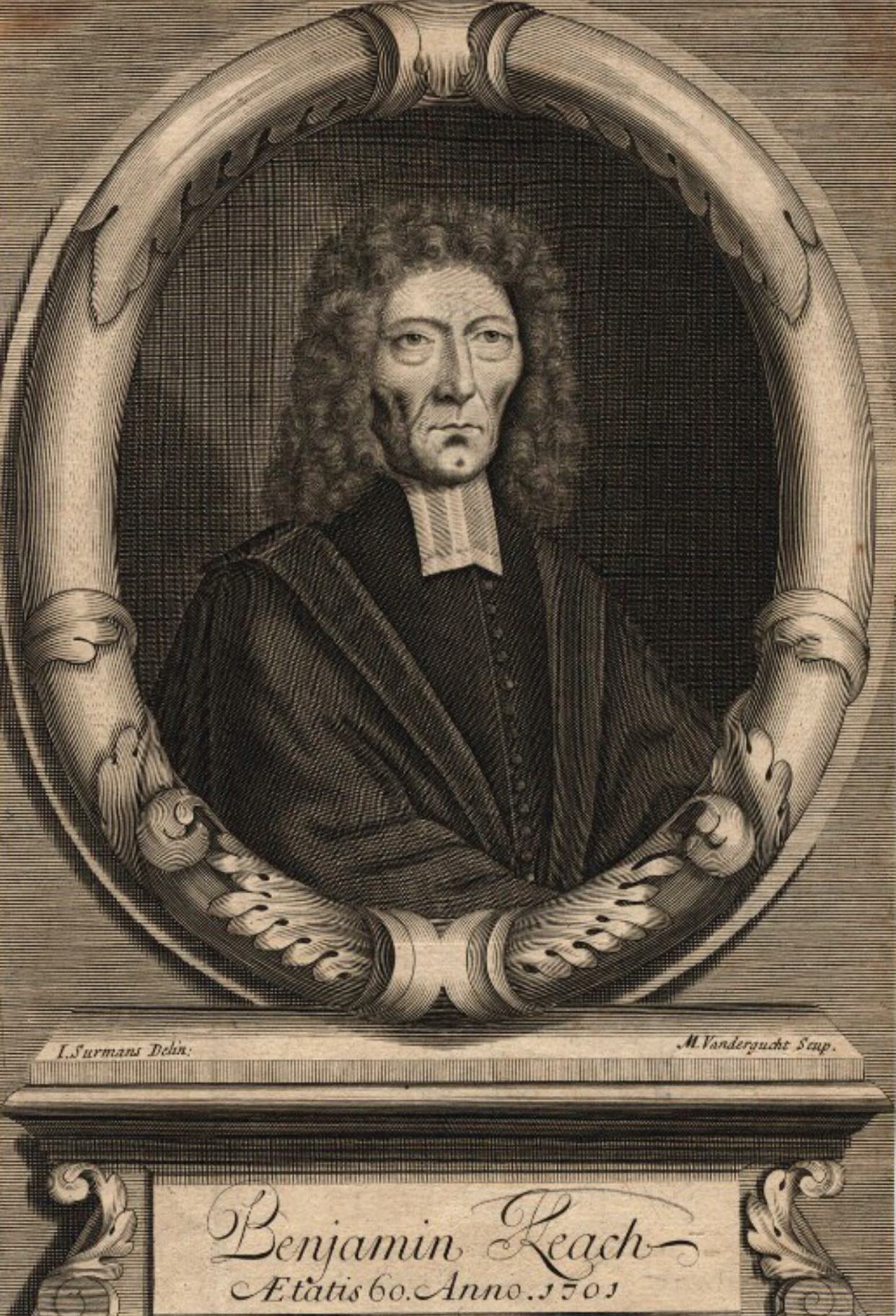
Benjamin Keach's article "Death Compared to a Sleep" addresses the theological concept of death as a temporary state akin to sleep, emphasizing the rest it offers the body and the differing experiences of the souls of the wicked and the righteous. Keach argues that death provides a fourfold rest: from labor, trouble, sorrow, and sin, as supported by Job 3:13, Job 17:3, and 1 Thessalonians 4:14. He contends that while the body may rest, the soul continues to exist consciously, thereby rejecting the notion that the soul sleeps in a state of inactivity until the resurrection. The doctrinal significance of this exposition lies in encouraging believers to view death not with trepidation but as a peaceful transition into the presence of Christ, while simultaneously motivating those outside of Christ to seek salvation.
Key Quotes
“Death is often called a Sleep in the holy scripture; Sleep is a figure or image of Death.”
“There is a four-fold rest which we obtain in Death... rest from labour and travel... rest from trouble and oppression...”
“Though the body lie in the grave yet Death is but a sleep as it were; the man will awake and rise again.”
“What a blessed condition are believers in! They are not only happy whilst they live but shall be blessed when they die.”
What does the Bible say about death compared to sleep?
The Bible often likens death to sleep, emphasizing the rest it brings to the body and the awakening of the dead at resurrection.
Daniel 12:2, 1 Thessalonians 4:14
How do we know the soul does not sleep at death?
The soul remains active after death and does not enter a state of sleep, as seen in scriptural references to consciousness post-mortem.
2 Corinthians 12:2-3, Luke 16:22-23
Why is understanding death as sleep important for Christians?
Understanding death as sleep provides comfort by assuring believers of their future resurrection and rest in Christ.
Hebrews 4:9-10
DEATH COMPARED TO A SLEEP
"And many of them that Sleep in the dust of the earth shall awalce" Da 12:2.
"Even so them also that sleep in Jesus, will God bring with him," 1Th 4:14.
DEATH is often called a Sleep in the holy scripture. Sleep is a figure or image of Death, a fit resemblance of Death; as will appear by the following parallels.
PARALLELS.
I. SLEEP is rest, or gives rest to the body: so Death is or doth give rest to the body. And hence Job saith, speaking of Death: "I should have lain still, and been quiet: I should have slept, then had I been at rest," Job 3:13. We usually say, when a man goes to sleep, he goes to rest. There is a four-fold rest which we obtain in Death. 1. From labour and travel; no work there. 2. There is a rest from trouble and oppression: "there the wicked cease from troubling, and the weary be at rest," Job 17:3. There is a rest from passion and sorrow: no grief shall afflict us there. 4. Which is better than all, there is a rest from sin, a rest from the temptations and drudgery of Satan, a rest from the law in our members.
II. In Sleep the whole body resteth, but many times the spirits of some men are troubled; though the outward man is at rest, yet the inward man is sorely disturbed, whereas the bodies and spirits too of others are at rest and quiet: so in the death of the wicked, though their bodies be at rest, yet their souls are tormented. It is the opinions of some men that the soul Sleeps with the body, and is wholly senseless of joy or misery until the resurrection. But that doubtless is a great error: for though it be granted that many operations of the soul do cease when it departs from the body, yet the soul sleeps not. There are some acts of the soul which are organical, and there are other acts which are inorganical, or immaterial. The organical acts, that is, whatsoever the soul acts by the members of the body, those acts must needs cease at Death; but the soul can act of itself without the assistance of the body, as we may collect by many experiments, while our bodies and souls are joined together. How often do we find our souls at work, when our bodies lie still and do nothing? When Sleep binds up all our senses, and shuts up the windows of the body close, that we can neither hear nor see; yet then the soul frames to itself, and beholds a thousand various shapes, and hears all sorts of sounds and voices; the soul then sees, and hears, and deviseth, discourseth, grieves, rejoices, hopes, fears, chooseth, and refuseth. All this the soul doth in dreams and visions of the night, when deep Sleep falls upon man. What meditations have some good men had in their Sleep I they have had sciiptures wonderfully opened to them, and have been grieved when they waked to find the matter gone from them. God seals up instruction sometimes to his people in their sleep. Also in ecstacies and ravishments the body is, as it were, laid by as useless and instrumental to the soul. "I knew a man in Christ fourteen years ago," so the apostle saith, "whether in the body I cannot tell, or out of the body I cannot tell, God knoweth," &c., 2Co 12:2-3. Now, if the soul was not capable of a separation from the body, and in that separated state capable of such divine ravishments, Paul might easily have resolved the case, and said, he was taken up in the body, but he could not tell whether the soul acted with his bodily organs, or without them. He had mighty operations in his soul, his spirit wrought strangely, and then took in such revelations of God and from God, as his bodily organs could never fashion into words, or represent by speech. He heard, quæ fando explicari a quoquam homine non possunt, "Unspeakable words, which it is not lawful," or possible, "For a man to utter." The soul hath an ear, to hear such words that the body cannot find a tongue to express. So John, in his divine ravishment, saith, "I was in the spirit on the Lord's day:" as for his body, that was, as to that business, laid aside and suspended as useless in that day, and his spirit called up to that angelical work, viz., the receiving of visions and revelations from on high, &c. Now, as the souls of good men, whilst they are in this world in Sleep, and in trances, or ecstacies, are capable of such glorious ravishments, &c, so when their bodies die or fall asleep, their souls are with Christ in heaven: and the souls of the wicked they go into chains of darkness, torment, and misery. "The rich man died, and was buried, and in hell he lift up his eyes, being in torment," Lu 16:22-23.
III. Sleep is not perpetual; we Sleep and wake again: so though the body lie in the grave, yet Death is but a sleep as it were: the man will awake and rise again.
IV. The going to Sleep, and Sleeping of some men, greatly differs from others: so the death of the saints greatly differs from the Death of the wicked.
1. In the preparation the one makes to go to rest over what the other doth. Some go to sleep before their work is done: so some die before their work is done. As no Saint dies before his work is done: so there is no wicked person that dies, but he dies or goes to sleep before his work is done. This is our working-day; when the sun of our life is set, no more work can be done. "The time comes," saith Jesus, "when no man can work." All the godly man's care is to be ready, when night comes, to go to rest. But the wicked take little thought about it.
2. Some men fall asleep in a hurry of business, and in great distraction, when others in a sweet manner lay their heads down upon their pillows; so some wicked men die in great distraction, and under sad horror of conscience, when many a godly man dies in a sweet and heavenly manner, declaring to all he hath nothing to do but to die.
3. Some men dread the thoughts of going to Sleep, for that it is dangerous in some cases for some persons to Sleep; so some wicked men dread the thoughts of death, like him who cried out, I am so sick I cannot live, and so sinful that I am afraid to die; but most godly men are delivered from the fear of Death, they go willingly to bed; "Now lettest thou thy servant depart in peace," &c., Lu 2:29. Saints are many times willing to go to rest, because they are quite wearied out. (1.) Sin wearies them, and even wears them out, and makes them groan. (2.) The world wearies them, and makes them willing to go to bed. (B.) The devil, the god of this world, wearies them with his temptations. (4.) Their bodily weaknesses and disquieting pains weary them. (5.) The absence of Christ also makes them willing to go home.
4. Some men fall asleep in a dangerous place, nay, and sometimes in the midst of their enemies: so wicked men die in a dangerous place, being far from God, and out of the covenant of grace, and besides are surrounded about with evil angels, who stand ready to devour their souls: but a godly man falls asleep in Jesus. that is a sweet place to Sleep in. (1.) He Sleeps in the view of Jesus; Christ knows his grave, and will preserve his dust. (2.) He falls asleep in the love of Jesus. (3.) He falls asleep in the covenant of Jesus. I am the God of Abraham, Isaac, and Jacob.
5. Some men's Sleep is much more sweet and comfortable than others, as we showed before, some men's sleep is very troublesome, their spirits are troubled: so the Death of the godly is sweet, they have peace and heavenly joy, being with Christ; but the Death of the wicked is troublesome, their spirits being in torment, whilst the body lies in the grave. I might also show you the great difference there shall be in the awaking of the one, and the other; but that I will leave to its proper place.
V. A man that is asleep, taking his natural rest, may be easily awakened, and called up by the power of man: so the body, when it is dead, can with infinitely more ease be raised up by the power of God; it is but a call from heaven, and we are awakened out of the dust; "The day is coming, when all that are in the grave shall hear his voice, and come forth," &c., Joh 5:28.
INFERENCES.
L What a blessed condition are believers in! They are not only happy whilst they live, but shall be blessed when they die; their bodies have not only quiet rest, but their souls also rest in peace and quietness.
II. It may stir up all Christless souls to labour after an interest in the Lord Jesus; for if they are not in Christ whilst they live, they are not like to fall asleep in Christ when they die.
III. We may learn also from hence, what little ground there is for a godly man to be unwilling to die, when his work is done: are any unwilling to go to Sleep at night, that have laboured hard all day?
IV. Let us labour hard whilst the day lasts, whilst we have health and life, that we may have done our work, and be ready to go to Sleep.

Comments
Your comment has been submitted and is awaiting moderation. Once approved, it will appear on this page.
Be the first to comment!