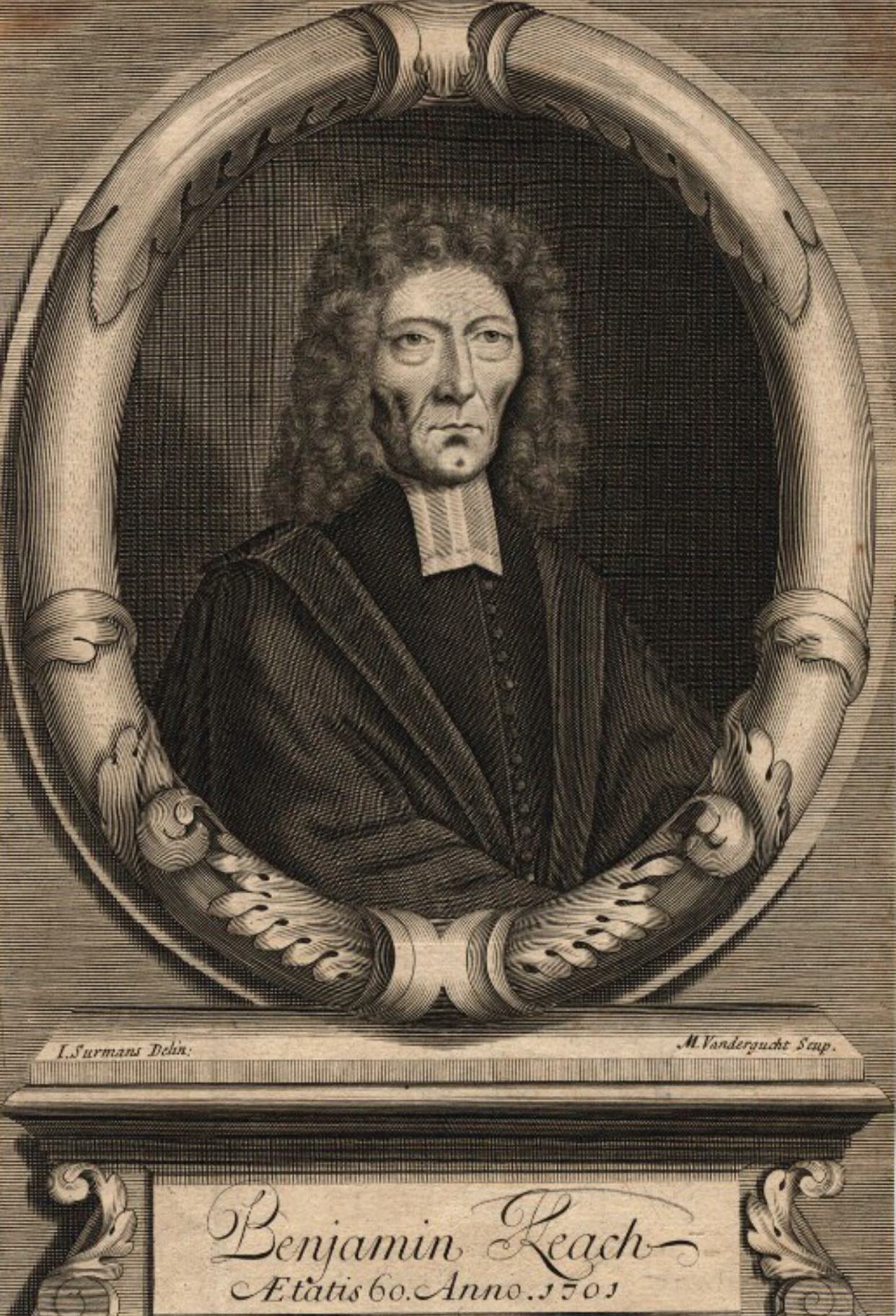
David is presented as a profound type of Christ in Benjamin Keach's analysis, with direct parallels drawn between David's life and the person and work of Jesus. Keach argues that various aspects of David's life, such as his humble origins, kingship, and prophetic role, serve as foreshadows of Christ. Specific Scripture references, including Isaiah 11:1, Ezekiel 34:24, and Jeremiah 30:9, are utilized to illustrate how David's kingship was a precursor to Christ's eternal reign. The significance of this typology lies in understanding that David's experiences and characteristics help believers comprehend the nature of Christ as the true King and Redeemer, providing a deeper appreciation of redemptive history.
Key Quotes
“David was so special a type of the Lord Jesus as scarce is any thing noted of Christ but some shadow of it might be observed in David.”
“Christ the true David hath and shall have his dominions from sea to sea and from the river to the ends of the earth.”
“Christ the true David is the most just and righteous Judge of heaven and earth who most sincerely dispenseth grace and mercy to all penitent sinners.”
“Many things that David speaks in the book of psalms...are directly applicable to none but Jesus Christ.”
What does the Bible say about David being a type of Christ?
David serves as a significant type of Christ, illustrating key aspects of Jesus' identity and mission.
Additionally, David was acknowledged as a man after God's own heart, though he was flawed; this points to the perfect righteousness of Christ, who embodies the fullness of divine purpose. Throughout the Scriptures, David's experiences—including his battles, his anointing, and his establishment as a king—reflect the life and mission of Jesus, ultimately underlining Christ’s supremacy and his role as the true King and Shepherd over His people, as seen in Jeremiah 30:9 and Ezekiel 34:24.
Isaiah 11:1, Jeremiah 30:9, Ezekiel 34:24
How do we know that Jesus is the fulfillment of the promises made to David?
Jesus fulfills the promises to David through His eternal kingdom, His righteous rule, and His lineage.
Furthermore, Jesus directly fulfills the prophetic expectations of David's greater son, evidenced by His miraculous works, teachings, and ultimately, His resurrection. Through His ministry, Jesus establishes an eternal kingdom, as foretold. This kingdom is not just limited to Israel but extends to all nations, illustrating the global scope of redemption promised to David. Thus, believing in Jesus as the fulfillment showcases the coherence of God's redemptive plan through history, reflecting the assurance that unlike David's earthly reign, Christ's kingdom will never end.
2 Samuel 7:12-16, Matthew 1:1, Luke 3:23-38
Why is understanding David as a type of Christ important for Christians?
Understanding David as a type of Christ provides deeper insight into the nature and mission of Jesus.
Additionally, this understanding enhances our appreciation of the character of Christ. David’s experience, including his struggles and triumphs, sheds light on Jesus’ own incarnation and ministry. It models for Christians the importance of faith in adversity and reliance on God’s promises. Ultimately, the realization that Jesus embodies and surpasses all that David represents deepens our worship and strengthens our faith, confirming Christ as the ultimate King and Savior of His people. As we see Christ's fulfillment of Davidic promises, we are encouraged and inspired by the faithfulness of God throughout history.
Acts 4:11, Isaiah 11:1, Jeremiah 30:9
"As all the kings of Israel were express types of Jesus Christ, the head of his kingdom, and of all the people of God, &c. So were there two of them, that were more manifest figures of him than all the rest; I mean, David and Solomon, of both which we shall enquire wherein the resemblance consisteth. David was so special a type of the Lord Jesus, as scarce is any thing noted of Christ, but some shadow of it might be observed in David, of which we shall briefly touch upon in the following parallels." Dr. Taylor.
PARALLELS.
I. For his person; David, the Son of Jesse: Christ, the true Rod out of the stock of Jesse. Both of obscure and low parentage, both out of dry and despicable roots, Isa 11:1.
II. David was a king of Israel, and had his kingdom raised out of humility: Christ is a King, King of saints, and King of nations; and yet at first his kingdom was small, and rose by degrees, much after the manner as David's did, whose kingdom was the figure of it.
III. David was a man after God's own heart, save in the case of Uriah: Christ much more a man after God's own heart, a man without spot. Christ is often called David, "My servant David shall be the Prince among them," Eze 34:24. "They shall serve the Lord their God, and David their king, whom I will raise up unto them," Jer 30:9. "They shall seek the Lord their God, and David their king," Ho 3:5. Not the typical David, long before dead, but the Messiah, the true David, the beloved of God.
IV. David was made the head of nations, as he himself speaketh, "Thou hast made me the head of nations," &c. Which was not so fully true in the type, as in the Antitype; he spake it figuratively of Jesus Christ; for literally David was king but of one little corner in Judea; but Christ, the true David, hath, and shall have his dominions from sea to sea, and from the river to the ends of the earth.
V. David was a prophet as well as a King: so is Jesus Christ.
VI. David was anointed about the thirtieth year of his life: so Christ, the true David, was baptized, and then anointed by the Holy Spirit, being about the thirtieth year of bis age.
VII. David in his wars had many poor men that followed him, such as were in debt, &c.; so Jesus Christ, the true David, had many poor men who followed him, and became his disciples, who were heavy laden under the burden of sin, which is called a debt.
VIII. David had several brave men with him, who were called his worthies: so had Christ, the true David, his twelve apostles, who were most valiant and noble champions for the truth, besides the seventy disciples.
IX. David had many open, and some secret enemies, as Doeg, Ahithophel, &e. His own son also rose up in rebellion against him: so Jesus Christ had, still hath, many open and secret enemies. The Jews, who were called his own people, plotted against him; nay, and one of his own disciples, that ate bread with him, lifted up the heel against him, and at last treacherously betrayed him with a kiss.
X. David was a type of Christ in his kingdom. 1. In respect of the entrance. 2. In respect of the administration. 3. Of continuation, &c.
1. David entered not without strong opposition, much contempt and. disdain: so Jesus Christ was vilified: "The stone which the builders refused, is become the head-stone of the corner," Ac 4:11. No man was more despised of Saul's courtiers, than David, who was thought far enough from the kingdom: so no man could be more slighted and rejected, than Christ was by the scribes, Pharisees, Priests, and other people of Israel.
2. In his administration, David would judge uprightly, and sing of mercy and judgment; he would endure no hateful person in his sight. Christ, the true David, is the most just and righteous Judge of heaven and earth, who most sincerely dispenseth grace and mercy to all penitent sinners, but feeds impenitent and rebellious ones with judgment, &c.
3. In the continuation of his kingdom, God promised mercy to David, and his seed for ever: which promises are not to be extended to his carnal succession, for the princely dignity is taken from them; but the spiritual seed of the true David was there meant:
(1.) Christ himself, in whom his kingdom is perpetuated. (2.) The true Israel, whether Jews or Gentiles, who by faith are engrafted into the Messiah, in respect of whom there shall be no end of his kingdom.
XI. Many things that David speaks in the book of psalms, which some are ready to think he spake of himself, yet, such a type was he of Christ, that they are directly applicable to none but Jesus Christ, &c.

Comments
Your comment has been submitted and is awaiting moderation. Once approved, it will appear on this page.
Be the first to comment!