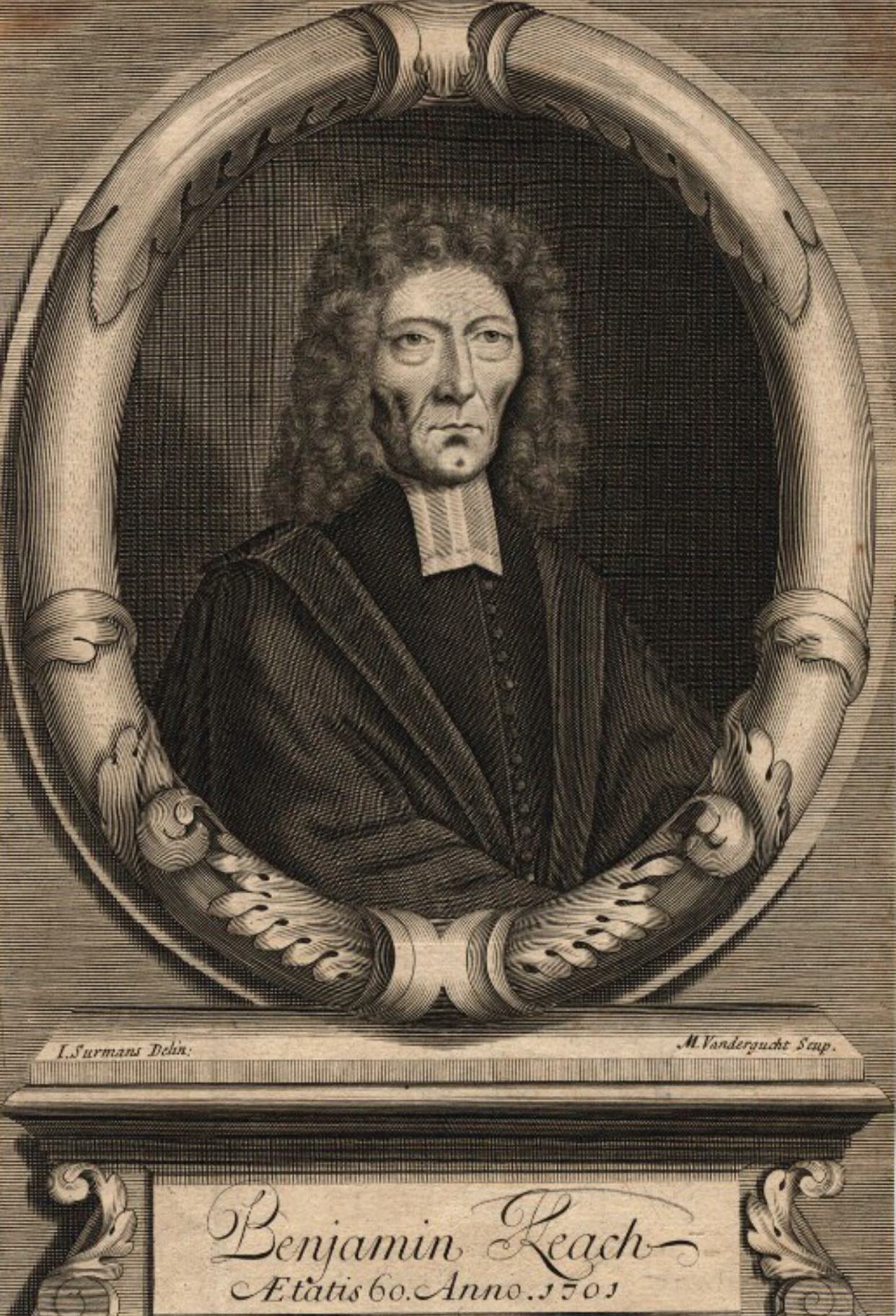
The article "The High Priest a Type of Christ" by Benjamin Keach explores the theological significance of the Old Testament high priest as a foreshadowing of Christ's person and work. Keach delineates key aspects of the high priest's role, including their selection from the tribe of Levi, their consecration rituals, the specific garments they wore, and the execution of their duties. He draws extensively from Scripture, including Hebrews 6:1, Exodus, and Leviticus, demonstrating that each aspect of the priestly office corresponds to the sinless nature, sacrificial role, and mediatorial function of Jesus Christ. The practical significance of this typology emphasizes that believers can approach God through Christ as their perfect High Priest, who intercedes on their behalf and fulfills the law's requirements.
Key Quotes
“He must be chosen out of the tribe of Levi; Christ was taken from among men of our flesh and bone.”
“The High Priest needed sacrifices to offer for his own sins; in that there is a disparity for Christ having no sin needeth no sacrifice for himself.”
“The priest must kill the sacrifices and none but he, signifying Jesus Christ's voluntary action in laying down his life for us.”
“Christ is the most perfect rule and direction shadowed by [the high priest's] use of the Urim.”
What does the Bible say about Christ as our High Priest?
The Bible shows that Christ is the ultimate High Priest, superior to the Levitical priests, fulfilling and surpassing their roles as seen in Hebrews 6 and 7.
Hebrews 6:20, Hebrews 7:27
How do we know Christ's righteousness is important for salvation?
Christ's righteousness is essential for salvation because it is through His perfect obedience that believers are counted righteous before God.
Romans 3:21-22
Why is Christ's sacrifice central to Christian faith?
Christ's sacrifice is central to the Christian faith as it atones for sin and reconciles humanity to God, affirming the doctrine of substitutionary atonement.
Hebrews 9:22, Hebrews 10:10, Luke 22:20
What does it mean that Christ carries us on His heart?
The imagery of Christ carrying us on His heart signifies His deep love and intercession for His people, illustrating His role as our compassionate mediator.
Exodus 28:29, Hebrews 7:25
PARALLELS.
THE High Priest was a Type of Christ, Heb 6:1. In his deputation to his office. 2. In his consecration. 3. In his apparel. 4. In the execution of his office, &c.
First; In his deputation to his office.
1. He must be chosen out of the tribe of Levi; Christ was taken from among men of our flesh and bone.
2. He must not be blind, lame, &c., but wholly without natural blemish: to signify Christ should be without sin, "In Ms mouth was no guile."
3. He was to be a man of knowledge, or no Priest of God: which figured forth that perfect knowledge that is in Christ.
Secondly; as to his consecration, is set down, Ex 1:1. Washing. 2. Anointing. 3. Sacrificing and purifying with blood, and this consecration to continue seven days together; which in general, shadowed the surpassing sanctity and purity of Christ, above all men and angels, and of his being anointed with the Holy Spirit above his brethren, and of his becoming our High Priest, by the sacrifice of himself, or by offering up his own blood, to atone and make peace, &c., Heb 1:8. But whereas the High Priest needed sacrifices to offer for his own sins, in that there is a disparity, for Christ having no sin, needeth no sacrifice for himself.
Thirdly; The High Priest in his apparel was a Type of Christ.
1. He was to have on a linen garment, which signified Christ's righteousness, which all that appear accepted before the Lord, must have on.
2. A girdle, which as Ainsworth, and divers others observe, signified that constancy and stability that was in Christ, who is as firm as a rock; as also to show how fixed and stable all God's people should be, being girt about with the girdle of truth and verity, and so prepared, ready, and strengthened to every good work.
3. A bonnet, which signified God's covering and protecting our head from all dangers, and in him, us, that no evil may befal us.
4. The High Priest was to have an Ephod, not of wool, nor silk, but of linen, the matter of which riseth out of the earth, which signifieth, saith Dr. Taylor, that holy flesh of Christ, which vailed his Deity, as a garment; it was a long white garment, signifying the absolute righteousness of Christ; which is long enough to cover all our nakedness. It was adorned with two onyx stones; and in them the names of the twelve tribes engraven, which he carried on his shoulders; signifying that the names of the godly are not lightly written, but engraven in the love and memory of Christ, that Christ should carry his Church and people upon his shoulders, or support them by his own strength: also the two onyx stones, with the names of the children of Israel engraven upou them, and wore upon the high priest's shoulder, was a great ornament to him: so Christ looks upon his people to he as precious stones, and jewels unto him.
5. The high-priest was to have on the breast-plate of judgment, the most precious part of all his garments.
(1.) In respect of the twelve costly and glittering stones, which were to he set in four rows, according to the number of the tribes of Israel: these stones signified the shining grace 'and holiness of Christ, not only as it shone forth in his own person, but also as it is communicated to all his faithful children, these stones shone gloriously: so do the saints in grace, and true Gospel purity.
(2.) These stones were of great worth and value; signifying what a value Jesus Christ puts upon his church, they are as precious stones, and costly jewels in his esteem, thoxigh slighted and contemned by men.
(3.) They were set in the pectoral, and Aaron must carry them on his heart; Dignifying that Christ hath as much care of his own people, as if they were inclosed in his heart; they he near him, and are always upon his heart, and in his mind.
(4.) In number twelve, according to all the tribes; noting there is room enough in Christ's heart for every particular saint, he loves them all, bears them all upon his heart, before the throne of God.
(5.) They stood in four rows in a comely quadrangle; signifying the comely order that Christ hath placed in his Church, some in a higher, and some in a lower rank.
(6.) All the stones, and so consequently all the names of the children of Israel, stood in the breast-plate in a narrow compass: so by Christ all the children of God are gathered together, and sweetly vailed through the Spirit in love: in the breast-plate also, was the Urirn and Thummim, which the Rabbi David, a Jew, saith, "It is unknown to us what these signify;" it is thought it was the workmanship of no man, but a sacred monument immediately received from God, but all the learned, I have met with, agree they signified Jesus Christ. 1. Their names, say some, signify light; others beauty and perfection; in Christ is all fulness of light, beauty and perfection. 2. Their use, was to receive by them answers from God, in difficult cases, when the priest consulted with him, the oracle by Urim gave certain direction: so Christ is the most perfect rule and direction, shadowed by that. As God spake then by Urim to the priest; so now by his own Son, Heb 1:1-2. Those who would have their doubts resolved, must go to the Urim, go to Christ, and to his ordinances, &c.
But to return back, and speak a little further to the robe of the Ephod, and bonnet on the skirts of the Ephod, were fastened, the pomegranates of blue silk, and purple, and scarlet round about; this fruit had a most pleasant smell, sweet in itself, and sweetening other things, and is full of precious juice and liqour,Ex 31:2. Bells of gold between them round about a golden bell and a pomegranate, &c., this vesture or garment, might signify the righteousness of Christ's human nature, and by the sweet pomegranates, the most excellent savour of Ms righteousness and obedience, in the nostrils of God the Father, in the behalf of man; which also in a spiritual sense was full of precious juice and virtue, to qualify and abate the raging heat of God's wrath; as the juice of pomegranates doth allay the burning heat of an ague or fever; as also they might signify what a. sweet savour Christ's righteousness doth cast upon us, when wrapped, as it were, therein, who by nature are in a stinking and loathsome condition. 3. As to the golden bells they might figure forth the blessed sound of the Gospel; or, as some understand, Christ's visible owning of us now in heaven, and our public owning of him on earth, which must be sincere; we must not only make a sound, but also have good fruit; we must not only have a word for God, but a work for God; a bell, a pomegranate, a word, and a work.
6. The high-priest must be heard when he goeth into the sanctuary; signifying, saith Dr. Taylor, the power of Christ, our HighPriest's perpetual intercession, being entered into the true sanctuary, viz., heaven itself for us.
As touching the mitre, or bonnet upon the priest's head, made of blue silk, and fine linen, like to an half coronet, beautified with a golden plate, on which was written "holiness to the Lord." 1. The mitre might not only signify God's covering and protecting our Head the Lord Jesus, and us in him, but also his kingly dignity. 2. The golden plate in which was written "Holiness to the Lord," figured forth in a most conspicuous manner; that most divine and perfect holiness of the Lord our righteousness, the holiness of his Person, the holiness of his nature, the holiness of all his actions and passions; his holiness, who is the cause, stream, and original of all our holiness, that is accepted of God.
Fourthly, the priest was a type of Christ in the execution of his office.
1. The priest must kill the sacrifices, and none but he; signifying Jesus Christ's voluntary action, in laying down his life for us, none could take it away from him; Joh 10:18; he was as well the priest as the sacrifice.
2. The priest offered the blood of the sacrifices to God, and sprinkled it on the altar; no man might offer his own sacrifice, but he must bring it to the priest: figuring there was no coming to God but by Christ, who oifered up his own blood to atone for our sins; no other can offer any sacrifice to take away sin, but him alone, Le 7:4.
3. The priest prepared the body of the sacrifice, flayed it, divided it into several parts, washed the entrails, put fire unto the burnt-offerings, consumed the fat, cast the filth and dung into the place of ashes, &c., signifying that Christ alone did the whole work of our redemption, he suffered the heat of God's wrath and justice, he puts away all our filth, and covers it in his own grave, and washeth us in the foundation of his own blood, &c., Le 1:6.
4. The priest was to teach the people, "The priest's lips must preserve knowledge, and thou shalt seek the law at his mouth;" Mal 2:7, this figured forth Christ in his prophetical office, who is the great Doctor and Teacher of God's mind and will to the children of men, it is he who hath the tongue of the learned, so that never man spake like him, it is he who hath the words of everlasting life, Ps 45:2.
5. The priests were to preserve the oil for lights, and the incense, and for the daily meat-offering, and the anointing oil, &c., signifying that Jesus Christ is the Preserver of all grace, in and for his church, he only watcheth for the safety of his people, he preserves the light of his grace and good works in us, and the oil of gladness from decaying in our lamps and vessels, Lu 24:50.
There were some actions more peculiar to the high priest.
1. He must daily dress the holy lambs and lights, morning and evening, before the Lord, to preserve the light from going out: so Christ preserves the light of his word and Gospel from being put out, though men and devils with all their might have endeavoured to do it, Le 24:2-3.
2. He must weekly make the shew-bread, and set it before the Lord continually, and, more expressly, every sabbath he must set on the table twelve loaves, according to the number of the tribes of Israel, and take the old away, &c., Ex 25:30. In this he was a type of Christ, who sets himself continually in the ministry of the 3. He must yearly, and that in the day of expiation, go into the holy of holies, to make an atonement for himself, for his house, and for all the people, but not without blood; signifying that Christ by one alone sacrifice of himself, hath opened the sanctuary of heaven, and by his ascension hath made entrance into it on our behalf, and there appears before God once for all to make intercession for us. The priest went alone without any attendants: so Christ hath trod the wine-press alone, no competitor, no companion hath he in this work, and now pleads alone, as our own, and only Mediator, by virtue of his own blood, at the Father's right-hand; "There is one," that is but one, "Mediator," between God and man, &c.
4. The high-priest continually was to decide the highest controversies, he must judge between the clean and the unclean, he must put the one out, and receive the other into the congregation; signifying that Christ only, Christ alone is the supreme Judge of all controversies, it is his word only that can decide the case, who is clean, and who unclean, who is to be put out, and who to be taken into his Church, Ex 30:10; Le 16:2; Heb 10:12,19.

Comments
Your comment has been submitted and is awaiting moderation. Once approved, it will appear on this page.
Be the first to comment!