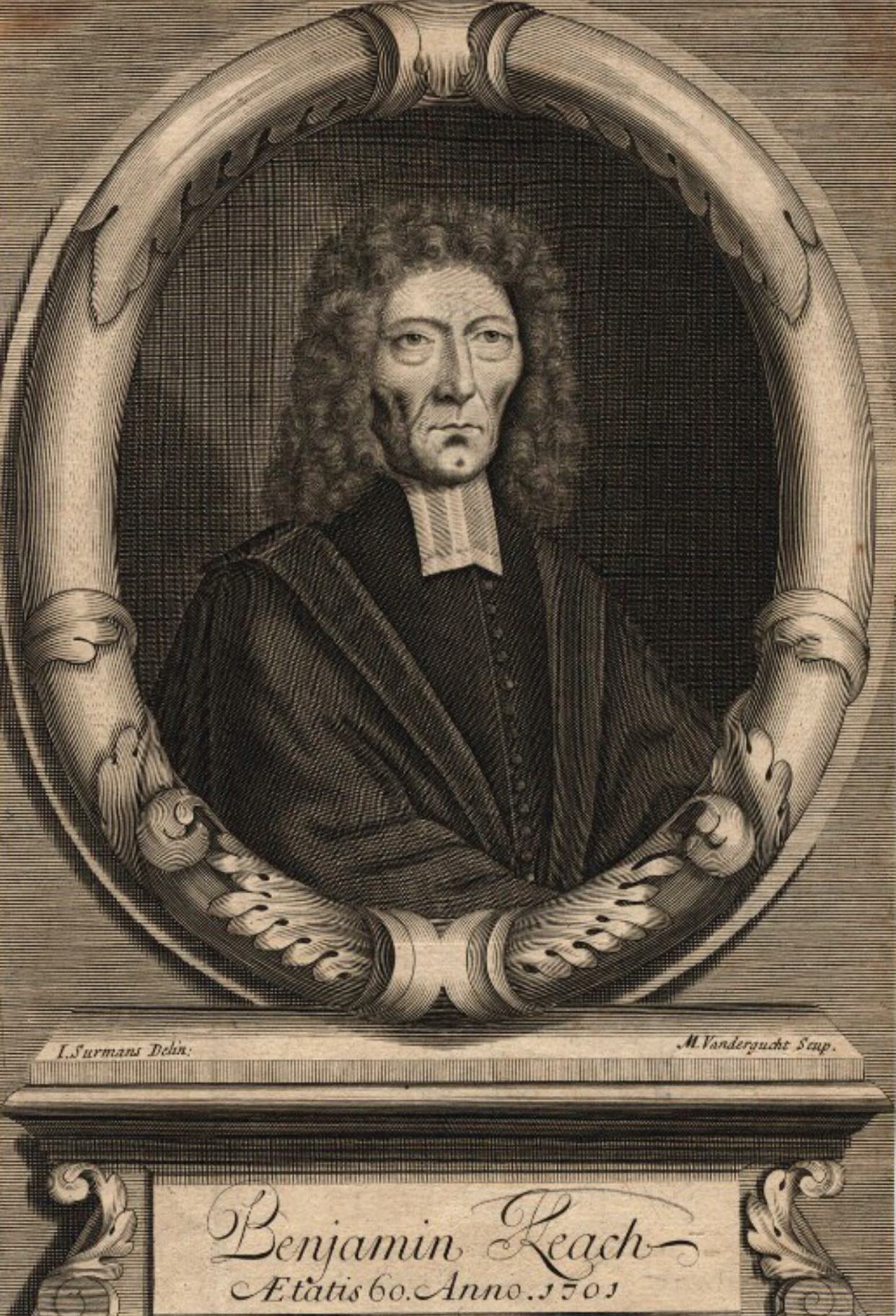
The article "The Meat-Offering, What It Was a Type Of" by Benjamin Keach discusses the theological significance of the meat-offering (minchah) in the Old Testament, particularly its typology concerning Christ's sacrifice. Keach notes that the meat-offering symbolizes Christ's oblation as a perfect and sinless sacrifice, supported by references such as Ephesians 5:2 and Hebrews 10:5-10, which emphasize Christ's fulfillment of the law and his role as the ultimate offering for sin. The article conveys the broader implications for Christians, illustrating how through Christ, believers are sanctified and called to offer pure and acceptable sacrifices to God in their lives (Hebrews 13:16, Philippians 4:18). Additionally, Keach highlights elements of the offering, such as the absence of leaven and the inclusion of salt, indicating the need for purity and preservation in both Christ and believers' service to God.
Key Quotes
“The minchah or Meat-offering...primarily a figure of Christ's oblation Who gave himself for us an oblation and sacrifice to God for a sweet-smelling savour.”
“All the meat-offerings were to be seasoned with salt signifying thereby that as salt seasoneth and keepeth from corruption so Christ seasoneth us and all our services and makes them acceptable to God.”
“It must be without leaven to show that Christ was without sin and that we must worship God in sincerity without malice in our hearts and without hypocrisy.”
“There is enough in Christ alone without the sweets of carnal delights to satisfy a gracious heart.”
What does the Bible say about meat-offerings?
The Bible describes meat-offerings as a type that represents Christ's sacrifice for believers.
Leviticus 2, Ephesians 5:2, Hebrews 10:5-10
How do we know that meat-offerings represent Christ?
The meat-offerings in the Old Testament function as types that point to Christ's impending sacrifice.
Hebrews 10:5-8, Leviticus 2
Why is the concept of meat-offering important for Christians?
Meat-offerings illustrate the nature of Christ's sacrifice and inform how Christians should live in gratitude.
1 Corinthians 5:8, Malachi 1:11
Le 2.
THE Meat-offerings, as Ainsworth observes, were nine, and all of them came to the altar:
(1.) The poor man's Meat-offering, Le 5:11. (2.) The jealousy offering, Nu 5:15. (3.) The Meat-offering of initiation, which every priest offered when he first entered into his service, Le 8:26,28. (4.) The Meat-offering, which the high priest offered every day, Le 6:20. (5.) The Meat-offering of fine flour. (6.) The Meat-offering baked on a plate. (7.) In a frying pan. (8.) In an oven, (9.) Wafers.
1. The minchah, or Meat-offering, saith he, primarily a figure of Christ's oblation, "Who gave himself for us, an oblation and sacrifice to God, for a sweet-smelling savour," Eph 5:2. "Sacrifice and oblation," Minchah, "thou wouldst not; but a body hast thou prepared me, &c. Above, when he said, sacrifice and oblation, and burnt-offerings for sin, thou wouldst not, &c. Then saith he, lo, I come to do thy will, O God, &c., by which will we are sanctified through the offering of Christ once for all," Heb 10:5,8-10. So that in the oblation of Christ's body, this legal service was accomplished and ended.
2. It figured, saith he, the persons of Christians, who through him are cleansed and sanctified, to be pure oblations unto God.
3. It figured, saith he, the fruits of grace and good works, that Christians are to perform both towards God and men. (1.) Towards God: "Let the lifting up of my hands," saith David, "be as the evening" minchah, or "oblation," Ps 141:2. So when God told the Jews, "I will not accept a," minchah, or "meat-offering, at your hands;" he addeth, "For from the rising of the sun, even to the going down of the same, my name shall be great among the Gentiles, and in every place incense shall be offered unto my name, and a pure meat-offering," Mal 1:10-11. Which is fulfilled when "Men pray every where, lifting up holy hands," &c. (2.) Towards men; see Heb 13:16; Php 4:18.
4. All the meat-offerings were of wheaten flour, except the jealousy-offering, and the waved sheaf, yea, and ought to be of fine flour; signifying the purity and perfection of Christ, as also that we shonld offer our best things to the Lord.
5. Oil and incense was put thereon; the oil, saith he, signified the graces and comforts of the Holy Ghost: and the incense or frankincense showed how acceptable saints and their services are unto the Lord, Eph 5:2; Ro 12:1.
6. It must be brought to the priest, and he shall bring it to the altar; shadowing, that it is by Christ, and in his oblation, that we and our works and duties are accepted of God.
7. That which was burnt thereof was a memorial, and sweet savour before the Lord; signifying, that the death of Christ, and his merits, should be an eternal memorial before his Father, to be merciful unto us.
8. It must be without leaven, to show, that Christ was without sin, and that we must worship God in sincerity, without malice in our hearts, and without hypocrisy, 1Co 5:8.
9. All meat-offerings were to be seasoned with salt, signifying thereby, that as salt seasoneth, and keepeth from corruption; so Christ seasoneth us, and all our services, and makes them acceptable to God; and that his grace preserveth us from spiritual corruption.
10. "The priest and his sons shall eat," saith the Lord, "of the meat-offering in the holy place, without leaven." Thus, saith Ainsworth, the meat-offering signified the maintenance and livelihood of God's ministers. This is to be understood of the meatoffering alone; but the meat and drink-offerings added to the other sacrifices, were not tobe eaten, but burnt, and poured out upon the altar, &c., before the Lord; which figured forth saith he, the graces and good works whereby we honour Christ, and relieve his poor saints; as also our communion with Christ and his people in his house, and blessed participation of his death.
11. It must have no honey in it: though honey be sweet, and contrary to the nature of sour leaven, yet being much eaten, it breadeth loathsomeness, and is not good, but turneth to choler, &c. Both these were forbidden in this sacrifice, viz., both leaven and honey; to signify the perfection of Christ, and the excellent state of believers in him, as they are sincere, and without guile, before the throne of God and the Lamb. Besides, it may signify, that there is enough in Christ alone, without the sweets of carnal delights, to satisfy a gracious heart.

Comments
Your comment has been submitted and is awaiting moderation. Once approved, it will appear on this page.
Be the first to comment!