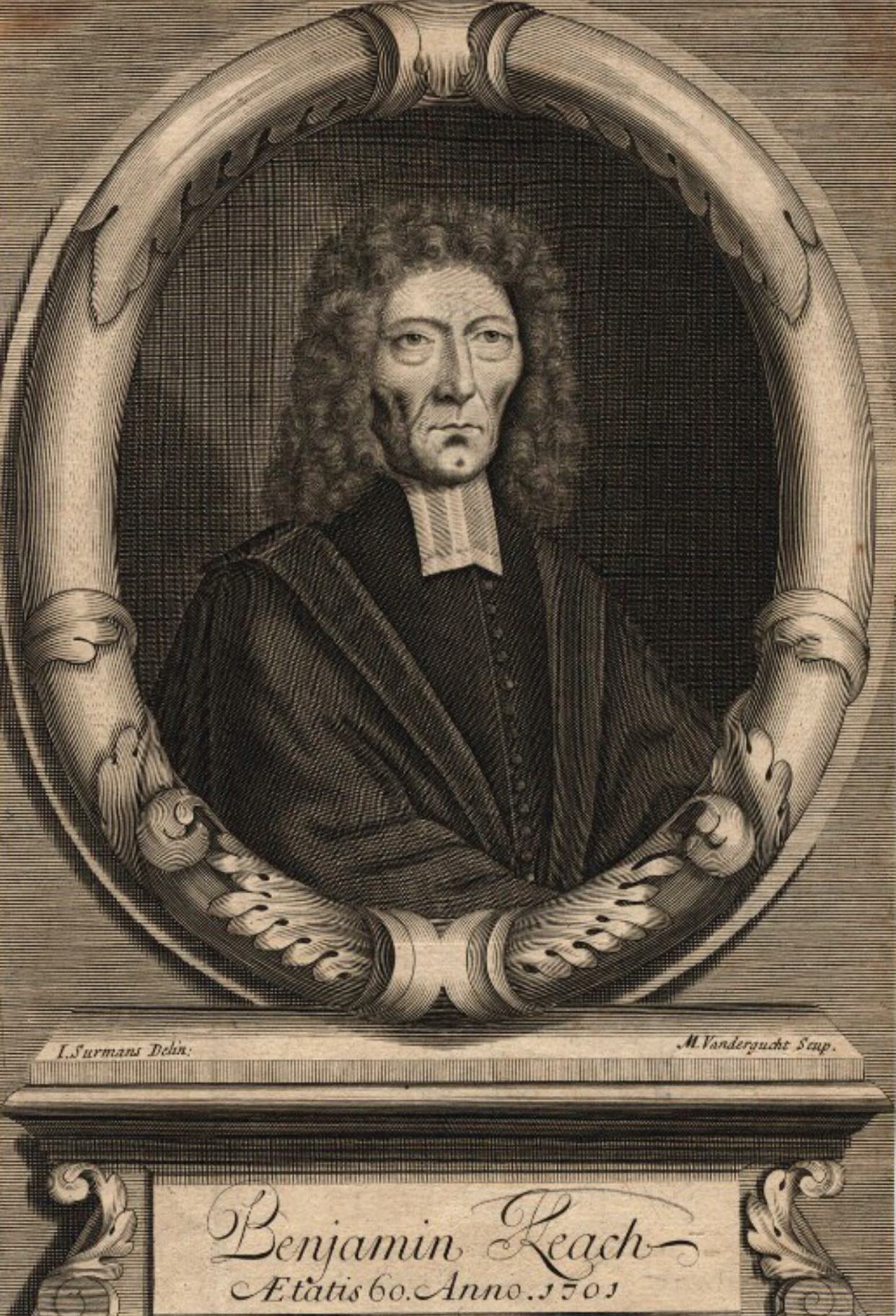
The article by Benjamin Keach discusses the theological significance of the yearly sacrifices of the bullock and he-goat as types of Christ, emphasizing the doctrines of atonement, substitution, and Christ's high priestly ministry. Keach argues that the sacrificial system foreshadows Christ’s ultimate sacrifice, specifically highlighting how the casting of lots for the two goats represents God’s sovereign choice in Christ's sacrificial role (Acts 4:28). The blood of the bullock and the he-goat is paralleled with Christ's blood, which is presented before God, signifying the sufficiency of His sacrifice for the cleansing of sin (Hebrews 9:21). The significance lies in the understanding that through Christ’s atonement, believers obtain forgiveness and access to God, pointing to the inefficacy of human efforts without the merit of Christ’s sacrifice. This reinforces the Reformed doctrine of salvation by grace alone, through faith alone, in Christ alone.
Key Quotes
“God by these lots showed which of the two he would have die figuring clearly unto them how that Jesus Christ the lively Antitype of them was to die by God's decree.”
“Such was the power of their iniquities that the holy altar ark and sanctuary itself was defiled in the sight of God and could not be cleansed without blood.”
“The high priest was to cast off his glorious garments when he made this atonement signifying that Christ should be abased and lay aside as it were his glorious robes.”
“Through the atonement and expiation of Christ he hath obtained everlasting rest for us and that in his death all typical sacrifices should end.”
What does the Bible say about the Day of Atonement?
The Day of Atonement, as described in Leviticus 16, illustrates the need for sacrificial atonement for sins, which ultimately points to Christ's singular and perfect sacrifice.
In the context of New Testament revelation, the Day of Atonement is a profound type of Christ’s ultimate sacrifice, as He entered the most holy place—not just a physical sanctuary, but heaven itself—offering His own blood for our redemption. Hebrews 9:24 emphasizes that Christ has entered into God's presence to intercede for us, fulfilling the shadow of the Day of Atonement in a far superior way. Thus, the significance of this day is not only historical but theological, revealing God's plan for salvation through Christ alone.
Leviticus 16, Hebrews 9:24
How do we know that Christ's sacrifice was sufficient?
Christ's sacrifice is deemed sufficient because it was a one-time event that fulfilled all Old Testament sacrifices and secured eternal redemption for believers.
Furthermore, the efficacy of His sacrifice is evident in the result it achieved—those who believe are granted complete remission of sins and entrance into the presence of God. As the letter to the Hebrews underscores, Christ's blood enters the heavenly tabernacle, interceding for us, thus forever establishing a once-for-all atonement that is effective for all who are called by God. Therefore, the doctrine of Christ's sufficiency in atonement and salvation is central to Reformed theology, summing up our assurance in His finished work.
Hebrews 9:26, Hebrews 10:10
Why is understanding Christ as our High Priest important?
Understanding Christ as our High Priest is vital, as He uniquely mediates between God and humanity, having offered Himself as the ultimate sacrifice.
Unlike the Levitical priests who needed to make sacrifices repeatedly, Christ’s offering of Himself was a singular act that achieved the ultimate reconciliation between God and man. His priestly work now includes interceding for believers, as outlined in Hebrews 7:25, ensuring that our prayers and lives are presented acceptably before God. This establishes a profound assurance for Christians, illustrating that our salvation does not depend on our merit but solely on Christ's perfect mediatory work. Therefore, grasping the significance of Christ's High Priesthood is foundational for understanding our relationship with God in the new covenant.
Hebrews 4:14, Hebrews 7:25
Le 16.
I. OF the two He-goats it was by lot that the one was taken, and the other escaped, &c. The manner, saith Ainsworth, was thus: they had two lots, the one had written upon it, "for Jehovah;" and on the other, "for a scape-goat." Now God by these lots showed which of the two he would have die; figuring clearly unto them, how that Jesus Christ, the lively Antitype of them, was to die by God's decree, or according to the determinate council of his own will, that we might escape eternal damnation thereby, Ac 4:28.
II. He on whom the lot fell, was made a sin-offering for the people; to signify that Christ should by God's decree become an offering or sacrifice for our sins.
III. The blood of the He-goat, as also the blood of the Bullock, was brought into the vail, and was sprinkled upon the mercy-seat, on the east side, which was towards the people. So are the merits of the blood of Jesus brought within the holiest of all, viz., heaven itself, before the throne of mercy, pleading for us, Heb 9:21.
IV. The priest was to make an atonement for the holy place, because of the uncleanness of the children of Israel, "And so he shall do for the tabernacle of the congregation," &c., Le 16:16. This showed the horrible nature of sin. For though the people never came into the holy place, much less into the most holy place; yet such was the power of their iniquities, that the holy altar, ark, and sanctuary itself was defiled in the sight of God, and could not be cleansed without blood. So our sins do defile God's Church, and his most holy ordinances therein performed, so that neither we, nor any of our best services, can meet with acceptance, but by the means of Christ's blood and merits.
V. No man was to be in the tabernacle, when the high priest went in to make atonement, only the high priest himself, &c., plainly signifying, that Jesus Christ, our High Priest, hath no partner with him in working our salvation. "He, his own self, bare our sins in his body on the tree," &c., 1Pe 2:24.
VI. The altar of incense was sprinkled with the blood of the killed goat, shadowing, that Christ, through the shedding of his own blood, should be consecrated our Intercessor, and by the means and merits thereof our prayers should be accepted, Heb 8:6.
VII. The high priest was to cast off his glorious garments, when he made this atonement; signifying, that Christ should be abased, and lay aside, as it were, his glorious robes, or veil his Deity, and appear in the form of a servant, that so he might finish the work of our redemption, Heb 8:4; Php 2:6.
VIII. The day of atonement shall, saith the text, be a sabbath for ever; shadowing thereby, that through the atonement and expiation of Christ, he hath obtained everlasting rest for us; and that in his death, all typical sacrifices should end.
IX. Once only in a year this atonement was made; to show, that not often, but once for ever, without repetition, Christ should make a perfect atonement for us by his own blood, and thereby enter into the highest heavens, to appear in the presence of God for us, Heb 9:24.

Comments
Your comment has been submitted and is awaiting moderation. Once approved, it will appear on this page.
Be the first to comment!