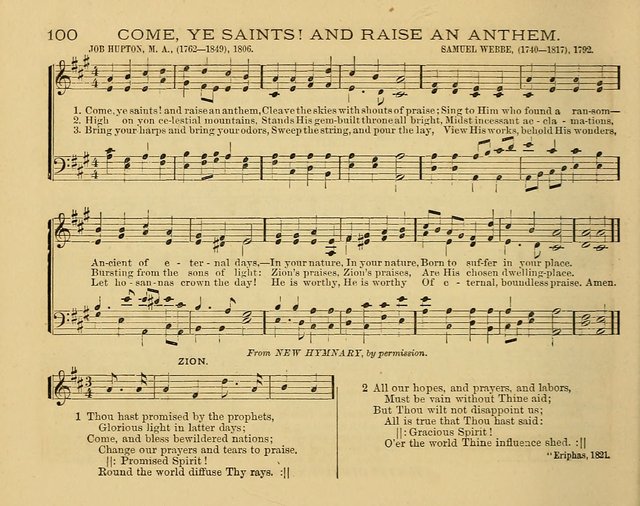
Hupton expounds on eternal life as the believer's inheritance through union with Christ, grounded in the eternal covenant of redemption. Beginning with humanity's total depravity inherited from Adam's transgression, he demonstrates how Christ—the God-Man and Head of the Church—possesses life eternally and bestows it upon the elect through indissoluble union with Him, secured by God's immutable oath. Through Christ's perfect obedience, atoning death, and victorious resurrection, believers receive complete justification and pardon; the life of faith they experience in this world—sustained by communion with Christ and nourished by His provision—culminates in endless communion with the Triune God in glory.
What does the Bible say about eternal life in Christ?
The Bible reveals that eternal life is found in union with Christ, as He is the source of life and salvation for believers.
Furthermore, in John 6:51, Jesus states, 'I am the living bread that came down from heaven. If anyone eats of this bread, he will live forever.' This metaphor of 'eating' His flesh and 'drinking' His blood reflects the necessity of spiritual nourishment from Christ, indicating that eternal life is sustained through an ongoing relationship with Him. As believers partake in this life, they are promised resurrection and eternal glory, bearing testimony to the transformative power of His grace and the certainty of salvation secured through His covenant.
How do we know that eternal life is a gift?
Eternal life is confirmed as a gift through Scripture, demonstrating that it is granted by God's grace rather than earned by human merit.
Moreover, in Romans 5:15, the Apostle Paul explains, 'But the free gift is not like the offense. For if by the one man's offense many died, much more the grace of God and the gift by the grace of the one Man, Jesus Christ, abounded to many.' This further reinforces the idea of grace as a gift, pointing to Christ’s redemptive work as the foundation for our eternal hope. The unmerited nature of this gift can also be seen in the covenants made by God, where He, out of deep love, provides eternal life to His chosen people, affirming that our assurance of eternal life rests entirely in His faithfulness and promise.
Why is being united with Christ essential for eternal life?
Union with Christ is essential for eternal life because it is through Him that believers receive salvation and partake in divine life.
The theological implications of this union are rich and manifold. This union is not based on mere association but on deep personal covenantal relationship wherein believers are made one with Christ in His death and resurrection (Romans 6:5). Through this unity, they receive life-giving grace, the righteousness of Christ, and the assurance of their place in the family of God. As stated, 'He that eateth me shall live by me' (John 6:57), indicating that continual dependence on Christ sustains spiritual life. Thus, the importance of being united with Christ is highlighted as the foundation of both our present spiritual vitality and our future eternal existence.
By nature we are sinners. We sinned in our first father: by his disobedience we were made sinners, and by his transgression judgment came upon us to condemnation and death. Our nature was poisoned in the fountain and cursed in the root. Our progenitor chose sin, and it compassed him about like a garment; and entered into his bowels like water. It ran through his veins, contaminated his blood, polluted every member of his body, and defiled every faculty of his soul. Thus he became a complete mass of moral corruption; and we, his children, inherit his depravity. We are shaven in iniquity, and in sin did our mother conceive us. Being conceived and horn in sin, we have conceived mischief, brought, forth falsehood, and added sin to sin, till the number of our crimes exceeds all calculation, and our amazing guilt has reached unto the heavens. We are criminals, deserving ten thousand deaths, and to death eternal, the righteous law, which we have transgressed in every point, has justly condemned us; nor is it possible that it should administer any thing to us but death and damnation. Yet, under these awful circumstances, we need not abandon ourselves to despair: life, eternal life, is proclaimed; a covenant of life was made by the eternal three, and it promise of life was given long before sin entered into the world, and death passed upon man. 'The second person of the holy trinity was ordained by the first, with his own free and full consent, to assume human nature and take it into personal union with himself; and become God-Man. As such in the divine purpose, he was set up from everlasting, from the beginning, or ever the earth was, as the head of the body, the church, and the saviour of all his members; and it pleased the Father, that in him should all fulness dwell. All the fulness of the elect was chosen in him by a sovereign, act of stupendous matchless grace, and fixed in him, never to be separated from him: it is, I think, with respect to this, that the apostle calls the church "the fulness of him, that filleth all in all."
As God, this glorious head of all principalities and powers, has life eternal dwelling essentially in himself; as God-Man,, and the head of the church, he has everlasting life given him by the Father for all his people. This we leant from his Own; gracious mouth. The words are these: "As the Father hath life in himself, so hath he given to the Son to have life in himself:" "As the living Father hath sent me, and I live by the Fatter: so he that eateth me, even he shall live by me. "Indissoluble union to Jesus is the ground on which we partake of eternal life. Being chosen in him, made one with him, and immutably fixed in him, by an eternal act of the divine mind, we are made partakers of his life and of all his fulness. Our title to life, spiritual and eternal, is indisputable. It was freely granted, and made absolutely certain in that covenant which is ordered in all things and sure. These ancient counsels, and these acts of grace; Oh! how glorious! how precious! The eternal God freely gives eternal life, by an eternal act of his own will, in an eternal testament, to be enjoyed by all the objects of his eternal love, through an eternal union with Jehovah Jesus, and all this is confirmed by his oath: "Wherein God willing more abundantly to shew unto the heirs of promise the immutability of his counsel, confirmed it by an oath.'' This has, at once, raised our title to everlasting life, far above every idea of human merit, and placed it infinitely beyond the influence of the caprice of mortals, and the fictitious power of chance.
At the time appointed by the Father, our glorious Immanuel came, that his sheep might have this life in real possession, as well as in title, and that they might have it more abundantly. As the representative of the whole general assembly and church of the first born, whose names are written in heaven, he stood under the law, obliged by his own absolute engagement, to obey its precepts with the utmost exactness, and to suffer its penalty in its full extent. By his obedience he brought in a complete righteousness, through which grace reigns, in the absolute justification of the ungodly, unto eternal life; and by his amazing sufferings upon the cross, he at once made the most complete atonement for all the sins of his people, that God the Father as a judge, could demand, made peace with God, obtained eternal redemption, removed the curse of the law, demolished the sting of death, crushed the empire of hell, and completed the work of salvation. Having conquered principalities and powers by his death, he made an open show of them in his resurrection and ascension, triumphing over them in the man, and brought life and immortality to light by the gospel. ''Though he were dead, he is alive again, he lives to die no more, and has the keys of hell and of death. All enemies are under his exalted feet, all power in heaven and in earth is his; he is the head over all principalities and powers; andl he claims all dominion and authority to give eternal life to us many as the Father has given him. He is our life; because he lives, we shall live also. In his obedience we have justification, free, complete, eternal. In his death, we have pardon, peace, deliverance from all condemnation, and victory over death itself:. His blood cleanseth us from all sin, and through it we shall overcomc every enemy, and triumph with him in the world of light.
The eternal life, which we have in, and from Jesus, is not barely an everlasting existence, but an endless state of being accompanied with coeval delight the most refined: a life of endless communion with the infinite divinity, in all his persons, perfections, characters, and all the riches of his own supreme blessedness.
The enjoyment of this life begins while we are in this present evil world. He who has said of himself, "I am the life," causes the dead to hear his voice, and live. He says unto them, "live," and his commandment is life. A new life, spiritual, heavenly, divine, and inextinguishable, is communicated to all the elect; from the overflowing fulness of their ever living head, in consequence of which they believe and live a life of faith. This truth is inculcated by our Lord himself in those memorable words, "I am the resurrection and the life, he that liveth and believeth in me, though he were dead, yet shall he live." The spirit of life, from the incarnate God, is entered into him, and he lives spiritually, believes scripturally, and shall live eternally. Christ and he are one. He lives in Christ, and Christ lives in him: he handles and tastes the word of life, and has real communion with him as the true God and eternal life. The life of faith is supported in him, by constant supplies of grace from the living vine on which he lives, and on which he grows. He feeds upon the bread of life, and lives by him; as it is written, Verily, verily, I say unto you, he that believeth on me, hath everlasting life "I an, that bread of life. This is the bread that cometh down from heaven, that a man may eat thereof and not die. I am the living bread which came down from heaven; if any man eat of this bread he shall live for ever; and the bread that I shall give is my flesh, which I will give for the life of the world. Whoso eateth my flesh, and drinketh my blood hath eternal life, and I will raise him up at the last day. He that eateth my flesh, and drinketh my blood, dwelleth in me, and I in him. As the living Father hath sent me, and I live by the father; so he that eateth me shall live by me." From this food the true believer receives present succour, strength, and comfort. In the strength which he derives from it, he stands, he fights, he conquers, and he triumphs. In this his might, still leaning upon his beloved, he marches on his heavenly way over mountains of difficulties; under burdens of afflictions and troubles; through floods of temptations and flames of persecution. He follows the good shepherd, listening to the gracious words of his mouth. "My sheep hear my voice, I know them and they follow me, and I give unto them eternal life, and they shall never perish, neither shall any pluck them out of my hand. My father who gave them me, is greater than all, and no man is able to pluck them out of my Father's hand. "This gracious and faithful declaration of his Almighty Redeemer, is the ground of his hope of' immortality and the basis of his confidence, that he shall be with him where he is, to behold his glory: here he rests. Drawn by the almighty love of his glorious forerunner, he presses after him, ardently longing to be with him, to see him as he is, and to feel a perfect transformation into his likeness, till he enters his everlasting rest, begins his life of glory, and is filled with the fulness of God. Thus divine love, sovereign, free, and immutable, flowing from the eternal throne, through the channel of a well ordered covenant, and in the streams of the mediator's blood, raises all the vessels of mercy from their lapsed state to glory ineffable. Now unto him that is able to keep us from falling, and to present us faultless before the presence of his glory with exceeding joy, to the only wise God our Saviour, be glory and majesty, dominion and power, both now and for ever. Amen.

Comments
Your comment has been submitted and is awaiting moderation. Once approved, it will appear on this page.
Be the first to comment!