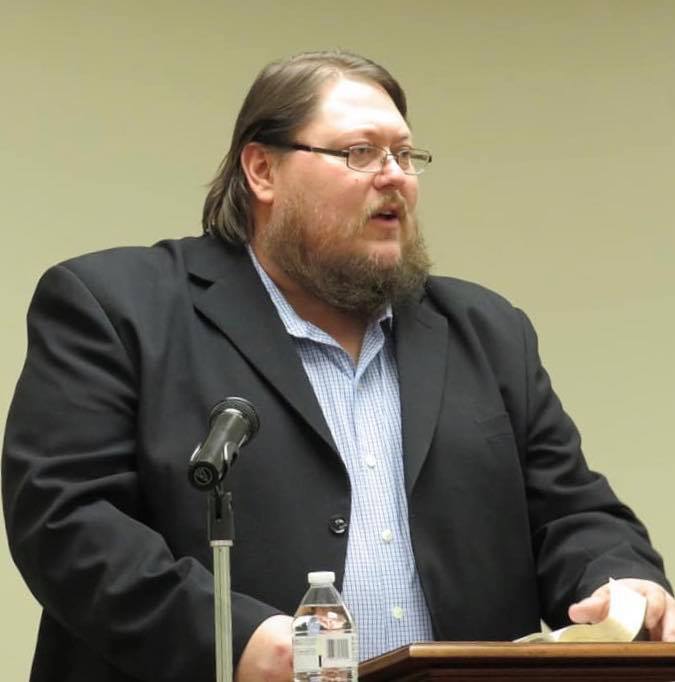
The sermon titled "Eternal Vital Union" by Mikal Smith addresses the Reformed theological concept of the eternal union of believers with Christ. Smith emphasizes the distinction between the physical and spiritual realms, arguing that believers, as the children of grace, possess both a natural man derived from Adam and a spiritual man inherited from Christ. He supports his assertions by referencing Genesis 1:11-13, where God's creation principles are laid down, emphasizing the idea that everything reproduces after its own kind. This principle, according to Smith, is foundational to understanding the relationship between Adam and Christ, where Adam represents humanity's natural lineage, while Christ represents the spiritual lineage of God’s elect. The practical significance of this union lies in the assurance it provides believers; they are eternally linked to Christ and partakers of His life, thus receiving eternal life through faith.
Key Quotes
“We are, as the children of God, a spiritual people and a physical people. The reprobates are just a natural person.”
“This union is not only a true union, meaning that we are one with Him, but it also shows us that that union is eternal because it began before the foundation of the world.”
“Everything that God created in this natural realm was created with its seed in itself and it reproduces after its kind.”
“The inward man continues on... because the inward man is eternal.”
Eternal vital union refers to the spiritual connection between believers and Christ, existing before the foundation of the world.
Eternal vital union is a fundamental concept in Reformed theology, reflecting the intimate and real relationship between Christ and His elect. This union is established in Scripture, emphasizing that believers were chosen in Christ before the foundation of the world (Ephesians 1:4). Just as Adam's progeny are born from his physical lineage, believers are spiritually derived from Christ, the second Adam, whose life and blessings flow to us through this vital union. This connection means that Christ's nature and eternal life are present in His people, ensuring that we have a living relationship with Him, which is both real and eternal.
Ephesians 1:4, 1 Corinthians 15:45, Colossians 3:3
The concept of spiritual seed is supported by Scripture, indicating that believers are born of an incorruptible seed through Christ.
The scriptural basis for the concept of spiritual seed comes from various passages that highlight our regeneration through Christ. In 1 Peter 1:23, it states that we are born again not of corruptible seed but of incorruptible seed, which is Christ Himself. This means that our spiritual life is derived from Jesus, who embodies eternal life. The union we have with Christ enables this seed to manifest in our lives, showing that spiritual descendants, or those who bear the image of Christ, are genuinely part of His family. This theme of producing after one's kind is essential in understanding our identity as children of God and the spiritual generational line established in Christ.
1 Peter 1:23, John 17:2, 1 John 5:11-12
Understanding the distinction between physical and spiritual helps Christians grasp their true identity and relationship with God.
Recognizing the difference between physical and spiritual realities is crucial in understanding our identity as believers. The physical realm pertains to our natural existence, which is mortal and subject to decay, inherited from Adam. However, the spiritual realm signifies our eternal life in Christ, which transcends earthly limitations. This distinction allows Christians to realize that their true existence is hidden in Christ, emphasizing our connection to Him rather than mere physical lineage. As believers, we are called to live in light of this spiritual truth, participating in a spiritual kingdom and displaying the fruit of our relationship with Christ in our lives, thereby fulfilling our calling as His representatives.
Romans 5:12, 2 Corinthians 4:16, Colossians 3:3
The first Adam represents humanity in sin, while the second Adam, Christ, embodies redemption and eternal life for believers.
The significance of the first Adam and the second Adam is foundational in Reformed theology, illustrating the dichotomy between natural humanity and spiritual redemption. The first Adam, created from the earth, fell into sin, resulting in death and separation from God, affecting all his descendants. In contrast, the second Adam, Jesus Christ, comes as the fulfillment of God's plan for redemption. By embodying a perfect life and dying for the sins of His people, Christ provides a way to eternal life and reconciliation with God. This theological framework underscores the importance of understanding our state in Adam versus our new identity in Christ, highlighting the transformative power of grace and the notion that believers have life through their union with the risen Lord.
Romans 5:12-21, 1 Corinthians 15:22

Comments
Your comment has been submitted and is awaiting moderation. Once approved, it will appear on this page.
Be the first to comment!