Bootstrap
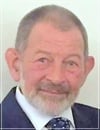
Daniel Parks

That I May Know Him

Philippians 3:10
Daniel Parks May, 12 2022 Video & Audio
0 Comments

In the sermon "That I May Know Him," Daniel Parks addresses the central theological topic of the believer's deep desire for personal, progressive, and experiential knowledge of Jesus Christ, as expressed in Philippians 3:10. Parks explores how the Apostle Paul emphasizes the importance of knowing Christ in a relationship that transcends mere intellectual understanding and involves a heartfelt connection. Key points include a warning against relying on works and status, illustrated through Paul's own transformation of valuing Christ above all things. Scripture references such as Philippians 3:8-10 are utilized to demonstrate the significance of knowing Christ's power through resurrection and fellowship in suffering. The practical significance of the sermon underscores that a genuine relational knowledge of Christ is foundational to a Christian's faith and daily living, driving the believer toward a continuous pursuit of intimacy with the Savior.

Key Quotes

“The saint desires personal knowledge of Christ... that I may know him.”

“Oh, that I may know him! The more I know him, the more I want to know him.”

“It is not enough to know about him; I want to know him.”

“I would like to know him most intimately, most intimately, the dearest friend I have, the husband of his church, the lover of his people.”

Sermon Transcript

Auto-generated transcript • May contain errors

100%
Good evening. I invite your attention to Philippians. I invite your attention to Philippians. My text will be found in verse
number 10, in those five words, that I may
know him. And God willing, we will consider
the subject tonight, the saint's desire for knowledge of Christ. But let me begin reading in verse
number one. Paul writes, finally. Yes, he
wrote finally, and then he went for two more chapters. He was
halfway in this epistle and said finally, and I'm so glad he found
so much more to write about. What he here writes about is
very much a blessing. Finally, my brethren, rejoice
in the Lord. Well, there is not much else
in which to rejoice, is there? Rejoice in your job? Eh, you
may not have it tomorrow. Rejoice in your career, your
house? Houses burned down. What is there
to rejoice in, in this world? In the Lord. In the Lord is a
steadfast rejoicing. Rejoice in the Lord, Paul writes. For me to write the same things
to you is not tedious, but for you it is safe. But do this,
beware of dogs, the two-legged variety. Beware of evil workers. Beware of the mutilation or concision. Paul here writes of the Judaizers. They were of the sect of the
Pharisees pretending to be Christians and telling believers in Christ
that they had to be circumcised. Paul said, it's not circumcision,
it's mutilation, it's concision, it's just avoid it. They're dogs
walking on two feet, they're evil workers and beware of them,
have nothing to do with them. Because we, or the circumcision,
who are we? We who worship God in the spirit,
rejoice in Christ Jesus, and have no confidence in the flesh. Those three marks are the circumcision. Worship God in the spirit, rejoice
in Christ Jesus, have no confidence in the flesh. Though I also might
have confidence in the flesh, Anyone thinks he may have confidence
in the flesh, I'm more so. Paul is here. We may say he's
kind of issuing a challenge. Do you know of someone who's
got confidence in the flesh? Bring him on. I'm the yardstick by which the
confidence in the flesh is measured. I'm the ruler, measuring by me. What was I? Circumcised the eighth day. And
I above the stock of Israel, I above the tribe of Benjamin.
One of the smallest of the tribes, but one of the most significant.
Paul says, I'm a Benjamite. Benjamites, he just said. could
fight you as well with the left hand as it could with the right.
I'm a Benjamite. And I'm a Hebrew of the Hebrews.
You wanna know what a Hebrew is? Look at me, Saul of Tarsus
would say. Concerning the law, I'm a Pharisee. The strictest sect of my people. Concerning zeal, persecuting
the church. concerning the righteousness
which is in the law, I'm blameless. I'm as righteous as it can be
according to the flesh, according to the flesh. But what things
were gained to me, those I have counted lost for Christ. But
indeed, I also count all things lost for the excellence of the
knowledge of Christ Jesus my Lord, for whom I have suffered
the loss of all things and do count them as rubbish or dung,
that I may gain Christ and be found in him." Be found in him. We hear some people talking about
wanting to win souls. Paul wanted to win Christ. win
Christ, that's far more important. Oh, that I may gain Christ and
be found in him, not having my own righteousness, which is from
the law, but that righteousness, which is through the faith of
Christ, the righteousness, which is from God, received by faith. And then Paul says, the words
of my text, that I may know him. and the power of his resurrection
and the fellowship of his sufferings being conformed to his death,
if by any means I may attain to the resurrection from the
dead." Look at that phrase in verse 10, those five words, that
I may know him. That's the saint's desire for
knowledge of Christ expressed in those words that I may know
him. What is it to say that I may
know him? I can give you an illustration.
It's not mine. I read it from Charles Spurgeon. It's rather lengthy, but I believe
I can paraphrase and summarize what he said. It helped me to
understand something of what it is to want to know Christ. But imagine for a moment that
you're in the days of the Roman Empire. You have been captured
and taken from your homeland. You've been taken to Rome and
made a slave. Today, you will be sport for
a tyrant. You have been brought into the
amphitheater. You are to be fed to the lion,
or at least you are to battle the lion in order that the tyrant may
have sport. People have come to see your
blood flow. And there you are in the middle
of the amphitheater and the huge gate raises yonder, and out steps
that king of the beasts, that lion. He's not been fed for days. He's hungry. He sees his meal
in front of him. The lion looks around. There
are thousands of people in the stands. But there is a very high
wall that prevents him from getting to them. But there is the next
meal. It is meat. there in the middle
of the amphitheater. And the lion begins his lunge
toward me. And what is this? Someone has come from the stands
and scaled the wall. Someone runs and meets the lion
before it can reach me. Someone grabs hold of the line
and engages it in the fight. Someone stranger to me has mortally
wounded that line, and the line now has made its way back with
its tail between its legs back to which it came. And I am safe. And this one who has come to
my defense, who has wounded the line for me, has now taken me
and held me up as though I am the victor. I've never seen him
before. I have no idea who this is, but
you can imagine the thought is it that is in my heart. Oh, that
I may know him. Who is he? Who is he who has
come to save me like this? And then he's gone. And some
come and usher me to a house They say it is his house. And
there I am washed of my wounds. I am fed very sumptuously. I am given new clothing, a good-looking
robe. I'm given a soft bed in which
to sleep, and I sleep soundly. I awaken the next morning, and
I am told that I am to be a guest in this house for some time,
being fed sumptuously Every day, when my clothing has worn out,
a new robe is provided. All my needs are met. By whom,
I wonder? The one who saved you. Who is
he? Who is he? Oh, I want to know
him, that I may know him. Who is he? Well, is it not enough
to know that your needs are being met? No, no. I appreciate the
fact that my needs are met, but I want to know him. who made
all this possible, oh, that I may know him. Well, he has done this
for many others as well, and right now he is preparing a mansion
for you in glory. He's gonna come and receive you
so that where he is, you may be also. Is that not enough?
No, I appreciate all that, but who is he? Who is he? Oh, that I may know him. Oh,
that I may know him. Is that not our desire? Paul says, I want to know him. I want to know him. Paul, do
you not know him? I do, but I want to know him. Paul, I do not understand this.
You preach him, right? Yes, I preach him. You teach
him, right? Yes, I teach him. Therefore you
know him, right? Yes, but oh, I want to know him. I want to know him. And that
is the way that it is with children of God. Oh, that I may know him. That I may know him. The saint's
desire for knowledge of Christ has these three marks, and they
are all found in our text. The saint desires personal knowledge
of Christ The saint desires progressive knowledge of Christ, and the
saint desires experiential knowledge of Christ. Personal, progressive,
and experiential, that I may know him. This is personal knowledge. There are two persons involved.
Paul says that I may know him. Two persons involved, this is
personal knowledge. First of all, consider the subject
of this knowledge. Who is it who wants to know?
It is the saint. The subject of this knowledge
is the saint. Oh, that I may know him. A preacher, many years ago, standing in line at a fast food
restaurant, struck up a conversation with a man who was there in the
line with him. And he asked him if he knew the
Lord. And the other man says, yeah, I know the Lord. I'll have
you know that my great-grandfather started such and such church
up the road. My grandfather was the first
deacon in the church. and my father is now the pastor
of the church. Yes, yes, I know the Lord. Yes,
but sir, do you know the Lord? Oh yes, yes, I know the Lord,
as I just told you. My great-grandfather started
such and such church, and my grandfather was the first deacon
in the church, and my father is now the pastor of that church,
and yes, I know the Lord. Okay. This is not going very
far, is it? A few days later, preacher comes
back to the same place. This time the other man is sitting
in a vehicle with a woman. And so the preacher walked up
to the vehicle and said, you know, I remember you. Yes, I
remember you. We had a conversation here a
few days ago. And the preacher looked at the
woman sitting beside him and then he looked at the man and
he says, I did not know you were married. No, no, no, no. I'm not married. This is my girlfriend.
I'm not married. Oh, but you are married. No,
sir. I am not married. This is my
girlfriend. No, you're married. And the man
is getting a little irate now. I am not married. What makes
you think that I am married? Well, your great-grandfather
was married, and your grandfather was married, and your father
is married, and of course you're married. And you see, you are
not married because your forefathers were. In a culture where people
are normally married, you do not know the Lord simply because
someone in your family trained in the Lord or was passed down
from generation to generation. It is good that Silas knows the
Lord. It is good that Peter knows the
Lord. It is good that John knows the
Lord. But Paul says, I want to know
Him. I want to know Him. Oh, that
I may know Him. The object of this knowledge
is Christ. That I, the subject, may know
him, the object. The object of my knowledge, I
want to be Christ. I want to know him. It is not
enough to know about him. You may find in some college,
in some school of higher learning in this big city of yours, you
may find some people who have studied Jesus Christ You may
find some people who know more about the so-called historical
Jesus than you do. You may know, you may meet some
people who could tell you more about the miracles he performed,
maybe, and you might even find some who've written commentaries
on him, and they can tell you all kinds of things about Jesus
Christ. But Paul did not say, I want
you to know about him. It is not enough to know that
he did miracles. It is not enough to know that
he was a good teacher. It is not enough to know what
he taught. It is not enough to know what
he preached. It is not enough to know about
the miracles he performed. All that is worthless if you
do not know him. Oh, that I may know him. I want
to know Him. I want to know the one that saved
me. I want to know who is this one
who killed the lion for me, delivered me from the lion? Who is this
one who stepped and took my place instead? Who is this one who
feeds me and clothes me and protects me? I want to know Him. The saint is ours. personal knowledge
of Christ. The saint desires also progressive
knowledge of Christ. Progressive knowledge of Christ. Paul says, oh, that I may know
him. You see the progression? Paul
wanted to know more about Jesus than he already knew. Oh, that
I may know him. with me tonight is my beloved
Sandra. We were introduced in 1974, June. And it was May or June,
anyway. Spring, about this time of the
year, 1974. All I knew was her name, and
I knew that she was coming with a young lady who was coming to
my brother's graduation from seminary. And this young lady
coming to my brother's graduation was bringing a friend with her.
Her name was Sandra. And Sandra and I were supposed to
be introduced to each other. Even Sandra did not know. I was
told. And so, you know, if you said,
you know, Sandy, we call it, do you know who Sandy is? Yeah,
she's the one coming with Becky and I'm supposed to meet her.
Yep, that's who she is. That's about all I knew. Then
I met her. Okay, I know something else.
She's a good looking girl. And, you know, sweet. That's about all I knew. And, Then in the circumstance and
in the providence of God, our paths crossed a little later
and I was smitten. I think I know her now. And let's see, she spent a week
with my family during an ordeal in her life that happened and
my parents opened their house up to her. Let's see, I dated
her on Tuesday night, took her to the worship service on Wednesday
night, and we went out on Thursday night and Friday night and asked
her to marry me. I thought I knew her good enough
to ask her to marry me. But I did tell her, go home and
think about it. Make sure you know me. But yeah,
I knew her well enough, I wanted to marry her. I thought I knew
her rather well. And then we got married, and
then I began to learn who she is. And the more I learned, the
better I like her. The better. And I want to know
more and more about her. We have been together now, well,
let's see, 1975, so you do the arithmetic. And I still find
out things about her. even after all this time. And
the more I know her, the more I want to know her. Oh, that
I may know her. That's the way that we want to
know Jesus Christ. It is a progressive knowledge. Do you remember, do you remember
when the Lord first saved you? Do you remember when you first
heard of him? Do you recall what joy came to
your heart when you were smitten by his love to you? Do you recall
what it was to learn that he had saved you and provided for
your justification and your sanctification and your redemption and even
your glorification? Do you not want to know more
and more and more about him? Do you not want to do as we read
in the scriptures, grow in the grace and in the knowledge of
our Lord and Savior, Jesus Christ? I want to know him more and more
and more. Oh, that I may know him. The
more I know him, the more I want to know him. I long for the day
when I shall know him as he knows me. We shall know as we are known. I'm gonna know him like he knows
me. Oh, that I may know him. The
more I know him, the more I want to know. Is it that way with
you? Is it that way with you? All
right. The saint's desire for knowledge
of Christ is personal knowledge, that I may know him The saint's
desire for knowledge of Christ is progressive knowledge that
I may know him. The saint's desire for knowledge
of Christ is experiential knowledge. We know that from the word know,
K-N-O-W. You see it in your text? There is a rule that usually
applies in learning the meaning of a word in the scriptures in
the New or even in the Old Testament. It is called the rule of first
occurrence. If you want to know what a word
means, quite often you'll find the meaning of a word in the
first time that it appears in the scripture. Now remember that
the Old Testament was written in Hebrew and The New Testament
was written in Greek. Paul wrote this in the Greek.
And he writes that I may know him. Interesting word here. The Greek word he used is ginosko. So let's find out what ginosko
means. The word here translated no. The first time you'll find it
is in Matthew's gospel chapter one. There is a man named Joseph,
and he is deeply, deeply troubled. He is betrothed and espoused
to a girl named Mary. She is supposed to be a virgin. To the best of his knowledge,
she is a virgin, but she is with Saul. and it is not his, and
he knows it. Oh, Mary, Mary, Mary, what have
you done? What have you done? And while he ponders what he
should do, an angel from God comes down and says, Joseph,
do not fear. Do not fear. Mary is a virgin. And that which is conceived in
her is of the Holy Spirit. And your wife is going to give
birth to Messiah. And when he's born, call his
name Jesus. And Joseph said, I will, I will. His heart is relieved. And then
we read that Joseph knew not marry his wife until her firstborn
was born. He did not know her. Joseph,
do you know her? Yep, that's Mary. She's my betrothed. What else do you know? Well,
she's from my village. She's got Messiah in her womb.
So you know her? I have never known her. Joseph, do you know her? Yes,
I know her, but I have never known her. It's not confusing,
folks. It is the truth. Joseph did not
know her. We speak of it as in the biblical
sense of the term. The marriage had not been consummated. They had not entered into that
intimate, most intimate knowledge that husbands and wives have
of each other. He knew her, but he had never
known her. He had never known her until
Jesus was born. And then he knew his wife. Intimately. Most intimately. Oh, I want to know Jesus that
way. I want to know Jesus that way.
Intimately. Intimately know him. How do you know him intimately?
Through the power of his resurrection, Paul writes. Knowing what it
is to be justified. How do you know him intimately?
through the fellowship of his sufferings. You wanna get to
know somebody? Suffer with him. Endure the sufferings
that she goes through. Yeah, you'll get to know someone
that way. I want to know him and the fellowship
of his sufferings. There's fellowship in it. I want
to know him, the power of his resurrection, the fellowship
of his sufferings. I want to be conformed unto the
image of his death. I want to know him. How do you
know him intimately? Find him in here. Read the scriptures. Why, you'll never know much of
Jesus if you never read about him. He is in here. Get under
the sound of a gospel preacher. I hope maybe you've learned something
tonight of Jesus. I hope this has not been a wasted
effort here. I hope that we now know something
of him, know something of him in fellowship with him. Oh, that
I may know him. I would like to know him most
intimately, most intimately, the dearest friend I have, the
husband of his church, the lover of his people. I want to know
him, Paul said. And that's what it is to know
him. I want to know Jesus Christ like
a husband knows his wife and a wife knows her husband most
intimately. I want to be able to commune
with him in the midnight hour as easily as I can in the noonday
sun. I want to know him. That's what it is to know Christ. Oh, that I may progressively experientially
know Him. Let me forget everything else
in this world, but let me know Him. Let me know Him. If you have never known him,
may this be the night you learned to start. And if you start tonight, may
you spend the rest of your life desiring to know him. Oh, that
I may know him. May the Lord help us to do that.
Daniel Parks
About Daniel Parks
Daniel E. “Moose” Parks is pastor of Sovereign Grace Church, 1000 7th Avenue South, Great Falls, Montana 59405. Call/text: 931.637-5684. Email: MooseParks@aol.com.

Comments

0 / 2000 characters
Comments are moderated before appearing.

Be the first to comment!

Joshua

Joshua

Shall we play a game? Ask me about articles, sermons, or theology from our library. I can also help you navigate the site.