Bootstrap
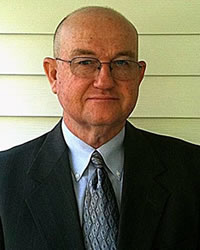
Gary Shepard

The Sinless Sacrifice

1 Peter 3:18
Gary Shepard March, 19 2017 Audio
0 Comments
Gary Shepard
Gary Shepard March, 19 2017

Sermon Transcript

Auto-generated transcript • May contain errors

100%
Turn with me to 1 Peter 3. Look with me at verse
18. 1 Peter 3, 18. For Christ also hath once suffered
for sins, the just for the unjust, that he might bring us to God. being put to death in the flesh,
but quickened by the Spirit. When false teachers came to the
people in Thessalonica, and tried to tell them that the
Lord Jesus had already come the second time. Paul responded to that error
by saying that that could not take place. The Lord Jesus would not come
back again until such a time as there be
a falling away. Falling away. That word there is the word we
get apostasy. And if you look in the dictionary,
Greek dictionaries, It means defection from the truth, except
there be a real defection from the truth. And I'm afraid, and I do believe, that that day
is here, at least in part. that there is a great defection
from the truth. There is apostasy. I want to bring you a message
that I preached once before. Once when I was invited to preach
for a while at a church. But this is the only message
that I got the opportunity to preach. They told me not to bother to
come back. Some said I was preaching a false
gospel. Some said I was a heretic. But I feel the need to preach
it to you. I feel the need to preach it
so that everybody can hear it. And you make your own evaluation. You make it your own thoughts. The Bible tells us that no scripture
is of any private interpretation. There is not a verse in this
book that stands by itself. In other words, every verse is
to be interpreted in the light of the whole, in the light of
all the scriptures. Somebody said that the best way
to interpret a verse is to stand it up and throw all the other
verses at it. And if it stands that test, then
it must be right. And men have spoken of what they
call the preponderance of scripture. Preponderance means that which
is greater in number, in quality, and importance. Everything is to be viewed in
the preponderance of scripture. And I learned something many
years ago, lots of years ago that has helped me quite a bit
over the course of my studying the word of God. A man said, never let what you
don't know. become the enemy of what you
do know. There are some things we don't
know. There are some things we don't
understand. But there are many more things
that we do know, that we do have understanding. And I found that
to be true in the interpreting of a verse like II Corinthians
5.21 where it says in part that Christ was made sin. Now does that suggest to us that
Christ ever was in any way actually a sinner? Does in any way mean that he
became sinful? Not if we consider the preponderance
of scripture. Not if we consider it in the
light of all The Bible says, just like in our text, it says that Christ died, that
he suffered once for sins, the just for the unjust. the just for the unjust. And so I want us to begin back
in the Old Testament, back in the very, one of the first books
in the Bible, where we begin to see what are types of the
Lord Jesus Christ. And they are types we know because
the New Testament, God tells us they are the figures. They
were the figures of things to come. They were shadows and types
of the Christ. So turn with me, first of all,
over to Exodus chapter 12. And look at with me in verse
5, where he's talking about the Passover lamb. Paul spoke of
Christ as being our Passover. John, when he heralded the Lord
Jesus Christ coming, he said, behold, the lamb of God. So in this description of this
Passover lamb, he gives this direction. Verse five. Your lamb shall be without blemish,
a male of the first year. You shall take it out from the
sheep or from the goats. And that very first qualification
was that it shall be without blemish. There is to be no blemish. All right, turn over in the book
of Leviticus. In the book of Leviticus, chapter
22, And verse 21, speaking of other
offerings and sacrifices. And these are just a very few,
just very few references to this. In Leviticus 22 and verse 21
it says, And whosoever offereth a sacrifice of peace offerings
unto the Lord to accomplish his vow, or a freewill offering in
beefs or sheep, it shall be perfect to be accepted, there shall be no blemish therein." In other
words, that is even more clear. It shall be perfect to be accepted
by God in every sacrifice or offering that is given. Likewise,
it is also true in regard to the priest. If one was a priest,
and Christ is our high priest, if one was a priest, he could
not in any way be flawed, in any way be maimed. And it says
this in Leviticus 21. No man that hath a blemish of
the seed of Aaron the priest shall come nigh to offer the
offerings of the Lord made by fire. He hath a blemish. He shall not come nigh to offer
the bread of his God. In other words, if he had a bad
eye, if he had a mangled ear, if he had a crippled hand, if
any way he had any perfection, imperfection, he could not be
the priest of God. He could not offer offerings
before God. And all the Old Testament sacrifices,
which were types of Christ, whether they were lambs or bulls or goats
or birds or whatever, they were all to have one thing in common,
they were to be without blemish. Hundreds of times we are told
this over and over again because they were types of the Messiah. In Isaiah 53 and verse 9 it says,
and he made his grave with the wicked and with the rich in his
death. because he had done no violence,
neither was any deceit in his mouth. And we could go to reference
after reference in the Old Testament, sacrifice, offering, priest,
whatever it is that typified Christ, and this is one thing
common, they were to be without spot, without blemish, without
flaw, They were to be perfect. And then we come to the New Testament. We come over to the New Testament,
and I'll just read you some of these references. One with regard
to what the angel said to Mary. And the angel answered and said
unto her, the Holy Ghost shall come upon thee, and the power
of the highest shall overshadow thee. Therefore also that holy
thing which shall be born of thee shall be called the Son
of God. That babe in Mary's womb was
called the Son of God, was the Lord Jesus Christ, and he was
described by the Spirit of God as that holy thing. And even after he was in his
manhood and being tried by his enemies, his enemies such as
Pilate, listen to what Pilate had to say. In Luke, it says, Then Pilate
to the chief priests and to the people said, I find no fault
in this man. And he said unto them the third
time, what evil hath he done? I have found no cause of death
in him. I therefore will chastise him
and let him go, because I cannot, wanting to please you, Wanting
to do what you want me to do, I still cannot find any fault
with him. And then there were the thieves
that were crucified with him. The thief that was crucified
him when the Lord opened his heart. He said to the other thief,
and we indeed justly, that is we are being punished justly. And we indeed justly for we receive
the due reward of our deeds. But this man, mark it down, this
man hath done nothing amiss. And then there was a centurion.
the one who observed the Lord Jesus Christ in his dying hours
when he was being crucified on that cross. In Luke 23 and verse
47 it says, now when the centurion saw that which was done, he glorified
God saying, certainly this was a righteous man. hardened soldiers, certainly
this was a righteous man. And when you listen to the words
Christ often said himself, such as in John 8, it says, he and
he that sent me is with me. The father hath not left me alone,
for I do always those things that please him. I do always
those things that please the Father. When Peter preached at Pentecost,
One of the things that he talked about, one of the things that
he reminded them about, it seemed that it would even antagonize
so many of them even the more. But one of the things he said
is, you denied the Holy One and the just and desired a murderer
to be granted unto you. Again, for of a truth against
thy holy child Jesus, whom thou hast anointed both Herod and
Pontius Pilate with the Gentiles, and the people of Israel were
gathered together against him, the holy child, the holy one,
the Lord Jesus Christ. And again and again throughout
the New Testament it's emphasized, such as in 1 John 3, and you
know that he was manifested to take away our sins, and in him
is no sin. And when you get to the book
of Hebrews, that book wherein the type and the The Lord Jesus
is oftentimes compared and oftentimes contrasted. You find this so
clear and so often, such as in Hebrews 4. Turn with me to Hebrews
chapter 4. Hebrews chapter 4. And look at what it says in this. For we have not a high priest
which cannot be touched with the feeling of our infirmities,
but was in all points tempted like as we are, yet without sin. It's not to say that Christ was
not tried, that he was not tested, that he was not tempted in all
points like as we are, but this is the one difference, yet without
sin. Turn over to Hebrews chapter
7, Hebrews 7 and verse 26, and look at what it says. For such
an high priest became us, or suited us, or fitted us, was
necessary for us, who is holy, harmless, undefiled, separate
from sinners, and made higher than the heavens. who needeth not daily as those
priests to offer up sacrifice, first for his own sins and then
for the people's, for this he did once when he offered up himself." He didn't need to offer up sins
for himself. He offered up sins for the people. because he himself was sinless. Turn over to Hebrews 9. Hebrews 9 in verse 14. How much more shall the blood
of Christ, who through the eternal spirit offered himself without
spot to God? purge your conscience from dead
works to serve the living God. He offered himself without spot
to God. And then look on down in verse,
in chapter 2, rather chapter 9 and verse 28.
Hebrews 9 and verse 28. So Christ was once offered to
bear the sins of many, and unto them that look for him the second
time shall he appear the second time without sin unto salvation. I Peter. Turn over to 1 Peter and listen
to Peter in 1 Peter 1 and chapter 18. This is so plain. This is so emphasized. Verse 18, for as much as ye know
that ye were not redeemed with corruptible things as silver
and gold from your vain conversation received by tradition from your
fathers, but with the precious blood of Christ. as of a lamb without spot and
without blemish. In other words, in the same way,
showing the same thing, denoting the same necessity, Christ came
as a sacrifice and redeemed his people because he was the Lamb
of God. He was without spot and without
blemish. Look over in 1 Peter chapter
2. I Peter chapter 2 and verse 22. It says of him, who did no sin,
neither was guile found in his mouth, who when he was reviled,
reviled not again. When he suffered, he threatened
not, but committed himself to him that judges righteously,
who his own self bare our sins in his own body. on the tree, that we being dead
to sins should live unto righteousness, for by whose stripes ye were
healed. Who did no sin, who thought no
sin, who felt no sin, who had not a nature of sin, who even
when he was reviled in the hour of his death, he absolutely did
no sin. So turn over to II Corinthians
5 and verse 21. II Corinthians
5 and verse 21. Paul says in verse 21, For he
hath made him to be sin for us, who knew no sin that we might
be made the righteousness of God in him." Now the first thing, the first thing he tells us is
that he knew no sin. So whatever follows that, whatever
comes after that, whatever is written behind that, it cannot
undo that. Christ knew no sin. So the question is, what does
it mean that he was made sin for us? The first thing I think that
we have to remember is that Paul's subject here in 2 Corinthians
5, as is plainly seen, is reconciliation. It isn't regeneration. And Paul
gives us here the basis of this reconciliation that he's been
talking about. And the basis for reconciliation
necessarily was, first of all, that he knew no sin. It cannot mean that Jesus became
a sinner. It cannot mean that he took a
nature of sin. It cannot mean that he was the
embodiment of sin. It cannot mean that he became
unrighteous and all the other various things that some people
in our day say that he is. Because the principle of substitution does not require him to become
what I am to save me. I've heard that said, in order
to save me, Christ had to become what I am. That is utter foolishness. If Christ had to become what
I am, he could not have saved me. because he would not have
been the sinless sacrifice, and God would not have accepted his
sacrifice. To say that he had to become
what I am, it may sound good to us, it may sound logical,
but it is not biblical. You see, for Christ to be my
substitute, It requires that he suffer my responsibility for
my sins in my place. And Paul is exactly saying that,
that he of God was made to be sin for me who knew no sin that
I might be made the righteousness of God." Now, when the New Testament was written, there was already the Old Testament
written. When the New Testament was written
and it was written in Greek, there was already an Old Testament
written in Greek called the Septuagint that had been around a long time. So whatever he means here You
cannot throw aside what the Old Testament version, the Septuagint,
was saying oftentimes over and again. We're using the same word. And you can go back. to the Septuagint
in places like Leviticus and Numbers and Deuteronomy. And
you see where the Greek word that is translated the same word
here for sin is translated sin offering. Sin offering. In other words, when Christ came
When He was made sin for us, He knew no sin. He didn't need
a sin offering for Himself because He knew no sin, but we did. And He was made a sin offering. Now listen to what it says in
various places in the New Testament. Like Hebrews 10. By the which will, by God's sovereign
will, the will of God, by the which will we are sanctified
through the offering of the body of Jesus Christ once for all. In other words, just like in
so many places, It says that his body bore the brunt of God's
wrath, and he was therefore our sin offering. Ephesians 5, and
walk in love as Christ also hath loved us and hath given himself
for us an offering and a sacrifice to God for a sweet-smelling savor. Daniel with one of the passages
in Daniel 9 where we undoubtedly know that it refers to Messiah. And after three score and two
weeks shall Messiah be cut off, but not for himself. He'll die, he'll suffer, he'll
bear the cross, but not for himself. Not because any sin was found
in him. Not because of anything he did
that was wrong. Philippians 2. And being found in fashion as
a man, He humbled himself and became obedient unto death. All the way. Obedient in all
things, in everything, unto death. Even the death of the cross. You see, if He gave Himself a
ransom for us, if He paid the price of redemption, if He became
the one sacrifice for sins forever, what is the price? And all those
references Some people call it a mercantile redemption because
we speak of it in such terms, but that's the way the Bible
speaks of it. It is a redemption. It is the
paying of a ransom by which we're saved. What is the price for
sin? The wages of sin is death. In other words, divine justice
held him accountable as our surety for sins. We had to stand as those who
are guilty, as those whose sins are real, as whose sins are worthy
of death. But the Bible says that Christ
stood as our surety. In other words, from the beginning,
and we don't know when that beginning was because we can't even think
in such terms, but from the beginning, Christ as our surety took on
himself the responsibility to pay for our sins. And the wages of sin is death. That's why the prophet prophesied
God saying, smite the shepherd. Do what to him? To this perfect
shepherd, to this good, to this great shepherd. If he's going
to save his sheep, something has to be done to him. He has
to be smitten. He has to die. And He dies in
our place as a sacrifice for sin. God imputed our sins to
Him. He held Him accountable for them. He decreed not to impute sin
to us because it says, blessed is the man to whom the Lord will
not impute sin. And blessed is the man whom the
Lord imputes righteousness without work. So the language of Scripture
was this, in Isaiah 53. Oh, how many times we've gone
to Isaiah 53. How often, like one writer says,
it seems like Isaiah was standing at the foot of the cross when
he wrote what he wrote. In Isaiah 53, in verse 4, he
says it like this. Surely he hath borne our griefs. Now, I realize that's old English
and we don't speak of things being borne or things, we bearing
things and such as that, but all it means is to carry as a
burden. Surely he hath borne our griefs
and carried our sorrows, and we did esteem him stricken, smitten
of God, and afflicted, but he was wounded for our transgressions. He was bruised for our iniquities. The chastisement of our peace
was upon him and with his stripes we are healed. All we like sheep
have gone astray and have turned everyone to his own way and the
Lord hath laid on him the iniquity of us all. Now Isaiah would have to write,
he would have to change his language there if it is not by imputation. He would have to say, the Lord
hath put in him, but he doesn't say that, does he? He says the
Lord laid on him, the Lord imputed to him, the Lord made to meet
on his head, the Lord made him responsible for the iniquity
of all his people, again in Isaiah 53. Yet it pleased the Lord to
bruise him. He hath put him to grief when
thou shalt make his soul an offering for sin. He shall see his seed,
he shall prolong his days, and the pleasure of the Lord shall
prosper in his hand. He shall see of the travail of
his soul and be satisfied. By his knowledge shall my righteous
servant justify many. for he shall bear their iniquities. Therefore will I divide him a
portion with the great, and he shall divide the spoil with the
strong, because he hath poured out his soul unto death, and
he was numbered with the transgression. He was numbered with the transgressors. And He bare the sin of many and
made intercession for the transgressions. He carried, He bore the burden,
He died for, He suffered for, He paid the price for our sins
and could Because he knew no sin. In 2 Corinthians 5 and 19, it
says, to wit, that God was in Christ, reconciling the world
unto himself, not imputing their trespasses unto them, and hath
committed unto us the word of reconciliation. Well, that's
the gospel, the word of reconciliation. Well, what is the gospel? that
God in grace, in sovereign free grace to his people did not impute
their sins to them. What does that mean? It means
that he did not lay to their account, he did not charge to
their account their sins. But being a just God, But being
holy, but being righteous, he had to impute them. He had to
charge them to someone. They had to be paid. And the only one who knew no
sin, the only one who was holy and harmless and undefiled and
separate from sinners, the only one that could bear somebody
else's sin was the sinless Christ. When Paul said, and it just dawned
on me sitting up here this morning, when Lee in his prayer said,
Christ crucify. Enable him to preach Christ crucify. The emphasis is always in the
gospel, God's righteousness in forgiving our sins through Christ's
death. Christ crucified. In all the Old Testament sacrifices,
we never see anything done to any sacrifice that would suggest
defilement, anything like rubbing of tar on that sacrifice, anything
on the sacrifice before or after its death. You will not find
it. Well, he had to actually become,
no, he did not. You won't see any sacrifice where
they rub dirty filth on the sacrifice. Well, you had to be like this
offer. No, you won't find any place where they put tar or something
dirty or black or defiled in any way. It had to be perfect
to be accepted. But I'll tell you what you will
see in the scapegoat. You'll see the hands of the offerer
laid on it, on the head of the sacrifice, signifying a transfer,
an imputation of the responsibility, of the guilt, of the punishment
on the innocent victim. And after those hands were laid
on that sacrifice's head, what happened immediately next? They
cut his throat. They put him to death. They shed
his blood because the sins of the offerer
in a figure had been transferred to Christ. Now sadly, sadly, such as the Roman Catholic
Church believes that Christ actually became seen. Sadly, people like Kenneth Copeland,
people like Benny Hinn, notable, visible false prophets in our
day, they believe in what I would call absolute
substitution. That in order for us to be saved,
Christ had to become what we are. That's a big problem. Big problem. Because if we ask ourselves the
question, is Christ God? Is He God manifest in the flesh? Is He Emmanuel, God with us? Well, can God change? He said, I am the Lord. I changed
not. And most especially in Jesus
Christ, who it said is the same yesterday, today, and forever. Is he God? Can the holy God become unholy, even for a time. In the minute he becomes unholy,
his sacrifice has no infinite value so as to redeem a multitude. But he's holy. He can't be anything
but holy. They used to talk about whether
or not Christ could sin. They talk about whether or not
Christ actually became sin. But to me, it's not even a question. It's not even a controversy if
we consider that He is God manifest in the flesh. To use words like mysterious
or unexplainable in talking about the death of Christ is such foolishness because we have such a plain
revelation. It says to us, the gospel says
to us that Christ died for our sins. When Paul is talking in
Romans 8 about the basis for our justification, the basis
of all of God's goodness to us, the basis upon which we are not
condemned, he says it is Christ that died. When Paul talked to the Corinthians
about preaching to them what he'd always preached to them,
what he'd preached to them first in the Scriptures, it was what?
How that Christ died according to the Scriptures. And he meant
the Old Testament Scriptures. So you look back at the Old Testament
Scriptures and the preponderance or the
whole, or the witness, or the emphasis that you find in the
Old Testament Scriptures is that Christ died as a sinless sacrifice. He had to be in order to bear
our sins, be charged with our sins, be accountable for our
sins. Turn with me to Galatians chapter
3. Galatians 3 and verse 13. Now Paul, just like
everywhere else, He uses words like redemption, and a ransom,
and a rescue, and all these languages, all these words that speak of
him paying a price. He says, Christ hath redeemed
earth from the curse of the law, being made a curse for us. What does that mean? I have a
feeling it means the exact same thing that being made sin for
us means. So what does he say? For it is
written, cursed is every one that hangeth on a tree. Every one, and especially this
one, cursed because he's hanging on a tree. What is he in himself? He's perfect. He's righteous. He's a sacrifice without spot
and without blemish, perfect in every way, obedient unto death,
harmless, holy, undefiled, separate from sinners, knew no sin. But
he's dying a death. He's suffering under the hand
of God the penalty that all his people were due. Death. Death. It's a very subtle thing by which the enemy seeks to belittle the very thing
that is our hope. We sang a hymn this morning,
and that hymn is taken from the Old Testament. Basic is taken
from the Old Testament when Christ is pictured in the Passover lamp And that lamb was to be perfect,
was to be spotless, was to be watched to make sure that he
was, was to be a male of the firstling of the flock, just
scrutinized so closely. God said, take it, shed its blood,
sprinkle the blood on the lentils and doorposts of your homes. And when I see the blood, when I see the blood, when I
see the death, when I see the just satisfying sacrifice, when
I see the thing that represents the one sacrifice for sin forever,
when I see the blood, I'll pass over you. I'll pass
over you. Men get caught up in so many word games and such as that so
as to make their point and prove their position, give this proof
text? No. It's what does the whole of scripture
say? What is the emphasis? not on Christ being in some way
mysteriously, unexplainably, unknowingly a sinner, but being the sacrifice, the
perfect sacrifice for sins forever. Christ died the just for the
unjust. And what did he do? He brought
everyone he suffered for to God. And that's what the gospel is.
It's the good news that if Christ died for you, you must go free. You can go
free. You have every reason to serve
him for his goodness. But nothing you do can ever put
away one sin. But the good news is he's done
it all. And he could do it because he
was the one person, the one man that came to this earth and didn't sin. Knew no sin. felt no sin, was in no way a
sinner. So justice could fall on his
head, put him to death, make an end of sin, and set you free. I tell you forever. Forever, the people of God are
going to be thankful for the sacrifice who knew no sin. Our Father, we pray in this hour that our ears and our hearts
might be tuned to listen to what you plainly declare in the scriptures. That we be not deceived, that
the death of Christ be not diminished, that the honor and glory of Christ
be not brought down by the foolish representations of men. we behold the lamb. As a lamb without spot and without
blemish, we plead his precious blood, his death for our sin. We thank you for such mercy. We thank you for such plainness, for such a plain gospel to declare. Christ died for our sins according
to the scriptures. Bind our hearts to your word. Forgive us our sins. For we pray
in Christ's name. Lord, we, no matter what we be labeled,
no matter what people think of us, let us ever be abiding in
your plain word. For we ask it in Jesus' name. Amen.
Gary Shepard
About Gary Shepard
Gary Shepard is teacher and pastor of Sovereign Grace Baptist Church in Jacksonville, North Carolina.

Comments

0 / 2000 characters
Comments are moderated before appearing.

Be the first to comment!

Joshua

Joshua

Shall we play a game? Ask me about articles, sermons, or theology from our library. I can also help you navigate the site.