Bootstrap
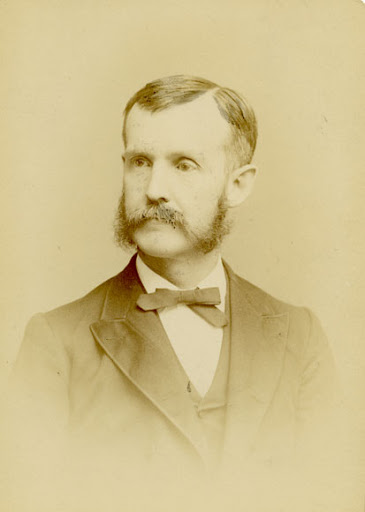
J.R. Miller

19. Habits in Religious Life

2 Timothy 3:16-17; Psalm 19:7-11
J.R. Miller January, 18 2022 Audio
0 Comments
"Silent Times, A Book to Help in Reading the Bible into Life!" by J.R. Miller, 1886

You will find it helpful to READ the texts--as you LISTEN to the audios.

The TEXTS for the entire 24 chapter book, can be bound here:
https://gracegems.org/C/Miller_silent_times.htm

The AUDIOS for the entire 24 chapter book can be bound here:
https://www.gracegems.org/SermonAudio.htm?sa_ac...


J.R. Miller's "Silent Times, A Book to Help in Reading the Bible into Life" has been professionally read, and graciously supplied by Christopher Glyn. Please visit his YouTube channel at: https://www.youtube.com/c/ChristopherGlyn where you can view a wide variety of Christopher's devotional readings with read-a-long texts online.

Sermon Transcript

Auto-generated transcript • May contain errors

100%
Chapter 19. Habits in Religious
Life Some conscientious people are anxious because their religious
life has become such a matter of habit that they're not conscious
of any voluntary efforts to live right. They feel that their acts
and services cannot be pleasing to God when rendered without
any conscious desire to honor Him. They are oppressed with
the fear that their comfortable religion is really only formality. They pray at certain hours and
go to church at certain times, and they go through regular routines
of duties, and they seem to be good and do good by routine rather
than from the heart. The methodicalness of their piety
frightens them when they think seriously about it. It seems
to them that in all their acts of devotion and service there
should be a spontaneous feeling, ever fresh and sweet. A little
reflection will show us that such anxiety is groundless. All
true greatness is unconscious of itself. It is so of beauty. The sweetest feature in childhood
is its unconsciousness. Whenever the little girl begins
to be conscious that she is pretty, her beauty is greatly marred.
The highest skill in any art is that which is not conscious
of skill. Poets do their best work when
they are conscious of no effort. They write as it were by natural
inspiration, just as a bird sings. Artists reach their highest achievements
when they are conscious of making no great exertion. A musician
brings the sweetest strains from his instrument when he is not
conscious of trying to do anything great. The highest attainment
in any art is that in which the art is forgotten. The appearance
of effort mars any performance. All truly great things are done
easily and unconsciously. The principle is just as true
in its application to Christian life. When one is conscious of
his spiritual graces, the beauty of these graces is marred. When
a man knows that he is humble, his humility vanishes. When one
has to make efforts to be generous, patient, or unselfish, he has
yet much to learn about these elements. The highest reach in
Christian character brings the disciple back to the simplicity
of a little child when he's utterly unconscious of the splendor of
his character in heaven's sight. This is the culmination. But
it takes many years, oft-times, to attain such completeness. Take piano-playing. You listen
in trance to the skilful performer. His fingers fly over the keys
and wander effortlessly over the chords, up and down the octaves,
and the music thrills you. You are utterly amazed at the
skill he exhibits. Yet it seems no effort to him.
He does it all as easily as the bird sings its morning song in
the grove. This is the ultimate of his art. But it was not always so. Behind
what you now see and hear lie long, patient years of weary,
toilsome learning and tedious, exhausting practice, when he
had to pick out each separate note on the keyboard, then pass
to the next, and search for that. So you see a Christian who is
very patient, or has great meekness, He is not easily provoked when
he is insulted, his face grows a little pale, but there is no
outburst, no anger clouds his brow, no passionate word escapes
his lips. He rules his own spirit, he speaks
the soft answer or is silent, or he has wondrous Christian
joy. He has sorrows, but amid them
all his heart rejoices. His life is a song in the night,
or he has attained rare, almost unearthly spirituality. He seems
to have actual converse with heaven. A celestial brightness
clings to him. He walks the earth as if he were
a visitant from another world. His daily life is a prayer, breathing
out a silent, unconscious influence of heaviness, as a sweet flower
pours out fragrance on the common air. Or he lives a Christian
life of superior nobleness. He displays the graces of the
Spirit in unusual measure. He manifests Christ's hidden
life wherever he goes. His life is one of great usefulness,
as, with beautiful unselfishness, he ministers to the good of others. His heart is touched by every
cry of distress, and his hand goes out to give relief to all
suffering and need. And all this costs no effort.
It appears easy and natural for him to be just such a Christian.
And he seems unconscious of any preeminent attainments. Looking
at such characters and lives, many feel discouraged. They say,
I can never be such a Christian. Or perhaps they take another
view of it and say, it costs these men or women nothing to
be godly Christians. It's easy and natural to them.
They have to make no effort to be true, meek, gentle, unselfish,
or good-tempered and sweet-spirited. If they had my quick-fiery nature,
they could not be so. If they were made of tinder,
as I am, they would not be able to so rule their spirits under
keen provocation. If they had my fiery emotions,
they could not be joyful when sorrow sweeps over them. If they
had all my peculiarities of constitution, circumstance, and environment,
all my trials and difficulties, they could not be such lovely,
full-rounded Christians. No doubt there is something in
temperament and constitution, but there is far less than many
of us claim. It is very convenient to have
such a scapegoat on which to pile the responsibility for bad
temper and execrable living, but the difference usually is
in the culture of the life. It is just as in the case of
the pianist. You see the matured character, the disciplined spirit,
the trained life, and you marvel at the ease, the perfectness,
the unconsciousness with which these beautiful things are done.
But you know nothing of the years which lie behind these results,
in which there were exertions, efforts, struggles, and failures,
amid which a thousand times hearts grew faint and spirits sank almost
in despair. What we admire and envy in the
finely cultured character is not the spontaneity of unschooled
nature, but the result of years and years of patient and painful
discipline, by which a disposition, perhaps coarse and crude and
impetuous, has been trained into refinement, gentleness, and calm
peace. The tendency of all faithful
and true living is toward the confirmation and solidifying
of Christian character. We grow always in the direction
of our habits and efforts. He who continually struggles
to be unselfish will have many a conflict and many a defeat,
but at length he will learn to exercise an unselfish spirit
without any exertion. The wheels have run so long and
so often in one track that they have cut deep grooves for themselves,
into which they fall as if by nature. Yet this does not take
away from the moral character of the acts themselves. Indeed,
it shows that instead of doing certain specific things in detail
to please God, the whole life has become bent, trained, and
solidified into conformity with holiness. It shows that instead
of piecemeal obedience, holy principles have become wrought
into the very fiber and quality of the soul. There may be less
feeling, less emotion, less consciousness of trying to please God in the
minute acts of life, but the character itself has taken on
the stamp of holiness, and the natural motions of the soul have
been trained into the grooves of righteousness. Yielding habitually
to the munitions of the Spirit, the life has been transformed
more and more into the image of Christ, until unconsciously
and without effort the Christian does the things that please God. This is the ultimate of Christian
culture. It has in the highest and truest
sense become second nature to do right and beautiful things,
and not even to stop to think of them as right and beautiful,
or to weigh their moral character. Who does not know some quiet
Christian life which makes no pretension to greatness, which
is simple, humble, modest, unobtrusive, and yet performs a blessed ministry,
breathing fragrance and joy all about itself. The more we watch
the seeds which grow and bring forth fruit in this world, the
more shall we learn that they are often as those that are unconsciously
dropped, when the sower knows not that his hand is scattering
golden grains of life. When we try to do something great
or dazzling, nothing comes of it. God seems to blight the things
we do with large intent. Then, when we do some simple
thing, without pretentious purpose or any thought of excellence
or fame, He makes the results immortal. Surely no one will
say that these beautiful things possess no moral quality because
they are wrought unconsciously or through force of long habit.
A ripe Christian character is simply a life in which all Christian
virtues and graces have become fixed and solidified into permanence,
as established habits. It costs no struggle to do right,
because what has been done so long under the influence of grace
in the heart has become part of the regenerated nature. The
bird sings not to be heard, but because the song is in its heart
and must be expressed. It sings just as sweetly in the
depths of the forest with no ear to listen as by the crowded
thoroughfare. Beethoven did not sing for fame,
but to give utterance to the glorious music that filled his
soul. The face of Moses did not shine
to convince people of his holiness, but because he had dwelt so long
in the presence of God that it could not but shine. truest,
ripest Christian life flows out of a full heart, a heart so filled
with Christ that it requires no effort to live holy and to
scatter the sweetness of grace and love. It must be remembered,
however, that all goodness in living begins first in obeying
rules, in keeping commandments. Mozart and Mendelssohn began
with running scales and striking chords and with painful finger
exercises. The noblest Christian began with
the simple obediences. The way to become skillful is
to do things over and over until we can do them perfectly and
without thought or effort. The way to become able to do
great things is to do our little things with endless repetition. and with increasing dexterity
and carefulness. The way to grow into Christ's
likeness of character is to watch ourselves in the minutest things
of thought and word and act until our powers are trained to go
almost without watching in the lines of moral right and holy
beauty. To become prayerful, we must
learn to pray by the clock at fixed times. It's fine ideal
talk to say that our devotions should be like the birds' songs,
warbling out anywhere and at any time with sweet unrestraint.
But in plain truth, to depend upon such impulses as guides
to praying would soon lead to no praying at all. This may do
for our heavenly life, but we've not gotten into heaven yet. And
until we do, we need to pray by habit. So of all religious
life. We can only grow into patience
by being as patient as we can, daily and hourly, and in smallest
matters, ever learning to be more and more patient until we
reach the highest possible culture in that line. We can only become
unselfish by practicing unselfishness whenever we have an opportunity,
until our life grows into the permanent beauty of unselfishness. We can only grow better by striving
ever to be better than we already are, and by climbing step by
step toward the radiant heights of excellence. Thus our daily
habits carry in them the buds and prophecies of our future
character. The test of all moral life is
in its tendencies. The question is not what point
have you attained to, but which way are you tending? In what
direction is your growth? Is your character tending and
aiming toward patience, gentleness, truth, and love, or toward impatience,
hardness, falsehood and selfishness. What is the trend of your spiritual
habits? We grow always in the direction
of our daily living. The powers we use develop continually
into greater strength. The graces we cultivate come
out more and more clearly in our character. A bird that would
not use its wings would soon have no wings that it could use. Made to soar above the earth
as our souls are to fly toward God in heaven, if we only grovel
in the dust and do not use our wings, we lose the power to soar,
and our whole life grows toward earthliness. But if we train
ourselves to look upward, to walk erect, to gather our soul's
food from the branches of the tree of life, our whole being
will grow toward spirituality and heavenliness.
J.R. Miller
About J.R. Miller
James Russell Miller (20 March 1840 — 2 July 1912) was a popular Christian author, Editorial Superintendent of the Presbyterian Board of Publication, and pastor of several churches in Pennsylvania and Illinois.
Broadcaster:

Comments

0 / 2000 characters
Comments are moderated before appearing.

Be the first to comment!

Joshua

Joshua

Shall we play a game? Ask me about articles, sermons, or theology from our library. I can also help you navigate the site.