Bootstrap
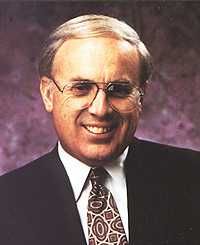
John MacArthur

Separating From Unbelievers

2 Corinthians 6:14-18; 2 Corinthians 7:1
John MacArthur May, 21 2010 Video & Audio
0 Comments
This outstanding sermon was given at the 2010 Shepherd's Conference. Please 'forward' this to your church leaders.

Please visit our other website:

GRACE GEMS—
http://gracegems.org/

Today's Grace Gem—
http://gracegems.org/Grace_Gems.htm

Grace QUOTES—
http://gracegems.org/gq.htm

Grace SERMONS—
http://gracegems.org/SERMONS.htm

Grace BOOKS—
http://gracegems.org/BOOKS.htm

Grace AUDIO Treasures—
http://www.gracegems.org/audio_authors.htm

Grace VIDEOS—
http://www.gracegems.org/Video.htm

Sermon Transcript

Auto-generated transcript • May contain errors

100%
Welcome to the 2010 Shepherds
Conference. General session number one, Separating
from Unbelievers, John MacArthur. If there is a sort of an overarching
theme or overarching emphasis in the Shepherds Conference this
year, it's going to be a bit on the pastoral level. I think
we are all I guess maybe aware of the issues that are around
us. We're all blogged to death, even those of us who don't have
a computer, but have an iPhone and get everything sent to us
one way or another, or ending up on our desk in a printed form.
The issues that we face are well known to us. The dialogue and
debate about those issues is well known to us. Never in the
history of the world have we had so much information so fast
on so many things. We're not going to be here this
year to try to address all the frontline issues, although there
are many that could be addressed. But a twofold objective, at least
in my own heart, and it's going to be to maybe try to help us
to see things in terms of ministry in a little bit more of a pastoral
way. maybe if I can in these later years of my life. Somebody
said the other day, how do you feel? I said, I have never felt
better in my life, and so just pray that I don't start getting
Alzheimer's this week. Next week it's okay, not this
week. But I don't know how long I will have to make certain pastoral
encouragements to you from the Word of God, and so these are
the things that are on my heart. I want to talk a little bit about
The issue of separation, a little bit about the issue of sincerity,
and something about the issue of sympathy in the three messages
that I have to give to you. Now, in speaking about the issue
of separation, I realize that I'm stepping into a somewhat
crowded field of ideas and thoughts and history and so forth. I don't
intend at all to give you a history of the issues of separation that
we're aware of. If you want the formidable work
on understanding the issues of separation that are part of evangelicalism,
have been in the past, and I think still should be, The best thing
you can do is read volume 2 of Martin Lloyd-Jones' biography
by Ian Murray. Read the last 150 pages and you
will understand where the issues of separation and compromise
basically found their beginnings. Or read Evangelicalism Divided
by Ian Murray and you'll get a good idea of these kinds of
issues regarding separation. I grew up in a fundamentalist
kind of environment. I grew up at a time when the
word separation was a big word on the evangelical word list,
a time when to be a fundamentalist meant essentially that you drew
really broad lines, you built very high walls in terms of church
conduct and relationships. And if anybody crossed those
lines, they were readily vilified and labeled and thrown out of
the association. What happened to fundamentalism
was it was so cannibalistic that it consumed itself. It just ate
itself alive and disappeared. We have a generation of many
of you young men who've grown up since that kind of highly
separatistic fundamentalism sort of disappeared who don't even
perhaps remember what it was. We could talk about fundamentalism
today and we'd have a generation of young pastors who might be
able to accept that word without any past baggage because they
weren't even around in those years. The fundamentalism that
was unbiblical, the fundamentalism that was cruel and critical and
self-destructive needed to go away, and it did. But there needs
to be in this generation a biblical understanding of separation,
not a traditional one, but a biblical one. And it's very important
that we address that issue. As I said, I grew up in a time
when separation was a very, very big issue. And many of us at
the time, if we didn't separate the way the establishment, the
fundamentalist establishment thought we ought to separate,
we were hammered pretty viciously. I endured a lot of that because
there were people who perceived that I was a loyal fundamentalist
and when I behaved in ways that they felt were outside their
parameters, They saw me as a traitor, a kind of a Judas figure, and,
you know, we were vilified on every front. I remember in one
fell swoop we were stripped off about 55 radio stations in a
day. So there were all kinds of actions
taken against us that people were essentially taking against
their own, and that's why the movement kind of faded away.
That is not to say that in an age of tolerance and an age of
acceptance and all the openness that we have today that we don't
need to bring to bear upon this a clear biblical understanding
of what is to be the relationship between believers and non-believers. Part of the muddying of the water
of this issue is the indifference to our church membership. You
have all these floating people who have no connection with anything,
and they float in and out of churches, and they have churches
with no interest in membership, and so the congregation is a
mixture of everything and everyone. This doesn't help the issue.
I don't need to chronicle all the problem. Let me just take
you to a text of Scripture, and I want to just kind of work through
this a little bit with you today. It would be the one you would
expect, 2 Corinthians 6.14, 2 Corinthians 6.14. And I'm still preaching from
the NAS, and happy to do so. Still believe it's a great translation. I'm thankful for it. Verse 14
of 2 Corinthians 6, "'Do not be bound together with unbelievers,
for what partnership have righteousness and lawlessness? Or what fellowship
has light with darkness? Or what harmony has Christ with
Belial? Or what has a believer in common
with an unbeliever? Or what agreement has the temple
of God with idols? For we are the temple of the
living God. Just as God said, I will dwell
in them and walk among them. and I will be their God, and
they shall be My people. Therefore come out from their
midst and be separate, says the Lord, and do not touch what is
unclean, and I will welcome you, and I will be a father to you,
and you shall be sons and daughters to Me, says the Lord Almighty."
Therefore, having these promises, beloved, let us cleanse ourselves
from all defilement of flesh and spirit, perfecting holiness
in the fear of God." The summation statement is in chapter 7 verse
1. Everything that has been said
leads to the therefore so that we can understand that this kind
of separation is a cleansing from defilement in terms of internal
and outward defilement that leads us to a mature holiness in the
fear of God. I think we are very much aware
of the fact that there is a distinction between being a Christian and
being a non-Christian. You understand that. I don't
think much of evangelicalism understands that. I think the
line between a true Christian and a false Christian is significantly
blurred, significantly blurred. But we understand that there
are two opposing realms. There are two opposing worlds,
if you will. There are two opposing cosmos
identities. There is righteousness, and there
is unrighteousness. There is light, and there is
darkness. There is Christ, and there is Satan. There are believers,
and there are non-believers. These two worlds are utterly
distinct, and they are completely different, so much so that the
text here tells us they are mutually exclusive. They cannot work together. They cannot engage in a common
partnership. They cannot have fellowship on
any true spiritual basis. One is old, the other is new.
One is earthly, the other is heavenly. One is deadly, the
other is life-giving. One is wicked, the other is holy.
One is built on lies, the other is all about truth. One perishes,
the other lives forever. And that is Paul's message here
to make it clear that believers cannot live in both those worlds. Love not the world, neither the
things that are in the world. All that is in the world, the
lust of the flesh, the lust of the eyes, the pride of life is
of the world and perishes. James 4, friendship with the
world is what? Enmity with God. You cannot be
a friend of the world and a friend of God. It's a clean break. Be not conformed to this world,
but be transformed, Romans 12, 2. The Corinthians were still
living in two worlds, or trying to live in two worlds. They had
come to Christ out of idolatry. Everybody in the Gentile world
essentially came to Christ out of idolatry. As it says in 1
Thessalonians 1.9 that you've turned from idols to serve the
living and true God. That was true across the Gentile
world. But it was a challenge to make
a clean break. pagan religious culture which
so dominated, in particular, Corinthian life, at least in
this text, was characterized by the worship of false gods. And it was a very base and corrupt,
sexually deviant kind of, quote-unquote, worship. But the worship was
so dominant, I hope you understand, America is the first society
in human history that ever had a separation between the political
entity and the religious beliefs of its people. This is the first
nation in history to do that. Pagan nations in the past blended
their religion into every single phase of social life. It was
part of the fabric of everything. And so when you came out of that
pagan life, you had to come out completely. and it had tremendous
social implications. Those tended to pull people back
who had come to Christ and identified with the church. There was a
lot of pressure to pull them back into associations that allowed
them to continue to be exposed or to even give some kind of
tacit affirmation to the religion of Satan from which they had
been delivered. Now what's going on in Corinth
is pretty clear to anybody who's studied the life of Paul. Paul
isn't there. He poured a lot of his life into
that place, almost three years. He realizes now that the worst
of all situations has happened. False teachers have come there.
They are, I think, demonically empowered false teachers. That's
2 Corinthians 12 where Paul says, there was a stake rammed through
my flesh, and he says it is a messenger of Satan, a satanic Well, satanic
Angelos is a demon, and I think demons were part of the onslaught
of the false teachers. That would make sense, wouldn't
it? Didn't Paul say that false doctrine is demon doctrine? So
demons were assaulting this church with their sort of quasi-Christian
system of heresy that included compromise with paganism, compromise
with false religion. and idolatry. So there could
easily develop in these Gentile churches an eclectic, syncretistic
blend of Christianity and paganism intended to make Christians more
palatable, intended to make them more popular, less distinct,
less narrow, less offensive, less exclusive, less different,
and then to make the acceptance of Christianity easily received. Nothing new, is there? Nothing
new. Very much like the modern Christianity
of today that seeks to blend Christianity with popular culture.
And popular culture is behavior that is full of religious ideology,
though it may not be labeled such. Everybody's behavior goes
back to their view of God, and everybody has a view of God,
even those who believe there is no God believe themselves
therefore to have taken the place of the deity. The result of this
kind of compromise was so frightening to the Apostle Paul that he took
the burden to this extent here in 2 Corinthians chapter 6 and
demands a total break, whatever the cost might be. The bottom line is in the first
statement, do not be bound together with unbelievers. Simply reading
that would say to you that the church, if it is to be anything,
is to be absolutely distinct from the culture, absolutely
distinct from the world, absolutely distinct from unbelievers. That's the command that pervades
the text. The rest is really an exposition
of that command. So we're going to do an exposition
on an exposition. It's an unmistakable call to believers to separate
from unbelievers. Now it is essential to understand
what Paul is not saying, and this will be obvious to you.
He is not saying don't ever talk to a nonbeliever. He's not saying
don't take the gospel to nonbelievers. We've been told to take the gospel
to the ends of the earth, right? We understand that. And if ever
there was a man who did it, it was Paul. That's what he did. He was a minister of the gospel
to the pagan world. He's not calling for complete
isolation from unbelievers. He is calling for the church
being an absolutely separate entity from anything that defines
or describes the belief system or the behavior of the society,
the culture. He's not saying divorce your
unsaved spouse. Some have tried to make this
say that. We know we have other teaching on that in 1 Corinthians
7, right? Stay because perhaps in God pouring
out blessing on you, you'll be used to win that unsaved spouse.
Peter says the same thing. He's not saying if you work with
a nonbeliever, get another job. If you go to school with a nonbeliever,
go to another school. He's not saying that at all.
The issue here, mark this, specifically relates to harnessing believers
and unbelievers in any common religious, spiritual enterprise. That's the issue. The culture and the church are
separate, the people we must reach. But you can't harness
the two systems. You can't marry the church to
the culture. You say, well, it makes it easy
for them to accept the message. And that's exactly what you don't
want to do, is come up with a synthetic gospel that is more acceptable
than the truth. The two can't be yoked together
in such an effort anymore. Deuteronomy 22.10, you know,
says that an ox and an ass yoked together can't plow a straight
furrow. The church is a separated entity. And if you study the New Testament,
you understand that. They're utterly separate people. They were identified immediately.
They knew how many there were on the day of Pentecost. There
were 3,000. They knew how many there were a few days later when
thousands more were added to the church. And when one believer
went from one town to another town, they sent a letter with
that believer from the church there to identify him to the
new church. We've lost all of those kinds of things, seemingly. But they were understood to be
a separated people. The Corinthians were having a
hard time letting go of the culture, old friends and old forms of
pagan worship was difficult enough. But now you have false teachers
coming in, and the goal of the false teachers is to bring a
compromised message, a compromised gospel that is more friendly
to the culture. And sad to say the Corinthians
had fallen victim to this, hadn't they? Paul even says to them,
you seem to be able to endure very well the false teachers.
You seem to be able to come to terms rather easily with false
doctrine. The false teachers always come
in with a blend of the culture and the church that is more palatable
to the culture. Pagan religion, false teaching
ruins destroys, dams, spreads like gangrene, upsets the faith
of some, as Paul writes. So the issue here is religious,
spiritual, cooperation and compromise with false teachers and doctrinal
error. True Christians have to separate
from all of that, all matters related to ministry, related
to Scripture, related to doctrine, and related to worship, right?
That's what we're talking about. We don't get together in a prayer
meeting with non-believers. What would be the point of that?
To give them the illusion that they could talk to God and He
would care? We don't get together in any
kind of enterprise with a spiritual end and a spiritual goal with
non-believers. Now there are five reasons why
we don't do this, and Paul lays them out here, five reasons for
this separation, five motives. First of all, to be bound together
with unbelievers in any spiritual enterprise is irrational. Irrational. The point here is
to call Christians to separate from non-Christians in regard
to all ministry, all teaching, all worship, Unbelievers and
believers cannot be yoked together in common ministry because they're
pulling in opposite directions. They're headed in opposite...toward
opposite goals, motivated by opposite desires, controlled
by opposite opposing leaders. Those who do not confess Christ
truly, do not affirm the true gospel, have no place participating
in any enterprise that intends to advance God's purpose and
God's kingdom in the world. It is irrational. Why is it irrational? Four rhetorical questions lay
it out for us. For what partnership have righteousness
and lawlessness? I mean, are these hard questions?
Rhetorical though they be, they are self-evident, axiomatic. What partnership have righteousness
and lawlessness? Obviously none. Medicaid, the
word for partnership here, it's a strong word. It's a synonym
of koinonia. It is partner, companion, companionship,
means to be a mutual partaker, find common ground. It is absolutely
impossible for two such realities as righteousness and lawlessness
to accomplish anything for God together. Unbelievers are classified
here as anomia, without law, anomia. They are, 1 John 3, 4
says, practicing lawlessness, who live in sin. Anyone who lives
in sin practices lawlessness. In Matthew 7, you remember the
text in verses 22 and 23 about those who say, Lord, Lord, we
did this, we did that. That's religious people, religious
people who thought they were somehow connected to the right
religion, and His response to them is, Depart from Me, I never
knew you, you who practice what? Lawlessness. That's the defining
characteristic of unbelievers Religious unbelievers any kind
of unbelievers, and they're all religious to one degree or another
The defining element is that they are lawless, that they are
disobedient to the law of God by nature, by behavior, by choice. That's why in Matthew 13, 41
it says, the Son of Man will come with His angels to take
out of His kingdom all those who practice lawlessness. They
may hang around the kingdom because it's wheat and tares, isn't it? It's full of a lot of things,
the visible kingdom, but the day will come when the Lord will
come and sort it out, and some will be barned and some will
be burned. The ones burned will be the ones
whose life is characterized by lawlessness. Matthew 23, 27,
28, Jesus denouncing the scribes and Pharisees as being guilty
of lawlessness. In fact, He puts it this way,
you are full of lawlessness to the exclusion of any righteousness
at all. Hebrews 1.9 says, God loves righteousness
and hates lawlessness. I don't need to go through all
of this. Unbelievers are, well let's look at the words of Ephesians
2.12, they are strangers with no hope in the world and without
God. The distinction is just formidable. On the other hand, the believers
are dikaiosune, righteous. Their sins are forgiven. They
have a new nature. They have been, according to
Titus 2.14, freed from every lawless deed. Romans tells us
that we have had our lawless deeds forgiven. Once we were
the servants, Romans 6, of sin, we are now the servants of righteousness. So the first rhetorical question
makes an obvious point. It would be irrational to assume
that people who are righteous could work together with people
who are lawless. Second rhetorical question, or
what fellowship has light with darkness? Here is another simple
rhetorical question to point out the irrationality of such
an association. Nothing is more incompatible
than light and dark. One always dispels the other. Dark dispels
the light. Light dispels the dark. They
cannot coexist. This, by the way, as you well
know, I'm not going to go through all of it. I have too much on my
mind to say anyway, but you understand that the difference between dark
and light is made crystal clear all through Scripture. If you
walk in the light, you don't walk in the darkness, 1 John.
Christ is the light of life. Whoever comes to Him does not
walk in darkness. but in the light. We have been
delivered from the kingdom of darkness, Colossians 1, into
the kingdom of God's dear Son. Light and dark are clear distinctions
that Scripture calls out. We have been called out of darkness
into light. So there can be no partnership
between light and darkness. Now these two questions have
to do with our nature, okay? They have to do with our nature.
We are so utterly different intrinsically, inherently. We are righteous. We are light. The world is lawless. It is dark. There is no possibility
of a mutual achievement, certainly in some goal that is intended
to bring honor to God. We are so utterly different.
There can be no common intimacy in the realm of spiritual life.
There can be no commonality in worship. We can't worship together.
We can't minister together. That's an utter impossibility,
and that's why the Bible calls for the separation of the church
from the world and from the culture. And if there's any one thing
you want to be sure about your church, it's that you know that
your church is a truly redeemed community of believers. It's
not an event open to anybody and everybody where you accommodate
the world at the expense of the spiritual life and maturity of
the church, the true believers. Any attempted fellowship in common
is ridiculous, damaging, falsely reassuring to the unbeliever,
and confusing to the world. There's a third rhetorical question
that moves from the distinct difference in the very nature
of a believer and a non-believer to the difference in the leadership
of these two realms. Third question, verse 15, what
harmony has Christ with Belial? That's a pretty basic question.
Here we move from principle, sort of identification principle,
to personal rulers. Do we understand that unbelievers,
biblically, are never ever seen as sort of free-wheeling people? They are all very, very carefully
controlled subjects of their father, the devil. And since
He is primarily disguised as an angel of light and His ministers
are disguised as angels of light, the place where they want to
ply their trade most adeptly is in religion and in the church. But there is an absolute, eternal,
fundamental antagonism at the highest level of the kingdoms
of light and darkness between the ruler of the kingdom of light,
who is none other than our Christ, and the ruler of the realm of
darkness, who is none other than Satan. There can be no partnership. No partnership. Christ has no
partnership, no fellowship with Satan. He threw him out of heaven
forever and he'll end up in an eternal lake of fire where he'll
burn forever. According to John 8.44, his children
are the world of unbelievers, in particular the religious leaders
of Israel in that context, who will be in the same place for
the same duration. The thought that a believer could
engage in fellowship with an unbeliever for some kingdom purpose,
for some spiritual purpose, is as blasphemous as the idea that
Jesus would cooperate as a partner with Satan in the same thing.
It's unthinkable. God uses Satan. He does not fellowship
with him. He does not associate with him.
What? Harmony, the word harmony. Sum
phonesis, symphony. Not just a musical term, it means
coming together in a common cause. Belial is an alternative to the
word beliar. used only here, by the way, in
the New Testament, but used very often in the Old Testament. Sons
of Belial, you remember reading that several places, Deuteronomy,
Judges, 1 Samuel, 1 Kings. It's a word that refers to corruptions. A son of Belial was a worthless
It eventually became a term, an epithet, for Satan. It is
so used in the Dead Sea Scrolls, it was used in the intertestamental
period, and it appears here. He is the ultimate worthless
one. He is the ultimate corrupt one to be thrown on the trash
heap, to burn forever in the eternal Gehenna. The whole life
of an unbeliever is under the domain of Satan, Ephesians 2,
2 and 3, right? Satan is primarily religious,
I say it again. God doesn't cooperate with him.
Go back to the story in 1 Samuel 4-6 where Philistines managed
to capture the Ark of the Covenant, remember that? So they took the
Ark of the Covenant and they put it in the temple of Dagon.
Dagon was a Philistine god, one of the many Philistine gods who
was Half fish, half man. From what we know, the body was
a man and the head was a fish. So when they captured the little
box, which the Philistines assumed was the representation of the
God of Israel, they put it in the temple next to Dagon, feeling
that's where it should go. Here's another God, you know,
maybe we ought to think about praying to this God, along with
the others. Well, you remember what happened.
They came back in the morning and Dagon was dumped over. God had come in the night and
slammed Dagon to the ground. So they dutifully got him put
back up again. And they came back the next morning
and he was on the ground again, only this time his hands and
his head were whacked off. And God was saying, I don't get
along really well with daggone. Such fusion, listen to me, such
fusion must never be an evangelical strategy. That kind of fusion
is always a satanic strategy, always. Number four in our rhetorical
questions, verse 15, are what has a believer in common with
an unbeliever? What does pisto with apistu have
to do? mutually exclusive. The basic
beliefs are different. The foundation of everything
is opposite. We believe in the true and living
God, the God and Father of our Lord Jesus Christ. They do not. No spiritual enterprise can be
attempted with a view to success that involves such a mingling.
Wasn't it Amos 3.3, how can two walk together unless they be
agreed? I mean, it's that simple. It's
that simple. The truth that we receive from
Scripture, all that Scripture affirms are virtues, doctrines,
principles that are mutually incompatible with the thinking
and the affirmations of the world. Then there is a fifth rhetorical
question. fifth rhetorical question, but it appears in verse 16, and
it's really a stand-alone point, so let me make a second point,
and we'll pick this one out first. The four rhetorical questions
tell us that any coalition of any kind, any affirmation, any
alliance, any coming together with non-believers outside the
church, inside the church, for any religious, spiritual purpose,
is absolutely irrational. In fact, it's more than that.
It is sacrilegious. That's the second part. It's
sacrilegious. What agreement has the temple
of God with idols? Do you understand what's being
said here in the light, as I do, of 1 Corinthians 10, verse 20? I say that the things which the
Gentiles sacrifice, they sacrifice to demons and not to God. I do
not want you to become sharers in demons. You can't drink the
cup of the Lord and the cup of demons. You can't partake of
the table of the Lord and the table of demons." Do you understand
that there are just these two possibilities in the world? You're
either a part of the temple of God or you're in the demonic
system. All false religion is demon worship,
and that's drawn out of the Old Testament. All the nations, all
the idols of the nations, the Old Testament says, are demons.
All who are in religion that is not the true religion are
demon worshipers. They don't like to hear that,
but that's the fact. You can't mix devil worshipers
with God worshipers and call it a church, or call it a Christian
enterprise, or call it a Christian college or university. People say to me all the time,
did somebody have to be a Christian to teach at the master's college? Yeah, we worked on that one.
Yeah. Well, why are you so narrow?
It's tough enough going against the kingdom of darkness without
trying to partner and giving them an inside position. It would
be ridiculous. You know, there are a lot of…
I think about this with the church so much. So many of these whatever
they are, they're not churches, they're events on a Sunday with
a stand-up speaker who's got a charisma. They don't understand
the church. And who knows what kind of a
mass of people are out there. I'm not against evangelism, but
don't call it a church. Don't call it a church. A church is a defined group of
people who have come to Christ and separated themselves from
Satan's system. as an entity, as a worshiping,
ministering, serving entity. Christianity is completely and
totally separate from every form of idolatry. There is no hope
of commonality. You can't bring idols into the
temple of God. It is forbidden. You can't put
God in the same building with Dagon. Turn for a minute to 2
Kings and we'll let the Old Testament weigh in on this a little bit. This is Manasseh who, verse 2,
did evil in the sight of the Lord, as we know, according to
the abominations of the nations whom the Lord dispossessed before
the sons of Israel. Do you see the problem there? What did Manasseh do? What was
the evil that he did? He reconnected with whom? With
the culture. He embraced all the abominations
of the nations whom the Lord dispossessed. The ones that were
basically put out of their place when Israel arrived. He built
altars in the house of the Lord, of which the Lord had said, in
Jerusalem I'll put My name. So He puts idle altars in the
house of the Lord. And then he made his son pass
through the fire, you know, infant sacrifices to Molech, practiced
witchcraft, used divination, dealt with mediums and spiritists.
He did much evil in the sight of the Lord, provoking him to
anger. He set the carved image of Asherah,
which he had made in the house of which the Lord said to David
and his son Solomon, in this house and in Jerusalem, which
I have chosen from all the tribes of Israel, I will put my name
forever." Can you imagine the audacity of that? Well, it's a sad, horrendous
story of what this man did. Verse 9 says, He seduced them
to do evil more than the nations whom the Lord destroyed before
the sons of Israel. A compromiser was a worse seducer
than the wicked nations themselves. It's always worse when you find
a way to marry the two. It didn't go well with Manasseh,
as you know. It didn't go well with Israel. Verse 14, Isn't
that sad? Was it clear when they got to
the edge of the Promised Land what they were supposed to do? Clean them
out. It's an act of divine judgment. They didn't do it. And the history
of Israel is this one long tragedy. If you remember chapter 23 you
have the reforms of Josiah. But this is typical and it is
disastrous. Absolutely disastrous. You remember
Ezekiel's vision in Ezekiel 10? Such a marvelous vision. He sees
in the house of God, and he sees graffiti, idolatrous graffiti
all over the walls. And then he sees the worship
of Tammuz, who is a Baal figure, a mother-child cult. And then
he sees people worshiping the sun. in the temple of God and
then all of a sudden Ichabod, right? He sees the glory of God
come up over the door and then up over the building and then
up over the mountain and gone. The glory is gone. The Greek and Roman pantheons
with their multiple deities had created an environment in which
these Gentiles grew up in a polytheistic kind of religious experience. They were happy even for Paul
to throw his no-name God in there. They already had an extra idol
without a name. Let Paul call him the God who
created heaven and earth. This does in Acts 17, explains
who that true and only God is. Pagans don't mind joining Christians.
in religious activity. They welcome it. Why? Because
Satan wants to infiltrate. Do you understand that? They're
ready to take you on, to embrace you. In fact, they love that. That's just a big score for them,
gives them legitimacy. We can't join with unbelievers
in worship. We can't join with unbelievers in ministry. We can't
join with unbelievers, listen, in any enterprise that involves
God's name. That's blasphemy. That's sack
religious. There's no temple today, but
go back to verse 16. For we are the temple of the
living God. Just as God said, I will dwell
in them and walk among them. I will be their God and they
shall be my people. If I engage in an enterprise
with demon worshipers, I have put Dagon in the house of God. I have corrupted myself. I love that. That's such a profound
statement. For we are the temple of the
living God. Just as God said, I will dwell
in them and walk in them and be their God. Isn't that glorious? Paul says, what? You don't know
you're the temple of God? How can you behave the way you're
behaving? As a body, we are collectively the temple, aren't we, Ephesians
2.22? We're a spiritual house, Peter says in 1 Peter 2. By the
way, the term living God is a wonderful New Testament term. It's in contrast
to dead idols. We worship the living God. So any joining of ourselves to
non-believers in any common enterprise that bears the name of God is
a sacrilege. It is putting our God next to
Dagon. And it's the worst if we call
those people believers. on the other side, or speak of
any point of common religion, common faith. And Paul confirms this point
of sacrilege by referring to a mosaic of Old Testament passages.
You know how this works. Maybe this would be a good place
to mention that. I think I have just a minute or two to do that. I know we all kind of sometimes
grapple with how the New Testament writers quote the Old Testament
writer. Sometimes it can be a little confusing. Let me just give you
something to think about. When New Testament writers quote Old
Testament writers, they often quote a translation which doesn't
strictly adhere to the original in Hebrew. Sometimes it's a Septuagint,
sometimes it's Hebrew, and sometimes it's It's a close approximation,
which is fine if you get the true meaning. And you remember
the New Testament writers were all inspired. Sometimes they
actually quote the sense of it. Sometimes they quote an Old Testament
passage as nothing but an illustration or an analogy, like, out of Israel
have I called My Son, which in Hosea refers to a nation, and
in Matthew refers to Christ Himself coming out of Egypt. Sometimes
they give the sense not of one passage, not even of a multiple
of passages, but the general sense of Scripture. Generally
the Scripture says this. but always they quote as authoritative
and only the Old Testament. So what you have here is this
kind of a sort of a mosaic. If you're trying to chase around
and find, because it says here, just as God said, I will be dwelling
in them and walk in them and be their God and they shall be
My people. You could put together Isaiah 52, 11 with Leviticus
26, 11 and 12, Hosea 2, 23, Jeremiah 24, 7, Ezekiel 37, 27, and you'd
get that. That would be a summation statement,
and the writers of the New Testament give us those mosaics summarizing
a great truth that we are the temple of God, the people of
His covenant, His own precious possession, and wonder of wonders,
wonder of wonders, we are His actual dwelling place, individually,
collectively. Therefore, any unequal yoking
is intolerable, it is both irrational, and it is sacrilegious. Can we make spiritual heroes
out of the people that violate these commands? I would think rather a call for
church discipline would be in order. There's a third point. It is irrational to do this.
It is sacrilegious to do this. It is disobedient to do this.
Verse 17, therefore, come out from their midst and be separate,
says the Lord, and do not touch what is unclean. This is a reiteration
of the command in verse 14, as if he was saying, don't be bound
with unbelievers. Here's why, and now I'm telling
you again, and here come the imperatives, come out from their
midst. Be separate, says the Lord. Do not touch, because you're
asking, how separate? Don't touch what is unclean. As a proper reaction to such
marvelous privilege to be indwelt by God, the living and almighty
God, realizing the unspeakable grace and privilege of constant
communion with God and the power of the Spirit and the presence
of Christ, the Sovereign One in His full Trinitarian glory
dwelling in us, leaves no alternative to us but to be obedient to Him. No other option can even be considered. Come out from their midst. Be
separate, says the Lord. That's taken, by the way, from
Isaiah 52, verses 7 to 11. There God was calling to the
returning, believing remnant to leave everything that was
in any way associated with their former lives and idolatry behind. They were going to go back. back
to their land, and they needed to leave everything that smacked
of their former land behind. Here, the call to the Corinthians
is to do the same, break all ties with false religion, recognition
that even if they shun the overt sins of pagan religion, they
cannot avoid contamination if they get themselves in any common
worship environments, common ministry environments, it will
eat like gangrene. In Revelation 18, there's a good
word there that I just will remind you of. I know you're well aware
of these passages. And these things, I saw another
angel coming down from heaven, heaven having great authority.
The earth was illumined with his glory. And he cried out with
a mighty voice saying, fallen, fallen is Babylon the great.
She has become a dwelling place of demons and a prison of every
unclean spirit and a prison of every unclean and hateful bird.
For all the nations have drunk of the wine of the passion of
her immorality, and the kings of the earth have committed acts
of immorality with her, and the merchants of the earth have become
rich by the wealth of her sensuality." This is a picture of the world
system under Antichrist, which is primarily a religious system,
right? It's the final form of world
false religion. And after defining that, identifying
that, and you have the full picture of that false final world religious
system in Revelation 17, so this is in response. What is the message
to the believer who is in that day, in that situation? Verse
4, I heard another voice from heaven saying what? Come out
of her, My people, so that you'll not participate in her sins and
receive of her plagues. For her sins have piled up as
high as heaven, and God has remembered His iniquities." We can't make
a truce with any culture. What you just read in Revelation
18 could define the culture in this world today. We don't make
alliances with those people. We're a wholly separated people
who live in a profane and defiled culture. It is commanded that
we come out, exerkomai, and that we separate, aphorizo. In all
ages, this is the way it is. Read Leviticus chapter 20, particularly
Leviticus 20 and 21, which calls for separation because of the
holiness of God. Leviticus 22, be holy because I'm holy, be
holy because I'm holy. Believers of all ages have always
been called to this level of separation, whether you're talking about
liberals, neo-Orthodox, Roman Catholics, cultists, heretics,
false teachers, quasi-Christians. And the worst in my mind so often
is to import all of the styles of the culture into the holy
life of the church is simply to validate the culture and confuse
the church. It's worse than that. It's, as
we learn here, sacrilege and disobedience. How restrictive is this? Don't
touch what is unclean. Aptomai, to touch. Don't touch
it. It's the same word you have in
1 Corinthians 7. I permit a man not to touch a
woman, nevertheless to avoid fornication. So it's a touch
of intimacy. Don't fornicate with the world. Don't come together in a common
enterprise. It's carnal. It's a harmful touch. Might be
good to remember the use of that same word in 1 John 5, 18 where
it's called the touch of the evil one. So we're commanded to separate
ourselves from unbelievers in every and any spiritual enterprise,
stay clear of false teachers and idolaters, any compromise
of false religion. It's irrational, sacrilegious,
disobedient. Number four, it's unprofitable. It's unprofitable. And I will welcome you, and I'll
be a father to you, and you shall be sons and daughters to Me,
says the Lord Almighty." What does that mean? I will welcome
you? Could be drawn from the septuagint
translation of Ezekiel 20, 34, where God promises to receive
Israel to Himself when she is literally taken out of her idolatry.
truly saved and truly loves Him. The word welcome means to receive
with favor. It's only here in the New Testament. I think the main point here for
the Corinthians is if you want to experience the favor of God,
don't do this. There can be no real fellowship,
no real favor with God, no real blessing until you become separate. from sinful unholy alliances
with ungodly idolaters." Don't let them dictate the church.
Don't let them determine the alliances and the associations.
And don't think you gain anything from God by such compromises.
You simply forfeit the favor that God gives to His separated
people. There's great benefit, immense
reward for the Christian, for the church that doesn't compromise
with ungodly people and systems. I will be a father to you and
you shall be sons and daughters to me, says the Lord Almighty. Again, that's not a direct quote
from the Old Testament, but it sounds a lot like 2 Samuel 7,
14, or maybe a little bit of Isaiah 43, 6 and Jeremiah 31,
9. The idea is that God embraces
those who separate themselves. You know, if there's any one
thing I've ever wanted in my ministry, and I can tell you
it's a stronger desire now than it was in the beginning years,
I just don't want to ever come to the end of my ministry and
wonder whether I did it or God did it. I always want, secondly,
to be sure that I do everything within my power by the Spirit
of God to be in the place of divine favor. With me, You know,
I'm not by nature this narrow-minded kind of separatist who wants
to chew up and spit out everybody who crosses the lines that I
draw. But I just want, above all things in my life, to obey
the Word of God and to be in the place of blessing. Not so
much for myself, but I realize that I make decisions that can
actually cut off divine blessing from my congregation. If I do
that, what have I done? If I'm out of favor with God,
what happens to my people? I just want my church, my people,
I want my family, I want my wife and my children to know the favor
of God. It's not perfection. It doesn't
mean we don't have troubles, trials, we all do. God disciplines
every son. But I just want to be in the
place of favor. I want God to be a father to
me in the tenderest, most consistent, gracious, loving way. Even though
I deserve nothing, He set the terms, and separation is one
of those terms, to enjoy His favor. God is our Father. We are His children who must
repudiate all contaminating relationships, alliances with the darkness,
with lawlessness, with sin. Satan and false religion is the
worst. It's the worst. Sadly, when that promise was
given to David's descendants, Solomon forfeited all of it. All of it. His compromise with
practitioners of false religion was bizarre, wasn't it? And over the top. And devastating. Solomon's disobedience, remember,
caused God to, he said, tear the kingdom from him. 1 Kings
11. And you know what happened after
that, right? Split kingdom. and favor was
gone. And in the north, never returned. So God is our Father, desires
to pour out the best of His loving gifts on His children. It's that
hard to understand. You're fathers, right? Well,
what are the benefits that an obedient child receives that
a disobedient child doesn't receive? It's a huge difference, isn't
it? I want all the discipline I need
to be holy and no more. So listen, I will take the educative
discipline, I will take the protective discipline, but I'd rather not
have the corrective discipline. We don't identify with satanic,
idolatrous culture or religion. We confront it. That's another
message. You confront it, and if you confront
it openly and honestly and biblically with the power of the Spirit
of God and the truth of Scripture, it'll collapse whatever alliance
you're after. Well, there's another point.
To be unequally yoked together with unbelievers is irrational,
sacrilegious, disobedient, unprofitable. It's ungrateful. It's ungrateful. This is a poor chapter break.
Therefore, since God has taken up residence in you, since God
is a Father, and since you are now called sons and daughters
of His, since the Lord Almighty has embraced you in His family,
therefore having these promises." What promises? All the promises
that come with being a child of God. This moves beyond commands,
doesn't it? I mean, isn't this how it works?
You command your children to do something, and you follow
your commands with promises of blessing on their obedience. I mean, how ungrateful would
I be to the God who has taken up residence in me, and who has
taken up residence in His church, and who has literally poured
out endless promises to flagrantly disobey. What promises? I will dwell in
them, walk in them, be their God, they'll be my people. I'll
welcome you. I'll be a father to you. You'll
be my sons, my daughters. With all the fullness of blessing
that comes with it, what do I do? Spurn that? Do I want the accolades of men?
in exchange for the favor of God? I don't think so. So there's only
one truly grateful response. End of verse 1. Let us cleanse ourselves from
all defilement of flesh and spirit, perfecting holiness in the fear
of God." And I know you know that verse. You probably have
it memorized. You've probably preached on it many times, but are you sure
you've seen it connected to the prior passage? I hate that chapter
7 is stuck there. This is the kind of separation
we're talking about. This is the kind of cleansing we're talking
about. It's plural. Let us as the church cleanse
ourselves from all filthiness of the flesh and spirit." Where
is it coming from? It comes from the non-believers. This is not a sort of a simple
personal thing. It's the pollution that arrives
because of alliances we make. All sin is defiling, but the
exhortation here focuses on a specific kind of defilement. And he chooses
a word here, the word filthiness, malismos, only here and three
times in the Septuagint. And it's always connected with
religious defilement, idolatrous feasts, prostitutes in idol temples,
idol sacrifices, festivals. It's a religious...it's about
religious prostitution, about religious harlotry, about religious
sacrifices and worship. So we're called to, that's the
verb catharizo, which would get the English word cathartic, to
cleanse ourselves from all these kinds of defiling alliances that
come from these kinds of relationships. You say, well boy, if we isolate
ourselves like this, it's going to be really hard to reach the
world. No, you can't reach the world anyway. God will do that. If we're obedient to do what
He tells us to do, you'll enjoy the fullness of His blessing.
If you violate the command, you may be superficially successful
on a human level, but you'll be without the full blessing
of the Lord. Well, there's much more to say.
It's what you always say when you just run out of material. Second Corinthians How do I know that? Second Corinthians,
back to the end of verse 1. The whole objective in this is
to perfect holiness in the fear of God. Don't you love that phrase?
Fear of God means we love Him enough, we worship Him enough,
we adore Him enough, we are awed by Him. He is our full joy, our
full desire, our full delight to the degree that we will pursue
a perfecting holiness. I just will close with Deuteronomy
7. Deuteronomy 7. Verse 1, when the Lord God brings
you into the land where you're entering to possess it and clears
away many nations before you, then He names them, nations greater
and stronger than you. Verse 2, when the Lord your God
delivers them before you and you defeat them, then you shall
utterly destroy them. You shall make no covenant with
them and show no favor to them. Amazing. Furthermore, you shall
not intermarry with them, you shall not give your daughters
to their sons, nor shall you take their daughters for your
sons. For they will turn your sons
away from following Me to serve other gods, and the anger of
the Lord will be kindled against you, and He will quickly destroy
you. But thus you shall do to them, tear down their altars,
smash their sacred pillars, hew down their asherim, and burn
their graven images with fire." Now let me stop you right here.
Obviously, that's a physical kind of thing. If you want a
parallel, if you want to draw from that analogy, When you face
the unbelieving culture and the unbelieving world, your goal
is not to find ways to accommodate it. Your goal, your righteous
goal and your gracious goal is to attack and assault and smash
the fortresses of satanic culture and do all you can to liberate
the captive souls that are in there and bring them and every
thought they have captive to Christ. Here's verse 6, "'Why
do you do this? For you are a holy people to
the Lord your God. The Lord your God has chosen
you to be a people for His own possession out of all the peoples
who are on the face of the earth. The Lord didn't set His love
on you or choose you because you were more in number than
any of the peoples. You were the fewest of all people,
but because the Lord loved you and kept the oath which He swore
to your forefathers.'" Now stop right there and say, He called
you to Himself. He expects you to be obedient.
He called you not because you deserved it, but because He sovereignly
decided to set His love on you. What do you owe in return? You
owe obedience to Him and honor to Him. You follow the path of
obedience. and bring glory to his name.
Put yourself in the place of maximum blessing and watch God
embrace you as a father to an obedient, loving child. Pour out his goodness. Father,
thank you for our time. We are looking forward to more.
We pray that you'll seal these things to our hearts. Amen. You've
reached the end of this audio presentation. For more audio,
or for more information on the Shepherds Conference, please
visit shepherdsconference.org.
Broadcaster:

Comments

0 / 2000 characters
Comments are moderated before appearing.

Be the first to comment!

Joshua

Joshua

Shall we play a game? Ask me about articles, sermons, or theology from our library. I can also help you navigate the site.