Bootstrap
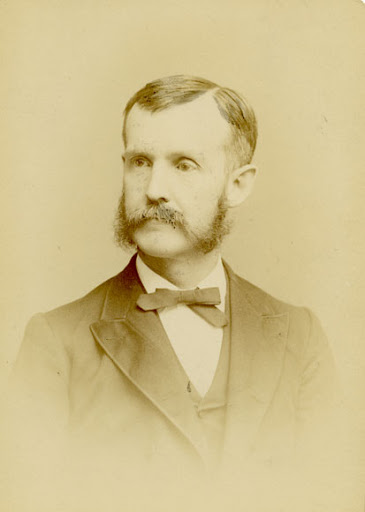
J.R. Miller

How to Live a Beautiful Christian Life

J.R. Miller March, 6 2010 Audio
0 Comments
Choice Puritan Devotional

Sermon Transcript

Auto-generated transcript • May contain errors

100%
How to Live a Beautiful Christian
Life by J.R. Miller We have only successfully
acquired the art of living a Christian life when we have learned to
apply the principles of true religion and enjoy its help and
comfort in our daily life. It is easy to join in devotional
exercises, to quote Bible promises, to extol the beauty of the Scriptures,
But there are many who do these things whose religion utterly
fails them in the very places and at the very times when it
ought to prove their staff and stay. All of us must go out from
the sweet services of the Sunday into a week of very real and
very commonplace life. We must mingle with people who
are not angels. We must pass through experiences
that will naturally worry and vex us. Those about us, either
wittingly or unwittingly, annoy and try us. We must mingle with
those who do not love Christ. We all meet many troubles and
worries in ordinary weekday life. There are continual irritations
and annoyances. The problem is to live a beautiful
Christian life in the face of all these hindrances. How can
we get through the tangled briars which grow along our path, without
having our hands and feet torn by them? How can we live sweetly,
amid the vexing and irritating things, and the multitude of
little worries and frets, which infest our way, and which we
cannot evade? It is not enough merely to get
along in any sort of way, to drag to the close of each long
worrisome day, happy when night comes to end the Life should
be a joy, and not a burden. We should live victoriously,
ever master of our experiences, and not toss by them like a leaf
on the dashing waves. Every earnest Christian wants
to live a truly beautiful life, whatever the circumstances may
be. A little child, when asked, what
it was to be a Christian, replied, For me, to be a Christian is
to live as Jesus would live, and behave as Jesus would behave,
if he were a little girl and lived at our house. No better
definition of practical religion could be given. Each one of us
is to live just as Jesus would, if he were living out our little
life in the midst of its actual environment, standing all day
just where we stand, mingling with the same people with whom
we must mingle, and exposed to the very annoyances, trials,
and provocations to which we are exposed. We want to live
a life that will please God, and that will bear witness on
its face to the genuineness of our piety. How can we do this? We must first recognize the fact
that our life must be lived just in its own circumstances. We
cannot at present change our surroundings. Whatever we are
to make of our lives must be made in the midst of our actual
experiences. Here we must either win our victories,
or suffer our defeats. We may think our lot is especially
hard, and may wish it were otherwise. We may wish that we had a life
of ease and luxury, amid softer scenes, with no briars or thorns,
no worries or provocations. Then we would be always gentle,
patient, serene, trustful, happy. how delightful it would be, never
to have a care, an irritation, a cross, a single vexing thing. But, meanwhile, this fact remains,
that our aspiration cannot be realized, and that whatever our
life is to be made, beautiful or marred, we must make it just
where we are. No restless discontent can change
our lot. We cannot get into any paradise
merely by longing for it. Other people may have other circumstances,
possibly more pleasant than ours, but here are ours. We may as
well settle this point at once, and accept the battle of life
on this field, or else, while we are vainly wishing for a better
chance, the opportunity for victory shall have passed. The next thought
is that the place in which we find ourselves is the place in
which the Master desires us to live our life. There is no haphazard
in this world. God leads every one of his children
by the right way. He knows where, and under what
influences, each particular life will ripen best. One tree grows
best in the sheltered valley, another by the water's edge,
another on the bleak mountaintop swept by storms. There is always
adaptation in nature. Every tree or plant is found
in the locality where the conditions of its growth exist, and does
God give more thought to trees and plants than to his own children? He places us amid the circumstances
and experiences in which our life will grow and ripen the
best. The peculiar discipline to which
we are each subjected is the discipline we each need to bring
out in us the beauties and graces of true spiritual character.
We are in the right school. We may think that we would ripen
more quickly in a more easy and luxurious life, but God knows
what is best. He makes no mistakes. There is
a little fable which says that a primrose growing by itself
in a shady corner of the garden became discontented as it saw
the other flowers in their mirthful beds in the sunshine, and begged
to be moved to a more conspicuous place. Its prayer was granted. The gardener transplanted it
to a more showy and sunny spot. It was greatly pleased. But there
came a change over it immediately. Its blossoms lost much of their
beauty, and became pale and sickly. The hot sun caused them to faint
and wither. So it prayed again to be taken
back to its old place in the shade. The wise gardener knows
best where to plant each flower, and so God, the divine gardener,
knows where his people will best grow into what he would have
them to be. Some require the fierce storms,
some will only thrive spiritually in the shadow of worldly adversity,
and some come to ripeness more sweetly under the soft and gentle
influences of prosperity, whose beauty rough experiences would
mar. He knows what is best for each
one. The next thought is that it is
possible to live a beautiful life anywhere. There is no position
in this world in the allotment of providence in which it is
not possible to be a true Christian, exemplifying all the virtues
of Christianity. The grace of Christ has in it
potency enough to enable us to live godly, wherever we are called
to dwell. When God chooses a home for us,
he fits us for its peculiar trials. There is a beautiful law of adaptation
that runs through all God's providences. Animals made to dwell amid arctic
snows are covered with warm furs. The camel's home is the desert,
and a wondrous provision is made by which it can endure long journeys
across the hot sands without drink. Birds are fitted for their
flights in the air. Animals made to live among the
mountain crags have feet prepared for climbing over the steep rocks. In all nature, this law of special
equipment and preparation for allotted places prevails. And the same is true in spiritual
life. God adapts His grace to the peculiarities
of each one's necessity. For rough, flinty paths, He provides
shoes of iron. He never sends anyone to climb
sharp, rugged mountainsides wearing silken slippers. He always gives
sufficient grace. As the burdens grow heavier,
the strength increases. As the difficulties thicken,
the angel draws closer. As the trials become sore, the
trusting heart grows calmer. Jesus always sees his disciples
when they are toiling in the waves, and at the right moment
comes to deliver them. Thus it becomes possible to live
a true and victorious life in any circumstances. Christ can
as easily enable Joseph to remain pure and true in heathen Egypt
as Benjamin in the shelter of his father's love. The sharper
the temptations, the more of divine grace is granted. There
is, therefore, no environment of trial, or difficulty, or hardship,
in which we cannot live beautiful lives of Christian fidelity and
holy conduct. Instead, then, of yielding to
discouragement when trials multiply, and it becomes hard to live right,
or of being satisfied with a broken peace and a very faulty life,
it should be the settled purpose of each one to live, through
the grace of God, a patient, gentle, and unspotted life, in
the place and amid the circumstances he allots to us. The true victory
is not found in escaping or evading trials, but in rightly meeting
and enduring them. The questions should not be,
How can I get out of these worries? How can I get into a place where
there shall be no irritations, nothing to try my temper, or
put my patience to the test? How can I avoid the distractions
that continually harass me? There is nothing noble in such
living. The soldier who flies to the
rear, when he smells the battle, is no hero. He is a coward. The questions should rather be,
How can I pass through these trying experiences, and not fail
as a Christian? How can I endure these struggles,
and not suffer defeat? How can I live amid these provocations,
these reproaches and testings of my temper, and yet live sweetly,
not speaking unadvisedly, bearing injuries meekly, returning gentle
answers to insulting words? This is the true problem of Christian
living. We are at school here. This life
is disciplinary. Processes are not important. It is the results we want. If
a tree grow into majesty and strength, it matters not whether
it is in the deep valley or on the cold peak, whether calm or
storm nurtures it. If character develops into Christlike
symmetry, what does it matter whether it be in ease and luxury,
or through hardship? The important matter is not the
process, but the result, not the means, but the end, and the
end of all Christian nurture is spiritual loveliness. To be
made truly noble and godlike, we should be willing to submit
to any discipline. Every obstacle to true living
should, then, only nerve us with fresh determination to succeed. We should use each difficulty
and hardship as a leverage to gain some new advantage. We should
compel our temptations to minister to us, instead of hindering us. We should regard all our provocations,
annoyances, and trials, of whatever sort, as practice lessons in
the application of the theories of Christian life. It will be
seen in the end that the hardships and difficulties are, by no means,
the smallest blessings of our lives. Someone compares them
to the weights of a clock, without which there could be no steady,
orderly life. The tree that grows where tempests
toss its boughs and bend its trunk, often almost to breaking,
is more firmly rooted than the tree which grows in the sequestered
valley where no storm ever brings stress or strain. The same is
true in life. The grandest character is grown
in hardship. Weakness of character springs
out of luxury. The best men the world ever reared
have been brought up in the school of adversity and hardship. Besides,
it is no heroism to live patiently where there is no provocation,
bravely where there is no danger, calmly where there is nothing
to perturb. Not the hermit's cave, but the
heart of busy life, tests as well as makes character. If we can live patiently, lovingly,
and cheerfully Amid all our frets and irritations, day after day,
year after year, that is grander heroism than the farthest famed
military exploits, for he who rules his own spirit is better
than he who captures a city. This is our allotted task. It
is no easy one. It can be accomplished only by
the most resolute decision, with unwavering purpose and incessant
watchfulness. Nor can it be accomplished without
the continual help of Christ. Each one's battle must be a personal
one. We may decline the struggle,
but it will be declining also the joy of victory. No one can
reach the summit without climbing the steep mountain path. We cannot
be borne up on any strong shoulder. God does not put features of
beauty into our lives as the jeweler sets gems in clusters
in a coronet. The unlovely elements are not
magically removed and replaced by lovely ones. Each must win
his way, through struggles and efforts, to all noble attainments. The help of God is given only
in cooperation with human aspiration and energy. While God works in
us, we are to work out our own salvation. He who overcomes shall
be a pillar in the temple of God. We should accept the task
with quiet joy. We shall fail many times. Many a night we shall retire
to weep at Christ's feet over the day's defeat. In our efforts
to follow the copy set for us by our Lord, we shall write many
a crooked line, and leave many a blotted page, blistered with
tears of regret. Yet we must keep through all
a brave heart, an unfaltering purpose, and a calm, joyful confidence
in God. Temporary defeat should only
cause us to lean on Christ more fully. God is on the side of
every one who is loyally struggling to obey his divine will and to
grow into Christ-likeness, and that means assured victory to
every one whose heart fails not.
J.R. Miller
About J.R. Miller
James Russell Miller (20 March 1840 — 2 July 1912) was a popular Christian author, Editorial Superintendent of the Presbyterian Board of Publication, and pastor of several churches in Pennsylvania and Illinois.
Broadcaster:

Comments

0 / 2000 characters
Comments are moderated before appearing.

Be the first to comment!

Joshua

Joshua

Shall we play a game? Ask me about articles, sermons, or theology from our library. I can also help you navigate the site.