Bootstrap
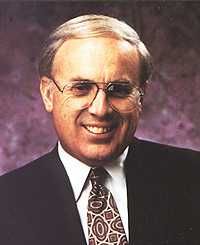
John MacArthur

Questions & Answers #34

Proverbs 1; Proverbs 2
John MacArthur March, 6 2003 Audio
0 Comments
Shepherd's Conference
Question and Answer session with John MacArthur and others.

Sermon Transcript

Auto-generated transcript • May contain errors

100%
Welcome to the 2003 Shepherds
Conference. General session number three,
questions and answers with John MacArthur. Well, today, of course,
is a time for Q&A. This is something that I used
to do for about an hour and then people said, well, could we do
it for two hours? And now I look at the schedule and it looks
like we have three hours of this this time. So I'm being thrown
to the wolves more than ever before. I'm not here to give
the ultimate answer to anything, but I certainly am here to provide
whatever measure of clarification that I can to any issue. And you have to understand that
most of the answers that I'll be giving you are in the footnotes
of the MacArthur Study Bible, so whatever I don't know, I just
have it right here and I can find everything. You know, writing that study
Bible was without question the greatest spiritual exercise of
my life. When you have to literally think
through every word, every phrase, every verse of Scripture, even
the ones you don't write notes on because you've thought them
through and you don't need to write a note, those things which
are self-evident, just that exercise in and of itself is incredibly
cathartic spiritually. It is catalytic. Just going through
all of it, it was a multi-year, you know, it's one of those deals
where it took thirty years to accumulate the information for
it and then it took three years to put it together. Then the
final year was an intense year of about, I would say, just in
all honesty, seven to fourteen hour days for a solid year, living
and breathing with every note in that...in that Bible. In fact,
for that final year I didn't really prepare any sermons, I
just basically preached out of the overflow because I didn't
have time. And so I would just come in and
I would be whatever passage I was in. I just sort of jumped around
during that year and I was so flooded with information that
the only real challenge for me was to figure out how to pull
it all together and make it make sense. It was a great, great,
marvelous exercise for me and if nobody ever read it, it was
well worth the It took about a year physically to recover
from it, but what a privilege to have the opportunity to intensely
commit yourself to that kind of discipline and force to do
that. So I count it an incredible privilege
in my life because of all that I learned and all that the Word
did in working on my own heart. So while I kind of kid about
it a little bit, because I never did want to have my name on God's
book. But it sort of ended up that way, but for me it was a
great exercise. Well, there are some microphones out there. I
think there's one in the center aisles here, each of the three,
and all you need to do is step up there. And is there going
to be somebody there to help you, or are you just going to
pop up and ask questions? Whatever happens, happens. So
just go to a microphone. Try not to get the line any more
than, say, three deep or so, so you don't wind up standing
there too long unless you're already there and then you can
stay. I don't want anybody to feel bad. And we'll just maybe start with a
long line at the right. Give me your name, if you will, and
then your question. I'm Harry Messirian from Ithaca, New York.
We just...before coming here we had a short discussion on
foreknowledge. For the sake of many of us who
don't make a distinction between foreknowledge and foresight,
like God saw the future, that Harry was going to repent and
receive Him, he wrote his name. I believe foreknowledge is different. Would you define, please? Yes,
I think foreknowledge is nothing more than pre-knowledge. And when we talk about pre-knowledge,
then we ask the question, what is the essence of knowledge?
What are we talking about when we talk about knowledge? One thing is clear, foreknowledge
has to be interpreted consistently with what the Bible teaches about
the doctrine of election so that the context in which we understand
foreknowledge is the doctrine of election. And the doctrine
of election explicitly teaches that God chose, uninfluenced
by any person or anything, God in His uninfluenced sovereignty
chose who He would save, wrote their names down in a book before
the foundation of the world. And that no one is saved apart
from that eternal predetermination. That is explicit all through
Scripture. I don't need to say more than that because essentially
tomorrow night I'm going to end up there. We're going to talk
about it. The evidence for the doctrine
of election is replete in Scripture, it's everywhere. So whenever
we talk about foreknowledge, we are talking about foreknowledge
in the context of the doctrine of election. Then on the basis
of that, 1 Peter 1, Paul an Apostle of Jesus Christ to those who
reside as aliens scattered throughout Pontus, Galatia, Cappadocia,
Asia, Bithynia, who are chosen according to the foreknowledge
of God the Father. by the sanctifying work of the
Spirit. The foreknowledge of God links up with God's choosing,
with God's elective purpose. And I think it is nothing more
than a predetermination to know in an intimate way. In the Old
Testament it says, Israel only have I known. That doesn't mean
that Israel is the only nation God had any information about. In John, the gospel of John in
the tenth chapter, Jesus talks about His sheep and He says,
ìI know My sheep.î Heís not saying, ìI know about them, I know who
they are.î Heís saying, ìI have with them an intimate relationship.î
The Old Testament, it says Adam knew his wife and she bore a
son. That does not mean that he knew
who she was. That means he engaged in an intimate union. It is that
kind of knowledge. We even talk about that in the
case of the New Testament in the language of Joseph and Mary.
The shock to Joseph was that Mary was pregnant and he had
never known her. There's plenty of room in the Scripture for
the word no to go beyond some superficial awareness. And so we believe that foreknowledge
is God's prescience, that is to say God's foreknowledge in
the sense of His predetermined intimate relationship that is
linked inextricably with His election. The problem is that people are
looking for an escape hatch from election and they think they've
found the door in foreknowledge. They're looking to somehow undue election and foreknowledge
looks like a way you could sort of loosen the knot. But it isn't. It is simply another way to express
choosing or electing, predetermining an intimate relationship that
goes beyond superficiality. And in fact, the reason people
want to somehow find an escape hatch from election is they somehow
think that election bodes poorly for God's reputation. They think
they need to rescue God from the horrible reality that He took
away determination from human beings, as if God is culpable
of some great iniquity because He determined who would be saved
rather than we determined who would be saved. So really I think
this is born out of pride, human pride. This is that sinful bent
that wants to hold on to human autonomy and give to man the
right to do what The Bible clearly indicates you could never do,
the deaf cannot hear, the blind cannot see, the dumb cannot speak
and the dead cannot live. And that is the condition of
the unconverted man and he has absolutely no capacity to respond
to anything unless he is given life and light by the power of
God. So it comes down to...again,
it goes against the grain of human thinking and I'll get into
that a little bit tonight. enamored by our imaginary autonomy. But even if you did concede foreknowledge,
you certainly don't get God off the hook because if God foreknew
what somebody was going to do and created Him anyway, then
He has the same responsibility because He could have not done
that. It takes you absolutely nowhere and it puts you in violation
of what Scripture clearly teaches. The appropriate way to understand
foreknowledge is not that God is looking down through history
and saying, Oh boy, look what He's doing, I'm going to have
to make an adjustment to that. That ultimately ends up, if you
want to go to the logical conclusion of that, you're going to end
up in openness theology. You're going to end up with the
fact that God is still in that same mode, He's still looking
out and seeing what's going to happen and maybe He doesn't even
know what's going to happen until it happens, right? And then He
tries His best to make something out of it. So the Bible is explicit
about that. Foreknowledge can be defined
as I defined it and provides no escape hatch from that doctrine.
Sir, my name is Carlos Miranda. I'm from Miami, and first of
all, I want to thank you for your faithful ministry. It's
had quite an impact on my life. Thank you, Carlos. I'd like to,
in light of the Reformers' understanding of the ecclesiology of the Church,
passages like Ephesians 2, 11 through the end of the section,
I believe, they held to the understanding that the Church and Israel were
one people. You are very Reformed in many,
many of your aspects. I wondered what led you to deviate
from that view of the church in Israel being one, the new
Israel? Well, that's a very good question,
Carlos, and the answer to that question is because I am first
and foremost, and I suppose only, concerned about what the Bible
teaches. I embrace Reformed theology insofar as it's biblical. Insofar
as it is not biblical, I don't embrace it. I don't buy into
any system. That's why I'm sort of hard to
label. I have been called a leaky Calvinist and a leaky Dispensationalist. And that's okay, I'll leak anywhere
I need to leak. I'm not going to get… Let's come down to the bottom
line here. The Reformation, obviously monumental. They got their theology proper
right. They got their bibliology right. They got their Christology
right. They got their pneumatology right.
They got their soteriology right, even Hamartiology right. Unfortunately
they didn't get to ecclesiology. You know, I think it was part
of that whole progress of dogma. And so, you know, in the battles
that they were fighting, they came right up to the edge of
ecclesiology, I think, and there was a huge failure. That's why
you have such tragic realities as Reformers killing Anabaptists. Or say, Luther vacillating on
whether infant baptism was mandatory or not, and finally caving in
and inventory was that infant baptism was mandatory so that
you could create a Protestant state to offset the Catholic
state and it became a political thing. You know, historically
you can see how they got caught in those kinds of issues and
they never really got their ecclesiology clear, and I think even today
there is within Reformed theology with the vestiges of Catholicism
in infant baptism, an element of theology that is not biblically
defensible. And if you want to hear a little
debate on that, R.C. Sproul and I did a debate on
that. At his conference he asked me to do it and I told him, you're
in trouble. This is your conference, you've
got no case. But you know, he's such a great friend and a great
guy, I said, well let's have at it and see what happens. I'll
never forget his first line after I did my thing, his first line
was, well, MacArthur says it's not in the Bible and of course
he's right. And then he went on to talk. Well, so I'm simply saying there
were some issues there. Eschatology is another issue
that melds together with ecclesiology that never really got cared for. by the Reformers. And as a result,
I think because people...I'm trying to be, you know, sort
of general about this, but because there is so much to honor and
revere and respect the Reformers for, there are just some people
who take the whole thing and with its strengths and weaknesses,
if it was good enough for Calvin, certainly good enough for me.
even though Calvin wrote a commentary on every book of the Bible except
Revelation. And I understand that, they're
heroes, they're monumental. But I think you have to forget
all that and you have to go back to the text. And when you go
back to the text, there's a simple principle here. I believe that
the Bible is interpreted legitimately by one consistent hermeneutic. And that's where you go. I remember
reading a book, and I gave a talk on this at the college a couple
of years ago, a book written by a non-millennialist who said,
ìIf we do not change our hermeneutics when we get to the subject of
prophecy, weíre going to end up as pre-millennialists.î What? So weíve got to change the rules.
So they have a whole different set of interpretive principles
to deal with prophetic literature I don't see that. Let me give
you...let me draw a scheme. I want to take a minute with
this because this is important. If you take a literal, grammatical,
historical approach to Genesis 1 and 2, what do you get? What
do you get? Six day creation, right? You
find evolution in Genesis 1 and 2? No. You say, well what about
day ages? I don't see day ages in there
anywhere. It's not there, it's not written
there. You say, yeah but what about science? Forget science
as if science never existed. You're living 500 years ago and
you read Genesis and you don't know anything about anything,
you're not going to find Darwin's theory there, or any form of
it because you're just taking it at face value. You're just
interpreting it. You're not even going to find
something in the gap between verse 1 and 2. I have a gap in my Bible but
nothing's in it. And it's a very small gap, you
couldn't get anything in it. So you can just take it at face
value. That's why I wrote The Battle
for the Beginning, that's why I labored for a year to go through Genesis
1, 2 and 3, to just say, here's what it says, here's what it
says. And the rest of Scripture supports that and so does science
because real science understands reality. And I really believe I want to
start my Bible with the same literal, historical, grammatical
interpretation that has...that is legitimate in any interpretation
of an ancient document. And I also want to end my Bible
with the same hermeneutic and I don't want to have to be told
that I need to shift that hermeneutic when I get into some prophetic
literature, any more than I get into the literature of origins,
I want to invent another interpretive scheme. And I also can't imagine
anybody writing a book writing a book so complete as this book
that starts from before creation and ends after creation, and
writing everything throughout that book with such amazing precision,
and then coming to the end and saying, Who would write a book like that?
You know, you can make it mean whatever you want. I don't really
care. Ah, 70 A.D. works for me, if
you want that one. Who would write a book like that?
God is very precise. I just take everything it says.
If it says there's going to be a thousand-year millennial kingdom and Satan's
going to be bound, I look at that and I say, Oh, there's going
to be a thousand-year kingdom and Satan's going to be bound.
What else am I supposed to do? Well isn't there another hermeneutic
for that? What other hermeneutic? And if you tell me that that's
not what it means, Then who's going to tell me what it means?
If God's not clear, who's more clear? Maybe you could tell me. Now, all that to say, the Old
Testament promises the Kingdom to Israel, does it not? The New
Testament promises the salvation of Israel, does it not? In the
Old Testament when God promised cursings to Israel, were they
received literally on Israel? Yes. God promised blessings on
Israel, will they be received literally on Israel? Yes. You
can't split the passages of the Old Testament and say, well you
get all the curses and the church gets all the blessings. You can't
do that, that's completely arbitrary. Now some of you are saying, Oh
boy, he's a dispensationalist, he's a closet dispensationalist.
I will tell you my entire dispensational system and I don't need a chart.
I don't need any kind of chart. Here's my dispensationalism.
I believe in a literal interpretation of the Bible and I believe God
made a promise of a literal kingdom for Israel, period, paragraph. That's my system. Well what about
human government and what about innocence? That's not biblical
stuff. That's in the footnotes of another
study Bible. You're not going to find it in
mine. But look, I am just a simple guy. I take the Word of God at
face value. I will not go beyond what Scripture
says. I will not come below what Scripture says. I land where
the Bible lands. What else can I do? And my reason
for believing in a future in Israel, for the nation's salvation
and for all the promises of God to Israel in the Abrahamic Covenant,
all the promises of God to Israel in the Davidic Covenant, all
the promises of God even to Israel in the New Covenant Romans 11
that they would someday come to salvation and way back in
Zechariah they would even look on the one they had pierced and
mourn for Him as their only Son. I believe that's going to happen and I
believe Jesus Christ is going to come back to the Mount of
Olives because that's what it says. If that's not what it means,
then who in the world is going to tell me what it means? If it
doesn't mean what it says, then Pandora's box is open. That's
why it's very hard to write a commentary on Revelation if you don't take
a literal view of the book. Now I understand that not everything
can be clear, but I just believe that what the Bible says is going
to happen is going to happen. Israel is going to be saved.
Jesus is going to come back and He's going to put His feet on
the Mount of Olives. Nations are going to gather there. He's
going to set up His Kingdom, Israel having already been saved
in a time of great Tribulation. is going to be brought into the
Kingdom, those who are the sheep are going to enter the Kingdom, the
goats are cast out of the Kingdom into the Kingdom they go, receiving
all that is promised to them, reconstituting, as Ezekiel says,
the Old Testament sacrifices as memorials and as they look
forward to the glorious cross of Jesus Christ, they will also
celebrate the Lord's Table in the Kingdom with Christ as well.
All of that is simply to be taken literally and it all will unfold
the way the Scripture says. That really is the extent of
my view of dispensationalism. There is a future for Israel
because that's what it says. And I don't see anything in the
Scripture that replaces those promises with the church. And
so that's where I land on that. In light of that, John, could
you explain Ephesians 2, 11 through 22? Well sure, that's talking
about the church. That's absolutely talking about
the church. The middle wall of partition has been broken down
between Jew and Gentile in the church. He's made two into one new man,
verse 15. He's reconciled both in one body
to God through the cross. In the church there is Jew and
Gentile. That's all that's saying. And the true Christian Jew is
identified by Paul as the Israel of God. That's the true Christian
Jew. So all Ephesians is saying is
that the church has made up the new people, the new witness,
Israel having been unfaithful. God calls a new people into existence,
the church. and they are both Jew and Gentile
in the body of Christ. This in no way obviates the promises
of God to Israel. Romans 11, as God...I say then,
God has not rejected His people, has He? May it never be...may
it never be. Not only has He not rejected
His people, but He hasn't changed His covenant. He goes on in that
eleventh chapter to talk about how Israel as a nation will be
grafted back into the place of blessing, how it has to be that
way because of verse 28. From the standpoint of the gospel,
they are enemies for your sake. From the standpoint of God's
choice, they are beloved for the sake of the fathers for the
gifts and calling of God are irrevocable. Whatever God promised
to Israel, He must deliver to Israel because His gifts and
callings are irrevocable. All Israel will be saved. That is the promise of Scripture. And I think it's certainly supported
in the New Testament, but I think the primary reason that I believe
in a future for Israel is Old Testament. I mean, everything
hinges on that, absolutely everything. All the promises of God to Israel
which He said He would never forget, are tied to their salvation. And I believe in the future there
will be the national salvation of the remnant of Israel. Two-thirds
of the rebels will be purged out, the remaining will believe
they will receive all the fulfillment of Davidic and Abrahamic promise
in the Millennial Kingdom over which the Lord Jesus Himself
will reign, after which you have the new heaven and the new earth.
Okay? Stan Martin from Bonners Ferry,
Idaho. I was recently reading an article by Joe more craft
in which he quoted from the Auburn Avenue pastor conference. And
some of the quotes there were such things as the soul of the
Reformation are not enough and since works are necessary for
sanctification, therefore necessary for justification. Many other
quotes that were quite amazing to me, and I noticed at least
one of the speakers at that conference was from a Reformed background,
actually from my home state. To your knowledge, are there
others of the Reformed background endorsing the new perspective
on Paul? And if so, why would, in your estimation, a tradition
which was so instrumental in keeping those solas at the forefront
now abandon them? You know, why questions are for
God to answer? I mean, I ask that question,
why? Why would you do that? But there's
no question in my mind that there are people who have had a very
strong position in the past, sort of dead center on historic
Reformed theology who are moving that direction. And some of them
very notable, some of them well-known. as to why they are drawn that
way? I don't know. You know, I can't answer the
why, but yes, there's no question. You know, it is one of the griefs
of my life, and maybe just because I only live in this one little
piece of time, it seems to me the fluidity of everything we
hold precious is just frightening. It seems like every... I grew
up, for years of my life, you know, everybody who was a Christian
sort of believed the same thing. And we were fighting the cults. And then all of a sudden, everything
within the framework of historic evangelicalism began to move.
Everything. And that's why I say the fluidity
of it all, it's just staggering to me. I mean, you feel like
you want to run over and bottle this one and hold on to it. So I just
think that's the... That just seems to be the spirit
of the time, a human pride, a desire for acceptance, wanting to be
novel, wanting to be new, always looking for some novel thing,
or wanting to be esteemed. Pride is a huge thing, wanting
to be esteemed by your intellectual heroes, or accepted in some sort
of quasi-gnostic group, you know, who think they've ascended to
the pure true knowledge. I frankly would be We were talking
about N.T. Wright on the new perspective
on Paul just last night at dinner a little bit. I mean, I would
be absolutely frightened out of my shoes to say, ladies and
gentlemen, I am here to tell you that since the Reformation,
everyone has had it wrong on the doctrine of the gospel.
That's just to me...that is absolutely mind-boggling that anybody would
do that. Or even worse, the openness of God, that everybody from the
beginning of our understanding of the Christian faith has had
it wrong about God. What level of ego is that? Where
you say, the truth has finally arrived with me. That's just
staggering to me. So I don't know what the motives
are for those things. But I'm telling you, man, we
live in a day when everything is moving...everything. And I have often said, I believe
that one of the signs that the Rapture has to be near is that
there are so many theological journals out now that somebody
is going to write an article to overturn everything we believe
if Jesus doesn't come soon. I don't know if I can stand another
assault on another historic doctrine. It just seems to be that everything
is fair game. You know, they...the liberals,
when I was in seminary, the liberals were...the liberals attacking
the doctrine of Christ. That was the big thing when I
was a student, it was the doctrine of Christ. Then I watched the
Charismatics assault the doctrine of the Holy Spirit and just shred
a biblical understanding of the Holy Spirit. Now I'm watching
them attack God. And I'm wondering, who's left? Maybe we're very much near the
coming of the Lord then. would ever imagine. But yes,
I do believe there are people going that direction because
it's academically novel, it's sort
of an elitist posture, and some people want to go with the edge
to be thought of as thinking beyond the hoi polloi. And I
really think it's motivated by that kind of thing. It's a sad
situation. I'm a very loyal person and I
want to be loyal to those who understand and have understood
in the past and have refined and tested things far better
than I. Unfortunately, as I said earlier,
the Reformers didn't do in ecclesiology and eschatology the same thing
they did in those other areas. But where they did their work
in the area of soteriology and where that was hammered out in
the councils and all, I think to assault those kinds of things
is just the height of folly and must be driven by either pride
or the ignorance that comes to a darkened heart. OK. Mike Berry from Riverside, our
churches embraced expository approach to preaching as we were
trained at the master seminary, but recently there's been some
criticism from a few folks that we're not law gospel enough in
our approach to preaching and we're not embracing a proper
law gospel hermeneutic and we're trying to get our minds doing
what? Not being law law gospel. Yeah, they want more law. Yeah,
I suppose so. We're having a little trouble
getting our minds around it because it really didn't come up in our
training. And I'm just wondering, I know it comes from more reformed
circles. I'm wondering what your take
is on it, how you would respond, whether you've received any similar
criticism. Did you all hear that question? He's saying they're
pastoring a church and they're teaching the Bible and doing
all that, and they came to the seminary. But the people are
bringing up the issue of law and gospel. Is there enough law
to make the gospel make sense? Well, as those who are committed
to the exposition of the Word of God, I think the only issue is, are
you teaching systematically through the Scriptures? You could take Paul and say,
well Paul's ministry to the Corinthian church was somehow sub-par because
it didn't have enough law in it, or whatever. You could say
that about any of his letters, whatever one you wanted to pick
on. But I think it's artificial to sort of superimpose on every
text of Scripture some grid, even if it's a classically Reformed
and legitimate area of theology. I think that At the end of the
day, we all are helped by the systematizing
of things, but systems can be a very, very difficult master. They can be a very good servant.
And when people get their system and want to sort of superimpose
the system, it's like the Lutheran Christological grid. No matter
what verse you're in in the Bible, if it doesn't teach Christ, somehow
you've abandoned the faith. You don't need to put the law
gospel grid in the sort of sacerdotal sacramental tradition that some
of these people in Reformed theology come out of. You don't need to
impose the law gospel grid on every verse of Scripture. They
would do well, some of these people, to jump out of the theologies
they're reading and read Calvin's commentaries. You could read
Calvin's commentaries for pages and pages and pages and not know
he was a Calvinist. You take what comes, you take
the Word at its face value. And I think that is not only
the genius of it, but that is the faithfulness of expository
preaching. I'm preaching through the gospel
of Luke. I can't impose on the gospel of Luke a law gospel grid,
say in terms of Galatians, because we haven't even gotten Jesus
crucified yet. So we're dealing with sin and righteousness. in
a pre-cross environment with the cross, of course, in view.
But I think that kind of pressure is a master that tends to overpower
the exegetical method. Just be faithful to the Word. And I will suggest this to you,
if you're new in a church, If you're new in a church and you
want to preach the most powerful thing you can possibly preach,
preach Christ. Just preach the most compelling,
riveting, dramatic, dynamic, overwhelming person who ever
walked on the planet. And rather than go into a new
church and start preaching theological systems and getting all caught
up in Pauline machinations, which are very important as an explanation
of Christ, assume that what they need is to fall on their faces
before the living Christ and just flood them with the glories
of Christ. And there will come out of that
understanding of Christ a balanced understanding of Law. I mean,
Jesus basically crushed the sinners under the weight of their own
iniquity, even the self-righteous ones. and called them to repentance. So that all plays in. But I really
think you can do yourself a great favor if you just preach Christ. And that's why there are four
gospels. There's so much material there
you could preach your whole life and die, you know, in the last chapter
of John and you would have served the church well. So, you know,
you want to be gracious to people, but you want to let the text
do its speaking. I try not to preach systems ever,
I've been doing this a long time, but always to preach the text
and then the people bow to the text and not to a system. Okay? Roger Daly, Kalispell,
Montana. Forgive me, sir, I'm going to
ask another why question. Okay. Why is it that in particular
TMS graduates are staying for such a short time in today's
churches? More and more. I don't know if we have actual
statistics. Probably should take a look at that and see what the
actual statistics are. It's not been our experience
that they stay a short time. It's been our experience that
some stay a short time. I don't know if there's any generalization
about why that happens or doesn't happen. There are some who've
stayed a very long time in the same place where they came out
of seminary. The only way I can answer the
question is to say it would be as unique as each person and in
each situation. I mean, you could ask the question,
Why did I stay here so long? I don't know why I stayed here
so long, except that this is what God had for me to do and
so I'm still here. When a person leaves the church after a short
time, I don't necessarily want to assume that they were wrong
to do that or that they were right. Conflicts come and conflicts
go and I'm not always able to sort them out. But we would hope,
it would be our goal that when our men go into a church, it
would be with a view to staying there and faithfully carrying
out the work of the ministry. And I tell our guys when I talk
to them in chapel, it's long-term stuff. I mean, it's not going
to happen in a year, it's not going to happen in five, probably
isn't going to happen in ten. You have to go deeper. back and rebuild everybody's
understanding of everything and it's a long-term process. So we encourage them to stay
for the long haul. But then again, you know, God
is at work and He knows where He wants His people and so it's
not always going to be that way. So I do think though, in answer
to that question, it would be good to do...to get a little
information on that because we could pull together some kind
of a survey of our guys and see. It's been our experience that
they do tend to stay maybe longer than average. I think the actual
average stay for a pastor, the last that I saw, is under two
years. I think we're probably a lot
better than that. OK? Daryl Ferguson from Colorado,
would you tell us what you would about your own personal prayer
habits and routine, as well as whatever advice you'd have for
those of us who struggle with distraction during prayer? Yeah,
and that's always such a difficult thing. My life is just so invaded. Darrell, I don't want to...I
don't want to be vague about this, but prayer is...when the Bible says,
ìPray without ceasing,î prayer for me is like...it's like the
most normal response to everything. That's not what you're asking,
I know, but that's where I want to start. I mean, I guess I've been trained
because I'm in a large church and so many people ask me to
pray about this and that and everything, that when I get asked,
the prayer goes up. Because if I have to kind of
remember it, I'm not sure I'm going to remember it. So from
a general standpoint, and I've just written a new book on this,
so it's kind of fresh in my mind, called Lord Teach Me to Pray.
It should be out in a little while. It's just a simple little book
on the basics of prayer. But it's just a matter of viewing
everything that happens in your life with a Godward frame of
reference so that when there's something to be thankful for,
the immediate thing is a prayer of thanks. When there's something
to be concerned about, it's a prayer for wisdom. When there's comfort
to be needed, it's a prayer for comfort. So it's just sort of
a way of life. Now apart from that, quiet times
are rare for me, late at night, early in the morning, after the
phone stops ringing and before it starts. or after the last
crisis of the day and before the first one of the morning
are times of solitude, varying times because of the character
of the interruptions. For me, the focus of prayer takes
place in my study. When I get into the book, I don't
know about you, but I find that my prayer is energized in my
study. I mean, for me study becomes a conversation. God is speaking
through the Word and I'm speaking back. And maybe I'm jogged about
an issue, I keep a little prayer list by my desk. But I think
the time… I need to have the isolation and the quiet in my
life to cultivate that. And it's when I get away from
everything and I'm locked in to the time of study with my
books, in the process of that, that I have my prayer time. Sometimes a period of time, sometimes
slotted in and out of that. sometimes in direct response
to the Word of God. But if you ask me, do I get up
at four o'clock in the morning and pray for two hours every
day? No. You know, there is something
in me that longs for that. But I find myself a sort of tyrannized
person. I've often said I would wish
to live in a different time where there was much more contemplation,
much less traffic. in your life. And I think it's
a challenge for all of us. It's a great challenge for me. My
wife and I talked about the fact that we wanted to read through
the Bible together this year and we had a little schedule
to read through the thing and we're only about...this is what,
March? We're only about a month and a half behind, just trying
to sit down and read the Word of God and, of course, she wants
me to explain it as we go. So I said, look, I bought you
the most high-priced. So we're going through, you know,
well, and Moses said, well, why did he say that? Oh, well, because
of, well, why did they, why did they need to know that? Well,
because back in here, And so, you know, she's just like I am.
It doesn't help me to read something I don't understand. It's very
frustrating. But all of that to say, life is really running
at a fast pace and I think you have to train yourself to be
in a spirit and attitude of unceasing prayer all the time just to sustain
that. I could wish that I had the luxury
of a life...I wish I had only one job, you know. That's something
I have found in my life, no matter how much I pray, I always feel
guilty about not praying enough. Do you all feel that way? I always
feel like that's this huge weight on me. So that would be something
we could pray for each other about, that God would give us
a quiet...a quiet space in our life. I don't know about you,
but even when I go to prepare a sermon, I am so squeezed into
that preparation time that if I don't run at almost a fever
pitch through that process, I can't get it done. I can't...I can't
preach every Sunday, every Sunday night, have it put on tape, everything
I ever say put on the radio, broadcast all over the world,
put in a book, you know. I can't do that unless I've...unless
I've done what I need to do to handle the Word of God accurately.
that I'm given, the pressure of that is really relentless
on me. So I do tell you this, I thank
God for all the people in my church who pray for me, and there
are many, many who do and regularly do. And some of you have written
me little notes this week and said that you're praying for
me and that means a great, great deal to me. It's holding up my
arms in this process and I thank you for that. But I will confess
to you, that's the area of my life where I feel that I fail
the most. And if you were to ask my wife,
she would tell you the same thing, that she from time to time will
say to me, I don't feel like you spend enough time in prayer.
And there's just no way around it. I mean, how much is enough?
Never is enough. Never is the amount you pray
enough because the needs never end. The importunity is laid
out in Scripture. And so we're sort of stuck with
falling short at that point. And maybe by honestly confessing
that, we can sort of renew ourselves to that commitment. Occasionally
I enjoy reading biographies because they tend to generate my prayer
life because I read the biographies of people long dead who had great
commitment to prayer and sort of heaped some scorn on myself
from other lives, which is a good catalyst. My name is Mike from
Lake Arrowhead. I've got a strong Calvinist friend
who insists that God hates unbelievers. He likes to quote Romans 9 and
the imprecatory Psalms. His favorite sermon is Sinners
in the Hands of an Angry God, which he distributes to everybody.
Is this an accurate understanding that God hates the non-elect
or the unbeliever, or is that a little overstated? Yeah, it's
out of balance. all things being considered,
it's out of balance. God is angry with the wicked
every day. The Old Testament says that God hates those who
do iniquity. You know, I mean, you could take
the New Testament as well, the Book of Romans, Esau have I loved,
Jacob have I... Jacob have I loved, Esau have I hated. I mean, that's
within the framework of the whole picture. of a God who weeps through the
tears of Jeremiah, of a God who weeps through the eyes of Jesus
and says, ìJerusalem, Jerusalem, how often I would have gathered
you as a hen gathers her brood and you would not. Why will you die,î
says God. You know, I just think thatís
out of balance. I think that kind of whatever
you call it, Calvinism, is unacceptable. Thatís over the top. That's a proud… that's a proud
kind of Calvinism. I think somebody who really understands
the sovereignty of God could only weep, really, over the lost
and be just literally overwhelmed with the love and grace of God
on His behalf. I can't be going around promoting
hate toward the lost. I just think that...I don't think
that's acceptable. You know, we...there are so many
Scriptures jumping into my head, but that is so very out of balance
that I think it's almost...how can
I say this? It's not...it's almost not Christian to think like that. Jesus said, ìLove your enemies,î
didnít He? ìso that you will be sons of
your Father.î You manifest that youíre a son
of God by showing to the enemies love. Thatís the attitude of
God. So I think there is a sense in
which ultimately theyíre going to feel the fury of Godís wrath
and hate. But I think you can make a case. I wrote this book
called The God Who Loves. It might be a book to give to
your friend. God even expresses that He loves. Jesus looked at the...remember
the story of the rich young ruler we talked about the other day?
Jesus looked at him and loved him. I just think that's out
of balance. OK? This is the last question.
We'll do the rest tomorrow, OK? Dave Newton from Cranberry Township,
Pennsylvania. Our leadership board has been
working through the book Biblical Eldership by Alexander Straw.
And in that book is a short section on the principle of first among
equals. And we're really struggling to
how to apply that practically. And some of the questions that
have arisen are, is that the senior pastor, teacher, is there
more than one first among equals? How do the other guys relate
to this guy? I think a simple way to understand that is the
plurality of eldership, clearly Scriptural, but there
are going to be diverse gifts within that plurality and there
are going to be levels of giftedness, the measure of faith, Paul identifies
it, so that some will be Better teachers than others, all teachers,
some better. And usually one will be the best,
sort of standing out. It isn't that he has more power,
it isn't that he has more authority. It is simply that by virtue of
exposure, more exposure to more people, he carries the weight
of influence. In the Apostles, you have twelve,
you have three groups of three. Group one, group two, there are
four lists. Group one, group two, group three. Always the
four are in each...the same group. The first four are always the
same every time they're listed. The second, always the same every
time they're listed. The third, always the same every
time they're listed. The first group we know about, Peter, James,
John and Andrew. The second group we don't know
a lot about, Philip and then it starts to get blurry. In group
three we remember Judas immediately. So they're descending in their
profile in the New Testament. We don't have a lot of information,
that's why I wrote the book Twelve Ordinary Men. They're also descending
in their intimacy with Jesus. The guys in the bottom group
really have very little appearance with Jesus. The middle group
a little bit. The main group is number one.
So we know, and we also know that in those three groups the
first name at the head of each of the three groups is always
the same, so that they had a leader over each group. But the first
name in all four lists is always whom? Peter. And Peter speaks...and
Peter doesn't speak always for Peter. Peter speaks as the representative
of the Twelve. They will all have foundations
of the gates of the New Jerusalem named after them. They will all
sit on thrones and rule over the twelve tribes of Israel in
the glorious Kingdom of Christ. So they bear that equality. They
were all given equally the ability to cast out demons, heal the
sick, raise the dead and called to preach the gospel. They were
the first generation of gospel preachers. They all had that. But there's no question about
the fact that when it came down to the giftedness, the one who
had the largest profile and therefore the largest influence was the
one who spoke the most to the most people. And that's Peter. You come into the book of Acts
and you have the first twelve chapters of Acts, it's Peter
and John traveling. Peter and John are traveling.
John never says one word recorded in Acts. He's with Peter and
he just deferred. Did John have anything to say?
Sure, when he finally got his chance, he wrote, John, 1 John,
2 John, 3 John and Revelation. It was like... all pent up, you know, all the
time he was hanging around Peter. I just think you have to recognize that. You recognize that that kind
of leadership is just reality. It's reality. It's also true,
I think, I would be interesting for you to ask that question
to the men who serve with me here, how I kind of fit into
the whole scheme of things. These men here are great preachers,
great teachers, gifted shepherds. But there's never really a discussion
about who's going to preach because it's just the unique nature of
my gift to do this. And they all know that if I didn't
do this, I can't do anything else. So they would pay me for
nothing. So it's...you know, it's pragmatics
to keep me here, I think. I just think it's a recognition
of the different gifts. I have no authority, as I said.
Listen, there is no such thing as authority that belongs to
the pastor because of his office. The only authority is when you
speak this book. I don't have any authority. I can't...I don't walk into a...I
don't even chair an elders meeting, I don't even...I don't even chair
the staff meeting, they make sure of that. I just go in there
and sit there and they ask me if I have anything to say. I'm
not even usually on the agenda. I just go in there and... It's...I
don't buy this building, build this building, I'm the pastor,
paint that green, you know. My office confers no authority
on me whatsoever. Now I'm the president of the
college. When I go over there, paint that building green. That
is a whole different animal. That's not the church. And if
I need a dose of that, I go over there. Well anyway, we'll go on tomorrow. I tried that at Grace to You
and Phil Johnson didn't buy it. Who do you think you are? As we close this afternoon, I
want to tell you about something that is very, very exciting. Tune in on this one. We've been
doing this now, this is year 25 for these Shepherds Conferences
and we have built such a wonderful camaraderie and this just gets
better every year and it's so rich and so wonderful. And you
know, one of the...I was telling some of our guys some time back,
one of the reasons I invite the speakers to come here. It's not
just to have them speak, it's somewhat a daunting situation
for them and they're willing to do it. But you know, one of
the reasons I want them to come here, I just want them to see You. I just
want them to sing with You. I just want them to be encouraged
because some of them come out of struggling situations and
I just really want them to be encouraged. And I want...we want
that from You. We want to encourage You. We're
here to serve You. That's what we want to do. Well
so many through the years, people have said, We want a relationship
with you. We want a relationship that's
more than a conference. So we decided we're going to
start something called the Shepherds Fellowship and you can belong. It's going to take the Shepherds
Conference and extend it through the whole year. We're going to
produce a magazine that will start out as an online magazine
and probably end up as a bi-monthly print magazine, but it's going
to be cutting edge. We're going to speak to the issues
that face all of us in ministry biblically. We're going to help
you to think through the things that are swirling around. We're
going to provide some online resource material for you, study
resources, exegetical notes, Bible study guides. personal
resources on the pastor's personal life, preaching resources on
expository preaching, counseling resources, even administrative
resources from church management to taxes and things like that.
We're going to provide for you significant discounts on all
material from Grace Church, Grace Bookstore and Grace To You. We're
going to offer you a member-only trip to Israel with the Ibex
faculty. which is a life-changing experience. Seminary videos, classes are
going to be taped and made available to you so that you can increase
your learning. Access to sermons and journals. We're going to provide a sort
of a support network that you can interact with. Just a lot
of things going. Well, it's all in this beautiful
little package here with a CD that you can listen to and information
that you can read about it. If you want to be a partner with
us, you don't have to sign a doctrinal statement, you don't have to
do anything like that. We're just saying, here we are, if
you want to link up, if you want our resources, we're going to
make them available to you. We'll give you a discount when
you come to the Shepherds Conference. I think it's going to be four
hundred dollars a year and that for a church would give you four
sort of memberships for that year and all the resources that
we have would be available to you. And I just...I feel it's
time to start a movement. I mean, a conference isn't enough,
we need a movement. We just need a movement. We need to stand
up, lock arms and start moving this thing against the tide of
what's going on. So when you go out the door,
they're going to give you one of these. This isn't a pressure
thing, do whatever you want. But if you want to be a part of it,
we're going to need you to think about it. There's a...inside
this little packet is a card that says, interest list. Just
tell us if you're interested. We're going to launch and open
it up for membership July 1 and we're going to launch for real
September, the Shepherds Fellowship. There will be a lot more stuff
coming down the way that will more than make up for that four
hundred dollars. I think they're fifty dollars each on top of
that and they can...people can join. There will be a website
with all kinds of things. It's explained in here. This
really was a burden to me and I take the responsibility for
sort of kicking this thing off and saying, look, can't we just...can't
we get some power and some motion and really come alongside men
who are committed to what we're committed to, committed to the
Word of God, biblical ministry and help them be effective. and
join as partners together. So you'll get one of those when
you go out, prayerfully consider what to do. Take a look at that
interest list card and if you are interested, there's a table,
I think, is that right, Nate, out there on the patio where
you can drop off that interest card. All right? Let's have a
word of prayer. Fathers, thank You for this wonderful
time together. We are so blessed to be able
to sharpen each other in these issues and questions and answers
and I thank You so much for the eagerness of the men to understand
things biblically and accurately. Lord, we know that there are
challenging issues in the Word of God and yet at the same time
it is clear, it has perspicuity, it is not vague, it is not ambiguous
and we thank You for that. We thank You that even those
of us who are not many noble and not many mighty can understand
the deep things of God. because the Word is clear and
the Spirit is faithful to be our teacher. I pray right now
for the Shepherds' Fellowship. I want it to be whatever you
want it to be, nothing more, nothing less. But if we can come
along as servants and fellow shepherds and strengthen many,
many others so that there is some force and some energy and
some camaraderie and some partnership that strengthens us all, that's
what we want. We ask that You would only bring
that to pass for Your glory, we pray in Christ's name. Amen.
Broadcaster:

Comments

0 / 2000 characters
Comments are moderated before appearing.

Be the first to comment!

Joshua

Joshua

Shall we play a game? Ask me about articles, sermons, or theology from our library. I can also help you navigate the site.