This is side B of tape number
2. We were in chapter 5. An individual may have theology
without salvation, knowledge without service, faith without
works, organization without animation, ceremonial worship without devotion,
and profession without possession, but there is no spirit in him. God commanded Ezekiel to preach
to dry, unburied bones. They represented not bodies,
but dead souls. Free grace must be preached to
dead souls. The person and work of Jesus
Christ must be proclaimed to them. The manner and matter of
preaching is given. The manner was by command. Ezekiel
preached to dry bones, and God commands preachers to preach
repentance and faith to dead souls. The preacher's authority
is the truth of God's Word. Ezekiel 37, verse 4. He exhorts
his audience to hear the word of the Lord, even though they
cannot hear and understand apart from the Spirit of God. However,
The preacher does not know who the Spirit will enable to hear
and understand. The preacher must do as he is
commanded and leave the results to the Spirit of God." Ezekiel
37, verse 9. The Spirit alone can quicken
hearts, open deaf ears, and give sight to blind eyes. Ezekiel
saw death, but preached life. He saw ruin, but preached remedy. Although these conditions are
prevalent, the preacher preaches life in Jesus Christ. Ezekiel
chapter 37 verses 11 through 14 and verses 22 through 28. Ezekiel addressed the Spirit
of God in verse 9. The Holy Spirit, depicted by
breath and wind in Ezekiel's vision, will be to national Israel
what he is now to the individual Christian. The man of God appeals
to the Spirit of God's open hearts, recognizing the Spirit's sovereignty.
He does not depend on his oratorical ability or the methods of men
to regenerate those he addresses. In connection with Jesus Christ,
the Spirit is breath. John 20, verse 22. In regard
to man, he is the breath of life. He speaks life to the individual
God gave to Christ in the covenant of redemption. The preacher cannot
control the Spirit. He is completely dependent on
Him. He preaches the Word and then looks to the Holy Spirit
to apply the proclaimed message. Knowledge of the sovereignty
of the Spirit does not prevent the preacher from doing what
he is commanded. Chapter 5, Third Division. Reception of the Message of Reconciliation. The person who has been justified
by God before divine justice will be justified by faith before
his own consciousness. Romans chapter five, verses one
and two. This justification is not before
God. The faith of Romans chapter five,
verse one, is on the basis of having been justified, but now
we are justified before our own consciousness. This is the result
of imparted righteousness, whereas the farmer is on the basis of
imputed righteousness. We could never be justified by
faith apart from imparted righteousness. The righteousness wrought out
by Jesus Christ on the cross was imparted to the elect person
in regeneration, which is the act of the Holy Spirit. Having
been made new creatures in Christ Jesus, we are justified by faith
before our consciousness on the basis of imparted righteousness. The use of the word, quote, therefore,
close quote, un, in Romans chapter 5, verse 1, shows that Paul was
giving the conclusion on his arguments concerning righteousness,
imputation, justification, and faith. He had used Abraham as
an example of the life of faith. Therefore, on the basis of what
Paul had given on the subject discussed in Romans chapter 4,
being justified, an arius passive participle of decio, which means
having been justified, by ecce, ablative of means, which means
by means of, faith, we have, a present active indicative of
ecce, peace with God through dea, ablative of agency, our
Lord Jesus Christ, by dea, ablative of agency, which means through,
whom also we have, perfect, active, indicative of echo, which means
permanently have, access, by faith into this grace wherein,
in which, we stand, perfect, active, indicative of histamine,
which means permanently stand, and rejoice in a P, dative of
reference, which means upon the basis of hope of the glory of
God. For clarification, I'll reread
that verse without the Greek interruption. Quote, being justified
by faith, we have peace with God through our Lord Jesus Christ,
by whom also we have access by faith into this grace wherein
we stand. and rejoice in hope of the glory
of God." Romans chapter 5 verses 1 and 2. Having been justified,
we have peace. The basic meaning of the word
justify, dekaio, is to declare. The arias tense here denotes
a once-for-all justification. It is a completed act that is
looked upon as being finished before the believer's consciousness.
Having been declared righteous by the sovereign God, justifying
righteousness is revealed through faith. The justifying act of
God is followed by an appropriating act of faith, which is the fruit
of regeneration. Faith, which is the gift of God,
is the experience of justification that results in a life of faith.
Justifying faith before the human consciousness is not passive,
it is active. However, in his justification
before God, the sinner is passive. God's act initiated his action. His justification is manifested
by the regenerated person's faith. He is commanded to believe, but
righteousness and justification before God are not commands.
Justifying faith is not faith in one's faith, but it is faith
in Christ before our consciousness. The righteousness of God and
the justification by God are understood by faith, because
it comes out of faith, which is the gift of God. God-given
faith comes directly to Jesus Christ, abides in Christ, and
finds His promises to be true. There is controversy over the
preposition by, ek, which is used in connection with faith
in Romans chapter 5, verse 1. Some believe it is the ablative
of source. They claim that we are justified out of our faith.
If it were source, it would be having been justified out of
the source of faith. On the contrary, it is the ablative
of means. One is justified by means of
the faith God gave him when he regenerated him. Conclusively,
faith is not the ground but the instrument used before one's
own consciousness. The Roman Christians were already
justified before God on the basis of imputed righteousness of Christ
on behalf of the elect. A critical study of the word
for, quote, we have, close quote, echo, of verse one, will show
that it is questioned by many who believe the word is spelled
with the Greek character omega rather than omicron. If it were,
the verb would be a present active subjunctive. There is a difference
between the indicative and the subjunctive moods. The indicative
mood is factual and the subjunctive mood is the first step away from
reality. The peace that the justified
have is not peace that we may have, but it is peace that we
have because of justification having already taken place. We
are presently having peace with God through our Lord Jesus Christ.
through whom we also have permanent access by faith into His grace
upon which we permanently stand and rejoice in hope. Through
Jesus Christ we have permanent access into this grace upon which
we have permanent standing. A companion passage is Ephesians
chapter 2 verse 18. Quote, for through Him we both
have access by one Spirit unto the Father. In Christ we have
boldness and access by faith of Him. Ephesians chapter 3 verse
12. The Spirit of Christ, Spirit
of regeneration, is the introducer. Access comes from the introduction.
The regenerate person is introduced. The grace given involves both
imputed and imparted righteousness. Standing is our permanent position
in Christ. Wrapped up in the perfect tense,
completed action in past time with continuing results, of the
verb, quote, we have, close quote, of Romans chapter 5 verse 2,
we have present and permanent position and eternal benefits.
The past, present, and future are portrayed in Romans chapter
5 verses 1 through 3. Having been justified is past.
We are having access as we are having peace is present. The
fruition of hope, which is the glory of God, is future. The
doctrinal truths considered in the first two verses work in
our lives. Verse 3. Therefore, we glory
in tribulation. The Greek word for tribulation
is the dative plural of thalipsis, which means tribulation, trouble,
distress, persecution, or hard circumstances. Tribulations produce
Perseverance, and Perseverance produces Character. We can boast
in Tribulation, permanently knowing, perfect active participle of
Oida, which signifies permanent knowledge, that Tribulation produces
Perseverance. The word Patience, from Upamang,
can be translated Perseverance. Genuinely saved people will endure
to the end. They will not go out from us
because they are of us. Perseverance is not in order
to be saved, but it is a manifestation of salvation. The Greek word
for experience, dokomi, can also be translated character, verse
4. Christian character is developed
in the life of every Christian. The absence of it indicates that
one has no grace. Christian character produces
hope, and this hope is not disappointing, verse 5, because it has Jesus
Christ as its foundation. Chapter 6 The Fruit of Saving
Faith The person who has been justified
before God and before his own consciousness lives a life of
faith. The things he does do, do not justify him before God.
His life of faith is the fruit of God's already having declared
him just. Justification by works follows
the transition from spiritual death to spiritual life. Chapter
6 First Division Life of Faith Preceded by Quickening Paul,
in his instruction to Titus, commanded him to remind those
to whom he ministered that they had been cleansed in regeneration.
Therefore, they should be concerned about good works. Titus chapter
3 verses 1 through 11. Continually reminding saints
of the things about which they are acquainted is an important
part of the ministry. Christians need frequent remindings
because we are so forgetful and neglectful. Therefore, We must
never become intoxicated with fragments of Scripture. Any person
who majors on just portions of Scripture without considering
the whole is a heretic. Such intoxication causes blindness
to the whole of Scripture. Christians love all the Word
of God. Those who become intoxicated
with fragments will never have a clear understanding of the
truths of God. Many who read and study the scriptures
have enthusiasm for certain things, but in their fervor they lose
their balance for lack of grace. Seven qualities of a good citizen
are presented in Titus chapter 3, verses 1 and 2. 1. Be subject
to rulers and authorities. 2. Be obedient. 3. Be ready to every good work. 4. Be peaceable. 5. Do not be brawlers. 6. Be considerate. 7. Show humility. The evil actions
of men are displayed in Titus chapter 3 verse 3. This is the
factual portrayal of every person born in the world. Every recipient
of grace has been dug from this pit and raised from this dunghill. Isaiah chapter 51 verse 1 and
1 Samuel chapter 2 verse 8. The same consecutive but day
is used in Titus chapter 3 verse 4 and in Ephesians chapter 2
verse 4 to show the contrast between what we were by nature
and what we are by God's grace. Both epistles show the transition
from death to life and the justification by works before men which follows.
Both emphasize the positive and the negative sides of the Christians
walk of practical holiness. A positive attitude based on
biblical principles will cause the child of God to take a negative
stand towards that which is contrary to revealed truth. Quickening
by the Spirit of God precedes good works. Having been saved
by grace, we are enabled to live the Christian life. Quote, having
been saved by grace, close quote, is the correct translation of,
quote, by grace you are saved, a perfect passive participle
of sozo. Ephesians 2, verse 5. The Apostle Paul spoke of a particular
grace. For by grace are you saved through
faith, and that not of yourselves, it is the gift of God. Ephesians
2, verse 8. In the Greek text, a definite
article, te, precedes the word grace, dative of charis, which
means grace, kindness, mercy, goodwill, favor, undeserved favor,
etc. There is no indefinite article
in the Greek, therefore the definite article is included for a purpose.
The presence of the Greek article calls attention not to general
kindness, mercy, goodwill, favor, etc., but to a particular grace. Paul was telling the Ephesian
saints, you are the ones having been saved through, dia, ablative
of means faith, ablative of pistis, which means faith, trust. And
this tattoo, not uk, out of ek, ablative of source, u. It is
the gift of God. The word for saved, in Ephesians
chapter 2 verse 8, is a perfect passive participle of sozo. In
any Greek tense, other than the aorist, which is point-action
past time, the writer always mentions details. Hence, the
details are included in Ephesians chapter 2 verse 8. The act of
God was not only complete, but also perfect. This is the reason
for the use of the perfect passive participle. Salvation is actual
and progressive, and it will be final. The Christian can say,
having been saved, I am being saved, and I will be saved. This can also be worded, quote,
who delivered us from so great a death, and doth deliver, in
whom we trust that he will yet deliver us, close quote. Second
Corinthians chapter one, verse 10. We have been delivered from
the guilt and penalty of sin. We are presently being delivered
from the power of sin by the indwelling grace of God. We shall
be delivered from the presence of sin when we are glorified.
The child of God is positionally sanctified, and His progressive
sanctification will continue until He is glorified. Believers
are presently possessors of a completed past salvation in the present.
The salvation completed in the past has present continuing results. We are presently enjoying it.
Glorification will be the consummation of God's completed salvation
in the elect in the future. Both you are and the ones having
been saved must be connected in the translation. The Greek
construction gives us what is called a peripheristic perfect. The Greek word for you are, present
active indicative of I am me, adds a durative force to the
present aspect of one's salvation. Both grace and faith are God's
gifts. They are feminine gender in the
Greek text. Both this and gift are neuter
gender in the Greek text. The gift is the antecedent of
the pronoun this because both grace and faith constitute God's
gift and salvation which is not out of you. Hence, the gift is
not out of you and the faith is not out of you. God gives
both. Salvation in the sense of being
born of God is not by grace and faith. That is, grace being God's
part and faith being our part. We believe through grace. Acts
chapter 18 verse 27. One does not believe and then
get God's grace. Out of God's unmerited favor
one is unable to believe. Grace reigns in planning the
salvation of the elect. in the execution of the plan
and in the consummation of the plan. Therefore, it is of God
all the way. How can a person without faith
exercise that which he does not have? The person who says, I
do, to the exhortation to believe on the Lord Jesus Christ and
be saved, may have believed the message that he heard with his
human faith. The exhorter may then seek to
assure him that everything is all right. But his believing
may be only a human faith, and not faith which is the gift of
God. This is not believing through grace. A decision does not mean
one's decision has saved him. Since faith is God's gift to
us in our being made alive with Christ, it cannot be said that
sinners must exercise faith in order to have faith. The grace
of God, which is unmerited favor, cannot stand with man's faith
or anything in man. Therefore, being born of God
precedes faith. Quote, whosoever, everyone, believeth,
believing, present, active, participle of pastuo, that Jesus is the
Christ, is born, has been born, perfect, passive, participle
of ganao, of God. Close quote. First John, chapter
5, verse 1. His having been born of God is
completed action in past time with continuing results. Therefore,
he is continuing to believe, and he will always believe. He
will never do anything but believe. God does not start something
which he is unable to bring to completion. Philippians chapter
1, verse 6. It is of God in its beginning,
continuation, and consummation. Everyone believing that Jesus
is the Christ has been born of God. He does not believe in order
to be born of God. Salvation before God is not out
of works in order that one may boast. Ephesians chapter 2 verse
9. Religionists boast of their accomplishments, but they have
nothing of which to boast. However, Christians boast of
what the Lord has done, is doing, and will do. We praise the Lord
who enables, not the person enabled. Of Him We are a product having
been created in Christ Jesus. Ephesians chapter 2 verse 10.
This is an explanation of the two preceding verses. The first
part of verse 10 proves that the salvation of verse 8 is neither
out of man nor out of his works. Dead sinners are incapable of
any spiritual movement. A person dead in trespasses and
sins cannot make a move in the direction of God because he lacks
the ability. He is living physically, but
is spiritually dead. Therefore, he must be made alive,
thus enabling him to move in the direction of God. Anyone
who moves in the direction of God moves by the power of the
Holy Spirit of regeneration working in him, and he lives in conformity
with good works. Hence, a creative work of the
Sovereign God is the sinner's only hope. Language, similar
to that in Ephesians 2, verse 10, occurs in 1 Corinthians 1,
verses 18-31. God has chosen for himself the
foolish things of the world to confound the wise, the weak things
of the world to confound the mighty, and low things of the
world, and things having been despised, etc., in order that
no flesh should glory in his presence. All glorying should
be in the Lord. We are God's workmanship created
in Christ Jesus for the purpose of, a P, dative of reference,
good works. Ephesians chapter 2 verse 10.
Good works follow having been created in Christ Jesus. There
can never be a good work until one has become a new creature
in Jesus Christ. A person has been made a new
creature in order that he may walk in the good works. Walking
in the scriptures is living the Christian life. The person born
from above lives in conformity with good works. What God has
done by grace for us is recorded in Titus chapter 3 verses 5 through
7. The history of salvation is recorded beginning with verse
5. Salvation is like a stream flowing through the ages reaching
an elect person here and another there. This stream has its origin
in eternity, where no mind can penetrate and no human tongue
can bring information apart from what God has given. It is sufficient
and complete. No person can tell us about it,
but we have the message given to us by the Holy Spirit through
men of God. Therefore, what we know about
this salvation came directly from God through the Holy Spirit
and through His apostles and prophets. Since salvation owes
everything to grace, God did not save us by deeds in religious
duties. Grace is the source of salvation.
Ephesians chapter 2 verse 5. Regeneration is the preparation
of the elect for salvation. No person by his own intellect
can find salvation. This was demonstrated by the
Athenians who were worshiping the unknown God. Acts chapter
17. Faith is the reception of this
salvation. Acts 16, verse 31. Baptism is
the confession of this salvation. 1 Peter 3, verse 21. Works are the manifestation of
this salvation. James 2, verse 18. Christ's life,
the living Christ who lives in the recipients of grace, is the
support of this salvation. Romans 5, verse 10. Trials are proof of this salvation. 1 Peter 1, verse 7. Hope is the prospect and consummation
of this salvation. Romans 8, verse 24. God has saved
us not by the works of religious rites, but by the cleansing of
regeneration. As a Hebrew of the Hebrews, Paul
had performed many religious rites, but none of them made
any contribution to his being quickened by the Spirit of God.
Regeneration is not the preparation of the sinner for the impartation
of life. It is the impartation of life.
Being born from above and being saved are two different things.
We must distinguish regeneration from embracing Jesus Christ in
a salvation experience. The latter, which is conversion,
is the fruit of the former. The former is the act of the
Sovereign Spirit on the passive sinner. The sinner makes no contribution
to his new birth. Conversion, being saved, is the
result of the regenerated sinner's repentance and faith. Regeneration
enables the quickened sinner to repent and believe. The believing
of John chapter 3 verses 14 through 16 is the result of having been
born of the Spirit in John chapter 3 verse 8. Without being born
of the Spirit, there would be no believing. Man must repent
and believe in order to be saved, not to be born again. Everyone
who repents and believes will be saved. Repentance and faith
are acts of man through God's enablement. The natural man cannot
repent and believe in order to be saved. If the natural man
could repent and believe, he would not be depraved. Religionists
deny depravity when they say an individual by his faith can
repent and believe. They deny the spiritual inability
of the sinner. This is humanism which is so
prevalent among denominations today. We condemn secular humanism,
but secular humanism is not as heinous as religious humanism. Thinking one can be influenced
to spirituality by another is unscriptural. The natural man
cannot repent and believe. Liberals, modernists, Arminians,
and humanists are all in the same category. They all believe
there is a spark in man which only needs to be fanned. Regeneration
is God's giving man the ability to do spiritually what he was
unable to do naturally. Repentance and faith are the
evidences, not the cause of regeneration. Preparatory grace contributes
nothing to the origin of life. Like the origin of seed that
is sown in the ground has no connection with the cultivation
of the soil, the immediate agency of the Holy Spirit is the efficient
cause of regeneration. The word regeneration, palagenesia,
is used only twice in the New Testament. Titus 3.5 and Matthew
19.28. The noun palagenesia means birth
or regeneration. And it can mean the new age as
in Matthew 19.28. It is used to designate the new
birth of an individual in Titus chapter 3 verse 5. The verb ganao,
which is used frequently in the New Testament, means to father
or to give birth to. There are other uses of ganao,
but they do not relate to our subject. This verb means a male
or a female bringing forth a child that has been conceived or the
father's producing the seed for conception. It is used throughout
the genealogy of Jesus Christ to refer to a man's ability to
propagate. Matthew chapter 1 verses 1 through
14. Hence, it can refer to both, but that makes no difference
in the new birth, because the center is totally dependent on
the action of the sovereign Spirit of God. Physically, we were not
begotten by our Father's production of the seed for our conception,
because we decided to be begotten. Our physical birth was not our
decision. We were a non-entity. Furthermore,
a child is physically totally dependent on the mother to be
brought forth. Being brought forth is not dependent
on the will of the one brought forth. Likewise, our being born
from above is totally dependent on the Holy Spirit, not only
to produce the seed, but also to bring us forth in birth. The
Greek word for renewal Anachronosis, which means renewal, renovation,
or complete change for the better. Like the one for regeneration
is used only twice in the New Testament. Titus chapter 3 verse
5 and Romans chapter 12 verse 2. There is an initial act of
renewal, but there is also a process of renewing. In Titus 3, 5, the
subject is the work of God in the new birth, preparing us for
good works. Hence, this verse records the
starting point of renewal. The process of renewing is recorded
in Romans chapter 12 and verse 2. Paul was appealing to the
Roman brethren, through the mercies of God, that they would present
their bodies a living sacrifice, holy and acceptable to God, which
was their reasonable service. Romans chapter 12 verse 1. This
is performed by the exercise of the mind. They should not
be conformed to this age, but be transformed by the renewing
of the mind, so that they might prove what is the will of God,
that which is good and acceptable and perfect. Quote, And be not
conformed to this world, but be ye transformed by the renewing
of your mind, that ye may prove what is that good and acceptable
and perfect will of God." Romans chapter 12 verse 2. The Greek
verb for be ye transformed is an imperative. Therefore, Christians
are commanded to be transformed by the renewing of our minds
that we might prove by our own experience that which pleases
God. Jesus Christ was a dying sacrifice
which makes our living sacrifice a reality. We are responsible
to offer our bodies as living sacrifices to be continually
dying to the things of the world and living to the glory of God.
We have not only the inward power, but we also have motivation in
sanctification and glorification. We present our bodies to the
indwelling Spirit of God. Our bodies are the temples of
the Holy Spirit. The Holy Spirit resides within
us. We have been bought with a price. Therefore, we should
glorify God in our bodies. 1 Corinthians 3, verses 16 and
17. Also, chapter 6, verses 19 and
20. We are not to be drunk with wine
wherein is excess, but we are to be filled with the Spirit.
Ephesians 5, verse 18. As we yield to the already indwelling
Spirit, we are filled. The dedication of the body, Romans
chapter 12 verse 2, is an act, but the renewing of the mind
is a process. The happiest person in the world
is a Christian who has surrendered to the Lord and is continually
renewing himself through the study and meditation of the Scripture
and yielding himself to the Holy Spirit. He is going on in the
process of renewing his mind in order that by his actions
he proves to himself what is the will of God. Renewing strikes
at stagnation. It is also a safeguard against
sinning. Observe that the organism of the mind, the memory, the
perception, the judgment, etc. is in operation. The mind does
not change in regeneration. The Christian's IQ remains the
same as before. A great change has occurred,
but the Holy Spirit who inhabits the mind and governs it is God
Himself. That is the difference. Hence,
the ruling and motivating power functions on a different class
of subjects. The things with which the regenerated
person was formerly pleased, and to which he yielded his thoughts
and actions, are not gone. but the indwelling Holy Spirit
alters the entire inner mechanism to be pleased with the will of
God and to think on and do spiritual things. The Holy Spirit has been
poured upon us richly through Jesus Christ our Savior. Titus
chapter 3 verse 6. The climax to what God has done
for us in his preparing us for good works is that having been
justified by the grace of that one we may become heirs according
to the expectation of life eternal." Titus chapter 3 verse 7. Paul
told Titus that the Word is faithful and he wanted him to confidently
affirm these things he had been discussing in order that the
ones having believed God may be concerned to maintain good
works. Titus chapter 3 verse 8. These
things are profitable to men. What are good works? There are
many misconceptions of good works. Some classify social services
as good works. Others will resort to confirmation
to this age in order to reach people for Jesus. But good works
are restricted to what the scripture classifies as good works. The
Apostle commanded the Roman Christians to stop continually conforming
to this age. We must not copy the behavior
and customs of this age. People who make a profession
of faith and continue doing what they previously did prove they
do not have the grace of God. We are not entitled to take a
broader view than Scripture describes as a good work. Whatever is not
of faith is sin. Romans chapter 14 verse 23. Upon
the authority of God's Word, anything that is not in harmony
with Scripture no matter what it appears to be doing, is not
a good work. This includes parachurch organizations,
schools, dramas, concerts, gymnasiums, movies, Christmas festivities,
etc. The church's only mission is
to teach and spread the Word of God by the means God has appointed. Only in this manner are works
good and profitable to men. The question may be raised, is
there any underlying principle involved here? If good works
are not limited to the scriptures, then we should be consistent
and take the broad view and embrace all sorts of human inventions.
Human inventions are human inventions, whether they are Roman Catholic,
Protestant, or non-Protestant. Who is God and who is man? persons who create certain principles,
or add to what God has ordained, put themselves on an equal with
the Sovereign God of the universe." Who hath directed the Spirit
of the Lord, or, being His counselor, hath taught Him? Isaiah 40, verse
13. Anyone who adds to God's Word
becomes His instructor, and anyone who alters God's Word becomes
His counselor. All Scripture is given by inspiration
of God, and is profitable for doctrine, for reproof, for correction,
for instruction in righteousness, that the man of God may be perfect,
thoroughly furnished unto all good works." 2 Timothy chapter
3 verses 16 and 17. After Paul had related the positive
side of Christian works, of which he desired Titus to remind his
hearers, He mentioned the negative side. Titus chapter 3 verses
9 through 11. Christians should shun foolish
controversies, genealogies, contentions, strife, and legal strife, for
they are unprofitable. They should reject, after a second
warning, one who creates faction, having known that such a man
has been perverted. One who creates faction is perverted. Knowledge of the truth of God
is necessary to detect those who create factions. The church
that does not practice positive and negative works is not doing
what God commands. This concludes side B of tape
number two.
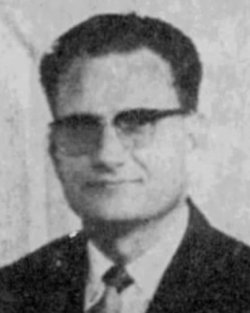
About W.E. Best
Wilbern Elias Best (1919-2007) was a preacher and writer of Gospel material. He wrote 25 books and pamphlets comprised of sermons he preached to his congregation. These books were distributed in English and Spanish around the world from 1970 to 2018 at no cost via the W.E. Best Book Missionary Trust.
SERMON ACTIVITY
Comments
Thank you for your comment!
Your comment has been submitted and is awaiting moderation. Once approved, it will appear on this page.
Pristine Grace functions as a digital library of preaching and teaching from many different men and ministries. I maintain a broad collection for research, study, and listening, and the presence of any preacher or message here should not be taken as a blanket endorsement of every doctrinal position expressed.
I publish my own convictions openly and without hesitation throughout this site and in my own preaching and writing. This archive is not a denominational clearinghouse. My aim in maintaining it is to preserve historic and contemporary preaching, encourage careful study, and above all direct readers and listeners to the person and work of Christ.
Brandan Kraft
Bible Verse Lookup
Loading today's devotional...
Unable to load devotional.
Select a devotional to begin reading.
Examples: Isaiah 53:10, Rom 8:28-30, Psalm 23, grace, love one another
to
This chapter has verses 1---
Sign in to save your Bible lookup and search history.
Comments
Your comment has been submitted and is awaiting moderation. Once approved, it will appear on this page.
Be the first to comment!