The following is an audio transcript
of the book, Justification Before God, Not by Faith. This is tape number three, side
A. We were in chapter six and have
come to the second division. Life of Faith Begun. The life
of faith is exemplified in Abraham. Some verses of Scripture appear
to some to say that Abraham's faith was reckoned as righteousness,
upon which the patriarch was justified. If faith were the
ground of Abraham's justification, Scripture would necessarily read,
quote, On account of Abraham's faith, he was justified, close
quote. A consideration of Romans chapter
4, verses 3, 5, 9, and 22 as well as Galatians chapter
3 verse 6 and James chapter 2 verse 23 will prove that scripture
never uses such terms as on account of faith or because of faith. Contrary to the teaching that
Abraham's faith justified him before God, these scriptures
prove that they refer to a life of faith. The person who has
been given the principle of faith does exercise that principle. But the ability to exercise it
does not justify him before God. If it did, one would be justified
by what he could do rather than what the Lord has done for him.
Abraham's first act of faith is recorded in Genesis chapter
12 verse 1 and is quoted in Acts chapter 7 verses 2 and 3 and
Hebrews chapter 11 verse 8. Quote, Now the Lord had said
unto Abraham, get thee out of thy country, and from thy kindred,
and from thy father's house, unto a land that I will show
thee." Genesis chapter 12 verse 1. This was prior to his name
change. The only way to understand Abraham's
life of faith is to begin by considering his first act of
faith. Abraham, being called, obeyed
to go forth into a place which he was destined to receive for
an inheritance. And he went forth not understanding
where he was going. Hebrews chapter 11 verse 8. To
read and understand Abraham and his life of faith, one would
begin with the latter part of Genesis 11, and especially with
the first verses of chapter 12. Stephen gave a brief history
of this in Acts chapter 7 verses 2 through 8. God appeared to
Abraham when he was in Mesopotamia, before he dwelt in Charn. He
told Abraham to get out of Ur of the Chaldees, and away from
his kindred, and come to a land he would show him. By faith Abraham,
when he was called to go out into a place which he should
after receive for an inheritance, obeyed. And he went out not knowing
whither he went. Abraham's faith began with God
calling him. The word called is a present
passive participle of kaleo, and it means being called. God's
call of Abraham was effectual. There was nothing general about
this call. This call does not come sooner or later to every
man. If it did, it would not be effectual
to every man. The call to Abraham effected
obedience in him. The Bible distinguishes between
general and particular calls. The general call is to go forth
and preach the gospel to all nations. But in the particular
call, the gospel is the power of God unto salvation. The effectual
call gives God his rightful place as the prime mover in the work
of grace. If man were the prime mover, there would be no work
of grace. In Hebrews 11, verse 8, the present
passive participle, kaloumanos, being called, speaks of action
going on at the same time of the action of the leading verb,
and the leading verb is obeyed. By faith, Abraham being called,
obeyed. He did not wait and pray about
it. He did not say he would have to think it through. He was not
sure yet, or he wanted to be positive. This could continue
for months and years. When God has given faith to a
person, that individual will respond to God's call, and he
will act immediately on truth. While Abraham was being called,
he obeyed. Therefore, his obedience was
immediate. He heard the call because he
had an ear to hear. He knew God was dealing with
him. He did not question God. He knew what he should do, and
he did it. Saul of Tarsus responded in the
same manner after God came into his heart and life. Immediately
he was baptized, and immediately he began proclaiming that Jesus
Christ is the Son of God. Immediately and straight away
are translations of the same Greek adverb, ootheos. The kind of faith exhibited by
Abraham and Paul is rare today. Abraham obeyed at the time he
was being called. The Greek word for obeyed is
an Arius active indicative of huarkua. The same word is used
in Romans chapter 6 verse 17. Quote, but God be thanked that
ye were the servants of sin, but ye have obeyed from the heart
that form of doctrine which was delivered you. Close quote. It
is a compound word, the stem of which, akuo, means to hear,
and the prepositional prefix, hupa, means under or subordinate. The word also means to listen
attentively. Both Abraham and Paul knew they
were in subordination to Jesus Christ. One to whom God has given
faith hears and recognizes truth when he hears it proclaimed,
and he immediately responds. He then continues obeying truth
throughout life. Abraham obeyed to go out into
a place which he, quote, should after, close quote, an ariest
imperfect indicative of mellow, which means must, be going, be
about, intend, or be destined to receive. Destined is the better
word here. Abraham was destined to receive
the place God promised him. He was predestinated to do what
God had planned for him. By faith, Abraham being called,
obeyed to go forth into a place which he was destined to receive.
The patriarch went out not understanding where he was going. The word
used here for knowing in the Greek can be translated either
understanding or knowing. Abraham acted like a blind man,
following his faithful and skillful guide. He walked by faith, not
by sight. When God commands us to do something,
we should obey and not worry about circumstances. Abraham
was destined to receive an inheritance. Therefore, Hebrews 11, verses
18-19 refers not only to Abraham's posterity, but also to him individually. The very place where he would
sojourn would be the place he was destined to receive as his
inheritance. His offering Isaac and receiving
him alive was a symbol of Christ's resurrection, signifying that
the fulfillment of the promise would not occur until after the
resurrection of Jesus Christ. The greatest test of Abraham's
faith was when he offered up Isaac. Although he did not kill
Isaac, he obeyed God. The sacrifice was accomplished
in Abraham's will before God stayed his hand. He had taken
into account that God was able to raise his son from the dead.
Hence, he received him back in type. Abraham's temporary sojourn
in the land of promise must not be equated with the covenant
of promise. The only thing Abraham acquired before Christ's kingdom
will be established was a burying place. But Abraham looked for
something beyond a burying place. Although Abraham went to Canaan,
from the perspective of time, he has not yet come into possession
of his inheritance. Nevertheless, he obeyed without
reasoning, questioning, arguing, delaying, or objecting. By faith,
Abraham lived in the land of promise. He was a foreigner living
in tents with Isaac and Jacob, the fellow heirs of the same
promise. Christians are in the world, but we are not of it.
This is not our homeland. We are aliens just walking through. The world does not know us and
is unconcerned about our welfare. They love their own. Abraham
looked, imperfect middle indicative of, ek dekomai, which means wait
for, wait, expect, or look forward to, for a city, verse 10. This patriarch was obediently
living the life of faith, expecting a city having the foundations
whose architect and builder is God. Likewise, Christians should
be obediently living the life of faith, expecting the city
that will come down from God out of heaven, the New Jerusalem,
when all things will be new. By faith, Sarah herself received
power to conceive seed." Verse 11. The words, to conceive seed,
are debated among men. Many Greek scholars say this
must apply to the male, not to the female, because the offspring
in Scripture is always referred to as the seed of the man, except
in the case of Christ. The preposition, ais, is in the
accusative case. and the noun katabolon, conception,
is also in the accusative case. The noun sperma is in the genitive
case. Does the seed refer to the seed
of man or does it refer to the ability of woman to receive the
seed and produce posterity? The answer is that Sarah was
given power to receive seed and begin a posterity for Abraham
in answer to the promise God had given to Abraham. And her
conception was even beyond the time for childbearing. She regarded
the one having promised faithful. Hence, she, like her husband,
was living a life of faith. She had laughed when she was
told she would have a child, but she was ninety years of age
and past the age of childbearing. Nevertheless, God gave her power
to receive seed and start a posterity for her husband. Thus, there
came into being many seed from one as good as dead, as the stars
of the heavens in multitude, and as the sand beside the seashore
innumerable. All the patriarchs died in faith,
not having received the promise. Conclusively, their being in
Canaan was not the conclusion of the promise. There is something
else. The patriarchs lived their lives
looking for the fulfillment of the promise. They confessed that
they were strangers and exiles on the earth. They desired a
permanent settlement found only in the Eternal City. If they
were thinking of Mesopotamia, the country they had left, they
had opportunity to return, verse 15. Their minds were not on where
they had been, but where they were going. They lived a life
of faith and obedience with their eyes set on the Eternal City
of God. This brings us to the third division
of chapter six, continually living the life of faith. Many acts
of faith follow the first act of faith. This was true in the
life of Abraham. Based on his faith that God would
make his seed as the dust of the earth and God's command to
arise and walk through the land, Abraham obeyed. Genesis chapter
13, verses 16 through 18. Based on his faith, he obeyed
God and fought and won the battle with Chedor-le-Omer. After his
victory over Chedor-le-Omer, Abraham's assurance was renewed
and his faith was strengthened. Abraham believed God, and it
was put to his account because of righteousness. Hence, Abraham
exhibited many acts of faith prior to Genesis chapter 15 verse
6, which was quoted by Paul in Romans chapter 4 verse 3. Quote,
For what saith the scripture? Abraham believed God, and it
was counted, Arius passive indicative of logizimae, which means reckoned,
counted, put to the account of, calculate, estimate, consider,
etc. Unto him four, ice, accusative
of cause, which means because of, righteousness. The fifth
verse of Romans 4 makes a statement similar to that of verse 3. But
to him that worketh not, but believeth on him that justifieth
the ungodly, his faith is counted for ice, accusative of cause,
which means on account of righteousness. The same is true of verse 9.
Faith was reckoned, put to his account, to Abraham, for ice,
accusative of cause, which means because of righteousness. and
of verse 22, it was imputed to him, but to his account, for
ice, accusative of cause, which means because of righteousness. Abraham had already been justified
before God and before his own conscience. Hence, his justification
was manifested by his life of faith. The righteousness of Romans
chapter 4 verse 3 and 5 is faith righteousness. Quote, For the
promise that he should be the heir of the world was not to
Abraham or to his seed through the law, but through the righteousness
of faith. Close quote. Romans chapter 4
verse 13 Distinction must be made between faith-righteousness
and Christ-righteousness. The elect are not justified on
the basis of faith-righteousness, but on the basis of the righteousness
of Christ imputed to them. There can be no faith righteousness
antecedent to either imputed or imparted righteousness. The
latter are the cause of the former. Faith righteousness makes no
contribution to the righteousness of God that justifies. Furthermore,
it can do nothing subsequent to imputed and imparted righteousness
to assist in the justification of the sinner, because the justified
sinner can do nothing to help obtain what he already has. Justification
is by the righteousness of one, and not the righteousness of
two. God-given faith is not emotion, but devotion, which leads to
a devoted life. This faith is not passive, it
is active. One not only comes to Christ,
but he also continues coming to Christ. 1 Peter 2, verse 4. He not only believes, but he
also continues believing. 1 John 5, verse 1. Abraham's faith of committal
was followed by many acts of faith. Neither Paul nor James
looked at the verb believed, an arius active indicative of
pastuo, in Romans chapter 4 verse 3 and James chapter 2 verse 23
with the emphasis on either the beginning or the consummation
of the action. Both writers looked at the action
of the life as a whole. This is consistent with the text
and the context. Paul was quoting from Genesis
chapter 15 verse 6, which occurred before Abraham was justified
by works in offering up his son Isaac upon the altar, Genesis
chapter 22. Abraham offered up his son several
years after he exercised faith to believe God would give him
a son, Genesis chapter 15 verses 5 and 6. James used the same statement
to speak of Abraham offering up his son. This statement is
also quoted in Galatians chapter 3 verse 6. Considering all the
passages together, one concludes that they refer to the life of
faith. Abraham's whole life, after he had been called by God,
was lived in faith. Paul's testimony of Philippians
chapter 3 verses 8 and 9 harmonizes with his example of Abraham. Quote, Yea, doubtless, and I
count all things but loss for the excellency of the knowledge
of Christ Jesus my Lord, for whom I have suffered the loss
of all things, and do count them but dung, that I may win Christ,
and be found in him not having my own righteousness, which is
of the law. but that which is through the
faith of Christ, the righteousness which is of God by faith." The
faith expressed by Paul embraced the objective righteousness of
Jesus Christ and lived in constant renewal as he reflected on God's
grace. By faith he was able to adapt
to whatever circumstances occurred. The quotation of Genesis chapter
15 verse 6 and Galatians chapter 3 verse 6 also refers to Abraham's
life of faith. Jesus Christ had been set forth,
an Arius Passive Indicative of Pragrapho, having been crucified,
perfect passive participle of Stharu, among the Galatians. Galatians chapter 3 verse 1.
The Galatians had nothing to do with Christ having been set
forth crucified. That was the work of God. Therefore,
Paul was surprised and indignant at their lack of understanding.
He called them foolish, from anotas, which means unwise or
not understanding. This is the reason the legalizers
were causing disturbance among them. The Galatians were lacking
in perception. They had begun in the Spirit.
Did they think they could be made perfect by the energy of
the flesh? Had they suffered many things
for Christ in vain? The apostle was not discussing
their salvation, but their justification before men by their works. Hence,
he used the illustration of Abraham's life of faith, Galatians 3, verse
6. The quotation of Genesis 15,
verse 6, in James 2, verse 23, was to show that the regenerated
person is justified before men by his works. James is teaching
that the person who has the gift of faith will manifest it by
his works. Life demonstrates its invisible
existence by visible fruit. Quote, What doth it profit, my
brethren, though a man may say, present active subjunctive of
lego which means may say He hath faith and have not works Can
that faith save him? if a brother or sister be naked
and destitute of daily food and one of you say arias active subjunctive
of lego which means may say Unto them depart in peace Be you warmed
and filled? Notwithstanding, you give them
not those things which are needful to the body. What doth it profit?"
James chapter 2 verses 14 through 16. Can fruitless faith save? Since faith without works is
dead, from necros, which means lifeless, useless, ineffective,
fruitless, or dead, it cannot save. James chapter 2 verse 17. There is no such thing as fruitless
God-given faith. The life principle of a tree
cannot be seen except as the tree grows its foliage and fruit.
The physical life principle itself cannot be seen. It is invisible
except as it is manifested by movement, hearing, and talking. Eternal life is invisible except
as it is made manifest by what a person does, what he says,
and when he bears fruit. The person justified by works
has already been justified before God and justified by his faith
before himself. What profit is there if anyone
is saying he has faith and has not works? Can such faith save
him? Faith justifies the regenerated
person. Works also justify him, but they justify him before others
and at the same time justify his faith. This signifies that
doctrine calls for practice. Doctrine is only the beginning.
Fruitfulness follows. While Abraham was being called,
he obeyed, and his life was a life of fruitfulness. James is stressing
the truth that where good works are absent, faith is lacking.
Dead faith is without works, and dead works are without faith.
Anyone can say he has faith, but that kind of faith cannot
save him. James illustrated that kind of faith by saying, if a
brother or sister who is destitute of the necessities is merely
told to go in hell, warm yourself, and feed yourself, the person
speaking thus does not demonstrate that he has faith. Many take
this out of context and teach that the church is to feed and
clothe the needy of the world. However, James was not proclaiming
a social gospel. He was demonstrating what true
faith will do for a brother or sister within the local assembly.
The church does have a vital role in taking care of widows
and persons in need within the local congregation. Christians
can be in distress. Paul spoke of his being deprived
of the necessities of life, being hungry, poorly clothed, and maltreated. Nevertheless, he never begged.
There are less than 10 references in all of the scriptures on the
subject of begging, but none of them refer to a child of God.
The record of the blind men in John 9 and Mark 10 refers to
the time of their unregenerate state. When God saves a begging
person, he ceases to be a beggar. The psalmist verified this truth,
quote, I have been young and now am old, yet have I not seen
the righteous forsaken, nor his seed begging bread, close quote. Psalms chapter 37, verse 25. God's seed never beg, no matter
how hungry they may become. Persecution was such in the early
days of the church that many Christians were in great need.
Hence, they sold their possessions and placed the resources in a
common pool to help those in need. This is what James was
talking about. Christians are willing to help
those in the local assembly who are not in a position to help
themselves. The idea that the church is commissioned
to feed, educate, and reform the world is not biblical. God's
people have always been referred to as a little flock. Can you
imagine a little flock feeding, educating, and reforming the
whole world? Instead of being called to do these things, the
church has been called to carry the message that God has committed
to her trust in order that she might reach with the gospel those
God is regenerating, that they might be saved. This is the mission
of the church. Faith is dead if it does not
perform good works. James chapter 2 verse 17. God-given faith does not remain
alone. There may be only a minimal amount
of fruit, but the person with God-given faith will produce
some fruit. This is proved by the parable of the sower, Matthew
13. Doctrine calls for practice.
The person who does not practice the truth, to which he has been
exposed, has not had his heart opened to hear. God opened Lydia's
heart so that, quote, she attended unto the things which were spoken
of Paul, close quote. Acts chapter 16, verse 14. Lydia, a dealer of purple cloth
or dye in the city of Thyatira, was worshipping God. At this
point in time, she may be classified with Cornelius, who also worshipped
God. He was a devout man, feared God,
was generous with his money, and prayed to God. He did all these before Peter
was sent to proclaim the message, whereby he was converted. He
had already been regenerated and prepared for the hearing
of the truth. Lydia was worshipping God because she had already been
regenerated. When the Lord opened her heart
to hear, she followed the Lord in baptism. The baptism of Lydia's
household, or family, is misrepresented by many to teach the household
salvation, even including infants. Infants cannot believe and they
cannot willingly submit to baptism. Although some infants may have
been present in the instances of Lydia, the Philippian jailer,
Cornelius, Crispus, and Stephanus, regeneration by the Spirit of
God and faith in conversion precede baptism. The households mentioned
in the New Testament are the households of Lydia. the Philippian jailer, Acts chapter
16 verses 30 through 34, Cornelius, Acts chapter 10 verses 24 and
44, Crispus, Acts chapter 18 verses 8 through 10, and Stephanas,
1st Corinthians chapter 1 verse 16. None of these offer any proof
of infant baptism or covenant theology. In each case, faith
preceded baptism. The Philippian jailer was guarding
Paul and Silas in the prison when God sent an earthquake to
release his servants. The jailer was terrified, knowing
that some great power had intervened. He brought the two prisoners
outside and asked what was necessary for him to be doing to be saved. They replied, Believe in the
Lord Jesus, and you and your family shall be saved. The Greek word for house, oikos,
can mean house, home, family, household, nation, people, etc. The word family fits the context
in this instance. Acts chapter 16 verse 31. Paul
and Silas spoke the word of the Lord to him together with all
the ones dwelling in his house. The jailer and his family were
baptized immediately. He brought Paul and Silas into
his house and set a table before them and rejoiced greatly, having
believed in God with his whole household or family. Where can
you get infant baptism out of that? Can babies believe? In the case of Crispus, the chief
ruler of the synagogue, he with all his house and many of the
Corinthians were hearing, were active in believing, and were
submitting to baptism. Acts chapter 18 verses 8 through
10. The imperfect tense is used for
both believing and submitting to baptism. The regenerated person
possesses the spirit of faith, 2 Corinthians chapter 4 verse
13. The spirit of faith can and will
act. Faith does not bestow reality
where there is none. The average person believes that
by his faith salvation becomes a reality. If this were true,
salvation would be out of one's faith, which is contrary to the
teaching of the scripture. Subjective faith, God's gift
to the person he has regenerated, is only the channel through which
objective faith flows. Subjective faith alone does not
save. If it did, everyone who claims to have faith, regardless
of what kind of faith it is, would be saved. Saving faith
sees Christ who is invisible. Whom having not seen, ye love. In whom, though now ye see him
not, yet believing, ye rejoice with joy unspeakable, and full
of glory. Although he is not seen with
the physical eye, the person born from above loves him because
the love of God has been poured out in his heart by the Holy
Spirit. Object of faith concerning the
person and work of Jesus Christ gives subject of faith assurance,
power, and victory. Quote, Knowing, brethren beloved,
your election of God, for our gospel came not unto you in word
only, but also in power, and in the Holy Spirit, and in much
assurance, as ye know what manner of men we were among you for
your sake. and ye became followers of us, and of the Lord, having
received the word in much affliction, with joy of the Holy Spirit."
1 Thessalonians 1 verses 4-6. Assurance does not come from
activity or from listening to music, but from the word of God. Everyone believing that Jesus
is the Christ has been born of God, loves God, keeps His commandments,
and overcomes the world. 1 John 5 verses 1-4. The victory that overcomes the
world is our faith. Such faith is anchored in Jesus
Christ who makes hope a reality. Sense works are the fruit of
faith. The Christian shows his faith by bearing fruit. Quote,
wherefore by their fruits ye shall know them, close quote.
Matthew chapter 7 verse 20. Where there is no spiritual fruit,
there is no faith. One is justified by works before
men. Abraham was justified before
men by his works when he offered his son Isaac on the altar. The
purpose of works is to manifest faith. Men see that Abraham's
faith was working with his works. and by the works faith was completed."
James chapter 2 verses 22 and 23. Here is the true definition
of Romans chapter 4 verse 3, which is questioned by many.
Abraham is an example of living faith. The life of faith he was
living justified him before men. This is not talking about his
first act of faith. Like Paul's reference to Genesis
chapter 15 verse 6, in Romans chapter 4 verse 3, 5, 9, 11,
and 22, James referred to the same verse, quote, and the scripture
was fulfilled, Arius passive indicative of plero, which means
fulfilled, completed, or fully realized. which saith, Abraham
believed God, and it was imputed unto him for ice, accusative
of cause, which means because of righteousness, accusative
of dachias, which means a state or quality of one who is righteous. And he was called the friend
of God." James chapter 2 verse 23. The scripture that was fully
realized was Genesis chapter 15 verse 6. Abraham believed
God, and it was put to his account because of righteousness, and
righteousness refers to a state or quality of one who is in a
right relationship with God. In other words, Abraham was not
justified before God by his faith. A study in chronology will reveal
that some 40 years of history had passed between Abraham's
first act of faith, Genesis 12, verse 1, and the record concerning
his life of faith, Genesis 15, verse 6. God's favor flowed to
Abraham through his God-given faith. To emphasize that justification
by works is before men, James said, quote, you see then how
that by works a man is justified and not by faith only, close
quote. Chapter 2, verse 24. He added
the illustration of Rahab, the prostitute, being justified by
her life of faith before men when she received the messengers
and sent them out another way. Verse 25. Rahab, the prostitute,
was no longer a prostitute. God has some from all walks of
life, and he can do what he pleases with his own. God had already
done something for her. The spies were sent to spy out
Jericho. God had already pronounced judgment
upon Jericho. They were spies to Jericho, but
they were messengers of God sent with God's message to Rahab.
A regenerated person never despises God's truth or his ordained means
for the proclamation of truth. Rahab was in accord with the
judgment God had passed upon the people of Jericho. The pronouncement
of judgment on the people of Jericho reminds us of the judgment
God had passed upon the people of the world. One cannot be among
the people of God without violating allegiance to what goes on in
the country or world in which he lives. The messengers had
just been sent. Hence, Rahab was not well informed. Therefore, she did things she
would not have done later. And every Christian will admit
he did things, when he was a babe in Christ, steeped in spiritual
ignorance, that he would not think of doing now. Rahab justified
her faith before men. 1. Her faith was of God. Hence, she was in a position
to receive the messengers, who were also spies. Joshua chapter
2. 2. She confessed her faith when
she said, quote, our hearts did melt, close quote. Joshua chapter
2, verses 9 through 11. 3. She lied about the spies,
which manifested that her faith was not perfect. Her lying, like
David's adultery, is not for imitation or justification of
ourselves in sinning. Unlike most Christians, God does
not hide the sins of His family. He displays all the imperfections
of his family for the world to see. 4. Her faith was the evidence
of love. It was a faith that works by
love. Galatians chapter 5 verse 6. The messengers came in the
front door, but she sent them out a different way. 5. She was
rewarded. Joshua chapter 6. Her family
was spared. A greater reward was the inclusion
of her name in the genealogy of our Lord. Regardless of those
through whom the human nature of Christ would come, He was
protected from all sin. Her name is also inscribed in
the chapter on the Excellency of Faith, Hebrews 11, verse 31. What a reward to have her name
inscribed upon the imperishable scroll of Holy Scripture. James
repeated that faith without works is dead, for emphasis. Quote,
for as the body without the spirit is dead, so faith without works
is dead also. Close quote. James chapter 2
verse 26. Dead faith is without works,
and dead works are without faith. In the trials of the life of
faith, actions and works are blemished. Abraham and Rahab
lied. Moses disobeyed by smiting the
rock twice. Peter denied the Lord, etc. God
forgives the evil in our good actions and works. We must look
at the overall life of faith of every Christian. Every Christian,
like Abraham, Rahab, and others, will demonstrate his faith by
his works. In conclusion, the following
are some established biblical facts concerning justification. 1. God's justification of the
elect is on the basis of imputed righteousness. Romans chapter
8 verses 30 and 33. This is before divine justice.
God's declaration of righteousness on the ground of imputed righteousness
must not be confused with imparted righteousness. Justification, like election,
is before faith unto faith. Abraham had been justified prior
to Paul's reference to his faith in Romans chapter 4 verse 3.
2. Justification by faith is on
the foundation of imparted righteousness. Romans chapter 5 verse 1. This
is before the consciousness of the one justified by God. Therefore,
Abraham had been justified before God prior to his justification
by faith. 3. Justification by works is
on the basis of imparted righteousness. James chapter 2 verses 20-25. This is before men. God, faith,
and works all declare the elect righteous. But the declarations
are before different persons and for different reasons. God's
justification before divine justice on the basis of imputed righteousness
does not actually make the elect sinners righteous. In fact, we
did not even exist. Hence, God could declare Abraham
justified when the patriarch was both non-existent and ungodly
in himself. Faith's justification of regenerated
sinners on the basis of imparted righteousness does not cleanse
them from the guilt and condemnation of sin. It is simply a declaration
to their own consciousness of sins forgiven by both imputed
and imparted righteousness. They were already new creatures
in Christ. Therefore, their faith did not complement God's work
of quickening them. Work's justification on the ground
of imparted righteousness does not give a person standing before
God. He already has that standing.
This has to do with his condition. Although work's justification
does not give one standing before God, it does justify him before
men. Chapter 7 The Protecting Shield
of Saving Faith Doctrine merges into walk, and
walk merges into warfare. Doctrine is of no value unless
it merges into walking worthy of him who has called us by His
grace. The epistle to the Ephesians
goes from doctrine in the first part of the epistle to the walk
of the believer in the middle part and concludes with warfare
in the closing verses of chapter 6. This epistle of such spiritual
elevation and magnitude descends into a battlefield for its conclusion. Jesus Christ won positional victory
for us at Calvary. But recipients of that victory
are expected, by the grace and the power of God, to take the
full armor of God and win conditional victory. The realization that
God's power is engaged in defense of His own enables believers
to fight the good fight of faith. 1 Timothy chapter 6 verse 12. Brethren are exhorted to, quote,
put on the whole armor of God that ye may be able to stand,
close quote. Ephesians chapter 6 verse 11.
The saints go from the inward principle of grace to the external
exercise of that principle. Since Jesus Christ has already
won positional victory for his own in his death at Calvary,
it is now our responsibility by the inward principle of grace
to take the shield of faith and win for ourselves conditional
victory. Doctrine merges into the Christian walk, which immediately
encounters struggling with the forces of evil. Christians do
not wrestle against flesh and blood, but against, quote, principalities,
against powers, against the rulers of the darkness of this world,
against spiritual wickedness in high places, close quote.
Ephesians chapter 6 verse 12. Principalities are authorities. Powers refer to Satan, who has
names of great power. He is called a strong man in
Luke 11, verse 21. He is called the roaring lion
in 1 Peter 5, verse 8. He leads sinners captive at his
will, 2 Timothy 2, verse 26. However, this power is derived
and limited, John 19, verse 11. Hence, Satan cannot do what he
will and shall not do what he can. Rulers of darkness are in
Satan's empire, but his empire is restricted by time. Satan
is already judged, convicted, and condemned, but his execution
is stayed until the consummation of all things. The child of God
also fights against spiritual wickedness, or forces of wickedness. This concludes side A of tape
number 3.
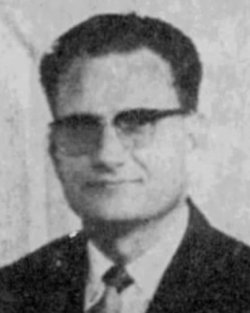
About W.E. Best
Wilbern Elias Best (1919-2007) was a preacher and writer of Gospel material. He wrote 25 books and pamphlets comprised of sermons he preached to his congregation. These books were distributed in English and Spanish around the world from 1970 to 2018 at no cost via the W.E. Best Book Missionary Trust.
SERMON ACTIVITY
Comments
Thank you for your comment!
Your comment has been submitted and is awaiting moderation. Once approved, it will appear on this page.
Pristine Grace functions as a digital library of preaching and teaching from many different men and ministries. I maintain a broad collection for research, study, and listening, and the presence of any preacher or message here should not be taken as a blanket endorsement of every doctrinal position expressed.
I publish my own convictions openly and without hesitation throughout this site and in my own preaching and writing. This archive is not a denominational clearinghouse. My aim in maintaining it is to preserve historic and contemporary preaching, encourage careful study, and above all direct readers and listeners to the person and work of Christ.
Brandan Kraft
Bible Verse Lookup
Loading today's devotional...
Unable to load devotional.
Select a devotional to begin reading.
Examples: Isaiah 53:10, Rom 8:28-30, Psalm 23, grace, love one another
to
This chapter has verses 1---
Sign in to save your Bible lookup and search history.
Comments
Your comment has been submitted and is awaiting moderation. Once approved, it will appear on this page.
Be the first to comment!