Objective Reconciliation The
Father is appointing His Son to execute His purpose, fulfill
His prophecies, and redeem His elect. At His appointed time,
by coming and dying on behalf of sinners, is the foundation
of Objective Reconciliation. 1. His Son is the One who knew no
sin. He who knew no sin was appointed to be the representative of sin
on behalf of the sinners whom God gave to Christ in the covenant
of redemption. 2. The Son of God became the Son
of Man in order that the chosen sons of men might become the
sons of God. 3. Jesus Christ took our misery
in order for us to take His glory. 4. The Eternal Son was born of a
woman in order for the elect to be born of God. 5. Christ
suffered the effects of our sins so that we could experience the
effects of His righteousness, which He provided for us at Calvary. 6. Christ was made the representative
of our sins by imputation, not by impartation. so that the elect
could be assured of being made righteousness by the imputation
and the impartation of His righteousness. 7. Christ Jesus was appointed
to die for the elect in order for us to become the righteousness
of God in Him. This righteousness, even when
perfected in eternity, will not be identical with God's unalterable
character, but it will be the completion of what Jesus Christ
provided at Calvary. It is a fact that all, including
the elect, are enemies of Christ until the elect are regenerated
by the Spirit of God. In God's all-seeing eye, all
the elect were enemies when He chose us in Christ. Objective
reconciliation presupposes an alienation which has been satisfied
by the death of Jesus Christ at Calvary. The reconciliation took place
in the past when Jesus Christ died on behalf of those the Father
gave to Him. Objective reconciliation is the
propitiation of Jesus Christ by which He satisfied divine
justice and enabled the righteous God to look with favor upon the
sinner. Divine justice was satisfied
when Jesus Christ shed His blood and not when an individual is
regenerated. Subjective reconciliation is
possible only by objective reconciliation. Since men are at enmity against
God, reconciliation cannot occur until a work of grace changes
an individual's heart and his attitude toward God is transformed. Reconciliation does not refer
to putting away subjective enmity from the heart of the sinner,
said to be reconciled, but to obliterating the alienation of
that one. There is no reconciliation separate
from propitiation. Propitiation presupposes the
holy displeasure of God. Therefore, it is Godward. The purpose of propitiation is
to remove God's displeasure. Hence, the death of Jesus Christ
propitiated the holy anger of God, rendering Him propitious
to those for whom Jesus Christ died. Propitiation does not constrain
God to love sinners. Herein is love, not that we love
God, but that He loved us and sent His Son to be the propitiation
for our sins. 1 John 4, verse 10. It does not change God's wrath
to love. It is the provision of God's
eternal, unchanging love through the propitiation of divine wrath.
God's love fulfills its purpose in harmony with and not at the
expense of holiness. To say a wrathful God is made
a loving God by propitiation is false, but to say the God
of wrath is the God of love is true. Propitiation is not the
cause but the result of God's eternal love. Propitiation presupposes wrath,
and reconciliation presupposes the anger and alienation implied
in reconciliation. Alienation is twofold, man against
God, and God against man. But your iniquities have separated
between you and your God, and your sins have hid His face from
you, that He will not hear. God does not hear sinners, and
they do not hear Him. John 9, verse 31. God's alienation
from man was removed by Christ's propitiation. Objective reconciliation
secures every person for whom Christ died. Although the New
Testament does not, in so many words, say that God is reconciled
to man, the principle is there. God's displeasure against mankind
and not man's enmity against God comes into the foreground
in biblical reconciliation. Whether reconciliation is viewed
as action or result, God's alienation is in the forefront. The key
to the understanding of the doctrine of reconciliation is that it
begins with the offended and not with the offender. The sinner
has offended God and cannot come to Him. God looks with displeasure
on all sinners. Their only approach to Him is
in the person of Jesus Christ who satisfied divine justice.
Man has no more part in his reconciliation than in his faith or his justification. He is only the recipient of reconciliation. Romans chapter 5 verse 11. Reconciliation
is the work of grace. God's attitude towards the elect
has been changed by the propitiation of Jesus Christ. Hence, God who
is offended is reconciled. That is objective reconciliation. Contrary to the common interpretation
of Romans chapter 5 verses 8 through 11, attention is drawn not to
subjective but to objective reconciliation. If that portion of Scripture
taught subjective reconciliation, it would have to read, quote,
for if when we were enemies We laid aside our enmity against
God through the death of His Son. How much more, having laid
aside our enmity, shall we be saved by His life?" This is not
the teaching. Paul addressed those who were
already reconciled. Action and result are both of
God. Reconciliation is finished. It
was wrought once for all by the death of Jesus Christ. Objective
reconciliation is a historical fact. It was perfected by Jesus
Christ. Subjective reconciliation is
affected by the Holy Spirit in regeneration when he removes
the sinner's enmity against God. The statement, quote, reconciled
to God by the death of his son, close quote, of Romans chapter
5, verse 10, is parallel with, quote, being now justified by
his blood, close quote, of verse 9. The language is identical. Both are forensic terms. As eternal
justification is accomplished outside an individual by God,
reconciliation came to pass in the objective sphere of divine
action. Subjective Reconciliation Objective reconciliation guarantees
the subjective reconciliation of the elect in time. Reconciliation
is a wonderful truth, but it is greatly misunderstood. Its
misunderstanding is evidenced in a popular work on systematic
theology, which dates that there is a reconciliation which of
itself reconciles no one, but which is the basis for the reconciliation
of any and all who will believe. The ideal that there is a reconciliation
which of itself reconciles no one is erroneous. That is like
saying the redemptive work of Jesus Christ did not really redeem
anyone. No one is reconciled to God when
he believes. Every chosen person was reconciled
to God when Jesus Christ died at Calvary. And his reconciliation,
which was objective before the Father at Calvary, guarantees
his subjective reconciliation in time. Moreover, subjective
reconciliation assures us of future salvation. We shall be
saved by His life." Romans chapter 5 verse 10. Not only this, but
we are presently rejoicing in God through our Lord Jesus Christ.
Romans chapter 5 verse 11. Each step towards eternity increases
our rejoicing. The incarnation, life, death,
and resurrection of Jesus Christ were essential to the subjective
reconciliation of the elect in time. their Christian living
and their assurance of future resurrection. The Lord Jesus
Christ became incarnate. There was a personal union of
deity and humanity in the Word made flesh. John chapter 1 verse
14. He was holy and separate from
sin. Nevertheless, the life he lived among the sons of men could
not atone for sin. Union of the divine and human
nature of Jesus Christ alone does not remove the barrier of
alienation. God sent His Son in the likeness
of sinful flesh to condemn sin in the flesh. Romans 8, verses
2 and 3 and 2 Corinthians 5, verse 21. The Incarnation was
necessary to effect the redemption of the elect. Jesus Christ assumed
a human nature in which He could taste death and come forth victorious
through death. He was put to death in the flesh,
but quickened by the Spirit." 1 Peter 3, verse 18. Redemption was necessary to carry
out the purpose of the Incarnation. Jesus Christ took upon Himself
a likeness of human nature, not to set an example, but to become
the Redeemer of the elect. The Lord Jesus Christ arose from
the dead. Calvary marked the completion
of the redemption of God's elect no more than justification by
blood completed their justification. Christ's death on the cross did
provide a remedy for sin, but the remedy left results which
needed further remedy. The resurrection set its seal
to the Incarnation and Atonement and completed both from Christ's
standpoint. Christ's resurrection was the
proof of the Father's acceptance of His atoning work at Calvary.
The death of Jesus Christ atoned for the elect, and His resurrection
justified them. Christ's death was no interruption
of His continuing life. The Lord's statement, quote,
Because I live, ye shall live also, close quote, of John chapter
14, verse 19, was made before his death. Hence, he declared
that his death on the cross would not interrupt his continuing
life. He had already predicted his death when he said, quote,
I am the Good Shepherd. The Good Shepherd giveth his
life for the sheep, close quote. John chapter 10, verse 11. Quote,
I lay down my life for the sheep, close quote. Verse 15, end quote. I have the power to lay it down,
close quote. Verse 18. He also spoke of his
death when he said, "'Verily, verily, I say unto you, except
a corn of wheat fall into the ground and die, it abideth alone. But if it die, it bringeth forth
much fruit.'" John 12, verse 24. It was necessary for Jesus
Christ to come into the world and to go to the cross of Calvary,
to die, and to be raised out from among the dead before there
could be any life for the elect. When Jesus Christ said, quote,
Because I live, ye shall live also, close quote, John chapter
14, verse 19, He was speaking of resurrection life. This is
in view of His death and resurrection. The Lord's affirmation, quote,
Because I live, close quote, of John chapter 14, verse 19,
must be viewed as resurrection life. As a divine person, the
Lord Jesus possesses, independent infinite, immutable, eternal
life. Therefore, in Him is life, and
there will ever be life. John chapter 1 verse 4. All life
proceeds from this independent fountain of life, Jesus Christ
Himself. Through this life, all life is
sustained. By this life, life shall be perfected. Not until Christ's death on the
cross, and His resurrection out from among the dead, could His
life be displayed to the elect. Jesus Christ lives. He was dead,
but He is alive forevermore. Revelation chapter 1, verse 18.
His past death points to resurrection life. The death of Jesus Christ
is the fountain of life for the people of God. Quote, I am He
that liveth, close quote. is a title belonging exclusively
to God, quote, I am alive forevermore, close quote, means Christ's life
shall experience no interruption or cessation. His having the
keys of death and hell manifest His supremacy over hell and death.
He has the authority of death. Who raised Christ from the dead?
The Godhead, the Father, the Son, and the Holy Spirit was
active in His resurrection. The Father made Christ's soul
an offering for sin. Isaiah 53, verse 10. Jesus Christ
voluntarily laid down His life. John 10, verses 17 and 18. He offered Himself through His
eternal Spirit to obtain eternal redemption for the elect. Hebrews
9, verse 14. The Father raised Jesus Christ
from the dead. Acts 2, verses 23 and 24. The Son took His life again,
John 10, verses 17 and 18. The Spirit raised Him from the
dead, Romans 8, verse 11. For what purpose was Jesus Christ
raised? He was raised to prove the Father's acceptance of His
sacrifice, to guarantee the actual justification of the elect, and
to guarantee the resurrection of their bodies. There is more
in Christ's resurrection than a stamp of approval on His death.
The regenerated died with Him on the cross. Romans chapter
6 verses 1-10 They live with Him in His resurrection. Christians
have been raised up and made to sit with Christ in the heavenlies.
Ephesians chapter 2 verse 6 Since they are risen with Christ, they
should set their affection on things above. Colossians chapter
3 verses 1-3 The death of believers with Christ did not occur when
they were regenerated by the power of the Spirit or when they
were converted, but when Jesus Christ died on the cross. They
died in Christ and have been raised in Him. Two, the regenerated
do not live by Christ's death, but by the life that flows to
them through the redemptive work of Christ. Jesus Christ is not
dead. He died once, but He now lives
at the Father's right hand. Because He lives, His own live
in Him. 3. The emphasis is not on death
and Christ's sacrificial death, but on His giving life through
means of death. 4. The emphasis is on the living
Christ and the living believer, not on a dead Christ and the
dead sinner. 5. The cross breaks the power of sin. and the resurrection
opens the power of God to those for whom Christ died. Romans
chapter 1 verse 4. 6. Redemption was more than paying
a penalty, dismissing from suffering, and escaping from hell. It was
also God's way of providing life that the ungodly might live now
and later in His favor. If paying a penalty, dismissing
from suffering, and escaping the punishment of hell alone
were accomplished through Christ's death and resurrection, a dead
sacrifice would suffice. Those were accomplished by Christ's
death, but His life consummates redemption. The believer lives
by the power of the resurrected Christ who lives within him.
God was in Christ reconciling the world unto Himself. 2 Corinthians
chapter 5 verse 19. Universalists think that the
world that Jesus Christ is reconciling to Himself includes all mankind. But the next statement in this
verse restricts the word world, cosmos, to God's chosen ones
by the words their and them, which refer to the elect. When
we were reconciled before God, Our trespasses were not counted
against us because Jesus Christ paid for them in full. He did
not pay for all the sins of all men. Hence, the text proves the
number is restricted. The extent of Christ's dying
for all is understood in the light of all for whom Christ
died. Christ did not purchase universal redemption. As the
Father knoweth me, even so know I the Father, and I lay down
my life for the sheep. John 10, verse 15. Christ's death
is our death. Those who died legally with Christ
at Calvary die practically to sin, subsequent to their regeneration. Therefore, death to sin and the
life of grace have the same source. Those who died and those who
live are the same persons. The reason they are living is
because Christ died for them, and they died with Christ in
His death. The atonement is limited by all soteriologists. All views
or systems of soteriology limit either the extent or the value
of the atonement. Jesus Christ did not die for
everybody without exception, rendering himself unable to save
all for whom he died. This would limit the value of
the atonement. Those who limit the value make salvation a gamble.
They advocate that God wants to save all, but they will not
let him. Hence, God would not know how
many He will be able to save because He would not know how
many will let Him save them. That is limiting the value of
the redemptive work of Jesus Christ. Limiting the extent of
Christ's redemptive work is biblical. Everyone for whom Christ died
will be brought into the ark of safety. God does not fail
in what He purposed. John Owen questioned, quote,
Did Jesus Christ die for all the sins of all men? Or did Jesus
Christ die for some of the sins of all men? Or did Jesus Christ
die for all the sins of some men? Those who have a view, or soteriology,
that says He died for all sins except one, which is unbelief,
reveal that they believe He did not die for all. Jesus Christ
died for all the sins of some, those whom the Father gave to
the Son in the covenant of redemption. Observe the connective for, gar,
which is frequently used in 2 Corinthians chapter 5 verses 1 through 14.
But a different connective, haste, is used in verses 16 and 17. This conjunction expresses consequence
or result. Paul said that we have recognized
a man according to the flesh. On the contrary, we no longer
know him according to the flesh. Jesus Christ was a minister under
the Old Covenant, but since Calvary, He is the Reconciler. Romans
15, verse 8. Paul was not driving a wedge,
in verse 16, between the Jesus of history and the Christ of
faith. Jesus Christ is the Reconciler,
and anyone in Him is a new creation. The word for new, in verse 17,
is from kainos. which is something new in quality.
The other Greek word for new is neos which refers to something
new in reference to time. The old has become obsolete and
something superior has succeeded it. Every believer is a new creation
but something brought about this newness. Former things passed
away and all things have become new. Many erroneously interpret
this to mean that old things have passed away from one who
is regenerated and all things have become new to him. In the
first place, old things have not passed away in the regenerated
person. Paul proved that in Romans chapter
7 by relating his struggle with himself after his conversion.
Old thoughts and desires do not pass away. Furthermore, all things
do not become new. they will not become new until
they are made new in the kingdom. The teaching that former things
have passed away and all things have become new does not refer
to the time of an individual's salvation. The verb translated,
or become, is a perfect active indicative of genomi, showing
that they have become new and remain in a continual state of
newness. The teaching is that all the
former things under the Levitical system The mosaic economy concerning
the ceremonial aspect of the Law have come to an end. The
former things that passed away were the ancient ways of viewing
the Messiah, the Christ. Although the new heavens and
the new earth are future to us, we do have new ways of viewing
Jesus Christ. They are the permanent ways set
forth in the New Testament. All things have become new and
are now in a permanent state of newness. This is the teaching
of the Hebrew epistle concerning the quote, better things, close
quote. Jesus Christ is the substance
of which all those former things were but shadows. This is what
brought about newness of life, which one experiences in Jesus
Christ. A great change had taken place
in God's economy. The things of the new covenant
are superior to the former things, Hebrews chapter 8. Hence, this
ties in with no longer knowing Christ after the flesh. Paul
did not teach that old desires and propensities are completely
taken away in the new birth. That teaching is a misrepresentation
of this text. Christ alone could say the ruler
of this age is coming and he has nothing in me. Paul was saved
from the guilt, penalty, and reigning power of sin, but he
has not saved him from the evil thoughts wicked desires, and
worldly lusts. Nevertheless, Paul was an overcomer
by the grace of God within him. Reconciliation is subjectively
understood. There can be no change without
a foundation. The foundation is one, imputed righteousness,
and two, imparted righteousness. It takes more than imputed righteousness
for this change from hatred for God to reverence for Him. The
imputed righteousness before God on the basis of the finished
work of Jesus Christ guarantees imparted righteousness. Righteousness
is imparted when the Holy Spirit imparts the finished work of
Jesus Christ to the heart of the elect in regeneration, but
it was imputed before it was imparted. Imputed righteousness
is objective and imparted righteousness is subjective. The imputation
of the sins of the elect to Christ and the imputation of His righteousness
to us differ. The imputation of Christ's righteousness
to us took place when Jesus Christ paid for our sins. This guarantees
the impartation of the righteousness of Christ to the elect when the
Holy Spirit regenerates them. Hence, there is a very important
distinction between imputation and the impartation of Christ's
righteousness to God's chosen ones. The following truths concerning
imputation are important. 1. The imputation of Adam's sin
to all men rests upon a different kind of union from that upon
which the imputation of Christ's righteousness to the elect rests.
2. All men were in Adam when he disobeyed, but all men were
not in Jesus Christ when he obeyed. Romans 5, verses 15-19. 3. All men fell in Adam. Some men are redeemed by Christ.
Union with Adam is natural, physical. Union in Christ is supernatural,
spiritual. Union in Adam is universal. Union
in Christ is particular. 2. The imputation of Adam's sin
to all men and the imputation of the sins of the elect to Christ
cannot be the same. We were involved in Adam's sin,
but Christ was not involved in our sins. Depravity did not touch
Jesus Christ. 3. The imputation of Adam's sin
to us and the imputation of Christ's righteousness to the elect cannot
be the same. Original sin is imputed to us
because of our representative solidarity with Adam. Romans
chapter 5 verse 12. And it was imparted to us when
we came into existence. Hence, the imputation and the
impartation of Adam's sin differ. Its imputation is the legal aspect,
but its impartation is the actual aspect. Christ's righteousness
was imputed to all the elect when Jesus Christ died. It is
imparted to each of them at the time God regenerates him. Since
God's judgment has come upon man because of what he is, what
he has done, and what he has not done, Jesus Christ represented
the elect in each of these. If Jesus Christ could, but did
not sin, he could not have represented the elect in what we are, what
we have done, and what we have not done. The only way Jesus
Christ could become a representative of the sins of God's chosen was
in knowing no sin. God justifies the elect on the
basis of imputed righteousness. That righteousness is before
divine justice. God's justification of the elect
on the basis of imputed righteousness is objective righteousness. It
is the perfect work of Jesus Christ outside the believer.
Faith justifies the elect on the basis of imparted righteousness
which occurred in his regeneration before he was conscious of it.
Hence, he understands, receives, and keeps the objective faith
which flowed through his subjective faith. He has assurance and confidence
in the finished work of Christ. Since divine justice is satisfied,
He is satisfied. Imputation is the judicial ground
for either the infliction of penalty or the bestowal of grace. The imputation of the believer's
sin to Jesus Christ is judicial, whereas the imputation of original
sin to man was real. Jesus Christ never became involved
with man's depraved nature. He did no sin. 1 Peter chapter
2 verses 22. In Him is no sin. 1 John 3, verse
5. He knew no sin. 2 Corinthians
5, verse 21. The sins of the elect were not
antecedently Christ's. The sins of the elect became
Christ's imputatively. The virtues of Jesus Christ were
absolute. They were not comparatives. His
holiness did not arise from the absence of temptation. It is
positive virtue. Jesus Christ was not guilty.
Guilt is personal and incapable of transference to Jesus Christ.
No one who is not personally guilty is a transgressor. If
Christ had been guilty in any sense, he deserved to die, and
his death could have no merit. He was treated as though he were
guilty because he willed to stand in the place of the guilty and
pay their penalty. The imputation of Christ's righteousness
does not make the believer as holy as Christ. The precise thing
meant is that which is imputed becomes the judicial basis for
the bestowal of God's grace. The elect were actually justified
in the mind of God when Jesus Christ died for them. Imputed
justification becomes the foundation for imparted righteousness in
sanctification. The word judicial means the legal
way to decide or determine a matter. On the basis of Christ's obedience,
the elect have learned for them a righteousness qualifying them
for heaven. Christ's obedience alone provided
righteousness for the elect. Without righteously settling
the question of the sins of the elect on the cross, Jesus Christ
could not righteously plead their cause on the throne. Pleading
for forgiveness without first suffering for the offense would
be asking God the Father to pass by sin without judging it. That
is impossible. Sin must be judged in either
the individual or the person of Jesus Christ. Sin that has
been judged in Jesus Christ will not be judged in His children.
There is no condemnation to those who are in Christ. Romans chapter
8 verse 1. The peace that was made by the
blood of the cross is accomplished. And having made peace through
the blood of His cross, by Him to reconcile all things unto
Himself, by Him, I say, whether they be things in earth or things
in heaven, and you that were sometimes alienated, and enemies
in your mind by wicked works, yet now hath He reconciled, an
arius active indicative of apaca atalassa." Colossians chapter
1, verses 20 and 21. Reconciliation, which is effective
through the blood of Christ's cross, is not limited to men. It extends to the whole order
of creation, which has been affected by sin. Paul did not say all
men, but all things. Not only sinful men, but also
the created order that was made subject to vanity because of
sin will share in the fruits of Christ's redemptive work.
Romans chapter 8, verses 20 and 21. The statement, ìthings in
earth, or things in heaven,î of Colossians 1, verse 20, should
be contrasted with the ìthings under the earthî of Philippians
2, verse 10. ìThings under the earthî was
omitted from the Colossian reference. Paul was emphasizing the sovereignty
of Jesus Christ in the Philippian reference. The time will come
when every knee will bow and every tongue will confess the
Lordship of Christ, including those in heaven on the earth
and under the earth. People who have died in their
sins were the persons referred to in the Philippian reference.
The Apostle was discussing reconciliation instead of Christ's sovereignty
in the Colossian reference. The statement, things under the
earth, was omitted because individuals who have died in their sins will
never be reconciled to God. Chapter 4 The Necessity of Saving
Faith The necessity of saving faith is revealed in that human
character is basically corrupt. Romans chapter 3 verses 9-12
Depraved man is inwardly corrupt verses 13-14 and depraved man
is outwardly corrupt verses 15-18. Verses of scripture were drawn
from the Mosaic legislation and the prophets to bring 14 horrible
indictments against every person who comes into the world. Paul
presented his argument from the viewpoint of a court scene. One,
the accused are all under sin. Two, the judge, God. Three, the
jury, the deeds of the law. Four, the charge, 14 violations. Five, the prosecuting attorney,
the law. Six, the defense, rested by saying
every mouth is stopped, and seven, the verdict, guilty before God. Human depravity is universal.
It includes Jews and Gentiles. Social, cultural, educational,
and financial advantages are only veneers, which are removed,
and all men stand alike before God. Quote, For all have sinned,
and come, a present passive indicative of hysteria, which means coming,
short of the glory of God." Romans chapter 3 verses 23. The brave
man continually comes short of God's glory. The verdict that
all are under sin is pronounced in verse 9. The character of
the verdict is that it is sin. The dominion of the verdict is
that all are under sin. The extent of the verdict is
that all are under sin. The meaning of depravity is explained
in Romans chapter 3 verses 10 through 12. 1. Every person is
naturally unrighteous, verse 10. Everything that proceeds
from an unrighteous person corrupts. 2. Every person is naturally
without spiritual understanding, verse 11. The Apostle did not
indicate that an individual cannot generally understand the various
sciences of the world. He was not talking about imbecility. However, man is incapable of
understanding the five basic sciences of the Bible. Theology,
Anthropology, Soteriology, Ecclesiology, and Eschatology. He lacks spiritual
understanding. 1 Corinthians chapter 2 verse
14. 3 No man naturally seeks God. Mankind, both Jews and Gentiles,
have gone out of the way. Romans 3.12 Isaiah 53.6 Romans
1.19-21 4. Natural man is unprofitable.
An example of man's unprofitableness was portrayed in Onesimus, Philemon's
servant. Philemon 11. A natural man does
not and cannot do good. Improper motives may prompt him
to social benevolence, but he does nothing for God's glory. The depraved individual is inwardly
corrupt, Romans chapter 3 verses 13 and 14. His throat is likened
to a grave containing the unsealed remains of the dead. His tongue
may charm, but it is deceitful. Beneath his tongue and lips is
a sack of poison likened to a poisonous serpent. The unsaved person's
mouth is full of cursing and bitterness, verse 14. Its fullness
signifies that there is room for nothing else. Poison is manifested
in the area of vocabulary, literature, politics, and religion. The influence
of an unsaved person continues to spread, like waves caused
by a thrown rock in a placid lake, until it reaches the shore
of eternity. The depraved person is outwardly
corrupt. Romans chapter 3, verses 15-18. His feet are swift to
shed blood. Murderers have continued since
Cain murdered Abel, and they will continue until Jesus Christ
comes as King and demonstrates His victory. Destruction and
misery are in the ways of the unsaved. Verse 16. Destruction
is objective and misery is subjective. Destruction is the desire that
is manifested by misery that exists within the hearts of the
unsaved. Their ways are made known by
their evil actions. The plural word, ways, should
be contrasted with Jesus Christ, who is THE way, John 14, verse
6. The ways of the unredeemed are
opposite from peace which is found only in the way. They know
no peace. and they have no reverential
fear of God." Isaiah chapter 48 verse 22. The word law of
Romans chapter 3 verse 19 must be understood not in the restricted
sense of the Mosaic legislation. It involves the whole Old Testament
scriptures. Verse 21. The Old Testament was
regarded by the apostles to have two major divisions, the law
and the prophets. The function of the law is to
impart the knowledge of Romans chapter 3 verse 20. In this verse,
the word law is used in the sense of the Mosaic legislation. Offense
in one point renders an individual guilty of offending in the whole
moral law. The word is used a third way
in verse 27. There it is used in the sense
of the principle of faith. Those under the law include both
Jews and Gentiles. The preposition under, in, locative
of sphere, which means in the sphere of, of Romans chapter
3 verse 19, means in the sphere of the wall, whereas in Romans
chapter 6 verse 14, under, hupah, accusative of measure, which
means under, is used as an antithesis of under grace. The Gentiles
were not outside the sphere of judgment which was pronounced
in the Old Testament. The Old and New Testaments proclaim
that all mankind stand before God as sinners. Although the
Gentiles were not included in the Mosaic legislation, by nature
they observe some of the things contained in the law. Romans
chapter 2, verse 14. Quote, all the world, close quote,
includes both Jews and Gentiles. However, the emphasis is not
that the Gentiles are included, but that the Jews are non-exempt
from the condemnation discussed. The realm in which the guilty
are condemned is, quote, before God, close quote. Romans chapter
3, verse 19. A person may be condemned before
men and not condemned before God. One who is in Jesus Christ
is not condemned before God. No one is unrelated to the law,
which pronounces all men condemned. The justified person is given
standing before the law. The penalty has been paid for
him and the law does not demand further payment. God's law cannot
be disconnected from Himself. God and His law are righteous. God can justify an unjust sinner
only on the basis of the satisfaction of His divine law. He cannot
act unjustly or without regard for the principles of law. The
law demands death as the penalty for sin, and Jesus Christ paid
that penalty when He died in the stead of the elect sinner.
God is the lawgiver. If one could imagine that all
the laws found in statute books were incarnate in one judge,
he could get a small glimpse of the laws of God incarnate
in God. Unlike man-made laws, God's law
is holy, just, and good. Romans 7, verse 12. A human judge
must not condemn the just and justify the wicked. Deuteronomy
25, verse 1. 1 Kings 8, verse 52, and Exodus
23, verse 7. He would act unjustly to pronounce
a convicted criminal not guilty. He has no authority to tell the
criminal that he forgives him and that the offender should
go and refrain from committing the same crime. He would be acting
arbitrarily, contrary to the laws of the land. God does not
act in contradiction to but in harmony with His law. This concludes
side B of tape number one.
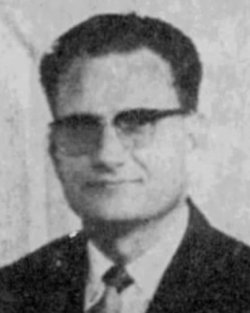
About W.E. Best
Wilbern Elias Best (1919-2007) was a preacher and writer of Gospel material. He wrote 25 books and pamphlets comprised of sermons he preached to his congregation. These books were distributed in English and Spanish around the world from 1970 to 2018 at no cost via the W.E. Best Book Missionary Trust.
SERMON ACTIVITY
Comments
Thank you for your comment!
Your comment has been submitted and is awaiting moderation. Once approved, it will appear on this page.
Pristine Grace functions as a digital library of preaching and teaching from many different men and ministries. I maintain a broad collection for research, study, and listening, and the presence of any preacher or message here should not be taken as a blanket endorsement of every doctrinal position expressed.
I publish my own convictions openly and without hesitation throughout this site and in my own preaching and writing. This archive is not a denominational clearinghouse. My aim in maintaining it is to preserve historic and contemporary preaching, encourage careful study, and above all direct readers and listeners to the person and work of Christ.
Brandan Kraft
Bible Verse Lookup
Loading today's devotional...
Unable to load devotional.
Select a devotional to begin reading.
Examples: Isaiah 53:10, Rom 8:28-30, Psalm 23, grace, love one another
to
This chapter has verses 1---
Sign in to save your Bible lookup and search history.
Comments
Your comment has been submitted and is awaiting moderation. Once approved, it will appear on this page.
Be the first to comment!