The following is an audio transcript
of the book, Justification Before God, Not by Faith. Justification Before God is authored
by W.E. Best, pastor of the South Belt
Assembly of Christ, in the year 1989. Justification Before God,
Not by Faith. extends some 93 pages and is
divided into nine chapters. Chapter 1 Introduction What does it mean to believe
on Christ? A person who asks another to
define a biblical term is unpopular. The average person asked to explain
saving faith would think the request foolish, because he thinks
everyone knows what simple faith is. He would explain that the
athlete has faith that he will win, and a surgical patient has
faith that he will recover. Buddhist, Muslims, and all religionists
talk about faith. The concept that faith is simple
is humanistic. Saving faith is not simple. Saving
faith must not be confused with general faith, which is found
among religionists, politicians, athletes, pagans, etc. A guide who neglects to examine
his route before undertaking to guide is unworthy of the title
guide. A so-called church member who
says he is a believer and has not investigated the meaning
of faith is not worthy of the title of believer. A person who
hears from the pulpit only simple faith and practical directions
is poorly informed. Both salvation and the Christian
life are complex subjects. Therefore, simple terms and directions
will not suffice. A concise definition of faith
by Arminians is that in one sense faith is the gift of God, but
it is God's gift to all who want it and are willing to use it.
It is not given to all because all will not avail themselves
of it. They will not all yield to the moving of the Spirit and
let the regenerating power of God work within them. Contrary
to this Arminian definition, faith is the gift of God Everything
God gives is received, and the recipient recognizes that God
gave it. God-given faith and human faith
are distinct. One, human faith may believe
an infallible object. For instance, the devils believed
God, James 2, verse 19. Furthermore, many people during
the personal ministry of our Lord, who saw the miracles he
performed, believed. but the Lord would not commit
himself to them." John 2, verses 23 and 24. Human faith in an
infallible object is only temporary. 2. God-given faith cannot believe
a fallible object in a true conversion experience. John 10, verses 4
and 5. 3. Religious faith embraces a
questionable object. An example of one with religious
faith embracing a questionable object is his not knowing whether
Jesus Christ is dead or alive, but he thinks he needs him. Most
religionists believe justification is God's reward for a human performance
of faith. Hence, they believe justification
before God is on the basis of their faith. Neither faith nor
works justify one before God. Exhorting a person to make a
decision for Jesus Christ and be saved is erroneous. The decision
is God's, not man's. Justification is not a reward
for the human performance of faith. One is not justified by
making a decision for Christ. If a person begins a discussion
of a subject from the standpoint of logic, he must know his premise. If thinking about law, there
must be a basis for argument, a basis on which reasoning proceeds.
This can be considered from either logic or from law. It is a false
exegesis to take a hypothetical reason and draw an absolute conclusion. The following things may be listed
under what saving faith is not. Number one. Saving faith is not
a particular form of human faith. Faith in a friend and faith in
God would both come under this heading. There are no atheists
among the demons because they believe there is one God and
shudder at the thought. James chapter 2 verse 19. More
than the object of faith is included in faith. Although the demons
had faith in God, the proper object, their faith was out of
the wrong source. 2. Saving faith is not blind trust,
a general intention to believe whatever the church believes. 3. Saving faith is not historical,
the intellectual apprehension of what is preached. This faith
may be the result of education, public opinion, or curiosity
in the unknown. It may be called theoretic, received
in theory but void of practical effects. 4. Saving faith is not temporary. One does not believe for a while
and then cease believing. This type of faith is illustrated
in Luke chapter 8 verse 13. 5. Saving faith is not built on
miracles. The teaching that through faith one may have physical health,
avoid adversities, and have riches is not scriptural. If it were,
none of the patriarchs whose names were recorded in the chapter
on the excellency of faith, Hebrews chapter 11, had faith. True faith
was revealed in their endurance of much affliction. Hebrews chapter
11, verses 33-40. Their faith did not give them
physical health, enable them to avoid adversity, or give them
riches. 6. Saving faith is not vain. 1 Corinthians 2 verse 14. Faith in a dead Christ, a peccable
Christ, or in the wrong object would be vain. 7. Saving faith
is not dead. 8. Saving faith is not based
on feelings. Religious activity is designed
to produce feelings rather than to call forth the exercise of
God-given faith. This is the reason religious
services are made attractive by things which can be seen.
9. Saving faith is not a prerequisite to election, justification before
God, or regeneration. 10. Saving Faith is not a new
organ added to human nature. It is not the working of a faculty
or a new sense added to the five senses we already have. The following things show what
Saving Faith is. 1. Saving Faith is a new disposition,
implanted by the Holy Spirit of Regeneration, which enables
the recipient of grace to believe and embrace Jesus Christ as Savior
and Lord. 2. Saving faith belongs to the covenant
of grace. 3. Saving faith is the gift of
God, which is the fruit of election and regeneration. 4. Saving faith
is called into exercise by the effectual call. 5. Saving faith
involves the mind, heart, and will. The Jewish people looked
upon this as expressive of understanding, affection, and will. The heart
is the seed of these things, and they must all be exercised
for faith to be genuine. 6. Saving faith goes beyond the
purely cognitive process of knowing and perceiving. 7. Saving faith cannot be classified
with any of the ten negative things listed under what faith
is not. God is the author of faith, Christ
is the object of faith, and works are the fruit of faith. The average
professing Christian says the word justify means to make one
righteous before God. If that is true, does a person's
faith or his works make him righteous before God? Neither faith nor
works make a person righteous before God. Although God, faith,
and works declare the elect to be righteous, the declarations
are before different persons and for different reasons. 1. The elect are justified before
God on the basis of imputed righteousness. 2. The person justified before
God is justified by faith before his own consciousness. 3. The
person justified before God and before his own consciousness
is justified by works before others. Justification before
God is on the basis of imputed righteousness. Justification
before one's own consciousness is by imputed and imparted righteousness. The elect are justified by works
before others. Chapter 2 The Author of Saving
Faith God is the author of saving faith. Whose faith justifies
the sinner before God? The Greek noun form of faith,
pistos, means faith, belief, assurance, integrity, faithfulness,
trustfulness, or firm conviction. It should be translated faithfulness
with reference to the faith of God in Romans chapter 3 verse
3. Quote, for what if some did not
believe? Shall their unbelief make the
faith of God without effect? Close quote. Verse 3 may be correctly
translated, quote, for what if some did not believe? Shall their
unbelief make the faithfulness of God without effect? The faithfulness of God is in the genitive case in this
verse. The genitive case in itself is neither objective nor subjective. This is determined only by the
context. The faithfulness of God is subjective,
not objective. God's faithfulness is not dependent
on depraved man. Paul was addressing the Jews,
whose unfaithfulness did not annul God's promise to national
Israel. Romans chapter 11. Therefore, man's unbelief cannot
render God's work ineffectual. Every born-again person was an
unbeliever until God, in regeneration, gave him the ability to believe.
The absence of faith on man's part cannot render God's faithfulness
unproductive. If the absence of faith on the
part of anyone could render God's work unproductive, there would
be no hope for anyone. That would indicate that man
is controlling God. Can God have faith? Surely God
has faith. He has faith, or assurance, in
His Son. The sinner is justified before
God by God's faithfulness. by His assurance in the blood
of His Son, whom He appointed, and by the faithfulness of Jesus
Christ in bringing into being a righteousness that can be not
only imputed, but also imparted to us. The sinner is justified
in the presence of God by grace. Being justified, a present passive
participle of Dakaio, freely by His grace through the redemption
that is in Christ Jesus, whom God hath set forth, an arius
middle indicative of prothythomy, which means to design, purpose,
set forth, or determine beforehand, to be a propitiation through
faith in his blood, to declare his righteousness for the remission
of sins that are past, through the forbearance of God." Romans
chapter 3, verses 24 and 25. God, close quote, is the performing
noun in verse 25. God purposed Christ as a propitiation
through faith in His blood. Although saving faith is inseparably
connected with God's appointment to eternal life. It is neither
the cause nor the instrument of divine quickening. As many
as were ordained to eternal life believed." Acts 13, verse 48. The cause of our justification
before God is the Father's purpose in grace and His faith, pistis,
assurance, in that purpose. His assurance is revealed in
the fact that He gave grace to all the elect in the Eternal
Covenant before the beginning of time. 2 Timothy chapter 1
verse 9. How could God the Father give
grace to all the elect in the Eternal Covenant before the beginning
of time, if He did not have faith in His purpose? The Father had
perfect confidence in the Son's work. Therefore, He gave the
elect grace in Christ before time began. What the Son did
and what the Father purposed did not fail, is not failing,
and will not fail. Furthermore, the instrumental
work of the Holy Spirit in applying what the Father purposed and
the Son provided cannot fail. Salvation is eternal with respect
to its origin, and its experience applied in time is everlasting.
From our point of view, the grace of the Father purposed salvation.
2 Timothy 1.9 The grace of the Son purchased salvation. 2 Corinthians
8.9 And the grace of the Holy Spirit applies salvation. John
3.8 Conclusively, salvation is purposed purchased and applied apart from
the recipient's assistance. The application of grace is as
free as electing and purchasing grace. Grace is not free unless
it is free in its application. The synergistic, that is, cooperative
theory of regeneration is heresy. Two persons cannot cooperate
unless they are equal in rank and occupy the same relative
position. Therefore, God and the sinner can never work together
in either the purposing, purchasing, or applying of the redemptive
work of Jesus Christ. How can the sinner assist God
in a recreative work? The law which governs the association
of antecedents and consequence prohibits the introduction into
the process of regeneration, a means different in nature from
the antecedent. Thus, a non-creative means cannot
be associated creatively with a creative antecedent. That means
a sinner cannot be associated with God in the application of
salvation. God justified the elect sinner
on the basis of his own faith, assurance, and confidence in
the work of his Son. Romans chapter 8, verse 33. Faith is not the initial act
of union with God. The first stage of union with
God lies in God's decree of election. All subsequent unions, such as
crucified with Christ, regeneration, and faith flow from the eternal
covenant of God. God's giving us grace in Christ
before the world began in His election. There had to be some
kind of union between God and the ones He gave to Christ in
the Eternal Covenant. Hebrews 13, verse 20. The necessity of faith, beginning
with God, is portrayed in man's being dead in sin. dea, accusative of cause, can
be translated for this reason, as by dea, ablative of agency,
which means through, one man's sin entered into the world, and
death by dea, ablative of agency, which means through, sin, and
so death passed upon all men, for that all have sinned." Romans
chapter 5 verse 12. Sin did not begin with Adam.
It began with Lucifer, the archangel, Isaiah chapter 14 and Ezekiel
chapter 28. Sin began in the human race in
Adam. Hence, we sinned in Adam, beginning
with Romans chapter 5 verse 12. Paul was contrasting Adam, the
representative head of all mankind, with Jesus Christ, the representative
head of those whom the Father gave to him in the covenant of
redemption. He then injected something before
continuing the contrast. The last part of the verse required
a parenthesis, which is given in verses 13 and 14. In the parenthesis,
the Apostle showed that sin was in the world until the law of
Moses, but sin is not charged to one's account when there is
no law. But death reigned from Adam to
Moses, even over the ones not sinning in the likeness of the
transgression of Adam. who is a type of the One, that
is, Jesus Christ, coming. Jesus Christ would be a representative
head of those whom the Father gave Him in the covenant of redemption.
After the parentheses, Paul returned to the contrast. Adam entered
the world upright, Ecclesiastes 7, verse 29. But he fell, and
sin entered the human race through him. All men fell in him. Death entered in through sin. Law entered to develop sin. Christ
entered to pay sin's debt on behalf of the elect. Grace entered
in to save the elect. The elect, having been regenerated
and converted, shall enter the kingdom. all sinned in Adam. For all have sinned, Arius active
indicative of harmitano, sinned, and come short, a present passive
indicative of huesterio, which means coming short, of the glory
of God." Romans chapter 3 verse 23 All sinned is past tense and
are coming short is present tense. This verse states that all sinned,
not that all have been made sinful. We were not made sinful because
of Adam's sin or because of the sin of our parents. We all sinned
in Adam as our representative head. We sinned in him because
of our solidarity with him. Since death reigned from Adam
to Moses, does an act of sin or one's depraved condition cause
him to die? A person dies because of his
depraved nature. Christians, as well as others,
die physically, regardless of the kind of life they live. How
could death reign when sin is not charged to one's account,
when there is no law? In order to answer this question,
one must distinguish sin Hamartia, which means sin, and offense. Parapatoma, which means offense,
trespass, or overstepping. Transgression or offense means
to overstep a law. It is sinning against a law. But sin, in this verse, does
not refer to an act of sin. It refers to the sin principle.
Hence, everyone comes into this world with the principle of sin,
or the depraved nature. This is the reason sin reigned
from Adam to Moses. Death could not have reigned
without the depravity with which every person is born. Babies,
as well as others, die because of the principle of sin. All
are dead in trespasses and sins. Ephesians chapter 2 verses 1
through 3. Hence, God does not look upon
infants as innocent or sinless. Quote, whoever perished being
innocent. Close quote. Job chapter 4 verse
7. Are all who die in infancy safe? Scripture proves that they are
not. 1. Everyone except Noah and his three sons and their
wives were destroyed in the flood. Genesis chapter 7 and chapter
8. Any children in the world at
that time were destroyed not because they had committed acts
of sin, but because of their complicity with Adam in his sin.
2. The only people who were not
destroyed in Sodom and Gomorrah were Lot and his family. There were not ten righteous
people there. All the children were destroyed
with the others. 3. At the Passover, the death angel slew everyone
in the houses of those where blood had not been applied. Infants
died with the others. 4 Everyone other than Rahab and
her family in Jericho was destroyed, and they utterly destroyed all
that was in the city, both man and woman, young and old. 5 And
thee spies went in, and brought out Rahab, and her father, and
her mother, and her brethren, and all that she had. 6 And they
brought out all her kindred, and left them without the camp
of Israel. 7 And they burnt the city with fire. Joshua chapter
6 verse 21, 23 and 24. 5 During the time of Ezekiel, God
destroyed all those in the city of Jerusalem who had not been
marked by His messengers. Ezekiel chapter 7 through chapter
9. The Lord said to the messenger
clothed in linen, Go through the midst of the city, through
the midst of Jerusalem, and set a mark upon the foreheads of
the men that sigh, and that cry for all the abominations that
have been done in the midst thereof. And to the others He said, in
mine hearing, Go ye after him through the city, and smite,
let not your eye spare, neither have you pity. Slay utterly,
old and young, both maids and little children. and women, but
come not near any man upon whom is the mark." Ezekiel 9, verses
4-6. They were slain because they
were sinful. 6. At the time of the rapture, only
the dead in Christ and the spiritually alive who are living will be
caught up. 1 Thessalonians 4, verses 13-17. 7. Children will not be spared in
the terrible judgments that shall come upon the world during the
tribulation period. Many religionists claim that
children are safe until they reach the age of accountability,
whatever that is, and then they are no longer safe. If that is
true, what a shame that they are not either aborted or die
before they reach that age. If they are safe until they reach
the age of accountability, it is an act of mercy to abort one
before it comes from the mother's womb, or let it die before it
reaches the age of accountability. Every person's sin took place
in the past, when he sinned in Adam. Conclusively, no one can
prove from Scripture that all children who die in infancy go
to heaven. The objector might complain that
God is not just, but the objector himself is the unjust one. God
is the righteous judge. All that he does is right. He
executes justice. Paul resumed the contrast begun
in Romans 5, verse 12, and verse 15. Two major contrasts are 1. The offense versus the free gift,
that is in verses 15-18, and 2. Disobedience versus obedience,
in verses 19-21. The origin of sin is taught in
verse 12, the extent of sin is taught in verses 13 and 14, and
the conquest of sin is taught in verses 15 through 21. The
contrast between the offense and the free gift goes from Adam's
one act of sin that brought judgment to the many trespasses that drew
forth God's mercy and grace to be given to the elect. The justification
of the elect is in spite of our many trespasses. Sin may be considered
as 1. A state of depravity. Romans
chapter 5 verse 12. And 2. Transgression of the law. 1 John chapter 3 verse 4. In what sense is sin used in
John chapter 1 verse 29? Quote, The next day John seeth
Jesus coming unto him, and saith, Behold the Lamb of God, which
taketh away the sin of the world." 1. Is it a state of depravity? If
so, one must believe in universal redemption. This verse does not
refer to all people in the world because all are not saved. 2. Does it refer to transgression
of the law? Did Jesus Christ die for all
the sins of all men, some of the sins of all men, or all the
sins of some men? Jesus Christ is not taking away
all the transgressions of the law. Hence, the verse does not
teach the taking away of the transgressions of the law. Conclusively,
John chapter 1 verse 29 refers to Christ's legal obligation
to punish sin. John saw the Lamb of God coming
toward him. There was no offer here, and
sinners were not, quote, coming to Jesus, close quote. Christ
is taken away by a perpetual act the sin of His people, the
world of the elect. Study John chapter 1 verse 29,
chapter 3 verses 1-16, and chapter 4 verse 42. Consider briefly
the reference in John chapter 4 verse 42. Those in Samaria who believed
had previously believed because of the witness by the woman of
Samaria. Therefore, their previous encounter
was hearsay faith. John chapter 4 verse 39. Now,
they were no longer believing because of the saying of the
woman, but they themselves heard. Quote, now we believe. not because
of thy saying, for we have heard, perfect active indicative of
Akuo, which means permanent hearing, him ourselves, and know, that
is a perfect active indicative of Oida, which means permanent
knowledge, that this one is indeed the Christ, the Savior of the
world." John chapter 4 verse 42. They had hearing ears, they
heard and their hearing continued. Is Christ the Savior of every
person without exception? The word world in this verse
refers to the same people as John chapter 1 verse 29. The
world of the elect. The one act of Adam brought judgments
to the many trespasses that drew forth God's mercy and grace to
his own. Romans chapter 5 verse 16. Hence,
the elector justified in spite of our many trespasses. The sinner's
passivity in justification signifies that he was not active in his
justification before God. Through this man is preached
unto you the forgiveness of sins, and by him all that believe present
active participle of pistul, which means is believing, or
justified, a present passive indicative of dakao, which means
being justified." Acts chapter 13, verses 38 and 39. Hence, in this one, everyone
believing is justified. Paul's text, in these verses,
states the results of justification before God. Therefore, a person
cannot be justified by his faith because faith is active, and
justification before God is passive. His active faith is the fruit
of being justified before God. Viewed as an act, faith does
not justify a person before God. There is no more reason why man's
act of faith could justify him before God than his hope or his
love. Love is greater than either faith
or hope. His believing is in the same
sense as, quote, he that doeth, present active participle of,
pao, which means the one practicing. Righteousness is righteous, close
quote. 1 John chapter 3 verse 7. Or,
quote, everyone that doeth, that is, everyone practicing righteousness,
is born a perfect passive indicative of ganao, which means has been
born, of him. Close quote. 1 John chapter 2
verse 29. Or, quote, everyone that loveth
a present active participle of agapao, which means loving, is
born perfect passive indicative of ganao. which means has been
born of God, and knoweth God." 1 John 4, verse 7. Believing does not regenerate.
Therefore, the person acting is not acting in the new birth.
Proof that he has been justified before God is his practicing
righteousness and loving which are in the active voice. CHAPTER 3 THE OBJECT OF SAVING
FAITH The righteousness of God is through the faithfulness of
Jesus Christ, who is the object of saving faith. The context
of Romans chapter 3 verse 22 QUOTE Even the righteousness
of God, which is by, dea, which means through, faith of Jesus
Christ unto all, and upon all them that a present active participle,
of pesteo, which means believing, for there is no difference. Proves
the faith of Jesus Christ is subjective. The verse may be
translated, quote, even the righteousness of God through faith of Jesus
Christ unto all believing, close quote. An analogy to the righteousness
of God being through the faithfulness of Jesus Christ, in Paul's terminology
is, quote, For I am not ashamed of the gospel of Christ, for
it is the power of God unto salvation to every one that believeth,
to the Jew first, and also to the Greek, close quote. Romans
chapter 1 verse 16. The gospel being the power of
God unto salvation, proves the gospel does not come to mankind
in general to inform them of a new objective state of affairs.
It invades the elect in the same manner as the righteousness of
God through the faithfulness of Jesus Christ invades the elect.
Romans chapter 3 verse 22 Reconciliation, God's absolute
sovereignty, the Sonship of Jesus Christ, and the sinner are discussed
in 2 Corinthians 5, verses 18 through 6, verse 2. Reconciliation
begins with the offended, not with the offender. The word Father
does not occur in 2 Corinthians 5, verse 21, but the sovereignty
of God, the Father, is understood. God the Father made His Son the
representative of sin. God's justice is seen in His
making His Son the representative of sin on behalf of sinners chosen
in Christ. He made His soul an offering
for sin. Isaiah 53, verse 10. He so loved the world that He
gave His only begotten Son. John 3, verse 16. Grace is connected
with the Father in the statement, quote, that we might be made
the righteousness of God in Him, close quote. Verse 21. Conclusively,
when you think about the Father, you see sovereignty, justice,
and grace. The purity of Christ is revealed
in His having known no sin. Here is His impeccability. The suffering of the Son is seen
in His being made a representative of sin. In order to be made a
representative of sin, he suffered on behalf of sinners at Calvary.
The merit of his sacrificial suffering at Calvary is that
we might be made the righteousness of God in him. Those chosen by
God in Christ were sinners. Jesus Christ was made the representative
of sin for sinners. This deliverance, which is implied
but not stated in verse 21, is from the penalty of guilt of
sin. The delivered are in a state of righteousness because we have
become the righteousness of God in Christ. The one having reconciled
us to himself is where reconciliation begins. The principle of reconciliation
begins with God, not with the sinner. This principle is illustrated
in the two men who went to the altar to worship. Matthew chapter
5, verses 23 and 24. One had been offended by the
other. Before the offender could worship, he must leave his gift,
go away from the altar, and be reconciled to the offended. Everyone
for whom reconciliation was accomplished was reconciled before God when
Jesus Christ died on behalf of the elected Calvary, when we
were still helpless. At the appointed time, Christ
died for the godless. Romans chapter 5 verse 6. God
is demonstrating his love to us because while we were still
sinners, Christ died on our behalf. Romans chapter 5 verse 8. These
verses have described Christ's death and those in whose place
he stood at Calvary. Therefore, having been justified,
Arius passive participle of Dakao, now by his blood We shall be
saved from wrath through him. Romans chapter 5, verse 9. Since
being enemies, we were reconciled, Arius passive indicative of katalaso. To God, through the death of
his son, proves that reconciliation began with the offended, not
with the offender. The tense of the verb in 2 Corinthians
chapter 5, verse 18, proves that objective reconciliation is a
finished work. It is not continuously wrought
by God. Having been reconciled, Arius
Passive Participle of Caetolassa, we shall be saved, a future Passive
Indicative of Sozo, by, in, instrumental of agency, his life. Hence, going
from the Arius Passive Participle to the future Passive Indicative
Verb, proves that having been reconciled to God guarantees
that we shall be saved by His life. Romans chapter 5 verse
10 Reconciliation is affected by
redemption. That He might bring us to God,
being put to death in the flesh, but quickened by the Spirit.
1 Peter 3, verse 18. The redemption by Jesus Christ
that was necessary to render satisfaction to the moral nature
of God must now satisfy the quickened witness of the heart of every
recipient of grace. regeneration, and all its benefits
find their moral basis and justification in the redemptive work of Jesus
Christ. His finished work satisfied the nature of God, and it satisfies
the principle of life within every child of God. The atoning
work of Jesus Christ preserves peace in the Godhead, making
it possible for God to reconcile sinners to himself. It makes
the quickened sinner to be at peace with God. Romans chapter
5 verse 1. God is reconciled to the sinner
in the sense of making it possible for the Holy God to look with
favor upon sinful mankind. The removal of God's wrath does
not oppose, but proves His immutability. Reconciliation affects no change
in God, but it does change the administration of His government.
His law regards with approbation those against whom it was formerly
hostile. The change is with the relation
between those for whom Christ died and the judge of all. God
always acts according to His unchanging righteousness. This
attribute enables him not to change his relative attitude
towards those who are changed by grace. It would not allow
him to look with favor on the ungodly until they were changed
by His grace. Therefore, the change in God's
relation towards those who are changed by His grace proves His
immutability. With God, reconciliation does
not mean His change of heart from an angry to a friendly disposition. Conversely, it refers to an effect
which has followed from that proper and full satisfaction
which Christ offered to the violated law and offended justice of God. Christian reconciliation has
two sides, objective and subjective. God must be reconciled to man,
and man must be reconciled to God. Ephesians 2.16 Colossians
1.20-21 Hebrews 2.17 Matthew 5.24 Romans 5.9-11 Also 11.15
2 Corinthians 5.18-21 1 Peter 3.18 1. The satisfaction of God's holy
law is objective reconciliation. It is a reconciliation by which
God has reconciled man to himself. God has laid aside his holy anger
against sin and the sinner and has received the redeemed sinner
into his favor. 2. Subjective reconciliation is
the operation of the Holy Spirit in removing the sinner's enmity
against God. It is subordinate to Objective
Reconciliation. Objective Reconciliation makes
Subjective Reconciliation a reality. Mere Subjective Reconciliation
would be psychological, and all would be based on feeling. Assurance
comes not from feeling, but from knowing that God's nature has
been satisfied, and that He looks with favor on the redeemed. This concludes side A of tape
number one.
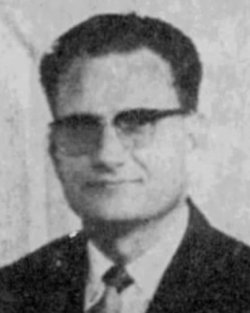
About W.E. Best
Wilbern Elias Best (1919-2007) was a preacher and writer of Gospel material. He wrote 25 books and pamphlets comprised of sermons he preached to his congregation. These books were distributed in English and Spanish around the world from 1970 to 2018 at no cost via the W.E. Best Book Missionary Trust.
SERMON ACTIVITY
Comments
Thank you for your comment!
Your comment has been submitted and is awaiting moderation. Once approved, it will appear on this page.
Pristine Grace functions as a digital library of preaching and teaching from many different men and ministries. I maintain a broad collection for research, study, and listening, and the presence of any preacher or message here should not be taken as a blanket endorsement of every doctrinal position expressed.
I publish my own convictions openly and without hesitation throughout this site and in my own preaching and writing. This archive is not a denominational clearinghouse. My aim in maintaining it is to preserve historic and contemporary preaching, encourage careful study, and above all direct readers and listeners to the person and work of Christ.
Brandan Kraft
Bible Verse Lookup
Loading today's devotional...
Unable to load devotional.
Select a devotional to begin reading.
Examples: Isaiah 53:10, Rom 8:28-30, Psalm 23, grace, love one another
to
This chapter has verses 1---
Sign in to save your Bible lookup and search history.
Comments
Your comment has been submitted and is awaiting moderation. Once approved, it will appear on this page.
Be the first to comment!