read in the first epistle, chapter
five, and then the first chapter of the second epistle. And then
we'll get into our lesson. Now, as to the times and the
epochs, brethren, you have no need of anything to be written
to you. For you yourselves know full
well that the day of the Lord will come just like a thief in
the night. While they are saying, peace
and safety, then sudden destruction will come upon them suddenly
like birth pangs upon a woman with child, and they shall not
escape. But you, brethren, are not in
darkness that the day should overtake you like a thief. For
you are all sons of light and sons of day. We are not of night
nor of darkness. So then let us not sleep as others
do, but let us be alert and sober. For those who sleep do their
sleeping at night, and those who get drunk get drunk at night. But since we are of the day,
let us be sober, having put on the breastplate of faith and
love as a helmet, the hope of salvation. For God has not destined
us for wrath. Notice destined us for wrath. but for obtaining salvation through
our Lord Jesus Christ, who died for us, that whatever we are,
whether we are awake or asleep, we may live together with Him.
Therefore, encourage one another and build up one another just
as you also are doing. But we request of you, brethren,
that you appreciate those who diligently labor among you and
have charge over you in the Lord and give you instruction, and
that you esteem them very highly in love because of their work. Live in peace with one another. And we urge you, brethren, admonish
the unruly Encourage the faint-hearted. Help the weak. Be patient with
all men. See that no one repays another
with evil for evil, but always seek after that which is good
for one another and for all men. Rejoice always. Pray without
ceasing. In everything give thanks, for
this is God's will for you in Christ Jesus. Do not quench the
spirit. Do not despise prophetic utterances,
but examine everything carefully. Hold fast to that which is good. Abstain from every form of evil. Now may the God of peace Himself
sanctify you entirely, and may your spirit and soul and body
be preserved complete without blame at the coming of our Lord
Jesus Christ. Faithful is He who calls you,
and He also will bring it to pass. Brethren, pray for us. Greet all the brethren with a
holy kiss. I adjure you, by the Lord, to
have this letter read to all the brethren. Well, we're reading
it to you this morning. The grace of our Lord Jesus Christ
be with you all. Second Epistle, first chapter. Paul and Silvanus and Timothy
to the church of the Thessalonians, in God our Father, and the Lord
Jesus Christ. Grace to you and peace from God
the Father and the Lord Jesus Christ. We ought always to give
thanks to God for you, brethren, as is only fitting, because your
faith is greatly enlarged and the love of each one of you toward
one another grows ever greater. That's one of the great reasons
why it's called the model church in that verse. Therefore, we
ourselves speak proudly of you among the churches of God for
your perseverance and faith in the midst of all your persecutions
and afflictions which you endure. This is a plain indication of
God's righteous judgment, so that you may be considered worthy
of the kingdom of God, for which indeed you are suffering. For after all, it is only just
for God to repay with affliction those who afflict you, and to
give relief to you who are afflicted and to us as well when the Lord
Jesus shall be revealed from heaven with the mighty angels
in flaming fire, dealing out retribution to those who do not
know God and to those who do not obey the gospel of our Lord
Jesus. And these will pay the penalty
of eternal destruction. away from the presence of the
Lord and from the glory of His power. When He comes to be glorified
in His saints on that day, and to be marveled at among all who
have believed, for our testimony to you was believed. To this end, also we pray for
you always. that our God may count you worthy
of your calling and fulfill every desire for goodness and the work
of faith with power, in order that the name of our Lord Jesus
may be glorified in you and you in Him, according to the grace
of our God and the Lord Jesus Christ. We'll read the last two
chapters next Lord's Day. For two weeks, we've been looking
at the subject of slavery. Slavery. We're doing that for a reason.
My next question that I'm going to be dealing with, we'll begin
this morning by giving part one, and then we'll have part two
next Lord's Day. What is separation? What is separation? Now I want you to open your Bibles
to 2 Corinthians 6 and we'll read together verses 14 through
18. We began our study by looking
at Romans 1, 1 through 7 in the study of slavery. And now we're
going to study what is separation. Paul deals not only with slavery
in the first verse of Romans, but he also deals with the subject
of separation in the same text. So our subject for today, what
is? What is separation? Let us read
verses 14 through 18 of 2 Corinthians chapter 6. Do not be bound together with
unbelievers. I want to stop there for a moment. This does not mean that we think
of this portion of scripture or we think of separation only
when we think about a believer joining up or becoming married
to an unbeliever. But this is not to be restricted
to the subject of marriage, folks. I wanted to warn you about that
to begin with. Do not be bound together with
unbelievers, and we'll see five different realms in which we're
not to do that. So do not be bound together with
unbelievers, for what partnership have righteousness and lawlessness? Or what fellowship has light
with darkness? Or what harmony has Christ with
Belial, and this equals to be the devil? Or what has a believer
in common with an unbeliever? Or what agreement has the temple
of God with idols? For we are the temple of the
living God, just as God said. I will dwell in them, and walk
among them, and I will be their God, and they shall be my people. Therefore, come out from among..." See, I wasn't reading it, I was
fixing to quote the King James. That's what you get into when
you memorize a lot of scripture when you're younger. Come out
from their midst and be separate, says the Lord. And do not touch
what is unclean, and I will welcome you, and I will be a father to
you, and you shall be sons and daughters to me, says the Lord
Almighty. I know of no greater portion
of Scripture to read on the subject of separation than that which
we have just completed reading from the sixth chapter of 2 Corinthians. What is separation? What is it? Great question. Did you know
I have had more problems in my years preaching the gospel,
when I would deal with a subject either of divine election or
separation. So this is a good test for our
little assembly. After all these years, it's been
a long time since I've discussed this subject with you. But I
think you'll be able to see before we complete next Lord's Day,
why there's so much opposition to the subject of separation.
It is a subject that is greatly misunderstood. Paul's personal relationship
to Jesus Christ as his slave is true liberty. I wanted to
refresh your minds for what we've been studying. What did I say? I said Paul's personal relationship
to Jesus Christ as his slave is true liberty. Now there is
such a thing as we discussed last Sunday as law without liberty
and then there's liberty without law and there is liberty and
law and so the Christian alone experiences liberty and law. Well, what does it mean to separate?
Something came to my mind that I either heard years ago or something,
but it came to my mind as I was reviewing this again this past
week. The best definition without using
any scripture that I have ever heard, and that is this. There are not
enough letters in the word separation to spell stay in and clean it
up. Think that through. And that
says a whole lot. You'll be amazed at religionists
who think it's their prerogative. Sometimes to join up with an
institution, they may not feel like that they can agree with
a lot of things, but they say, there are some things with which
I can agree, and I may have the opportunity of being great help
to those people. Well, we've had people like that
who have joined our assembly over the last 50 years, and of
course it isn't long until they expose themselves And as the
result of such exposure, we have to deal with them. So it's always
caused a lot of controversy when you really teach the subject
of separation. So we begin by saying again that
Paul's personal relationship to the Lord as his slave and
a willing slave at that, and we've already discussed it, So that is true liberty, and
the only true liberty there is. It is liberty and law, the laws
of our Lord Himself. However, to be a slave to any
other person or to civil authority is terrible in the abstract. Slavery taken alone is a plunge
into the dark and cold void. On the other hand, self-surrender
to the Son of God Himself is not a plunge into the dark void. It is coming to understand what
freedom is in the concrete the reality of being a Christian
who knows the truth, which has made him free and free indeed,
according to John 8, 32 and 36 and 1 Corinthians 7, verses 21
through 23. We talk about slavery. I got
to thinking about it this past week. You know that The blacks
in the United States now, a lot of them, and there are some pushing
for it, for the United States to pay reparations to those who
are related to former slaves. Isn't that the most ridiculous
thing you've ever heard? Well, I'll just give you a little
pun after having made that statement.
The children of Israel were slaves to Pharaoh and the Egyptians.
I haven't heard the Jews talk about wanting anything from the
Egyptians, have you? By way of reparation. So isn't it ridiculous? And that's
just about as sensible as for the blacks in this country wanting
it because their forefathers were slaves. I'm a slave now
and I'm rejoicing in every minute of my slavery and so is every
other Christian. Paul's relationship to the service
of Christ is expressed by the term set apart for the gospel
of God as Romans 1.1. It is imperative that we investigate
Romans 1.1 in order to have a clear understanding of Christian slavery. Secondly, the effectual call. And thirdly, separation for the
gospel of God. So you go from slavery to what? Separation for the glory of the
gospel of our Lord. So I said it's imperative that
we investigate this text because every Christian is a slave of
Christ and he has been called by the grace of the sovereign
God and he is separated under the gospel which is committed
to God's people and it's our responsibility to proclaim it
to every creature. So according to Acts 22, 1-3,
Galatians 1, 13-17, I'm giving these for you to study this afternoon
as I've been doing, and finally Philippians 3, 1-14, Paul's pre-regeneration
condition was, number one, intellectual. Secondly, it was religious. I didn't say Christian, it was
religious. And thirdly, it was profitable
to Paul at that time. His illumination and information
presupposed his regeneration and then his conversion experience
that is recorded in the ninth chapter of the Acts of the Apostles.
Paul's conversion experience included his embracing Christ's
lordship, his own personal self-surrender to be his slave, his being effectually
called to be an apostle, and he was permanently, notice I
said permanently, set apart or separated for the gospel of God. Now, when we look at the last
term that I used, permanently set apart or separated, this
is the perfect passive participle of the Greek verb aphorizo. And it means to separate, to
set apart, or to appoint. And so Paul was set apart. He
was separated for it. and he was appointed to the proclamation
of the gospel of Jesus Christ. All Christians are not called
either as extraordinary or ordinary servants of the assemblies. And
that's something else that's very important, especially in
this day when the charismatics are growing by thunder. I mean,
they're really growing. And people seem to be flocking
after their teaching. And it's all as heretical as
heresy can ever get. And I say that without any, any
reserve whatsoever. So, all Christians are called
to do what? To serve the Lord Jesus Christ
in our lives. We're not called to be an apostle. We have no apostles today. There
aren't any. They're not called to be. But
we're not even called to be, the church congregation as a
whole is not called to be elders. And now that we have about as
many female elders coming along as we do have as we have male
elders coming along, and that too is contrary to Scripture,
another sign of the day in which we're living. So, however, all
Christians without exception are called saints, S-A-I-N-T-S. And the word is hagios, which
is the plural for hagios, which is the noun for saint. And what
does it mean? The word means to be holy, to
be set apart by God, morally pure, or to be upright. So in Romans 1.1, the text states,
Paul a slave, and if I were translating it, I would not use bond slave. I'd just use the word slave,
not anything wrong with it. We don't want to try to explain
in a way what it really means. And so he was a slave. And so
we are to recognize what has happened to us and to be thankful
for what we are by God's grace. So the word saints is applied
to all New Testament Christians. not to a select body of the so-called
spiritual elite as manifested by the Roman Catholic Church. In other words, you have to do
something and you have to do a lot of it over a long period
of time and then you'll be appointed by the Roman Catholic Church
as being a saint. Every Christian is a saint. and then we're called to be saints.
We're called saints by the grace of God, and then we're called
to be saintly, and to act like we are the saints of God. So
the Greek adjective is equivalent to the Hebrew word meaning to
separate, a holy thing, something sacred, a holy place, or to separate. And Christians are saints. Those
who are positionally holy are expected to be practically holy. Thus, as soon as we're called
saints, we are called to be saintly. So the same twofold separation
is applied to the entire assembly of God. It's applied to every
member of this assembly. I'd like for you to turn with
me and I'd like to read a couple of verses to you from 1 Peter
chapter 2. 1 Peter chapter 2. Let's begin
with the 9th verse. Paul says, but you are a chosen
race. Now here you have God's choice.
A royal priesthood. A holy nation. a people for God's
own possession, that you may proclaim the excellences of Him
who has called you out of darkness into His marvelous light, for
you once were not a people." That's pretty strong language,
isn't it? Notice what it says. For you once were not a people,
but now you are the people of God. You had not received mercy,
but now you have received mercy. Paul was separated from all other
ruling aims to the ruling aim of God's message. In some respects,
Paul was the least isolated of men. because he was in constant
contact with religionists who despised the message that he
proclaimed. And folks, that message is as
despised today as it was during the time of Paul. I assure you. I've had enough years experience
to give attestation to that fact. The dedication of Paul to the
message was proclaimed in God's eternal purpose. We read in Galatians
1, 15, and 16 the proof of what I've just said. Paul himself
is giving an account of what had taken place in his life.
And here's what he says in Galatians 5, 15, and 16. When he, that
is God, who had set me apart even from my mother's womb, and
call me through His grace, was pleased to reveal His Son in
me, that I might preach Him among the Gentiles. I did not immediately
consult with flesh and blood." Now let's expand on this. Paul
was related personally officially and dedicationally to Jesus Christ,
his Lord and Savior. His service and his message demanded
separation. Not only his service, but his
message demanded separation. And here's what we find. Separated
for what? Separated for the gospel. Means Paul, who had been separated,
who had been separated, or set apart, or appointed, and that
is a perfect passive participle of aphorizo, of the verb aphorizo,
for the gospel of the Lord Jesus Christ. Therefore, dedication
of Paul to the gospel was preordained, I said preordained, in God's
eternal purpose, according to Galatians 1.15, revealed at his
conversion experience, which is recorded in Acts 9, and the
divine purpose was historically fulfilled, and I mean historically
fulfilled by the beginning of the assembly in Antioch, Acts
13 forward. Aphorizo, the verb, may refer
to either Paul's eternal purpose or his preordination of Paul
from eternity to be an apostle are to be the separation of Paul
to that work by the order of the Holy Spirit Himself according
to Acts chapter 13. Now if this disturbs people when
you talk about God's appointing and His coordination and all
of this, I'd like to read you something from the Old Testament.
It's not something that Paul hatched up. Jeremiah is a good
person to study along when you're studying the life of the Apostle
Paul. Couldn't be a better example
from the Old Testament. So open your Bibles to Jeremiah
chapter 1, verses 4 through 10. I just want to call your attention
to something, and I'll call attention while you read the passage. The words that I'm going to use
are familiar words, and they unfold great truths to us. The seven points are, first of
all, God knew Jeremiah. That's Jeremiah 1.5. He knew it. Number one. Number two. God sanctified or
He consecrated Jeremiah. That's also in verse five. Number
three. God appointed him a prophet to
the nations, that's also in verse 5. Number 4, God sent him forth,
in verse 7. Number 5, God commanded him to
speak, that's in verse 7. And then, number 6, God encouraged
him, verse 8, And finally, number seven, God spoke through him,
and that's given us in verse nine. So you see how important
those verses are in Jeremiah chapter one. When God acts according
to a perfect participle that is given us in Romans 1.1, his
action is characterized by eternity. This can be understood in the
same sense as divine election. I said as divine election. The
word election does not always refer to the electing decree. I'm sure you have found that
out if you've made a study of the word election every time
it's found in the New Testament. You found that out. So the word
election, I said, does not always refer to the electing decree.
It is sometimes used in the sense of the manifestation of that
decree. The manifestation of that decree. Let me give you two examples
for it. First, John 15 verse 19. They were called forth. They were the chosen of
God, but this is a manifestation of it. And then in 1 Peter 1,
verses 1 through 3, you find another manifestation of His
divine choice by the Father. So as there is an election unto
sanctification, which is performed by the gospel, There is a separation
unto the gospel by the effectual call of God. So you see how a
wonderful word it becomes. So separation for the gospel
of God is internal. Internal. Separation for the
gospel is internal. God called Paul. and he knew that God had called.
And I believe every person today, not called in the same sense
that the apostles were called, but every person who has been
called of God, he'll know he's been called. And he can't do
anything else but do what God has called him to do. And God
will see to it that that's the case. So separation is a very,
very important point to think about. So the separation for
the gospel is internal. Paul had been effectually called
to a particular ministry. Every Christian cannot be personally
set apart to either extraordinary, as being an apostle and so forth,
or even an elder That's the ordinary service, not the extraordinary,
but the ordinary service. And the only service we have
today are ordinary service. We don't have any of the extraordinary. Do you know what the first qualification
of being an apostle is? To have been an eyewitness to
Jesus Christ. What about people who say they've
seen Him? They're lying. It's just that simple. You say,
well, wait a minute, Paul was an apostle, and he never had
really seen him at it. Well, what about the 12th chapter
of 2 Corinthians verses 1 through 3? He was caught up in the third
heavens and heard words not lawful for him to speak. So Paul was
qualified. God saw to it that he would be
qualified, and we would know what the qualification is. I
heard a man this morning talking about his power, and he just
left the audience with a belief that he was exercising the same
power that Christ Himself exercised and the apostles exercised. And
they were eating that up. I had a hard time listening,
but I wanted to see how far away from the truth he would get,
so I kept listening, and I heard enough. I hurt enough. So every Christian cannot be
personally set apart to either extraordinary or ordinary service. But every Christian, every Christian
is set apart for the message of Jesus Christ and you are responsible
for its proclamation in your way of proclaiming it. Separation
for something means automatic separation from something. You
can't be separated to something without being separated from
something. Just that simple. Well, I'll
illustrate it like this. You can't be separated to Dallas
unless you're separated from Houston. I think we can understand
that. So too many religionists today
are trying to separate themselves from the things of the world
that have never been separated for Jesus Christ by the grace
of the sovereign God. Now I want to give you something
on the other side of that coin. That coin has two sides. And let me state it again. Too
many religionists are trying to separate themselves today
from the things of the world who have never been separated
by God's grace. Now, on the other hand, listen
closely, there are other religionists
who bolster their separation for Christ by divine election
and the effectual call who are without the manifestation of
practical holiness in their lives. I'm talking about antinomians.
And folks, I've come across a lot of those too, just about as many
as I have the other. Separation comes from the Greek
verb aphorizo, which contains our English idea to mark off by boundaries, to
mark off for oneself. So it contains our English idea
of horizon. A horizon. Listen closely. Paul's
pre-salvation days had been circumscribed by the circle of Judaism. He was born a Jew, studied Judaism,
well-schooled in Judaism, but he was not a Christian until
God's grace came into his heart and life. So listen to it again. I said Paul's salvation had given
him a new horizon. Think about this. His salvation
had given him a new horizon because he had been lifted out of the
circle of Judaism into the limitless horizon of Christianity. You see what I'm saying? And
the third chapter of Philippians will explain that to you better
than anybody else can do it. Therefore, the new life in Jesus
Christ is the cause of the old dead leaves of the old horizon,
Judaism, like the dead leaves of a pin oak tree will not fall
off until the new leaves push them off in the springtime. And
that's what you find in Philippians chapter 3, the new horizon. The extent of the horizon may
vary between one believer and another believer, but that is
because it takes time to go from children to young men to fathers. We're not born young men. We're
not born fathers. We're born as babies in Christ. And yet the Bible divides all
Christians in 1 John chapter 2, beginning with the 12th verse,
divides them into little children, young men, and fathers. And then when you get into the
15th and 16th verses, You'll see how those verses apply to
those three divisions of Christians that you read about in the two
verses before you get to verse 15. So separation is not only
internal, but it's external. External. God's separation of
the elect by grace results in a separation that will continue
throughout the lives of His chosen ones in time. Thus, the once-for-all
cross of Jesus Christ in conversion and the daily cross of progressive
sanctification are an inexhaustible paradox. I want you to think
about that for a little bit. We'll read some scriptures. I'd
like for you to turn to 1 John. So turn to 1 John chapter 2. Let's begin with about the 12th verse. John said, I'm writing
to you little children because your sins are forgiven
you for His name's sake. Now notice the next verse. I'm
writing to you fathers because you know Him who has been from
the beginning. I am writing to you, young men,
because you know the Father, and you know the One. I have written to you,
children, because you know the Father. Now, what's the next
verse? I have written to you, fathers,
because you know Him, who has been from the beginning, I've
written to you, young men, because you're strong, and the Word of
God abides in you, and you have overcome the evil one. Now notice
what he says, beginning with verse 15. Do not love the world,
nor the things in the world. If anyone loves the world, the
love of the Father is not in him. For all that is in the world
And he's going to mention several things here. Lust of the flesh,
lust of the eyes, pride of life is not of the father, but of
the world. Now, one of those, there are
three things there, and one of those fits each one of the divisions
of maturity that is mentioned. Had you thought about that? Look
at it closely. Let's look at verse 16 again.
For all that is in the world, lust of the flesh, lust of the eyes, pride of life. The lust of the eyes, lust of
the flesh. Now you take the lust of the
flesh, that goes back to children days. And you study this and you'll
see what I'm talking about. And then look at the next one. Then lust of the eyes. When you
get to be a young man in your prime, you have your best knowledge
to give your employer, and you give him your best service, boy,
you want to get ahead, get ahead, get ahead. So watch it. It can get out of hand, see?
and something could get control of you that you wish didn't do
that. So you got the lust of the flesh,
that's the children's stage. And then the lust of the eyes,
that's when you become a young man, you're qualified now. If
I'm going to make it, I've got to make it now. And then the
last one is the pride of life. You know who that fits? That's the old people. No prouder people that grandparents,
they want to show off their grandkids. Now I could elaborate on this
for a long time, but that isn't necessary. And then in old age,
you want to show what you've done, you know. So there's something for every
age group, isn't there? And a warning. Then it says in
verse 17, but the world is passing away. And folks, the world as
you and I know it, it's passing away. Time is getting short. Time is getting short, getting
shorter by the minute, getting shorter by the second. And the
world is passing away. And also it's lusts. But the
one who does the will of God. Notice the capstone that John
puts on his writing here. But the one who does the will
of God abides forever. Forever. So, the once for all
cross of Christ in a conversion experience and the daily cross,
daily cross of progressive sanctification are an inexhaustible paradox. I want us to look at this for
a moment. We have in conversion, I'm not talking about regeneration,
I'm talking about conversion, a true and total self-denial. A true and total self-denial. And in progressive sanctification,
We have a daily need of self-crucifixion. You got to crucify the flesh
with its affections and lusts. You see what I'm talking about?
Now, let's expand on that a little bit. Let's make it very practical. The once for all cross life is
not an attainment. The cross life. Paul did not
live and die with the sheep under his care, but he died and lived
with them. See the difference? Paul said
to the Corinthians in 2 Corinthians 7, 3, I do not speak to condemn
you, For I have said before that you are in our hearts to die
together and to live together." We're talking about the togetherness
of an assembly. And I'm doing this for a reason,
folks. What a responsibility you folk
have. What a tremendous responsibility.
to keep the little assembly going. You know, Luba has been looking
for a church in London, and she may have found one. Well, she has been looking for
it nearly a year, and she has been going now for several services,
and they have about 30 people. But she said, the man goes right
down the line teaching the scriptures. They have a few songs and that's
it. Sounds kind of like our little assembly. So if you're looking
for a church that's going to be faithful to God and all the
teachings of the scriptures, if you see a gymnasium, just
drive on by folks. You're wasting your time. If you see a lot of buildings
other than an auditorium, just drive on by, you're wasting your
time. Now, if someone had told me that
when I was 30 years old, I would probably have laughed. I'm not laughing this morning.
I've never been more sincere. And the one man that helped to
keep me straight Every once in a while, he would ask, Best,
how's the church doing? He knew we were growing numerically.
And he's the one who told me one day, what I've told you before,
the more Bible you teach, the fewer people you'll have to listen. And the more you compromise,
the greater your congregation will be. I'm on the subject of
separation this morning. Do you think you can take what
I have to continue to give this morning and next Sunday? Well,
let's see. Let's see. Separated for the
gospel brings the elect who have been regenerated into the light
of the cross, not to be straightened out, but to be crossed out. Are you with me? Crossed out. The message of the cross contradicts
our wills, affections, wisdom, pride, yes, and ourselves. The most joyous moment in the
life of the bride should be when she loses her name. and self-dependence at the marriage
altar. Are you listening? Taking her
husband's name and merging her life into his. Now let's go back,
let's be old fashioned and be biblical. I said the most joyous
moment in the life of the bride should be when she loses her
name, she's going to take on a new name, at the marriage altar,
taking her husband's name and merging her life into his. Furthermore, the most blissful
moment in the life of the regenerated person is when he announces his
right to self-ownership and begins to reckon himself dead to sin,
dead to self, and dead to the world through the cross of Jesus
Christ. Folks, that's spirituality. Applied truth is truth that has
been learned, applied truth. If you haven't applied it, you
haven't learned it. You may learn something and be
able to quote it, but if you haven't applied it, you haven't
learned it. I'm going to prove this with the scriptures in a
minute, so stay with me, folks. I didn't just hatch this up. In John 7, 17, will you turn
to that portion of scripture with me? John 7, 17. Our Lord is speaking. Here's
what he said. If any man is willing to do his
will, if any man is willing to do his will, he shall know of
the teaching, whether it is of God or whether I speak from myself. And we're going to elaborate
on that verse a little bit, so don't go away from it yet. Truth
stored in the mind is no different from the mental concept of truth,
which Satan possesses. I want that to soak in. You can memorize, memorize. I've done a little of it myself
in over 60 years, quite a bit of it in fact. But it's one thing to be able
to quote just from rote memory and to know it experientially. So listen carefully. I said true
stored in the mind is no different from the mental concept of truth,
which Satan possesses. Satan does know everything, but
he knows a lot, knows more than you and I do. He knows more than
we know. He'd been around quite a while.
Been quite a while since he fell. So don't forget that. Divine truth is intimately connected. with the disposition of the mind
of the Christian. And the results are twofold. Number one, a desire to know
God's will. A desire to know God's will. Well, turn to Acts 10.33. And listen to this, and so I
sent to you immediately, and you have been kind enough to
come. Now then, we are all here present
before God to hear all that you have been commanded by the Lord. So a desire to know God's will,
and secondly, a determination to do God's will. determination
to do it. Now look at John 7 17 again and
what do you have? If any man is willing to do his
will well if you're doing God's will you've been made willing
by God for he causes us to will and to do of his good pleasure
the scripture says So a determination to do God's will, to speak from
the mental concept of truth is to speak from the neck up. Have you ever talked to somebody
and when you got through the conversation, you felt like all
you heard is just from here up? It didn't come from down here
up? Didn't come from the heart, but
it came from the head? All right. So to speak from a mental concept
of truth is to speak from the neck up. But to speak from applied
truth, applied truth is to speak from the heart. And there is
a big difference. Now let's go a little further.
The object of true knowledge is to look at doctrine as being
one correlated whole. one correlated whole. Therefore,
Christians must be careful about separating the doctrinal from
the practical. Are you with me? I hope so. Doctrinal from the practical.
Christ's doctrine means His teaching embraced everything He taught. doctrine is one correlated whole
in contrast to the doctrines of men, in contrast to the doctrines
of men. Open your Bibles to 1st Timothy
4, let's look at verses 1 & 2. 1st Timothy chapter 4, Paul said, but the Spirit explicitly
says that in the latter times, some will depart or some will
fall away. See, I was quoting King James
again. Will fall away from the faith.
This is the NASB translation. Fall away from the faith, paying
attention to deceitful spirits and doctrines of demons. by means
of hypocrisy of liars seared in their conscience, own conscience,
as with a branding iron. Boy, well, I want you to hold
that place. Go to Matthew 15, let's look
at verses eight and nine. Concerning the Pharisees, our
Lord had this to say about them. And the precepts of men are diverse
and conflicting, And that is why scripture warns about being
carried away with strange teachings. So here we are. This people honors
me, our Lord said, with their lips, but their heart is far
away from me. But in vain do they worship me. In vain do they worship me. Teaching
as doctrines, the what? The precepts of men. So the precepts
of men are diverse and conflicting. And that is why scripture warns
about being carried away by strange teachings. And also we have the statement,
doctrines of demons. So that's why Paul warns us as
he did in 1 Timothy 4 verses 1 and 2. Spiritual knowledge,
spiritual knowledge does not come through the intellect of
the natural man and then reaches the heart. Now we're going to
get down to a little searching. So let's get there and let's
listen carefully. And if you miss out, we'll give
the outline next Sunday, so you'll have it all before you. Now,
what did I say? Spiritual knowledge does not
come through the intellect of the natural man, natural man, and then reaches the heart. See, that does away with all of these easy believers in
easy believism. I don't believe that a person,
an unregenerate person, can help himself at all. He's
got to be quickened by the Holy Spirit of God in regeneration
and given the faith that He gives him at that time and also the
ability to comprehend and understand truth when he hears it. An unregenerate
person doesn't understand it. He may understand it historically,
but he doesn't understand it for the satisfaction of his heart.
So let's watch this now. So true knowledge comes through
the renewed heart, through the renewed heart in regeneration. and gives assurance to the intellect. Therefore, Christ's teaching
comes not through natural reasoning, but it comes through the exercise
of faith, which is God's gift to that person who is regenerated. That can't be refuted, folks.
I'm not worried about anybody refuting it. You say, well, you're pretty
dogmatic. Yes, I am. I surely am. Scripture says, now faith is
the assurance. This is Hebrews 11, one through
three. Now faith is the assurance of
things hoped for, the conviction of things not seen. Now watch this. For by it, the
men of old gained approval. By faith, we understand. It's only by faith we understand. And the faith itself is the gift
of God. And no unregenerate person has
that faith. Are you with me? This is just plain facts, folks.
There is a wide difference between supposing and knowing. Somebody said, well, I suppose.
I'm not interested in anybody's supposition. Not interested.
Difference between supposing and knowing. Well, I'd like you to turn to
1 Corinthians 2, 8 through 16. 1 Corinthians chapter 2. We'll let the scripture answer. I'm showing in this passage the
wide difference between supposing and knowing. And by the way,
while you're turning, five chapters of 1 John. That's the most wonderful
little book. It was written for one purpose.
The Gospel of John was written that we might know how to believe
and so forth, and what happens to us in regeneration and conversion. But the first epistle of John
is written for one main purpose. And there are twenty-some perfect
tense verbs concerning knowledge used in that one little book. So let's read a few verses. In 1 Corinthians chapter 2, beginning
with verse 8. Well, I thought I had it, I'll have
to turn to it myself. 1 Corinthians 2, beginning with
verse 8. The wisdom which none of the
rulers of this age had understood. The rulers of this age. For if they had understood it,
they would not have crucified the Lord of glory. But just as
it is written, Things which eye has not seen, and ear has not
heard, and which have not entered the heart of man, all that God
has prepared for those who love him. For to us God revealed them
through the Spirit, for the Spirit searches all things, even the
deep or the depths of God. For who among men knows the thoughts
of a man except the Spirit of the man which is in him? Even so the thoughts of God no
one knows except the Spirit of God. Now we have received not
the Spirit of the world, but the Spirit who is from God, that
we might know the things freely given to us by God. which things
we also speak, not in words taught by human wisdom, but in those
taught by the Spirit, combining spiritual thoughts with spiritual
words. But a natural man, that's the
unregenerate person, does not accept the things of the Spirit
of God. Why? Their foolishness to it.
their foolishness to him and he cannot understand them because
they're spiritually appraised but he who is spiritual appraises
all things yet he himself is appraised by no man for who has
known the mind of the Lord that he should instruct him but we
have the mind of Christ. So diversity of views from the
people who hear or read, and I'm talking about the scriptures,
hear the scriptures read or read the scriptures, but they do not
come from the scriptures themselves. Scripture means one thing to
an unrenewed mind and it means something entirely different. to a renewed mind. So when you listen to a person
on television and he is heretical, listen to him carefully. While
you listen, listen to him carefully and compare it with the scriptures
and you'll see what's taking place and who it is that is speaking. So diversity Our views arise
from the people who hear and read the scriptures, but they
do not come from the scriptures themselves. Furthermore, the
most obedient Christian, I said the most obedient Christian,
has the greatest knowledge of Bible doctrine. The more obedient
you are, the greater your knowledge is. Man's mode differs from God's. Man says study. Man says consider. Listen closely now or you'll
miss the point. God says obey. Let me go back. I don't want
you to miss the point. I said man's mode differs from
God's. Man says study. Man says consider. We are to study. We are to consider.
But who can study and consider and handle it correctly? Only
a child of God. God says obey and that means
the child of God or the person who says he's a child of God,
if he doesn't make an effort to obey what he has heard, what
he has heard read, and what he hears and reads for himself,
If he doesn't obey, he doesn't have it. He doesn't have it. So listen to the verse now, John
7, 17. If any man is willing to do his
will, he shall know. You can just stop right there.
He shall know. What shall he know of the teaching? whether it is from God or whether
it is from oneself. So it's obeying. If we do not
obey and put into practice what we learn, we don't learn anymore
until we do. I'm talking about the Christian. That's part number one. And the subject is separation.
Now we'll get down to the separation part next Sunday. And believe
me, there's not much left. We either do or we don't. We
either have it or we don't have it. We're either in or we're
out. We're either off or we're on.
It's just that simple. How far should one go? Keep in mind, separation includes
a lot of things. A lot of things. Five different
spheres in 2 Corinthians 6. In that passage we read to begin
with this morning. Five different spheres. And it
takes in everything. Let's stand for that.
About W.E. Best
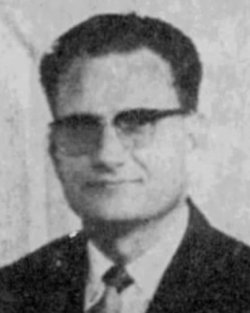
Wilbern Elias Best (1919-2007) was a preacher and writer of Gospel material. He wrote 25 books and pamphlets comprised of sermons he preached to his congregation. These books were distributed in English and Spanish around the world from 1970 to 2018 at no cost via the W.E. Best Book Missionary Trust.
SERMON ACTIVITY
Comments
Thank you for your comment!
Your comment has been submitted and is awaiting moderation. Once approved, it will appear on this page.
Pristine Grace functions as a digital library of preaching and teaching from many different men and ministries. I maintain a broad collection for research, study, and listening, and the presence of any preacher or message here should not be taken as a blanket endorsement of every doctrinal position expressed.
I publish my own convictions openly and without hesitation throughout this site and in my own preaching and writing. This archive is not a denominational clearinghouse. My aim in maintaining it is to preserve historic and contemporary preaching, encourage careful study, and above all direct readers and listeners to the person and work of Christ.
Brandan Kraft
Bible Verse Lookup
Loading today's devotional...
Unable to load devotional.
Select a devotional to begin reading.
Examples: Isaiah 53:10, Rom 8:28-30, Psalm 23, grace, love one another
to
This chapter has verses 1---
Sign in to save your Bible lookup and search history.
Comments
Your comment has been submitted and is awaiting moderation. Once approved, it will appear on this page.
Be the first to comment!