Turn to 1 John chapter 1. I want to begin with verse 6 and read through verse 6 of chapter
2. This is the portion of Scripture
that is quite debatable, as I have already shown you, and we'll
continue today. We gave two arguments. last week
and the answer to those arguments. We have two more arguments today
and I'll go slowly in giving you the arguments and then the
answer to those two arguments today. Let's begin with verse
5 of chapter 1. And I want to make this statement.
The first epistle of John is the greatest portion of scripture
put together for one main purpose, and that is to give the little
children, that's Christians, assurance of their relationship
to God and what is expected and will be manifested by those who
have passed out of death into light. John said, beginning with
verse 5 of chapter 1, and this is the message. We have heard
from him and announced to you that God is light and in him
there is no darkness at all. If we say that we have fellowship,
koinonia, And I gave you all the words last Sunday. You took
them down and that places six different words and where they're
found in the New Testament. Reading verse six again, if we
say that we have fellowship with him and yet walk in darkness,
we lie and do not practice the truth. But if we walk in the
light as he himself is in the light, we have fellowship with
one another and the blood of Jesus Christ, his son, cleanses
us from all sin. Is that positional or conditional?
If we say that we have no sin, we're deceiving ourselves and
the truth is not in us. If we confess our sins, He is
faithful and righteous to forgive us our sins and to cleanse us
from all unrighteousness. If we say that we have not sinned,
we make Him a liar and His Word is not in us. My little children,
I'm writing these things to you, that you may not sin. He doesn't
tell us, you're saved now, just go out and have a good time.
Commit whatever sin you want to commit. He can't say that,
can he? That's the way most people live today. That's the way religionists
live. Let me read the first verse again. My little children, I'm writing
these things to you that you may not sin. And if anyone sins,
We have an Advocate with the Father, Jesus Christ the Righteous.
And He Himself is the propitiation for our sins. And not for ours
only, but also for those of the whole world. And by this we know that we have
come to know Him. Stop there for a moment. I had to recheck my counting
of the perfect tense verbs. It's been a long time. I think
I told you a couple of weeks ago, I was trusting my memory,
54. There are 61 perfect tense verbs
and seven perfect participles. Now does that tell you anything
about knowledge, folks? If you haven't learned the meaning
of the perfect tense in the Greek as much as you have been exposed
to it, and if you couldn't give an answer now, you are in terrible
shape as a Christian. All right, let's read a little
further. Let's read the third verse again.
And by this we know that we have come to know Him. if we keep His commandments.
The one who says, I have come to know Him, and does not keep
His commandments, is a liar. And the truth is not in him. But whoever keeps His word in
him, the love of God has truly been perfected, or brought to
a completion. By this we know that we are in
Him. The one who says he abides in
Him ought himself to walk in the same manner as He walked. Argument number three. We looked
at two last week. Let's get right into it because
I have a lot of territory to cover. I don't want to go too
fast. I'd like to do as I did last
Sunday, but I'm afraid if I do, I'll not get halfway through
this, and I want to complete this point to go on to the next
regarding the subject of fellowship. Here's the argument. Listen closely. The hypocrisy
of professors of Christianity should be denounced. That's the
lead sentence. That's a good statement within
itself. But whenever you find a good
statement, don't stop. You better go ahead and continue
reading. And that's true whether you're
reading my books or my outlines or anything else. Most people
today, they see something they like, it's a good statement,
they just read it, they stop, and then they start wondering
and imagining and get clear away. Now listen, the hypocrisy of
professors of Christianity should be denounced, a true statement
within itself. Now watch this, see if you catch
it as I read. You heard enough last Sunday,
you should catch everything wrong with what I'm going to read.
The seven ifs, keep in mind now, it isn't E Epsilon Iota, I, but
it's Epsilon Alpha Nu, Eon. It's the third class condition
always used with a subjunctive mood. The seven ifs of John 1, 6 through
2, 6 are divided into two categories of three and four. Three declares condemnation. Number one, if we say we have
fellowship with him and yet walk in darkness, that's verse six
of chapter one, we lie and do not practice the truth. reveals
what? Reveals the darkness of the human
mind. Number two, if we say that we
have no sin, that's verse eight of chapter one, manifest the
debasement of human nature, the debasement of human nature. All
you have to do is turn the TV on and you will see the debasement
of human nature. Number three, if we say that
we have not sinned, that's verse 10 of chapter 1, discloses the
defilement of human conduct. Now, those are the first three
that declare condemnation. Now, four reveal salvation. Here they are. We'll take the
other four now that are left in these verses that I read to
begin with. If we confess our sins, this is verse 9 of chapter
1, He is faithful and righteous to forgive us of our sins and
to cleanse us from all unrighteousness. It's a declaration of justification. How many of you believe that's
correct? declaration of justification. Now think it through before you
commit yourself. Think it through carefully. Let
me read a little further. Number two, and this is in verse
7 of chapter 1, but if we walk in the light as he himself is
in the light, we have fellowship with one another and the blood
of Jesus Christ, His Son, cleanses us from all sin is a manifestation
of positional sanctification. Is that true or false? Now, if you heard me last Sunday
and you studied it, you already have the answer. And if you haven't
studied that much, then folks, before we get through, you're
going to be in worse shape if you had going back to our days
when we discussed eternity and time for 36 messages, and a lot of folk just left me
completely after just a few. I hope you stay with me. It'll
be a blessing to you if you do, and it may be your undoing or
mine if you don't, and it doesn't make any difference to me. I'm
just here for one purpose, and that's to declare the truth,
because I believe it is set forth. Is it a manifestation of positional
sanctification? No. John's writing to Christians,
not to the unregenerate. All right, number three, and
this is chapter two, verse one, if anyone sins, We have an advocate
with the Father, Jesus Christ the righteous. Reveals our preservation. This is the argument now, I'm
still, I'm not through with it yet, see. Number four, and this
is chapter two, verse three. And by this we know that we have
come to know Him. If, that's aeon, not I. Not a first class condition,
it's a third class condition. with the mood of possibility,
not the mood of reality. That is the first class condition
with I. You say, I don't see that it's
necessary to study like this. Well, I'm gonna do it for three
months. I'm gonna either bore you to tears or what? And I won't
go too long until I, If you don't follow me, I'll just say some
Sunday morning, all of you who want to come with me, we'll go
and we'll start another class. Folks, what I'm trying to tell
you is I've never been on a series any more important for Christians
than what I'm on now. And I make no apology for it. Look at number four again, this
is the last. And by this we know that we have come to know him
if we keep his commandments. Reveals salvation's consummation. One more sentence in the argument.
To know that we know and to know as we are known, unite the knowledge
of heaven and earth Now, nothing wrong with the statement, that's
a good statement within itself, but not within the context of
what he's talking about. Let's begin the answer. See, I want you to do this, and
I want you to take notes, so you can see how well you take
notes. So next week we'll give you the
outline on last Sunday and also today. But I want you to take
notes. I could give you the outline
and let you follow along. That's too easy. I don't want
that. I want you to do some thinking.
And I don't care how old you are. You may have your senior moments. I'll let you rest for just a
second. I heard a good one last week. A group of women were getting
together and playing cards a lot. One day there were four women
sitting at the table, best I remember the article. And one said, looked
across the table and said, played cards with her many times before.
It was a regular thing with her. And this one said, what is your
name? I have forgotten your name. What
is your name? And the lady across from the
one who had asked the question looked at her, looked at her,
kept looking at her for two or three minutes and said, how much longer will you give
me before I give the answer? Did you get it? Here's the answer. A careful
reading of 1 John 1, 6 through chapter
2, verse 6 will reveal, number one, the testing of hypocrisy. That's verse 6 of chapter 1. It will reveal the glorying in
the genuine, verse 7. There will be a probing of self-deception
in verse 8 of chapter 1. There will be a pointing the
way to true experience, true experience, not false experience,
true experience, verse 9. of chapter one. Number five,
there will be a making doubly sure that we see our shame and
sin. And that is Christians, folks.
That's you, that's me. For this was written to Christians. That's verse 10 of chapter one. Was that number five? Okay, number
six. We will be putting ourselves
in the liar category. In the liar category. Chapter two, verse four. Finally,
number seven. There will be a summing up of
the whole probing process. in verse 6 of chapter 2. Now you take that outline and
look at that carefully. Now, we'll be enlarging on this
for quite a bit, so stay with me. No Christian, I said no Christian, and I mean that from the bottom
of my heart, no Christian, can claim an unbroken an unclouded
fellowship. Is anybody willing to stand and
say, I've always been in full fellowship of the Lord and I've
never made a false step and I've never been out of this fellowship?
If you were to stand and say that, I'd say you're the biggest
liar that ever walked on two feet. What did Christ say in John 8
and 29? I always do the things that are
pleasing to Him that is the Father. Can you say what Christ said? Only Christ could say that. You
can't say that. No human being can say that.
No Christian can say that. Those who make no distinction
as the man whose argument that I read to you. They make no distinction. So
those who make no distinction between salvation and fellowship. Salvation and fellowship. Believe true fellowship is salvation. If you don't make any distinction,
then true fellowship is salvation. Are you with me? Please stay. Please stay with me. Hang on. So those who make no distinction
between salvation and fellowship believe true fellowship is salvation
according to them. A Christian does not lose his
fellowship but he only loses the joy of his fellowship. Are you familiar with the scripture
about losing the joy of fellowship? Their proof text on 1 John 1,
6, referring to non-Christians, or John 8, 12, here is their
proof text. John 8, 12, Acts 26, 18, and
1 Thessalonians 5, 4, and 5. They think those passages prove
what they have said. You'll have to study them to
see. They further state that sin messes
up the fellowship. It is sin messes up the fellowship,
but does not put anyone out of fellowship. You think that's a true statement?
If you do, you haven't grown very much. Fellowship has two
sides. Two sides. Our union in Christ,
side one. and His abiding in us side too. Are you with me? You're familiar
with the term abiding in Christ, used many, many times in the
gospel, especially John. There is an unconditional, listen
closely, unconditional, once for all cleansing by Christ's
blood. Now keep that in mind before
we go any further. Hebrews 10, 10 through 14 talks
about this once offered Christ and the blood that was offered
only once in the end of the age. to put away sin, but the sacrifice
of himself. And there is, that's not the
end of the sentence, and there is a conditional cleansing that
is perpetual. So there is a once for all cleansing. And secondly, a perpetual cleansing. That's what 1 John 1, 7 teaches. He's not talking about the once-for-all
cleansing. That's understood. It's the perpetual
cleansing of the Christian. When you sin, Christ forgives
you when you confess, and you're forgiven of your sin.
on the basis of what he did 2,000 years ago. Stay with me, folks. We're taking
it step by step. And I don't mind challenging
any of you, or anybody else for that matter,
to refute it. The first cleansing is positional,
and that's the once-for-all cleansing. Hebrews 10, 10 through 14. I
just gave that passage because it is so great in expressing
itself on this particular point. Let's read it. Turn to your Bibles
and let's read part of it. So open your Bibles. I'm going
to have to really get going here if we get through by one o'clock. Let's look at the 14th verse.
10 through 14, but look at the 14th
verse. For by one offering, he has perfected. Now stop right
there for a second. He has perfected. That is a perfect,
active, indicative of teleiao, which means to execute fully. to perfect a person's position
that needs no further provision before God. And it was done once, once for
all. You know why we have the pulpit
right here where it is? There's no altar here. We don't
offer up any sacrifice. We don't turn We don't turn the
wine into blood and the bread into a literal body. The center of the assembly is
to proclaim the finished work of Christ. Anytime you see the
Lutheran, the Episcopal, or the Catholic, and the Methodist with
their altar and then over to the side, you know exactly what
to believe. That's heresy, folks. I'm making
a strong statement, but I've made it. I've made it. He's not offered up. When we
observe the Lord separate, Jesus Christ is not offered up. He
died 2,000 years ago. All right, watch this. So the first cleansing is positional,
for by one offering he has perfected And that's the perfect tense
verb. It's perfect, and it's active, and it's in the indicative
mood, the mood of reality. For all time, the text says. And the word for all time, which
means continuous, uninterrupted, or for all time, or perpetual. I'll just give you the meaning
of the Greek word that's used here. Those who are sanctified,
those who are set apart as a present passive participle of hagiadzo,
which means to separate, to cleanse, to purify, or to set apart. Hebrews 10, 14. Now, the second
cleansing is conditional. The second is conditional. All
right, go back to 1 John 1.9. If we confess our sins, he is
faithful and righteous to forgive us our sins and to cleanse as
an arius active subjunctive, which means to make clean or
remove by cleansing us from all unrighteousness. Positional cleansing is by the
immediate work of the Holy Spirit on the passive center. Watch
this, I'm putting it all together. I said positional cleansing is
by the immediate work of the Holy Spirit on the passive center.
But conditional cleansing is contingent on the believer's
confession. You say, what if he doesn't confess?
All right, follow me and I'll answer that in just a minute.
I'll take it step by step. You won't be in doubt. Won't be in doubt. So conditional cleansing is contingent
on our confession of sin. Our sins. I tell you what, the
longer I live, the more sinful I become. Some of you may say, well, I'm
not surprised at that. And you mean it in the wrong
way. If you were to tell me that,
I'd tell you, when I got through with you, you'd wish you hadn't
even thought it. Folks, if we all get through
this together in the next three months, I'm not going to be worried
about you. In the meantime, I'm not going
to tell you what I might think about some, so stay with me. We're not going to leave any
stone unturned that I can think of after 60 years of study. Failure to walk in the light. We all know more than we practice. Are you with me? There is not a Christian who
is obedient to everything to the nth degree, continuously. He's just not, he doesn't do
it. We're human. We have the grace of God, but
we also have that old nature with us. Juanita said the other day we
were talking about it and we were proofing some things that
we were studying and she was typing up for a man. She said,
makes me want to, Lord, get us out of this so I can get rid
of this old human, this old nature, this natural nature of mine that
gives me so much problem, such a big problem. Failure to walk
in the light results in what? How many of you, I'm not gonna
say the word yet, I wanna see if you can think of it. Failure
to walk in the light results in what? Who knows? What is it, Hollis? Well, that's true, but that's
not the result, chastening. You see what I'm after? Failure to walk in the light
results in chastening. Hebrews chapter 12, verses 5
and 6. And sometimes, do you want this? You go together whether you want
it or not. You got to feast on it. And sometimes, even removal
from life itself. In other words, God will kill
you. Take you out. Take you on home. You're not
fit to live. How do you like that? 1 John
5, 16. I gave you the passage, and I
can prove it from the Old Testament. You know what is so wonderful
about the study that I'm making right now on fellowship? You
put everything, everything harmonizes from Genesis to Revelation. Now,
there was a time 50 years, 55, 60 years ago, I couldn't understand
that. But folks, there is perfect harmony. There is not a principle in the
New Testament that was not given to us by type or shadow in the
Old Testament. And every principle in the Old
Testament given to the Israelites in the Old Testament is a principle
that is manifested in the New Testament. Nothing new under
the sun. It all harmonizes. Paul harmonizes. The statements,
walk in the darkness, verse 6, and you were formerly darkness,
watch this, are not the same. So, walk in the darkness, that
phrase in verse 6, And you were formerly darkness, Ephesians
5, 8. They're not the same. You were nothing but darkness
until the Lord saved you. You were darkness. That's Ephesians
5, 8. But walking the darkness is not
the same as you were darkness. So you were formerly darkness
refers to the darkness of unregeneracy. See what I'm talking about? It's
a darkness of unregeneracy. But walk in the darkness points
to believers walking outside the will of God. The Ephesians who were formerly
darkness had by God's grace become light in the Lord. That's also
found in the same verse. Ephesians 5 verse 8. And Paul
commanded them to walk as children of light. Also found in Ephesians
5 verse 8. And do not participate, and that's
a present active imperative, He commands us not to participate
in the unfruitful deeds of darkness, but instead even expose them. So folks, it's not enough. Listen
to this. Boy, does this put us where we
belong today? Does this ever put us where we
belong? So two things here. Number one,
You do not participate in the unfruitful deeds of darkness.
But it goes on to say, but even expose them, you're responsible
to expose them. You can't keep quiet. When you
know the truth, you can't keep quiet. So don't fellowship with that
which is contrary to scripture, but your responsibility is to
expose them. And I'm afraid too many of us
are so willing to expose somebody else. We're not willing to take
much time in exposing and looking at ourselves. So Ephesians 5.11, don't forget
that passage to go along with 5.8. Christians are not, watch
this, Christians are not hypocrites positionally. Positionally, we're
not hypocrites. I said positionally. But conditionally,
we're all hypocrites. There's hypocrisy in all of us. If I were to ask you this morning,
how many of you do not believe you're a hypocrite? And all of
you stood. Folks, I tell you what, if that
happened, I'd have to say, folks, let me get out of here. I can't
take this. No wonder. So let me say it again. Christians are not hypocrites
positionally, but we're all hypocrites conditionally. Can any Christian honestly say
that there is no hypocrisy in him? But I'm here to tell you, no
one can say it. Let me just prove it. Let me
give a few things and see if you can relate with any of these.
I'll give you a few things, see if you can relate with them. Have you ever pretended to know
something that you don't really know? Come on. How many of you, even
in giving your testimony or something about the scriptures, and you
just pretend to know more about it than you actually know? Huh? See, that gets right down
where we live, doesn't it? Well, let's look at another one. Have you pretended to know something
when you did not know? Have you ever feigned spirituality
while engaging in acts of sin? Well, let's just use a public
figure. Look at Bill Clinton. He'd never
admit anything. Perfect example. Of course, you
know what I believe about him. I think he's a reprobate. I think
God's given him over to a worthless mind. Oh, sharp in some areas,
sure. A lot of college professors and
doctors and PhDs and everything else you can think of. Have you pretended to be more
ill than you were in order to get
a little sympathy from your husband or your wife or your friends. Have you ever put on the appearance
of being in fellowship with others when you did not share their
beliefs? I want you to think that one
through. Let me say it again, folks. Well, I could preach for
an hour on this point. Have you put on the appearance
of being in fellowship with others when you did not share their
beliefs? You have a neighbor. I want to
win him. Listen closely, folks. I have a fellow worker. Somebody
I work with. Sometimes I leave the impression
that, boy, we have a lot in common. Do you really? What about visitation? You know
all these, when you visit people and you want to get them to come
to your church and they make a statement, oh, you know, you... Do you act the hypocrite? Time
like that, hoping you're going to get him and win him. Folks, I'm right down where we
all live. Any person who pretends to be
something when he is not is a liar. He's living a lie. Others may not recognize the
hypocrisy for a time, but God knows. You may fool me, I may fool you,
but God knows you and God knows me. Listen to this passage in
Hebrews 4.13. And there is no creature hidden
from his sight, God's sight. But all things are open and laid
bare King James says, naked, laid bare to the eyes of him
with whom we have to do. All will know the insincerity
when the Lord comes, when the Lord comes. because he will bring
to light the hidden things of darkness and disclose even the
very motives of men's hearts. That's 1 Corinthians 4-5. 1 John 1-6 describes saved persons
out of fellowship with the Lord. Disobedience to reveal truth. blinds a person to expressed
truth. John 7, 17, if any man is willing
to do his will, he shall know, only the one who is willing to
do God's will, he shall know of the teaching, whether it is
of God or whether I speak from myself. Christ gave a basic principle. that where the will to obey is
lacking, true understanding, true understanding and experience
will also be absent. John recorded three faults, three
faults and three corrections. Number one, walking in the darkness
is corrected by cleansing. 2. Unconfessed sin is corrected
by Christ's advocacy. Chapter 2, verse 1. Will anyone
deny that walking in the darkness, unconfessed sin, and the presence
of sin breaks fellowship with God? Number 3. Interrupted communion
or fellowship is restored by Christ's advocacy. Chapter 2,
verses 1 and 2. Sin interrupts communion, but
Christ, as our advocate, restores it. Christ prayed for Peter. Let me give you an example. Christ
prayed for Peter. He sinned. I'm not going to take
time to go to the passage, but let me give it to you in the
19th chapter of Luke. Verses 31 through 34. You remember when
the Lord told Peter? He said, Satan desires to have
you that he may sift you as wheat. But I have prayed for you that
your faith will not fail. And folks, it was not Peter,
but it was the Lord's prayer that kept him in line. Peter couldn't do any bragging.
I can't do any bragging. And you can't. Will anyone deny that we do not
walk the life of the Christian without sinning and sinning daily
and daily and many times during the day? Let me give you the fourth argument.
Have I answered the first argument? The fourth argument, this is
the last one that we'll be looking at. Listen closely. John showed from 1 John 1, 6
through 7, 6 and 7, that where not how, where not how, you walk is taught. Therefore, he explained
position instead of condition. The cleansing of verse 7 speaks
of fact, F-A-C-T, not experience. John was not saying when the
blood cleanses, but that it cleanses. When the believer walks in the
light, He evidences that the blood is cleansing blood. The eternal efficacy of Christ's
blood enables the Christian to walk in the light, proving that
the application of Christ's blood is positional. Positional. Some believe verse 7 of chapter
1 teaches walking according to the light. That view would indicate
that we are cleansed when we do not need it. Are you listening
to me? Let me repeat it. I said there are some, believe verse 7 teaches walking
according to the light, And that view would indicate
that we are cleansed when we do not need it. Therefore, the cleansing is judicial. What about the practical? What
about the practical? If we confess, 1 John 1, 9, So as a sinner, one comes on
the ground of verse 7. But as a believer, he comes confessing
verse 9. Now, think about some of the
statements that have been made. Let's see the answer. Let's see
the answer. Contrary to the aforementioned
argument, John taught in John, 1 John 1, 6 and 7, that walking
in the light is how, not where. How, not where. Let me illustrate. The third class condition of
aeon, if. with a plural arius active subjunctive
of lego to say, or we say, it's plural, creates the possibility
of believers saying they have fellowship. Oh, I can say it.
I can stand up here and tell you I have fellowship when I'm
out of fellowship. Even while I'm walking in darkness.
I can say I'm in fellowship while I'm walking in darkness, walking
out of the will of God. Simultaneous fellowship with
God while walking in spiritual darkness is impossible. Let me repeat it. Simultaneous fellowship with
God while walking in darkness is impossible. The reality of fellowship is
not in what people say, but it's in what people do. Christians, as well as non-Christians,
have a sin problem. Now just let that soak in for
a moment. Christians, as well as non-Christians, have a sin
problem. Now how do we explain the difference? I'll make it as simple as I can. Unlike non-Christians, the Christian
sin problem is one of condition. instead of position. It's one of condition. So my
sin problem is not based on my position in the Lord. And I'll
explain this. Unless the condition view is
correct, the cleansing of sanctification would be a prerequisite to positional
cleansing. That would mean your living for
God is necessary for you to be saved. Well, what about most
religionists today? They're in that category and
don't know it. Listen closely. How can Christian
experience be the means of positional cleansing? How can fellowship with one another
precede positional cleansing? You see what I'm talking about?
Christ's one perfect sacrifice. for sin is the foundation for
the continuous process of cleansing. The context proves the cleansing
to be conditional instead of positional. Let me give three
things here. Number one, the blood of Jesus
Christ is the basis for conditional cleansing. It's the basis. Two,
confession of sin is the condition for the cleansing of progressive
sanctification. That's in verse 9. And 3, the
advocacy of Christ, in verses 1 and 2 of chapter 2, is the
assurance of cleansing of the Christian's state, S-T-A-T-E. Now, I want to show you something,
how it all harmonizes. The principles of the Old Testament
are carried into the New Testament. Folks, this is so important for
believers to learn as quickly as possible. I told Juanita, just yesterday
we were discussing this, I said, You remember when we sat under
Dr. Louis Ensminger? He was an Arminian, but he did
do a good job of teaching the tabernacle, priesthood, and offerings.
And he was good in the Pentateuch, the first five books of the Bible.
Taught us some good historical things. I said, even though we
couldn't go along with his Arminianism, and especially later, he said
some things to which we were subjected. that have been a tremendous
blessing. I learned some of these things
quickly from him. So the principles of
the Old Testament are carried into the New Testament. And before
we get through, we're going to show you, it'll be down the line,
I'm not sure if it's the next message, but it will be the next
series, the Red Heifer. See, the Red Heifer Offering
is in the 19th chapter of Numbers. And that offering was on the
basis of the Passover going back to Exodus 12. The real foundation. And so, what the Red Heifer Offering
was to the Israelites in their wilderness journeys and their
disobedience, it took them 40 years to travel a distance they
should have made in 11 days. What kind of progress are you
making? What kind of progress are we
making? So that's your Red Heifer offering. Man's approach to God remains
the same. I want you to turn to Titus 3.5.
I want to show you how this passage of Scripture takes all of that
in the Old Testament, the offerings and priesthood and so forth,
and brings it into the New Testament and how it brings it all and
ties it together. Titus 3, 5. He saved us not on the basis
of deeds which we have done in righteousness, but according
to His mercy by the washing of regeneration and renewing of
the Holy Spirit. That's Titus 3, 5, folks. Washing of regeneration is the
once for all washing spoken of by Christ to Peter. Now I want
to take you to the Gospel of John. Turn to chapter 13. Look at the 10th verse. Washing of regeneration is the
once for all washing. spoken of by Christ to Peter.
In verse 10 of John 13, He who has bathed, that's a perfect
passive participle of Luo, which means to bathe, wash, or cleanse
from sin. Now let me go back again. He
who has bathed needs only to wash his feet. wash his feet, but is completely
clean. Needs only to wash his feet,
but is completely clean. Both once-for-all washing and
continual washing are made possible by the renewing of the Holy Spirit. Now, when Christ arose from separate,
He spoke of His resurrection from the dead. He laid aside
his garment and girded himself for priestly service, manifesting
to his own that his love for them was unto perfection. Look at 1 Peter 1.9, and we'll
come back to John 13 in just a minute. Look at 1 Peter 1.9,
obtaining as the outcome of your faith, the salvation of your
souls. Ignorance existed in His disciples,
just as ignorance exists in you and me. So ignorance existed
in His disciples, but knowledge was approaching. Knowledge was
approaching. Look at verse 7 of John 13. Jesus
answered and said to Peter, what I do you do not realize now,
but you shall understand hereafter. That's verse seven. Peter did not then know that
Christ was telling them by the symbol of foot washing about
his priestly service for them after his departure to be to
the father's right hand. Therefore, what happened? Watch
this. Stay in John 13. I want to show
you how it all ties together, folks. Therefore, vacillating
Peter spoke rashly. Have you ever spoken rashly?
Oh, yeah. Oh, yeah. You better believe
you have. Let's look at verse 8. Peter spoke rashly, he said,
Never shall you wash my feet. Isn't that what Peter said? He was pretty ignorant, wasn't
he? Just like he was ignorant in
the 16th chapter of Matthew, when he knew the Lord's mission.
And he said, Oh, that can never happen to you. He's going to
protect him. How ignorant can you get? And
how ignorant, folks, I'm amazed what the Lord has taught me. Never shall you wash my feet. Jesus answered him, watch this,
if I do not wash as an arius active subjunctive of niptoe,
if I do not wash you, you have no part. You have no part. or partnership,
that's the Greek word meros, which means partner's portion,
or partnership, or fellowship. So, you have no part with me. Christ used, watch this, how
beautiful this is, folks, in just the use of the prepositions.
Christ used the preposition meta. With me, it's meta. He didn't use I-N, which is E-N
in the Greek. Peter was in Christ positionally
when he made that statement. However, apart from conditional
cleansing, that Christ was showing him what he was going to do when
he returned to the Father as our advocate, We must confess
he forgives on the basis of his once offering, his once offering
of himself. So Peter was in Christ positionally. However, apart from conditional
cleansing, he could have no fellowship with Metta, with him. He was in Christ But he couldn't
have fellowship with Christ unless Christ washed his feet, didn't
wash him all over, washed his feet. The defiled feet that had become
defiled by his walk. How can we walk in the light
of what we have forgotten? I asked Juanita that question
yesterday. We were looking at something. I didn't realize how
much I had forgotten on this subject after 25 years of digging
into it. How much I had forgotten. I want
to ask you a question. How can we walk in the light
of that which we have forgotten? I told you folks what you're
in for. we're going to get the sifting
of our lives. Christians experience fellowship
when they walk in the light. Christian responsibilities are
not merely for objective consideration. Are you listening? They must be subjectively realized. in order to receive blessing. Aaron's sons objectively considered
the labor of brass. Watch my illustration. It's biblical. They knew that failure to subjectively
experience cleansing from personal defilement before entering the
tabernacle would result in their physical death. What do you think those things
all point to, folks? Christians under grace may or
may not die for failure to cleanse themselves,
but they cannot experience fellowship. God may not kill you, and again,
He may kill you, take you out. But I haven't had any to tell
me before they died. Preacher, I think as a result
of my disobedience, the Lord is taking me out. And I sometimes wonder how many
have died and the Lord took them because of their disobedience. Knowledge is essential to correct
obedience, and obedience is required for fellowship. A Christian must
walk in the light of revealed truth in order to
be in fellowship. How many of you are willing to
just say out loud? I'm not asking you to do it,
but just would you be willing? Preacher, this hits me right
between the eyes. A lot of times I've come to church
and I was out of the will of God. As a result of things happening,
I was out of the will of God. No fellowship when you come.
You don't make any contribution to the service. It is here. If anything, it's a hindrance. A Christian must walk, must walk
in the light of revealed truth in order to be in fellowship.
Knowledge without obedience, watch this, is an aggravation
of transgressions. Fellowship with one another,
that's a great statement. First John 1-7. Must be interpreted
in the light of the Greek pronoun used. It's a genitive plural
of allos, which means one another or each other. This signifies
born again believers and God. share things in common. I want to make an application
of what I'm giving this morning, and I'll not be able to give
all the information, but it'll be in the outline. Our age in which we live is one of ignorance of the teaching of scripture
concerning biblical fellowship. I've never heard a series. I've
never heard a message in my life preached by somebody on the radio,
television, or in church on the subject of fellowship. Sixty
years! And I'm going to be giving them
to you for the next three months. Now watch what I'm going to say.
Now this would really cause a lot of people to become so angry
that there isn't any telling what they might try to do. Are
you ready for it? And are you willing to give such
a testimony as what I'm going to give you here? The news media
and churches display such slogans as fellowship of excitement,
Let that soak in, folks. Or joy explosion, et cetera,
et cetera. In order to appeal to the spiritually
ignorant. I said spiritually ignorant. And to the flesh of religionist
and non-religionists. Religionists label recreation
and entertainment as ministries of the church. Stay with me,
folks. Stay with me, please. They are spiritually blind who
can be attracted by such advertisements. Some think that gymnasiums and
the building of gymnasiums, bowling lanes, theaters, and any other
thing to draw people to what they call the church is a false philosophy. Thinking that through the church,
in quotation marks, people will be drawn, watch this, You were
taught it as a Baptist. Don't tell me you were not. Thinking that people are drawn
to Jesus Christ and folks that is
in opposition in direct opposition to what the Bible teaches. Now
what does the Bible teach? Listen. Scripture teaches that
God draws men to the assembly, not the assembly draws men. Am I right? Am I biblical? I said Scripture teaches that
God draws men to the assembly. and the Assembly does not draw
men to Christ. In John 6, verse 44, No one can
come to Me unless the Father who has sent Me draws him. If you haven't been drawn by
the Lord, you might well be sitting on a creek bank somewhere, fishing. Now folks, this is the reason
we're in the mess we're in today. Politically, religiously, and
everything else. But it's going to get worse,
not better. The realization of assurance
is, the blood of Jesus Christ, His Son, cleanses us from all
sin. 1 John 1. In this verse, Christ's blood
is associated with fellowship. There is a cleansing from guilt
and a cleansing from filth. Follow me closely. Listen. Guilt
and filth. My position of cleansing delivered
me from guilt. and the application of his blood
cleansed me from the filth that I pick up and I'm guilty of. Let's explain a little further.
Guilt is removed by the once-offered Christ in positional cleansing, and
filth of the all nature that you have and I have is removed by purification in
conditional cleansing. There is no condemnation in positional
cleansing. Now every one of you should know
the verse that says that. Romans what? 8.1, folks. No condemnation to them who are
in Christ. No condemnation. I've been delivered
from condemnation. That's positional. That's positional. So positional cleansing leaves
nothing for condemnation. But the presence of sin must
be accounted for daily in progressive sanctification. Although sin
has been taken away, in our union with Christ, the presence of
sin must be dealt with in order to commune with Him. Christ's blood that cleanses
from all sin is extensive. First John 1 7. Original sin
with which we are born is not forgiven. Did you know that? The old nature you have never
will be forgiven. The only thing that's going to
deliver you from it is when you leave earth and go to be with
the Lord. So original sin with which we
are born is not forgiven, but condemned. It's condemned. However, every sin that is the
fruit of our sinful nature, either before or subsequent, to regeneration
is forgiven. Did you hear what I said? Cleansing by Christ's blood is
realized in the promise. The blood of Jesus Christ, his
son, cleanses us from all sin. Walking in the light of God-applied
redemption requires the cleansing blood. The nearer we get to Jesus Christ,
the more we feel our imperfections. That's why I said, folks, I'm
a bigger sinner today than I've ever been. You make that statement in the
average church, Did they just make that statement without any
explanation at all? They wouldn't know what to do
with it. What do you think Paul meant
when he said, I am chief of sinners? And that was long toward the
last of his ministry. So the nearer we get to Christ,
the more we feel our imperfections. That's true humility, and that
alone is true humility. To draw near, watch this, Hebrews
10.22, after that tremendous statement in verses 10-14 of
Hebrews 10, the once for all Christ, our
position. Following that, to draw near of Hebrews 10.22 is a present
middle subjunctive, which means to approach or draw near of the
bird. It is a continual act, continual
act by those whose hearts have been sprinkled. And have been
sprinkled is a perfect passive participle, which means to sprinkle
or to cleanse by sprinkling. Have been sprinkled clean from
an evil conscience. Watch this. And our bodies washed
with pure water. This statement in conclusion.
The cleansing of 1 John 1.7 is continual. Furthermore, the writer
of Hebrews was referring to believers drawing near to God for the purpose
of worship. Washing in water has no reference
to baptism, but to the water of purification, which is the
continual cleansing effect. Christ. Therefore the blood of
Jesus Christ has an initial, has an initial and number two,
a continual cleansing effect. I ask the brethren to come for
the observance of
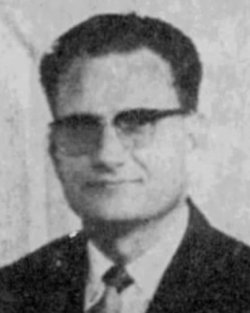
About W.E. Best
Wilbern Elias Best (1919-2007) was a preacher and writer of Gospel material. He wrote 25 books and pamphlets comprised of sermons he preached to his congregation. These books were distributed in English and Spanish around the world from 1970 to 2018 at no cost via the W.E. Best Book Missionary Trust.
SERMON ACTIVITY
Comments
Thank you for your comment!
Your comment has been submitted and is awaiting moderation. Once approved, it will appear on this page.
Pristine Grace functions as a digital library of preaching and teaching from many different men and ministries. I maintain a broad collection for research, study, and listening, and the presence of any preacher or message here should not be taken as a blanket endorsement of every doctrinal position expressed.
I publish my own convictions openly and without hesitation throughout this site and in my own preaching and writing. This archive is not a denominational clearinghouse. My aim in maintaining it is to preserve historic and contemporary preaching, encourage careful study, and above all direct readers and listeners to the person and work of Christ.
Brandan Kraft
Bible Verse Lookup
Loading today's devotional...
Unable to load devotional.
Select a devotional to begin reading.
Examples: Isaiah 53:10, Rom 8:28-30, Psalm 23, grace, love one another
to
This chapter has verses 1---
Sign in to save your Bible lookup and search history.
Comments
Your comment has been submitted and is awaiting moderation. Once approved, it will appear on this page.
Be the first to comment!