First, I want you to open your
Bibles to 2 Timothy chapter 4, and I want to read the first
five verses. That's just to begin with. We're
going to have a little different type of lesson this morning.
I want to take you through quite a few scriptures today. Then
I would like to close the series that I've been in, Next Lord's
Day, the Lord Willing. by speaking from Paul's second
letter to the Corinthians. And the desire of Paul was to
present the Corinthians as a chaste virgin to Christ. That should be the
desire of every man of God, not just the apostles. whatever God
called preacher. In 2 Timothy chapter 4, very
familiar passage to all of us, I want to read just the first
five verses. And then I want to develop something
this morning that I think that we need. I am not giving this
message just for the benefit of two or three or one or two
members of the assembly. or even a half a dozen or a dozen,
it is a lesson for all of us in these times in which we're
living and what our responsibilities are, not only as one called by
God to teach and preach the Word, but also to all who name the
name of Christ. I'm reading from the New American
Standard Bible, I solemnly charge you in the presence of God and
Christ Jesus, who is to judge the living and the dead, and
by His appearing and His Preach the word. Proclaim the
word. Be ready in season and out of season. Reprove, rebuke,
exhort with great patience and instruction. Now here's your purpose statement. For the time will come when they
will not endure sound doctrine or sound teaching, but wanting to have their ears
tickled, they will accumulate for themselves teachers. in accordance
to their own desires, and will turn away their ears
from the truth, and will turn aside to myths. Now, there's another article
in yesterday's paper about a man who has written a book. You'll
want to look at that, too. I think it's in the religious
section. on angels. Folks, some dangerous times ahead
for all of us. I said that in connection with
the word myths. Verse 5, but you, now who is
addressing whom? is addressing his letter to Timothy. Paul is charging Timothy. You never read where Timothy
charged Paul. You know, I was raised in a different
generation. That doesn't mean that I wasn't
a sinner. That doesn't mean that I didn't have a wicked heart.
That doesn't mean that I could have done many of the things
that are being done by people today in this generation, but
I was raised in a generation where there was some respect
for age. That doesn't exist anymore. One of the greatest hindrances
to our society and also to the assemblies of Christ Verse 5
again, but you be sober in all things. Endure hardship. Persevere in other words. Do the work of an evangelist.
Fulfill your ministry. That was Paul's charge to Timothy. And then you'll notice what he
says beginning with verse 6, for I am ready. Paul was at the
end of the race, just about the end of the race, when he wrote this, I'm being
poured out as a drink offering, and the time of my departure
has come. I've fought the good fight. I
have finished the course, I have kept the faith. In the future there is laid up
for me the crown of righteousness, which the Lord, the righteous
judge, will award to me on that day, and not only to me, but
also to all who love His appearing. Great passage of scripture. Really
great. I want to take one word this
morning and develop it. The word is a very familiar word
to most of us. Presbyteros. This word is found 67 times in
the New Testament. I also want to mention about
five other words that carry a similar connotation. I want to deal with
both things that are easily affirmed and then some things about which
there are questions and doubts and see if we can't eliminate
the doubts. that some may have. I said there
are five other words. Let me give them to you. Presbyah
is found only twice, and I'll give you these references because
they're not found many times, so you can find them for yourself.
It's found in Luke 14.32 and Luke 19.14, and it is translated, ambassador. I think in your King James it
may be ambassage. The second is a verb form, presbuo,
presbuo. Presbuo is found only twice,
found in 2 Corinthians 5.20 and Ephesians 6.20. And it speaks of ambassadors. We are ambassadors on the behalf
of Christ, Paul said. We are ambassadors. And an ambassador
is one that has been sent by someone to some other people
on behalf of the sender and what is to be represented by the ambassador. So we are ambassadors. Found
only twice, the verb form. Now there is another. This one
is Presbyterion. Presbyteron. It is found in Luke
22, 66, Acts 22, 15, and 1 Timothy 4, 14, and it speaks of a presbytery,
which is a body of elders. Now, let me give you another
word. It's presbutes. Presbutes. Found only twice. Found in Luke 118 and in Titus
2 and verse 2. Well, three times. And Philemon
verse 9. Finally, the last word is presbutes. Found only once and it is used
in reference to women. Now we'll put all these words
together in the study of Presbuteros. This word may mean
either an older man, according to John 8 verse 9,
and I'll give you another proof text, also according to Luke
118. Now, in John 8 and verse 9, we
have that portion of Scripture where the woman who had been
taken in the act of adultery stood before the Lord, and the
Lord had something to say to all of them. They wanted to take
the person who had been taken in the act, and they called attention
to the fact that she should be killed, stoned to death. So the Lord turned it on them,
and when He turned it on them, He began with the older men,
He began with them, and then they all left, beginning with
the older men, until they were all gone, and left only the woman. So Presbyteros is used in the
sense of older men, not only in that passage, But in Luke
1 and verse 18, and this is a very familiar passage and that's why
I chose this one to give you on this particular point, you
remember Zacharias, when the angel came to speak to Zacharias
concerning the birth of John the Baptist and how that he would
come in through them, through Zacharias and by Zacharias and
his wife. And so here is the statement.
Zechariah said, I'm an old man. That's presbyteros. Is there any doubt about how
it's used here, what it means? It refers to an older man, an
older man. So Zechariah said, I'm an old
man and my wife is advanced in years. So he wondered how in
the world this could take place. So I'm calling attention only
to the fact that he spoke of himself as an old man. Now, I said to begin with that
the word may mean either an old man, secondly, or an elder, and I think it should be translated
in that manner, an elder, because of one's official position in
the assembly. Now notice what I said. He should
be called an elder, same word, because of his official position
in the assembly. I want to ask you a question
at this point. Not all the apostles are referred to as elders. Only two are referred to by the
use of the word elder. You know who they are? John. See, I thought about this in
connection with my study of 3rd John and 2nd John. See, when
the apostle John wrote the 2nd epistle, just one chapter, and
then the 3rd epistle, The first one was to the chosen lady, remember
that? The chosen lady and her children. And then he referred to himself
as an elder, the elder. In other words, the elder wrote
to the chosen lady and her children. So, written to an individual
in reference to this woman and her children or her family. So
it's a general, a general epistle, not written to an assembly. The
third epistle begins the elder. So he referred to himself again
as the elder. And this time it was to Gaius
that we looked at last week. And it was not written to an
assembly, but written to a Christian man who was very active in an
assembly. Now, who is the other that is
referred to as an elder? It is Peter. Peter referred to
himself as an elder. And I'd like to take the time
to read that passage, so open your Bibles, please, to 1 Peter. And in 1 Peter, chapter 5, beginning
with verse 1. Look at the King James first,
then we'll change it around a little bit. The elders who are among
you, I exhort, who am also an elder." There's your presbyteros
again. Now, you can translate it like
this, therefore I exhort the elders among you. And then he says, as your fellow elder. Now, you have the word presbyteros. In this instance, notice you
have the S-U-M, and that is the preposition S-U-N. Prefix. So, basically, the prepositional
prefix, whether it's used in a verb or an adjective or whatever,
noun or whatever, It is the word that adds something to the stem. And the basic meaning of soon
is with. But you're not, it's not necessary
to translate it that way. So I think the translation is
very good. Who am, are as a fellow elder. So therefore I am exhorting,
that's a present active indicative. I am exhorting the elders among
you. as a fellow elder. So he referred to himself as
a fellow elder. And that is interesting and that
is a good lesson for us to learn. So Peter referred to himself
as an elder. Now it was interesting in studying this because I hadn't
studied it just from this point of view before in all of my life.
In fact, I never thought it, I guess, necessary and so I just
hadn't explored this particular avenue. I read in doing a little
research work on this that some say, and I'm quoting now, how
are we to understand the words ha, and that's the definite article,
Omicron with a rough breathing, ha, ha presbuteros. How are we to understand it as
applied to John? and Peter. And they say, go so
far as to say, it remains in doubt as to whether it refers
to the manhood as each person being a man, an older man, or
whether it refers mainly to his official capacity or position
in the assembly or in the Lord's work. Well, let me just raise
the question. How do you think Peter meant
it here? Think about it for a moment. So there is a controversy, has
been, still is, differences of opinion as to how one should
accept Peter's use and John's use, and especially since there
is no reference to all the other apostles as being elders. Well, we do know the main position,
and I'm talking about the official position of the various apostles,
and they were all proclaimers of the Word, and that's all in
the world that it really means. The word elder refers to a preaching,
teaching man that God has called. There are some instances where
it does refer to an older man. Now let me give you an illustration
of that. Look with me and then we'll have a few more comments
and I'll come to a conclusion. At least it's a conclusion as
far as I'm concerned. It may not be yours, but as far
as I'm concerned. Turn to 1 Timothy chapter 5. In 1 Timothy chapter 5, verse
1. How is the word presbyteros used
and what is its meaning in this particular passage of Scripture? And here it is. Do not reprimand an elder. but exhort him as a father."
Personally, I think in this particular instance, as Paul is giving information
and a charge to Timothy, who was a young preacher, in other
words, you're a younger man, and since you are a younger man,
do not And notice what he says. Do not reprimand, and the word
is rebuke in your King James, an elder. In other words, an
older man. Don't reprimand him. Approach
it differently. And then he says, you're to treat
him as a father. And then he goes on to say, the
younger men as brothers. Treat them as brothers. He's
talking about assembly work and how he should conduct himself
in the assembly. So that's the basic meaning there.
So personally, I believe in this instance, he's talking about
an older man because it is used in that way and I've already
proved that. from the passages that I gave you in John 8 and
9 and also in Luke 1 and verse 18. Now, let's go a little further
in the fifth chapter of 1 Timothy and see what the word means,
that is the word elder. Drop down to verse 17. Now, you're
not talking about older men here necessarily. So he says, let
the elders having ruled well. Let the elders having rule well. Now, Presbuteros is not used
in the same way here. He's talking about the rulers.
He's talking about the official position of a God-called man
in the assembly. So he says, let the elders In
other words, taking into consideration, there is a plurality of elders.
Let the elders, having rue well, be esteemed deserving. In other words, counted worthy
or esteemed worthy of double honor. And especially those who
labor in the Word, and notice now the twofold thing is mentioned
here, and doctrine, which literally means teaching. In other words,
preaching and teaching. There is a little difference.
When you really study it out, there's a little difference between
a proclamation of a message, generally, and then teaching
when you get down to the nitty-gritty of a great biblical subject.
So the person who is good as far as he's excellent in his
work as a proclaimer, Generally speaking, the message in a general
way, and then when it comes to the teaching of the words and
getting into the doctrine and unfolding and interpreting, he's
handling, he's doing a good job. He's worthy of double honor.
And then you'll notice in verse 19, against an elder, do not
receive an accusation. So don't receive an accusation
against an elder except it be before two or three witnesses. Why? Because of his official
position. Folks, it's not easy to be an
elder. I don't know why a lot of young
men think it's a glamorous thing to be a preacher. I don't know
why they think it. I never thought it because I
didn't know enough about it to even think that when God called
me. I just knew I had to preach and I knew that and so I had
to do it. But a lot of these other things
I didn't realize. And I was so naive when I first started that
I thought everyone who went to church just had a love for the
Word and the proclamation of the Word. And I didn't know it
would cause so much trouble. That's how naive I was. But I
found out the more you teach and the stronger you are in your
explanations and you declare the whole counsel of God, you
find out a lot of people don't want it. And that was a real
surprise. So I was in for a rude awakening
real quick. So you see, in this fifth chapter,
you have... You see, I'm doing this too,
folks. I want you folk, if it's in the will of God, when you
have someone to take my place, you'll understand the workings
of an elder better, and you'll treat him as he ought to be treated. I wouldn't want to recommend
a young person or an older person for that matter, believing that
he's a God-called, God-ordained man, not just ordained my men,
but God ordained man. I wouldn't want to recommend
him to anybody unless I felt that the assembly understands
some things. And especially you folk, you've
been subjected to the whole counsel of God. And I think I can say
this without boasting. I think that over the years,
some of you have been under my ministry nearly half a century,
And many of you, 25 years, and very few of you, just a few years,
and even during that length of time, we've tried to cover a
lot of area and a lot of material. And you have access to the books,
so you should be pretty well indoctrinated. And therefore,
you should know how to conduct yourselves. Now, at this point,
let me say this. If I know my heart, I am committed,
folks, I am committed to my God, the Father, and His Son, the
Eternal Son, the Lord Jesus, and the Holy Spirit who lives
within me. I'm committed. And I'm committed
to the Word that He has entrusted to me. I'm committed. Furthermore, I
am committed to those of you who are committed, and I hope
all of you are committed. You say, well, aren't you committed
to give the message to everybody? Yes. Yes, I have that opportunity. But I'm talking about committed
folks, to people who are committed. Now, you're committed. I'm taking
for granted you're committed to the Lord and to His Word.
Did you know you're not only committed to the Lord, but you
are also committed, in being committed to the Lord and to
His Word, you are committed to the under-shepherd because He
is a representative of the shepherd. Did you know I've even had church
members to say to me, I said church members, I haven't had
for a long time, but I've had them to say to me, When I would
use the passage that Paul used, follow me as I follow the Lord. And I've had church members who
dislike me with a purple passion that say, if you think I'm going
to follow you, you have another thought coming.
So it didn't take me long to tell people like that, you have
no business being here. So folks, we need to be realistic. Realistic. So if I said, I said,
if I know my heart, I'm committed. I'm even, I'm even more committed
today than I was 58 years ago at this time. Now, we have seen how that pressed
butyros is used. It can mean an older person,
but it can also mean, and does mean in most cases where the
word is used, the official of the assembly, his official position
in the assembly. The question is, are we all committed? The more we're committed, the
easier it's going to be for us in the troublest times that are
ahead of us. Now, I want to give a few points
at this time. First of all, preaching elders,
that's what I am, a preaching elder. I'm not going into the
other words, the word bishop is used, I'm not going into the
word for shepherd and so forth, and pastor. They're used synonymously,
but there is a little shade of difference in the words. But
I'm not going into that this morning. That isn't necessary.
Let's just look at preaching elders. And did you know the
Bible does not teach that anybody else ought to do the preaching
but God-called preachers? No such thing as a lay preacher,
biblically speaking. All Christians, all saved people,
are responsible to witness. You take, for instance, when
the church in Jerusalem was scattered and the people went everywhere,
they all gave testimony, they all had something to give. They were not elders being sent
out, but they were Christians giving the message, personal
witnessing. But as far as the Bible is concerned,
and I don't find too many today, and I have searched this out,
and I did this over 40 years ago because I was concerned about
it, and I came to the conclusion because there was nothing to
contradict it, and I have mentioned it to people, I've mentioned
it to preachers, and I've had preachers to say to me, you're
right, Bess, but you can't afford to say that today. You can't
afford to do that today. Our churches are so organized
and so geared in things you can't get by with it today. Folks,
I don't have any more sense than to believe that whatever the
Bible teaches, that's exactly what I'm to do. So preaching elders are to do
what? Preach, proclaim. Now, I'm looking
at the passage we've already read. This is 2 Timothy. Chapter
4 and verse 2. Preach. Then you have the word
reprove. How do you do it? You do it with
the proclamation of the truth. And I'll give you some illustrations
of it in a minute. Secondly, you are to rebuke. When a person
needs to be rebuked, he's to be rebuked. And fourthly, you are to exhort. So notice the words, preach,
reprove, rebuke, exhort, and then he gives the reason why.
Why? In the next verse. Now, I would
like for you to turn to Hebrews 13, chapter 13. The word presbyteros is not used,
but yet he's talking about people in the official capacity of leading. And that's what a shepherd, an
under-shepherd, leads. And folks, I don't want to drive,
I don't believe in driving, I believe in leading. I believe in leading. In Hebrews
chapter 13, and let's look at some passages in this portion
of Scripture. Verse 7 is the first one. Hebrews
13, verse 7. And then verse 17, we have a
verb that is used here, and the verb is hegiomai. And hegiomai means what? It means to lead, to rule, or
to guide. to lead, to rule, or to guide. Now look at verse 7. The King
James says, Remember them which have the rule over you. I'm going
to translate it like this. By continually remembering, the
ones who have the rule are the ones leading you, who spoke to you the word of God,
whose faith follow, considering him and considering the manner
of life of the individual. So you are to be continually
Remembering the ones who have the rule are to lead, are to
guide you. We have the same thing in verse
17. And here it says obey. And I
want you to know, I admit that's a pretty strong word, but notice
what it says. You're not obeying me when I
give you the truth. You're obeying the Lord and I'm
just His instrument. But obey them, in other words,
recognize what they are saying, and obey the ones leading you. Same verb that we've already
told you about. And then submit to them. Here's
the reason why. For they watch out for your souls. Watch out for your souls. Well,
let me stop there for a moment. Yesterday I read a letter. by a preacher down in Florida,
and he has sent out a lot of books. Hank knows about him,
Mount Zion Baptist Church. He has sent out a lot of our
books. He's given them away to his radio
listeners and all. He has a radio program. And they
sent a lot of books and tracks overseas. He had gotten one from
Africa, and he wanted his readers to read this particular letter
or an excerpt of it. And these were people who don't
hardly have food to eat. In fact, they go sometimes two
or three days without a meal. And he was impressed just as
I was impressed when I read it. And he wanted the people to read
it that he sent this letter out to. And this man said, send us
Bibles, Bibles, Bibles, not food, but Bibles, because we need something
to feed our souls. Folks, that's pretty touching.
When here is a man and he has gone three and four days without
food, and he's not asking for money, even for food. He's asking
for Bibles that he might have food for the soul. I'll tell
you, whenever a person is that hungry for the Word, it certainly
stands to reason that something has happened to that individual.
I've never been in that position, and you haven't either. I may
have postponed a few meals, but I haven't really been without
food. for a very long period of time.
So they watch out, these men, if they are God-called men and
their eldership is recognized as being God-ordained, they are
watching out for your souls. No wonder Paul said that he was
jealous of the Corinthian Christians. with a godly jealousy that he
might present them as chaste virgins to the Lord
Jesus Christ. Folks, if that's not a pastor's
heart, if that's not a true pastor's heart, I don't know one. And I believe that's the desire
of every God-called person. So we can see what he's talking
about here. So God-called elders are committed. And the elder is not the one
who either regenerates or convicts. He doesn't do either
one. He just simply gives the message. And the Holy Spirit will use
the message if the Holy Spirit has already quickened or made
alive that person, thus enabling that person to experience a true
conversion experience. So the elder is not one who either
regenerates or convicts. Now here's a warning for all
of us. And I mean this was good for me as I thought it through.
And I discussed it with Juanita. We discussed it together. So
follow me on this for a few minutes. I want to explain something.
Response to the Word of God, beloved, must always be not because
of persuasion by the preacher, but by the persuasion of the
indwelling Holy Spirit. You know, as well as I do, the
methods that Baptists use, not only Baptists but many others,
button-holing people, trying to get a decision out of them,
using your influence to persuade them to make a decision for Christ,
we know what the result is, that assemblies become filled with
unregenerated people. So any time a person responds,
you see, I did that when I was nearly 15 years of age. I said,
I did that. because of the pressure that
was put on me. And here my girlfriend had just
walked the aisle and made a profession of faith. And the preacher comes
back to me and he says, Are you a Christian? I said, No. Don't
you want to be? And I said, Yes. And so before
I realized what it was all about, he had me up there. But folks,
I'm here to tell you this morning there wasn't any change. There
wasn't any change. Yes, there was a change. for
a week or so because of what I saw and the pressure that was
put on me. But it didn't last, and it never
does last any more than you as a believer. If you do something
because you feel that I'm putting pressure on you to do something,
it won't last. And I know it won't last. But
if you do what you do, in response to the Holy Spirit within you. After all, He is the Teacher. The Holy Spirit is THE Teacher. Now, I want to prove what I'm
saying. So let me give you a passage. I have so much I want to say
this morning. I won't have any problem. I just want to keep
it in sequence. So turn with me now, if you will, to 1 John
chapter 2. I John chapter 2. I want us to
look at verses 20 and 27 of this first epistle of John. Let's look at verse 20. But you have an unction. You have an unction. Or you have an anointing. Could be translated anointing.
He's talking about the Holy Spirit. You have an unction or you have
an anointing. Now, I want you to look at the
preposition that is used here. The preposition that is used,
if you have your Greek and linear with you, is apa. Now folks,
it's not going to be easy for you to find out how apa is used. in this particular verse. It's
in the ablative case. And I'm going to go ahead and
tell you that it is a partitive ablative. Partitive ablative. It's used in that sense. And
having said that, let's look at this. But you have an anointing
or an unction from the Holy Spirit, as it's translated in your King
James Bible. But let's spend a little time
on that. I think we need to look at that
real closely because it really has an important meaning. So the Holy Spirit who indwells
us, he works in connection with the message that has been given.
the written, that is, the objective truth that has been committed
to us. And it's the Holy Spirit that uses the objective truth
that is given by the elder or elders, and He uses that to bring
conviction. So it's the Holy Spirit. Now,
and He uses the objective message. So you have an unction, and this
unction It's used, of course, within connection with the objective
message. The Holy One. And it's from the
Holy One. And you have known. Now, it's
important that we know what kind of a verb this is. You have known.
And when you look closely, it is a perfect. And it is a perfect,
active, indicative verb. You not only have known you have
been brought to the realization, but you are in a continual state
of knowing. In other words, when the Holy
Spirit convicts you, convinces you of the truth of what has
been given, folks, you don't lose that tomorrow. You don't
walk off and leave it tomorrow, or the next day, or the next
week, or the next month. Because it is something that
is permanently written on your heart of flesh. And I'm using
an Old Testament expression. Ezekiel chapter 36. Your heart
of flesh and the heart of the regenerated person is soft. It
isn't hard. It's soft. And it being soft,
it's a heart of flesh. It's a new heart. And I said
I'm using the expression of Ezekiel. And Jeremiah uses similar language
in his prophecy. So as a result of this, you have
been convicted. And you have been thoroughly
convinced. So let us be honest now. There
are two ways the taught message is received. Two ways. It's either
received, embraced, are rejected and shunned. In other words,
you are either receiving what I'm giving this morning or you're
rejecting it. No neutrality. Either receive or you refuse
or you reject. Now let's look at two types of
people. Number one, the person who possesses
the spirit of regeneration, hears what is said, he hears because
he's been given a hearing ear. That means he's been regenerated.
He hears what is said, or what is given. And having heard, what
happens? He's convicted, and when he's
convicted, there is a change. Now this continues after we're
regenerated. we grow in grace and knowledge
of the Lord. So we hear things we haven't
heard, we have been rebuked, we've been reproved by the Word
of God, we know where we have missed the mark, and so when
we hear the truth, the Holy Spirit takes that truth, we're convicted,
and then comes the change. And so we had an initial change
in regeneration. But that was a change that just
keeps on changing unto the final change when we stand in the likeness
of Christ before Him. Just keep on changing. So the person who receives the
spirit of regeneration or possesses the spirit of regeneration, he
hears, he's convicted, And he changes by what he's heard. Secondly,
the person who possesses, he may be a religious person, but
he possesses only the spirit of the world if he's unregenerate. Because a person may possess
the spirit of some religion, but it's still the religion of
the world, not the religion, it's not Christianity, it's not
true Christianity. So the person who possesses the
spirit of the world, responds with anger and revenge. With anger and revenge. Now I'm going to give you a classic
example. Somebody that you know that I
don't mind using. We had to exclude him a few years
ago. And David Culberson knows exactly
what I'm talking about. You're a man who came He even
thought he was called to preach. His wife was really the one who
had called him, I think. She was pushing it more than
he was. And some of you, and I appreciate you young men, he'd
like to have a class and have you all to come, and he would
like to teach anybody to listen to him. Some of you young men,
you didn't. You didn't give him the time of day. And you know,
he even complained to me about, it seemed like the young men
in this church, they didn't want to get together and discuss the
Scriptures. I think you found him out. You
read him real well. One Sunday morning, when I got
through preaching, he came to me red in the face. He was angry
enough with what I had preached that he was ready to fight. I wasn't surprised. I was just
waiting for it. I knew it was coming sooner or
later. He didn't like what I said. He was angry. He had been hit. He couldn't take it. You know
why? He only possessed the spirit of the world. Therefore, he wasn't
convicted. He wasn't convinced. He had his
own idea about things. So it didn't take me but a few
minutes that day, and he'd been coming several years, about six
or seven years. I showed him the door. You remember
I rebuked him for the pulpit. And then finally you know what
happened. Folks, My wife and I were talking to a couple the
other day, and this lady and her husband both are very religious,
evidently, and she mentioned about an autobiography. I just
mentioned during the conversation that the computer came up. Of course, she's a computer operator,
I think, or has been. She's retired now. And so I said,
well, I don't fool with computers. I said, my wife takes care of
the computer work for me. And I said, I don't want to get
involved at my age. I've got my own system of finding
things. And to make a long story short,
the subject of the books came up and wanted to mention what
she had been doing, working with Mary for a long time and so forth,
and how they'd worked on the books. And she said, oh, you
have some books. She said, oh, have you heard
about the autobiography of Billy Graham? And so I had to, in the nicest
way I could, say, well, I don't have too much confidence in Billy
Graham. But isn't it amazing how people
will take his autobiography? Folks, I want you to know, I
could write an autobiography if I told you all that Experiences
that I've had may be more interesting to read than some of Billy Graham's.
No, they wouldn't be as interesting, and you know why? Not bragging on himself and how
many people he has won and reached and all that stuff. How many
millions of people and all of this. But the point is, just
writing an autobiography. Well, I've had some unusual experiences,
but I don't even care about writing about it. I don't like to remember
them too well, but sometimes they do come up. So, you see
the difference? Now, the Holy Spirit either convicts
or condemns. Now the difference is between
the Spirit of the Lord or the Spirit of the world. When you
have been convinced by the Spirit of God that this is the truth
of God, There is always a change when you're truly convicted.
The spirit of the world makes you angry at what you heard,
and then you seek revenge. And folks, I have far more enemies
than I have friends. And I have news for you. The
same thing is true with any true elder that God has called to
proclaim the whole counsel of God. So the Holy Spirit either convicts
or condemns. The conviction is internal. The condemnation is external. In other words, that's what's
going to take place. So one must never respond to Scripture out
of mere pressure from men. Please get what I'm saying now,
because this is so important. I said one must never respond
to Scripture out of mere pressure from men, but from Scripture. Now I want you to turn with me.
Turn, please, to 1 Thessalonians 1. I want to give you the answer
of God's Word to this very important point. 1 Thessalonians chapter
1. And I want to read beginning
with verse 5. What a statement. I Thessalonians 1 verse 5. I'll get turned to it here in
a minute. Here we are. Now this follows verse 4 when Paul said, having known,
brothers, that you have been loved by God. the choosing of you. Now notice what it says, for
our gospel did not come to you in word. Watch this, in word. That's number one, only. It wasn't
just the proclamation of the word to you only. More to it
than that. That's number one. Now notice
the second thing, but also in power. It's in the locative case,
it could be in the sphere of the word, proclaimed, or in the
sphere of power. Because the preposition in that
is used is in the locative case, the locative of sphere. Well,
I even got to thinking about the word power. What does it
mean here? I think I can explain it better like this. You remember
in the third chapter of 2 Timothy, when Paul warned about, in the
last days perilous times shall come, beginning with verse 1? And then he goes on, having a
form of godliness, but denying the power? Well, think about that statement
now. Now look at this. So those whom God has loved eternally,
even love before the foundation of the world, given in Christ
before the foundation of the world, you chosen ones, for our
gospel did not come to you in word only, but also... Now I want you to
look at the conjunction that is used too. But also in power. That is, in the sphere of power. In the sphere of power. What
else? And then he says, and in the
sphere of the Spirit. And of course the power coming
from the Spirit. And in the Holy Spirit, and in
Much assurance. So many people say they lack
assurance. There shouldn't be any lack of
assurance. When they have this kind of experience,
folks, there shouldn't be any lack of experience. Now let's read verse 5 again
all the way through. For our gospel did not come to
you in word, in the sphere of the word only, but also in the
sphere of power, and in the sphere of the Holy Spirit, and in the
sphere of much assurance. Much assurance. Now what does he say? As you
have known Now notice that, another perfect tense. You have known
and you continue to know what kind of men we were among
you for your sake. And you became imitators of us. Now Paul was an official, imitators
of us. So you see what a tremendous
responsibility the man of God has. And of the Lord, having welcomed
the Word, now watch this, in much affliction, in much affliction,
with joy of the Holy Spirit. Now, I'm not going to have time
to get into this, but I want to close with this. I won't have
any time to go further. Since we're talking about in
the sphere of the Spirit, in the sphere of God's power, this
assurance has come. Having talked about the Spirit
of God, folks, the Spirit has to be tested. You've got to be
able to test the Spirit. Now, having said that, I want
you to turn in your Bibles Please, to 1 John chapter 4, the first epistle of John chapter
4. He talks about trying or testing
the spirits and what a responsibility that is. Let's read beginning
with verse 1. Do not believe every spirit. Don't believe every spirit. After
all, there is the spirit of the world. And the spirit of the
world happens to be under the domination of the spirit of the
devil himself, evil spirit. And then he goes on to say, but
test the spirits, plural, only one Holy Spirit. Test the spirits. which in confessing that Jesus
Christ has come in the flesh is of God. So test every spirit
whether they are from God because many false spirits have gone
forth into the world. And then he tells how we can
test the Spirit in reference to the message of Christ. So
when someone says Christ was peccable, that's the wrong Spirit,
folks, not the Spirit of God, just to give a simple explanation
of it. So our responsibility is to test
the Spirits, and that is a very serious responsibility. I want
to make this as the final point. Older elders direct the younger
elders. So I wanted to study that part.
And I'm going to have to give some illustrations of my own
experiences. A few years ago, I had an elder
of this assembly who said he was an elder. He came to me,
and after many years, and he said, I am an equal elder with
you. Now, because I'm a retired person,
I'm an equal elder with you. And I'm requesting that you share
all the preaching and all the responsibilities of the church
equally with me. Now folks, That was pretty hard to take. I hadn't heard that one before.
So I sat there. He had dismissed his wife. His
wife went to shop and just left him there. And he called me,
asked me to come over to his house. So I went over there.
And so he informed me. Now then, I'm an equal elder
with you, time-wise and everything. I said, I have news for you. And I'll admit it made me angry.
It made me angry again. I said, I'm not going to share
anything with you in the sense that you're talking about. In
fact, the business, you have just committed yourself in a
manner that Sunday morning you're going to have to go or I'm going
to have to go. I'm not even going to work with
you. The very idea, the audacity, I said, you have manifested to
me, you're a self-appointed individual. And you're making demands now
that I won't take. And I got up and walked out.
And I said, I'll see you tomorrow. That was Saturday. And I went
to church that next Sunday morning, just before we left over on Broadway. And I was determined to do it
that Sunday morning. And I confess to you today, I made a mistake
by not doing it. But your hindsight is always
better than your foresight. And of course, I'd been through
many problems with him over a period of about 25 years. And so in those days, I got there
early and opened up the building, turned the lights on, the air
conditioner and everything. In a few minutes, he and his
wife, they came real early. He came because he knew I got there
usually about an hour early. He walked in and he said, I've
got to talk to you. I said, OK. He said, I was wrong about what
I said and did. Could, and he always included,
when he said family, boy, he meant all of his family, his
kids and everybody, you know. He controlled everybody. So he
said, Is it alright with you if my family and I continue worshipping
here?" I said, it'll take you a long
time to prove yourself to me. It'll take a long time for you
to prove that you are sincere in what you're saying now. But I said, he brought up about,
you know, forgive him, seventy times seven, You see, there's always, I don't
care what the subject is, anybody, if he's looking for a proof text,
he can find it. He may take it out of context,
and I was reading something the other day on that, that I'll
share with you. And this fellow was commenting about diatrophies. He said, everybody has a principle. He said, the man of God has a
principle. But he said, Diotrephes had his principle. Well, folks,
that's true today. As Christians, we're fighting
and we're contending for a principle. But I want you to know, the Muslims
have their principle. And so the most wicked fellow
in the world has his principle. So anybody can have a principle.
It may not be biblical, but he has a principle. And that principle
is a strong motivating force in his life. So I didn't do,
I gave him another chance. But folks, he proved again, over
and over, that equality is what he was always looking for. He
had to have a job, he had to do this, he had to do that. Equality.
Well, I have news for you this morning, so listen closely. You
may want to search the scripture and see if I'm telling you the
truth or not. There is no such thing as there being equality
among elders anymore than there is equality among members. No such thing. We're not all
the same. We're not all the same as far
as what we do, what we think, in our growth, in grace and knowledge,
etc., etc. Now you say, well, what about
it? Let me give you one other illustration.
How do you think I felt back in 1983 when my health was bad
at that time and we, you know, had a certain fellow to come
and who said he didn't even want to preach or teach? And after
six weeks, he came to my living room and sat on my couch and
looked at me and made the statement If you'll get out of the way,
I'll pastor this church." You know what I told him that
morning? I said, let me tell you that
this coming Sunday morning, I'm going to bring a motion that
we send you back to Georgia where you came from. And that we did. Self-appointed. Folks, do you realize that I've
had to face over 40 self-appointed men over the last 35 years? And not a one of them, not a
one of them is preaching the gospel today. I said those self-appointed ones.
So there's no such thing as equality. So I want to tell you this morning,
in closing, I'm doing this for a practical reason. My hope is when we get the building and you manifest your commitment
to the Lord and to what we're seeking to do, I'll start looking. And I know some men through the
country. But it doesn't make any difference
who comes, whether he's young or a man 50 or 60. There will
not be the recognition of equality between us until I step down
and say, you are the presiding and the elder to be in charge. That's my goal. And I hope that
the Lord enables us to do just that. I hope I've been helpful. I hope
I've been practical. But there's some very important
things. Folks, I do not want you to say, I am committed, preacher,
and do it out of pressure or you feel that it's been pressure
from me. We want to be convinced, we want
to be convicted, not by the word only, but by power, by the Spirit, and in full assurance. Let's stand.
About W.E. Best
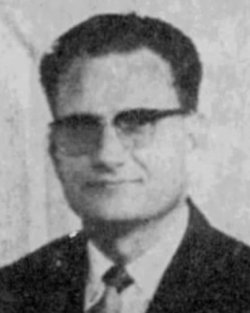
Wilbern Elias Best (1919-2007) was a preacher and writer of Gospel material. He wrote 25 books and pamphlets comprised of sermons he preached to his congregation. These books were distributed in English and Spanish around the world from 1970 to 2018 at no cost via the W.E. Best Book Missionary Trust.
SERMON ACTIVITY
Comments
Thank you for your comment!
Your comment has been submitted and is awaiting moderation. Once approved, it will appear on this page.
Pristine Grace functions as a digital library of preaching and teaching from many different men and ministries. I maintain a broad collection for research, study, and listening, and the presence of any preacher or message here should not be taken as a blanket endorsement of every doctrinal position expressed.
I publish my own convictions openly and without hesitation throughout this site and in my own preaching and writing. This archive is not a denominational clearinghouse. My aim in maintaining it is to preserve historic and contemporary preaching, encourage careful study, and above all direct readers and listeners to the person and work of Christ.
Brandan Kraft
Bible Verse Lookup
Loading today's devotional...
Unable to load devotional.
Select a devotional to begin reading.
Examples: Isaiah 53:10, Rom 8:28-30, Psalm 23, grace, love one another
to
This chapter has verses 1---
Sign in to save your Bible lookup and search history.
Comments
Your comment has been submitted and is awaiting moderation. Once approved, it will appear on this page.
Be the first to comment!