Spurgeon's testimony. I won't read you a lot of it.
I read you last week a portion of the testimony of a,
quote, grace preacher. Well, Charles Spurgeon is supposed
to be the same type of preacher. Let me read you just a few things
out of this testimony of his is called Spurgeon's personal
testimony. Let none despise the strivings
of the spirit in the hearts of the young. Let not boyish anxieties
and juvenile repentances be lightly regarded. He incurs a fearful amount of
guilt, who in the least promotes the aim of the evil one by trampling
upon a tender conscience in a child. No one can guess at what age
children become capable of conversion. And remember, they made no distinction
between conversion and regeneration. I, at least, can bear my personal
testimony to the fact that grace operates on some minds at a period
almost too early for recollection. When but young in years, I felt
with much sorrow the evil of sin. My bones waxed old with
my roaring all the day long. I have never been thoroughly
an unbeliever. I like the way that paragraph
starts off. I have never been thoroughly
an unbeliever but once. And that was not before I knew
the Savior, the need of a Savior, but after it. It was just when I wanted Christ
and panted after Him. that on a sudden the thought
crossed my mind, which I abhorred but could not conquer, that there
was no God, no Christ, no heaven, no hell, that all my prayers
were but a farce, and that I might as well have whistled to the
winds or spoken to the howling waves. Ah, I remember how my
ship drifted along through the sea of fire, loosened from the
anchor of my faith which I had received from my fathers. That would be human faith, wouldn't
it? I went to the very verge of the
dreary realms of unbelief. I went to the very bottom of
the sea of infidelity. As I hurried forward at an awful
speed, I began to doubt if there was a world. I doubted everything
until at last the devil defeated himself by making me doubt my
own existence. I thought I was an idea, floating
in the nothingness of the acuity. Oh, I tell you, I don't think
I've ever read anything any worse than this. It says, Then I awoke from that
death dream which, God knows, might have damned my soul. and ruined my body if I had not
awoke." Folks, I tried to come to some
understanding of this, and the further I went, the worse it
got. I'll read you just a little bit more. I think it often proves a great
blessing to a man that he had a terrible conflict, a desperate
encounter, a hard-fought engagement in passing from the empire of
Satan into the kingdom of God's dear Son. Sooner or later, each
saved man will have his hand-to-hand fight with the Prince of Darkness. And, as a general rule, it is
a great mercy to have it over at the outset of one's career
and to be able afterwards to feel, quote, whatever comes upon
me, I never can suffer as I suffered when I was seeking Christ. Whatever staggering doubt or
hideous blasphemy or ghastly insinuations, even of suicide
itself, may assail my feeble heart. They cannot outdo the
horror of great darkness through which my spirit passed when I
was struggling after a Savior. I do not say that it is desirable
that we should have this painful ordeal. much less that we should
seek it as an evidence of regeneration. But when we have passed through
it victoriously, we may so use it that it may be a perpetual
armory to us." Confusion twice confounded. I certainly wouldn't want something
like that in print. Two or three other important
announcements. Roy Nickerson called me this
past week. Roy has been asked to serve on
the deacon body. as a result of Brother Ronnie
Hicks going to Dallas. John, I think it's timely that
we look at this portion of Scripture today in view of decisions that
you men will make today, hopefully, and they'll be made in a good
spirit, and then that unity will be manifested subsequent to the
meeting today. This is not an epistle written
to an assembly. This is what is called a little
general epistle. So read with me. I'll give a
different translation of what you read, but read along with
me in your King James or NASB or whatever you have. written by John, the elder to the chosen lady and her children, whom I love
in the sphere of the truth. That preposition in, locative
of sphere or realm. And not I only, but also all
the ones who have known the truth. I'm reading slowly, folks. Who have known the truth is a perfect active partisan. who have known the truth. That
means you continue to know it. And you'll always have it facing
you. And you can't get away from it.
Verse 2. Because of the truth dwelling in us. And I'm trusting you have truth
dwelling in you. and shall be with us how long
two or three days and then forget it oh no forever pretty good
epistle isn't it pretty strong isn't it I have no confidence in a compromiser
period grace mercy and peace shall be with us From, this is
the source. From whom? From God the Father. And just the Father? No, and
from the Lord Jesus Christ, the Son of the Father, in the sphere
of truth and love. Truth and love go together, folks. If you have the truth, There's
love in you. Love for the truth and love for
those who love the truth. Period. I would say those two verses
are pretty potent, aren't they? Then what does he say? Three
verses. I rejoiced greatly because I
have found some of your children walking in truth, or walking
in the sphere of truth. As we received, not a commandment,
just commandment, commandment from the Father, and the Father
being the source. Verse 5, And now I ask you, lady,
not as though I wrote a new commandment to you, But that which was from
the beginning. That we love one another. And this is love. That we live
according to His commandments. And folks, when we live according
to His commandments, we don't try to change them. We just take
them at face value. We don't try to water them down. We don't say, well, we're not
living in that era. The truth is for mankind in every
age because human nature is the same in every age and manifests itself the same
way in every age. just as you have heard from the
beginning, in order that you may live in the sphere of truth. There's that locative of sphere
again, in the sphere of truth. You may, that's the subjunctive,
doesn't mean you always will, but that's your responsibility. Now notice beginning with verse
7. For many deceivers have gone out into the world. Many deceivers. And folks, this
refers to their goal. G-O-A-L. The deceivers have a
goal. And their goal is to deceive. who do not acknowledge Jesus
Christ as coming in the flesh. Do you see what all is involved
in that statement? The subject of impeccability
comes up and that heresy of peccability comes up and on and on we could
go. This is Notice now we have a
definite article in the Greek. This is THE deceiver and THE
antichrist. So every one of these deceivers
is an antichrist. And folks, we have a whole swarm
of them in the world today. Now look at verse 8. Watch yourselves in order that
we may not lose, now there's another subjunctive, may not
lose those things which we accomplished, but that we may receive a full
reward. Yes, may receive it. No guarantee that you will, but
you may receive it. Verse 9, everyone who goes too
far and does not continue in the teaching of Christ does not
have God. The one continuing in the teaching of
Christ has both the Father and the Son. So watch out, compromising, bad
sign. Verse 10, if anyone comes to
you, anyone, brings not this teaching do not receive it into the house and to not bid him Godspeed don't
you even bid him Godspeed for the one telling him to rejoice is contributing to
his evil deeds. Brother, that's as strong as
could be put. I believe it. Having many things to write to
you, I do not want to do so with paper and ink. But I hope to come to you and
speak face to face that your joy may be full. The children
of your chosen sister See, you can't get away from
that choice. Greet you, and that's all you have to say,
no Amen, in your Greek text. Wouldn't you say that's a pretty
powerful portion of Scripture? It doesn't really need any interpretation. It just interprets itself. And
that's what I like. I want to give you a A few statements
to begin with this morning. I was reading yesterday, doing
some research work and looking into the works of the Puritans.
Came across a Puritan who made a very significant statement
about faith. Last Thursday, from two until
past five o'clock, as I've already mentioned to you, I sat in a
dental chair. Juanita was next door, and she was two hours in
one. Had an aide, dental aide for
her, and had a dental aide for me. The one for me was very talkative. She didn't
have much to do, and so she was waiting for the dentist to come
back in. So during the conversation, she
admitted she went to church. Her grandmother is a Pentecostal
preacher. Folks, you've got all kinds of
charismatics in East Texas, not only East Texas, but in Houston
and everywhere else. Baptists and Methodists, and I want you
to know there isn't any difference in any of them. Let me say that again. There
isn't any difference really in any of them. And so she said, I want you to
bring me some books when you come back. on the 10th of next
month. And I said, OK. And she said,
what do you have? And I said, they're all theological
books. Theological? I said, yes. And
so I said, let me give you the titles of a few so you can let
me know which ones you might like for me to bring to you.
I said, simple faith. She stopped me. She didn't let
me finish. She said, that's what I need. I need something that's
simple. I said, you didn't wait until I gave you all the title. A misnomer. I said, anything connected with
the sovereign God is not simple. It's complex. So I won't go into this at any
length, but I started to ask her a few questions. I said,
you know, there are seven different phases of deliverance. And I said, you're familiar with
the word salvation, aren't you? Yes. I said, well, it comes the
verb form or the noun form. It doesn't make any difference.
I said, it can also mean deliverance. So there are seven different
aspects of deliverance, and where do you think it starts? She looked at me. She didn't
answer. I said, well, I'll give you what
the average answer would be today, whether it's from the charismatic
followers or whether it's Methodists or Baptists. They would say it's
when you Turn your life over to Jesus.
When you accepted Him, yeah, I said, that isn't true. That's
not the first aspect of deliverance. I said, have you ever heard a
message on election? No, elect, 44 years old now,
folks, goes to church all the time. 44 years of age, goes to church
all the time, and you've never heard a message on election?
No. I said, do you know what it means? She said, well, I'm
trying to think it through. I said, surely you're familiar
with Ephesians chapter 1. And I said, put that down in
your memory or write it down and look at it when you get home.
And I said, I'll give you even a greater passage than that.
I said, the High Priest of the Prayer of Christ, John 17, seven
references, seven references to that subject by the Lord Himself,
speaking of those whom the Father gave to Him even before the foundation
of the world. She said, are you talking about
predestination? I said, yeah, that's all right.
Predetermined before the foundation of the world. Oh, she said, that
just, she said, that's hard to accept. I said, you can't accept
it apart from grace. Now, how much she reads, I don't
know. But I was reading a statement on faith by a Puritan last week, and he made this statement. It's
a tremendous thing. He said there are two signal
and remarkable ventures of faith. Now, I want you to
think with me, folks. We're going to get kind of deep
before we get through here in this simple faith. But I want
to touch something I haven't touched with you before. I was struck by it. Now let me
tell you what else he said, and folks, you ought to be. And then
I'm going to add a third element to it this morning, which he
didn't discuss. He just made the statement, there are two
signal and remarkable ventures of faith. You know the first
word that really captivated my attention? See, I love word studies. I've learned long time ago, words
are powerful only, only when they're properly understood and
properly used. Only. That word venture, I got to think,
now what is he saying? So I just pulled my English dictionary
down. And I looked at the dictionary.
Now, do you want this? Let's see how good his statement
was. Venture. And I'll give you one, two, as
they're given, listed in the dictionary. An understanding
involving risk or uncertainty. When I read the first one, I
said, he missed the boat great Puritan writer but he missed
the boat and I doubt very seriously if the word venture has changed
its meaning since his day now follow me folks to a business enterprise in which
loss is risked in the hope of profit, saying the same thing. Or, for an observation of this,
hazard or risk. Now, I'm not through yet. To undertake to express in spite
of possible contradiction or opposition. And see, I'm exposing myself
this morning. Some of you may oppose what I'm
going to say or what I've already said this morning. And you may
want to contradict it if you can. to venture a guess. Then I wanted to see what the
major synonyms of venture would be. And the synonyms are endanger,
imperil, or jeopardize. Now folks, I want to ask you
a question. We're not getting off to a very
pleasant start. I hope that the conclusion will
be pleasant. What did he say? They're two
signal and remarkable ventures of faith. Now listen to what
he said, and I like this, but I don't like the word he used
because he can't use that word. Not as a Puritan, he can't use
it. Number one, he said, the first
is one's initial conversion. I buy that. I can remember the
greatest experience of my life so far was when I was justified
by faith before my consciousness. When I heard the gospel, when
I read about it and heard about it, And I saw what Christ had
done for me. And for all the gospel is the
power of God unto our deliverance, salvation. That's Romans 1 and
16. And I'm not going into an exposition
again on that subject with you this morning. I've done that.
But I want you to put it all together. So he says, number
one, the first is one's initial conversion. And I added to that,
when one experiences the power of the gospel in his or her deliverance. Secondly, what's this? The second
is when one casts himself into the ocean of eternity on the
trustworthiness, this is my word that I've chosen, on the trustworthiness
or credibility of God's promises. And folks, it won't be long until
some of you And I hope all of you live to see the time when
your act of faith really becomes active, when you cast yourself
as it were, knowing that you're going to step out of time into
eternity. And I'd like to be in my mind where I can understand what I'm
doing when I take that, not venture, when I take that step by faith.
And as the Puritan said, when I cast myself into the ocean
of eternity on the credibility or the trustworthiness of God's
promise, Now, folks, I want to ask you another question. Now,
that's what he said, and that captivated my attention. But
he used a terrible word, didn't he, in the word venture? No uncertainty there, folks.
In God-given faith, there is no uncertainty, because it's
based not on your feelings, but on the facts of Holy Scripture. Just as certain Almighty God
Himself is sure. And of course the great portion
of Scripture for that last point is 1st Corinthians chapter 1
verses I'd like you to begin with verse 14 all the way through
verse 24 but especially verses 20, 21, 22, and 23 and we don't
have time this morning to give an exposition of those. But now
I come with something else. What about all the acts of faith subsequent to the original, the
original act of faith when I was justified
before my consciousness? through belief in the power of
the gospel for my deliverance. What about all the other acts
of faith? Now I want to give you a biblical
example of that and I'm going to ask you to turn to a very
familiar portion of scripture. I want to make this as plain
as possible for the next 15 minutes and then let you have your meeting
and you make some very important decisions. Remember the story
of Gideon in the seventh chapter of the
book of Judges? The period of the Judges was
one of the darkest periods in the history of Israel, but no
darker than it is for you and me today. No darker than for you and me
today. We can't read all that I'd like
to read in this portion. You're familiar with the main
things that I'm going to bring out, and I want to make it very
practical. Gideon was called to fight the
good fight of faith, just as you and I are. 1 Timothy 6, 12. We are
called upon to fight the good fight of faith, and it's a fight. Success in this battle in which
we're all engaged requires three things for you and me just as
it required these three things for Gideon. Number one, careful
preparation. I said careful preparation. Daring deeds call for careful selection. I hope you get the point. This
is the principle in both human and divine governance. Secondly, obedience. The prepared
heart soon learns the divine will. It's God's will he's concerned
about. not his own will. And thirdly, faith. And there
are many acts of our faith following that initial act of faith which is the fruit of regeneration. And before the last act of faith
when we commit ourselves to the ocean of eternity, own the trustworthiness
of God's promises. What about all the promises that
he's made to you and me? He'll never leave us nor forsake
us while we're here fighting the good fight of faith. The best work is always done
by the few, F-E-W, few. Now, are you going to permit
that to be done here? It's a question you have to ask. Did you know that God never complained
throughout the scriptures of having too few fighting the good
fight of faith? You'll never find a complaint. It is always the little flock,
Luke 12, 32. And even in the book of Joshua,
one man shall chase a thousand. You don't know what God can do
with you and through you after having done something for
you. The fearful, however, must be
eliminated. Are you ready for this? And I want
you to know the principle that I'm taking from the Old Testament
this morning is the same principle of the New Testament. I said the fearful must be eliminated
because, number one, Fear is contagious. I said fear is contagious. And
secondly, it is the opposite of faith. Fear is the very opposite of
faith. Now, let me give a word of explanation. I have fear when I preach to
you. There's a sense of fear in my
own heart. And as Paul said, there was with him and trembling. So this does not mean that faith
must be free from all admixture of fear. But faith must subdue
fear. I said faith must subdue fear. The first test is given in verse
5. Look at verse 5 of Judges chapter
7. I'll read the King James first
and I want to give you the translation, not by Owens, but as he has given
the meaning of the words, I'll put it together. But let's look
at verse 5 first. So he brought down the people
to the water, or unto the water, as the King James said, and the
Lord, that's Yahweh. Every time you find L-O-R-D,
spelled with caps, in your King James, it's always the word Yahweh. That's the word for the covenant
God. said to Gideon, every one that lappeth of the water with
his tongue as a dog lappeth. Him shalt thou set by himself,
likewise every one that boweth down upon his knees to drink.
Let me give you a translation of the latter part of that. And
the number was those that lapped with their hands to their mouths,
300 men. But all the rest of the people
knelt down on their knees to drink water. All of those who got down on
their knees were eliminated. You say, well, isn't that foolish?
Nothing is foolish with God. This was the test. Folks, I said
this was the test. Now look at it again. And the
number was those that lapped with their hands to their mouths. In other words, they grabbed
water as they waded through with cupped hands. That's what it
means. They didn't get out on their knees. They had a job to
do. And they were not going to take
time. to get out on their knees. Now notice what happened. And
those who took their hands, dipped up the water, and lapped the
water as they marched through, they were the 300 that were put
to the test and they passed the test. I said they passed the test. Now drop down to verse 15. We
can't read as much as we would like to, but let's read a few
verses here. When Gideon heard the telling
of the dream and its interpretation, he worshipped and returned to
the camp of Israel and said, Arise, for Yahweh has given into
your hand the host of Midian. He's given into your hand. Folks,
that's the assurance. So he was given assurance of
victory even before the battle started. And he divided the 300 men into
three companies. Watch this. Very simple, but
very meaningful, and a principle is before us that we cannot ignore. And he divided the 300 men into
three companies. And he put trumpets into the
hands of all of them and empty jars and torches inside the jars. And he said to them, look at
me and do likewise. This is Gideon speaking now. And behold, when I come to the
outskirts of the camp, as I do, in other words, let's simplify
it, do as I do. That's all you have to say in
translating. Not as I do, so shall ye do,
but do as I do. He's setting the proper example.
When I blow the trumpet, I and all that are with me, then also
on every side of the camp, and shout, watch this, for Yahweh
and for Gideon. Now why does he add Gideon's
name to Yahweh, the covenant of God? that battle cry inspired
confidence. Why was the name of Gideon added
to the name of Yahweh? Someone has said, and I think
it's a good statement, I quote, an abstract idea has greater
influence when associated with some human agency. Now let's see this in its fullest,
folks. In its fullest. Hence, the incarnation
of God in human nature is the greatest of all illustrations. The sword of the Lord. And of
course, His Christ. His Christ. Now what happened? Look at verse 21, they stood
every man in his place round about the camp. Look at the simplicity
of this. Every man was in his designated
place. That's what I expect of you men,
every one of you. Folks, if we can't do it by this
time and the instruction you had, I'll tell you what, I'm
going to have a few people that I'm going to minister to and
some of you may not be around. And I expect every person who's
had the instruction to which you've been subjected to get
on the bandwagon and not do like some of the Israelites did. Watch
this. Let's read a little further. I want to make this point and
then we're through. And they stood every man in his place
round about the camp. And all the army ran and cried
out and fled. And when they blew 300 trumpets and Yahweh sent every man's sword
against his fellow throughout the whole army and the army fled. And then it gives the different
places to which they fled. Now look at verse 23. And the
men of Israel were called out from Naphtali, from Asher, and
from Manasseh. And they pursued after the Midianites. I want you to get the picture.
Folks, please get the picture. What a picture. 300 won the victory. Every man standing in his place
around the camp, in his place, his appointed place, And then,
of course, the army of the Midianites, they didn't know how many thousands
there were. For when they blew their trumpets,
coming from all sides, broke their jars, and the lights shined
forth, they were frightened. They didn't
know how many, and they ran. And then after the victory was
won by the few, then the rest of the Israelites came and they
wanted to get on the bandwagon and enjoy the victory. Look at
the last part of that last verse. Folks, you have a responsibility,
and I have a responsibility. Someone has said, Nothing makes
a person more unpopular than for him to insist on a definition
of terms. I always insist on a definition
of what one is talking about. One in reply said, eloquent preachers
do not like to have their flow of eloquence checked by such
a thing as a definition. Oh, that's a great statement,
folks. Religionists are horrified by
the use of theological terms today. They think when the preacher
speaks, he should speak with the use of one-syllable words. Go. Stop. We have a responsibility, folks. But I tell you what, if we can't
be together, enthusiastic about what we're doing, I would rather
you vote today to cancel everything. And then I'll do what I have
to do with ease. But I just don't intend to spend
the rest of my days Somebody said, we can't build our lives
around you. You may go home. Listen, I may.
I may go home today, may go home tomorrow. I may outlive half
of you men out there. You don't know. Let's stand.
About W.E. Best
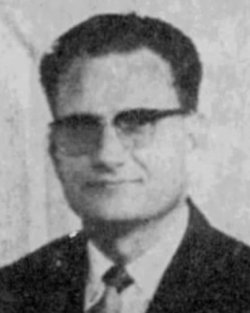
Wilbern Elias Best (1919-2007) was a preacher and writer of Gospel material. He wrote 25 books and pamphlets comprised of sermons he preached to his congregation. These books were distributed in English and Spanish around the world from 1970 to 2018 at no cost via the W.E. Best Book Missionary Trust.
SERMON ACTIVITY
Comments
Thank you for your comment!
Your comment has been submitted and is awaiting moderation. Once approved, it will appear on this page.
Pristine Grace functions as a digital library of preaching and teaching from many different men and ministries. I maintain a broad collection for research, study, and listening, and the presence of any preacher or message here should not be taken as a blanket endorsement of every doctrinal position expressed.
I publish my own convictions openly and without hesitation throughout this site and in my own preaching and writing. This archive is not a denominational clearinghouse. My aim in maintaining it is to preserve historic and contemporary preaching, encourage careful study, and above all direct readers and listeners to the person and work of Christ.
Brandan Kraft
Bible Verse Lookup
Loading today's devotional...
Unable to load devotional.
Select a devotional to begin reading.
Examples: Isaiah 53:10, Rom 8:28-30, Psalm 23, grace, love one another
to
This chapter has verses 1---
Sign in to save your Bible lookup and search history.
Comments
Your comment has been submitted and is awaiting moderation. Once approved, it will appear on this page.
Be the first to comment!