I want to read to you this morning
verses 23 through 26. This is the passage we read every
time we observe the Lord's Supper, or usually read it every time
we observe the Lord's Supper. Now we are studying actually
verses 17 through 34, but I'm dealing with one aspect of the
subject today, and I will enlarge on it not only today, but also
next son to the Lord willing. So let's read verses 23 through
26. And Paul is quoting what had
already taken place during the lifetime of our Lord when the
Lord's Feast, I like to call it Feast rather than Supper,
when the Lord's Feast or the Lord's Supper, whichever you
want to call it, was actually instituted by Christ the night
that He was betrayed before He was apprehended and also crucified
on behalf of the elect of God. So this is what Paul is quoting,
verses 23 through 26. For I received from the Lord What I also delivered to you,
that the Lord Jesus in the night in which He was being betrayed,
took bread. And having given thanks, He broke
it and said, This is my body. This is my body. Now notice the language. The
Catholics say, as a result of transubstantiation, that it was
actually his body. This is my body, which is broken
on behalf of you. You be doing this in remembrance for me. Now notice I'm changing,
instead of of, I'm saying for me. In the same way, he took the
cup also after the supper, or after the supper in this case,
saying, this cup is the New Testament or the New Covenant in my blood. you be doing this as often as
you drink in remembrance of me." That is, as you drink it in remembrance
of me. For as often as you eat this
bread and drink the cup, it's understood that it's this cup,
that term has been used within the context, but in the Greek
text we have a definite article. So I'm using the definite article
rather than this, a pronominal adjective, the cup you are proclaiming. Now that's very important. Not as the King James says, you
do show, but you are proclaiming the Lord's death until He comes. If I had a subject this morning,
I would entitle it in remembrance of me." The phrase, in remembrance
of me. It's amazing what some people
say about this portion of Scripture. You and I know that each local
assembly is responsible for her own acts. According to the seven letters
to the seven churches in Asia, Revelation chapters 2 and 3, one was not responsible for the
error or the false teaching of another assembly. That means
that this assembly is not responsible for other assemblies. Other assemblies
are not responsible for the teaching of this assembly. So each assembly is the custodian
of the Lord's Supper, and therefore the people who participate at
the Lord's table, not altar. Now why did I say altar instead
of table? Because in many religious institutions,
not churches, they're called churches, but they're religious
institutions. They refer to it as an altar
rather than a table. And we'll be dealing with that.
I'll be condemning today Catholicism. I will be condemning Lutheranism. I will be condemning many of
the so-called reformed churches and their view of the Lord's
Supper. Now, that's a pretty large undertaking,
isn't it? You say, well, who are you to
do that? I'm just a two-by-four preacher, and I have a responsibility,
and I'm not going to shirk my responsibility. Let me give a few other introductory
things before we get into in remembrance of me. You say, does
that have something for us that we haven't heard before? I don't
know. We'll see. In writing to the Corinthian
assembly, Paul had some very important
things to say. on the subject of the Lord's
Feast or the Lord's Supper. He used severe language, if you
have been really studying verses 17 through 34. There is a recitation
of abuse in verses 17 through 22. We have dealt with that abuse
to some extent. We're going to deal with it more
today. The Corinthian assembly, was
assembling socially. Now notice what I said. The assembly
was assembling socially. They were also feeding their
stomachs, according to the context of verses 17 through 34. But they were improperly improperly
discerning the Lord's body. The result of their improperly
discerning the Lord's body brought some very severe language from
an inspired Paul to them for their benefit. I'd like to make
this as a general statement. The real, and underscore that
word in your mind, R-E-A-L. And secondly, bodily presence. Underscore in your mind, bodily
presence of the Lord are distinct. The real presence and the bodily
presence are distinct. He is not bodily present. in any assembly. He is not here
this morning. He has not been in any assembly
since His resurrection, vitally speaking. But His real presence
is certainly experienced in the assemblies of Christ, where two
or three are gathered together in His name, agreeing And that
happens to be Matthew 18 and verse 20. Agreeing. He has said, I'll be with you,
or I am with you. So the presence is genuine. It
is real. Not bodily presence, but the
real presence of Christ. Let us not forget. He is omnipresent. That means He is everywhere present. Just as God the Father is omnipresent
and omniscient, so is the Lord Jesus Christ. I'll go a step further and say,
so is the Holy Spirit of God. The three are one, are one. So the real presence and the
bodily presence of Jesus Christ are distinct. So He's vitally
present only when He was here. He was
vitally present. He's not vitally present today.
But His real presence, His spiritual presence, because I'm with you
where two or three are gathered together in my name agreeing.
So His real presence is known and felt in the assembly where
His Word is being proclaimed in its purity and the members
of the assembly are walking accordingly. Now that's a big statement, whether
it's taken as being big or not. The Lord is everywhere present,
but the presence of His blessing is present only in the assembly
adhering to and practicing His revealed will. Just that simple. A church may
conduct herself in a manner that God will remove the candlestick. And we find this in the letters
written to the seven churches in Asia. In fact, Ephesus, a
highly spiritual assembly, was told if she did not repent, that
He would come and remove the candlestick. He would remove
the presence of His blessing. You say, does that happen today?
It surely does. It surely does. I would like to make another
statement that is very important by way of introduction. One brings judgment upon himself
by unworthily observing the Lord's Supper. The adverb unworthily, as I showed
you last week, last Sunday, can also be translated carelessly. You can substitute the adverb
carelessly. It refers to the manner of observance. Now there are many ways one may
carelessly participate at the Lord's table. I'm going to mention
only four right now. Number one, he may fail to consider
the real meaning of the body of Christ and also the cup of
the covenant. Secondly, he may fail to think
of the impeccable life that the Lord Jesus Christ lived while
he was here for thirty-three and a half years and then by
his obedient death Righteousness was attained by which the elect
of God stand justified before the righteous and holy God. Thirdly, he may fail to reflect
on Christ's poured out life. And finally, number four, he
may place too much emphasis on the elements of the Lord's Supper
or Feast to the neglect of remembering what they represent. What they represent. Careless
participation leads to weakness among Christians in the local
assembly, sickness, and oftentimes physical death. Now, all of the
things that I mention, folks, are referred to in this passage,
1 Corinthians chapter 11, verses 17 through 34. Some pertinent
questions pertaining to the observance of the Lord's Feast should be
considered, and I'm going to mention ten to begin with this
morning before we start our exposition of in remembrance of me. Number one, when was the supper
instituted? Now, I want you to test yourself
as I'm asking these questions. Do you know when the supper was
instituted? Do you know by whom it was instituted? Do you know the passages that
refer to the institution of the supper or feast? I'm not giving
them this morning, I'm just raising the questions. Question number
two. Did Jesus Christ partake of the emblems that were used
having been blessed by Christ Himself? Did He partake of them
personally? Yes or no? Do you know? Did He
or did He not? Now you answer the questions
now, and then before we get through this morning we may answer some
of them, but we will answer them before we finish next Lord's
Day. Now it makes me want to discuss
the one that I just asked you with you, and I have a lot of
notes on that particular point because it is a very important
question. Question number three. Why is
the order of the bread and the cup reversed in 1 Corinthians
11 from that which is recorded in 1 Corinthians 10. Why is it
reversed? Do you know the answer? I want
to show you how big this subject is. I want to show you how important
it is. I may want to go back and say
something about some of these this morning before we get through. Question number four. Are the
terms broken, like 1 Corinthians 11, 24, and given, Luke 22 and verse
19, used interchangeably? Are the terms broken and given
used interchangeably? And I gave you the two passages,
the references, so you know why I asked the question. Question
number five. What emblems should be used in
the observance of the feast? Should just salting crackers
or a piece of bread and Welch's grape juice or should it be unleavened
bread and wine? And we'll be dealing with that
more later. Question number six. You see,
these questions are important. We observe the Lord's Supper
and going to observe it again next Lord's Day. Question number six. What directions
should the believer look in his observance of the Supper? What
directions are they referred to within the context of verses
17 through 34? Well folks, he is to look up
I'll go ahead and say this. He used to look back. First of
all, he used to look back. He used to look up. He used to
look within. He used to look without. And
he used to look forward. So you see what all is involved? Question number seven. When should the supper be observed? Question number eight. Should
Christians learn to distinguish things commanded, things commended,
and things left open? Commanded, commended, and left
open. Question number eight. Should
Christians learn to distinguish? That is number eight. Commanded,
commended, and left open. Question number nine. I made this statement, I think,
two weeks ago today, but I want to ask the question this morning.
Does it take a knowledge of Christ for one to know himself? That's in the context of this
passage, verses 17 through 34. Does one have to know Christ
for him to know himself? Finally, question number 10.
Do you know yourself? No, you don't if you don't know
Christ. And then I want to go a step
further with it. The knowledge that one has of
himself even though he knows Christ, is determined as to how
much he knows about Christ. That means a young believer doesn't
know all the things that he should know about himself. I want to ask another question
or two in connection with this last one. Are you committed Are you really committed to Christ? I want to ask you another question. If you feel that you are committed
to Christ, as every believer should be committed to Christ,
how would you like to be judged by members of the assembly who
are not committed, who are not really committed? Now those are very important
questions. I'm going to make a few comments
about two or three of these questions this morning, and we'll be enlarging
on them more later. Folks, these are teaching sessions,
I don't mind telling you. Which one would you like me to
deal with in particular? Well, let's look at the real
and bodily presence, because we're going to be dealing with
that quite a bit this morning. So let me give you a few things
to whet your appetite. We know that the Lord is here
provided We are here in agreement in the name of the Lord. And
we have to be in agreement. Now that doesn't mean we're in
agreement on every minute detail because we may not be conversant
in some of the things. But in all the major issues,
the major biblical principles, folks, if we're not in agreement,
the Lord is not here. The presence of His blessing
is not here, period. Now that's a very frightening
thought, but that is a biblical fact. How about Christ's partaking
of the emblems? He didn't partake of the emblems,
folks. that he used in the institution
of the sepulchre. You say, well, now he partook
of the Passover. Yes, he did. The last Passover. And there
is a reason for his partaking of the last Passover. He also
said, I'll not partake of it again until I partake of it when? In the kingdom. Isn't that what
he said? That's what he said. Now, the
Lord's exclamation that he would not drink henceforth until the
kingdom is found in Matthew 26, 29, referred to the Passover
cup. There were two cups. One was
used in the observance of the Passover, and the other was used
in the observance of the Feast, or the Lord's Supper, which He
instituted after the Passover. Jesus Christ, please listen to
this. Jesus Christ could not suitably
partake of the emblems that foreshadowed His own broken body and shed
blood. Folks, every person who believes
that Jesus Christ was peccable, most Baptists believe it today,
most Pentecostals believe it, I could go on and on and on.
They believed that he could sin, but he didn't. Now, the great tragedy is this.
I've witnessed to several people recently up in our area where
we've moved. Baptists, different ones, belonging
to different denominations. I'd ask them about the person
of Christ and about his impeccability. They didn't know what I was talking
about. We've never heard it. We've never heard it discussed. You see, if Christ had partaken
of that which symbolized His own broken body and His own shed
blood, which He shed once for all, Hebrews chapter 10. He offered Himself once for all,
verses 10 through 14. for the sins of his people. That
would mean that he believed that he also needed. He couldn't do
that. He couldn't do that. So you see how important it is
that we understand. He could not do that. Well, what emblems should be
used? Some say that doesn't make any
difference. Saltine crackers and grape juice. No folks, that
will not get the job done. Unleavened bread and wine which
has gone through the process and it is unleavened after it
goes through the process. If you don't believe it, make
some homemade wine And you'll see what will happen. It's going
to turn sour. It's going to go through a process
before it becomes wine. Nothing purer than alcohol. They didn't put grape juice.
You remember the man who was wounded in Luke chapter 10? Going from Jericho to Jerusalem,
fell among thieves that wounded him and left him half dead? Levi came along, he couldn't
give any help to him. The person came along who could. And what did he do? He poured
in oil and wine. Wine, you see, was used for medicinal
purposes, for cleansing. It had gone through the process
of fermentation. It didn't pour in grape juice.
Now we'll discuss that more later. So you can see these things are
very, very important. I want to mention a few of those
things. Let's get now to in remembrance of me. Look at the noun that is used
in your Greek text if you have it with you this morning. Anamnesen. Anamnesen. It's in the accusative case,
feminine, gender, singular number. It is a noun. And it is the accusative
of anamnesis, which means reminder, remembrance, or storage. Now let's let that soak in. Do this in remembrance of me. So our subject right now is in
remembrance of me. Looking at the Greek, you have
four words in the Greek. Ais, tein, imein, and ananason. That can be translated in remembrance
or in memory of me. In memory of me. You say, well, I see nothing
difficult about that. Well, I'm going to show you that
there are some very difficult things about it. I'm going to
show you why I will have absolutely nothing to do with Catholicism
in any form or fashion. Somebody said to me last week.
Oh, I just love Billy Graham. I said I don't Love him in the
sense of which you love it He's a compromiser He compromises with Roman Catholics
and everybody else just in your to get a crowd Now you're ready
for a real study this morning and I'll tell you what I brought
with me on my library I brought the real McCoy I Brought the
Roman Catholics catechism I'm going to read you something out
of it in a few minutes. Roman Catholics and some others
find a sacrificial implication. Now please underscore those two
words, sacrificial implication, in the word remembrance. Do you get a sacrificial implication
out of this? Does the word remembrance tell you that there is a sacrificial
implication in that word? Stay with me, folks. Is this scriptural? It is not. It is not. Such a view of the
word Anamnesis is untenable. It is indefensible. The view of sacrificial implication
is based on other misconceptions. Now let me show you what I'm
talking about. For example, the word do. Now, I'm not taking
it out of context. Look at the statement. What did
Christ say to the disciples? And Paul quotes that when he
wrote to the Corinthians, here in the 11th chapter of 1 Corinthians,
because he's quoting from what we have in Matthew, Mark, and
Luke. This do in remembrance of me,
or be doing this in remembrance of me, or in memory of me. Now, let's look at do. It means
to perform an act. The nature of the act, however,
must be determined by other words in the sentence, or by one's
knowledge of the precise significance of the act. Let me illustrate
it. You remember John 13, 27? John's account of what took place
when our Lord was betrayed by Judas. And Christ looked at him
in verse 27 and said to him, What you are doing, and that
is a present active indicative, a poeo. What you are doing, you
do. And that's an arius active imperative. In other words, you do it, Point
action, you see. You do it, you do it now. You
do it quickly. And then we have the adverb. You do it quickly. Now listen
closer to this. Christ looked at Judas, who was
betraying Him. He had already betrayed Him,
and Christ knew it, and knew, and so He said this to him. What
you are doing, you do quickly. Folks, that would mean betray. Do here would mean betray. To
be consistent with remembrance, if remembrance carries the sacrificial
implication of offering a sacrifice, then when Christ says, what you
are doing, do quickly, do, that is betray. It has been argued that do this,
or this be doing, to put it correctly, according to the verb that is
used, in Alexandrian Greek, meant sacrifice. Now I'm telling you what Catholics
teach. To support this opinion, some
have shown that 65 instances out of 2,500 references where
the words do, or this be doing, or do, occur not only in the
Koine Greek of the New Testament, but also the Septuagint, which
is the Greek translation of the Hebrew of the Old Testament.
It is connected with bloody victims for offerings, to do the lamb,
L-A-M-B, to do the bullock, etc. Now others have shown that do,
poeo, simply means act towards the object, act toward the object. The final criticism on this point
is worth quoting, and I want to give you the final criticism
by one theologian on this. A Dr. Harrison said, and I quote,
the Hebrew word and its Greek equivalent, well rendered in
English by the word to do, are dependent for their meaning
upon the connection in which they occur and are used to express
a multitude of acts. Does the bishop, Dr. Harrison asked, does the bishop really believe that? Does he inform us that the word
do in Alexandrian Greek means to sacrifice? He said to be so and both it
and the Hebrew word of which it is the common translation
mean to do or get souls Genesis 12, 5. Now notice how he does
this. To do or dress a calf, Genesis
18, 8. To do or prepare bread, Genesis
27, 17. To do or deal kindly, Genesis
47, 29. or to do or sacrifice unto the
Lord, Exodus 10, 25, to do or prepare the nails, Deuteronomy
21, 12, to do or dress the feet, or do or trim the beard, 2 Samuel
19, 24, or to do or show kindness, 1 Chronicles 19, 2. Then he says, the Hebrew word
and its Greek equivalent are in the English version rendered
by about 60 different words and they are variously translated
so as to express the different acts in relation to the terms
with which they stand connected, end of quote. Now that's taken from a work
that was written a long time ago, 1871. Now the words of our
text, in memory of me, were spoken by the one who knew
he was returning to the Father. who would not need to be reminded
of his son's sacrifice, having always his sacrifice been before
the Father since the foundation of the world. He is the sacrifice that was
sacrificed before the foundation of the world in the mind of God. So God the Father didn't need
to be informed. Now watch this, folks. You don't
know how important this is yet. and you don't know what all it
involves yet, but who desire that He Himself,
that is Christ, His works and His words should be remembered
by His blood-bought followers. That's you and me, folks. Our Lord's sacrifice not only
was to disannul Hebrews 9.26 and to blot out Acts 3.19 and
Colossians 2.14, sin and its record, but also not to remind
God of them. Not to remind God of them. He would not have us to forget
Him or His teaching. He would not have you and me
to forget what He has done 2,000 years ago on behalf of us and
the teaching which He has left us. Memory. Folks, that's a tremendous
subject. Memory. denotes the fact that Jesus Christ
is vitally absent. Look at the simplicity of what
I'm saying. I said vitally absent. You be doing this in memory of
me. That means that Jesus Christ
will not be here vitally speaking. So instead of a person, when
he thinks of the word remembrance, of implying a sacrifice being
offered up to God as the Roman Catholics teach, he's not going to be here. He's
already offered himself. He offered himself once in the
end of the age to put away sin by the sacrifice of himself.
You see what I'm saying? You see how simple it is? And
yet people build a damnable, heretical doctrine on it. Let's go a little further. Our
Lord's sacrifice, not only, I said, was to dishonor and to blot out
sin and evil against you and me, but He wants us to remember
what He has done. Memory denotes the fact that
Jesus Christ is vitally absent. We are prone to forget, and that's
why we are reminded throughout the Scriptures, remember, remember,
remember, because we are prone to forget. Shall our hearts be more senseless
than the sun which fainted when Christ died? I'm talking about the passages
that deal in Matthew, Mark, and Luke with the crucifixion of
Christ and what took place. The heavens mourned in black
and the rocks rent when Jesus Christ's death occurred. Now
let me raise the question. Should our hearts be more senseless
than those inanimate objects? Pretty serious question, isn't
it? We come not as idle spectators, but as active instruments by
exercising every grace upon Christ as crucified on behalf of us. Let me never, and folks I hope
you will say with me, you say let me, referring to yourself,
let me never be friends with my own heart until it loves Christ
better and hates sin more. You can't love Christ without
hating sin. If you love sin, you hate Christ. It's just that
simple. Memory. Capacity to retain and
revive impressions. Memory. Storage. When I think of the word storage,
no wonder we refer to the computer today. and the storage capacity
of a computer. And folks, they're getting it
down now. A little bit of chip can store, oh, such great amount of knowledge. And if you know the right key
to punch, you can pull it up. You can pull it up. Memory. But the human mind is great,
isn't it? Who created it? It didn't just
evolve, folks. When we should soar aloft in
the highest acts of God, we can but flutter, one said, on the
earth and make some weak offers heavenward. How true. Now, the second word the Catholics
use is the word consecration. And who consecrates the bread?
They say, well, Christ consecrated the first. Wine and bread. And the bread became the actual
body of Christ. And the wine became His actual
blood. I don't believe a word of it.
I don't care if the Roman Catholics do teach it, and there's not
much difference between what the Catholics teach and the Lutherans.
The Catholics believe in transubstantiation, and I'll deal with that before
we get through in detail, but the Lutherans believe in what
they call consubstantiation, and we'll give their own definition
of consubstantiation. Neither one is taught in the
Bible. that you and I possess. Neither
one. It isn't taught. Well, are we
to go along, embrace them as great Christians? Not me, folks. Not me. I'm going to believe what the
Bible says. Now, there was no consecration of the elements
either by Jesus Christ or the apostles. Don't forget it. The blessing of the bread in
Matthew 26 26 and the giving of thanks for
the same in Luke 22 17 and 19 shows folks the interchangeableness
of the two terms. And you'll want to study the
Greek on this. Let me say this again. the blessing of the bread
in Matthew 26 26 and the giving of thanks for
the same that is the bread in Luke 22 17 and 19 show the interchangeableness
of the terms the same exchange of words is seen in the feeding
of the 5,000 Matthew 14 19 and John 6 11 In 1 Corinthians 10, bless the
cup, and in chapter 11, our Lord gave thanks, same thing. So the feast is distorted by
any suggestion of transubstantiation, or any related transformation. The message is about, as I said
last Sunday, representation. So when you say, this is, this
represents my body. This is, this represents my blood. It's representation, not transformation. The message of 1 Corinthians
11 is clear. After the blessing, our giving thanks, the elements
are called, watch this, bread and cup. Oh! Now, let's look at it again. That contradicts Catholicism. Now what did I say? Let me say
it again. I want us to get the impact of what is said here.
After the blessing, our giving of thanks, The elements are called
bread and the cup. So it is not my body and my cup,
but it's still bread and it's still the cup. It's my bread,
my cup. So it's not my body, it's not
my cup, but this bread and this cup. Now I want to take time
here to read you something. And I'm going to take time to
do it because this is the best place to do it. The Holy Eucharist. This is right out of the Catholic,
this is their catechism, catechism that is given to all young converts
or all children so they can learn these things. Listen to this.
I'm going to take time to read it. The Holy Eucharist is a sacrament
and a sacrifice. Both words, sacrament and sacrifice,
are italicized. That means for emphasis. A priest's official offering
of a victim to God. Now folks, if you ever go to
a Catholic church, or you go to a funeral sometimes, they
have a mass, Now when they take something from that altar, they
call it the altar, to them that is the real blood of Christ and
it has been made the real blood of Christ by the consecration
of the priest in charge. So folks, I'm not going to many
of the funerals. If you know somebody, in fact,
I think I've gone to my last Catholic funeral. I'm not even
going to be courteous enough to go. Now listen to this. In the Holy Eucharist, Jesus
Christ's Body and Blood, Soul and Divinity, under the Appearances,
Appearances is italicized for emphasis. Whatever, and then
they have in parentheses following Appearances, We can see, feel,
touch, taste, or smell, parenthesis closed, of bread and wine is
contained, that's italicized, is offered, that's italicized,
to God in sacrifice and is received
in holy communion. Our Savior instituted the Holy
Eucharist at His Last Supper in the presence of the Apostles.
He did this when He took bread, blessed and broke it, and giving
it to His Apostles said, Take and eat, this is my body. Then he took a cup of wine, blessed
it, and giving it to them, said, All of you drink of this, for
this is my blood of the new covenant, and he has in parenthesis agreement,
this is my new agreement, which is being shed for many unto the
forgiveness of sins. Now let me stop here a moment.
Who is to participate at the Lord's table? Who is to participate? only those who have been regenerated so the offering of Christ has
already been applied by the Holy Spirit in regeneration
so it is the Christian you don't offer something in order to receive
you offer something because you have already received let me read on At this time also,
Christ made the apostles the first priests. When He commissioned,
in parenthesis, gave the power, privilege, and duty to them to do exactly as He had
just done in these words, do this in remembrance of Me. The priests of the church continue
to exercise this power to change bread. and wine into the body
and blood of Christ by repeating the words of Christ, This is
my body, this is my blood. So when the priest says, This
is my body, he has the power at that instant to change that
bread into the body of Christ and the wine into the blood of
Christ. Remember that, folks, when you
watch him perform. That's why I think, folks, it's
pretty hard for me to be patient with people who don't try to
be informed about the most important thing in life, and that is our
relationship to the Lord and how we became related to Him
and the things that we are to do as related people to Him. I can lose patience pretty quick
with people. like that. Now let me give you
some explanations that he gives. See I can't read all of this
because this is very time-consuming but you need to know these things
and don't take my word for it get one of these you ought to
have one of these in your home get one from a Catholic somewhere
or go to a Catholic bookstore and buy it. I believe in doing this with
every major religion I want to know why they believe what they
believe. Consecration. Explanation. Here's the explanation.
That part of the mass in which the priest changes bread and
wine into the body and blood of Christ. Covenant. Solemn agreement between
God and all mankind. Offering. presented or given
as an official sacrifice in worship to God. Substance, the real part of anything
which actually makes it what it is. Transubstantiation, listen
to the explanation by the Catholics. change of the entire substances
in which one substance is entirely destroyed and an entirely new
one takes its place without any change of appearance. The Holy Eucharist is a sacrament
and a sacrifice. In the Holy Eucharist, under
the appearances of bread and wine, the Lord Jesus Christ is
contained, offered, and received. Folks, that is blasphemy. Are you listening to me? I want to prove to you it's blasphemy.
I do get stirred up. I don't mind telling you I get
stirred up. Turn with me to Hebrews 10 for a moment. I want to read
you a little bit. I want to show you how blasphemous
it is. Now here we don't have a Catholic
priest speaking, we have a God-inspired man giving to you and to me the
truth of the sacrificial work of Jesus Christ. I want us to
begin reading with verse 10, Hebrews 10. Because of which
will we have been sanctified, We have been sanctified. That means set apart. And folks,
that is a perfect passive participle. We have been. That means we are
for time and eternity set apart. By who's sacrifice? Christ's
sacrifice. When was it offered? At Calvary
2,000 years ago. It isn't offered every time the
Mass is said. Now watch this. Because of which will we have
been sanctified? And that means we are sanctified
now and we will ever be sanctified. It is perfect passive. Through
the offering of the body of Jesus Christ, how many times? Once
for all. not by repetition, but once for
all. And on one hand, every priest
has stood day by day ministering and often offering the same sacrifices,
which can never take away saints. On the other hand, this priest
having offered one sacrifice, that's Jesus Christ, on behalf
of sins, sat down in perpetuity, and I added that, on the right
hand of God. Where is Jesus Christ? At the
right hand of the Father. From now on, expecting until
His enemies may be made as a footstool. Verse 14, for by one offering,
Not by many, one. When did it take place? At Calvary,
2,000 years ago. So by one offering, He has perfected,
and folks, that is a perfect active indicative verb. Perfect tense. So you've been
perfected, you're perfected now, and you will ever be perfected. Notice what he says, and the
Holy Spirit is also witnessing, we're told in the next verse.
But verse 14, by one offering, he has perfected for all time
the ones being sanctified, are set apart. Now do you see why,
folks, I'm as dogmatic as I am? If I believe the Bible, I believe
the Bible. So Christ held the bread when
he gave thanks in one hand. And the hand which held the bread
was distinct from the bed which he held. He wasn't holding his
own body that had been transformed by transubstantiation. Now let me give you, so bread
is my body, cup is a new testament in my blood. So the use of such
metaphors is common in scripture. Now let me prove it, take these
references down. Genesis 14, 21, the seven kind,
K-I-N-E, are seven years, seven years. And He gave you another one,
Ezekiel 37, 11. These bones are the whole house
of Israel. It's a metaphor, isn't it? Used
metaphorically, isn't it? Listen to Revelation 17, 9. These
seven heads are the seven mountains and then turn to Galatians 4.24,
Sarah and Hagar are our two covenants. Thus the things our persons presented
represent something else in these passages. So when they say, this
is my body, it represents my body. This is my blood. It represents my blood which
was shed at Calvary. I have a lot of other things I'd
like to read, but I don't have time to read them this morning.
That's enough on this. So the supper, that is the feast,
of the Lord is perverted. by the theory of a magical virtue
infused into the elements of the feast. I said it's perverted. And we want to really give something
on that next Sunday. Now let's look at something else,
two other things I want to deal with before we stop this morning. In verse 26, he goes on to say,
the King James you do show now to show you what the Catholics
do with this ye do show is better translated and I'm
saying this now you are proclaiming the Lord's death until he comes
and I'm going to prove that to you if I can't prove it I'm not
going to say but I can prove it that's why I'm gonna I'm gonna
give it Verse 26 is commonly misquoted, as though it read,
Ye do show forth, and the Catholics emphasize this. Folks, there
is no justification for the insertion of the adverb FORTH. It does
not mean PRESENT or OFFER It simply means to proclaim. And you know what the verb is?
Look at it in your Greek text. Compound verb made up of kaha,
the prepositional prefix, and angelo, the verb. So to proclaim. To proclaim. In fact, if you look at Romans
1.8, I'll give you a reference where the same verb is used. karangelo and there in your King James
it is translated is spoken of but it means proclaimed this
message is proclaim your faith what you believe is proclaimed
throughout the world so this verb has no suggestion
of a presentation of a sacrifice, as the Catholics say. Once the
actual meaning of the verb is grasped, it is impossible to
import into the word proclaim a message that terminates on
God. Now follow me closely. We do
not need to advise God of the death of His Son, So when we observe the Lord's
Supper, we're not advising God as to what we're doing. That's not even the meaning of
the Lord's Supper. So that's partaking of it carelessly or
unworthily. And we'll get into that word
sacrament too, folks. Methodists use sacrament. Presbyterians
use sacrament. I don't use that term. It's not
a biblical term. So we do not need to advise God
of the death of His Son, who is the Lamb that was slain from
the foundation of the world, Revelation 13, 8. We do need to remind ourselves, to remind one another, that the
Lord Jesus Christ died on our behalf. The perpetuation of this
ordinance bears evidence of the resurrection and also to the
central position assigned to our Lord's death. The memory
of His death is perpetuated in two forms. We're buried by baptism into
His death. Romans 6. Unbaptized believers
are not contemplated in the New Testament. Don't forget that. Baptized into Christ's death
in Romans 6 follows the discussion of the two headships of Christ
in Romans 5, 12 through 21. It was not the end of their sins. Please get this thought. Please
get this thought. Romans 6 was not the end of their
sins, but the end of themselves in the death of Christ. That
is the focus in Romans chapter 6. The objective results of Christ's
death are a stated first. The objective results. So they
have died. Talking about the Romans. And
this is followed by this subjective side. They were to KNOW, to RECKON,
to YIELD, to OBEY. Folks, you see what I'm talking
about? I'm talking about not only life, but living what we
are. That's what I'm talking about.
So thus, baptism becomes a memorial followed by the Lord's Feast. Secondly, we proclaim, we declare
the Lord's death. His mediatorial work His propitiation. Every time we participate at
the Lord's table, not altar. Not altar. When you think of
an altar, you think of a sacrifice. So when the Methodists, the Presbyterians,
and Catholics, the Lutherans, Episcopalians, when they talk
about the altar, folks, you better have another thought. You better
think it through. And don't advise somebody, well,
attend church somewhere. Better to go somewhere than nowhere. I beg to differ. I beg to differ. So the supper, that is the feast,
is observed around the table, not around an altar. altar speaks
of sacrifice. It is to be a commemorative service
held after a meal which is to be eaten at home and not at church. I had a fella came over last Monday
to pick up our cushions. We had our divan Recovered and
the cushions just they were not right he came and he was very
disappointed He said I've got to take those he said y'all need
to be You want to have company around Thanksgiving at all aren't
you I said yes, and I said our our anniversary is coming up
He said I'll wait till next Monday. That's tomorrow before I come
pick up these cushions and put a different Rubber in them said
this this is no good. I said well. I want you to see
I And he's a Baptist. He had to tell me this. Oh, he
said, you know what we're going to do Wednesday night? I said,
what? We're going to have Thanksgiving separate church. And we're going
to have more than a thousand people there. I said, well, I
believe in eating at home. You go to church for another
purpose. Oh. Now let me call attention to
something else. Real presence must be distinguished from bodily
presence. Do you have that down? Giving
this in conclusion this morning. Those who advocate bodily presence
must be asked to prove their assertion. Don't you think? And folks, I'll ask every Catholic,
you prove to me. You prove to me your assertion
that Jesus Christ is personally, bodily present in the mass. Prove it to me. Number one, I have a question.
Is there a spiritual presence residing in the elements until
they cease to be bred and wined by natural decay? When the priest turns the wine
and the bread into the body and blood of Christ, and they don't
use it all, and they don't, unless the priest eats it all, and he
may, and drink all the wine that's left. I said he may. What about the bread and wine
that's been blessed and turned into the body and blood of Christ? It's not used. Is it going to
spoil? Is it going to decay? See, Christ's body, even His
human body, never saw any corruption, folks. Why don't people do a
little thinking? Just a little bit of thinking.
You say, well, I just don't believe that we should disturb people.
Folks, I'm going to state the truth. Another question, do we feed
on Christ's material body? Are we cannibals? Are all the Catholics that participate,
they eat the wafer, are they cannibals? Are they actually
eating? Yeah, they believe they're eating it. It doesn't look like
it, but they are. So they're cannibals. They become cannibalistic. Have
you ever seen these movies of people in Africa and different
foreign countries, they'll kill an animal and catch all the blood
and then drink it? Well, are you drinking the blood
of Christ? Are you cannibalistic? Are you acting like those people
in Africa, drinking the blood? Oh, I wouldn't dare embarrass
somebody. Oh, you wouldn't? You're not
going to stand up for the teaching of the Scriptures? Folks, I'm
saying a lot of things to you. I intend to say it stronger.
I want to know who I'm preaching to. You can judge me if you want
to. I don't mind uncommitted people
judging a committed person. Question number three. Are we
sustained by a dead Christ or by a living Christ? Are we sustained by a living
Christ or a dead Christ? I have another question. Is not
His presence in the heart rather than in the body? How do we feed on Him? By faith. The feeding, folks, is explained
in John 6, 35, if you want the biblical explanation. Now, two
other things before we're closed. Notice in your Greek, in verse
26, the adverbial preposition akri. Akri. And it is translated till, isn't
it? Till he come. Folks, the adverbial preposition
acri, until the time when Christ comes, proves Christ is not biblically
present. As often as you eat this bread
and drink this cup, you do proclaim the Lord's death until He comes. He's not here. He's in the right
hand of the Father. He's not here bidally. Bidally,
He is sitting at the right hand of God the Father. But He's coming
bidally, just as He went away. Now, we mentioned two ordinances,
and I'll give this in closing. You know what the Catholics teach
about how a person gets into Christ, and then how Christ gets
into the person? Do you know what they teach? You remember the passage in John
14, 20, I think it is. I'm trusting my memory now, but
I think it's John 14, 20. I in you and you in me. Christ
speaking to his disciples. I in you and you in me. You know
how the Catholics explain that? One gets into Christ by baptism. He's baptized into Christ. And then Christ gets into you
by the Mass when you eat the bread and drink the wine. I in you, you in me. You get
in me by baptism. I get in you by the Mass. Folks, don't you think it's time
that you did a little testifying to your relatives and friends
and people you know who are Catholics? You say, they won't listen to
me. Well, you can say enough to get them thinking. Show them the Scriptures. Have
you become accountable? I haven't really started this
subject yet. I don't know. I may go three or four more Sundays.
I don't know. I want to show you what all is involved. And
I'll tell you something else that's important. We need to
keep up, even with government leaders. You know, the Antichrist is going
to be a handsome fellow. He's going to be the most charming
man you've ever seen. Bill Clinton can't hold a candle Art Gingrich with all of his
smiles and all of his brrrrrrrrrrrrrrrrrrrrrrrrrrrrrrrrrrrrrrrrrrrrrrrrrrrrrrrrrrrrrrrrrrrrrrrrrrrrrrrrrrrrrrrrrrrrrrrrrrrrrrrrrrrrrrrrrrrrrrrrrrrrrrrrrrrrrrrrrrrrrrrrrrrrrrrrrrrrrrrrrrrrrrrrrrrrrrrrrrrrrrrrrrrrrrrrrrrrrrrrrrrrrrrrrrrrrrrrrrrrrrrrrrrrrrrrrrrrrrrrrrrrrrrrrrrrrrrrrrrrrrrrrrrrrrrrrrrrrrrrrrrrrrrrrrrrrrrrrrrrrrrrrrrrrrrrrrrrrrrrrrrrrrrrrrrrrrrrrrrrrrrrrrrrrrrrrrrrrrrrrrrrrrrrrrrrrrrrrrrrrrrrrrrrrrrrrrrrrrrrrrrrrrrrrrrrrrrrrrrrr Don't you think we need to keep
up with things? Let's stand.
About W.E. Best
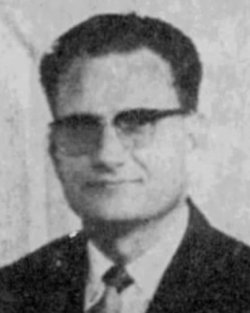
Wilbern Elias Best (1919-2007) was a preacher and writer of Gospel material. He wrote 25 books and pamphlets comprised of sermons he preached to his congregation. These books were distributed in English and Spanish around the world from 1970 to 2018 at no cost via the W.E. Best Book Missionary Trust.
SERMON ACTIVITY
Comments
Thank you for your comment!
Your comment has been submitted and is awaiting moderation. Once approved, it will appear on this page.
Pristine Grace functions as a digital library of preaching and teaching from many different men and ministries. I maintain a broad collection for research, study, and listening, and the presence of any preacher or message here should not be taken as a blanket endorsement of every doctrinal position expressed.
I publish my own convictions openly and without hesitation throughout this site and in my own preaching and writing. This archive is not a denominational clearinghouse. My aim in maintaining it is to preserve historic and contemporary preaching, encourage careful study, and above all direct readers and listeners to the person and work of Christ.
Brandan Kraft
Bible Verse Lookup
Loading today's devotional...
Unable to load devotional.
Select a devotional to begin reading.
Bible Reading Plans
Track your daily Bible reading with a structured plan. Choose from several options and let us keep track of your progress.
Comments
Your comment has been submitted and is awaiting moderation. Once approved, it will appear on this page.
Be the first to comment!