Bootstrap
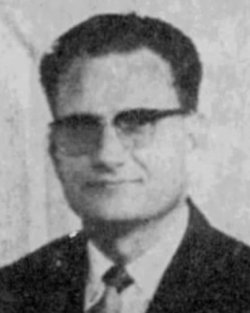
W.E. Best

The Subject of Apostacy, Part 3

W.E. Best September, 10 1995 Audio
0 Comments
Best on Apostacy

Sermon Transcript

Auto-generated transcript • May contain errors

100%
last Sunday morning. I think I do want to review the
first nine. I may just kind of run through
them. I think we have a few here this morning, but we're not here
last week. But if you ever made a study of words, folks, I hope
you will do it in verses 2, 3, and 4. There are 18, 15 adjectives,
two nouns, and a verb used by Paul by the inspiration of the
Holy Spirit to describe the awfulness of this world's system. Let's read beginning with verse
1. But this you be understanding,
or recognizing, in the final days Notice I'm translating the word
eschatos, final, rather than last. Difficult times shall be
present. Future tense. Now, I'm emphasizing this this
morning because we have a tense in verse 5, folks, that you'd
better follow me on this. or you'll miss the whole thing. You remember what I said two
weeks ago today about eschatos? Gave you some verses how it is
used, and it's not always used the same way. Sometimes eschatos,
and I know of one instance, and that is Hebrews 1, 1 and 2, where
eschatos takes in the whole period of time, between Christ's first
and his second advents. But that isn't always so. In
the light of the context here, we know that things are bad now,
but they're going to get worse and worse. And so the question
is, are we living in the last of the last times. Now, verse 2. Notice I've changed
the translation from the King James in some of these, and I
have given you other words that could be used in what we've already
studied. But this is a word study. For
the people shall be self-lovers. money lovers, boasters, arrogant,
blasphemers, disobedient to parents, unthankful or ungrateful, and
folks, I want to call attention to that adjective before we get
through, unholy, without natural affections, plural, irreconcilable,
slanderous, without self-control, untamed, not lovers of good,
traitors, reckless, and I'll use the word high-minded now,
but we'll look at it in the original in a moment, pleasure lovers,
More than God lovers Now look at verse 5 I Read almost one whole day last
week Different works on this one verse
What an eye-opener listen now having a form of Now notice all
of these adjectives and two nouns and a verb. Now notice what he
says in verse 5, having a form of piety. But who have denied? What tense is that verb? It's a participle. And it is
a perfect... Is it a middle or is it passive?
Part or simple? Having a form of piety. But who have denied the power
of it? You... Now this is a command,
folks. This is a command. And it is a present, is it a
passive command or is it a middle command? There are differences
of opinion as to whether it's passive or middle voice. You be turning yourself away
from these. So folks, Christians can't stay
in a rotten mess They got to turn away from it. And let me
hasten to say, Christians will do that very thing. We're in for a great time for
a few minutes if you'll study with me. I'd like to run through the first
nine adjectives, nouns, one verb, One noun, no verbs, I don't think.
Let's see. It might have had one verb. I'd
have to look through them all here. No, they're adjectives. It hadn't gotten to the verb
yet in the first nine. So they're adjectives with one
noun. Let us look at them briefly.
I've already given this. It's on tape, but I want to review
this to emphasize what I want to give in the discussion of
the last part of these adjectives, noun, and verb. The first one
in verse 2, and they're all in the nominative
case, so keep that in mind, and I'll explain that. It's a compound
word made up of phyllis and autos, which means self or oneself.
self-love. Secondly, we have another compound
adjective made up of phyllis and argyros. And argyros is the
word meaning any form of negotiable money. So it's money letters. Then we
come to the noun. And the noun is means arrogant, boastful, or
a boaster. Then you have another adjective,
and once again it is a compound adjective, made up of huper,
which means above, and phaino, and when you put them together,
what do you have? Huper af anus. appearing above others, showing
off above others. I'm just reviewing briefly what
we went over last Sunday. Number five is the word, it's
another adjective, blasphemoi, the plural, blasphemous, means
speaking against God, insulting, cursers of that which is holy. And folks, when people belittle
God, make derogatory statements about God, they are blaspheming. Period. Number six is another adjective. It is not a compound. Up I face. meaning rebellious,
rebellious to parents. Have you ever seen as much rebellion
as we have today? See, the president of the Southern
Baptist Convention wants to appeal to the baby boomers. I didn't
read it all. You need to read it. Yesterday's
religious section of the paper. Rotten people. Rotten kids. I've never seen as much of what
I have just described as being disobedient or rebellious to
parents as we're witnessing today. Number seven, another adjective. This is a compound. If you'll
notice the word, you can see chorus in it. Chorus is the word
for grace. But the first letter of this
word is alpha. And when alpha is used with a
word, it negates. So chorus meaning grace, alpha
negates that, and so it means without grace. That's the literal meaning, folks,
of it. It's translated in the King James,
unthankful. But without grace. Number eight is another adjective.
It is another word that begins with alpha. And then you have
usias. So, usias means holy. And alpha negates it. That means
unholy. The opposite of holiness. Number
nine, and this will conclude what we have gone over already.
It is another word that begins with Alpha. And it's made up of two words,
Alpha and Stargay. And Stargay refers to the natural
or instinctive affection or love which a person has. But Alpha
negates that. So it's without natural affection
or natural love. I was talking to Richard when
he was home nearly two weeks ago about love. He looked at me and said, Dad,
now here's an unregenerate person. He said, Dad, he said, you don't
know what it's like out there. You've been shielded. I said,
I'm thankful that I've been shielded. He said, I don't believe there's
hardly anyone that knows what true love is.
I agree. So even lost people can recognize
that. Without natural affection, abortion
folks can go in that category. All the dastardly, wicked things
that people are doing today. can go in that category. Homosexuality,
lesbianism, and on and on. So, no wonder, even in Solomon's
time, he said, I saw the place of justice, or I saw wickedness
in the place of justice. I saw wickedness in the place
of righteousness. Let's begin this morning with number 10. We have another compound word
made up of alpha, which negates what is being given. It is translated
trucebreaker. Our trucebreaker is plural, means
refusing to enter into treaty. The word is aspondoi. Nominative, masculine, plural
of the adjective aspodos. Made up of alpha and
spondae. Now, you're not going to find
spondae in some of your lexicons, let me tell you. If you don't
have the works whereby you can go into classical Greek, you
won't be helped. So I'll just give you that word
in case you come to me and say, I couldn't find it. Where did
you find that word spandei? You have to go to Liddell and
Scott or some of the other works that take in the classical. So let's look at this word for
a moment. Let's look at this in the light of what we see around
us every day. People refusing to enter into
treaty. Unwilling to make a treaty. Irreconcilable. Irreconcilable. Not interested
in peace. While they're talking about peace,
peace, they're not interested in peace. While people are talking
about justice, justice, they're not interested in justice. While
they're condemning somebody else for lying, they're telling lies. You know the way they've talked
about Furman's lying, and he did lie. But folks, I'd like to ask some
of those lawyers, I'd like to put them on a witness stand,
I'd like to interrogate them for a little bit. Have you ever
lied? I've heard the lawyers for the
last several months. Folks, it's disgusting. Every person has lied. There
is not a person sitting in this auditorium this morning who has
not lied. Children go forth from the womb
speaking lies. That's what the Bible says. So what do we have? As it's translated,
truth-makers, in your King James Bible, it refers to persons who
become utterly careless in word or pledge. Watch what I'm saying,
pledge. It denotes a corrupt condition
of society. Let me illustrate it. I was talking
with a woman this past week. She was telling me about her
father. Her father's a contractor. And she said, Brother Bass said
he doesn't take a lot of jobs. Said he just takes one job at
a time. He's 58 years old. And said he's been in it all
of his life. He is so conscientious about his work. He does all that
he can do And he's qualified to do. And then he has certain
men that he knows to do the other things that he cannot do. Because he said, you can't trust
anybody today. Corrupt society. That wasn't
true when I was a kid. But it's true today. In the last
days, men will not only be sermon-proof and judgment-proof, but they'll
be covenant-proof. Covenant-proof. Notice what I'm
saying. They will make no more of a covenant
than a monkey does his collar, which he can slip off and own
as His pleasure. Oh yes, they'll sign a name or
shake hands, but it doesn't mean a thing in the world. That's the day in which we're
living. Very few people you will find
who have any integrity. When they tell you something,
they mean it and they will stand by it. The eleventh adjective is diabolos. Diabolos is made up of two words,
dia, the preposition, meaning through, and balo, the verb,
to thrust through, to defame, to inform against. Diabolo. So it comes from that verb. Diabolos,
an adjective, used 38 times, translated devil, and as an adjective given to
malicious gossip. So false accusers, that statement
refers to those who excite contentions and quarrels. The word used is
the word for devil. And the meaning of the Greek
word for devil means slanderer or accuser. So he is a treacherous informer. He is a traitor. like Judas. Such persons will invent faults
if they cannot find some, as the devil did with Job. Job 2.5 and verses 9 through
11. I heard something recently, a
good illustration at this point. You know, the snake's poison
is in its teeth, but the poison of a slanderer
is in his tongue. The snake usually goes away at
the approach of man, but the slanderer follows his victim
with untiring perseverance. The poison of a slanderer is
worse than a snake. His venom often strikes a whole
family, sometimes a whole assembly or community, thus destroying
all peace and confidence. Have you seen just recently,
you know, we've always been some kooks out there, religiously
The snake handlers, I heard a real good one. And it was in a paper
just recently. A Baptist preacher was approached
one time by a snake handler. He said, I want to prove to you
that I can handle snakes and the snakes won't bite me. And so he took this rattlesnake
and he fooled with it a while. He said, you want to try it?
He said, well, there's more to that verse than what you have
said. He said, there is something else
contained in that verse. They can drink deadly poison,
it won't hurt them. He said, I'll make a bargain
with you. You know what's coming, don't you? He said, you let me
mix a drink for you, and I'll mix some strychnine and some
water. And he said, if you claim the
power that you say you have, He said, you take my drink that
I've prepared for you, that contains strychnine, you drink it, and
if you live, I'll start handling snakes. He didn't take him up. I wonder why. Folks, we've got to be good judges
of what we hear. Number 13, the word in your King James has
the word fears. The Greek adjective is anemoroi, anemoras. the singular, the word from which
we get the plural. What does it mean? Fierce or
vicious. Folks, I'm witnessing every time
I pick up the paper. Vicious people out there. I said vicious people out there. It means, in other words, merciless,
a savage. It is the very antithesis of
being civilized or tamed. Now this word comes from two words again. And what do
you have? Some say the first part comes
from anos. And that's Omega, the last word.
There are others who say, no, it just begins with alpha. So
I'll let you wrestle with that. I did. I know is an adverb, meaning
above or up. But if it begins with alpha,
it negates something. Hamerus is the word. And hameros means gentle, mild,
and it is negated by alpha, thus giving us the meaning of ungentle,
fierce, ferocious, savage, or untamed. World's full of them, folks.
And we see it today more than ever because God is gradually
removing His restraints. So cruelty has certainly increased, and inhuman disposition is seen
on every hand. So the root of self-love and
money-love is the passion to slay all who oppose them. Such ferocious nature is compared
to lions, Job 4.10, to wolves, Habakkuk 1.8, to serpents, Psalm
74.13 and 14, and butchers to kill, Romans 8.36. Number 14, we have another adjective,
another compound. This time you have three parts
to this word. You have the first word is alpha. Then you have the word phyllis.
Can you see it in it? Do you have your Greek text with
you? And then you have the word for
good, agathos. So you have phyllis and agathos
means lover of that which is good. But it is negated by alpha. And it's the very opposite of
being a lover. That means you're a hater of
those that are good, or anything that's good, or right, or upright. So the word is afil agathoi,
or afil agathos. Now, let's look at number 15.
Well, let me comment a little bit more on this word. So, despisers
of those that are good, where the King James states, is better
translated, haters. Haters. So, this is the antithesis of
those who are lovers of good men and good things. enmity between the righteous
and the wicked is irreconcilable. Genesis 3, 15. Carnal love springs
from carnal ends and carnal principles. James 2, 1 through 4. Spiritual
love springs from spiritual considerations and not from any byproduct. Number 15. traitors. Here's the word in your King
James. And once again, we have a compound word made up of the
preposition pra, which means before, and the verb didymy,
which means to give, and therefore, when you put them together, to
give beforehand, to give up, are, over, before. And this refers
to the sense of time. So, when we separate it here,
we have a noun this time, a noun, and the word is pradadis, pradadis,
which means traitor, betrayer, treacherous person is the individual
that Paul is describing. So, made up from the preposition
pra and the verb didymi, coming from that word. So, treason has been regarded
as one of the worst crimes that man can commit. But there are
three kinds of treason, folks. Political treason, ecclesiastical
treason, and domestical treason. unreliable person is prepared
to change sides if it seems to be advantageous to do so so here's
a person he takes I'll get on this side but if it's not advantageous
to stay there I'll get on the other side that's a traitor so
the traitor has no sense of loyalty to any cause our person Unless
it is S-E-L-L self. That's all. That's the day, folks,
and it's getting worse. Number 16. In your King James,
they've translated this adjective heavy. H-E-A-D-Y. What is the word in the original?
It's another compound word. made up of a preposition, and
the preposition is pra, and the verb is pipto. So it means to
fall, pra meaning before, to fall forward, to fall headlong,
to be reckless or impulsive. So it means rash, inconsiderate,
impulsive, reckless. In the last days, men will be
rash and inconsiderate. They will be carried by the violence
of their lusts without reason. Persons will make desperate adventures. They will be ready to do anything
without concern for the consequences. Isn't that true? Living for the
moment. Eternity is not in mind at all. Now we come to a verb, and this
is interesting. We have a perfect passive participle
of the verb tafal. Tafal is translated high-minded,
I think in your King James, which means to be clouded with pride.
Such a person is filled with unwarranted Self-importance. We've all made this statement,
we've all seen people, and we're familiar with this cliché, oh,
if I could just buy that fella for what he's worth and sell
him for what he thinks he's worth, I'd have it made. Every time I hear Johnny Cochran
speak, I want to say, fella, if I could buy you for what you're
worth and sell you for what you think you're worth, I'd really
have it made. And also, you know who the pit
bull is of the defense team, don't you? Shaq. He's called the pit bull. He's supposed to be the brains
of the defense team of 15 lawyers. Number 17, perfect passive participle
of tefal. Tefal. Such a person is filled
with unwarranted self-importance. He's proud. He's arrogant. There's a difference in being
bold and standing for the truth and being arrogant. Let's look at number 18. Then
I want to take you for some 15 or 20 minutes into the 5th verse
to prepare you for next Lord's Day and to bring some things together
that need to be understood concerning eschatology. Number 18, we close
out with another compound adjective that uses as the prefix phyllis,
the adjective phyllis. Pleasure lovers. So you have
phyllis and hedone. Hedone. And hedone means pleasure,
passion, or lust. So lovers of pleasure, more than
lovers of God. That's another compound made
up of phyllis and theos. But here we're looking at phyllis hedonea. Lovers of pleasure more than
lovers of God refers to the sensual pleasures of vain amusements. There is a wild and feverish
rush after pleasure in this modern age. It will increase more and more
in the last days. Pleasure lovers have no serious
or meaningful pursuits. They live for time, not for eternity. Now let's read verse 5. Let me
point out something to begin with in this text because it
is so important. I'm going to divide it up this
morning. I won't outline it today. You may think I will have done
so by the time we get through. Having a form of piety. You mean people who are guilty
of some of these things or all of these things that you have
just described by the adjectives, two nouns, and a verb, used as
a participle? You mean they have a form of
piety? You know where the devil does his greatest work? Under
the cover of religion. So having a form of piety. But
who have denied," watch this, watch the tense of this, we're
talking about a perfect tense, "...who have denied a completed
action with a continuing state of results, and are continuing
to deny." You see, this, preacher, condemns
your view of these days Are this passage as a whole describing
the last of the last days? Does it? Watch it, folks. Here's where tense is very important. Very important. So let's look
at this. What is Paul doing now in verse
5? He is describing the apostate's character. I said he's describing the apostate's
character. their character of piety, having
a form of piety. So they possess a mere form of
piety. And the word for form is morphe.
I'm going to say a little bit about the words as we go through
it, but I'm not getting into an exhaustive study until next
Sunday. So the word form means the form by which a person or
a thing strikes the vision. the external appearance, if you
please. It also refers to the expression
of the essential being of that which is expressed. Children are said to reflect
the form of their parents. In the Incarnation, there was
a change of form, Philippians 2, 5 through 8, actually 6 through
8, but not a change of content. Only a change of form with the
Lord Jesus. Not a change of content. He was
still God. He was God manifested in the
flesh. Now see, that would take us into
a real study of that, but I won't explain to you the word morphe. The context that we're looking
at indicates the meaning of the word form. In Romans 2.20, the
word refers to the embodiment of truth as it is contained in
the law. But in 2 Timothy 3.5, this verse
that we're now investigating speaks of the mere outward semblance
as it is distinguished from inward reality. the embodiment is external, but
not unreal in the truce embodiment in the law and incarnate truce
embodiment in the form of a man. Morphe, our 2 Timothy 3.5, was
nothing more than a theoretical, academic, apprehension of godliness,
a shell, if you please, and a living creature within a shell certainly
differ. Did you know that Satan's most
destructive work is accomplished under the form of, quote, Christianity,
end of quote. I didn't know that when I was
first saved. You didn't either. But it wasn't long thereafter
until you begin to see the evidence of it. Satan knows that forms are necessary
to Christianity as the means of its manifestation. Therefore,
he seeks to imitate everything that is related to Christianity. And he does it. I'm going to
prove it with three things this morning. This could be discussed
for weeks, but I'm going to use three things. And the Scripture
is found in 2 Corinthians 11, 1-4, but especially the 4th verse. Satan produces another Jesus. Paul uses that expression in
2 Corinthians 11, 4. He also produces another spirit. And thirdly, he produces another
gospel. That's Paul's own analysis. And
he knew he was speaking by inspiration. Another Jesus. So when somebody
talks about the peccability of Christ, that's another Jesus,
folks. Another Jesus. You know, when the President
of the Southern Baptist Convention talked about saving souls, I like to put him on the stand
and ask him a few questions. Knowing what Baptists believe
by the expression, salvation of souls, Mr. Henry, what do you mean,
save souls? See, I believe that we can save
souls from false doctrine, from false teaching, by teaching the
Word of God. Paul talks about saving himself
and those who hear him from false teaching. I Timothy chapter 4,
verse 16. I could go on and on. But you
don't use sozo when it comes to the salvation of the soul.
I'm talking about regeneration. I'm talking about the impartation
of life. I can't do that. I don't have
any part in that. And no other man does. So Mr. Henry doesn't even understand
the biblical teaching of the salvation of souls. It's the
Baptists that are always talking about sharing your faith. You
can't share your God-given faith with somebody else and somebody
else get a part of your faith. That's ridiculous. So another gospel. They have
another gospel. They have another Jesus. And they have another Spirit. What about the charismatics?
Do they have another spirit? I'll guarantee you. In formalism, outward appearance
must be distinguished from inward. There is a difference between
knowledge in the head and grace in the heart. In formalism, a form, see that's
what I'm talking about. Obedience is merely external
in words and works. Formalists live as though godliness
were an empty name, void of all efficiency. Now notice this. having a form of godliness. Now notice, if you will, the
perfect participle that she used. They did not possess the power
of godliness. So I would translate it like
this. But who have denied? Who have denied the power of
godliness? Not only have they denied it,
they are in a continual state of denying it. And folks, that's That's really
serious, isn't it? Now, there are differences of
opinion as to whether this participle should be middle or
passive. I studied this. I wrestled with
it. I found some outstanding Greek
students, Robertson, for instance. He says it's middle voice. Well,
if it's middle voice, it would be the passive voice implies
they preferred the wages of unrighteousness, see, to the things of God. Others think it's a middle voice. I'm going to let you wrestle
with it. I haven't really come to a settled position on this yet
myself, because the Greek scholars haven't. The inflected form means
it could be either passive or middle. And I'll tell you what
most Greek scholars do with it. They don't say anything about
it being middle. They just say it's a perfect
participle. That's the best way to handle
it, I guess, if you don't want to get into a big argument. But
I think we should seek to find out really how it is used in
the light of the context. So that's an interesting study
and I haven't come to a conclusion on that myself yet. But I do
know this, it's a perfect participle. So not only have they denied,
so those who have denied the power of it, that is the form,
but they're in a state of denying it. So that I can be sure of. So the word for power here is
dunamis. Dunamis. The absence of divine
power made their profession therefore vain. It has been said that that which
has no force, force is a farce. I like that. That's stating it
very succinctly. That which has no force is a
farce. You and I know there is no power
in another Jesus. There is no power in another
gospel. There is no power in another
spirit. So I'll use what we've already
covered. You see how important it is. So formalism is an abomination
to God. It is the substitution of outward
right for the inner spirit and life of the soul. There is no
value in mere formality. Why go through the form? To be frank with you, I wonder
why a lot of people go to church. I wonder why a lot of people
even waste their time in going to church. to express that differently.
No value in mere formality. A painted fire cannot give you
any heat. A painted sumptuous meal cannot
quench your hunger. So apostates are not content
with a mere rejection of truth. Watch this. They positively attack
it by a form of piety. They attack it. Apostates maintain outward form
only for one purpose, folks, and that is to deceive. To claim you're interested in
justice, you'll carry the form of it in
order to deceive the jury. So watch that tonight. Watch
that tonight, folks. Listen closely to that outstanding
orator on the defense side of the issue.
You'll learn a valuable lesson. Now, notice this. He gives a command. I said He gives a command. And this word is a compound verb. Present, middle, imperative. What is it? is the first part of the verb.
From. Basically it means from. And
Treppo is the verb. The middle voice. So you turn
yourself away from anyone who is manifesting any of these
characteristics that we have just described. You shun. You avoid them. So this precept requires a judgment
of the character of others, and that is our responsibility. This precept does not contradict
the verses which forbid judgment, Matthew 7, verse 1. There are
lawful and unlawful judgments. The believer must exercise discernment
for the protection of himself and the cause of Christ. This
precept requires an unfavorable judgment when the judgment is
unfavorable. Failure to turn away gives sanction
to form without reality, without power. Such judgment is very
unfashionable at the time it is exercised. Believers, don't
ever forget this, are fruit inspectors. I want to take you back in closing
this morning to the perfect tense of the participant we just discussed
who have denied. I want you to think now with
me for a moment seriously. I said at the beginning of this
study And I gave you all millennialists of what they have to say about
the passage in 2 Timothy chapter 3 concerning apostasy. They say that the word translated
last, and I've translated it final,
final days, final times, final days, difficult times, shall
be present, that this refers, and then we get into the future
tense, the last of the last days. Now, we're looking at a verb,
and this perfect participle here, whether it be middle or passive
voice, doesn't change this thought, and that is this. The perfect
tense, folks, indicates these characteristics described in
verses 2 through 4. were not necessarily all futuristic. Think with me for a moment. So
you have to be careful when somebody quotes this or some smart odd
millennialist gets a hold of you, you've got to know what
you're talking about. He said, wait a minute, the word
can mean either a time from Christ's first advent until His second
advent, or it can be a period of time within that long period
of time. And we do have some future things.
You have the future tense in the last part of the first verse. They shall be. They shall exist. But here we have a perfect tense,
which means something already finished and living in a continual
state of whatever it is. Now, folks, that is easily explained
if you're willing to listen to it. So perfect tense indicates
that there are characteristics which are not necessarily futuristic. What do you mean by that? The
term we made of 1 John 2, verse 18. We'll just read it in the
King James. We'll get into it more next Sunday. 1 John 2, verse 18. Little children, it is the last
time. Watch this now. And as you have
heard that ante, Christ, singular folks, shall come. That's future. Shall come. Even now are there many anti-Christs. Folks, we've always had anti-Christs. We have them right now. But THE
anti-Christ that is mentioned in the first part of the verse,
has not yet arrived. If He has, we don't know who
He is. So you must distinguish between the Antichrist, that
is yet to come from your point of view and mine, and the Antichrists
that are already, they were in existence even in John's day. So let's read all of verse 18. It is the last time. And as you
have heard, that Antichrist shall come. Even now are there many
Antichrists. There were Antichrists in his
day. There are Antichrists in our
day. But THE Antichrist was not manifested in John's day. And
THE Antichrist is not manifested in your day and mine. Then he
says, whereby we know that it is the last time. So there are
the last days and there are the final days of the last days. That's just the beginning of
the explanation of this, but no problem if a person is willing
to study. So the tense of verbs, folks,
is very, very important. So as I was studying this, and
I said, now here's a perfect tense verb. So some of these characteristics
were in existence in Paul's time when he wrote. Human nature is
the same. And they've existed in every
age of this long age. but they're getting worse and
worse and worse as we get to the final age. Let's stand.
W.E. Best
About W.E. Best
Wilbern Elias Best (1919-2007) was a preacher and writer of Gospel material. He wrote 25 books and pamphlets comprised of sermons he preached to his congregation. These books were distributed in English and Spanish around the world from 1970 to 2018 at no cost via the W.E. Best Book Missionary Trust.

Comments

0 / 2000 characters
Comments are moderated before appearing.

Be the first to comment!