Testing our conversion experience. Testing our conversion experience. There are many conversion experiences
apart from regeneration by the Holy Spirit. We're going to give you plenty
of biblical examples of this subject. I'm going to try to give you
this morning enough information that really
should take about five or six weeks to give. So we're going to cover a lot
of territory this morning. I think it's needful. I heard
something this past week. that brought it to my attention
even that much more. I heard about a family, one of
many, who have left this assembly. I had no confidence in them while
they were here. I wasn't surprised when they
left. And now then, they're divorced. I'll let you wonder who it is. Folks, we have seen enough in
this assembly over the last several years, all claiming to have had conversion
experiences, but their lives do not measure up and still do
not measure up to their professions. I want you to open your Bibles
first to 2 Corinthians chapter 12. If I do not handle the Word correctly
today, then you're not obligated to believe anything that I say. But I assure you that for every
Christian who is present, This is going to be the most heart-searching
time that probably you have experienced in a service. Church testing is necessary. Paul demonstrates that in the
13th chapter of 2 Corinthians. The apostle was determined to
restore discipline to the assembly at Corinth. It
wasn't easy to do, but he was determined to do it. Let's read beginning with the
first verse, but the fifth verse I want to spend a little time
by way of introduction to our subject. Paul said, this is the
third time I'm coming to you. In the mouth of two or three
witnesses shall every word be established. I have said previously, and I say beforehand, being present the second time
and being absent now I write to the ones having previously
sinned. Previously sinned. And to the remaining ones, if
I may come again, I shall not spare. Now, I'm not in Paul's shoes. I can't say that this assembly
has the same attitude toward me, at least I hope not, that
the assembly at Corinth had about Paul. They didn't like him. Verse 4, for indeed... Go back to verse 3, excuse me. since
you are seeking proof of Christ speaking in me." They were judging Paul, but they
were not judging themselves. "...who is not weak toward you, but powerful in you." For indeed
he was crucified because of weakness, but he lives by means of the
power of God. For we also are weak, and the
word weak here in the Greek literally means frail humanity. Weak in him. But we shall live
with him by means of the power of God toward you. Now here's
the verse. This is our introduction to our
subject, Examining Our Conversion Experience. Paul said, Be constantly testing. We're looking at a present, active
imperative. It's present tense. It is something
that is to be done continually. And if the church is to test
herself, that means each individual of the assembly must be testing
himself. So be constantly testing yourselves
whether you are in the faith. Then notice we have the second
present active imperative. Be constantly proving yourselves. Not recognizing that Jesus Christ
is in you. unless you also, unless you are,
and the King James says, reprobates, are disqualified or disapproved. So let's read it like this. Be
testing yourselves, that's constantly, whether you are in the faith,
be proving yourselves, that's constantly, or do you yourselves
not recognize or know well that Jesus Christ is in you unless
perhaps you are disqualified? We have a responsibility. Both commands that are given
in verse 5, as I've already stated, are present active. So be testing yourselves to see
if you are in the faith. The emphatic position of the
pronoun hiatus demonstrates that Paul had turned the tables upon
the Corinthians. They have been judging him. Now
he's going to force them to judge themselves. Testing is a scholastic term. It's a military term. And it's
also a Christian idea. Be proving yourselves, he says. We know that the ship makes a
trial run before she goes on a long journey
or voyage. And then he says, or do you not
know? That's a very strong word in
the Greek, epigenosko. to perceive or to know completely
or thoroughly that you're in Jesus Christ or that Jesus Christ
is in you. So the Corinthians prided themselves in Greek philosophy whose wisest precept was, know
yourselves. The Christian had better know
some things about himself. And this follows as he follows
on to know the Lord more completely. Now I want you to go to the eighth
chapter, of the Acts of the Apostles. I'm going to begin with one who
joined the Church and was baptized. He had a conversion experience,
but it was not genuine. So let me give you an idea of
what we'll be covering this morning. I trust that each one who is
present who is a member of this assembly, or if you are a Christian
and not a member of this assembly, you have the grace today to examine
yourself, to examine your conversion experience. I have never put together as
much information on this subject as I have for you this morning,
and I hope I can hold out long enough to give you all of it
at one time. When you and I judge our conversion
experience, we could ask the question, is it hypocritical? Is it something that is merely
mental? Is it something that is legalistic
and not genuine? Is it the mere words coming from
the mouth and not from the heart? Is it something that took place
because of affliction? Because of the death of someone? Because of some terrible tragedy? in which you might have been
involved or you saw someone involved in a terrible tragedy. Is my conversion experience based
on what I'm doing, my works? Now, folks, I have Bible examples
for all of these, so stay with me. I'm going to add one at this
point. Is it something that is providential? And what do you mean by something
that is purely providential? A providential conversion experience,
like a person has gone through some serious illness and he's
made promises to God, Lord, if you'll let me get through this,
I'll do thus and so. Providential. Is it because of
some deathbed experience you have witnessed someone who died? Is it because of some tragedy?
Is it because of a funeral service that you attended, of one that
you loved? Is it because of a financial
problem? Now you can see where all of
the TV evangelists today that preach prosperity religion, They
make a heyday of this, and they will approach a person's
financial problem being solved even before anything is ever
said, and they don't have anything to say anyway, because they do
not know the truth concerning regeneration. But they touch what people want
to hear. Is your conversion experience
something that was brought about by a program instituted by a
church? Is your conversion experience
something that was brought about by some preacher approaching
you and talking to you? Is your conversion experience,
and when you refer to it, is it because of some, quote, soul
winner and his desire to see you make a profession of faith?
Folks, I'm hitting everything that I can think of this morning.
And I'm doing it for a reason. I know why apostasy is so great
today. Are you listening? I know why
apostasy is so great today. Is your conversion experience
the result of you putting your faith in Jesus Christ? That's false. If it is, that's
false. You've never been regenerated. Is it something that is merely
emotional? I'll give you a Bible example
of that before we're through. Is it something that is temporary? And I'm going to begin with this
one this morning. Is it impressionistic? just merely impressionistic. Now turn to Acts 8. Let's begin
with this one, and we'll develop the others around this. Let's begin with the very first
verse of Acts chapter 8. Everything about the faith of
a Christian is interesting, but the trial of faith is unto
praise. 1 Peter 1, 7. When we begin reading with the
first verse of Acts 8, we will find that God is now
exposing the Christians at Jerusalem. They're being subjected to experiences
that they had not gone through. Thus, they were being put to
the test. The Gospel in chapter 8 of Acts
has now reached the second stage. Notice what I'm saying, the second
stage. The time of persecution. I said the time of persecution. That's the second stage of the
gospel that has been received, embraced by one who has truly
had a conversion experience. one according to the scriptures. All right, let's begin with verse
one. And Saul was arguing, excuse me, and Saul was agreeing
to his murder. To whose murder? Going back to
the seventh chapter. And we're talking about Stephen.
And at that time, there was a great persecution against the assembly, which was in Jerusalem. And all
were scattered abroad throughout the regions of Judea and Samaria
except the apostles. And devout men buried Stephen and made great lamentation over
him. But Saul was harassing the assembly, entering
into every house and dragging both men and women whilst delivering
them to prison. Therefore, the one being scattered,
the ones being scattered, went about preaching the word. And Philip, having gone down
to the city of Samaria, and was preaching Christ to them. Now, Philip takes up where Stephen
left off. So don't forget that. And the
people with one mind were giving close attention to the things
being spoken by Philip, to be hearing and seeing the signs
which he was performing. Many of the ones having unclean
spirits, crying with a great voice, were coming out. And many, having been paralyzed
and lame, were healed. And there was great joy in the
city. But a certain man, Simon by name... Now here's the first case. We
have a lot of cases this morning. Here's the first. I'll spend
more time on this one. The others I'll refer to and
give you the scriptures. A certain man, Simon by name,
was previously in the city practicing magic and astonishing the people of
Samaria, himself saying to be one of the
great, to whom they were all giving
from the least to the greatest, saying this man is being called great. They were giving heed to him
because that a long time he had amazed them with magical arts. But when they believed Philip
preaching the things concerning the kingdom of God in the name
of Jesus Christ, they were being baptized both men and women.
And even Simon, here's the first case, folks, himself believed. Was it genuine? Was he really
saved? I want you to know Simon would
be welcome in 999% of assemblies today with open arms. I said with open arms. He made
a decision. He decided to do something. He
tried other things and now he's going to try Jesus. Even Simon himself believed, and having been baptized, was attaching himself to Philip. He wanted to be close to the
preacher, and he was astonished beholding
great signs and powerful deeds which were done. I'll skip down a little bit,
but I'll bring you up to date. So now the apostles in Samaria,
hearing that Samaria had received the word of God, sent to them Peter and John. And when they came down, record
says, who, when they were come down, prayed for them, that they
may receive the Holy Spirit. Now if you'll read the verses
that follow closely when you have time, nothing is said about
Simon receiving the Holy Spirit. Simon was not even interested
in the Holy Spirit. Simon was interested only in
one thing, the power which he saw demonstrated by Peter and
John. That's what he wanted. He wanted
it so badly, he even offered to purchase it. But the Holy Spirit can't be
purchased. The Holy Spirit is sovereign. So drop down to verse 18, And
Simon, having seen that through laying on of the apostles' hands
the Holy Spirit was being given, he offered them money. He offered them money, saying, Give me also this authority. in order that on whom I lay hands
he may receive the Holy Spirit. But Peter said to him, May your
silver be with you in perdition. May your silver be with you in
perdition, because you thought to acquire
the gift of God by means of money. You have no part nor share in
this matter, for your heart is not right in the sight of God. of this your wickedness, and
ask the Lord if perhaps the thought of your heart shall be forgiven
you. For I understand you to be in
the gall of bitterness and bond of unrighteousness." Simon answering said, You pray
to the Lord on my behalf that not one of the things which you
have spoken may come upon me. So then when they solemnly testified
and had spoken the word of the Lord as they were returning to
Jerusalem They continued preaching the gospel in many villages of
the Samaritans. Now let's look at some passages
here. Who does Simon represent? People
who have been impressed by what they saw, what is taking place,
but his heart has not been touched, not been touched. So his conversion
experience was simply and purely impressionistic, imitating the mannerisms of others
who were saved. And that can be done for a while,
but folks, The unregenerate person can't
continue. Eventually, he will show himself
for what he really is. So Simon, having seen, he saw that Philip's message
was true. But the soul of his own heart
had not been prepared by the Sovereign Spirit for receiving
the truth of the gospel. He had a low concept of high
things. And folks, I find a lot of folk
today who say they're Christians and they have a very low concept
of high things. He did not ask for the Spirit.
He asked for authority. Look at the record and don't
forget it. Thus his sin was a desire to
possess authority for personal gain. And only personal gain. Faith based on the Scriptures
is not only less spectacular, but it requires more effort and
study. Now the question is, was Simon
saved? Many say he was. I remember as a young preacher,
I had to battle with this. Because I had a Baptist preacher
to tell me he believed. He made a commitment. He even was baptized. But the
question is, was he really saved? Did he really have a conversion
experience as a result of being regenerated by the Spirit of
God? Well, let's look at some things
here. says he believed. You and I know that for a person
to say, I believe, doesn't really mean a lot. That's not enough. Belief alone does not prove that
a person is passed from death into life. The devils believe, the demons
believe, which is a correct Translation of James 2.19. They believe and
the difference between them and most church members today, they
tremble but church members don't tremble. There is such a thing as believing
for a time and then cease to believe. Luke 8.13. They believe
for a little while. And then they stop believing.
You see, when faith is exercised and it is the fruit of regeneration,
you not only believe, but you continue to believe. You will
always believe. You'll never cease to believe. You can't do anything but believe. Because it's God-given faith. Secondly, faith that is based
on miracles does not prove it. That doesn't prove that it's
genuine. John 2, 23 through 25, Our Lord was performing miracles,
and many who saw Him perform miracles, they believed, but
Christ would not commit Himself to them. Why? Because He knew
the heart. It wasn't genuine. And that's
John 2, 23 through 25, folks. Thirdly, you'll notice in Acts
8, nothing is stated that Simon received the Spirit. He didn't receive the Spirit. Number four, he continued to
have a self-centered interest in authority, and only in authority. You know, I think a lot of people join a church looking
for a position, something to do. And sometimes you'll have
folk to inform you that I'm not going to join your church. I've
had people tell me this, unless I have a job. It doesn't take
me long to eliminate them. And folks, I didn't just start
that. I started that 40 years ago. In the first 10 to 13 years
of my pastoral experience, I soon learned that people who are just
looking for a position, you better let them look somewhere else. Look at verse 19. Give me also this authority in
order that on whomever I may lay hands, this is subjunctive,
may lay hands, he may be receiving the Holy Spirit. So old sins are always coming
back in a new religious dress. He had been able to bewitch people,
and he wanted to carry it on in a bigger way. So he's going
to join up with the crowd. There is nothing new under the
sun. What Simon craved was not the Spirit of God, but the authority for personal
profit. Many people refer to Simon as
simony, like you talk about sodomy. Well, simony may not be as corrupt
as sodomy in some ways, but in the eyes of God, there's no difference
between the two. Sodomy and simony. So what's the difference between
money for gain and human consideration for gain? Then look at verse 20. But Peter
said to him, May your silver be with you in perdition. That's strong language, folks.
I want to illustrate that. You know, religious institutions
today, educate men for the ministry. Notice how I said that. Religious
institutions educate men for the ministry. I think the Declaration should
be, and I read this years ago and I liked it so well I put
it in the margin of my Bible. Quote, the Declaration should be May
your education for the ministry be with you in perdition. Are
you listening to me? Because you assumed, that is
you thought, or you supposed, that you could acquire the gift
of the ministry by education. End of quote. Now stay with me for a moment. Get all the education. I believe
every person should get all the education he can get. All that he can acquire. Without
compromise. Now listen to what I'm saying.
Without compromise. But do not forget that the gift
of the ministry is not by education, but it is the gift from God Himself. I've heard people say they were
considering the ministry. Listen to this. Then pray, someone said, to God
that you may never enter it. Then pray to God that you may
never enter it. Because it is not a subject for
consideration. Folks, I didn't consider. I can
honestly say, I didn't consider. the ministry, gave no consideration to it. Does a person, this is a way
to illustrate it, does a person consider the armed service when
he has been drafted? Folks, when God calls, He drafts. You don't consider, you do. what
he called you to do. Do you think for a moment that
Simon was saved? I do not. He had a conversion
experience such as it was, but it wasn't genuine. It was merely impressionistic.
Now we're going to have to go A lot faster than I've gone,
so we're going to take them real fast now, but follow me because
when you leave this place this morning, if you take these things
down and if you examine your conversion experience, you'll
know whether it is genuine or not. You can know from what the
Bible says. So is it hypocritical like Judas? Turn with me to John chapter
12. We're going fast now, so stay with me. John chapter 12. Begin reading with me at the
first verse. Six days before the Passover,
according to verse 1, where Lazarus, who had been dead, and had been
raised out from among the dead. And they made him a supper. Martha served, but Lazarus was
one of them that sat at the table with him. Then Mary took a pound
of ointment, a spikenard, very costly. I'll tell you how costly
it was. It was a year's wages. A year's
wages. I won't go into it in detail
but I have the information. Years wages. And anointed the
feet of Jesus and wiped his feet with her hair and the house was
filled with the odor of the ointment. But Judas the Iscariot. I'm going to put the definite
article in there. The Iscariot. One of his disciples the one
who was about to betray him says. Now notice who it is, folks.
And then notice what he says. Why was this ointment not sold for 300 denarii? That's a year's wages and given
to the poor. Why? Was it not sold and given
to the poor? Now notice what the Lord says. But he said this, talking about
Judas. Because he was concerned about
the poor, but because he was a thief. He wasn't concerned about the
poor. He was a thief. Is a thief concerned about the
poor? I get amused with these politicians.
They always like to be talking about the poor, you know. They're
not concerned about the poor. They're concerned about their
position. Notice what the Lord says in
verse 7. Then said Jesus, let her alone. You left her alone. Against the day of my burying
has she kept this The poor you always have with you, but you
don't always have me with you Now let's look at a few things
here Judas Was his so-called conversion
experience genuine? Nope He was a thief Concerned
only about himself So an evil person can give what
appears to be, especially to a depraved society, a good motive for an evil deed. He gave what he thought was a
good motive for an evil deed. Why doesn't he sell? Why don't
you sell it? A year's wages for that ointment?
Why waste it on the feet of the Lord, Jesus? So Judas was a good example of
humanitarianism. He was a reprobate. And we know
it, don't we? Now, according to Mark 14, 4
and 5, You'll have to study this in order to get the picture.
The other disciples were even influenced by what Judah said.
I want you to know Christians in a church can be influenced by an unregenerate
person who makes a good showing for a time. They were influenced. Mark 14
proves it. 4 and 5. And they even rebuke the woman. So evil quickly spreads. And spiritual leaders can be
led along by Satan's tools. And here is evidence of it. So
the value of the perfume being that of a year's wages, Christ
told Mary's critics, you left her alone. Now, let's look at something.
What a contrast between the money box of Judas. See, he was a treasurer. The money box of Judas and the
alabaster box of Mary. Don't forget the contrast. Let's
look at some more contrasts. I'm just making it as potent
as I can in as few words as possible. Secondly, look at the contrast
between the 30 pieces of silver and the 300 denarii. Look at the contrast between
the love for money and Christian liberality. Mary's Christian liberality,
and folks, I believe Christians are liberal. There's another contrast. Notice
the contrast between the hypocritical profession of concern for the
poor and a noble Christian deed for her blessed Lord. And last but not least, let's
look at another contrast. Mary, in her devotion, unconsciously
provides for the honor of Christ's death, which was imminent. Now
what's in contrast to that? And Judas, in his selfishness,
brings about the death itself. He sold him for 30 pieces of
silver. So, what about Judas? He was hypocritical. Secondly, what about a person just having
a mental concept? of conversion, but it's mental
and only mental. Well, let's look at the Bible.
Turn to Matthew 25. Now, if I were to do with this
passage what most of you would want me to do, it would take
days to develop it. But I'm not on that now. We'll
get into that later. Are you familiar, surely you
are, of the ten virgins? Now, if you were to read various
views of the ten virgins, folks, you can read and read and read
and you'll get all kinds of ideas about who they represent. But
I'm going to make a very simple statement based on what I understand
about the passage in the light of its immediate context and
then go from there. of the first 13 verses of Matthew
25 represent Israelites according to the previous chapter. Proof? Look at the very first
verse of Matthew 25. And not only the first verse,
but the first word. Then. We have an adverb. Tate. Then. Or at that time. So when Christ returns in glory,
judgment on living Jews will take place. And that's what our
Lord was teaching. So the virgins must be studied
in view of the judgment. You don't stop with the last
verse of chapter 24. So we have 10 virgins, 5 wise
and 5 foolish. Are all the Jews going to be
wise when the Lord comes? Some are going to be quickened
and some will be passed by. There is an Israel, spiritual
Israel, within natural Israel. But let's look, if you will,
at verse 5. While the bridegroom tarried,
they all slumbered and slept. And at midnight there was a cry
made, Behold the bridegroom cometh, or is coming. Go you out to meet
him. Now let me put this in proper
focus. So the bridegroom will come. And when the bridegroom comes,
according to Revelation 19, he'll come with ten thousands of his
saints. And he'll come for the purpose
of establishing his kingdom. So let's keep it in proper focus.
So he is to return with the bride to enter the kingdom. Not all
the Jews will be ready. So there'll be wise Jews and
there'll be unwise Jews. Now, with that before you, Let's
read on. And at midnight there was a cry
made, Behold, the bridegroom is coming, go you out to meet
him. Then all those virgins arose and trimmed their laps, and the
foolish said to the wise, Give us of your all, for our laps
are gone out. But the wise answered, saying,
Not so, lest there be not enough for us and you, but go ye rather
to them that sell, and buy for yourselves. And while they went
to bide, the bridegroom came, and they that were ready went
in with him to the marriage, and the door was shut. Now keep it in proper focus,
please, folks. Then notice, after we came also,
the other virgins saying, Lord, Lord, open to us. Were the foolish virgin saved? Look at verse 12, But he answered
and said, Truly I am saying to you, I have not known you. And folks, he still did not know
them. That's a perfect, that's a perfect
tense. I have not known you. Perfect active indignity. And
he didn't know them at that time. And he never will know them. Knowing them intimately. So what
they knew was simply mental. Just mental. That's not a true
conversion experience. A person may memorize the scriptures,
be able to quote the scriptures, but that doesn't make it genuine. Well, let's look at another case. Is your conversion experience
legalistic? Legalistic. Turn with me to John
9, verses 39 through 41. John chapter 9, beginning with verse 39 through
verse 41. And Jesus said, speaking to the
Jews, I came into this world for judgment,
in order that the ones not seeing may see, and the ones seeing may become
blind. Now folks, this is not difficult
to understand, not at all. Now watch the next verse. Those of the Pharisees being
with Him heard these things and said to him, are we also blind? Jesus said to them, watch this,
if you were blind, you would have no sin. But now you say,
we see, we see, So a person who has had a conversion
experience apart from regeneration may say, ìWe see,î but he doesnít
see. Heís blind. Heís blind, folks, just as these
Jews were blind. But now you say, ìWe see, your
sin is remaining.î What in the world does that mean? Let's see
if I can put it in a very simple term. If you knew that you were blind
and ignorant and desired light and knowledge, folks, your sin
would be under the blood of Jesus Christ. But as long as the Pharisee
feels like he sees and he doesn't need what he does need, he's
blind. So is it merely legalistic? The Jews knew the Old Testament
Scriptures, but they were spiritually, many of them, blind, spiritually
blind. It isn't enough to be able to
quote the scriptures. So it could be legalistic. Number
four, is it a mere lip service? I'll just give you the reference
on this one, Matthew 15, 7 and 8. You draw near to me with your
lips, but your heart is far from me. So it's lip service, not genuine. Then number five, is it affliction
like Pharaoh? You remember the judgments that
came upon Pharaoh in the first chapters of the book of Exodus? The plagues they were called,
seven of them. One of them was hail. And when
the terrible hail came, according to Exodus chapter 9, what did
Pharaoh do? He said, I have sinned. Was he genuine? No. He was a
reprobate. But he said, I have sinned. I
want to tell you an interesting study. There are only, if my
memory is serving me correctly this morning, I think there are
five different biblical characters who made the statement, I have
sinned, but they were never saved. Yes, they confessed. A person
even may confess his sin. And Pharaoh confessed because
of the affliction. And that's why we have many people
today who make confessions and make promises to God and feel
they've had a conversion experience, when in reality, It's because
of affliction and not because of grace. Therefore, it doesn't
last. That's why people leave the church.
That's why John said they went out from us because they were
not of us. If they had been of us, they would have continued
with us. But they have gone out that it may be made manifest
that they were not of us. Is it because of good works?
A lot of people put their faith, watch what I'm saying, in Christ,
make a profession of faith, follow the Lord in baptism. Notice I
said their faith. And they talk about their faith,
their faith. And they become big workers in
the church, our churches. Well, I can tell you one who
outworked all the Jews, and who outworked all the religionists
that have ever been. And his name is Saul of Tarsus,
who became Paul. He said, I profited in the Jews'
religion. Galatians 1.15. Profit in the
Jews' religion. Actually, verses 13 through 16,
you want to study in Galatians. In the third chapter of Philippians,
he tells about all of his achievements. But he counted all those things
as refuse that he might be found in Christ, not having his own
righteousness, but that which had been imputed and by grace
imparted to him. So I'm having to go through this
in a hurry. So folks, it's not your works. That's why I said
to you when I got out of the hospital on the first Sunday
I was here, I never thought one word. Didn't even think about
53 years in the pastorate. I didn't even think about those
things as I was facing surgery. I thought of only one thing.
One thing. Father, it's because of your
marvelous grace that I am what I am. Don't become so occupied in doing,
and that doesn't mean that the Christian will not perform good
works. He will, but not in order to
stand just before God because he is just. Then is it a providential conversion? Did you make a profession of
faith because of some tragedy, or some person who died, or because
you became ill, or because of some affliction, or because of
your great need? And you say, well, I've got to
have something, I've got to have some help, so I'll try this.
Folks, that's not genuine. That's not enough. That will not stand the test
of Holy Writ. then is it a conversion that
took place because of a church program. When I think of all
the church programs today, and by the way, talk about church
programs, have some of you seen that the Baptist women of the
Southern Baptist Convention have gotten organized? And they are so organized, they
are going to promote and give support to women in the ministry. Folks, I'm so glad that God led
me out of that stinking mess. The Word of God doesn't mean
a thing in the world to those people. One of the members of
our church was telling me recently that a friend of hers, been a
few years ago, she was here, she'd been a missionary, a friend
of hers had been a missionary, and this woman was going to speak
in a church, and so, A member of our church asked her, said,
what do you mean? Is she going to speak in the pulpit? Yes.
Well, we don't believe that that's correct. Oh, you're outdated. Folks, I'll stay outdated. I'll
tell you what, I'll stay outdated. I'll never compromise one biblical
principle that I've learned regardless of the consequences, period.
Period. Was it church made? Secondly,
preacher made. Now see, I can testify here. I can give a personal testimony
to this one. Not a good testimony, but I'll give it. My first conversion
experience was preacher made. When I was almost 15 years of
age. Came back during a revival service.
Said, don't you want to be a Christian? I said, yes sir. My girlfriend
had made a profession of faith. Don't you want to be a Christian?
Yes, sir. Well, come on in. Get up here and give your heart
to the Lord. Got me by the arm. I shed some tears because others
were shedding tears. It was not genuine. Two weeks. My old vocabulary came back. And some things I'd fight a bus
all for. no change preacher made that's why there was no change
let me ask you this question was yours a self-made conversion
what do you mean by self-made did you put your faith were you
led by some preacher or some Sunday school teacher or somebody
did someone lead you to say you just put your faith in Christ
and become a Christian Folks, you don't become a Christian
in that manner. That's not a true conversion experience. Faith
that embraces Christ is the fruit of regeneration. If you were
not regenerated before, you just put your faith. And you're as
lost as you can be. Or some soul winner. These fellows who go around button-holing
everybody they come in contact with. Are you a Christian? No.
Well, won't you just say this little prayer and follow me and
say this little prayer? Folks, that's soul winner made. Churches
are literally filled with unregenerate people today. That's why apostasy
is so great. So human faith will not save.
Proof of it? Luke 8, 13. Read it for yourself. Believe for a while. And you
cease to believe. Well, what about Esau? What about
Esau? A person can be emotional. Now
turn with me to the 12th chapter of Hebrews. We'll have to hurry
up through this. But stay with me. And if you can contradict what
I'm saying, and if I'm not handling the truth of God's Word correctly
this morning, you're under no obligation to believe it. But
if I am correctly handling it, you are obligated to believe
it or suffer the consequences. Let's look at verse 15 of Hebrews
chapter 12. See to it. Looking, I'm translating it,
see to it. that no one has need of the grace of God, that no
root of bitterness growing may cause trouble, and by this many
be contaminated. Now he's going to give an example, that not any fornicator or profane
person as Esau who for one meal gave up his
birthright. Now, I want to ask you a question. I thought I'd read some of my
commentaries and all. You talk about fantastic things. Folks, not a word of truth in
most of what I read, not a word of truth. In the first place,
who was Esau? Come on, think with me now for
a minute. Who was Esau? Don't forget Romans 9, 13. Jacob have I loved, but Esau
have I hated. Esau was a reprobate, according to the Scriptures.
So, in setting his birthright, doesn't mean that he gave up
a great opportunity of being saved. And I read that this past
week and it was sickening, absolutely sickening. Why did he give up? He gave up a physical birthright. That's all he gave up. He was
a reprobate. Now, tears alone, however, are
in vain. I shed some tears when I went
up that night. and when I had a preacher made
experience of conversion. Let's read on a little bit. So
notice this, that not any fornicator or profane person as Esau who
for one meal gave up his birthright. For you have known that afterwards
when desiring to inherit the blessing he was rejected For
he found no place for repentance. Found no place for repentance.
Notice that. Though he sought for it with
tears. He sought for it with tears. He was a reprobate. So Paul is
addressing, professing believers here, Jewish believers. And the
doom of the apostate is irretrievable. So Esau was a reprobate, therefore
no place for salvation. No place for salvation. So what
about the statement? And I read this this past week,
listen to this. There is a time beyond which There is no redemption. Folks, anyone who would make
that statement doesn't even understand redemption. He doesn't understand
grace. He doesn't understand reprobation.
Or he would never have made such a statement. But you see, that
appeals to a lot of people. Be careful. You have an opportunity. Don't sell your birthright. Don't
sell your opportunity. Now, I'm not giving the truth,
folks. Listen to me. I'm giving you
what people say. You have an opportunity to be
saved, and you'd better do it now. You may want to do it later,
and even with tears, and you'll not be able to do it. You will
have past The time of redemption. You will have sinned against
the Holy Spirit. You will have committed the unpardonable
sin. Folks, that's not what it's talking
about. Look at this in the light of the context, please. Please. Paul uses this as an example.
Because there were many Jews who were turning back. And he
wanted them to know who it is that turns back. That turns back. When we have been turned by the
grace of God, folks, there is no turning back. And then I'll close with this
one. Was your conversion experience
something that was just temporary? A true conversion experience
is permanent, not something that's just temporary. I'll use Lot's
wife as an example. Nineteenth chapter of the book
of Genesis. You remember what God had to
do with Lot? Had to go in, take him out, and
his wife, they were on the way. And what happened to Lot's wife? Even though she was on the way
out, leaving Solomon Gomorrah, her heart was there. And when
she turned, she became a pillar of salt. So what did you say? So it was temporary. Like Lot's
wife, she was on the way out. Although she was on the way to
Zoar, Her heart was still in Sodom. And folks, only the Lord knows
how many people there are today who make professions of faith,
and they say they're on the way to heaven, when in reality, their
hearts are still in the world. In the world. And on worldly
things, And those things take precedence to everything else
in their lives. Is your conversion experience,
is it genuine? Is it genuine? I've seen too many people, folks,
in this little assembly, even in the last decade, just decades, Turn in all kinds of directions. Commit all kinds of heinous sins.
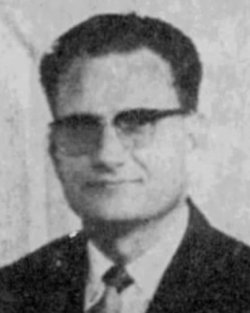
About W.E. Best
Wilbern Elias Best (1919-2007) was a preacher and writer of Gospel material. He wrote 25 books and pamphlets comprised of sermons he preached to his congregation. These books were distributed in English and Spanish around the world from 1970 to 2018 at no cost via the W.E. Best Book Missionary Trust.
SERMON ACTIVITY
Comments
Thank you for your comment!
Your comment has been submitted and is awaiting moderation. Once approved, it will appear on this page.
Pristine Grace functions as a digital library of preaching and teaching from many different men and ministries. I maintain a broad collection for research, study, and listening, and the presence of any preacher or message here should not be taken as a blanket endorsement of every doctrinal position expressed.
I publish my own convictions openly and without hesitation throughout this site and in my own preaching and writing. This archive is not a denominational clearinghouse. My aim in maintaining it is to preserve historic and contemporary preaching, encourage careful study, and above all direct readers and listeners to the person and work of Christ.
Brandan Kraft
Bible Verse Lookup
Loading today's devotional...
Unable to load devotional.
Select a devotional to begin reading.
Bible Reading Plans
Track your daily Bible reading with a structured plan. Choose from several options and let us keep track of your progress.
Comments
Your comment has been submitted and is awaiting moderation. Once approved, it will appear on this page.
Be the first to comment!