Bootstrap
W.E. Best

The Subject of Sanctificaton, An Overview, Part 2

Romans 5:20
W.E. Best September, 19 1992 Audio
0 Comments
Best's Corner

Sermon Transcript

Auto-generated transcript • May contain errors

100%
Let's read once again chapter
5, beginning with verse 20. I think I'll take the time tonight
to read through the first division of the sixth chapter. We will
not get any further than the second verse and may not be able
to complete our study of that verse. Chapter 5, verse 20. And the
law came in beside. in order that the trespass may
abound. But where sin abounded, grace
superabounded. That even as sin reigned in the
sphere of death, so also grace may reign by means of righteousness,
resulting in eternal life, by the agency of Jesus Christ our
Lord. What then shall we say? May we continue
in sin that grace may abound? Absolutely not, or let it not
be. That could be translated different
ways, and I'll go into that later. We who died Now, I want to stop
there for a moment. Look at your King James translation. How shall we that are dead? Is that a good translation of
the ariest active indicative? No, it isn't. We who died to
sin. How shall we continue living
in it? Now notice the third verse. R,
are you failing to understand that as many of us as were baptized
because of Jesus Christ were baptized because of his death? Do you have any objection to
the way I translated that? The King James says, or you,
well no you're not, that so many of us as were baptized into Jesus
Christ were baptized into his death. Now as a result of that
translation of the Greek, baptismal regeneration is to use this as
a proof text. All of those who believe that
a person is regenerated by the Spirit and they use 1 Corinthians
12, 13 as a proof text say this means the same. This is talking
about regeneration. Baptists say it's talking about
baptism in water. And I can give you, if I wanted
to take time and we'll get into this, but not tonight, many different views based on
this translation. Let's read the third verse again.
Verses three through five are the most controversial verses
of the sixth chapter of Romans. Don't forget that. Or are you failing to understand
that as many of us as were baptized because of Jesus Christ were
baptized because of his death? Now do you know why I translate
it in that manner? The preposition is ice. It's in the accusative
case. Is it with reference to or is
it because of? Now we'll answer that later.
Verse 4, Therefore we were buried together with him by means of
baptism because of death, in order that like Christ was raised
from the dead by the glory of the Father, even so we also may
walk in newness of life. For since we have become united
with him, in the likeness of his death, certainly shall we
be also part of the resurrection, knowing
this, that our old man was crucified with him, in order that the body
of sin may be ineffective, that we no longer serve sin. For the one who has died has
been made free from sin. Now, since we died once for all,
and I'm adding that, with Christ, we are believing that we shall
also live with him. Having known that Christ, who
has been raised from the dead, dies no more, death is no longer
having power over him. For that he died, he died to
sin once for all. But the life he is living, he
is living to God. So also you consider yourselves,
on the one hand, to be dead indeed to sin, on the other hand, living
to God in Christ Jesus. Therefore, do not let sin rule
in your mortal body. That's your responsibility. That's
my responsibility. So after he has completed what
he had to give concerning our position, then the responsibility
comes out. So notice verse 12 again, Therefore
do not let sin rule in your mortal body, with the result to be obeying
its lusts. And do not continue placing your
members as instruments of unrighteousness to sin, but put yourselves at
the disposal once for all who are living out
from among the dead and your members instruments of righteousness
to God. And then the last verse of this
first division, for sin shall not have rule or power over you
for you are not under law but under grace. Now folks, we're in the most
practical part of the Bible, and we're going to spend some
time on it. We're going to see just what we are, all of us,
all of us. So let's go back now to verse
21. That's where we left off this morning in our study of
the last two verses after the introduction to the subject of
justification and making the proper transition from justification
to sanctification. So now we'll continue with verse
21. Let me read verse 21 again. That even as sin reigned in the
sphere of death, so also grace may reign by means of righteousness
resulting in eternal life by the agency of Jesus Christ our
Lord. Grace reigns by means of righteousness. That's our subject for a few
minutes. Distinction must be made between purpose and cause. Another important distinction
for us to make. Distinction between purpose and
cause. God did purpose to permit sin,
but he did not cause sin. He's not the author of sin. Now
look at verse 21 closely. There are five words that I want
to pick out. And notice the order in the Greek
text in which they occur. The first one I'm going to call
attention to is the word sin. The second one is the word death.
The third one is the one grace. The fourth one is the one righteousness.
And the last one is the life. You say, well, what does that
say? Well, let's look at it closer. Let me give them again. Picking
out five words in this text, and let's see what these five
words teach. Sin, death, grace, righteousness,
and life. What is the middle word? Grace. Grace. Now, the last two, righteousness
and life are the trophies of grace. I said they are the trophies
of grace. While many people ridicule righteousness
and life, they are sinking under the reign of sin and death, the
first two. So you have five words, and when
you see what they mean, you have really an interpretation of the
verse. But let's go a little further. Paul brings his discourse
on condemnation and justification to a conclusion in chapter 5
before he begins the subject of sanctification. What a conclusion! What a conclusion! Listen closely. the contrasts between Adam and
Christ, between disobedience and obedience in chapter 5 beginning
with verse 16, between condemnation and justification, between death
and life, and the reign of sin and the reign of grace. What
a conclusion! Now go back to the 16th verse
of chapter 5 and go through in all these contrasts. So Paul
brings his discourse on condemnation and justification to a conclusion. But in that conclusion, what
does he do? Beginning with verse 16. We're
not going to go back and read them. You can do that. We're
not teaching those verses tonight. But I'm pulling it all together
and showing the importance. So the contrast we have between
Adam and Christ. between disobedience and obedience,
between condemnation and justification, between death and life, between
the reign of sin and the reign of grace. I say that's a tremendous
conclusion, folks. Let's go a step further. If the
shallow stream from Adam which was no wider than his finite
sin, eating the forbidden fruit, if
you please, involved all mankind because of their solidarity with
him in his sin, how much more shall the deep
stream of Christ's infinite righteousness, which was as broad as all the
sins of the elect, assure them of heaven." Let's look at something else.
Therefore, the knowledge of our fallen Adam and our redemption
by Jesus Christ are the two great hinges upon which the whole structure
of our salvation, our Christianity, moves. As the former cannot be understood
without taking a survey of the latter, The latter cannot be
apprehended without a knowledge of the former. After all, what was the law given
for? We saw this morning. The superabounding grace of God
is the excess of God's bounty. I said the excess of His bounty. Let me use an Old Testament illustration. You remember when the Queen of
Sheba traveled a long, long ways to see Solomon and have a conference
with the wisest man in the world? And at the conclusion of that
conversation, we have a statement. And what did Solomon give the
queen of Sheba? He gave her a present of his
royal bounty. Folks, that's what the Lord Jesus
Christ has done for you and me. Sin, looking at verse 21 now,
reigns where there is no grace. where there is no grace, sin
reigns. You know what that means? That
means every person who is a sinner, every person who is not a Christian,
in that person, sin reigns. You say, I don't believe it.
Then you don't believe the Bible. But I'll tell you one thing. Once
the Lord Jesus Christ touches you in grace, you will believe
it. Religion is denied, unregenerate
religion is, but no born again person, no individual with the
grace of God denies it. Sin literally reigns in the heart
of every unregenerate person. Everything is for self. Everything. Self. So sin reigns where there is
no grace. That means depraved man is controlled
by sin. That means he is a slave of sin. He can talk about his freedom
all he wants to, but he's a slave of sin. John 8, 34. Thus the slave is
not neutral to either sin or not sin. Not a matter of neutrality. I'll sin or I won't sin. He's
a servant of sin. He's a slave of sin. Period. Now I want to apply this to the
philosophy of today. And I don't have a thing in the
world in common with the educational system today, I don't have anything
in common with the political system today, and you don't either as a Christian. So this is the key to the understanding
of the modern world. What do you expect from the world?
We as Christians expect too much from the world. We expect things
from unregenerate people that we should never expect. They're slaves of sin. S-I-N. Religionists, politicians, psychologists, and humanist don't
understand what I'm talking about. Therefore, I have nothing in
common with any of them. They don't know how to cope with
the problems of today. None of them. The politicians
don't. You say, well, wait a minute.
You mean you're smarter than the people who are running our country?
I didn't say that. I'm just going by what the word
of God says, folks. The educational system doesn't
know how to cope with problems today. The psychologists do not
know how to cope with problems today. The humanists do not know
how to cope with problems. The only people who know how
to cope with problems are those who have been born of God and
have a workable knowledge of the Word of God. I'm going to have to make some
serious decisions in the future. It keeps popping up every day,
more and more. My wife and I were discussing
this going home after the service this morning. I'll not go into
some things with you now, but folks, I ask you this morning,
let's all get our heads out of the sand. Let's face reality. And if what
we're studying now doesn't help us, I don't have a thing to offer
you. I have absolutely nothing to
offer you. And the reason they do not know
how to cope with the problem is because they're either ignorant
or deny depravity man's enslavement to sin. That's the problem. And they won't admit it because
they don't believe in depravity. And the religionists are just
taking up. Oh, you're somebody. You're somebody. Don't you get
sick and tired of hearing that stuff? You're somebody. Well, folks, every person outside
of Jesus Christ is a nobody. How do you like that? You say, you can't talk to me
like that. I said, everybody outside of Jesus Christ is a
nobody. And he only becomes somebody worthwhile by the grace of the
sovereign God. I'm not trying to win a Nobel
Peace Prize. Sin reigns where there is no
grace. Now let's turn it around and
look at the other side of this last verse of chapter 5. Grace reigns. Well, where does
grace reign? I'm going to tell you where grace
starts and I'll take you all the way through and challenge
anybody to refute it. Grace reigns, first of all, in
election. Grace reigns in redemption. Grace
reigns in regeneration. Grace reigns in sanctification. Yes, and grace reigns and will
reign in glorification. Grace reigns. Grace would not reign if it merely
offered salvation. That's a pungent one. Hope you
don't miss it. What did I say? I said grace
would not reign, would not reign, if it merely offered salvation. That would not be reigning. Furthermore, grace reigns in
the Christian as sin reigns in the non-Christian. Is grace reigning in your life? I said grace reigns in the Christian
as sin reigns in the non-Christian. Grace reigns by means of the
righteousness provided by Jesus Christ in His death. Listen to
this. First of all, it fulfilled the
law. Secondly, it satisfied justice. And thirdly, it manifests holiness. Holiness of life. The person who knows more about
grace knows more about his sinful condition. You can be a Christian and not
know what you ought to know about sin. So listen to that again. The person who knows more about
grace knows more about sin. And I'll reverse it. The person
who knows more about sin, he knows more about grace which
enables him to know more about sin. These are common sense things,
all biblical to the very nth degree. Now I gave you a couple of things
this morning and I'll bring this to conclusion and we'll get into
the sixth chapter. I said historically, the curtain
is lifted on the subject of sin. I went into that. Expositionally,
The law is a mirror which leads the elect to seek his all in
Jesus Christ if he has been regenerated. Now, theologically, here's the
basis for it all. We are forced to study and have
a workable knowledge of Romans 3, 24 through 5, 19. And if you
don't have that, that's theology. That's theology. Now let me read just the first
two verses of chapter 6 again and then we will begin our discussion. You can see why there should
not be a chapter division here. What then May we continue in sin that grace
may abound? Let's stop with that. Let's look
at that verse. Positionally, now we're dealing
with position. Paul wants the believers in Rome
to be secure, wanted them to understand what it's all about.
So positionally, Christians are dead. Yes, we died. We died to sin. We died to sin
in the death of Christ. That death 2,000 years ago was
legal before the Father. It became actual to the recipient
when he was born of God. So there's a difference between
the legal aspect and the actual aspect. Although grace more than covers
the sin the law uncovers." Now having said that, think about
the two verses that we have been studying today, 20 and 21 of
chapter 5. Grace more than covers what the
law uncovers. Don't forget that statement. So, although grace more than
covers the sin, the law uncovers. Believers do not continue in
sin in order that grace may abound. Wouldn't that be foolish? You
know, the apostle knew how foolish people were. After all, he had
been a religious Pharisee. He had been an unregenerate Pharisee
for a long time. We don't want to forget that.
So he could relate with the questions that would be raised by the natural
mind. So he raised the questions and
answered them before any foolish person could have time to even
raise them. So he said to himself, I'll take
care of that to begin with. So what then? What then? What then shall we say? Shall we continue in sin that
grace may abound? Now I want you to look at your
Greek text for a few minutes. The fourth word on line 1 of
verse 1 of chapter 6. You have the inflected form of
the verb. Epimeno. epimeno. It is a subjunctive mood verb. So may we continue present middle
voice subjunctive. May we continue in saying May we continue. Now you'll notice the verb that
precedes it is a future active indicative of lego and then of
course that verb is preceded by tiun and this gives us the
first division going all the way through the 14th verse as
I described to you this morning. So the subjunctive mood expresses
possibility. Now since this subjunctive mood
is the nearest thing to the indicative mood, watch this, and it is future tense, so what
do we say? What does this tell us? tells us something very important. Did you know there was a time
when the subjunctive and the indicative were used interchangeably
in the study of the Greek? And then later? the future came out of the subjunctive. So that's why when you read and
you find in many translations that there isn't anything wrong
with it, instead of using the word may, possibility, the use
shall is because of its close connection with the future, because
the future really came out of it, came out of the subjunctive. So thus the idea of futurity, is connected with the subjunctive,
futurity. So shall we continue, continue
in sin? So verse 1 is Paul's answer to
chapter 5 verse 20 and 21. Before human reason has time
to ask a question, and the source of a holy life cannot be the
source of a sinful life. How in the world can the source
of a holy life be the source of a sinful life? Doesn't make
sense, does it? It is a contradiction of terms
to say that Christ came to save us from our sins in order that
we may continue to live in our sins. Or to continue living in
sin. Doesn't make sense. He came to
save us from our sins, not in order that we could continue
living in our sins. And we have the preposition that
is used here, apa, and that's the adjective of separation.
So He has separated us from our sins. And if we've been separated
from our sins, we do not continue to live in sins. I'm not saying
that we do not sin. We'll get to that later. All
of that's dealt with in what we're studying now and for weeks
to come. And we'll deal with every aspect
of it. So at this point, there are three
things we must understand. We're looking at verse 1. We're
not at verse 2 yet. Verse 2 is really an interesting
verse. So at this point there are three
things we must understand. Number one, sin is the terrible
principle that man introduced into the world. Now the question
is what is your relation to sin? What is your relation to it?
Are you dead to it or are you alive to it? You're either spiritually dead
in sin or by grace you are dead to sin. Either one. Only by grace you're delivered
from being dead in sin and thus become dead to sin. Now this
is biblical. This cannot be contradicted.
And no Christian will try to contradict it. He can relate
with it. Secondly, law is the principle
that God introduced into the world about 2,500 years ago to
give man the knowledge of sin. Romans 3, 19 and 20, Romans 5,
20 and 21, Romans 7, 7 through 13. Now, in making known what God
requires, it gives a man a sense of God's righteousness and holiness. So this causes man to see himself. If you don't see yourself, then
you don't have grace. You do not have grace, period. No other way. Thirdly, death
is the only way the bond between the law and those under its condemnation
can be invalidated. And that we'll get into Romans
7, 1 through 6 later, not tonight. The Christian, having been delivered
from the guilt and condemnation of the law, has not been left
lawless. Romans 7, verse 4. There is now
an attachment by grace with the risen Savior. Where you were
a slave of sin, now you are a slave of Jesus Christ and grateful
for Him. I tell you how I'd like to illustrate
that, but in order to do it I'd have to carry you all the way
through the four chapters of the book of Ruth. But let me
make one statement to illustrate something and you can check me
out on it. Ruth with Naomi is an illustration
of Romans 6. Ruth with Boaz is an illustration
of Romans 7. Just remember that. I'm not going
to go back and make a study now of the four chapters of the book
of Ruth. I'll let you do that. But that's
a tremendous Old Testament illustration of what we're talking about.
And I want you to know truth is like this. Old Testament principles
and New Testament principles, they harmonize. Now this is what is interesting.
I told you this this morning and we'll get into it more later.
All the moods of the Greek grammar are used in Romans 6. All four
of them. And we'll show you that later.
Three of them are used in the first two verses, and then the
imperative form is used in verses 11, 12, 13, and 19. And I close our thinking together
on verse 1 with this statement. Grace does not give license to
sin is further explained now in verse 2. Grace does not give
license to sin. That's further explained in verse
2. Now let's read verse 2. Now this first part could be
translated two different ways and I wouldn't quibble over it. But let's look at this. Let's
begin at the beginning. We'll go back to verse 1 first.
What then shall we say? May we continue in sin that grace
may abound. Absolutely not. Now I want to say a word about
that statement. Notice in verse 2 you have me
genoita. Me genoita. Now genoita is an
arius middle optative of the verb genomai. But it is
preceded by the negative may. Now when you look at those two
words, genomai, it's used a great number of ways, but it's not
used in the sense that you can use God's name. So God's name
is not used here. And the King James says, God
forbid. Now, I'm not going to lose a
lot of sleep over that, but you don't find the name God, any
reference to God, in May, Genoita. You know why that many have translated
it, God forbid? They have translated it because
it is a strong negative, and it's used with Genoita, which
is the ariest middle voice of the optative mood. And they say, God is the inspirer
of Scripture, and so it's God's Word, and so God forbids it.
Well, that's true. I don't want to argue with that,
but we don't have to say that. And I have read many different
views of how it should be translated. I think the most common one is,
let it not be. Let it not be. What then shall
we say? Shall we continue in sin that
grace may abound? Let it not be. That's all right.
But I'm going to use one stronger. Absolutely not. And it's permissible. I have found it used in some
Greek works. So absolutely not. Now notice
this. We who died to sin. I want to call attention to that
verb. It's an arius active indicative
of apothnasco. Apothnasco means to die. It's an arius active indicative. Point action, past time. Indicative
move, past tense. Completed action, past time. It's a fact. It's a reality. That's important, folks. We who died to sin, how shall
we continue living in it? Now notice the next verb. It
is a future active indicative of desire, of desire which means to live.
Now this is one of the several places in the New Testament where
the future active indicative is used in the sense of a progressive
future active indicative. And the context tells you that.
So therefore you can translate it like this. Absolutely not. We who died to sin, how should
we continue living, continue living in it? It's a continuous
future tense. It is a progressive future tense. Now keep that in mind as we develop
this. So we were dead in sin, but now
we are dead to sin. Listen. Medicine does not promote
the disease it destroys, does it? And the blood of Jesus Christ
does not promote the sin it destroys. The principle of obedience and
righteousness have been introduced in chapter 5, verses 15 through
21. Therefore, to live in the sphere
of Christ's obedience and righteousness means death to the sphere of
disobedience and unrighteousness. If that's not the teaching of
Scripture, folks, I'm through. I don't have a thing to teach. Christians cannot be loyal subjects
to Jesus Christ and rebels to Him at the same time. You can't
do it. We're getting into sanctification.
We're making the proper transition from justification to sanctification. Believers in their knowledge
of justification of chapter 5 are sitting under, oh I love this,
are sitting under the shadow of their experiential knowledge
of progressive sanctification in chapter 6. You understand what I'm talking about?
Let me state it again. I don't want us to get the picture.
All of us who understand justification, we've been declared righteous
by the sovereign God on the basis of the application of the shed
blood of Jesus Christ, not only before him by imputed righteousness,
but by imparted righteousness as a result of the work of the
Holy Spirit within us. Now, having said that, under the shadow of experiential
knowledge of justification, both before God and before our consciousness, and also under the shadow of
progressive sanctification. In chapter 6, Thus the question
is no longer one of sin as a guilt. I'm not disturbed about the guilt
of my sin. I understand what has been taught
me in the area of justification before God and before my consciousness. So there is no longer one of
sin as a guilt that should concern me, but rather a question of
the power of sin over me. Over my desires and over my passions. Now we're getting down to where
we all live. So what do we have now? The question is no longer one
of our standing. It's not a question of my position
in Christ. That's been settled. I understand
it. On the authority of Scripture and my own experience that something
has happened. Now let's go a step further.
It is now and will continue to be, as long as I am living in
time, the question of my state, the question of my condition.
And here's what disturbs me. I do not witness today on the
part of most Christians, and I'll go so far as to say, and
some in this assembly, and more than I would like to say, It doesn't seem to matter when
it comes to condition. Condition involves dedication. Condition involves your whole
being. You can't be complacent. You
can't be indifferent with an understanding of what the Lord
has done for you. The Holy Spirit within you won't
allow it. You may quench Him and you may grieve Him, but you
can't kill Him and you can't get Him out. He's there and He'll
haunt you and show you what your responsibility
is. Aren't you grateful for it? Although we had nothing to do
with our standing and we didn't. No one has anything to do with
his standing, his position in Christ. But folks, we do have something
to do with our condition. And that begins with verse 12.
I've already called attention to it as we read it. Not only verse 12, but also verse
13. Now let us consider the reasons
for Paul's strong negative. In verse 2, me genota. I said let us consider it. I'm
going to just give you these seven things in conclusion tonight.
We're not even going to complete the second verse tonight. Not
going to make any attempt to. But let us give seven things
on showing Paul's reasons for his strong
negative. Number one, it is continuing
in the realm or sphere of sin rather than committing acts of
sin. Number one, I said it is continuing
in the realm, in the sphere of sin rather than committing acts
of sin. See, I'm making a distinction
again. Certainly we commit acts of sin, but don't live in it. Justified persons cannot, cannot
live in the sphere of sin. They can't do it. It is contrary to the teaching
of Scripture, all of Scripture. Number two, since sin does not
promote grace, how horrible the thought that
grace promotes sin. Watch this, an explanation. Sin is the occasion for God to
display His grace. Number three, death to sin. Notice what I'm saying. We who die, that's an arius active,
indicative. We've already called attention
to it. So we're dead to sin. And death to sin does not give
life to it. Number four, grace which makes
us like God, like God, does not at the same time make us unlike
God. Number five, I want to illustrate
it. I don't know of a greater way
to illustrate it. We're going to have a marriage here pretty
soon in our assembly, and I'm going to perform it if I'm alive
at that time. I do not know of anything greater than two Christian
people getting married. I don't know of anything greater,
period. Now listen to this, using illustration. I'm using this as number five.
And it's based on scripture, but I'll not go into the scripture.
The wife bound by love to her husband does not try her husband
by being unfaithful to him. And as a wife who is bound by
love to her husband does not try him by being unfaithful to
him, the Christian does not try God by being unfaithful to him. I'm talking about a life of unfaithfulness,
folks. Number six. Anyone who asks the
question of verse 1, what then shall we say? Shall we continue
in sin that grace may abound? Two questions there. So anyone who asks the question
of verse 1 is ignorant of the teaching of Romans chapters 1
through 5. He's ignorant. I mean ignorant,
for he had never asked such a question. Paul anticipated an attack on
his teaching concerning grace. He knew what would happen. Folks,
I know what's happened to me time and time again. So he knew what the flesh did
not suggest the devil himself would. And so he answered the
question before they had the time to raise them. Whatever one's flesh does not
suggest the devil would be glad to suggest it. Number seven. The true gospel
of Jesus Christ is a stumbling block to religionists. I said the true gospel of our
Lord Jesus Christ is a stumbling block to religionists. Thus, a person who believes in
free will says, I'm going to give you an illustration. I've
heard questions similar to this many times in my lifetime as
a Christian. If I believed in free grace as you do, if I believed in the perseverance
of the saints as you do, I'd get my fill of sin. There's only one answer to give
a person like that and you know what it is? How much sin does
it take for a Christian to get his fill of sin? Now you answer
that one for me and I'll carry the conversation on later. Isn't
that ignorance? Have you ever had people ask
you a question similar to that? Well, if I believe, even as a
Baptist, we talk about eternal security. If I believe what you
believe, I'd just, what? I'd get my fill of sin. And folks, those questions were
asked by a religionist, not by a person who didn't profess to
be a Christian. By religionists, by Arminians. How much sin does it take for
you to get your fill? Isn't that the proper question? Death to sin is contrasted with
living in sin. That's verse 2, contrasted with
living in sin. Paul's strong negative. I said,
following now Paul's strong negative, what did he say? We who died
to sin, How shall we continue living in it? Now notice something. You go
from an arius active indicative verb
to a future progressive active verb. So you're dead. And since you are dead and it
is a fact, it's a reality, you're dead to sin. How in the world
can you continue, progressively live in it? You can't do it. No person can do it. Don't forget,
grace reigns, folks. Reigns. If grace didn't reign,
we would be without hope. So when a person talks like that
or thinks like that, he doesn't understand grace, he doesn't
understand anything. In fact, he doesn't have a spiritual
mind. We're going to stop right there
because I'm getting into some other areas for another seven
points and so forth. in the discussion of verse 2.
So we'll finish up on verse 2 as an introduction into the next
part, next Lord's Day. I want you to start studying
this week verses 3 through 5. I want you to read your Presbyterian
material. I want you to read everything
you have in your home library and get it all down because we're
going to expose all of it. from these three verses. Verses
three through five. In fact, I have here before me,
I have this in my notes just to give you an idea. I have here
a Church of Christ view. I have this man's work. It was
sent to me a couple of three years ago. A commentary, just
a brief commentary on the whole New Testament. A man by the name
of John May. And I have his view. on verses
3 through 5. I'll just give you this to whet
your appetite. Here's what he says, direct quote. When did
we die to sin? See, that's what we're talking
about in verse 2. Now, here's what he says. When were we united
to Christ? Another question. It was when
we were baptized into Christ. And many are ignorant of this
vital and precious truth. And you know what Presbyterians
believe? They believe in baptismal regeneration. You may be shocked
at that, but folks, they believe in baptismal regeneration. If
you don't believe that, I don't know if a sign's still on the
freeway or not. Used to be a big sign down here at Presbyterian
Church in Park Place. Had a big sign up, A Better Way,
and they had Acts 238. How many of you remember seeing
that sign? Huge sign, billboard. There's another way, Acts 238.
They believe in baptismal regeneration. I approve it from their own works. And then I have the Baptist position. I have Wolvard and Zuck. I have
a man by the name of Ernest Campbell. He doesn't believe in baptism
at all. That is baptism by immersion
of water. Grace man. I studied Greek under Matthew.
I have his work. I have the GARBC. That's the
General Association of Regular Baptist Churches. I have their
view, not the same as most. I have A.T. Robertson from his
word studies. And I have some others here.
I'll share all these things. I'm not hiding anything from
you. Folks, I'll expose you to everything. Then let's look at
the book. Is that the way to teach? You're going to come in contact
with it sooner or later if you do any witnessing. Of course,
if you just go home and sit on your fanny, and you don't ever
do anything, never witness or anything else, and you're complacent, never open your mouth, you won't
know what's going on. We're living in a day now, it's
going to cost you something, brothers and sisters. It's going to cost you something
to take a stand for truth. Do you realize that? You may not want to follow the
teaching that I'm going to continue to give. You may not want to
follow it at all. It's going to cost you something. The good days
are gone, folks. They are past. Freedom, as we
have enjoyed, is gone.
W.E. Best
About W.E. Best
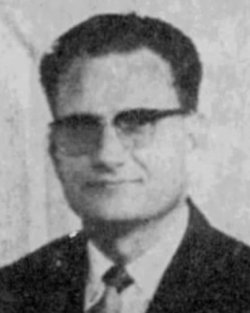
Wilbern Elias Best (1919-2007) was a preacher and writer of Gospel material. He wrote 25 books and pamphlets comprised of sermons he preached to his congregation. These books were distributed in English and Spanish around the world from 1970 to 2018 at no cost via the W.E. Best Book Missionary Trust.

Comments

0 / 2000 characters
Comments are moderated before appearing.

Be the first to comment!