Bootstrap
W.E. Best

The Person of Christ & His Impeccability, Part 4

Philippians 2:5-8
W.E. Best June, 10 1992 Audio
0 Comments
Best on the Person of Christ

Sermon Transcript

Auto-generated transcript • May contain errors

100%
First of all tonight to Philippians
chapter 2. Since we're discussing the dignity,
humility, and glory of Christ in the light of this passage, I think we ought to take time
out because I haven't done this even though we have a book on
Christ Emptied Himself. I would like for us to look at
verses 5 through 8 especially tonight Because there is so much controversy
about these three verses, especially the subject of Christ emptying
himself. Before we continue where we left
off last Wednesday evening. Next Wednesday we may take the
next three verses before we continue our lesson. verses 9, 10, and 11 on the exaltation
of Christ, but this is a section that deals with his humility.
So let's begin with verse 5. Now we're going to call attention
to the Greek text tonight, so if you have your Greek text with
you, if you have one, you should always bring it because you do
not know when we will be referring to it. Let's read it in the King James
first. Let this mind be in you which was also in Christ Jesus,
who being in the form of God thought it not robbery to be
equal with God, but made himself of no reputation and took upon
him the form of a servant and was made in the likeness of men.
And being found in fashion as a man, he humbled himself and
became obedient unto death, even the death of the cross." Now look at your inner linear,
if you will, please, and we'll call attention to some important
things in these three verses by way of using the Greek. I translate the fifth verse in
this manner. We have an imperative. If you'll
notice, tuta, and that is a demonstrative pronominal adjective, an adjective
used as a pronoun. Translated this, and that's a
good translation. And then you have a present active
imperative of the verb franeo, and the inflected form here is
franaite. So it's a present active imperative.
Then look at the next word. It's a preposition. It's the
preposition in epsilon nu. Now it can be translated either
way. In other words, more than one
way. And either one would be correct
grammatically and doctrinally. So we're going to have to decide
in the light of the context which would be the better translation
of the preposition in. And I'd like for us to look at
it closely so if we can see that we can determine just the better
translation of the preposition in. Then you have human, so it
of course corresponds to the preposition that precedes it.
And therefore, whichever way, whether we translate it as being
allocative or an instrumental, would determine on what the pronoun
would be that follows. So I'm translating it like this.
This mind be having in you. Now it can be translated that
way, but it can also be translated this mind be having among you. Now, does it make any difference
which way you go? Both is correct. I said it's
correct. It's just a matter of choice
as to what really fits the context better. In order to determine
which way, whether it's instrumental of association or locative of
place. in you, and you, by the way,
is a second person plural pronoun. It's not a first person singular,
but it's plural. So it's second person plural,
not second person singular. So this mind be having among
you. How does that sound? Well, let's
see how it sounds. Let's go back to verse one, and
I'm reading the King James now in the first four verses. If
there be therefore any consolation in Christ, if any comfort of
love, if any fellowship of the Spirit, if any bowels and mercies,
fulfill ye my joy that ye be like-minded, having the same
love, being of one accord, of one mind. Now you know, surely you already
have made up your mind just how that this preposition should
be translated to fit the context. Verse three, let nothing be done
through strife or vainglory, but in lowliness of mind, let
each esteem other better than themselves. Look not every man
on his own things, but every man also on the things of others. Now, in the light of the context,
would you say among you or in you? In you would still be the same plural pronoun, but I believe
that among you, instrumental of association, fits the context
better. Now that's a matter of choice
and whichever way you were to translate it, it is still correct. You have not destroyed one single
solitary thing. And you could not fall out with
someone else if he had translated it different. So looking at verse 5, this mind
be having in you, Now why am I translating it in that manner?
It's a present active imperative. And since it is a present active
imperative, we are commanded to think as Christ thinks. Our thinking is to be controlled
by Christ. To whom is Paul writing? The
Philippian Saints. So note the present active imperative. This mind be constantly having
among you. You could say it like that. Or
continually having among you. Constantly having among you.
It's present active. It's a command. You don't have a choice in the
matter. I don't have a choice. Now having said that, watch what
I'm going to say and see if you know what I'm talking about. Let us forget, I'm quoting now,
let us forget about arguing over doctrine and go fishing. How many of you know what I'm
talking about? Let's see your hand. Now, I only heard that on Channel
11 and Steve Smith. Is it Steve Smith? Yeah, that's
the anchorman of Channel 11. He was interviewing the new president
of the SBC. And so the new president of the
SBC said, he was asked the question, what are you going to do? What's
your goal and so forth with the SBC, with the Southern Baptist
Convention? Let us quit arguing over doctrine
and go fishing. I'm a fisherman. I believe in
fishing for men. What do you think about that? Do I need to tell you what I
think about it? Did you see the article in Mundus'
paper? Did you see his picture on the
front page and then did you read it, Glenn, the whole article? Several of you have read it.
One of our men said, I don't see how a Christian could even
go to such an institution. Neither do I. Neither do I. Now, when you look at the first
four verses, this is very practical, isn't it? I was talking with one of our
members this week, and we were on a subject that is very important. And after our conversation, I
got to thinking about a study that I made several years ago
and I could not recall. In other words, I couldn't mash
a key or punch a key and bring up really all that I wanted to
bring up on it, but I knew how to get it because I knew about
where it was, the information. So I went to it. I found it. I was determined to find it.
It didn't take me too long to find it. I've tried to make,
I've tried to develop my own system through the years that
when I have something in storage, I know where to find it when
I need it. And we can't remember everything in detail when we're
dealing with the infinite mind of God. But looking at these
first verses, and I may not even get to our subject tonight because
this is very practical. I want to ask two questions.
What is love? Would you give a definition of
love? Would you write down in your own words just love from
your perspective? What is love? How would you define
love from your own point of view? Then I'm going to ask the second
question. I came across all this information that I dealt with
years ago, probably 25, between 25 and 30 years ago. And I was so overjoyed, I'd forgotten
much of it. I mean completely forgotten.
I remembered a few key things. And this is what I always try
to remember, a few key things. And that always opens up the
door to get back into it. The second question, what is
marriage? And then the third question,
what is New Testament Assembly Fellowship? Now, all these three
are related. I mean they are related. Of course, we're not married
to Christ, but this is a good question. Let's look at the first one for
a moment. You see, we have this in this portion of Scripture.
Be therefore any consolation in Christ, any comfort of love,
any fellowship of the Spirit, any bowels and mercies. Fulfill
ye my joy that ye be like-minded, having the same love, that's
still dwelling on love, having the same love, being of one accord,
of one mind. Now, do you believe that's the
goal of the assembly? Folks, it is not an assembly
if that is not the goal. Now, I'm letting you in on something
tonight, but we may be preaching it Sunday morning or Sunday night
or both services. I don't know. Because I'm determined,
by God's grace, to just keep hammering away. Things that I've
preached for years, touched on, but we haven't really gotten
what we should have gotten out of it, or out of those subjects. And we can't have what we should
have, we can't be what we should be, we can't do what we should
do, unless we apply the things that we learn. Just that simple. What is love? I want to give
you, if you've written down your definition, I want to give you
Now, I found this. I don't even know where I found
it, and I'm not wording it exactly like I found it years ago. But
from the Christian's point of view, this is the greatest definition
of love that one could ever find. Love does not measure the love
it gives or receives. Now think that through. Love
does not measure the love it gives or receives. Anytime love starts measuring
the love that it gives, it's the wrong motive. You don't give in order to receive. You don't give for recognition. You give because you're motivated
by God's love to give. And you don't start measuring
what you give. Now that does not contradict
what Paul said, the more I love the less I be loved. He was not
measuring it either way. He was simply making a statement
of fact. to the Corinthian assembly. So
love, if it's genuine, it does not measure the love that it
gives and neither does it measure the love that it receives. And
one thing for sure, if you really give love, you don't give it
with the idea of receiving. Now let me illustrate that in
a very simple way. a man and his wife, and that's the reason
I'm bringing marriage into it. And I'm not just giving this
tonight for the benefit of Bob and April, but it'd be good for
them to listen and good for everybody else. In fact, the bit is I might
even develop something along this line to say it at their
wedding if I'm alive and performing. that time. You see, I have to
say that because I can't boast of tomorrow, neither can you.
Y'all can't even boast that you're going to get married on the 18th
of July. No man can boast of tomorrow
because he does not know what the day will bring forth, right?
That's what the book says. We have to learn and we live
that way. Now what is marriage? I want
to tie it all together. What is marriage? Marriage is not two hearts in
two bodies. That's not marriage. And there are too many marriages
where there are two hearts in two bodies. A true marriage is one heart
in two bodies. You know what I'm saying? One
mind. One mind. Our affections are
the same. We're deeply in love with one
another. Now what about fellowship? Same
thing is true. Fellowship in the assembly. We
are united to each other in the assembly. But if we're not of
the same mind and of the same judgment, folks, it is a mess. You say, well, who's going to
determine what we're going to follow? Are you going to be a
dictator and tell us what we have to believe? Uh-uh, no, I'm
going to tell you what the Bible says. Not what I say. If I say it,
you leave it alone. You forget it. But if it's what
the book presents, folks, this is it. This is it. Now you can see why the fifth
verse that Paul continues in this manner. This mind be having
in you, which is also in Christ Jesus. All right, now let me explain
this a little more. So when you look at the verb
that is used here, it's the second word in verse five, phroneo,
and it means to think, to be in agreement, to have in mind, to have one's
mind, controlled by one's mind. Now whose mind are we to be controlled
by? By the mind of Christ. If we're not controlled by the
mind of Christ, we're a bunch of renegades. Let's face it. So franeo, we are commanded to
think as Christ thinks. So our thinking is to be controlled
by Christ. Now we're looking at it for what
it is, folks, and I'm one who will argue over
doctrine Doctrine or teaching is very
important. You don't have anything if you
don't have teaching If you don't have a standard you don't have
anything if a denomination is the standard you don't have anything The standard is the Word of God
So we either accept it live by it or pay the consequences period So it's a present active imperative. This mind, demonstrative pronominal
adjective, have the same thoughts among
yourselves as you have in your communion with Christ. Now what
did I say? Have the same thoughts among
yourselves. That's why I think the preposition
in here really should be instrumental of association rather, I think
it fits the context better, rather than the locative of place. It's understood, the in part
is understood even in with. All right, let's go a little
further now. Let's look at verse six. The King James says, who being
in the form of God. I'm not translating it like that.
The one existing. Now why am I translating it in
that manner? All right. The one existing. How? In the form of God. All right, look at verse six
now in your Greek. You have has, which is another
pronominal adjective, and it's a relative. This time it's a
relative pronominal adjective. And then you have in again, and
this time it's okay, locative of place. In the form, and the
word for form here is morphe, in the form of God. So he was in the form of God. And what does that say to you
and me? That speaks about what Jesus
Christ was eternally with the Father. All the attributes of
the Father were the attributes of the Son. And then he says, you have the
verb and it's a present active participle. Subsisting, they translated it
here. I'm not saying subsisting, I'm
saying existing. So let's look at the verb that
is used here. The verb is huparko, and it means
be at one's disposal or be present. All right, having said that,
the one existing in the form of God and not regarded to be
equal with God or something to hold on to. So did not regard what? the equality with God, or to
be equal with God, something to hold on to. Notice how I worded
that. And you will find that in the
study of the Greek word. Robbery. Harpagmos. Something to hold on to. And then you have Pronoun you
have an adjective actually and some use it as an adverb, but
I'm not going to use it as an adverb I'm going to use it as
an adjective and equal as an adjective Then notice in verse 6 the verb
Hey, Gia my That's on line 2 and the fourth word over translated
in your in linear deemed. I Then you have I nigh, and that's
a present active infinitive of I me, the verb to be. And then in verse seven, here's
where all of the debate has taken place for centuries. But emptied himself. I'm going
to translate it that way. But emptied himself. And what
is the verb? Kenao You'll notice in your inner linear
verse 7 and the first word in verse 7 is the strongest adversity
than the Greek Allah and Then you have on that you have a pronoun
he out on himself and then you have a can osen Emptied areas active indicative
of Kenao he emptied himself and He divested himself of his privileges. Now what privileges? Watch this.
He humbled himself. He left heaven in all of its
glory. So how do you explain this, he emptied himself? I'll
explain it in a very simple manner tonight. He became subordinate
to the Father. Don't we have that in the 11th
chapter? of 1 Corinthians, the wife is to be in subordination
to the husband. We don't see that much today.
Folks, you're going to have problems if the man doesn't take the role
and assume the role, continue to assume the role of a man and
the wife be in subjection to the man. That doesn't mean that
she can't express herself. but you're not going to have
a home that is a home in the eyes of God and according to
God's plan. So what did the Lord Jesus Christ
do? He left heaven and all of its glory so he now in this God-man
position as the mediator between God and man, he was in subjection
to the Father. And Paul gives us that, as the
woman is to be in subjection to the man, the man is to be
in subjection to Christ, as Christ is in subjection to the Father.
That's the order, that's Bible. That's God's plan. Any deviation
from it results in chaos. Absolute chaos. He not only became subordinate
to the Father when he emptied himself, he didn't empty himself,
he didn't divest himself of his attributes. He didn't un-God himself. Now if you want me to challenge
you on this, if you're around a Baptist bookstore, I went in
one the other day to pick up something and I looked around,
I never saw so much junk in my life. Now you talk about junk, I mean
just junk from one end of the store to the other end of the
store. No wonder people are not getting
any teaching today. Even many of the books that are
commentaries and so forth, nothing to them, they're commentaries
that I've given away and taken to a used bookstore and gotten
my what little I could out of them years ago. I didn't know any better and
bought a lot of them because I didn't know what to buy. But look at Barclay sometimes
on this portion of scripture. He's a favorite of the Baptist.
If you're in a bookstore, just browse around and you find Barclay's
commentary. I challenge you to pick up his
volume on Philippians and read it. That's just to name something
just to give you something to do when you don't have anything
else to do. But what else? He entered into
a new state of existing. But no longer existing as God
absolutely considered. He's now the God-man. The divine nature has taken on
a human nature, but a holy human nature. That's why we have been
advocating what we have for many, many years and will continue
to do so, regardless of the outcome, here, there, or anywhere, period.
I'll argue. I'll fuss. I'll even do more
than that when it comes to the truth of Scripture, folks. How can you go fishing if you
don't have any bait to give them when you get there? If you're going to give fish
something, you've got to have something to give fish. Don't think you'd catch very
many fish if you just went out there with a hook without anything
on it. Think you'd catch very many, would you? You'll catch
the sheep That is, the elected fish, if the fish have, you know
what I'm doing, I'm using an analogy now. If the fish has
been quickened, you can rest assured when you give the fish
the bait, you'll catch the fish. You know what, I heard that statement yesterday evening on Channel
11. I told Juanita, I said, you know
why fellas do say things like that? Sounds good to the flesh. That's the way you reach the
flesh. You don't reach sheep, you reach
unregenerate people. You reach the flesh. So whenever a person who says
he believes in the doctrines of grace and is always so afraid
that I can't say this or I can't say that because if I say this
or if I say that I might offend and I lose the opportunity of
winning. I don't believe a word of that.
Let me illustrate it. Yesterday morning I was sitting in a waiting
room. There were four other people in the waiting room waiting for
our cars. And the man next to me was older
than I. We had already been talking for
a few minutes and he told me he was 77 and that he was a school
teacher. He said, I didn't wait to retire,
I quit before I retired. He said, I went on, got my master's,
and I taught until I was 55, and I couldn't take any more
of it, and I quit. But he said, my wife continued, so she continued
to make the living for him, I guess, until, so he said he just kinda
did this, and he did that, until he could receive his retirement,
so forth, from 55 until he was 65. Really a talkative fella. By the way, I'll tell you who
he was. You wanna know if I saw him on TV. I said, no, I don't
believe so. Let me ask you something. You
remember here about two weeks ago or less than two weeks ago,
some black man had some dope and they were trying to find
him. It was on the TV, all right? I didn't think about it at the
time when a guy at home mentioned Juanita, she called my attention to it.
We did see it on the news. And they found him hiding in
a tree. Remember that? and they had been hunting for
him for over a day, almost two days. Well, he was first found
in his little garage building out back of his house, hiding
under a tarpaulin. And when they picked it up, he
ran again into the woods and climbed up a tree and they finally
got him. Make a long story short, when
he mentioned he was a schoolteacher, two of the other sitting there
were schoolteachers. Boy, they lighted up like Christmas trees.
So they started talking. They got talking about all the
problems they're having in schools today. One was a woman, about,
I'd say, probably 40. And the other was a young man
who teaches at Pasadena High School in Pasadena. Looked like
he was about 28, 29 years of age. Clean cut looking young
man. And so they were talking about
all the problems they're having. Then they started discussing
why they're having the problems. The problem goes back to the
home. Goes back to the home. And so
they were talking all around the truth. And so I thought,
well, about time for me to say something. So I'll see if they're
willing to listen to what the Bible has to say. I said, well,
I agree with you that a lot of the problem does go back to the
home. I said, both mother and father at work, and no one there
to see after the children. Well, they agreed with that,
but I took it a step further. I got into depravity. And when
I got into depravity, a few things, and this man, 77, was a deacon
in a Baptist church. Been a member of that same Baptist
church now, OST Baptist Church out here on old, off of Highway
90, going toward Beaumont out of Houston. They wanted to change the subject
and they changed it in a hurry. Folks, you can't talk to religionists
today. You mention a Bible out in public and quote a verse of
scripture and you know what happens? Most people think they act like
they're ashamed of it. They literally act like they're
ashamed of it. Let's change the subject. All right, I'm talking about
subjection. I'm talking about subordination. He emptied himself. Emptied himself. All right, let's
read a little further. Verse seven. But emptied himself, not
but made himself, but emptied himself. You just take the Greek
word here, and it is an arius, active indicative, and so all
you can say in translating an arius verb, point action past
time, indicative mood, the mood of reality, He emptied himself. And then you come to an arius
active participle of Lombano. Now you would know that probably
by looking at Labone. Look at the top of the page,
781, second word, doulu. And then you have an arius participle,
nominative masculine singular. Lombano and you translate it
there are several ways you can translate it but I'm translating
it after having said but emptied himself having taken the form
all right now notice first he was in the form of God now having
taken the form of a slave then you have an arius middle participle
of genomi which is the first word on the second line and so
you can translate it like this you don't want to just continue
to translate them the same way so having taken the form of a
slave you can say then having what having been made the likeness
of men And who has been, who has been found, I'm having a
look at my writing here, my eyes are not real good and my print's
pretty small here. Having been found, having been
found is a passive. To what? to appear as a man been
found to appear as a man verse 8 now the first part of verse
8 in your in linear forget it because we've already translated
it the Greek in the last part of verse 7. So all you have actually
in the Greek in verse 8 is, He humbled himself, having become
obedient until death, the death of a cross. So tonight we want to take up
where we left off. We took quite a bit of time to
do that, but hopefully that was helpful to you. If not, you can
forget it and go home and go to sleep. Where did we leave
off last Wednesday evening? Where did we leave off last Wednesday
evening? We left off, if I remember correctly,
with this. The divine nature never has a
human attribute. nor the human a divine. But the
divine human, the God-man if you will, person may be spoken
of as having both. As having both. Thus you will observe, and then
I gave you some verses of scripture to study on this, thus you will
observe with respect to the union of the divine and human natures
of Christ, some deeds performed in one nature are ascribed to
the other nature, and we used Acts 20, 28. And I gave you,
I think, 1 Corinthians 2 and verse 8. John 3, 13 would be
another one. So it must be understood that
Christ's human nature never acted independently of his divine nature,
nor the divine nature of the human. Consequently, all Christ's
actions, all Christ's actions were the acts of one indivisible
person acting in the fullness of both
natures. Now, if we wanted to outline
this, we'll talk about the form of God. If you have your inner
linear, remember now we looked at verse 6, who in the form of
God. So the one existing in the form
of God did not regard it to be equal something to hold on to. regard something to be equal,
that to be held on to. So let's look at the form of
God in verse 6. The form of God was Christ's
eternal state. His eternal state of dignity
before the incarnation. Now some believe the form of
God refers to Christ's essential glory. the glory that he had with the
Father before the foundation of the world according to John
17. Let's look at this. Then I'm
going to give you what others believe about it, the form of
God. We're going to look first of all at those who believe that
the word form, morphe, and by the way, reality, reality, So this form must not be explained
by any such temporary manifestation, such as the Theophanies of the
Old Testament. Now do you know what a Theophany
is? That's a pre-incarnate manifestation of God in the Old Testament. I said a pre-incarnate manifestation
of God in the Old Testament. And you have a number of them.
They're called Theophanies. He appeared as an angel and of
course he appeared as a man, the fourth man. You remember
the fourth man in the burning fire of furnace? That's a theophany. Secondly, I'll give you some
points on this. Number one, this form must not
be explained by any temporary manifestation such as the theophanies
of the Old Testament. Two, fire is the symbol of deity, as was the Shekinah, we're talking
about the glory, but not the form, not the form. Three, the glories of Christ
are threefold. They are, first of all, personal,
secondly, official, and thirdly, our nation, that is, his personal
and official, but the moral could not be hidden. His personal glory was hidden.
His official glory was hidden, but not his moral glory. That
can never be hidden. Three, uh, four rather. Morphe,
the word form, carries with it the idea of shape. Shape. But Paul did not attempt to explain
the form. You'll notice that. He didn't
explain it, didn't try. There is an unspeakable contrast
between the heavenly and the earthly. Let me give you a passage
to study on that in the Old Testament. It's Job 4.16. We'll not take
time to look at it. You can do that. Job 4.16. Number five, form speaks of magnificence. Magnificence. There was nothing
contemptible about such form. Six, God did not manifest himself
to man as the form of God. He did not manifest himself as
the form of God. Man cannot look upon God absolutely
considered. You can't stare at the sunshine
shining in its meridian brilliance. a long period of time without
being blinded. What do you think it would do if you looked on
the glory of God? Seven, the glory was not laid
aside but veiled by human nature during the days of Christ's flesh. Now there are others who believe
The form of God is identified with the essence of a person
in Philippians 2.6, with the essence of a person in Philippians
2.6. Alright, on to that point, I
have several things to give you. Number one, in the form of God
proves not only Christ's pre-existence, but it proves that his existence
was essentially one with the Father. John 10 and verse 30, I and my
father are one. And notice Christ speaking, said
I and my father, he didn't say my father and I, he said I and
my father are one. Number two, the dignity of Christ's
essence was veiled by the incarnation. It was something from which He
humbled himself by making himself of no reputation. I'm using the
King James translation. Three, Jesus Christ did not change
one form of being for another form of being. We have to be careful how we explain
it. He changed his appearance by assuming another nature. Isn't that what happened? He
changed his appearance by assuming another nature. A human nature. So the divine nature was shrouded,
that we might say, with a human nature. Shrouded with a human
nature. That's why when people walk,
they call him a man. They saw him as a man. He had
the appearance of a man. And just stop with the word man
for the time being. Just stop there. He was a man,
but he was more than man. But an unregenerate person couldn't
see that any more than unregenerate people today can see it. Number four, Christ did not.
ceased to be what He was. But in the incarnation He was
made what He was not, the God-Man. He hadn't been the God-Man from
eternity, He was now the God-Man. Did you know many people today
believe that Jesus Christ laid aside the attributes and all
of that? One of the Puritans of the past
made this statement. I'll give you this quotation.
He said, If the sun should come down to earth, none could bear
its heat and luster. Our eyes would not be enlightened
but blinded by its glory, and all things would be swallowed
up and consumed by its greatness, whereas, though the beams of
it, everything is enlightened, through the beams of it, everything
is enlightened and kindly refreshed." End of quote. Good statement. That's number five. Jesus Christ,
number six, was not made God, but God was made Jesus Christ. He hadn't been Jesus before.
That's his human name. Don't ever be guilty of referring
to Jesus Christ as Jesus. Their heretics do that. Have
you ever noticed how the Charismatics and all of them are just Jesus
this, Jesus that, and now Baptists are falling right in line, just
Jesus this, Jesus that? That'd be like speaking of the
first president of the United States, saying, George this,
George that. No respect, but there's no comparison
really when you think about George Washington and Jesus the Christ. So Jesus Christ was not made
God, but God was made Jesus Christ. He was not made rich when he
was poor, but being rich, being rich, he was made poor. 2 Corinthians 8, 9. Now here is
the clincher. Number seven, to be and to be
manifested. To be and to be manifested are
two different things. When you talk about to be, that's
existing, that's the verb I me. To exist and to be ever the existing
one. And then to be manifested, that
eternal existing one, to be manifested. So to be and to be manifested
are two different things. Thinking of God absolutely considered
devours one's thoughts. You ever spend any time thinking
about God's absolute being? Folks, that's tremendous. What a joy. Your thoughts are
just devoured. The more you think, the bigger
it gets and the smaller you become. He's God. He's everything. Apart from Him, I am nothing. But to think of God manifested,
watch this, in the flesh is a comforting
consideration. If you just sit down and start
thinking about God as the absolutely holy Eternal
One, you're just devoured, you're consumed. But to think about
the Absolute One manifesting Himself. And in manifesting Himself in
the person of Christ, He manifests Himself to you and to me through
Christ. That's comforting. You know what I'm talking about?
You ever experienced it? Hopefully you all have. So form indicates what Jesus
Christ was in the form of God. Fashion, to use the word fashion,
that the King James uses. The Greek word means this is
what he looked like after he humbled himself. Subsequent to
his emptying himself and taking upon himself the likeness of
man. The likeness. Not man, but the
likeness of man. He's more than man. Anyone who
denies he's more than man I recommend that he go join up with a Buddhist
where he belongs. He certainly doesn't belong among
those who profess to be Christians. It gets back to the word flesh
again. Manifested himself in flesh. What kind of flesh? What
kind of flesh? What a study. What kind of flesh
did Jesus Christ manifest Himself to mankind? Some say sinful flesh. That's when you have to part
company, folks. Are we treating the Word of God
correctly? Well, we'll have to stop here
tonight. We'll get into the form of a servant next. We'll take
up here and we'll go into this passage and take the next three
verses in the Greek next Wednesday night. Then we'll begin with
the form of a servant. Let's quit arguing about doctrine
and go fishing. Sad day, folks. I'll have to tell you this before
we dismiss. This man who's been a member
of this Baptist Church since 1947, OST Baptist, got to tell
me about some of his preachers. He said, we had one before that.
He said, we've got a 32-year-old man now. He doesn't know anything. I said, he didn't know anything?
But he didn't know anything. Isn't that awful? I said, well, what happened to
the one you had before? He said, we squeezed him out. Folks, you can see what a good
time I had. Boy. You know, it's difficult to find
anybody with whom you can talk and relate with them about spiritual
things. It is really difficult. So I started telling him a few
things. He looked at me kind of funny. And he was ready to
go see about his car about that time. see what they were going
to have to do to it. And they gave him the news, what
it cost, that he was really, he meant, he told the fellow,
he said, I didn't even, you know, they come in to tell you, you
know, what the verdict is. So they came in, gave him the
verdict, and he said, I didn't even bring my checkbook. And
he said, man, he said, it's too far to walk home. So I don't
know what he did. Let's stand.
W.E. Best
About W.E. Best
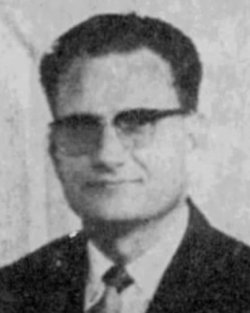
Wilbern Elias Best (1919-2007) was a preacher and writer of Gospel material. He wrote 25 books and pamphlets comprised of sermons he preached to his congregation. These books were distributed in English and Spanish around the world from 1970 to 2018 at no cost via the W.E. Best Book Missionary Trust.

Comments

0 / 2000 characters
Comments are moderated before appearing.

Be the first to comment!

Pristine Grace Research Assistant

Pristine Grace Research Assistant

Ask me about articles, sermons, or theology from our library. I can also help you navigate the site.