Bootstrap
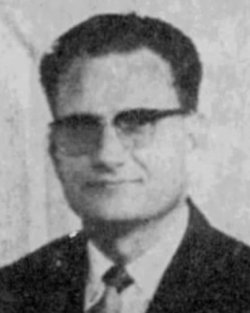
W.E. Best

The Person of Christ & His Impeccability, Part 1

James 1:13-15
W.E. Best May, 20 1992 Audio
0 Comments
Best on the Person of Christ

Sermon Transcript

Auto-generated transcript • May contain errors

100%
Now, tonight we'll take up, I
gave you the first argument to show you what we would be doing
tonight. These are things that I got into a great number of
years ago in the study of the impeccability of Christ. You don't realize how difficult
it is unless you do some witnessing, and regardless of the spirit
in which you try to witness, When people are not acquainted
with the scriptures, you're going to find it very difficult. I had an unusual experience yesterday. I'm going to see if they'll be
here, this woman and her husband, this coming Sunday. If not, I'm
going to go by and give them some books, but I'm going to
wait until next week. I'm not going to give them to
them this week. I want to see if they'll be in the service. But anyway,
Some of you make this, you go into this store, so I'll tell
you where some of you may know who I'm talking about. There's
a black woman, a black headed woman by the name of Roberts.
It works in the health food store next to Randall's. Some of you,
I know that you probably, some of you go in there. I think Candy
goes. You know who I'm talking about?
The black-headed woman? Very, very attractive woman. I went
in yesterday to get something while Juanita was shopping with
her mother, taking her. And I don't remember exactly
how it came up, but as I was checking out, Something was said,
and we had gotten some of this a couple of weeks ago, some vitamin
K all-natural ingredients for give you a little spurt, give
you a little energy, and I will say that it has really helped
Juanita and me both. And so I went back to get some
more of it, and she was talking to me and telling me about her
mother took it. Her mother lives in California. Well, we got to
talking, and I witnessed to her a little bit because there wasn't
anyone in the store at that time. And I asked her where she was
going to church, and she said, I'm not going anywhere right
now. I said, why? She said, well, I was raised
a Baptist, I made a profession of faith, I was baptized a Baptist
in California. And she said, I went to church
regular, gave my money, tithed. And she said, I got to the place
where I wasn't getting anything. I knew I wasn't getting anything.
I wasn't learning anything. Why am I giving my money when
I'm not getting anything from the pulpit that would strengthen
or help me grow? Boy, I thought, well, I haven't
heard anybody talk like that. I said, well, I'm only looking
for sheep that are hungry. And I'm going to let people know
that wherever I go and every time I witness. I'm not interested
in anybody to try to witness to them, to try to talk to them,
to try to strengthen them, to try to teach them anything unless
they're sheep that are hungry. And I'm adding that it is necessary
to put that last word on, looking for sheep. But I want to add
that last statement every time I present something, because
I let her know I invited her to our services, told her how
we conducted our services. And she seemed surprised, but
rather thrilled over it. So we'll see. She lives right
out here, just a few blocks from the church here, over here in
Glen, in Sage Glen, just off of Hughes Road. And so I said,
now I want you to know I'm not begging you to come. I said,
we invite people where I'm looking, our assembly is looking for sheep
that are hungry. Hungry for the Word of God, and
that's all you're hungry for. If you're looking for a place
that'll tickle your flesh, you won't find it with us. And that's
the way I left it. And that's the way I'm going
to witness. In fact, I have some very strong messages Sunday for
this congregation about the same thing. If you're not hungry for
the truth, there's something bad wrong. something bad wrong. That's why I'm staying in James
chapter one a little longer. So I realize that it is difficult
to witness when people have no concept really of truth or haven't,
they haven't been taught. So let's begin tonight. These
are questions. These are what I would consider
the outstanding arguments given by those who believe in peccability
in all the research work that I did some 25, 30, 35 years ago. And of course, I've tried to
add, too, and when I come across something even now that I'm reading,
And it's a tremendous statement. I stop and I go back and if I
do not have place where I have all this material correlated,
I will insert another page and make a few brief notes so I can
keep it all together. So we're looking at objections
to Christ's impeccability. I said objections to Christ's
impeccability. And we have a number of them,
I don't know how many of them I'm going to give to you, because
that could go into literally weeks. But I am going to give
some of the most important ones, at least for the time being.
This is number one. The humanity of Jesus was no
different from the humanity of Adam before the fall. I've tried
to correlate them in the order in which they would probably
portray them. Because I gathered these over
a long period of time in doing research work, and then after
I got all of my material, I tried to correlate them into a more
of a systematic order. So you can see why I'm beginning
with this one. The humanity of Jesus, and I'm using their term,
I don't or I just don't speak of the Lord Jesus Christ as Jesus,
and I have the Bible for that. And if I ever just use the word
Jesus, I'm either quoting only a very few scriptures that refer
to him as Jesus, or someone who has used only that term in an
argument. But you'll notice the charismatics,
it's always Jesus this, Jesus that, Jesus this, Jesus that.
Christ said, you call me master and Lord and you say well for
so I am. And that's our responsibility.
So the humanity of Jesus was no different from the humanity
of Adam before the fall. Now that's true of a lot of people
who carry the name Jesus. A lot of Spanish people Their
name is Iesu, Jesus. So that would be true of them,
but not the Lord Jesus Christ. This argument states that Jesus
Christ was God's second man. And in his humanity, he is the
last Adam. Now, of course, according to
1 Corinthians 15, Jesus Christ is the last Adam. the first Adam
and the last Adam. Hence they are alike in all points
according to those who believe in Christ's peccability. They
are alike in all points. The difference came only by the
fall, they say, the difference came only by the fall of the
first Adam in yielding to the temptation in yielding to the
temptation, and by the victory of the last Adam, the second
man over temptation, though tempted in all points like the first
Adam." Now, of course, when people don't
know any more than what they read in the King James Bible
over the word temptation, And if they've never been subjected
to the original language or the translation of the word, or a
discussion of the Greek word, the noun, parasmos, or parazo,
the verb, then you're going to have a difficult time. I mean
a difficult time, and it won't be long, folks, until you'll
know. whether the person really is
hungry to know the truth. And when you point out even the
things that we have already discussed in James 1, 13 through 15, if
that isn't enough to prove to them how that the word should
be used and should be translated, then all you can do is just say,
well, if you don't have the right concept of Christ, if you believe
that Jesus Christ could be tempted, He may be your savior, but he's
not mine. And you have to come to the parting
of the way. There is no ifs, ands, or buts. And I'm not trying to make anyone
believe what I believe. If you're not convinced, you
better become convinced. And folks, My message Sunday,
and I'll let you in on it now, it's going to be right down the
line, and I am preparing for something,
and I don't mind warning you in advance. I have the victory, and I must
do what I must do, and live with my own conscience. So this is
it. Now what is the answer to this
argument? The humanity of Jesus was no different from the humanity
of Adam before the fall. All right, let's study it. The
scriptures affirm that the union of the divine nature with the
human nature produced no change in the divine nature. I said scripture teaches that
when the divine nature assumed or became veiled in the human
nature, there was no change in the divine nature. Now watch
how I'm developing it step by step. Be no need for anyone to
make a mistake as to what I believe about this subject. Furthermore,
there was no conflict between the divine nature and the human
nature in Jesus Christ. There was no conflict between
the divine nature and the human nature in Christ. There is a
conflict between the divine nature or the God-like nature in you
as a result of regeneration and the human nature. There is a
conflict. I said there is a conflict. but
not so in Christ. There was never a conflict. Never
a conflict, and it's blasphemy to even suggest it. Now, since there was no conflict
between the divine and human natures of Christ, could this
be said of Adam? Can it be said of you? It could not be said of Adam,
and it cannot be said of you and me. There had to be conflict in Adam
or he would have never succumbed to the tempter in the Garden
of Eden. So there was a difference between
the first and the second Adam. And what a difference. The reason for no conflict between
Christ's divine nature and his human nature was because he was
born holy. His human nature, that holy thing,
Luke 1, 35. Therefore, it could be said of
him throughout his personal ministry, he was holy, harmless, undefiled,
separate from sinners. holy, harmless, undefiled, separate
from sinners. And this is off of the top of
my head, I think that's Hebrew 726. If I'm not correct, I won't
miss it far, so you'll find it. I believe it's Hebrew 726. He was not merely holy in behavior. I'm talking about Christ. He was not merely holy in behavior.
He was holy as to his very nature. We know his divine nature was
holy, so holy he couldn't even look upon sin. But so was his
human nature holy. This is a vital point in the
redemptive work of Jesus Christ. If he could have sinned, but
didn't. He could not be our Savior, period. Now I want to show you how I
reacted as a young Christian when I first heard this. I rebelled
when I was first subjected to it, when I first encountered
this idea. The first thought that came to
my infant Christian mind was, how could someone who was capable
of sinning save me? That was the first question that
came to my mind. Now folks, was that just a figment
of my imagination? Or was that an ear in tune with
a voice of truth? Which is it? Christ's sufferings had infinite
value. Infinite value. Because the one
who experienced them was an infinite person. An infinite person. Now what is the meaning of the
word infinite? Well, let's look at it. That's
an English word, but it's a great word. It means not capable of being
limited. It means more than being unlimited. It means that an infinite person
cannot be limited. Everyone should understand that
sin limits. The capability of sinning limits. This fact brings the inescapable
conclusion that if Christ was capable of sinning, then He was
capable of being limited. If he could be limited, then
he was not infinite. And if he was not infinite, he
was not God. Now I'd like to ask you a question. What about John 14, 12? You say Christ was limited. Did
you know that Charismatics teach that Christ was limited? In what sense was He limited?
Now, I'm not going to go into this tonight, but I want to throw
this out. We'll discuss it more later. Turn to John 14, verse
12. Just a moment. I'm not using my inner linear
here that I've translated in. I'm just looking at it in the
King James. and it's close enough. Verily,
verily, I say unto you, he that believeth on me, the works that
I do shall he do also, and greater And the word works, you'll notice,
has been inserted. Nothing wrong with that. Than
these shall he do, or greater than these, greater works. That's
understood. So works is understood. Greater works than these shall
he do because I go to my Father. Now, does this limit Christ?
You know, I heard a man just the other night who used this,
said, I can do things, I can do things greater than Christ
did. Well, I turned the knob, folks.
I said, that's enough of that. I don't want to hear any more
of that. So I'm going to just ask you
the question tonight, in what sense was he limited? The context
will prove the sense in which he was limited. But as God, he
was not limited. He was God manifested in the
flesh. So from the standpoint of the God-man with emphasis
on the flesh the human nature of Christ We know that he became
hungry he became sleepy and all of these are things not to be
put into the category of being sinful and He could only be as the God-man
in the flesh in one place at a time as he walked from one
place to another place. I'll go into that more later,
but in case somebody were to throw that up, I wanted to at
least say that much tonight because we're not teaching John 14 12.
And this again shows you the necessity of the study of the
scriptures. The humanity of Adam cannot be
properly apprehended apart from his person. Now watch where I'm
going, this is the next step now in the explanation of this. The humanity of Adam certainly
could not be properly apprehended apart from his person. Neither
can the human nature of Jesus Christ be properly discerned
apart from the person of Christ. Two natures, one person folks. Not two persons, two natures,
one person. I have a material nature. I have
an immaterial nature, but there's only one person here. Only one person. And in another
sense, you see, actually you can get into the dichotomy and
you can get into the trichotomy. If you get into the trichotomy,
when you get technical, you have body, soul, and spirit. But we won't get into that. That's
still another subject that must be understood, must be explored. All scripture fits. And you don't
learn these things unless you study. And if people don't get
but about 10 or 15 minutes a week from the pulpit of John 3 16,
they'll never learn very much. That's what the problem is today. And I feel sorry for people in
a way. And yet folks, I faced the same thing,
but we kept looking until we could find it. Are you with me? Adam was a peccable person. That
means he had the capacity to sin. He did sin, didn't he? Eve
sinned first, and then Adam was deceived by
Eve. Well, really he wasn't deceived.
He took it with his eyes wide open. He willfully did what he
did. But Adam was a peccable person.
Christ is impeccable. Now notice the contrast between
the two. I'll give you a few contrast here. Adam was peccable. Jesus Christ, the person of Christ,
was impeccable. Adam's perfection was finite
perfection, finite perfection. Christ's perfection was infinite
perfection. Adam's finite perfection had
the capacity to sin. Christ's infinite perfection
had no capacity. He did not have the capacity
to sin or for sin. Now, do these statements indicate
there was no difference between the nature of Adam and the nature
of Christ? Going back to the original proposition by those
who believe in peccability, Folks, you don't get this in
a classroom, I'm sorry to say. I've been to school a little
bit. You don't get it in a classroom, you got to get it the hard way.
Even as a minister of God, you've got to get it the hard way. And
tell you the truth, they probably wouldn't want to teach much like
this in the schools anyway. They spend most of their time
teaching the denominational program, whatever denomination it is. Now, we could go back and review
to even add to this argument some of the things we discussed
last Wednesday and I'll show you what I'm talking about. We
won't spend time on it because you have the notes on it. But
for instance, Christ is the image of God. Man is made in the image
of God. Christ is the express image of
God. Man is made the image of God. The person and work of Christ
manifested the perfection and glory of the Father. You remember
I gave you these last week? The image of God in Adam was
a created substance. Christ is the uncreated image
of God. The image of God in Adam was
corrupted in the fall, but God's image in Jesus Christ, the Son
of Man, was not corrupted by the incarnation. In the regeneration
of man, God's image in man, which was corrupted by the fall is
renewed. God's image in the son of man
did not need renewing in regeneration. You know, we have to think about
what Jesus Christ did when he came into the world the first
time. He came to be with us. He came
to be like us. in order to redeem us. Now there are three things there
that we could stop right there and go for the next hour just
on those three things. I'm just dropping them so you
could think about them and put them down and then add to them
later. Since we're talking about the
person of Adam and the person of Christ, the person of Christ
must be distinguished from the person of Adam. The person of Christ was uncreated.
The person of Adam was created. Jesus Christ is God's man by
incarnation. Adam is God's man by creation.
So I'm really reviewing the seven things that I gave you on this
point last week. So if you have your notes, you can go back to
those seven things. Now, I want to get into something
else tonight for a little while. When the eternal Son of God assumed
a human nature, He became responsible for all
that would be done through the instrumentality of the assumed
nature. Everything done through the instrumentality
of the human nature is attributable to the one person in the God-man. one person, just one person,
two natures but one person. Since the divine nature is the
root, now here is the key to the whole thing, this would be
the third basic argument to answer the first objection that I gave
to you. Since the divine nature is the root and base of the person
of Jesus Christ, Then to say that Christ could sin is the
same as to say that God could sin. When a person says that Jesus
Christ could sin, he's saying God could sin. What is the base of his person? Is it man or God? Is it the God-man
or the man-God? You see, those who believe that
he could sin, they would have to be man-God. But the order
is that God-man. So guilt could not be confined
to the human nature. just to the human nature. See
what I'm saying? Your guilt cannot be confined
only to that old principle of sin in you. You follow me? You sin. As a person, you sin. See, it's heretical to talk about
the two natures of the believer to the extent that you say, well,
it really wasn't the new nature that sinned, but the old nature.
No, the person sinned. You've heard me tell this before,
that the fellow who went before the judge after having committed
a crime, he said, judge, it wasn't really, it really wasn't me that
sinned, it's just the old devil in me. He said, well, I'm going
to sentence the devil, and then I'm going to sentence you because
of your complicity with the devil. And I'm going to sentence both
of you. And then he gave the length of time that they were
to be confined, or they were to be incarcerated. It enables us to understand the
point, doesn't it? You hear people say today, I didn't do it, the
devil did it. I didn't do it, the devil did
it. Boy, that's hogwash. You see, folks, if you don't
have a love for the truth, if you're not hungry for the truth, It's because you do not have
the nature, God-like nature. Every person who possesses the
grace of God has been given a hunger for the truth of God. And that's what we will be stressing
heavily this coming Sunday. So guilt could not be confined
to the human nature, but to the whole theanthropic person. Now, are you familiar with that
word? Theanthropic person? Well, in case you're not, we'll
just stop right here and give a little bit on it. Jesus Christ is a theanthropic
person. We won't go into it in detail.
If I did, it would take tonight, next Wednesday night, and probably
the following Wednesday night just on that subject. But let
me give you a brief outline on it. Let me give you a statement by
Flaval, one of the Puritans I like very much. He said, It is better
not to touch the bottom Now we're talking about the depth of teaching.
See, when you use a term today in the average church, and the
person has never heard it, he says, what in the world are you
talking about? They use all those big words. I like what Flavel said, it is
better not to touch the bottom than not to keep within the circle,
end of quote. Think that through. Another said, it is a doctrine
hard to understand and dangerous to mistake. End of quote. It's a doctrine or teaching,
don't get confused over the word doctrine, it literally means
teaching. Don't get confused Even though it is, you might
say, hard or a little difficult to understand. But then, it surely
is dangerous if you make a mistake. You know, when I hear people
make statements today that are so foreign to the Scriptures, and I heard of some this week, Makes you very sick, especially
when people have been subjected to the teaching of the Scriptures
for 15 to 20 years. So, folk, I'm either going to
get some folks to wake up or something. I've got to do what
I've got to do. The distinctive characteristic
of the Incarnation is the hypostatic union. I'm going to explain the
word theanthropic. I'll spell it for you. It's not
a big word. T-H-E-A-N-T-H-R-O-P-I-C. The theanthropic person. You
have God, And then you have the word for anthropos in the word. Let me give you a brief outline
on this, and you'll see what I'm talking about without spending
a lot of time tonight going into it. But this has to be understood
in order to answer the argument for peccability, the very first
one that I gave you this evening. A single person, I'm giving you
the truth of the subject now, a single person may consist of
one nature, or of two natures, or of three natures. You say, I don't understand this.
Well, wait just a minute, you will see what I'm talking about.
All right, now put down first of all, number one, a Trinitarian person, you say
you believe in the divine trinity? If you believe in the scriptures,
you do. A Trinitarian person has only
one nature. God absolutely considered has
only one nature. I'm just adding to it, you can
just get the main part down. A Trinitarian person has only
one nature. The one nature of the Godhead
is the divine essence. The one nature of the Godhead,
notice I use a different term, of the Godhead is the divine
essence. Number two. Now that's the divine
person or a Trinitarian person. A human person has two natures. Two natures. He has a material body and an immaterial soul. Material body and an immaterial
soul. Now we come to what we must understand
in order to understand the impeccability of Christ, or it helps us. A
theanthropic person has three natures. He has the divine essence, and he has a human body and a
human soul. And Jesus Christ during the Incarnation
had a human body and a human soul. That was the human nature. But there was only one person
in that nature. Therefore, he was the God-man. Now, if you'd like for me to,
I'm not going to give any more on that tonight. But if you'd
like for me to, I will discuss that with you. I think I'm going
to, in our Wednesday evening services now, I'm just going
to hit great major biblical doctrines. for a while. I think that's what
I'm going to do. I can't do it on Sunday and do
it here and give the things I want to give on Sunday. You just can't
get it all in. Now that's enough on argument
number one. That is, we're answering the
objection of Jesus Christ, or as they put it, they state it,
the humanity of Jesus was no different from the humanity of
Adam before the fall. All right, we have time to look
at the second. We're just going an hour. By
the way, I'm going to try. In fact, I'm going to do my best,
Sonny, to limit my messages to an hour or a little less, 50
to 60 minutes. Number two, this is the second
major objection to the impeccability of Jesus Christ. Here it is. Jesus, if he had chosen to, could
have listened to Satan and yielded to his temptation. Jesus, if he had chosen to, could
have listened to Satan and yielded to his temptation. Now, I want to give some further
explanation that they give of this before we start answering,
and I'm sure we'll not be able to finish the answer this evening. This argument further states
that the suggestion that Christ had the tendency to sin, tendency
to sin, must be rejected. But one must not jump to the
conclusion that he could not sin, and this is M. R. DeHaan
and Richard DeHaan and many of the evangelicals that I'm talking
about now. He has a book. If you don't believe
what I'm saying, M. R. DeHaan wrote a book and they
still give it on that program. I don't listen to the program,
but it's Richard DeHaan or one or the other. They keep it in
the family, you can rest assured of that. It may be now a grandson.
It was from father to son and it's probably now a grandson.
Probably is. I haven't listened to it in years. But I do have
the book. The Temptation of Jesus is the
title of the book. And he states, quote, ìAdam,
as he came from the hand of God, was also perfect without a weakness
or tendency for sin, but he fell just the same.î Now this is his
statement about Adam. So you see, this ties in with
the first argument and what they believe about the first argument.
I want to give you some additional quotations that I have here from
this book, ìThe Temptation of Jesusî by M.R. Let me read you some of them
here. Here's a direct quote from the
book. See, I try to keep it all the most important things right
where I can get to them, and I've done this over a period
of many years. Quote, Why all this preparation before
meeting Satan? He's talking about in the wilderness,
in Matthew 4, Luke 3, Mark 1. Why all this preparation before
meeting Satan? What kind of preparation is he
talking about? Now, notice this. If he is God, and he is to meet
Satan as God, and God cannot sin, then why all this detail
about his act of obedience, his praying, his filling with the
Spirit? It was because he was to meet
Satan as the first Adam met him, and he would not go without complete
and adequate preparation. He fought the battle alone and
refused to accept any outside help. The angels came to minister
to him after he had gained the victory. Now let me read you a little
bit more. Could Jesus have yielded to Satan? We must answer yes. If he had not met Him like Adam
did, without prayer, without the Word, and in disobedience,
and inversely, if Adam had determined to obey God, and prayed, and
had been filled with the Spirit, and met the enemy with thus saith
the Lord, he too would not have fallen. Yes, without this obedience,
prayer, and Word, the last Adam, talking about Christ, would have
been as prone to fall as the first Adam. We shudder to think, still quoting,
but I'm quoting from a different page now, we shudder to think
what would have happened if Jesus had admitted his inability to
gain the victory as the last Adam and resorted to the power
of his deity. it would immediately have vindicated
the first Adam and excused his defeat. Adam could then rise
up in his grave and accuse God of injustice. Adam could then
make the excuse that he sinned because he had no divine nature
to fall back on. Now folks, if that doesn't make
a Christian, well I better put it like this, it makes a Christian
sick. If it doesn't make a church member
sick, then that church member is sick unto spiritual death. And you're not going to get me
to apologize for that. That's it. I wouldn't back up an inch. Regardless of the opposition,
I wouldn't do like Dan Quayle did today. Try to water it down. That's
it. Let me look at this in conclusion. This argument is built upon the
supposition. The whole argument is built on
a supposition. So notice that to begin with. If Jesus had chosen,
and the supposition is, if Jesus had chosen, he could have sinned,
end of quote. So the whole argument is built
on a supposition. Such supposition comes from a
false concept of the person of Jesus Christ. He has a false concept of Christ,
he would have never made such a supposition. Now this is just the start. Furthermore,
there is a lack of understanding of Adam's perfection that he
talked about, of Adam's perfection. Adam's perfection cannot be equated
with Christ's. One is mutable, the other is
immutable. Adam could change and did change. Christ Jesus could never change.
He's the same yesterday, today, and forever. Let us stand.
W.E. Best
About W.E. Best
Wilbern Elias Best (1919-2007) was a preacher and writer of Gospel material. He wrote 25 books and pamphlets comprised of sermons he preached to his congregation. These books were distributed in English and Spanish around the world from 1970 to 2018 at no cost via the W.E. Best Book Missionary Trust.

Comments

0 / 2000 characters
Comments are moderated before appearing.

Be the first to comment!

Pristine Grace Research Assistant

Pristine Grace Research Assistant

Ask me about articles, sermons, or theology from our library. I can also help you navigate the site.