Bootstrap
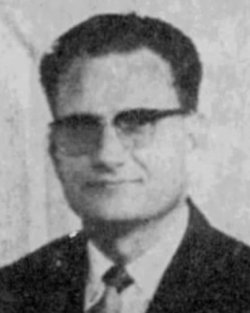
W.E. Best

Gethsamane - A Foretaste of, Part 2

John 12:23-36
W.E. Best July, 1 1990 Audio
0 Comments
Best's Corner

Sermon Transcript

Auto-generated transcript • May contain errors

100%
Good morning to the twelfth chapter
of the gospel according to John. You're probably thinking at this
point, why is the preacher choosing
this passage to continue his discussion of the agony of Gethsemane? Last Sunday evening in discussing
the first message on the agony of Gethsemane, we took our scripture
reading from Matthew chapter 26, verses 36 through 46. This morning, we have chosen
John chapter 12, beginning with verse 23, and we shall read through
verse 36 for our scripture reading. When we come to verses 27 and
28, I want to mention there are four
things in these two verses that harmonize with similar events
that are recorded not only by Matthew but also by Luke concerning
Christ's experience in the Garden of Gethsemane. I'm calling this
this morning a foretaste of Gethsemane. a foretaste of Gethsemane. Let us read beginning with verse
23. And Jesus answered them, saying, The hour is come, that
the Son of Man should be glorified. Verily, verily, I say unto you,
Except a corn of wheat fall into the ground and die, it abideth
alone. But if it die, it bringeth forth
much fruit. He that loveth his life shall
lose it, and he that hateth his life in this world shall keep
it unto life eternal. If any man serve me, let him
follow me. And where I am, there shall also
my servant be. If any man serve me, him will
my father honor. I'm not going to call attention
to the four things. I will do that in a few minutes,
as you will make a comparison between this passage, this parallel
passage, with the account given us by the Synoptic Gospels concerning
the agony of Jesus Christ in the Garden of Gethsemane. Observe
closely now as we read, beginning with verse 27. Now is my soul
troubled. And what shall I say? Father,
save me from this hour. But for this cause came I unto
this hour. Father, glorify thy name. Then came there a voice from
heaven saying, I have both glorified it and will glorify it again. The people, therefore, that stood
by and heard it, said that it thundered. Others said an angel
spake to him. Jesus answered and said, This
voice came not because of me, but for your sakes. Now is the
judgment of this world. Now shall the prince of this
world be cast out. And I, if I be lifted up from
the earth, will draw all unto me." I omitted the word men because
it is italicized, having been supplied by the translators.
All men without exception are not drawn to Jesus Christ. All
the elect of God are drawn to Jesus Christ. Now that gets into
something that is technical that I'm not dealing with per se this
morning. Verse 33, this he said signifying
what death he should die. The people answered him, We have
heard out of the law that Christ abideth forever. And how sayest
thou, The Son of Man must be lifted up? Who is this Son of
Man? Then Jesus said unto them, Yet
a little while is the light with you. Walk while ye have the light,
lest darkness come upon you. For he that walketh in darkness
knoweth not whither he goeth. while ye have light, believe
in the light, that ye may be the children of light." These
things spake Jesus and departed, get this, and did hide himself
from them. This was the conclusion of Christ's
public ministry. I repeat, This was the conclusion
of Christ's public ministry. Before I give to you the outline
this morning, I want to review briefly the important points
that we discussed with you last Lord's Day evening in our first
message entitled, The Agony of Gethsemane. The purpose of the
introductory message last Sunday was to give the difference between
what the God-man knew as God absolutely considered and what
he prayed for as the God-man. Do you get the difference? Should I repeat that? The purpose
of the introductory message was to give the difference between
what the God-man knew as God absolutely considered and what
he prayed for as the God-man. I am making a distinction between
the God-man absolutely considered and the God-man, the mediator,
who stands between God and men. There is a difference. Let me
go a little further. Since prayer can never be associated
with God absolutely considered, because God cannot pray, as God
absolutely considered because He would have no one to pray
to. He is the superior one. So I
repeat, since prayer can never be associated with the Lord Jesus
Christ as God absolutely considered, yet it is offered up, that is,
prayer is offered up as the God-man, as the God-man. He offered up
his desires and his resignations to the Father, whom he delighted
to please. He came into the world to please
the Father. The Son of the Eternal Father,
the Eternal Son of the Eternal Father, came into the world becoming
the God-Man, and as the God-Man, He offered up prayers to the
Father. Thus, He offered up His desires
and His resignations to God, whom He delighted to please. As we look a little closer into
the lesson that we gave to you last Sunday evening, we might
say it's superficially considered. I want that to soak in. Superficially
considered. There seems to be a conflict
between the human will of Jesus Christ and His divine will. I want to ask you a question
this morning. Was there ever any conflict between the human
will of Jesus Christ and the divine will? Could there ever
be a conflict between his human will and his divine will? That's
a question you must answer. However, even though there might
appear superficially to be a conflict between the two wills, human
and divine, you know, deep down in your heart, There could never
be such conflict. I said there could never be such
conflict. Now please listen to the next two statements that
I'm going to give. If you remember these two statements, you'll
have no problem in understanding the person as well as the work
of Jesus Christ. If these two statements are not
comprehended, then there are going to be a serious problem for you in
the study and understanding of Holy Scripture. The very moment that Jesus Christ
distinguished the two, the human and the divine wills, what did
He do? He subjected the human to the
divine. As soon Beloved, as soon as he
distinguished the two, he did have a human will, and he had a divine will, but
as soon as he distinguished the two, the human was subjected
to the divine. Please don't forget that. Furthermore,
a capability to sin, this is so important, a capability to
sin, would have been possible only, only, I want to stress,
by opposition of the human will to the divine will. Was there
any such opposition? Was there ever any such opposition? I say to you this morning, it
is heresy to even think there was such opposition. I go a step
further. But the impossibility The impossibility
or the incapability of Jesus Christ to sin results from what? The ego, the I, if you please,
the I of the human nature, which was the divine logos. Jesus Christ was not two persons, God and man. He was one person
with two natures, thus the God-man. I don't have time this morning
to go back into the heresies of the past, Apollinarianism,
Arianism, Nestorianism, Docetism, and all those various isms that
have been refuted by church fathers down through the ages. But we
will be referring to them briefly, I'm sure, in some subsequent
lesson or lessons. Now let me give these two statements
again because of their importance. This is before I give you the
outline this morning. Reviewing just briefly, briefly,
what we gave in the introductory message last Sunday. A capability
to sin. I said a capability to sin. would
have been possible only by the opposition of Christ's human
will to the divine. But that was impossible, impossible,
since the incapability for sin resulted from the I, the ego,
of the human nature which was the divine logos. I'll prove
that with one verse of Scripture in just a moment. Hence, not
a human but a divine self was responsible for the deeds performed
through the human will. Jesus Christ, therefore, was
one person. He is one person with two natures,
not two persons, not two persons. I mentioned a moment ago the
word ego. I am. In John chapter 10, verse
30, the Lord Jesus said, I and my Father are one. Thus everything performed by
Jesus Christ had the I, the ego of his divine person, that controlled everything that
was done by the God-man. That's very important for every
person to understand. The record of Christ's personal
ministry was brought to a close, as we have already seen in the
reading of John 12, beginning with 23 through 36. The Savior
foretold His death. He gave a short summary, I'm
sure you've observed, of what would take place in the Garden
of Gethsemane. That's why I call it a prelude
or a foretaste of Gethsemane. What we're going to study this
morning in John chapter 12 is a foretaste of Gethsemane. Not what he actually experienced
in the Garden of Gethsemane, but a foretaste of what he experienced
in the Garden of Gethsemane. There is a remarkable parallel
at every step between John, chapter 12, verses 27 and 28, and what
took place in the Garden of Gethsemane, whether you're studying Matthew's
account, Mark's account, or Luke's account. Now, John makes just
a very brief reference to it, as we will close with that this
morning in the 18th chapter of John, verse 11. Let me now give
to you the steps that we will be observing this morning in
our study of the foretaste of Gethsemane. In verse 27, the
Lord Jesus said, Now is my soul troubled. That's point number
one that we will be discussing. The parallel to that is found
in Matthew chapter 26 and verse 38. Here are the words. My soul is exceeding sorrowful,
even unto death. You have the foretaste in John.
You have the experiencing of that which was a foretaste in
Matthew chapter 26 and verse 38. Step number two. Also verse
27 of John chapter 12. Father, save me from this hour. Turn to Matthew chapter 26 and
verse 39, here's what you have. Oh my father, if it be possible,
let this cup pass from me. Step number 3, back in John chapter
12, verse 27. For this cause came I unto this
hour. Turn to Matthew 26, verse 42,
If this cup may not pass away from me, except I drink it, thy
will be done. Do you see the parallel between
the foretaste and what he actually experienced in the garden? Finally,
number four, in John chapter 12, verse 28, Father, glorify
thy name. Now, I'm not using Matthew's
account. I want you to go now to John
18, verse 11. We'll be commenting on this more
later. And there's a reason why I'm using this that is given
us by John in John 18, verse 11. The cup which my Father hath
given me, shall I not drink it? Now let me run those back by
again because of the importance of the outline this morning and
you being able to make a distinction between the foretaste of what
our Lord experienced in his last public address before he met
with the disciples and communed with them, and all of this before
his betrayal and his actual crucifixion at Calvary. Step number one,
In John 12, you may put down in your notes, John 12, 27 and
28, and then put down Matthew 26, 36 through 46, and also John
chapter 18 in verse 11. Step number one, my soul is trouble. Now is my soul trouble. What
he actually experienced, my soul is exceeding sorrowful even unto
death. Number two, Father, save me from
this hour. In Matthew 26, O my Father, if
it be possible, let this cup pass from me. Number three, for
this cause came I unto this hour. In Matthew 26, if this cup may
not pass away from me, You remember what I did last Sunday evening
in showing you those two prayers? Actually prayed three times,
but I took those two and gave a very important point on those
two prayers that he prayed. We should not have to review
it now. If this cup may not pass from me except I drink it, thy
will be done. Finally, number four. Father, glorify thine aim. Then in John 18 verse 11, the
cup which my father has given me, shall I not drink it? In anticipation of his death,
Jesus Christ said, now is my soul troubled. That's our first
point. Now is my soul troubled. Do you know the real meaning
of the word? translated trouble here in your King James Version. The Greek word for trouble comes
from the word tarasso. And tarasso means, which means
to trouble or to affect with grief because of what he foresaw. Of what he foresaw. So the perfect
passive indicative form of the verb used, tarasso, means to
trouble or to affect with grief. It also means to stir or to agitate. We're not going to take the time
this morning to look at a number of passages. That'll not be necessary. All we want to do this morning
is to show the difference between Christ's being troubled and for you and me to be troubled."
What a difference between Christ's being troubled and our being
troubled. Christ's soul was troubled. Why
was his soul troubled? After all, he had a human soul,
he had a human will, and his soul was troubled. It was trouble
because he had just completed the statement concerning his approaching death
in verse 24. Verily, verily, I say unto you,
except a corn of wheat fall into the ground and die, it abideth
alone. But if it die, it will bring
forth much fruit. It has been said, and I like
this, The sufferings of Christ's soul were the soul of His sufferings. Don't ever forget that. That's
it. The sufferings of Christ's soul
were the soul of His suffering. You don't know anything about
this suffering. You cannot understand this suffering that our Lord
suffered. You can have no comprehension
whatsoever of what Jesus Christ suffered in the Garden of Gethsemane. As we will try to show this morning,
we know that the Lord Jesus Christ possessed not only a human body,
but he possessed a human soul. Possessing a human soul, he possessed
a human will. We've already commented that
as soon as it made the distinction between the human and the divine,
the human was subjected to the divine. As the human body can see, hear,
taste, smell, and feel, is it necessary for me to tell
you this morning that the human soul also has senses? Your human soul has senses like
your human body. Jesus Christ had a human body
that could feel the pains of hunger, that could feel tiredness as
the result of a long walk or being deprived of sleep. And all of these were sinless
infirmities. You notice how I stress that?
Sinless infirmities. Not sinful infirmities, but sinless
infirmities. Now, first of all, let's take
the human body. We're all familiar with the five
senses of the human body. But we might not be as familiar
with the five senses of the human soul. Let's begin, first of all, with
the sense of sight. Did you know your soul can see? Your eyes see, but your windows,
your eyes are only the windows of what your soul actually sees.
Turn with me if you will please to Ephesians 1 in verse 18. Yes,
the soul does see. I want to read the New American
Standard Bible's translation, which is far better, I think,
than the King James Version. Paul was praying for the Ephesian
saints. He said in this prayer, quote,
I pray that the eyes of your heart, the eyes of your heart may be enlightened so that you
may know what is the hope of his calling, what are the riches
of the glory of his inheritance in the saints." You're to pray for me, I'm to
pray for you. We're to pray one for the other. That the eyes
of our hearts might be enlightened, that we might know, that we might
understand. Yes, the heart sees. are at the
soul's ease. Secondly, the quickened soul
has ears. The unregenerated soul has ears
on the body, but the unregenerated ears cannot hear and appreciate
divine truth. Only quickened ears can hear
and appreciate divine truth. Listen to this in John 5, 24.
We're talking now about the sense of hearing. I'm talking about
soul hearing. The Lord Jesus is speaking. Truly,
truly, I say to you, he who hears my word and believes Him who
sent me has eternal life. So the quickened soul hears what
the unquickened soul cannot hear. Thirdly, Did you know that your
soul can taste? Did you know that? If you'll
turn to 1 Peter 2, verses 2 and 3, reading again from the New
America Standard Bible, we know that the quickened soul does
have a taste for the pure, unadulterated, unmixed Word of the living God. This is what Peter said, like
newborn babes, long for the milk of the word, that by it you may
grow in respect to salvation, if you have tasted the kindness
of the Lord. Tasted. Throughout the Psalms you'll
find that expression, but the Psalmist David, having tasted
that the Lord is gracious. Yes, the soul tastes. The soul
sees, the soul hears, the soul tastes. Furthermore, did you
know the soul can smell? You say, now preacher, you're
getting a little ridiculous. Turn with me first of all to
the Song of Solomon. In Song of Solomon, chapter 1,
verse 3, Your oils have a pleasing fragrance. Now anyone who's been
a student of scripture for any length of time knows that the
Song of Solomon gives us the beautiful picture of the relationship
that Christ has with his bride, with his own. Your oils have
a pleasing fragrance. Let's take a verse from the New
Testament. I'm thinking about Ephesians chapter 5 and verse
2, when the Apostle Paul made this statement, "...and walk
in love, just as Christ also loved you, and gave himself up
for us, an offering and a sacrifice to God," here it is, "...as a
fragrant aroma." as a fragrant aroma. Yes, the soul smells. Finally, the soul feels. I said the soul feels. The soul
feels through its passions. And we'll mention a few to illustrate
my point. For instance, the soul feels
by love. Song of Solomon 8, 6, and 7.
The soul hates. The soul of the Christian hates
everything contrary to truth. He not only loves truth, but
he hates everything contrary to truth. So there is hatred for that which
is evil. There is joy in the soul. 1 Corinthians
13, 6. There is fear. We're to work out our salvation
with fear and trembling. There is anger. Being angry at
sin and not committing sin. I said being angry at sin but
not committing sin. That's Ephesians chapter 4 and
verse 26. And we could conclude the soul
has sorrow. Sorrow. And that's where we're
going. That's why I'm discussing all of this, showing that Jesus
Christ had a human soul, and there was deep sorrow, deep sorrow
in his heart. You and I are not to sorrow as
those who have no hope. So we do have sorrow, the soul
has feeling. Jesus Christ is spoken of in
Isaiah 53, verse 2, as being a man of sorrows, and acquainted
with grief. I wonder if we really understand
what that verse means. In the Garden of Gethsemane,
the Lord Jesus said, My soul is exceeding sorrowful. A man of sorrows is, according
to the Hebrew idiom, an emphatic expression for a very sorrowful
or afflicted person. Christ's sorrow was heart sorrow. And His grief was soul grief. You and I have never known it. We have never experienced it.
And thank God we will never have to experience it because of Christ's
sorrow, because of His grief for you and for me. Neither of these, his sorrow
or his grief, can be compared to our sorrow or our grief. Christ,
on the other hand, was for the wrath due to our sins, whereas
our sorrow and our grief is due to our own sins. When you have
sorrow, when you have grief, your sorrow, your grief is due
to your own sins. Christ's sorrow, his grief, was
due to our sins what he paid for on the cross and even before
that in the garden of Gethsemane as the man of sorrows acquainted
with grief I stated last Sunday evening that the agony of Jesus
Christ began in the garden of Gethsemane and was not completed
until he said from the cross it is finished Beloved, if what
we're discussing this morning cannot grip your heart, all I
can say is there's something seriously wrong. No greater subject
than to discuss either the person or what Jesus Christ went through
in behalf of his people. That means for you and for me. We must admit that Jesus Christ
was troubled. He was sorrowful. He possessed
in his human nature the same senses and passions that we possess,
oh, but with one difference, major difference, and that is
his were absolutely perfect, and ours aren't. His sorrow was
perfect. His grief was perfect. They were
perfect because his soul was impeccable. Thus we're told by
Isaiah, a great prophecy, that he grew up before the Lord in
body and soul as a, get this, tender plant. Tender plant. The human nature of Jesus Christ
bowed before the storms of this world, but thank God his soul
was never uprooted by the storms of this world. That which is
absolutely perfect could never be uprooted. Christ's troubled soul was unlike
the troubled souls of man. There's a lot of trouble today.
We've all experienced trouble. We've all experienced grief.
But, oh, what a difference between the trouble of Christ, the grief
of Christ, and the trouble of man. Yes, the grief of man. Our troubles are caused by our
sins, but Christ's troubled soul was caused by the wrath that
he must bear for the sins of his people. What a difference. Hence, his troubled soul was
like perfectly clean water, and I'm using a Puritan expression
now, but I can't improve upon it. His troubled soul was like perfectly
clean water in a perfectly clean vessel. When you take perfectly clean
water in a perfectly clean vessel, and I'm talking about the human
body of Jesus Christ, as He was troubled, as He was stirred,
you can stir perfectly clean water. And if there's a perfectly
clean vessel, there can never be any dregs. There can never
be any cloudiness. So as he was stirred, it was
still clear. But beloved, when you're stirred, it's a different matter. Not
only do you live in an unclean vessel, but even your soul is not absolutely
clean. So when you're stirred, there
is a stirring of an unclean soul. that lives in an unclean body.
And so when you're stirred, it's a muddy situation. So muddy,
in fact, you can't even see through it. But not so with my blessed
Lord. Not so with my blessed Lord.
Why? Because there was perfectly clean water in a perfectly clean
vessel, and it doesn't make any difference how much it was agitated.
It was still perfectly clean. Why? Because He was the impeccable
Savior. Thus when I hear men, like the
tape that I played for you a few weeks ago, when the Baptist preacher
here in the city said, Jesus Christ almost lost it in the
Garden of Gethsemane. That's blasphemy. That's blasphemy. In Christ's foretaste of Gethsemane,
now we're coming to the second point. He said, what shall I
say? What shall I say? Father, save
me from this hour. Save me from this hour. I want
to ask you a question. Do you believe for a second that
Jesus Christ wanted to escape Calvary? Think with me for a moment. Think
about it for a moment. Did He really want to escape
Calvary? There had been many important
hours before this, but none like the one to which
Jesus Christ referred. He refers to the hour being at
hand twice, so he named it twice in an emphatic manner. There
had been repeated notifications that his hour had not yet come,
I challenge you to go back and read beginning with the very
first chapter of the Gospel of John. You will find over and
over again when Jesus Christ would say, My hour is not yet. Mine hour has not come. But now, having come to the end
of His public ministry, He said, My hour is come. My hour is come. Let me give
you a couple of references where the Lord Jesus Christ had given
repeated notification that His hour had not yet come. In John 7, verse 30, And they
sought to take Him, they sought to take Him, His enemies, but
no man laid hands on Him, because His hour had, was not yet come. His hour was not yet come. Do
you believe that the enemies could have taken Jesus Christ?
No enemy could take the life of Jesus Christ. Jesus Christ
voluntarily laid down His life. No power existed that could take
the life of Jesus Christ from Him. He laid down His life voluntarily. He said, I have the power to
lay it down. I have the power to take it again. until the time came for Him to
lay down His life voluntarily. His hour had not come. Listen
to this verse in John 8 and verse 20. These words speak Jesus and
the treasury as He taught in the temple. And no man laid hands
on Him, and no man laid hands on Him, for His hour was not
yet come. However, In the closing message
of Christ's public ministry, he said, the hour is come. Look
at it here in John 12, 23. The hour is come that the Son
of Man should be glorified. This is repeated in John 13,
1. My hour has come. It is repeated again in John
17, verse 1, in his high priestly prayer. My hour has come. This is the hour, beloved, for
which time was made. I want you to get the beauty
of this. This was the hour. This was the
hour for which time was made. Do you believe that? This was the hour to which all
dispensations pointed before the coming of Jesus Christ. This
was the hour. This was the hour which all the prophets foretold. This was the hour in which the
greatest work was to be accomplished, the sacrificial work of Jesus
Christ on the cross. The just one standing in the place of unjust
ones. Dying for the elect, if you please. This was the hour in which the
greatest victory was to be achieved. Listen to my last point. This
was the hour in which all intelligent creatures were concerned. Believe me, when I got to thinking
about this point last week, I must confess I was overcome. This is the hour in which all intelligent creatures
were concerned. What do you mean by intelligent
creatures? Let me divide intelligent creatures up into three categories.
First of all, the unfallen angels. Secondly, Satan and the fallen
angels. And thirdly, the elect of God. Are you with me? Let's go back
a moment. My hour has not come. But now,
having finished his public ministry, he said, My hour is come. It was the hour for which time
was made. It was the hour to which all
dispensations pointed. And even our dispensation points
back. And even future dispensations
shall point back to Calvary. It is the hour in which the greatest
work is to be accomplished. It is the hour in which the greatest
victory is to be won. Last but not least, it is the
hour in which all intelligent creatures were concerned. For instance, we're told in 1
Peter 1, verse 12, and he's talking about the elect angels, we're not indifferent. to the
work of Calvary. They were interested spectators. Furthermore, when we think about
the intelligent creatures, let's think about Satan and the fallen
angels. They were concerned, and get
the context, Satan is to be judged, and if I be lifted up will draw
all unto me." So Satan and his followers knew
that they would soon be deprived, soon be deprived of their last
expiring hope. Satan knows he's defeated and
that's why he's working so diligently today. He knows his time is short
according to the Scriptures. I said he knows his time is short.
Finally, the elect from among all mankind experienced a full
atonement from their sins. Our sins have been imputed to
Jesus Christ. Therefore, both soul and body
of Jesus Christ were made an offering for sin. You remember
Isaiah 5310? God shall make His soul an offering
for sin. Some believe that Jesus Christ
wavered in His experience to the Father as He faced the hour
of His crucifixion. What do you believe about it?
What do you believe about it? Do you believe that Jesus Christ
wavered in the Garden of Gethsemane? Let me ask you a question. Had
he not shown that the hour for his own glorification had come? Look at the context. Beloved, don't take a verse out
of its context. Look at the whole context. Not
only the text from the immediate context, but the overall context
of Holy Scripture. And what's the question? Had
He not shown, had He not shown that the hour for His own glorification
had come? Look at verse 23 of John 12 again.
And Jesus answered them saying, The hour is come that the Son
of Man should be glorified. Now I want to give a practical
lesson before we go any further. The same principle that life
comes through death operates in both the physical and spiritual
spheres. He goes further to show the same
principle is applicable to the Christian life. There must be
death in the natural sphere before there can be plant life. There
must be death in the spiritual sphere before there can be spiritual
life. Now here's the third point, which
is a tremendous outline for a message. And you'll notice in verse 25
of John chapter 12, the believer must crucify the flesh, which
is the seat, which is the seat of sinful desires, if he is to
live the life of a Christian. Hence the life of service constitutes
the dying in order to live. Bloody, there is so much going
on today in the name of, quote, free grace and doctrines of grace,
end of quote, that I abhor with all the passion of my soul. 43 years of Bible study, I've
come to find out a few things. And all the people today who
claim they believe in free grace and live like the devil, Beloved,
they don't know what grace is. They don't know what grace is.
Whenever a person possesses the grace of God, it makes a tremendous
difference in his life and in his desire to live and please
Jehovah God. And anything that makes it easy
on the flesh, and the person who seeks to make it easy on
the flesh is a false teacher, period. And I'll have absolutely nothing
to do with him. I said, I'll have absolutely
nothing to do with him. The flesh must be crucified with
all of its affections and lusts is what the Bible says. And grace
enables the recipient to do just that. But I won't tell it like it is. Tell it just like it is. Now let's look at something before
we move on to the third point. There are those today who say
the preposition from, from, that you have here in John 12 and
27. You have the same preposition
in the gospel according to Matthew in the discussion of Christ's
prayer, which was prayed in the Garden of Gethsemane. There are
those who say the preposition from, which is the Greek preposition
ek, means, and I'll give a quotation
now from the works of another. Quote, help me to come safely
out of this hour. Now we're getting technical,
beloved. Do you want to make a study like this? Do you want to really
know what this passage teaches? Or do you want to read various
and sundry commentaries and not really think it through? So please
follow me now for the next few minutes. I said there are those
who say the preposition from saved me from this hour. That's the preposition ek. There
are those who say it means to help me to come safely out of
this hour rather than enable me to avoid the hour altogether. What do you think it means? You've
got to say something. What do you think it means? What did Jesus Christ mean when
he said, save me, Father, save me from this hour? Was he saying,
help me to come safely from this hour? or enable me to avoid the
hour altogether? What do you say? You've got to
say something, beloved. You can't be neutral. You've
got to have some opinion, some idea, what was Jesus Christ actually
saying? Bring me safely from, through,
and from this hour, or just save me from this hour altogether. What was he saying? Are you ready to get technical
for a few minutes? The preposition ek can mean either from or out
of. You want me to give you a couple
of examples of this? You want me to prove it to you from the
scriptures, first of all? And then we'll try to come to some
conclusion. Turn with me, if you will, to John 17. John 17,
verse 15. The preposition ek is used twice
in this verse. And it doesn't mean the same
in both places. So listen to it. Open your Bibles
now to John 17, 15. Follow me. I pray not that thou shouldest
take them out. Here it is. Of, that's ek. Of this world. Now what was Jesus
Christ praying for? Father, I'm not saying that you
just take them out of this world. Remove them from this world.
That's not what he prayed That's why you and I are here in the
world. We're in it, but we're not of it Jesus Christ did not
pray that we would be taken out of the world Now notice the last
part of the verse But that thou shouldest keep them from here's
echo game From the evil In other words, we're being kept from
the evil while we're in the world while we're in the world. Now
you have ech in both instances. I'd like you to turn with me
to James chapter 5. Let me give you another illustration.
James chapter 5 verses 19 and 20. Now there are various interpretations
of this passage, but I'll tell you before I read it that I believe
with all of my heart in the light of the context that the person
under consideration is a Christian. Brethren, James said, Brethren,
if any of you do err from the truth, and one convert him, let
him know that he which converted the sinner from the error of
his way shall save a soul, here it is, eck, from, from death,
and shall hide a multitude of sin. Now what does the word,
what does the preposition eck mean there? So the preposition ek, I've already
stated, can either mean from or out of. In the first, it denotes the
Christian's preservation while he's in the world, John 17, 15.
But in the latter, it means the believer is kept from physical
death, as James 5, verse 20. He's kept from physical death. Surely what Christ said in John
12, listen, harmonizes with what He said in the Garden of Gethsemane. Do you believe that what Jesus
Christ said here in His last public address before He went
into the Garden of Gethsemane harmonizes with what He actually
prayed in the Garden of Gethsemane? I say it harmonizes with what
He prayed in the Garden of Gethsemane. I'm going to give to you this
morning, I could give you about 25 or 30 different interpretations
of this, but I'm not going to take the time to do that. But
I have chosen about five or six men like John Gill, Albert Barnes,
Tasker, an English theologian, and Alford, Dean Alford, and
others. And I'm going to give you their interpretation of this,
so listen closely. And then the last one that I'm
going to give, I want you to really listen, and when I come
to it, I'm going to emphasize it. Now, what is my question? Did Jesus Christ pray for the
same thing that He said in John chapter 12? Did they
harmonize? Save me from this hour. Was he
really asking the Father to preserve him in and through it, or was
he asking Him to just take him away completely from it and not
let him experience it? Listen to these quotations. Here
is Dean Alford. Dean Alford, I do this once in
a while because I'm not trying to cram anything down anybody's
throat. I want you to be aware of what's being taught, what
has been taught, and what is being taught today. Dean Alford paraphrased the last
sentence of John 12, 27 in this manner, quote, I came to this
hour for this purpose, that I might be safe from this hour. The going into and exhausting
this hour, this cup, is the very appointed way of my glorification,
end of quote. Listen to John Gill. John Gill,
and I like a lot of things he says, but he missed the boat
here. Quote, as requesting his father that he might be strengthened
under the sufferings and death and carried through them and
out of them, end of quote. That's John Gill. Listen to Albert
Barnes. Quote, shall I apply to God to
rescue me? Or shall I go forward to bear
these trials? The Greek will bear either interpretation."
Beloved, I might add, the Greek will bear either interpretation.
On the surface, you've got to study it. Let me give Barnes
this quote again. Shall I apply to God to rescue
me? or shall I go forward to bear
these trials? The Greek will bear either interpretation."
Tastor, an English theologian, said, and I quote, It would seem
that the expression, save me from this hour, means help me
to come safely out of this hour rather than enable me to avoid
this hour altogether." End of quote. Now you ready for the last one?
And this is my favorite. May not be yours, but it's mine,
and you'll know exactly where I stand, so you won't have to
come around after the service and ask me where I stand. I'm
going to give it to you right now. I'll tell you who said it in
a moment. in the garden, indeed, he prayed that that cup should pass from him. But that cup was not the cup
of death, but the overwhelming anguish that then oppressed his
spirit." Beloved, I hope you've been listening. If you have any interest in truth,
you've been listening. Let me give the quote again.
In the garden, indeed, he prayed that that cup should pass from
him. But that cup was not the cup
of death. but the overwhelming anguish
that then oppressed his spirit." You know who said that? One of the great Puritans by
the name of John Brown. He hit it right on the head.
Now listen as we bring our study to a close this morning, and
I'll enlarge on that. In view of the absolute perfection
of Jesus Christ, there could never be any conflict between
his two natures. Even his human nature was holy,
Luke 135. Christ's incarnation was for
this hour, for this hour. He saw this hour in every period
of the days of His flesh on the earth. And beloved, from the standpoint
of the Eternal Son, it was ever before Him, because He was the
Lamb slain from the foundation of the world. Please look at
all of Scripture. He saw this hour, yes, in every
period as the God-man throughout the days of his flesh. But as
the eternal Son of God, he ever saw it because he was the Lamb
slain from the foundation of the world. And I'm assuming that you know
I'm quoting scripture when I made that last statement. It was not unexpected because
he said, notice, it was not unexpected. Now we're coming to the third
point, third point. Because he said, for this hour came I. For this cause came I unto this
hour. It was not unexpected. It was never unexpected with
him. I want you to turn with me to John chapter 18 for a moment.
Beloved, you've got to learn to study the scriptures. I'm
assuming that most of you do know how. And most of you do,
and I'm thankful for that. But look at John 18 and verse
4 for a moment. And this is in the context of
the 11th verse, which we will be using in just a minute, in
connection with the last point. Jesus, therefore, knowing all
things that should come upon Him, nothing took Him by surprise. He knew all things that would
ever come upon Him. Went forth and said unto them, Whom seek
ye? Whom seek ye? The motive which
had influenced him to die for his own was ever the same, was
ever the same, because he is the immutable one, the same yesterday,
today, and forever. Turn with me to John 10 for a
moment. And let's begin with verse 10 to call your attention
to something that's very important. What did he say? The thief cometh
not, but for to steal, and to kill, and to destroy. I am come
that they might have life, and that they might have it more
abundantly. And on and on he goes. The hireling fleeth, verse
13, because he is an hireling, and careth not for the sheep.
I am the good shepherd, and know my sheep, and am known of mine. Verse 15. As the Father knoweth
me, even so know I the Father, and laid down my life for the
sheep. of the sheep I have, which are
not of this fold, them also I must bring, and they shall hear my
voice, and there shall be one fold and one shepherd. Therefore
doth my Father love me, because I laid down my life, that I might
take it again. No man taketh it from me, but
I lay it down on myself. I have power to lay it down,
I have power to take it again. This commandment have I received
of my Father. Beloved, when people isolate
a verse of Scripture, a statement, and take it out of its context
and build an erroneous doctrine on it, I guarantee you they're
going to stand before the Lord someday and give an account for
the mishandling of Scripture. It was not the cup of death itself
that Jesus Christ asked to be removed, but the cup of anguish
that preceded the cup of death. If the statement, save me from
this hour, meant to save him from dying, why would he have
rebuked Peter? Listen to me. Why would he have
rebuked Peter as he did in Matthew chapter 16? Go back to Matthew
16 for a moment. After the Lord Jesus had told
Peter, after Peter's confession, thou art the Christ, the son
of the living God. I'll build my church upon this rock. I'll
build my church and the gates of hell shall never prevail against
it. Then immediately after that he gave the foundation for this
church and notice in chapter 16 and verse 21 From that time
forth began Jesus to show unto his disciples how that he must
go into Jerusalem Suffer many things of the elders chief priests
and scribes and be killed and be raised again the third day
Then what did Peter do? Peter took him began to rebuke
him And what did the Lord Jesus say to Peter? Get behind me,
Satan. So my question is, if this statement, save me from
this hour, meant to save him from the hour of dying, why would
he have rebuked Peter for saying, Lord, this can't happen to you.
Jesus Christ knew what was going to happen to him. Every step
he took throughout his earthly ministry was a step in the direction
of Calvary. He knew the purpose for which
he had come. Furthermore, listen to Luke 12
and verse 15. I'm reading the New American
Standard Bible's translation. But I have a baptism to undergo,
Jesus Christ said. I have a baptism to undergo.
And how distressed I am, I am, until it is accomplished. The
Greek word for straightened here, also translated distressed, in
the New American Standard Bible, is the present passive indicative
of sunecho, The verbs soon echo, which means to be in a state
of mental constriction or to be hard-pressed by urgency of
circumstances. It is the same word that Paul
used when he said, I'm in a strait betwixt two, having a desire
to be with Christ, which is far better, but to remain in the
flesh is more needful for you. When Jesus Christ saw the cup
of suffering, And you know what really caused the grief of soul
and the soul trouble? It was being separated from the
Father. My God, my God, why hast thou
forsaken me? Jesus Christ did not stand at
a crossroads, beloved. He did not stand at a crossroads.
There were not two possibilities, either going to Calvary or not
going to Calvary. Listen to this, the eternal decree
of God cannot be made void. When I hear these men today preach,
it makes me so sick in my stomach. They know nothing about the sovereignty
of God. They know nothing about the eternal
purpose of God. They know nothing about the decree
of God. And they ignore all these great
truths and let their human imagination run away with them. because they know that people
with their sentimentality will follow and say, oh, what you
say sounds so good. It's so pleasing to my flesh
to have a Jesus who could be tempted in all points like I
am. Such teaching has come out of
the very bottomless pit of hell itself. I said, the eternal decree of
God cannot be made void. Furthermore, the prophecies of
holy scripture cannot be falsified. Beloved, I know what I'm saying. I'm speaking with authority and
I'm not apologizing for it. I hope it doesn't appear to be
arrogant. If it does, it just has to appear to be arrogant.
I know what the book says and I'll tell you, I'm going to preach
it. I'm going to stand by it. Finally, come to the fourth point.
Christ said, Father, glorify thy name. Glorify thy name. This harmonizes, if you will
observe, with what the Lord Jesus Christ said to Peter in John
18 in verse 11. Put up thy sword into the sheath. And I don't have time to describe
that. You know what happened. Peter, you know who had denied
the Lord before the damsel? became bold, and here when the
people began to come toward the Lord Jesus, he was willing to
defend the Son of God, and he took the sword, and I believe
he fully meant to just take the fellow's head clear off, but
he just got his ear, and then the Lord had to undo what Peter
had done in the energy of the flesh. And Jesus Christ said
to him, put up the sword and the sheath. Put up the sword
and the sheath, and then look at the last part. the cup which
my father hath given me, shall I not drink it? To the cross
I must go." Several cups are mentioned in
scripture, and I'm adding one this morning that I'm afraid
most of us have overlooked. I said I'm adding one this morning,
so listen carefully. First of all, we have the cup
of salvation, Psalm 116, verse 13. We have the cup of fury,
Isaiah 51, verse 17. We have the cup of consolation,
Jeremiah 16, 7. We have the cup of suffering for Christians,
Matthew 20, 23. We have the cup of the Lord's
supper, Luke 22 and 20 we have the cup
here it is we have the cup of anguish the cup of anguish in
the garden of Gethsemane Matthew 26 39 and finally we have the
cup of wrath which Jesus Christ was to endure at Calvary for
the sins of his people and notice my father has given me this cup
John 18 11 Now in conclusion, and oh, what a conclusion, what
a conclusion, Christ's cup was prepared by
the Father's wisdom. I said the cup was prepared by
the Father's wisdom. No wonder Paul spoke about the
power, Christ crucified the power and wisdom of God. So Christ's cup was prepared
by the Father's wisdom. It was appointed in the Father's
love. It was accepted by the Father's
substitute, His only begotten Son. And last but not least,
it was designed for the Father's chosen ones. I'd like to preach an hour on
those four points, but I'm not through yet. Christ said, Father,
glorify thy name, glorify thy name. In the substitutionary
death of Jesus Christ shines, number one, spotless justice. Number two, incomprehensible
wisdom. And number three, infinite love
all at once. Let that soak in. I said in the
substitutionary death of Jesus Christ shines spotless justice,
incomprehensible wisdom, and infinite love all at once in
the death of Jesus Christ. But I'm not through yet. Hence, my life, my life, my spiritual
life is the fruit of Christ's death. My joy, is the result
of Christ's grief and trouble in the Garden of Gethsemane.
And my hope is the effect of His glorious resurrection out
from among the dead and His coming again to receive me unto Himself. Let's stand.
W.E. Best
About W.E. Best
Wilbern Elias Best (1919-2007) was a preacher and writer of Gospel material. He wrote 25 books and pamphlets comprised of sermons he preached to his congregation. These books were distributed in English and Spanish around the world from 1970 to 2018 at no cost via the W.E. Best Book Missionary Trust.

Comments

0 / 2000 characters
Comments are moderated before appearing.

Be the first to comment!

Joshua

Joshua

Shall we play a game? Ask me about articles, sermons, or theology from our library. I can also help you navigate the site.