Bootstrap
W.E. Best

Gethsemane - The Agony of, Part 1

Matthew 26:36-46
W.E. Best July, 1 1990 Audio
0 Comments
Best's Corner

Sermon Transcript

Auto-generated transcript • May contain errors

100%
having spent three services discussing
the temptation of Christ from Matthew chapter 4 and the companion
passages in the other two Synoptic Gospels. Tonight, I'd like for
us to read Matthew's account of the Garden of Gethsemane.
Open your Bibles, please, to Matthew chapter 26. Let us read
together verses 36 through 46. Then I have one other passage
that I want to read. It is from the fifth chapter
of Hebrews. You'll see the connection as
we read that passage in connection with this passage from Matthew
chapter 26. I'm entitling the subject tonight,
The Agony of Gethsemane. Then cometh Jesus with them unto
a place called Gethsemane, and saith unto the disciples, Sit
ye here while I go and pray yonder. And he took with him Peter and
the two sons of Zebedee. and began to be sorrowful and
very heavy. Then saith he unto them, My soul
is exceeding sorrowful, even unto death. Tarry ye here, and
watch with me. And he went a little further,
and fell on his face, and prayed, saying, O my father, If it be
possible, let this cup pass from me. Nevertheless, not as I will,
but as thou wilt. And he cometh unto the disciples,
and findeth them asleep, and saith unto Peter, What? Could ye not watch with me one
hour? Watch and pray that ye enter
not into temptation. The spirit indeed is willing,
but the flesh is weak." I must pause there for a moment.
The word flesh, as it is used in this verse, does not refer to the seat of sinful desires. The word flesh is used in that
sense in many places in Holy Scripture. In this verse, the
word flesh refers to the sinless infirmities of our bodies. I repeat, the sinless infirmities
of our bodies. Verse 42, He went away again
the second time, and prayed, saying, O my Father, if this
cup may not pass away from me, except I drink it, thy will be
done. And he came and found them asleep
again. for their eyes were heavy. And
he left them, and went away again, and prayed the third time, saying
the same words. Then cometh he to his disciples,
and saith unto them, Sleep on now, and take your rest. Behold, the hour is at hand,
and the Son of Man is betrayed into the hands of sinners. Rise,
let us be going. Behold, he is at hand that doth
betray me. I would request that when you
have time during the week, read Mark's account found in Mark
chapter 14, verses 26 through 42, and Luke's account in Luke
chapter 22, verses 39 through 46. Turn with me now to Hebrews chapter
5. I'd like for us to begin reading
with verse 5 and read through the 10th verse. When we come
to verse 7, please keep this text in mind. It applies to the very subject
that we will be discussing tonight. It is connected with what our
Lord experienced in the garden of Gethsemane. So also Christ
glorified not himself to be made an high priest, but he said unto
him, Thou art my son today, have I begotten thee. As he saith
also in another place, Thou art a priest forever after the order
of Melchizedek. who in the days of his flesh,"
it's very important, "...when he had offered up prayers and
supplications with strong crying and tears unto him," notice the
next words, "...that was able to save him from death." Note,
please, it does not say in this passage that he prayed for the
Father to save him from death, but he prayed unto Him who was
able to save him from death, and I add, had that been His
will, and was heard in that he feared. The word feared here is very
important. We'll have something to say about
it tonight. Though he were a son, yet learned he obedience by the
things which he suffered. And being made perfect, you mean
the Son of God made perfect? I thought he was perfect. He
was made perfect in what sense? And being made perfect, he became
the author of eternal salvation unto all them that obey him.
called of God in high priest after the order of Melchizedek. The agony of Gethsemane. I cannot cover all the territory
that I would desire to cover this evening. I do not know just
how far we'll get. I have enough outline here to
last about two hours, and I don't believe that I want to cover
that much material this evening. So we'll take it step by step.
I must begin by saying we're going to have to be theological. I'm not just saying this to make
fun or light of something that has been said. We're going to
have to be technical. And unless you're willing to
study, unless you're willing to apply yourself, you're not
going to have the appreciation of this passage of Scripture
that you would have had you been willing to make a diligent study
of this great passage of Scripture. What is the meaning of Gethsemane?
It means all press, all press. Gethsemane was a corridor that
led to the cross of Jesus Christ. Actually, the sufferings of our
Lord began in the garden of Gethsemane, and he never ceased from suffering
until he gave up the ghost. And his body was buried in a
borrowed tomb. I said his sufferings began in
the garden of Gethsemane. It was soul agony in the Garden
of Gethsemane. It was physical torture on the
cross. And that agony of soul, beloved,
was just as excruciating as the physical torture Jesus Christ
endured as he was suspended between heaven and earth on the cross. As the Lord Jesus entered that
garden when he went to pray, he set his feet upon a highway
of pain that never ended until he dismissed his spirit and left
his body for the borrowed tomb. On one occasion, we remember,
he asked certain disciples if they were able to be baptized
with a baptism with which he was to be baptized. This question
is found not only in Matthew 20, verses 22 and 23, in Mark
10, 38 and 39, and Luke 12 and verse 50, but here we have something
very similar to it. The folly of their affirmative
answer is comprehended only in the light of the suffering of
Jesus Christ in the Garden of Gethsemane. I trust that you
and I tonight stand aghast at this record of an agony that
mortal mind cannot comprehend. My mind cannot comprehend it. Neither can yours. The ministry
of Jesus Christ in Gethsemane was so personal and mysterious
that only three of his company were invited to enter with him
into the empty room of his sacrifice. And they slept throughout the
entire experience. What a tragedy. I wonder if you
thought about this as we have read from Matthew's account of
the Garden of Gethsemane experience. Who were the disciples that went
into the garden? He left eight outside the garden. He chose only three to go with
him into the garden. The same three, beloved, that
went with him on the Mount of Transfiguration
and had a foretaste of the kingdom. that is to come. Peter, James,
and John. I wonder if we can be practical
tonight for a few minutes. Twelve disciples, one of them
the devil, Judas Iscariot by name. The one who betrayed our
Lord, and you'll find immediately after the record of this experience
in the Garden of Gethsemane, the very one who betrayed our
Lord was seen by Jesus Christ coming, and so he said, do your
work. Go ahead and do your work. He
knew the very purpose for which Judas was approaching him. Out
of the eleven true disciples, only three were chosen by the
Lord Jesus to go with Him into the ante room of His sacrificial
work to be accomplished. Peter, James, and John. Was our Lord showing favoritism
by inviting these three? Why did He choose the same three
that He had chosen? to have a foretaste of the coming
kingdom, surely, beloved, there is a reason for it. Would you become angry if I were
to tell you that not every member of this
church have the same degree of spirituality? Not all possess the same closeness
to the Lord Jesus Christ. Some are closer than others.
With all my heart, I believe that Peter, James, and John were
special ones. Therefore, they were invited
by our Lord to go with Him, not only to have a foretaste of the
coming kingdom, but also to wait with Him in the Garden of Gethsemane. While he went a little further,
and it'll be interesting to you to read the other two accounts,
I think it is Luke who says, a stone's throw distance. That means, beloved, that these
three disciples, Peter, James, and John, could hear the Lord
Jesus Christ as he knelt, and I might add, even on his face,
prayed to the Father. They could hear the agony of
his soul expressed. If it be possible, let this cup
pass from me. And I want to raise the question
even now. I trust that you have not entertained,
you never have entertained, you shall never entertain the thought
that Jesus Christ The eternal Son of God almost lost it in
the Garden of Gethsemane. That would be blasphemy. Before we will have finished
our study of this portion, we will make the vital connection
between this passage and the temptation of our Lord in Matthew
chapter 4, Luke chapter 4, Mark chapter 1, This very passage that we will
be investigating, not only tonight, but for at least another lesson
or maybe two, is also used by persons who believe in the peccability
of Jesus Christ. Was there really any conflict
between the will of Jesus Christ as the God-man Was there really any conflict
between the human will and the divine will of Jesus
Christ? We're going to do our best to
answer that tonight. That's the first step that we
must take. That's the first hurdle over which we must pass. We remember
the Lord telling his disciples that he had many things, he had
many things to tell them which they were unable to bear. You
remember that? At the same time, he assured
them that the Holy Spirit would come and impart fuller understanding
to them. Therefore we have the courage,
I might add, to enter with boldness into the mystery of the cry of
our Savior. Remove this cup from me. That's what Luke says Remove
this cup from me. What does it mean? Let's go back now and lay the
foundation Let's take it step by step Adam began his career
in the Garden of Eden which ended in the wilderness The wilderness
of sin we could say On the other hand, Jesus Christ
began his work in the wilderness and ended it with his baptism
of suffering, which began in the Garden of Gethsemane and
never ceased until he said, it is finished, and gave up the
ghost. Think about that for a moment.
The first Adam, began in the Garden of Paradise, the Garden
of Eden. That's where his work began,
and it ended in the wilderness of sin, Adam having fallen. Jesus Christ, the second Adam,
and I'm using the terminology of Paul in 1 Corinthians 15,
began his work in the wilderness of sin, and it ended in the Garden
of Gethsemane, which did not cease until, he said, it is finished. What's the difference? The difference
between Adam's defeat and the second Adam's victory is summed
up in two statements. The first would be associated
with the first Adam. My will and the victory of the second
Adam was thy will. I wonder if we could make an
application of that to our own personal lives. We surely can. The difference between mine and
thy determines either victory or defeat. If you follow your
will, nothing but defeat. If you follow God's will, victory
is yours. That's the difference between
defeat and victory. So that can be a personal application
of this, and we want to try to do that as we progress in our
study of this subject. Adam's soul humanity into sin
and death. Romans 5 verse 12, Jesus Christ
the second Adam, bought man's redemption and purchased everlasting
life, according to Romans 5, verses 14 through 21. The Lord Jesus Christ prayed
in the garden. Have you ever really spent time
just thinking upon the subject of Jesus Christ, the eternal
Son of God, who became the God-man, praying? Why would he pray? For whom did he pray? First of all, I'd like you to
think about the prayer that is recorded in John 17, the high
priestly prayer of Christ. That prayer was for you and me.
That prayer gives to you and me assurance. He ever intercedes for us. The prayer in the garden of Gethsemane,
please observe, was for himself and he was strengthened physically. Please observe what I said, physically. The Lord Jesus prayed in the
garden. As he, Peter, James, and John
entered into the garden of Gethsemane, He did not let them go with him
and kneel down where he knelt and prayed. There was a distance
of a stone's throw between Peter, James, and John and the Son of
the Living God. Why? Beloved, Jesus Christ never did
pray with his disciples. He could not pray with his disciples. for a very special reason. He prayed alone. Why did he pray alone? Never in his earthly career did
our Lord beseech the prayers of men for himself. Why? No man ever prayed for him No
man ever prayed with him. These are important things to
learn. Do you know why? The reason is
because of an essentially different approach to God. The sinner must come to God as
a penitent. But Jesus Christ was without
sin. They could not pray in the same
manner. Now you might raise the question, how could Jesus Christ,
who was and who is the Son of God, pray? As God absolutely considered,
He could not pray. To whom would He pray? But Jesus Christ as the God-man,
the mediator between God and men, could and did pray in the
capacity of a mediator. We need to know the difference
between Jesus Christ as God absolutely considered before the Incarnation. He could never pray in that capacity. He could not go to one higher
than himself. But Jesus Christ, in a mediatorial
capacity, as the God-man, could and did pray. And only in that
sense could He pray. Thus, when He went into the Garden
of Gethsemane, He had to pray alone. The disciples couldn't pray with
Him. And the reason they could not
pray with him is because the disciples could not approach
God the Father apart from Jesus Christ by the work of the Holy
Spirit. But Jesus Christ did not need
a mediator to stand between Him and the Father. Because He was perfect. He was the Son of the Living
God. He was without sin. As you and I approach the Father
in prayer, if our prayers are heard, we must ever approach
Him as our Heavenly Father through the work of Jesus Christ, His
Son, and by the person of the Holy Spirit who indwells every
believer. Ephesians 2, verse 18. Thus it
is imperative for you and me to have a mediator, to mediate
between the Holy God And us, because we're sinners, we have
sins to confess. But Jesus Christ had no sin to
confess. They could never pray together.
No one ever prayed with Him. No one ever prayed for Him. Because
of the essential difference between the Son of God and sinners who
were saved by grace. Our Lord never accepted the fellowship
of men in prayer because of this difference between the nature
of man and his own nature. Here again we see the perfection
of Christ, the incapability of Christ even to sin, if you'll
just think it through. The Son of God could go directly
to the Father, and that He did. He needed no way to be made for
Him. But we can approach the Heavenly
Father only through Jesus Christ and by the Holy Spirit. Never
in all of his earthly life did Jesus Christ give more certain
evidence of his own deity than when he went through the agony
of Gethsemane, get this, alone. Alone. And not only alone, but unaccompanied. not only unaccompanied, but beloved,
without fellowship in prayer. When you think about those three
statements for a moment, I'd like to repeat it. Never in all
the earthly life of the blessed Son of God did He give more certain
evidence of His deity. than when he went through the
agony of Gethsemane alone, unaccompanied, and without fellowship in prayer. He who opened his heart before
the Father was personally and essentially the only begotten
of the Father. But he did not pray in this character. As God, he could not pray. He
would have none to whom to pray. deity could not receive from
anyone. However, as God-man, he prayed
as mediator in accordance with the office that he was about
to undertake. The Son of God prayed to the
Father in the presence of the disciples for the glory of God
in John 17. However, in the Garden of Gethsemane,
he prayed alone with God for the benefit of you and me. The hour was come, he said. He had fulfilled the law in life,
and now he was about to magnify the law in death. He had a baptism to be baptized
with, and his soul, the Bible says, was straightened until
it was accomplished. As our Savior prayed in the Garden
of Gethsemane, we know that He not only prayed, but He hungered,
He slept, and rested. And now I'm drawing from the
5th chapter of Hebrews, all of this in this expression, in the
days of His flesh. I want you to remember that expression.
We're looking at the interpretation of that in Hebrews 5, 7, right
here in our study tonight, in the days of his flesh. He prayed
in the days of his flesh. He hungered in the days of his
flesh. He slept in the days of his flesh. He wept in the days
of his flesh. A Christian would be indignant
at anyone who would diminish the glory of Christ's deity. His Godhead, and justly so. But let's turn it around tonight,
beloved. But do not take away from the truth of His humanity,
His human nature, or else we lose the sacrificial death of
Jesus Christ on the cross and His glorious resurrection out
from among the dead. And if we lose those two things,
we have no gospel, we have no hope. Therefore, to make his exposure
to testing complete, to make his exposure to testing complete,
he experienced the days of his flesh. The term is used to distinguish
his life on earth from his former estate in glory. The eternal
ages were not the days of his flesh. Nearly all who read Hebrews 5-7,
and you remember as we were reading this passage a few moments ago,
I called attention to an expression, but I've been amazed through
the years of study, that nearly all who read this passage, and
many who comment on this passage, take it for granted that Jesus
Christ is said to have prayed to be saved from death, but it
doesn't say that in Hebrews 5-7. Look at what it does say. The passage does say that he
prayed to be saved from death. No. He offered up prayers, the
record says, unto him that was able to save him from death. A lot of difference. When one says he prayed for the
Father to save him from death, there's a lot of difference between
that statement and saying that he prayed unto Him who was able
to save him from death, had that been the Father's will. You see
the difference? That for which Jesus Christ prayed
is not stated in Hebrews chapter 5. However, in Luke 22, We learned
that it was a prayer of submission to the Father's will. And because of that submission,
it was heard. Why? Because he ever said, My
delight is to do thy will, O God. An answer which would have taken
him out of the path of his Father's will would not really have been
an answer to the prayer. For he did not ask or wish for
this. Please observe some things I'm
saying, because we're getting to some technical things in a
moment. Notice how shortly after that
the Lord said to Peter, in the Garden of Gethsemane, And here
we have to turn to John chapter 18 and verse 11, and this is
a statement we read, The cup which my father hath, is what? Hath given me, shall I not drink
it? The cup that the father has given
to me, shall I not drink it? This is the language of an obedient
servant, not a disobedient servant. My Lord and Savior was never
disobedient. There was never any conflict,
as I will show in a few moments, between His human will and the
divine. I'd like you to turn for a moment
to Isaiah 50 and verse 5. It had been foretold of the Son
of God by the prophet. I was not rebellious, neither
turned away back, The Son of God was never rebellious. I delight
to do thy will, O God. Psalm 40, verses 7 and 8. And
this is repeated by the writer of Hebrews in Hebrews 10 and
verse 7. Now look at Hebrews for a moment.
Hebrews chapter 5. It says that he learned obedience. He learned obedience while he
was in the days of his flesh. This shows how near our Lord
came to you and to me. I said, how near He came to you
and to me. He learned obedience. You might
ask the question, how could the eternal Son of God learn obedience
since He ever did the will of the Father? Are you with me? Follow me closely. This shows how near, I said,
Jesus Christ came to you and me. when He came into this world. He was to learn obedience by
the things which He suffered, the record says in Hebrews 5. There was no sinful infirmity
in Jesus Christ. Hence the Savior prayed to be
saved while He was in the days of His flesh. The Savior viewed
the Father as being able to preserve Him in death, from the power
of death, therefore he would come forth from the grave victoriously. He would triumph on the cross
and also be able to bring him up again out from among the dead. This is prophesied by the psalmist
in Psalm 16 and verse 10. Look now for a moment at the
word fear in Hebrews 5. Do you mean that the Son of God,
as He prayed in the Garden of Gethsemane, that there was fear?
Yes. That this was not a sinful fear. There are several Greek words
for fear. We'll not discuss them all tonight
because that isn't necessary. But I'm really interested in
the one that was used here. Eulabia. Eulabia is the word
that is used here for fear. And the word means reverence.
It means that mingle fear and love. Notice what I said. Mingle fear and love, which combined
constitute the piety of one toward God. That's the word that is used
in Hebrews chapter 5. Prayed in that he feared. He
feared. Let's look at the word fear for
a few minutes. Christ had a natural and not a sinful fear. He had a natural fear because
of his human nature, his human soul, his human will, his human
body. Now I can't get into all those
things tonight, but those are lessons within themselves. There
really is no end to this subject. We could go on and on for months,
and it's all so interwoven. You've got to have an understanding
of all these things. He had a natural and not a sinful
fear. And that natural fear which he
had was related to his human nature.
The human nature which consisted of sinless infirmities. For him to become weary was not
sinful. For him to become hungry was
not sinful. I've already proved this from
the message last Sunday. For him to become thirsty was
not sinful. For him to want to sleep was
not sinful. These are infirmities, sinless
infirmities, related to the human nature of Jesus Christ. which
he assumed the one that was to be laid down. After
all, God absolutely considered cannot die. God cannot die. He had to assume a human nature
in order to die. So let's look at something here.
His death was different from all others of the human race,
because in his death, the penalty due to sin was condemned, and
also condensed. To the righteous man, we might
say, death is not a penalty, but a mode of going home. If my Savior, Tarrys, is coming,
My physical death will simply be a mode of my going home, of
my departure out of this life, a step out of time into eternity.
And that brings us back to a subject, doesn't it, that I haven't completely
gotten away from. I thought I'd let you rest for
a while before we got back to that. To Jesus Christ, on the
other hand, it was in the fullest sense, I'm talking about his
death, the penalty of death for human guilt. I want you to see
the difference. Death to you and me is a mode
of going home. Death to Jesus Christ was different. He was not a mode of going home.
He died to pay for your sins and for mine. He saw before himself,
as we do not, all the pain and torments of death itself. Now, this might be interesting
to you. Maybe you've never thought of this. Will you open your Bibles
to 1 John 4 for a moment? I'd like to raise a question,
and then I'd like to see just how you would handle it. Of course,
I'm not going to ask you how you would handle it tonight,
but I'll ask you, but you can answer it to yourself. We're
not going to do it publicly. But turn to 1 John 4, verse 18. Now, if we read this passage,
I have a very important question to ask. There is no fear in love. Now, this is a different Greek
word for fear. It's phobos here. But phobos not only means terror,
but it's also used in the sense of reverential fear. It can be
used both ways. I did want to call attention
that the word for fear here in 1 John 4, 18 is not eulabia. It is fabus. Fabus. There is no fear in love, but
perfect love, get this, casteth out fear, because fear hath torment. He that feareth is not made perfect
in love. I want to ask you a question. Hebrews 5 verse 7 says, Jesus
Christ prayed and He feared. My question is, was He perfect
in love? I'm not trying to lay a trap for you. I'm asking a
legitimate question, a question that has to be answered. How
would you answer that? Now, I would like to spend a
great deal of time in answering that, but I think I can answer
it in a very simple manner. I'd like you to listen closely.
You might want to take some notes. The statement here in 1 John
4, 8, perfect love casteth out fear. refers to the recipients
of that perfected love. I want you to know I am a recipient
of God's perfected love. Listen closely. Whereas the statement
in reference to Jesus Christ in Hebrews 5, 7, was heard in
that he feared, refers to the perfecting of that perfected
love. Beloved, I want you to see the
beauty of that. I want you to see the beauty of
it. Jesus Christ, when He spoke of fearing, He was not imperfect. He was simply perfecting, perfecting
that love. You and I, as Christians, in
the light of 1 John 4, 18, are the recipients of God's perfected
love, whereas in Hebrews 5, 7, He prayed in that he feared,
refers to what? To the perfecting of the perfected
love, and that love has been perfected in the death of Jesus
Christ, and I'm the recipient of that perfect love. Just thought I'd throw that in.
The Lord Jesus prayed that the cup might pass from him. Now
we're coming to the real crucial point. In the garden of Gethsemane,
he prayed that the cup might pass from him. Well, there are
several things we want to say before we get that far. And I
want you to notice the difference between his first prayer and
his second prayer. That'll give you a key. He prayed three times. But please observe the difference
between his first prayer and his second. And I'll give you
something which I believe will be helpful on that in just a
few minutes, but there are a few things we must observe before
we get that far. The Lord Jesus prayed that the
cup might pass from him. He said, if it be possible, let
this cup pass from me. This is his first prayer. Nevertheless,
not as I will, but as thou wilt. Now I want to give to you what
people say about this prayer. I can't give to you tonight.
all the things that I have read by many different people concerning
this. But let me give three statements
that are commonly heard today about this prayer, the first
prayer Jesus Christ prayed in the Garden of Gethsemane. Some
say this means that having the nature of man, it is true that
Jesus Christ became the perfect man. But while doing so, He remained
God. Others say that he was asking
to die an easier way. He asked to die an easier way,
since death by crucifixion was considered to be the most painful
of all deaths. Galatians 3.13 refutes that view. Cursed is the one who hangs on
a tree. Thirdly, there are still others who say that he did not
want to die in the garden as a victim of the devil. Boy, I
don't like that a little bit, do you? I recall when that statement
is made by anyone. They say he wanted to live and
perish on the cross. He didn't want to die at the
hands of Satan. He wanted to live and die on
the cross. That's another interpretation.
in trying to solve the mystery of Gethsemane, many have dishonored
the person of Jesus Christ. I want to stress that. I said many in trying to solve
the mystery of Gethsemane have dishonored, and they do dishonor
the very person of Jesus Christ, and I'll illustrate it with this,
and you heard it the other Sunday. John Bassanio's statement, quote,
I think Jesus Christ almost lost it in the garden, end of quote. Beloved, I hate that statement
with all the passion of my soul. But it's in harmony with all
the other erroneous things and heretical things that man embraces. We know that Satan had no power
to slay Jesus Christ. Satan could not possibly have
taken from the giver of life who had given physical life to
himself. Think about that for a moment. In him was life and the life
was the light of man. Let me repeat that, once you
get the impact of it. Satan could not take from Him,
from the giver of life, the very life that He had given Himself. Isn't Jesus Christ the giver
of life? And He had given Himself physical life, in order that
He might walk among the sons of men, in order that He might
die on the cross. The scripture shows the presence
of only the Son and the Father and a helping angel at the close,
as you observe the account given us by Matthew. We are now face
to face with the most solemn event in the life of the Son
of God, with the exception of the cross. There is no event
so solemn as the Garden of Gethsemane experience except the cross.
The suffering of our Lord in the garden is beyond the understanding
of any man. No one will ever be able to fathom
the depth of the mystery of his suffering. No way you and I can
understand it. Yet we're told that he sweat blood. Did you know the word sweat is
only found three times in scripture? Here's a message. The word sweat
is found only three times. Back in Genesis, of course, which
was the result of the curse. Here in the Garden of Gethsemane,
Jesus Christ sweat as he bore the foretaste of that curse that he must endure
for you and me. Ezekiel is the other reference
where the word sweat is used, but he is prophesying, giving
a prophecy of the coming kingdom. And then, of course, the time
will come in the kingdom, during the kingdom, the curse will be
removed. In Genesis, the first reference
to sweat is the fruit of the curse. In the Garden of Gethsemane,
Jesus Christ sweat. great drops of blood. And I'm
not going into that. I've read descriptions of this,
even medical descriptions of this, and I'll not go into those
things. That isn't necessary. But I want you to see the agony
of soul torture. Soul torture. And here he was
bearing the fortes of the curse that he was to endure on the
cross. And then, in the kingdom, no
more curse, no more tears, no more sweat. The Lord had no death in Himself.
He was conceived of the Holy Spirit, born of the Virgin Mary,
without sin, without spot and blemish, never transgressed the
law. Therefore, death had no personal
or direct relation to Him. No power could kill our Lord.
And no time was Jesus Christ in danger of death in the Garden of Gethsemane. Jesus Christ could never die
under the attacks of the enemy until God's appointed time. As
our substitute, however, he died. He died. His death could not
take place until that moment. All that was in death was concentrated
in that cup, in that cup. If it be possible, let this cup
pass from me. Not as I will, but as thou wilt. There was no substitution or
expiation in the garden. No substitution there, no expiation
there. The anticipation of the substitution
was the cause of his agony. He looked into that bitter cup.
What did he see? Something you and I could never
see and understand. He saw all of our sins, for which
he must die. He saw the true nature of sin,
Godward and manward. I said he saw the true nature
of sin, Godward and manward. We can never see the exceeding
sinfulness of sin in its depth and real consequences. This can
be seen only by the infinite God in all its mystery, in all
its reality. Thus Christ was sorrowful, sorrowful
unto death, unto death. What was the cup in Gethsemane? The cup was his approaching death.
The Father, not Satan, presented in the cup. Who was it that gave
Jesus Christ the cup? Satan? No, the Father gave him
the cup. Here he tasted what was the awfulness
of it would be, what the awfulness of it would be at Calvary. So the cup is the cup of holy
wrath against sin involving the forsaking concerning which our
Lord cried with such anguish on the cross. My God, my God,
why hast thou forsaken me? I want to give you a couple of
verses of scripture that will help you to get some concept
of what he saw in that cup. Turn with me first of all to
Psalm 75 verse 8. For in the hand of the Lord there is a cup,
for in the hand of the Lord there is a cup, and the wine is red. It is full of mixture, and he
poureth out of the same, but the dregs thereof. All the wicked
of the earth shall wring them out and drink them." Finally
in Revelation 14.10, the same shall drink of the wine of the
wrath of God. which is poured out without mixture
into the cup of His indignation. This, beloved, gives us an idea
of the terrible suffering which Jesus Christ would undergo when
He took the sinner's place and bore the sinner's penalty. He
was to be cut off from the fellowship of the Father's presence during
the time He was to be made a sin offering And that's going to
be a message in the series. 2 Corinthians 5, 21. He who knew no sin was made sin. Oh, that's a controversial statement.
Made sin. How was he made sin? That's discussed
and will be discussed later. Deep down in that cup that Jesus
Christ beheld, he saw this separation from God, the Father. The cup
of which he spoke was the cup of judgment. Now let's look at
the first two prayers. And I think I'll be able to help
you a little bit this evening, and we'll do our best to add
more to it later. But before we will have finished, we will
get quite technical, I assure you. Christ's first prayer in
the garden was, look at verse 39, O my Father, if it be possible,
let this cup pass from me nevertheless, not as I will, but as thou wilt. Drop down to verse 42. His second
prayer was, O my Father, if this cup may not pass away from me,
or we could say, if this cup cannot pass from me, except I
drink it, thy will be done." Thy will be done. Now here are
the two things I want to give. I'll go slowly because this is
meat indeed. The first prayer was one of submission
of Christ's human will to the divine. I repeat, the first prayer was
one of submission of the human will of Jesus Christ to the divine. Look now at the second prayer.
Christ's second prayer shows that beyond the submission of
the human will to the divine lies the silencing of the human
will. I want you to see the beauty
of the two. I'm going to repeat these two things. The first was
the prayer of submission of his human will to the divine. In
the second prayer, we have the submission of the human will
to the divine, and the result of which, the human will is forever
silent. Thus nothing remains, listen
carefully, As a result of the second prayer, nothing remains
but the act of submission, pure, simple, unconditional, and absolute
to the will of God the Father. The Savior viewed the Father
as able to preserve him in death from the power of death. He had
already begun tasting the cup. In reality, our Lord did not
seek exemption from suffering this death. He had come into
the world for this very purpose. From the beginning, He knew what
end He was in the world. And I like this expression. I
read this and I thought it was a beautiful way to express it.
in the crepe-covered mirror of Isaiah 53. Get the point. In the crepe-covered mirror of
Isaiah 53, our Lord beheld himself. Therefore, he spoke to Nicodemus
in the manner he did in John 3, 14 through 16. As Moses lifted
up a serpent in the wilderness, even so must the Son of Man be
lifted up. that whosoever believeth in him
should not perish, but have everlasting life. We read again in Mark 10.45,
For even the Son of man came, for what purpose? To give his
life a ransom for many. Again in John 12.24, Except a
corn of wheat fall into the ground and die, it abideth alone. His
desire was that the death he came to die might be accomplished.
Therefore, we find this statement in Luke 12, 50, I have a baptism
to be baptized with, and how am I straightened till it be
accomplished? Till it be accomplished. He was
ready to be offered and was anxious to get it over with. For his
hour had now come. His prayer was heard. The Savior
was resigned to the will of God the Father, which was known to
him even before the foundation of the world. Yes, the cup was
bitter, and in view of its bitter contents, purely human feelings
that are not sinful in themselves can never do anything but be
willing to drink it. But he let a little drop fall
into the cup, which was enough to make its contents sweet. And that drop was, God wills
it. God the Father wills it. When he went back from his disciples
the first time, he was not yet thoroughly mixed with the other
contents of the cup. The very point of the suffering
was to make the divine sweetness transfuse the human bitterness. Get the picture. Oh, get the
picture. When Jesus Christ said to the disciples, rise, let us
be going, the bitterness had been swallowed up by the sweetness
and made holy to disappear for our delight to do thy will, O
God. And he was perfectly resigned. His human will was in submission
to the divine will. And therefore his human will
was forever silent. Therefore the Savior advanced
and accosted his enemies with the question, Wherefore art thou
come? Matthew 26 verse 50. Let it not be thought that there
was even the semblance, beloved, of a variance between the will
of the Father and the will of the perfect man. There was no
variance between them. I'll give you a statement on
that in just a moment. Nothing was taking him by surprise, for
all things were known to him even before he came into the
world. Throughout his path, he walked
in constant obedience to the Father. At his beginning, I'm
talking about the beginning of his path, he said, I, lo I come,
lo I come to do thy will, O God. Here in the garden, the same
obedience was manifested as he gazed into the depths of the
cup. Jesus Christ had a human will, distinct, but not contrary
to the divine will. Did you get that point? I came
across something in doing some research work this past week. It's been some 15 years or more
since I've really gone into this passage of Scripture. You forget
a lot in that length of time. And I wanted to refresh my mind
not only on the material that I have accumulated through the
years, but I wanted to do additional work. And here is something that
I came across. If it be possible, Let this cup
pass from me. I'm raising a question. Was this
not a hypothetical statement? Will you think that through for
a little bit? Now I have scripture for this. And when I came across
that question, you know the first scripture and passage that came
to my mind? Hebrews chapter 6. Hebrews chapter 6, the hypothetical
statement of the apostle in Hebrews chapter 6. Was this not a hypothetical
statement? Now listen to this. I'm quoting
now. The human will of the God-man
was not adverse Now you're going to have to learn the meaning
of words. Adverse, A-D-V-E-R-S-E, which means antagonistic in purpose. Now let me go back a moment.
The human will of the God-man was not adverse, that is antagonistic
in purpose, or averse, A-V-E-R-S-E, which means having a strong feeling
of opposition. Now, after having given the meaning
of those words, let me go back again. The human will of the
God-man was not antagonistic in purpose or had a strong feeling
of opposition to the divine. It was only in its first act,
it was only in its first act diverse, different from, talking
now about the human will, The human will, diverse from it,
to which in the second act, in the second prayer, compares and
chooses. Thus, Jesus Christ freely submitted
his human will to the divine. End of quote. Great statement. The man did a little thinking
on that, and he put things together. Have before me, but I'll not
give them tonight because we want to go into this even more
in another lesson The agony of Gethsemane His soul suffered in Gethsemane
It began in Gethsemane, but did not cease until He gave up the
ghost after having said, it is finished. There is soul agony and there
is physical agony. The soul agony of our blessed
Lord in Gethsemane was as excruciating as his physical torture on Calvary. So the sufferings of our Lord
actually began in the Garden of Gethsemane for you and for
me. Let's stand.
W.E. Best
About W.E. Best
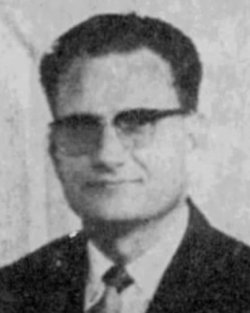
Wilbern Elias Best (1919-2007) was a preacher and writer of Gospel material. He wrote 25 books and pamphlets comprised of sermons he preached to his congregation. These books were distributed in English and Spanish around the world from 1970 to 2018 at no cost via the W.E. Best Book Missionary Trust.

Comments

0 / 2000 characters
Comments are moderated before appearing.

Be the first to comment!

Pristine Grace Research Assistant

Pristine Grace Research Assistant

Ask me about articles, sermons, or theology from our library. I can also help you navigate the site.