Bootstrap
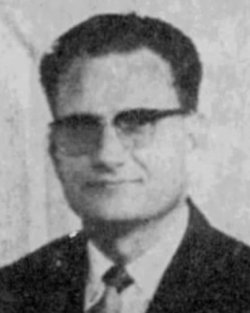
W.E. Best

God Is no Respecter of Persons

Acts 10:34-43
W.E. Best July, 2 1989 Audio
0 Comments
Best's Corner

Sermon Transcript

Auto-generated transcript • May contain errors

100%
Open your Bibles now to the 10th
chapter of the Acts of the Apostles, Acts chapter 10. We won't discuss the subject
tonight. God is no respecter of persons. I brought it up this
morning, and so I think we need to look into that subject. I'd
like for us to read, beginning with the 34th verse of Acts chapter
10. Surely you're familiar with Acts
10. Peter had learned firsthand that God was no respecter of
persons. Peter was, or had been, before
the Lord taught him, a respecter of persons. Peter was guilty of showing favoritism. Now, I'll give a little introduction
before we read. There isn't anything that gets
me any more than for people who are Christians to show favoritism. I don't care whether it's family,
friends, or whatever. There isn't anything that burns
me up any more. I can get really angry. And you can call it sinful-angry
if you want to. But for any person who claims
to be a Christian that shows favoritism, in other words, he
will go light on what the scripture says for fear he might make somebody
angry or he might offend somebody. Because after all, families are
involved here, friends are involved, and we just don't want to disturb
them. I must give this illustration.
this morning after the service, one of the members of the church
who was here last Wednesday evening and heard me say that I was going
to make a very practical application out of our subject this morning,
which I did, and I alluded to the fact that we should ask people
who say they're Christians, why did you come to Jesus Christ? You know what this person did?
Between last Wednesday night and today, This person was talking
with her sister in another state, long distance. And her sister
is a professing Christian, but is an Arminian to the core. So
she knew by raising that question, she could get to the point immediately.
So she asked her, why did you come to Jesus Christ? And her
answer was what you can expect out of most church members today. A human approach. Putting the
will of man before God. Putting the choice of the individual
before the choice of God. And so then she gave her testimony. And her sister became so angry,
you know what she said? I'd get out of that church and
I would even leave the state of Texas. Now you can know what to expect.
If you don't believe it, do the same. She said, wait a minute
now, you're talking about my church. And then she lowered
the boom again. She said, I'd like you to come
and attend the services. I'm not about to come and to
visit that church. There it is, folks. Are you willing
to pay the price by witnessing and using biblical ways of witnessing? What is wrong? I'm asking you
a question. What is wrong with asking a person who says he's
a Christian, why did you come to Jesus Christ? What's wrong
with it? Not a thing in the world. And
the reason people get angry is because they cannot stay with
the scriptures and they can't stand the teaching of God's Word.
Now I stated this morning that when Juanita and I both were
saved, after we got married, that we could explain things
at that time as we can today. And I hit some things real hard
this morning, and I intended to do that. I intend for every member of
this church, as small as we are, to search his or her own heart. Why did you come to Christ? Were
you pushed into it? Were you pushed into making a
decision? Did some personal worker or some zealous person beg you
and plead with you to make a decision and do this and join the church?
This is what you hear today. Join the church. And people joined
the church. They joined everything else,
so they decided to join the church. But I'll tell you this, when
the subject came up, you're looking at someone that did not become
angry because I did not know the answer to it. And there's
the test. If a person has the grace of
God, and you approach him in a scriptural manner, and you
show him what the scripture says, as we used John 6, 37 through
39 this morning, the Father is giving because he gave. He gave,
and that giving precedes his giving in time. And those whom
he is giving, they come to Christ, and those who come to Christ,
Christ will never cast out. A Christian, folks, a person
who has grace will not become angry. He will rejoice when that
is shown to him. If he becomes angry, he's becoming
angry because he lacks the grace of God. He's just a religionist. Now let's read beginning with
verse 34. Is God a respecter of persons? And having opened his mouth,
Peter said, on the basis of truth, I understand that God is not
one who shows favoritism. That's the way I have translated
the noun that is used here, translated in your King James Version, respecter
of persons. It does mean that, but it also
means to show favoritism, or showing favoritism. Verse 35,
But in every nation the one fearing him and working righteousness
is acceptable to him. Now Peter is not advocating works
righteousness, or a person is saved by his works. You'll have
to study this in the light of its entire context. Verse 36,
the word which he sent to the sons of Israel, preaching peace
by Jesus Christ, this one is Lord of all. You have known the message that
has spread throughout all Judea. and having begun from Galilee
after the baptism which John preached. How God anointed Jesus
from Nazareth with the Holy Spirit and with power, who went about
doing good and healing all the ones having been oppressed by
the devil, for God was with him. And we are witnesses of all things
which he did both in the country of the Jews and Jerusalem, whom
they killed hanging on a tree. This one God raised on the third
day and granted him to become visible, not to all the people,
but to witnesses who have been chosen in advance." Watch verse 41. Not to all the
people, but to witnesses who have been chosen in advance by
God to us who ate and drank with him
after he rose from the dead. and commanded us to preach to
the people and to bear testimony. This is the one who has been
appointed by God the judge of the living and the dead. To this
one all the prophets bear witness that through his name everyone
who believes in him receives forgiveness of sins. Now folks, that's a tremendous
passage. That's a division of this 10th chapter of the Acts
of the Apostles, beginning with verse 34 through 43. Now I'm
assuming that you are acquainted with all that has gone on before
in this 10th chapter of the Acts of the Apostles. Peter was sent
to preach to Cornelius. Cornelius was a prepared person
for the message that Peter preached. I'm pausing for a reason. I said he was a prepared person.
Not every person to whom I preach is prepared. I can't prepare
you. I can't prepare anybody for the
message. Won't that understood? You can't
prepare anybody for the message. God alone can prepare a person
for the message that he has committed to his men to proclaim. But Cornelius was a prepared
man. God had prepared him. I don't know what I would do
if I preached to an audience where every person in the audience
had been prepared by God to hear the message. I'll tell you, I
think things would just turn loose at both ends. I've never experienced anything
like that, doubt very seriously if I ever will. But here was a God-prepared audience
for Peter to preach to, the unsearchable riches of Jesus Christ. Now at
first when the Lord told him what he was to do, He was a prejudiced
person because he was a Jew. And he hadn't gotten all that
prejudice out of him even as a Christian, as an apostle. And
the Lord had to give him a vision, you remember, it is given, I
won't take time to go into that, to show him that his responsibility
was to preach to the Gentiles as well as the Jews. And Cornelius
was a Gentile. And being a Gentile didn't prepare
him just because the Jews, nationally speaking, had rejected the Lord
Jesus Christ and he had set them aside. And as a nation, Israel
is still set aside, but not forever, as we proved last night, last
Sunday night. But he had been prepared by the
grace of God. He had been praying. He wanted
the message. His prayers were going up as
a memorial before God. He was a prepared man. Therefore,
Peter had a prepared people for the message. And the message
will never take unless the hearts of people are prepared for it.
Religionists today believe that it's within the ability of the
preacher to prepare the hearts of the people. And so the services
of the average religious institution today is so designed, and you've
heard this and I have too, and I was foolish enough to believe
it for years as a young Christian and as a young preacher. You've
got to have a good musical program, get people to sing. You've got
to, you can prepare your hearts by singing. Oh no, you can't. What about the unsaved people?
They can't sing. Only the saved can sing praises
unto the Lord. The only people who can sing
are the redeemed, the Bible says. Let the redeemed of the Lord
say so. The unsaved don't have anything
to sing about. So singing doesn't prepare. people
for the service and for the preaching service. Prayer alone doesn't
prepare. Now prayer will prepare people
if they're saved plus the fact if there is true confession of
sin. I said true confession of sin.
Confessing one's sins and preparing himself, cleansing himself from
all filthiness of the flesh and of the spirit. perfecting holiness
in the fear of God, 2 Corinthians 7.1. He can be prepared. Peter had a prepared audience.
And now having a prepared audience, what happened? I want to point
this out. Notice, if you will, in verse
26. Well, reading first, verse 25 of chapter 10. And as Peter
was coming in, Cornelius met him and fell down at his feet
and worshiped him. That was wrong. He shouldn't
have done that, but he didn't know any different. He was so
thankful, he was so grateful that Peter had come with a message. He was giving undue reverence
to a man. Then notice what Peter says in
verse 26. And Peter took him up, standing, stand up, I myself,
I myself also am a man, I'm just a man. So that doesn't look like Peter
was the first pope, does it? He didn't act like a pope there,
did he? And he wasn't the first pope. But we see the true spirit
of Peter now after he had been taught. And then he began to
preach. Now he was in a position to know
what showing favoritism was. And then when he began his message,
and we'll read verse 34 once again. Just verse 34, then we'll
start developing our subject tonight. And having opened his
mouth, and this before a prepared audience,
on the basis of truth, please observe that, on the basis
of truth, not on the basis of people's opinion, Peter opened his mouth and said,
on the basis of truth, I understand. I understand. Now, I perceive,
is the King James translation of caralambano. What does caralambano
mean? We have a prepositional prefix. and then Lombano. It's in the
middle voice and it means to realize, to learn, or to understand. Now notice what Peter is saying.
He opened his mouth, Peter said, on the basis of truth, I understand,
or I realize, or I have learned. So he realizes, he understands
on the basis of revealed truth. God had been dealing with Peter.
Now what did he say? That God is not one who shows
favoritism. He is not one who shows favoritism. So God is no respecter of persons. When you think about partiality,
you have to think about injustice. And Paul warned Timothy about
this in 1 Timothy 5 and verse 21 and again in James 3 and verse
17. Now I want to raise a question.
Do all sinners have a right to favor from God. Do all sinners have a right to
favor with God? No, they do not. None of us have
a right. I said none of us have a right.
Now, I mentioned seven things for your benefit this morning
for you to think about during the afternoon. I want to run
through them again before we develop this message tonight.
with three major points in the development of this subject.
God is no respecter of persons, or he's not one to show favoritism.
I said we must understand, number one, that God's choice is for
no other reason than for his pleasure. That goes back to our subject
two weeks ago today, on God's sovereignty. God does what he pleases, and
he doesn't have to give an answer to anyone. If God was obligated to give
an answer to anyone, then God would not be God. And most people today do not
worship the God of the Bible. Number two, God's election. is not an act of justice. It's an act of sovereignty. Justice
is God condemning those whom he passed by for their sins. That's justice. Number three,
God's justice presupposes death. But God is indebted to no one. Man is obligated to God. Man is indebted to God. God is
God. We are the creatures. Number
four, election is not a matter of right and wrong. When you
hear someone say that by the very fact that God chose some
and passed by others, that's an injustice. They do not know
the truth of Scripture. Election is God's free favor
and election is grace as we have shown. When one talks about believing
in grace, if he denies election, he denies grace. You're not going
to get him to admit it, even though you can show it to him
from the scriptures in the 11th chapter of Romans. He won't believe it because he's
blinded by his own prejudice, blinded by his own depraved mind. Number five, God does not show
favoritism because he did not choose persons for their work's
sake. Now don't forget, let's look
at that verse again in Romans 9, because we're tying it all
together, taking it step by step. But in Romans 9, verse 11, for
not yet having been born, nor having practiced any good
or evil, in order that the purpose of God according to election
may remain none of works, but from him who calls." Not based on works. It's based
on God's free favor. And that's grace. And grace is
election. And election is grace. Number six, God does not value
a person on the basis of his or her nationality. Whether it be Jews or Gentiles.
Did you know there are only three classifications of people in
all the world? Just three. Do you know what
they are? First Corinthians 11.32, I think
it is. Forget the exact verse. Jews, Gentiles, and the assembly
of Christ. All the peoples of the world,
all the nationalities, all the races, there are just three divisions,
two divisions really, of all the peoples. Jews, Gentiles,
and the Gentiles takes in all of those other than Jews. and
then the assembly of Christ. So those who are Christ's, by
redemption and by regeneration, or by the election of the Father,
the redemptive work of Christ, and the regenerating work of
the Holy Spirit, they constitute the assembly. So we have the
Jews, we have the Gentiles, and we have the assembly of Christ.
Only three divisions. I'm grateful to be a member of
the assembly of Christ. And finally, God is not unjust
in choosing some because he would have been just had he passed
by everybody. There isn't any place for pride.
Now, I've read some so-called intellectual arguments, but you
know what my opinion of intellectualism is? I don't have the same concept
as some people do of intellectualism. The so-called intellectualism
today is not a thing in the world but the manifestation of human
ego. I said human ego. Now in talking about partiality
or God-showing favoritism, what appears to be, and I said appears,
and stressing that word, partiality are showing favoritism in providence
such as circumstances, now watch what I'm saying, this is the
introduction to our subject, such as circumstances, such as
the condition of body and health Not all people have the same
circumstances. Not all people live under the
same circumstances. Are you going to blame God for
it? Are you going to say He's unjust? We don't all have the
same degree of health or physical stamina. Is God unjust because that takes
place? Now watch what I'm saying. Circumstances. condition of body, health, natural
abilities, external advantages. You see, some just seem to be
able to get through life real easy. It just seems that advantages
are always having advantages that other people do not have.
Stay with me now. I'm just naming a few. What appears to be favoritism
or partiality in providence, such as circumstances, condition
of one's health, condition of one's body, natural abilities,
external advantages, all must wait that time for the solution. Some of people's doubts. Now
watch this. It is man's future, not alone, that can determine
him happy or unhappy upon the whole. Man's present condition is perpetually
changing. I said your condition is perpetually
changing. What else? All men pass through
the vicissitudes of what we call good and evil. Even temporal happiness, watch
what I'm saying, temporal happiness depends on something more than
externals. You know the thing that disturbs
me more than anything today? Now I can be having all kinds
of problems, but I want you to know in Christ, I'm happy. I
have joy in Christ. Have you ever noticed today,
just go to town and watch people as they pass by. How many happy faces do you see? How many countenances do you
see that just radiate joy and happiness? Just look like they're mad at
the world. You don't hardly see any young
people today that are happy. And there's something wrong,
and seriously wrong. I remember my brother-in-law,
two or three years ago, he went out to North Line and parked
his car, waiting for us to come by and pick him up. We were going
up to Mom's. So we picked him up about 10
o'clock, and he had parked his car in the parking lot there
at Greenpoint Mall, close to Foley's. And so I said, what
you been doing, Marcus? He said, well, I've been standing
on the corner 20 minutes looking at people. And he's kind of a pleasant person.
He has a pleasant personality, smiles a lot. And he said, you know, while
I was there in 20 minutes, I didn't see a happy person. Not one person
did I see that looked like he was happy or she was happy. You know, I wish sometime you
could stand where I'm standing. You know what I'm getting at
now? Some of you don't look too happy. And you don't act too
happy. The happiest people in the world
should be Christians, regardless of the problems you might be
experiencing. You're happy. You have a joy
that nothing can touch. Do you remember the prophet in
the Old Testament? You remember Habakkuk? Who said, just take
it all away. No meat. No meat in the stalls. No food. But yet in the face
of all of this, he rejoiced. He rejoiced! And Peter talked about rejoicing
with a joy which is unspeakable and full of glory. I'm setting the stage for our
message. Hope you realize that. So man's present condition is
perpetually changing. Even temporal happiness, I said,
depends on something more than externals. Did you know the average
person today, young person, adult alike, they think they're happy
if they have a good job, a good income, a good car, a house,
and they can buy another house. You know, this is what makes
for happiness. Folks, it isn't. It isn't. Now watch this, such things as
poverty, pain, disappointments, real calamities. Now these things which take place
in the lives of God's people are chastenings. to the unsaved their judgments. I said to the unsaved their judgments. Now let's develop our message.
First of all, I want to raise this question. What is respect
of persons? What is it? Respect of persons is to look
with favor upon persons with respect to their external privileges
without any real concern about their internal state. This is what Jude had in mind
when he said, Jude verse 16, listen to this, having men's
persons in admiration because of advantage. That gets right down where we
live, doesn't it? I like what Solomon said in Proverbs
24, verse 23. Here's what he said. It is not
good to have respect of persons in judgment. It is not good to have respect
of persons in judgment. Now when you pass judgment upon
someone, If you have respect of persons in judgment, you better
leave the judgment off. Just leave the judgment off. If the wicked man be great in
wealth, exalted in social influence and political power, there is
a tendency in all ranks below to overlook the wickedness for
the sake of advantage. Think that through. I don't know
what you think about sports today, but I think all sports periods
stink. Sports are not like they were
45 or 50 years ago. This Pete Rose case is a good
example. I hope he is banned from baseball
for the rest of his life. Now can you imagine a judge with
all the evidence there is against him and everybody on the news
media and all the men, even Bowie Kuhn and others. There's enough
evidence really to ban him from baseball for life. And yet he
stands up. I've never gambled. and they've
got it in black and white, they've got his fingerprints, and the
lawyers come along defending him, and the judge is stepping
in, and that is not right. They're supposed to have their
standard in baseball, folks. That is not any different than
the standard we have here in this church for discipline and
somebody or a judge steps in and says, you can't do that. Same principle. Same principle. So they have their standard in
baseball and they try to uphold that standard. But they don't
want to. After all, look what a tremendous
player he was. And I think somebody said it
correctly. He felt that he was above the law. Just like Richard
Nixon when he was in office. He felt like being the President
of the United States. He was above the law. But you can see, it doesn't make
any difference how wicked a person is. As long as he's wealthy and
has social influence, they will overlook a lot of things for
personal advantage. James condemns such respect of
persons in James 2, 1 through 9. I want you to turn to this
passage. Now this gets down to the assembly.
This gets down to Christians. James 2, 1 through 9. I can't
develop this, but I want to read it. We're covering a lot of territory
tonight. Let's begin with the first verse
of James 2 and read through the ninth verse. My brethren, do
not hold your faith of our glorious Lord Jesus Christ. I don't have time to tell you
why I've translated it in certain ways, so just let me give you
the translation. My brethren, do not hold your
faith of our glorious Lord Jesus Christ with favoritism. With favoritism. Verse 2, For
if a man may enter into your assembly with a gold ring, in
splendid apparel, and a poor man may enter in shabby clothing,
And you may look upon the one wearing the splendid clothing
and say to him, you sit here in a good place. And to the poor
man say, you stand there or sit beside my footstool. That says
something, doesn't it? Now I wonder how many religious
institutions there are. I want you to know, folks, by
God's grace ever since I've been preaching, And I've been put
to the test on a number of occasions. And Barbara will remember this
man. You remember Mr. Bond. He was the only man in
Tabernacle Baptist Church who had a lot of money. He owned
a plant here in the city of Houston. Everybody in the church looked
up to Mr. Bond. He was a deacon. It was Mr. Bond this, Mr. Bond
that, Mr. Bond this, Mr. Bond that, because
he gave a lot of money. And so they kept him a deacon.
And the first time we had to exercise discipline in that church
after I went there as pastor, and we were excluding a man,
or at least bringing him before the church, for adultery. And the person who was guilty
of adultery was a young preacher by the name of John Watts, whose
mother was a member of the church. Remember that family? Just around
the corner from y'all barber? In a four-way duplex. And so
in the deacon's meeting, Mr. Blunt got up and he said, we've
got to keep this quiet. We can't let this get out. This
will hurt the church. I said, what are you saying?
This is Mr. Bond. I didn't care if it was
Mr. Bond. I didn't care if it was
Mr. President of the United States. I didn't care who it was. I said,
what are you saying? We've got to keep this quiet.
I said, I have news for you. You may want to keep it quiet,
but I'm going to expose it from the pulpit this coming Sunday
morning, with your support or without your support. Now look at this, look at the
practical application here. Look at this fellow coming in.
See, they were showing favoritism in the church, or in the assembly.
And of course you're talking about the synagogue here. James
is writing to Jews. So look back at the first verse
again. My brethren, do not hold your faith. Now I'm not going
into this tonight. This is a good debatable subject,
whether this faith is objective or subjective. I'll let you wrestle
with that. Hold your faith of our Lord Jesus
Christ, that is in the gented case, and it is descriptive,
and I'll go ahead, our glorious Lord Jesus Christ, with favoritism. For if a man enter into your
assembly, and the word is synagogue, with a gold ring, splendid apparel,
splendid apparel, and a poor man may enter in shabby clothing,
And you may look upon the one wearing the splendid clothing
and say to him, you sit here in a good place, and to the poor
man say, you stand there, or sit beside my footstool. That's favoritism. Look at the next verse, verse
4. Did you not discriminate? That kind of discrimination,
folks, is a sin. Among yourselves, and became
judges, watch this, became judges with sinful motives. You see, all I have to do is
just read it. It explains itself. You parse these words and you
learn what they mean, it explains itself. And this is the message
of God. with sinful motives. In other
words, for someone in the synagogue to say to this man who evidently
is wealthy, you come over here and you sit in this good place.
And that man with shabby dress, you come over here and you sit
here or you sit beside my footstool. That's a sinful motive. Look
at verse 5. Listen, my beloved brethren,
Did not God choose the poor, watch this, in the world rich
in faith and heirs of the kingdom which he promised to the ones
loving him? But you have dishonored the poor. Do not the rich men oppress you
and drag you into court? Do they not blaspheme the good
name having been called upon you? Verse 8. If indeed you are fulfilling
a royal law according to scripture, or the scripture, you shall love
your neighbor as yourself. You are doing correctly. Verse 9. is the last now on this
particular section. But if you are showing favoritism,
if you are showing favoritism, you are committing sin and are
convicted by the law as transgressors. That's the book, folks. That's
the book. So James condemns such respect
of persons are showing favoritism. Respect of persons was forbidden
in the Mosaic Law, particularly in judicial decisions. I'll give you the passage. You
study it when you have time. The first one is Deuteronomy
1.17, and the second one is Leviticus 19 in verse 15. Now, James was
not referring to a regular assembly meeting here, but meetings which
were appointed for deciding matters of difference among the members
of the assembly. Now all respect of persons is
not sinful. Now watch what we're doing. All
respect of persons is not sinful. Think that through for a moment.
If it were, there would be no place for authority. I said there would be no place
for authority in the assembly or in civil government. And there's where the big problem
lies today. I sometimes feel like I'm fighting
a losing cause, but I know I'm not. And I'll continue to fight the
good fight of faith with or without the support of
people. There is a holy respect of persons
even by God himself. Now watch what I'm doing. I said there's a holy respect
of persons by God. God is said to accept the faces
of his people. The faces of his people. Genesis
19, 21. God is said to respect men's
persons first. Now this is a great one, listen.
Respect men's persons first and then their services, Genesis
4 and verse 4. And that's the true order. I'm
to have respect for the person before I can respect his service. Isn't that true? I said I have to respect the
individual before I can respect his service. Now the reason that
Abel offered a more excellent sacrifice than Cain is because
God had respect to his person, first of all, and because of
that respect, he respected his offering. And that's the order. There is a justifiable respect
of persons by man. Now this is the second part.
God is said to accept the faces of his people, and there is a
justifiable respect of persons by man. There is a respect of
persons for their age, but folks, I don't see that today.
Let me tell you what happened last week. Told Juanita about
it when I got home. Went to get her hair cut. I don't like to
go on Saturdays. I don't like to go on Fridays.
This barber's an excellent barber. It's a woman barber. I've been
going to her about six years. Excellent barber. She can cut
your hair in between five and ten minutes, believe it or not.
I've never seen a person that cut hair so quickly and do a
good job. She taught at a barber school
before she started her shop out in Friendswood. She's been out
there several years. I got there, and I always try to get there
early. She opens at 9. So I'll have to get there about 15 minutes
to 9. I'd rather wait 15 minutes and be the first one or the second
one in than to get in there, because I'll tell you, she has
a crowd. She has a crowd. She makes tremendous money, but
she earns every dime she makes. And when I drove in the parking
lot, there was a pickup truck there, and this man, as far as
I was concerned, he was first. He was there before I was. And
so we waited and waited. This was the day after the real
torrential rains. And she was running late. In
fact, she had problems, water problems. She lives down in League
City. And so they had some water problems
and she was late. 30 minutes late. I finally got
out of my car. When I did, this man got out.
He looked like he was about 40 years old. We were talking. He
said, I've never seen Doris this late. I said, well, I haven't
either. So about that time she wheeled in, apologized for being
late, said she couldn't have it. And so he said to me, he
said, you go on first. I looked at him and I said, you
mean, you're looking at my age and want me to go first? Yes,
you go on first. I said, oh no. I said, you were
here when I drove in. You're going first. Oh, go on,
go on. I said, no way, I'm not going
on. You go first. You were here.
I don't want it. I said, that's the first time
I ever had it happen. And I can understand it. While he was sitting
in the chair, I've never seen a more polite man. He was polite
to everybody. Really a polite man. So he had
respect evidently for age. I guess I looked my age to him. What am I talking about? I'm
talking about respect of age. What about calling? What about calling? Having been
in the ministry 50 years, and I was talking about this very
thing with Brother Langford the other day, and he's been in the
ministry 40, about 3 or 4 years. He said, you know Brother Best,
I can remember years ago when I used to pastor in small towns
up in Arkansas. He said, people looked up. They
didn't make any distinction. He said, even the persons who
were not Christians, they didn't make any distinction between
a Methodist preacher, a Baptist preacher, or anybody else. They
didn't know anything about doctrine. But by the very fact that man
was a preacher, the people in general respected him. He said,
that's gone. And he said, I can understand
why it's gone with all the false preachers that we have today.
I can understand it. But that's bad, isn't it? What did I say? Calling. Respect
of calling. Age, number one. The older people. Secondly, calling. Thirdly, office. I can remember years ago, for
a person to be like the governor of the state or the president
of the United States or a senator or whatever, you kind of looked
up to them. You thought about the office. Look how things have changed.
Look how things have changed. Gifts. Respect for gifts. It doesn't make any difference
today what gift a person might have. There are always those
who think they have a greater gift, and their gift is greater
than the other fellow's gift. No respect. What else? And graces. I said in graces. It is lawful to put a respect
upon them because of the difference that God has given them according
to 1st Corinthians 4-7. And listen to this. In respect
of salvation, all are equal. I said when it comes to salvation,
all are equal. That's why we have the expression
common salvation. Common salvation, that's a biblical
expression. But in respect of gifts and calling,
all are not equal. I don't claim to be equal with
somebody else. I'm just grateful to be what
I am by God's grace. I'm not trying to be somebody
else. And no one else should be trying
to be somebody else. Just be himself or herself. There is a respect proper and
due to such persons, but it is a respect not so much for their
sakes, for their sakes, watch what I'm saying, as it is for
the grace of God to them. If you have ability I don't have,
God gave you the ability. If I have some ability that you
don't have, God gave me the ability. Now we come to another part of
this first point. What is respect of persons? There is a sinful
respect of persons. I said a sinful respect of persons. When judgment is corrupted by
some external appearance or advantage, it is a heinous sin. Remember
what we just read in James 2, 1-9? There is a divine principle of
impartiality enjoined in the scriptures. The Lord said to
Moses, listen to this, in Leviticus 19.15, so I'll read this passage
now. I gave it to you as a reference,
but I'll read it to you now. Ye shall do no unrighteousness
in judgment. Somebody came to me yesterday
and said, preacher, I appreciate the fact that you
treat us all alike in this. I do my best to, I'm sure I don't,
I'm not 100% in it, but I do my best to. I have no favorites if I know
my heart. Now I'm not saying that I'm not
closer to some, you're just naturally closer to some Christians than
your others because of their dedication and because of their
loyalty. You can't help but feel a closer
tie. And that was true with our Lord
and the disciples, if you'll study the scriptures. But when
it comes to making a judgment, I have no favorites. I was taught by a godly person
in the early years of my Christian life and especially in studying
for the ministry. Best, don't you ever be guilty
of showing partiality. If you do, you'll mess yourself
up and it'll ruin you forever. Treat everybody alike when it comes to judgment. Now here's what God said to Moses. Ye shall do no unrighteousness
in judgment, thou shalt not respect the person of the poor, nor honor
the person of the mighty, but in righteousness shalt thou judge
thy neighbor. There is to be no special kindness
shown. to the guilty poor. Neither is
there to be flattery or overlooking the guilty rich. Respect of persons is manifested
by making external things the ground of respect and affection.
Now let me give that again. Watch this Respect of persons
is manifested by making external things the ground of respect
and affection. Nothing nauseates me more than
anything. For people to do things, you
know, with their own will, to try to get you indebted. Let me give you some statements
by some of the fathers of the past. Here's one by Tertullian. Tertullian said, quote, We must
not judge of faith by persons, but of persons by faith. Great statement. That's Tertullian. One must never make greatness
a cover for baseness and excuse sin by human honor. Here's one
by Erasmus. The truth of God must not be
despised because of the person who brings it. Watch this. This is irrational. The truth
of God must not be despised because of the person who brings it.
Observe that what was accounted orthodox in the Fathers was condemned
as heretical in Luther. Of course, now I don't buy everything
he said, but I wanted to read you that statement. So respect
of persons is to respect anything besides the matter and cause
itself. You know, the pastor, I've never
tried to hide things. I've said this before, but I'll
say it again. I don't expect all of it to just unveil yourself
all the time. But I do like open people. And I have a big question over
people who are just always closed mouth. I wonder if they're not hiding
something. The greatest Christians I've
ever known have been open people. And some of the, I think, greatest
Christians of this church are very open. I said very open. So respect of persons is to respect
anything besides the matter and cause itself. Thus it is going
from the matter to the man. From the thing to the person.
and swerve from righteous judgment and true estimation of things.
This evil cannot stand with Christian profession. In my years of preaching, quite
a few, I've pastored people who would defend relatives or friends
at the expense of truth. Anytime a person does that, I'm
off of him like a dirty shirt. I could care less what any of
you think about. I said I'm off of him like a dirty shirt. You
don't defend people at the expense of truth. A man is to be judged by his
character and not by his coat. He is to be judged by his character
and not by his profession. Now let's close with God is no
respecter of persons. Looking at verse 34, the text
where God is said to be no respecter of persons have to do with his
righteous judgment. I said his righteous judgment.
Impartiality is one of the chief qualifications of a judge. Without it, no amount of knowledge
or ability can inspire confidence on the part of people. God is absolutely impartial. The natural man would think that
for the sake of God's honor, he would conceal the sins of
his favorite servants. He hasn't done it. He showed
that Abraham lied, David committed adultery, Peter lied, and on
and on God exposes, God exposes the sin of his people. And David
was a man after his own heart. Even though the name of God is
blasphemed because of the sins of God's people. Payday is coming, folks. I said
payday is coming. And I'm looking forward to payday. I'm looking forward to payday. God does not have judicial regard
for any of the characteristics that aid man in distinguishing
one from another. God is not limited to human means
of making distinctions. God transcends our distinctions. Our distinctions of dress, of
color, of habit, of nationality, etc., etc., etc. God makes inner distinctions
of character without reference to anything external. Man looks on the outward appearance,
God looks on the heart. I sometimes think if I could
see what God sees, I'd probably faint. I'd just probably just
faint. I'd probably just pass out. God sees the nature. Man sees the nationality. God has respect to the robe of
righteousness. Man has respect to fine clothes,
culture, etc., etc. God regards the riches of his
grace. Man regards earthly riches. that will soon fly away, according
to Proverbs. With God there are only two colors,
black and white, just black and white, no gray, just black and
white. Good and bad, pure and vile,
saved and lost, truth and error, Man has respect to many colors. God's distinction is character.
Man distinguishes by characteristics. Quite a difference between character
and characteristics. Now closing with election. Election
does not make God a respecter of persons. And I gave you seven
proofs of it this morning and repeated them tonight. God can do what He pleases with
His own. Let's just read the 34th verse
and then we'll observe the Lord's Supper. Verse 34, Acts chapter 10. And
Peter was in a position to know this better than anybody. He had been one who had been
showing favoritism and God had to teach him a lesson. Having been taught that lesson,
he defended the righteous God in all of his actions. And having
opened His mouth, Peter said, on the basis of truth. Truth revealed by God Himself
to Peter. I understand that God is not
one who shows favoritism. I ask the brethren to come for
the observance of the Lord's Supper.
W.E. Best
About W.E. Best
Wilbern Elias Best (1919-2007) was a preacher and writer of Gospel material. He wrote 25 books and pamphlets comprised of sermons he preached to his congregation. These books were distributed in English and Spanish around the world from 1970 to 2018 at no cost via the W.E. Best Book Missionary Trust.

Comments

0 / 2000 characters
Comments are moderated before appearing.

Be the first to comment!

Joshua

Joshua

Shall we play a game? Ask me about articles, sermons, or theology from our library. I can also help you navigate the site.