Bootstrap
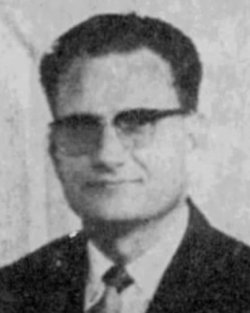
W.E. Best

A Challenge to the Church

2 Corinthians 3:1-3
W.E. Best May, 6 1989 Audio
0 Comments
Best's Corner

Sermon Transcript

Auto-generated transcript • May contain errors

100%
I want to present something to
you as a challenge. For us as a church, we're already
engaged in this particular aspect of work, but I don't believe
that we're doing what we could do, and certainly not what we
should do. I was talking with the preacher
not long ago, and we were discussing the reprinting of old works.
I'm not opposed to that. But isn't it a sad commentary
on the generation in which we live not to have some outstanding
works on the great principles that are set forth in Scripture?
You don't find many. In order to find real good books,
you've got to go back to generations past. And I want to challenge
that. I don't believe that's right. It is only a manifestation of
laziness on the part of preachers in the present generation. I want to use a basis for that,
and of course, that being scriptural. Look with me at, we'll read verses
1 and 2 and also a portion of verse 3, but I want to read these
verses and then present a challenge to you. Paul said to the Corinthians,
do we begin again to commend ourselves or do we as some, as
some, need letters of commendation to you are from you. Now the second verse is a real
challenge to every Christian. You are our letter. Paul said that the Corinthians
constituted his letter. Therefore he didn't need a letter
of recommendation. because the Corinthians constituted
his letter. You are our letter having been
written, or having been inscribed, and that is a perfect passive
participle. Having been written or having
been inscribed in our hearts. That's strong, isn't it? And then he goes on to say, being known and read by all men. Verse 3, being made known to be a letter of Christ, having been ministered by us, not having been inscribed with
ink, but by the Spirit of the living
God. Not in tables of stone, but in
fleshly tables of the heart. Look at verse 2 again. You are
our letter. Now the word for epistle, as
it is translated here, can be either epistle or letter. So you are our letter, having
been written in our hearts, being known and read by all men. No letter is self-produced. Let's
think for a few minutes about the letter. No letter that you receive from
someone has been self-produced. It has been produced by someone
else. It didn't just produce itself. This means that Christians are
the transcript of Christ's thought and purpose. That's an awesome thought, isn't
it? Furthermore, it is his medium of communication. Now we have imperfect manuscripts
today. And we also have imperfect living
transcripts. We're all imperfect living transcripts. And since we have imperfect living
transcripts, you can understand why we have imperfect manuscripts that have
been copied. Now that's no excuse, but it's
a fact. And we have to be realistic. One person said, and I like what
he stated, He said, and I quote, as there
are imperfect manuscripts of the Bible, there are imperfect copies of
the Bible. It is better, I think, to say
manuscripts are living letters, and living letters are both imperfect. I don't expect to find a perfect
manuscript. I don't expect to find a perfect
living transcript. But that's no excuse for what
our responsibility is in the sight of God. Another thing about
a letter. A letter implies an absent person
who sends it. Christ provided both the written
letter with ink and his living letters by the Spirit. He sends both. That is during his absence. We
have to understand that. Now what do you mean when you
say, Preacher, that we should have all the great truths of
scripture brought up to date. I believe that men today can
improve on what men yesterday wrote. Now, it may surprise you,
but I'm going to go ahead and tell you. I don't read the Puritans
as I used to. When you read a half a dozen
Puritans, you've read all of them. I mean you've read all of them. And their bag of tea was not
eschatology and many other great things that ought to be developed.
They were fighting Arminianism. You know, all the Puritans. That
was their battle. And they spent all of their time
and energy fighting Arminianism. I've learned much from the Puritans,
and I'm thankful for it. And I'm thankful to the men who
have given us some tremendous things. But I believe that men
in each generation should study and improve on what the generation
before had to say. Common sense ought to tell us
that. Let me illustrate it in this
manner. The gospel of God became the gospel of Paul. Now follow
me. The gospel of Paul became the
gospel of the Puritans. The gospel of the Puritans became
the gospel of this preacher, all coming from God. But the gospel of God became
the gospel of Paul. Paul called it his gospel. It
was his because God committed it to him. He entrusted him with it. And
that's why it's so important to commit the word of God, the
word of truth, to faithful men. And that is very important, and
that isn't being done. It isn't being done at all harder
today. in the generation in which we live. So the gospel of God became the
gospel of Paul, and the gospel of Paul became the gospel of
the Puritans, and the gospel of the Puritans has become our
gospel. But there should be improvement on the great truths as a result
of further and more diligent study of each of the great truths
that have been presented to us. Now why have I said that? I've
said that to say this. Some men today are giving themselves
diligently to bring into being what they call reprints of old works. Jay Green did that
a few years ago. There are some today that are
reprinting the works of Spurgeon. But I think in each generation
we ought not to go back and back and back. Each generation ought
to be well versed in the scriptures and make an improvement over
what men of the past have said. So reprints of good books of
biblical doctrine should become our print. And after I'm gone, the next
generation should do the same. Do I make sense of what I've
said? I don't believe in glamorizing
the Puritans. They were just men. I don't believe
in idolizing the Puritans. I don't believe that we ought
to idolize any man, period. I told a person recently, I said,
instead of really publicizing Baptist heritage, I think our
responsibility is to publish and publicize the truth of God
as it is set forth in Holy Scripture. Now that's a challenge to us. And I close with this statement.
Living letters, and that's what you are, you are a living letter.
as a recipient of God's grace. But living letters are just as
unpopular to the world as living or the living oracles of God. You're just as unpopular as the
Word of God itself.
W.E. Best
About W.E. Best
Wilbern Elias Best (1919-2007) was a preacher and writer of Gospel material. He wrote 25 books and pamphlets comprised of sermons he preached to his congregation. These books were distributed in English and Spanish around the world from 1970 to 2018 at no cost via the W.E. Best Book Missionary Trust.

Comments

0 / 2000 characters
Comments are moderated before appearing.

Be the first to comment!

Joshua

Joshua

Shall we play a game? Ask me about articles, sermons, or theology from our library. I can also help you navigate the site.