Bootstrap
W.E. Best

Faith Manifested by Prayer

James 5:13-18
W.E. Best May, 6 1989 Audio
0 Comments
Best on Prayer

Sermon Transcript

Auto-generated transcript • May contain errors

100%
Let us open our Bibles now to
the book of James, chapter 5. I do not know if I can cover all
the territory that I'd like to tonight or not, but we're going
to try to. I may give a few outlines as
we go along. Hopefully you will take them
down because they will help you to see other things that we may
not have time to develop. Since we read verses 13 through
20 this morning, let us not read the whole passage again. Let
us just begin by reading verse 13. Verses 13 through 18 are built
around three questions. Is anyone among you suffering
misfortune? That's the first question. Is anyone among you cheerful?
Then you have the imperative. And by the way, this little epistle
is filled with command. Do you like to be commanded? I find so many today who don't
want to be commanded. They don't like imperatives. If you think there are not a
lot of imperatives, turn back to chapter 4 for a moment. I
want to show you how many in a short space here, just a few verses,
how many imperatives there are. Look at verse 7, beginning with
verse 7. I'll just point them out. All of these are imperatives.
All of them are commands. Submit, verse 7. Resist, that's
a command. Draw near, that's a command.
Cleanse your hands, that's a command. Purify your hearts, that's a
command. Be afflicted or sorrowful. That's
a command. All of these are commands. Be
sad for mourn. Weep. Another one. Number nine. Be turned to sadness. Verse 10. Humble yourselves. That's the
tenth command. Verse 11. Speak not against one
another, brethren. All of those are commands. So looking at verses 13 through
18, we have three questions. Is anyone among you suffering
misfortune? And then the command is given.
Anyone cheerful or happy? And then a command. Now we come
to the third, and this one is really important. A lot of controversy
over this Verse 14, is anyone that King
James says sick? I'm not going to translate it
sick. You say, well, who are you? Just
a sinner saved by grace. But I do spend a little time
studying. And when I find out something, I don't mind saying
it. when I have Biblical evidence to prove what I'm saying. I don't think sick is a good
translation of the verb asthaneo. I shared that with you this morning. Is anyone weak? I am not going
to restrict Watch what I'm saying now and follow me on this. I
am not going to restrict the verb astaneo to illness, physical
illness. I'm not going to do it. It's
contrary to not only the passage, but it's contrary to the scriptures. A person can be weak in many
ways. I'll take in a few minutes and we'll look at a few verses
where ostinato is used. So reading verse 13, is anyone
among you suffering misfortune? Let him pray, and it's in the
middle voice, which means you pray for yourself. Is anyone happy? Now the imperative. Let him continue singing a psalm. Is anyone weak among you? Call at once. You say, well, where do you get
at once? Call at once the elders of the assembly. Calling at once? is an arius, middle, imperative. And since it's arius, you do
it. You get it done. That's point action, but do it
now. So call at once the elders of
the assembly. Don't call for divine healers. Now you see, this is a so-called
proof text for the charismatics and those who believe in, quote,
divine healing, end of quote, who literally make fun Or at
least they will denounce even doctors and medicine and so forth. But do you know what the Lord
Jesus had to say on one occasion? I came not to call the righteous
but sinners to repentance. And he said, the person who is
sick needs a physician. Now the Lord Jesus said that,
folks. The person who is sick needs a physician. So how can you condemn all physicians?
And the thing that's so amusing today, these so-called charismatics
that talk about divine healing all the time, they're not even
consistent. They all go to doctors, they
all go to hospitals, most of them wear glasses, have false
teeth, and everything else you can think of. Limp and hobble
around, and yet they talk about divine healing. Why don't people do a little
reading of the scriptures and believe what the Word of God
says? It doesn't say call for the divine
healers. It says call for the elders of
the church. They were just ordinary servants. I said ordinary servants. And let them pray over Him, having anointed Him with oil
in the name of the Lord." Oh, you say, what are you going to
do with that? Has that ever confused you? Did you know when I was in a
convention, I even knew of a few Baptist preachers that take their
bottle of oil around with them? I never have taken a bottle of
oil around with me. Now have we forgotten who wrote
this book? James, a Jew. Let me ask you this question.
Which do you believe is the oldest epistle in the New Testament? Do you have any idea? Did you know that the epistle
of James is the oldest epistle, I didn't say gospel, the oldest
epistle of the New Testament? Written somewhere between 45
and 48 A.D. You might ask the question, well
is that important? I would say it's quite important. And he
was writing to Jewish believers. Now don't get the idea, because
James was writing to Jewish believers, that it doesn't have a lesson
for you and me, because it does. But James used terms, he used
expressions, writing to Jewish believers, that you do not find
Paul using, and you do not find some of the others using, who
are ministering to the Gentiles. And I challenge you to refute
that statement. That's why this morning I took
the time to give you an overview of the epistle of James. If we
got just a glimpse of the overview of James, it will help us to
better understand the terminology and give a correct interpretation
of some of the problems that have been to many people through
the centuries. And I'll confess, they've been
a problem to me. No longer, but to have been. I don't mean by that that I have
all the answers, but I do have some answers. And I have answers
that are consistent with the revelation of God's mind, and
that's the only thing I'm concerned about. To have views that are in harmony
with the whole of Scripture. Let me present something else
to you, kind of as an overview before we get into some of the
finer points of our study tonight. When you think about anointing
with oil, I want to ask you a question. Do you know how many persons
whose names are recorded, I mean prominent persons in scripture,
who had a physical ailment, and they were not anointed. Paul is one. Paul had a thorn
in the flesh, 2 Corinthians chapter 12, verses 6 through 9. He was not anointed with all. Now follow me, folks, I'm giving
you the book. Timothy is another. Timothy, being the son or the
child of Paul in the faith, had a stomach ailment. He was not
anointed. Paul did tell him to use a little
wine for his stomach's sake and his often infirmities, and don't
just drink water only. One whom Paul loved dearly was
sick, and he was left sick, not anointed, and neither was he
healed. Epaphroditus is another, sick, not anointed, and not healed. Gaius is another. And he's mentioned in 3 John,
the first three verses. No reference to him being anointed.
Now think about this for a moment. Here we have the Apostle Paul,
who was himself ill, had a problem, physical problem, was not anointed,
and was not healed. not anointed. And we're talking
about some men to whom the apostle Paul was ministering. Trophimus, Epiphaditus, Gaius. Now I could give you all the
scriptures on each of those, but I'll let you look them up. But I've mentioned the names.
If you'll put down the names, then you can check me out. You
will find one of them in the 2nd chapter of Philippians, 1
in 2 Timothy chapter 4. Well, I've already given them
to you. 1 Timothy 5 for Timothy. Philippians
chapter 2, verses 25 and 26 for Trophimus. Oh, that's Epaphroditus. And
then Trophimus in 2 Timothy chapter 4 and verse 18, no, verse 20
I believe it is, verse 20. And then Gaius 3 John verses
1 through 3. You say, why are you mentioning
these? Well, it's important that we know something about these
men. How is oil used? Now, we'll get
into that in a few minutes, but I want to present the so-called
problems to you before, and then we'll start developing them.
All right, let's go a little further. Verse 15, and the prayer of faith. Now, is this just a person praying
who has faith, or is this special faith, the special gift of faith,
which was one of the special gifts? You have to decide on
what that means. Well, I'm not too sure that that
was still in effect at this particular time because he's talking about
the elders in general and not the apostles and some to whom
had been given the special gift of faith. And I'm talking about
1 Corinthians 12, 9. So in the prayer of faith shall
what? Now, heal. You have the word
save here in in your King James translation of the scriptures. And it's sozo, but it means more
than just to save a person, it means to heal. And it can mean other things,
as we've shown you, even last Sunday evening. So in the prayer
of faith, shall save or shall deliver, the sick. All right, now look
at the word sick a moment. You have a different word for
sick here. I want you to see this. Please look at your Greek in
a linear. Your Greek verse 15 on the second line right under
Chi. You have a present active participle
of the verb comno. Comno. So it's a different word
from that used in verse 14, astaneo. Now this was interesting. I want
to show you how it all harmonizes. Now stay with me for a moment.
Surely you want to see what the scripture says and not what people
think. I was reading one man this past
week, and he said, Comno is used only in this place and nowhere
else in the New Testament. I didn't take his word for it,
and I'm glad I didn't. Sometimes I do, and see, we all make mistakes.
Sometimes, you know, if you have a little confidence in a person
that you've been reading after for years and he's considered
a great Greek scholar or something, you just take his word for it.
But some reason I didn't do it last week. and I found he was
mistaken. Now I want to prove to you that
he was mistaken. Go with me please to Hebrews chapter 12. Hebrews
chapter 12. Let's look, beginning with the
first verse. It's the third verse that we will zero in on, but
let's begin with the first. Then since we also are compassed
about with so great a cloud of witnesses, let us lay aside every
weight and the sin which does so easily beset us, and let us
run with patience the race that is set before us. Looking away
to Jesus, folks, that is a tremendous statement. In the original, that
will really send you going. Looking away to Jesus, the author
and finisher of the faith. And for the joy that was set
before him endured a cross, despising the shame, and has sat down at
the right hand of the throne of God." Now verse 3, "...for
consider him who has endured such opposition of sinners against
himself, that you do not grow weary." In the King James it
says to be wearied and faint. Now we have, I won't get into
the Textus Receptus tonight, but that you do not grow weary. Look on the third line of your
Greek Interlinear please, and the last word, ye grow weary,
it is translated, it's an arius active subjunctive of the verb
that we're talking about, which is what? Komno. So it is you somewhere else,
isn't it? Now, it isn't used in Revelation
2-3, but in this text, but it is used in the received text. So it is used somewhere else.
And what is the basic meaning of it? To grow weary. To grow
weary. Now go back to James a moment.
For a moment, let's continue our reading. James chapter 5.
And the prayer of faith shall heal the one being weary. Could be that. It's calm note. And the Lord shall raise him,
and if he may be in a state of having committed sin. Now look
at that please. Look at that closely. The last
part of verse 15. It's important now. To observe that.
And if he may be in a state of having committed sins, it shall
be forgiven him. Now verse 16. Be confessing therefore your
sins one to another, and be praying for one another, that you may
be restored. I'm translating it restored.
rather than healed, restored. And then he says, a petition
of a righteous man becoming effective is very strong. Then he gives
the illustration of it. Elijah was a man of like feelings
as to us, and he prayed earnestly that it should not rain, and
it did not rain on the earth, three years and six months and
he prayed again and the heaven gave rain and the earth brought
forth its fruit. Now we'll not read the last two
verses because I'm sure we won't have time to get that far tonight. Let's go back to verse 13. Anyone among you suffering misfortune? What is he to do? He's to start
praying for himself. See, he's writing to Jewish believers. That doesn't mean all to whom
he was writing, even though they professed to be believers, that
they were actually believers, but he was writing to Jewish
believers. And then he says, is anyone happy,
let him continue singing a song. You notice what they sang. writing to Jews, and the Psalms,
all 150 of them, are the Psalms, they were Psalms, and the Jews
would chant them. So they hadn't left some of those
traditions. Consider now the people to whom he's writing and
the time that this epistle was written. That doesn't mean there's
not an application for you and me. Then in verse 14, looking at
that third question, is anyone weak? Now I'm not going to spend time
on those first two, because that's not a problem. We're going to
spend our time on verse 14. Is anyone weak among you? Go
with me please to Romans chapter 14, and let's look beginning
with the first verse of Romans chapter 14. The verb ostineo is used 35 times
in the New Testament. In checking this out, I found
that this verb is used in the following ways. So watch what
I'm going to say. Physical sickness? Yes. The impotent person? Yes. The weak? Weak through the flesh, just
weak. And secondly, weak through the flesh. I could give you scriptures
on all this, but you need to look up some things for yourselves.
Weak in faith. Now watch what I'm saying. Weak
in faith. In other words, the person's
faith is weak. He hasn't grown. His faith has
not increased. So he's weak in faith. Then you
find weak in the faith. Now what is the meaning of the
statement weak in the faith? That means weak in the faith
once delivered to the saints. That means to be weak in the
knowledge of biblical truth. And I want you to know we're
all weak in the knowledge of biblical
truth. every one of us. There is not a Christian who
is not weak to some degree in the knowledge of biblical truth. I like what Scrooge said. He
said, there is nothing more universal than biblical ignorance. You recognize your own biblical
ignorance every day. Now you don't if you don't study. I have absolutely no patience
and time for these denominational people today who think they've
already arrived, and they judge everything by their little standard.
I said by their little standard. And they even go so far as to
brag about they still teach and they say the same things that
they've said for 40 or 50 years. Folks, that's not a manifestation
of steadfastness, that's a manifestation of ignorance. So Scrooge was correct. There is nothing more universal
than biblical ignorance. Ostinato, used for physical sickness,
for a person who is impotent, for the weak in general, just
weak, weak through the flesh, like Romans 8.3, weak in faith,
weak in the faith, weak physically, So you see how the word is used.
Now, why restrict? By what authority does any person
have to restrict astaneo, of this passage, to physical illness? And then they use it as a proof
text for their so-called, quote, divine healing, end of quote. to be restored from any of these,
whether it is weak in faith, weak in the faith, weak physically,
or whatever. We all need this restoration. Ah, but thinking about what we
all need in this restoration, notice in verse 16 now, Be confessing therefore your
sins. Be confessing therefore your
sins. Now let's pause there for a moment.
Don't forget the last part of verse 15 and then the 16th verse. Verse 16 is not a question if
one has sinned or not. We've all sinned. 1 John 1 verses
8-10. We are all sinning. That's not
the question. Let's look and see what the question
is, folks. So it is not a question if one
has sinned or not, but if his sin has been such that he has
been brought to a place to be chastened by God. Are you with
me? Where do you sit? Where do you
stand? How do you stack up? That's the question. And it's a very serious question. Now, verse 15 is a promise. But it is not a promise to, quote,
faith healers, end of quote, who scoff at medicine and make
merchandise of prayer. I said, who scoff at medicine
and make merchandise of prayer. They call it prayer, it's not
prayer, and you know it isn't prayer, but that's what they
call it. You say, you're hard, you better
believe I am. I'm just as stern as truth. Now this passage does not refer
to extreme unction, as the Catholics say. This is their so-called
proof text. You know what? One does when
he calls for the priest, or the family will enter in and call
for the priest, and he goes to administer the extreme unction,
he does a lot of anointing. He almost empties his bottle
over all parts of the body. I had an unusual experience many
years ago. It's probably been 40-some years
ago. We had a man who had been attending
the church of which I was pastor at the time. He'd been in a serious
automobile accident. And he was not a Christian, but
he had been attending the church. And his wife was a member, but
that's all I can say. Just a member. You know, a lot
of members. And so they called. I was there visiting. And the
first thing I knew, a couple of nuns came in and said, Will
you please get out of the room? I said, What do you mean? And
this was at the Catholic hospital, folks. I said, will you please
get out of the room? That's just the way they said
it. The priest is coming in to administer
the extreme unction. I said, no, I'm not getting out
of the room. I meant every word of it. they would have had to
throw me out. Folks, there are some times I
just don't give in to anybody. You say, well, I'd have gotten
out. No, I didn't. I didn't know whether the man could hear me
or not, and I wanted to say something to him. I wanted to witness to
him. And so I just stayed right there.
And in just a moment, here came the so-called, I'll say, priest
with his long flowing robe and all of his regalia and all of
his stuff to to administer the extreme unction. He looked and
he saw me, you know, and I was really fouling up the works.
So the nuns, they were shaking. You know what I did? I walked
beside that man and stood by his side, took him by the hand,
and it didn't make any difference to me whether he could hear me
or not, I had something to say. And you know what I said? I said,
I don't know if you can hear me or not, hopefully you can.
But I want you to know that the extreme unction and nothing else
would do you any good. And I went ahead and said my
piece and gave some scriptures and some quotations. I want you
to know if I had been in some countries, they wouldn't have
let me out that light. They would have walked around
me with a knife and I would have been carried out on a platter.
I never saw such hatred in my life. as manifested by that so-called
priest and two nuns in St. Joseph Hospital, Houston, Texas. This is not, this is not the
proof text. It is not a proof text for the
Roman Catholic teaching on the extreme unction. Now the question is, who sins
for whom? Who sins for who? Watch this. The man with the weakness was
to sin for the elders of the assembly. Folks, let's let the
Bible speak to us. What does it say? Don't add something
to it. Don't detract from it. Let the
Bible speak. Who sins for whom? The weak man,
whether he was sick or had strayed away or whatever. And don't forget
now, the last two verses are to be taught right along in harmony
with what we're talking about here, folks. And don't forget
the 19th verse. Brethren, if any one of you may
stray away from the truth, That's what it says, isn't it? What's to be done? Anyone and anyone may turn him
back. Let him know that the one having
turned a sinner... You say, wait a minute now, the
word sinner. Well, Paul said he was chief of sinners. He said,
I'm just a sinner saved by grace and that's exactly what I am
and so are you. Let him know that the one having
turned a sinner from the error of his way shall save his soul
from death. What kind of death is this? Is it spiritual death? Nope. It's not spiritual death. I'll
tell you the kind of death that's being discussed here. It's the
same death that you read about in Ephesians 5, 14, arise from
the dead and Christ will give you not
life but L-I-G-H-T. It's the same word used in 1
Corinthians 11 and verse 30. Many of the Corinthians were
asleep. They were dead. Why? Because they had turned away
from the truth concerning the Lord's Supper and what it symbolized. They were dead, physically. What
kind of death is it? It's the same death that is expressed
by John in 1 John 5, 16. There is a sin unto d-e-a-t-h. What kind of death? Physical
death. Yes, a Christian can sow sin that God will kill him. Do we take that lightly today?
I'm afraid so. We take that as lightly as we
do. As I said to the folk last Wednesday
night, and I'm saying to all of you tonight, We take that
as lightly as we do the Lord removing the candlestick from
the church, from the assembly. The church at Ephesus was the
greatest indoctrinated church. And the more you and I know about
the truth, the more responsible we are. And the Lord will not
put up with things with you and me that he will with somebody
else that hasn't been properly taught. concerning many things. So the more we know, the more
responsible we are, and if we don't do what we know we should
do, God will remove the candlestick from such an assembly. It happened
to Ephesus. It can happen here. It can happen
anywhere. Now let's give you a few thoughts
now as we develop some of the most important things in this
passage. We know that prayer is an important
subject. It's an important subject of
this particular section of James. There are seven distinct references
to prayer in this section that we have just read. Let me point
them out. Seven distinct references to
prayer. Number one, personal. Let him
pray, verse 14. Let the one who is weak, let
him pray. In the middle voice, let him
pray for himself. Secondly, prayer is united. Let them pray, verse 14. Let them pray. Let the elders
pray. Let him pray and let them pray. Now let's put things in the proper
order. I don't believe that a person
who will call for the elders to come as a result of some weakness
in his life or her life I do not believe that that person
or those persons would be sincere unless they had done some praying
of their own first. Does that make sense? The Christian begins, he recognizes
something is wrong. And having recognized that something
is wrong, what is he to do? He's to pray. Pray for himself
or pray for herself. That's the first step. Then send
for the elders of the assembly. Then send for the elders of the
assembly, and let them hear as united prayer. Now we have the
person who is weak praying, and he's praying with the elders
that he has sent to come and pray with him about his condition. So there's united prayer. You know, the interesting thing
to me is I've had very few people, and I've had people, I've had
people in this assembly, and I want you to know I appreciate
it. It's a good sign. Some of you have had problems,
and you've come to me with them. You don't worry me with a lot
of things, and I don't think you should. I think you ought
to do all you can on your own. You need to learn to stand on
your two feet if you can. And that's why we're here, and that's
why we study. But there are times when you do feel obligated. But
I haven't heard and I haven't had very many people in 50 years
who have come to me with their spiritual ailments. Let me use an illustration. Suppose you got to feeling bad
physically. What would you do? Come on now, what would you do?
Each day you just felt a little worse than you did the day before.
Well, I guess I better go see the doctor. So what do you do? You go see
the doctor. Nothing wrong with that. King Asa went to see the doctor. But he went to see the doctor
even before he consulted the Lord, and that's wrong. Go to
the Lord first. I read the best illustration
yesterday. A medical doctor decided that he was kind of tired and
he was getting up in his 60s and so he felt like that he just
needed to kind of phase out and do as little as he could and
play more golf and this and that and other things. And just kind
of turn his practice over to somebody else. And so he began
to slack up. He had been a very diligent person,
a hard-working person, a person who was interested in his patients.
And there are some like that today, folks, and don't think
there aren't, but you have to look for them. Just like you have
to look for a preacher that really preaches the truth, you have
to look for a doctor that has an interest in his patients.
And you can go on and on. You can say that's true in every
aspect of life. And so he was just going to take
it easy. First thing he knew, he began to feel better. And
he got to feeling worse. He said, well, what's the problem
here? He decided he just wasn't doing anything, so he better
get busy again. And you know what? He said, I'll just start
back with my practice, and I'll just take those patients. And
so he just got active again, and he got to feeling better.
Well, I can understand that. Sometimes we can just... I don't
blame some of you men from retirement. When you retire, don't retire.
Don't just sit down in a rocking chair and rock yourself until
you die. That's not living. Folks, that's
not living. Now what does a person do when
he is spiritually sick? He didn't want to go see the
preacher. You have very few. I don't want to talk to him. But now here's a person who's
weak. Something is wrong. What is wrong? I don't know.
You don't know. But let's look at the context. But first he begins by praying
for himself. Then he sends for the elders.
That's personal prayer. Then he sends for the elders
of the assembly and they all unite in prayer. That's united
prayer. Now that's only the second step
in the prayer line. Let's look at the third one.
The third one is believing, the prayer of faith. In other words, pray according
to the will of God. Don't ask for something that
is not according to the will of God, but pray according to
the will of God. Now, if we wanted to get into
the will of God tonight, all we'd have to do is to go back
to the fourth chapter and we'd get into the will of God, praying
in the will of God, if it's God's will. It may not be God's will
to raise a person up soon. I said it may not be. God may
be just spanking the tar out of him. It is a form of discipline oftentimes. So it's a believing prayer, the
prayer of faith. Then notice number four, it's
mutual. Then we go to mutual prayer.
Pray one for another, verse 16. Then number five, prayer that
is effective, effective prayer. And you find this in verse 16,
the effectual fervent prayer of a righteous man avails much,
avails much. And number six, verse 17, to
pray earnestly, to pray earnestly, And then in verse 18, continual
prayer. Elijah prayed again. Continual
prayer. So you have seven things here.
You have personal prayer, united prayer, believing prayer, mutual
prayer, effective prayer, earnest prayer, continual prayer. Now the Christian not only has
a variety of experiences, but he has a variety of duties.
Now let's look at this in the light of this passage. And I'll
mention three under each one of these categories. I said the
Christian has not only a variety of experiences, but he has a
variety of duties. First of all, what are his experiences? Experiences are mentioned first
of all in affliction or suffering. Affliction or suffering. Look
back to verse 11 for a moment. All of this is within the context,
but let's look back at verse 11 for just a moment. Behold,
we are considering the enduring ones happy. We're considering
the enduring ones, or the persevering ones, happy. You heard of the patience of
Job. And you saw the end of the Lord. Now what do you think James meant
by using the expression, the end of the Lord? He's talking about the discipline
of Job. The discipline of Job. Now don't
just read the first chapters of Job and all the suffering
of Job. And then fall short and not read
the last two chapters of Job. If you do, you miss something.
I said, you miss something. You and I know that God has a
purpose in everything that happens. He has a purpose in mind by sending
affliction upon his people. He had something in mind. He
had a purpose in mind when he afflicted Job. Oh, but when you
turn to the 40th chapter of Job, the latter end of Job was greater
than the beginning. Than the beginning. The end of
his suffering. So constancy is always an admirable
thing during the time of human suffering. I said constancy. He that endures to the end shall
be saved. That's the teaching of scripture
and I believe it. The child of God will endure. He will persevere
because God preserves him and enables him to persevere. So when we look at Job, calamity
after calamity came upon him and he's mentioned here. in the
11th verse of this fifth chapter. One thing with rapid succession
after another came to him, yet he never failed to persevere. That's the test. That's the test. So first of all, affliction. Then cheerfulness. is the second
experience. And then, weakness. Those are
the three major experiences of the section of Scripture. Now
notice the duties. So, the Christian life is one
that has a variety of experiences, but it also has a variety of
duties. And what are the duties? The
primary duties are, number one, prayer. Number two, singing praises. Number three, confession. Confession. Now we're not going to discuss
the first two. Let's spend a little time on
is there any weak among you. The weak person is to sin for
the elders of the assembly. So this refutes the common idea
of sinning for a divine healer. You'll notice this man was a
church-oriented person. Will you look at that? I believe
that all Christians ought to be assembly-oriented people. if at all possible, and I mean
if at all possible, make every effort to be an assembly-oriented
person. That's God's plan, and we cannot
thrive and prosper spiritually apart from it. So this weak man was to call
for the elders, and the word is plural. Nothing is stated
about the degree of the weakness. Notice, nothing is stated here
about the degree of the weakness. The chief interest should be
the soul of a person rather than his physical condition. I wish we were all as concerned
about our soul condition as we are our physical condition. If
we were as serious about our soul condition, that would help
a lot as far as the physical condition is concerned. You know, I believe sometimes
God gives people just what they're looking for. If a person starts
making an excuse, God will give you a good excuse. So don't start
making excuses, folks. Anytime a Christian starts excusing
himself for this and excusing himself for that, look out, God
will give you a reason. He'll give you an excuse, a big
excuse. Do you believe that? The weak should desire the help
of those who have an interest and care for souls. You want to know where that's
found? Hebrews 13, 7 and 17 and 24. So the elders were to commend
the sick man to the Lord in prayer. Notice that, anointing him with
oil. Now there are two ways to look
at the anointing. And I've read both issues for
years. In the first place, two things
were used in New Testament times for medicine, oil and wine. Paul told Timothy to use a little
wine for stomach's sake. It was used as medicine. Use a little. Don't drink a quart
or half a gallon. Just use a little for your stomach's
sake and your often infirmities. You remember the man in the 10th
chapter of the Gospel of Luke who went from Jericho, fell among
thieves that stripped him and wounded him and left him half
dead? When the Good Samaritan came
after the Levite and others had passed by and couldn't give any
help, What did he do? Poured in oil and wine. They were used as medicine. But there was another use, and that was to anoint. To anoint. Turn with me, if you will, I
think you'll find this passage. I think
it's the ninth chapter of the gospel according to Matthew.
I believe it is. I thought about using it, but... You remember the woman with the
alabaster box that anointed the feet of the Lord Jesus? And then
in that same chapter, later on, What happened? No, it's Luke chapter 7. Luke
chapter 7. And look at the 46th verse. Now
she had already anointed the feet of the Lord Jesus Christ
with that expensive ointment. Look at verse 46. And the Lord
Jesus is making a statement. We'll have to read verse 45 to
get the connection. You gave me no kiss, but this
woman from the time I entered Cease not kissing my feet. You anointed not my head with
oil. Now keep in mind, this is a message
of the Jews now, this is during the time that the Lord Jesus
Christ was ministering. You anointed not my head with
oil, but this woman anointed my feet with ointment. So it was used ceremonially. So you have to make up your mind
just exactly how you want to use it to make it a difference.
And we'll see about that in just a moment. So anointing with oil. Now since
these were the ordinary officers of the church, elders, then the
cure or the restoration hoped for was not something miraculous,
watch this, was not something miraculous as if performed by
the apostles. Now folks, these are facts you
have to accept. We're talking about elders, ordinary
ministers of the church, not apostles, not apostles. So the case involved is that
of a believer who had done something, he was weak, whether he was weak
physically, he was weak in the faith, whether he had turned
away from the truth or what it was, he needed help. So if he was sick physically,
well they may have put some oil on him. They have anointed him with oil. And that's what we have here.
Or it could have been a ceremonial thing. So you have two things
to think about. The ceremonial use of awe or
the medicinal use of awe. So don't try to make something
out of it that isn't there. And then if he has committed
sins is not a question, as I've already stated, as if he has
sinned or he has not sinned, but if he has done something
that has brought about the chastening of God upon him. So it's a conditional particle. Then anointing him with oil,
used two ways in scripture. First, as a symbol of divine
grace, Mark 6, 13. And second, for medicinal purposes,
Luke 10 and verse 34. Now, I like this statement made
by a man in the past, and I think it's a great statement. He said,
the rite, he's thinking about the ceremony, the rite ceased
when the gift ceased. The ceremony ceased when the
gift ceased. That is the gift of healing.
Gifts of healing are coupled with other miraculous gifts,
end of quote. And then he gave the scriptures
which I've just given to you, Mark 6, 13, and also Mark 16,
verses 17 and 18. And they're all to be considered.
So don't run to this passage as a proof text. Look at the
whole book and find out what the principal thought is. You
know what most people do? They form their opinion as to
what they believe and then they start looking for scripture to
justify it. Folks, that is the wrong way. That's going at it in reverse. Study the Word of God and let
your opinions be formed on the basis of revealed truth. All
the truth, not picking, but all the revelation of God's mind. So the prayer of faith-saving
or restoring the weak person or the sick person is a precious
promise, but not for professional faith healers who scoff at means
and make a merchandise of prayer. Now let's look at verse 16. We
want to spend the rest of our time tonight on this. Confession. This is not an easy verse to
interpret, really. How far do you go? What are you
willing to do? Let's see if we can come to some
logical conclusion in the light of all of Scripture as to what
verse 16 means. Be confessing therefore your
sins one to another, and be praying for one another, that you may
be restored, that you may be restored. That's far enough.
Let's look at the word confession. There are two words for confession.
One is just the word, and then there is a compound word that
has a prepositional prefix. One means to confess, and the
other means to confess publicly. And it's the ek prefix that gives
it the meaning of confessing publicly. But what is the meaning
of confession? You know, sin is more humiliating.
Now we're going to get down where we all live. This is good for
every one of us. And folks, there's not a person
in this building tonight that doesn't need what I'm going to
say now. I've been looking at it for a
week closely. So let's look at this confessing. Sin is never
more humiliating to a person than when he confesses openly. Would you agree with that? I
said sin is never more humiliating than when it is confessed openly. Do you know what confession is,
really? I'm drawing now on a Puritan statement that's outstanding.
Confession is the vomit of the soul. Think that through. Confession
is the vomit of the soul. He could not have stated it better. You know what it is to vomit? Every one of you knows. Confession
is the vomit of the soul. What does it do? It manifests
the soul's hatred of sin. Now when you find people who
will not confess, and the reason they will not confess is because
they do not have the grace to confess. Now I'm taking this
step by step. There's a lot in this. And here is a principle that
will help any Christian or help any church. It is painful to the flesh to
confess, but where it is painful to the
flesh to confess, it is helpful to the soul. Sin is judged first by God at
Calvary. And it is judged by the elect
subsequent to regeneration. But confessing is something,
there is an initial confession and then there is a continual
confessing. And it's the continual confessing
that is being discussed here in our verse that we're looking
at tonight. James is writing to Jewish believers, Jewish believers. In confession, divine judgment
is recognized. Think that through for a moment.
I said in confession, divine judgment is realized. In other
words, if one really confesses He recognizes that God has already
judged that sin for the heinousness of it. He recognizes it. If you want
a demonstration of this, we don't have time to turn to it tonight,
but Psalm 32 and Psalm 51, the confessions of David. Confessing therefore your sins
one to another of James 5 must be properly understood. I said
this must be properly understood. There are some real warnings.
There are some guidelines for us here. So watch this closely. We know that Rome uses it, but
I can't use it in the sense that Rome does. Now watch this one. Some use
it as a means of getting pleasure out of confessing. In other words,
reliving their sin. Have you ever come in contact
with people that are always talking about certain sins they committed
before they were Christians? Just always bringing them up? Folks, I don't want to discuss
mine. If you won't discuss yours, you go ahead and do it somewhere
else. You don't understand what Jesus Christ paid for at Calvary. And sin is under the blood. Anytime,
folks, anytime. And that's what nauseates me
with these fellows that they're always having in Baptist, they're
doing it. These drug addicts that come in and tell about their
drug addiction. They love to talk about it. They
relive it. And then the kids, they sit there
and listen to them. They say, boy, look what they're
getting to do. Look what they're getting to
do. Man, they're being brought before people. They're getting
to give their testimony, what they've been saved from and tell
about all of their addiction. Man, we better try it so we might
be able to do that too. I'll never forget But old brother
Harrison, pastor of Trinity Baptist Church, who sat by me in pastor's
conference about 35 years ago or more, and Freddie gauged that
I have absolutely no confidence in whatsoever. I have absolutely
none, N-O-N-E, none. And somebody got him on the pastor's
conference program, and he was speaking that morning. And I'd
heard it before. And I wanted to get up and leave.
Brother Harris leaned and put his foot on my leg and he said,
let's just hear him out. He wanted to go to, he said,
but I do have a question. Is he confessing or is he bragging? That was a wise statement. I'll
tell you what he was doing. He was bragging. Our sins have been removed as
far as the east is from the west. Why do we want to continue to
drag them up? So we have to be careful. We
have to be careful. There is an extreme. Now watch
what we're doing now. I'm talking about going back
into our past lives. But that's not what this passage
is talking about. Say, I'm discussing confession
in general, then I'm bringing it down to the present as a Christian. Now, such confession does not
eliminate public confession. In other words, if you think
you can go to somebody and confess your sin, so don't come to me
and tell me about your sin personally. If it's something that has brought
reproach upon your life and the life of the church, and expect
me to let it stop there. I won't do it. Personal, private confession
does not eliminate public confession. But you know what people do?
They only look for scriptures, they'll hear a preacher, and
they don't hear him, and they pick out what they want to hear,
and they look for something to justify them, what they want
to do, they don't see the whole perspective, they don't have
the ability to see the whole perspective of truth. I've had that recently, some
of you have, you've had that experience. So a public sin that
has brought reproach upon Christ and His assembly, it isn't enough
just to go to the preacher and say, I've sinned, I've done so
and so, and just drop it there. And then if the preacher says
anything and brings it to the church, then they want to hang the preacher.
You can't even talk to the preacher and confess anything without
him just publicizing it. It all depends on what it is,
folks. You know, there are those who
excuse their sins. You know how they excuse them?
They excuse them by saying, we've all sinned, We've all sinned. And they think that excuses.
That's a cop-out. Some will admit great sins, but
hide little sins. Now watch what I'm doing. There's
a real important point in all of these. In other words, if
it's something that is really Scandalous? They may confess
that, but all the little sins. But you know what really destroys?
Don't forget Song of Solomon, chapter 2, verse 15, I believe
it is. The little foxes that spoil the vine. The little foxes
that spoil the vine. It's the little sins that just
keep eating. So watch out, folks. This is
for you. This is for me. We may feel like
by doing this little thing or that little thing and not getting
right, those are little things. We all do those little things.
It's those little things, little things, little things that after
a while destroy your fellowship, destroy my fellowship. And when fellowship is destroyed, we're in bad shape. Now, here's a question. Is James
5.16 stressing the principle of Matthew 5.23 and 24? You might ask, well, what is the
principle of Matthew 5.23 and 24? Well, let's turn and look
at it. Turn to Matthew chapter 5 for
a moment. I'm trying to give some things
tonight that I feel that our church, this church, needs. Therefore, if you bring your
gift to the altar, and you remember that your brother has ought against
you, Leave there your gift before the altar and go your way and
be reconciled to your brother and then come offer your gift. Is that what this is talking
about? Is James 5.16 stressing the principle of Matthew 5.23
and 24? Now here's another question. Listen to it. How far should
believers go in confessing their sins one to another. How far should we go? Why every
time you feel like you've committed a sin, whether you consider it
to be a little sin or a middle sin or a big sin, you go to somebody
and you tell them about it. Be careful. How far should one go? This is
a question we have to answer. What's he talking about? Now, although great care should
be taken, listen to this, you better be careful, you better
know the person to whom you go and confess your sin. That person may use it against
you as a plug. You know what I'm talking about?
Now, that doesn't mean that you're to shy away from doing it, because
there is a sense in which we are to go to someone we have
confidence in. I'm talking about some Christian
brother or some Christian sister to another Christian sister.
And it's a private thing, it's not something that has brought
reproach, but you go, and you go because you feel that this
person will listen to you and pray with you about that. But
you better be sure. You understand that person and
know that person. Because there is help in confessing. There
is help. But there is another way of looking
at it. It raises another question. Is this the fulfillment of John
13 verse 14? Do as I've done to you. Washing the feet of the disciples.
That's not literally washing one's feet. But that's helping,
listening, and praying.
W.E. Best
About W.E. Best
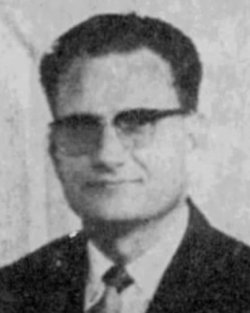
Wilbern Elias Best (1919-2007) was a preacher and writer of Gospel material. He wrote 25 books and pamphlets comprised of sermons he preached to his congregation. These books were distributed in English and Spanish around the world from 1970 to 2018 at no cost via the W.E. Best Book Missionary Trust.

Comments

0 / 2000 characters
Comments are moderated before appearing.

Be the first to comment!

Joshua

Joshua

Shall we play a game? Ask me about articles, sermons, or theology from our library. I can also help you navigate the site.