Bootstrap
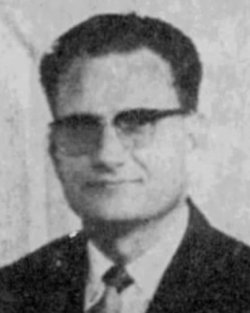
W.E. Best

The Model Prayer

Matthew 6:9-13
W.E. Best April, 16 1989 Audio
0 Comments
Best on Prayer

Sermon Transcript

Auto-generated transcript • May contain errors

100%
Having read the model prayer, it has been said by a number
of scholars that we have three partitions that are related to
God and three that are related to man. The three that are related to
God in this model prayer which I have read, number one, your
name, the Father. That's revelation of God's character
and attributes. Number two, your kingdom. This
is associated with the Son, the Lord Jesus. You might ask the
question, well, how can you associate the kingdom with the Son? Because
the kingdom is the Father's and the Son has gone to receive the
kingdom from the Father and return in Luke chapter 19 beginning
with verse 12. Reading further. So your kingdom
is associated with the Son. And thirdly, your will be done
on earth will never be accomplished until the Holy Spirit indwells
every person in the kingdom. Think that through. Now, you're
not going to read that in the average commentary, so I just
thought I'd throw this out. This is the result of research
work through the years putting this together. Then, of course,
we have three that are related to the individual. And I'm of
the opinion there may be the fourth. And that takes in verses 11,
12, and 13. Give us today our daily bread.
Here you have the physical. Verse 12, and forgive us our
debts as we forgave our debtors. That's mental. And then in verse
13, and bring us not into trial, but deliver us from the evil.
That's spiritual. I made the statement this morning
that the words in the last part of verse 13, for thine is the
kingdom and the power and the glory forever, Amen, is not in
your Greek interlinear text. That is, the copy of the manuscript
that was used to give us this Marshall's text. But it is in some manuscripts.
If you want to use it, that's fine. And if you don't use it,
you're not going to do violence to the Word of God. But it is
not in the text that we have. So that's where you get into
the study of the manuscripts, and we'll not get into that. I ask you this morning to do
a little thinking on this subject tonight, especially verse 13,
which is not easy to interpret. Let me bring a few things before
you before we begin our study of the model prayer as a whole.
And bring us not into trial. Now Christ is giving the model
prayer to his people. Do you think that he would say,
and bring us not into temptation? I want you to see how atrocious
the King James translation is sometimes, and I'm going to go
further than that tonight. That statement is pretty blunt.
But when we go to another portion of scripture to make a study
of a few verses in reference to what we're studying here in
Matthew 6, you're going to see the importance,
I said the importance, of studying as you've never studied before
in order that you might handle the truth correctly. I have memorized
a great number of scriptures through the years, but you know
I don't like to quote them anymore. I'm afraid to. until I have restudied
those verses. That's how conscientious I am,
by God's grace, to be right. Because a lot of the scriptures
that I've quoted, I've memorized, and I quote, sometimes the translation
in the King James from which I memorize these scriptures,
it just isn't that way. Now you can take it, but I'll
tell you what, this church can take a lot of things that a lot
of churches cannot take. And I'm grateful for the fact
that you do love to study, you manifested by your presence.
Not only do you love to study, I'm talking about the church
as a whole, but it's easy to take care of difficult matters
sometimes because of the spirit that is manifested. I told somebody
this last week, you know when you have to bring up something
in the matter of, say, discipline as far as teaching the scriptures
would be concerned. Sometimes when I get through,
as a result of the attitude of the members of the church, I
feel like a parent who has spanked a child too hard. I'm just being
honest with you. So it is really great to be with
a group of people that have a love for the scriptures and they want
all the Word of God. Let's look at verse 9. Therefore
you pray like this. We saw this morning in each of
the three divisions that we studied, verses 1 through 18, how that
we are to give our gifts for the poor, our giving of alms,
how we are to pray, and also how we are to fast. So we have giving of alms, praying,
and fasting. And in each one of these we have
the negative before you have the positive. How not to do it
and then how to do it. You have that which is counterfeit
and then you have secondly that which is a reality. Now after
discussing prayer and how not to pray and then how to pray.
Don't pray as the Pharisees. Then he says in verse nine, therefore
you pray like this. This is a model prayer. This
is not the Lord's Prayer. It's called the Lord's Prayer.
In fact, the song has been given that title, the Lord's Prayer,
and they sing this. I've never understood why at
so many weddings this model prayer is sung. It just doesn't make
sense. Why they would sing this at a
wedding. Let your kingdom come. No two young people getting married
would want the kingdom to come. They're getting married. That's
all they're thinking about. Now the question is, what does
this mean, let your kingdom come? Looking at verse 9, pray like
this. Our Father, the One in the Heavens,
let your name be revered. There isn't anything wrong with
the word hallowed. It comes from the Greek verb
hagiadzo, which means to regard as holy or to be reverent. I suppose you understand now
why I don't like to be called reverend. That word is found
and used in reference to God and only once in the scriptures
and it's never used in reference to man. So don't ever call a
preacher reverend. He doesn't deserve it. Doesn't deserve it. But let your name be revered. Now we could spend a lot of time
on the word name because it really tells us about character and
attributes and everything that goes with God the Father. But let your name be revered. God's name is not revered when
His name is used in vain. I don't like to hear anybody
use the Lord's name in vain. Now a person doesn't have to
curse in order to use the Lord's name in vain. I said you don't have to curse.
The Lord's name can be in vain just by speaking foolishly and
using the name of the Lord in a light way. And a person might even be religious
and just always throwing out, well, the Lord, the Lord, the
Lord, and they don't really mean it. When we use the name of the
Lord, we are to revere the name of the Lord. Now we come to the second. So
your name, this is the revelation of God's character and attributes. And I'm not preaching either
on God's character tonight or his attributes. Secondly, this
is the debatable point. Let your kingdom come. What do
you think it means, let your kingdom come? I don't think you want to listen
to all of these, but I'm going to give you a few. I have here
18 different sources from which
I have copied statements by theologians on this particular statement,
let your kingdom come. I'm not even going to give the
names of all of them, so I'm just going to go through and
I want you to listen closely because you can't take notes
on this, but I want you to see the various ideas that are being
propagated concerning Let Your Kingdom Come. Number one, this
is a spiritual kingdom. The prayer has for its object
the spread of the gospel and the saving reception of the gospel. Two, the kingdom of God is twofold,
universal and particular. The one is power and the other
is grace. It is the latter that is used
here. Let your kingdom come. In other words, let your kingdom
of grace come. Now, this kingdom of grace is
his church and may be considered two ways. One, in its growth
and progress, and two, in its perfection and consummation.
In the former respect, it is the church militant here upon
earth. In the latter, it is the church triumphant in heaven.
Three, the kingdom of God is fourfold. Power, gospel, grace,
and glory. I just want you to have a little
taste of what you get into when you read a study. The works of
men. The four kingdoms. Now notice
this. The four kingdoms, he says, are linked together and stand
in a line of subordination. The end of which is the kingdom
of glory. The kingdom of grace being subordinate
to it the gospel kingdom to that of grace, and the kingdom of
power to the kingdom of the gospel. Isn't that amazing? Number four,
the kingdom here intended is the dominion of His grace, that
provision of His infinite grace by which He is to subdue our
sinful race into cheerful allegiance, exalting homage, and general
service. Five, the kingdom of God is in
its essence a spiritual kingdom. The seat of his dominion is the
thoughts and affections of men. It is a prayer that the whole
world may grow better and brighter, that all the people in the world
may grow gentler and stronger and truer and kinder and happier
year by year. End of quote. Do you see why I get real sick
of just reading sometimes? I was telling some of the men
before the service tonight, I have a lot of books that I'm throwing
away and going to give away. I'm going to spend the last year
studying the Greek text and a few things that I have in my library,
a few things that are outstanding. I've done enough general reading
of all the religious rot that exists and I don't care about
spending much more time. I'm going to try to spend it
more profitable by looking at the Greek text itself. Number
six. God's kingdom is threefold, authority
over the souls of believers, spiritual, his church upon earth,
visible, and after the resurrection, heavenly. Number seven, the kingdom
of God is within you. It is not a thing to be seen,
it is a power to be felt. This view of the kingdom is purely
a personal one. So you got your own little personal
kingdoms. Eight. The kingdoms of grace and glory
are but one and the same kingdom, distinguished into two parts,
which differ in five circumstances. One, in time, one is present
and the other is future. Two, in place, one is on earth
and the other is in heaven. Three, in condition, the church
militant on earth and the church triumphant in glory. In order
of entering into them, grace is to be entered into before
we can enter into glory. Five, in the manner of government,
grace is governed by subordinate means, ministers and ordinances,
glory governed immediately by God. And that, folks, comes from
the pen of one of the great Puritans of the past, Gouge. One that Arthur W. Peake quoted constantly. Nine. The coming of Christ's kingdom,
greater than all the kingdoms of the world, amidst all the
breaking up of human kingdoms, men seek one that will abide. This is a kingdom founded not
by external might, but by moral goodness. The kingdom of God
is God's first primeval thought. The kingdom of God has made out
a history. The way of its coming is an inner spiritual being. His kingdom comes in time till
it will one day come gloriously in eternity. That's the Lutheran. Listen to this by Albert Barnes.
I'll call his name because you're familiar with him and I think
his works are back here in the library. He gives the following
definition. His spiritual reign begun in
the church on earth and completed in heaven. God's reign are the
gospel of Christ advanced, the effect of the gospel, piety in
a renewed heart, the church on earth. The kingdom can be regarded,
this is number 11, the kingdom of God can be regarded in three
ways. In one sense, it has already
come. The kingdom is here at this moment in the hearts of
those who submit to it. This is Martyn Lloyd-Jones, by
the way. The day is yet to come when his kingdom shall have been
established upon the earth. Another Puritan. The disciples
were taught to pray for the success of the gospel, for the conversion
of God's elect, in which the kingdom would greatly appear
to the destruction of the kingdom of Satan, and the abolition of
the kingdom of the beast, which will usher in the kingdom of
the mediator." That's John Gill. Fourteen. Let the kingdom of
God come more within the hearts of all men, and hasten the revelation
of the kingdom of glory. Here's John Calvin. It is God's
will to govern men by his word. But if the inward power of the
Spirit be not added, the kingdom will not be established. This
is what we are to pray for. Here's Matthew Henry. Let the
bounds of the gospel, church be enlarged, the kingdom of the
world be made Christ's kingdom, and all men become subject to
it. I'm going to give one more. In the course of church history,
the kingdom has received three principal interpretations. One,
the perfect reign of Christ in heaven after the last judgment. Two, the visible church on earth
between the first and the second coming of Christ. And three,
a visible reign of Christ on earth between the second coming
and last judgment. Now, what do you think it means? when our Lord gave this as a
model prayer, a pattern, which we are to pray. And this is a
model prayer for us during the dispensation of grace. Is the present kingdom in a limited,
is it present in a limited sense? That's the question. Let your kingdom come, instead
of translating it, thy kingdom come, let your kingdom come,
is a prayer. Now watch what I'm going to say.
I'm interpreting now. I'm giving what I believe the
scriptures teach concerning the kingdom for which we are to pray. Let your kingdom come is a prayer
that one distinctive kingdom One distinctive kingdom, watch
what I'm saying, shall come. Not two or more. Not that one may be within another. Not that one may become, not
that one may come in different stages. You see what I've done
in this statement? I've taken all of those views
that I've just read to you. So here's what I believe the
scriptures teach concerning the kingdom. I believe it is eschatological,
period. Now there are a lot of questions.
There are four scriptures in the New Testament, so watch this.
There are four scriptures in the New Testament that on the
surface seemingly teach that the kingdom is already, there
is a sense of which it is already in existence. Now, I'll deal
with those scriptures later, not tonight, so please remember
that's a step down the line. But I'm starting step by step
now discussing the subject of the kingdom. It doesn't mean
that I'll take this subject each Sunday night or Sunday morning
until we will have finished the study of the kingdom, but we
will develop it in stages, so please wait for the next installment
before you make up your mind. I'm just beginning the subject.
This is the foundation. So, let your kingdom come is
a prayer that one distinctive kingdom, which is eschatological, shall come. Not two or more. Not that one may be within another. Not that one may come in different
stages. Now I've been surprised in doing
some new research work on this. I have found two or three men
that make some great statements about this. I was reading the work of one
man this past week and he said, there is to be a, I'm using his
expression, cataclysmic coming. It's something in the future.
And I buy that. I believe he's right. With all
my heart I believe it. Now I'm going to give you eight
things and I'd like you to take notes on this. I'm making it
real concise, each point. Let your kingdom come, number
one, cannot be prayed by one who is already in it. Think that one through. If you
were already in the kingdom, You couldn't pray for that which
you're already in to come. Well, someone might say, well,
I'm in one aspect of the kingdom, and being in one aspect of the
kingdom, I'm praying for the full kingdom to come. But that
won't stand the test of scripture. So let your kingdom come, cannot
be prayed by one who is already in it. Now that makes sense. The language here points to the
future. Number two, let your kingdom come. Now the disciples
were taught the mysteries of the kingdom. And the mysteries
of the kingdom are given in Matthew 13. Those seven parables of Matthew
13. We're not discussing those tonight,
but I'm giving you these points for you to study. I'm making
it concise. So you can get these major points
down. So the disciples were taught the mysteries of the kingdom. And if they were taught the mysteries
of the kingdom, they were not taught that the kingdom already
existed. Because when the kingdom is manifested, it's not going
to be a mystery. But they were taught the mysteries of the kingdom.
And we'll see what that means later. Number three. The kingdom
is one distinctive kingdom, eschatological. Eschatological. Apart from the prophecies of
the Old Testament, there would have been no basis whatsoever
of this petition that our Lord gave the disciples to pray. You can read Isaiah 6. Psalms
74 and 89. I could give many scriptures,
but I'm giving some of the outstanding passages in the Old Testament.
Isaiah 6, I'm talking about the sixth chapter. Psalms 74 and
89, and Daniel 2. Here you see we have the prophecies
of the kingdom. Number four. Requesting for the
kingdom proves it did not exist. But the very fact, let your kingdom
come, proves it did not exist, in fact it does not exist. Number five, the kingdoms is
the fathers to give, not ours to help bring into existence. Now when you hear these preachers
talk about bringing in the kingdom, And working in the Kingdom, all
of that terminology is foreign to Scripture. We don't bring
in the Kingdom. The Kingdom is the Father's and
it's His to give. Now I want to stop here and you
turn with me to Luke 19. Now I haven't had time to parse
all of this and translate it, so I'll just have to read from
the King James. Luke 19. So that's another task. And this
will be about a half a day's work. Take this in Luke 19. But begin with the 11th verse.
And as they heard these things, he added and spake a parable.
Because it was nigh to Jerusalem, and because they thought that
the kingdom of God should immediately appear. They thought. They thought
that the kingdom should immediately appear. Verse 12. He said, therefore,
now he's going to give a tremendous truth in the form of a parable.
So he said, therefore, a certain nobleman went into a far country
to receive for himself a kingdom and to return. Who is the nobleman? The nobleman is the Lord Jesus.
Where has he gone? Into a far country or heaven,
if you please. And he's going to return. Now look at the next
verse. And he called his ten servants,
and delivered them ten pounds, and said unto them, Occupy till
I come. But his citizens hated him, and
sent a message after him, saying, We will not have this man to
reign over us. And it came to pass that when
he was returned," now watch this, when he was returned, having
received the kingdom. Jesus Christ is at the right
hand of the Father. He's going to receive the kingdom
from the Father. He isn't going to receive the
kingdom from the church. The church is not the kingdom,
and the kingdom is not the church. The church is the preparatory
stage for the kingdom. We are the heirs of the kingdom. Jesus Christ has gone. Here we
have the parable, and our Lord is giving the parable. He's the
author of this parable. So he has gone to receive, and
having received the kingdom, he will return. So the kingdom
is the father's to give, and the son's to receive, and the
son having received the kingdom will return. Well, we'll get
into where he'll return later, but I'll go ahead and add to
the earth, but we'll do that later. So number five, the kingdom is
the father's to give, not ours, not ours, to help bring into
existence. You see how important that is.
So requesting here expresses faith and hope. Let your kingdom
come. This expresses faith and hope
in the Old Testament prophecies. Number seven. The petition is
by those who are heirs of the kingdom. James 2, 5, where there
is the kingdom. And number eight, the earth is
the place where the kingdom shall be established. Now there are eight things for
you to think about concerning this statement here, thy kingdom
come. So thy kingdom come was a petition
often upon the hearts of godly people in the Old Testament. Apart from the prophecies of
such kingdom, there could have been no basis for such a petition
as we have here in the model prayer. Thy kingdom come is a
prayer, as I've already stated, one distinctive kingdom, one
distinctive kingdom that shall come. Now how could
the kingdom be in existence since they were to pray for it? Doesn't make sense, does it? You know, it's to be regretted
that the word millennium ever supplanted the word kingdom. Please don't forget that. Don't
refer to the kingdom as the millennium just because you have the period
of a thousand years. That's not the length of the
kingdom. The kingdom is going to be forever
and ever, folks. He'll reign forever and ever. You say, well
what, where do the thousand years come in? We'll discuss that later.
But I said it is a tragedy that the word millennium has supplanted
the word kingdom that is taught in the scriptures. Several years ago, in fact I
suppose it's been 25 years ago, when I first began really making
an in-depth study of this because there were many things that I
was taught as a pre-millenarian that I knew would not stand the
test of scripture. So I said the best way to study this subject
could just start in in the Old Testament. And I did it. It took
me a long time to do it. I went through the whole Bible
studying the word Kingdom as it is related to God from the very first book of the
Bible to the very last. And I'll tell you that was a
rewarding experience. I said a rewarding experience.
Now when you take time to do that, you ought to have a pretty
good opinion of what the kingdom is and what it is not. I won't tell you how long it
took, because I'm not anxious to do that, but I studied on
it a pretty good while. And it takes time to do it. Now
let's look at the next one. Looking at verse 9 again and
through verse 10. Therefore you pray like this,
Our Father, the One in the heavens, let your name be revered, let
your kingdom come, let your will be done, as in heaven, so in
earth. Now, when is the will of God
going to be done? You say, well, the will of God
is being done on earth. The will of God in its ultimate sense
is not being done even in my life or yours. I'm not really
perfecting the will of God in my life and you're not. Let's
be honest with ourselves. I don't always do the will of
God. You don't always do the will of God. We're not always
in the will of God. But the time is coming, folks,
when the kingdom is established that the perfect will of God
will be accomplished. But it will not be until the
Spirit of God indwells the hearts of the elect and they are perfected,
and having been perfected, then there will be perfect people
living in a perfect kingdom. There will be perfect government.
There will be perfect unanimity. And on and on we could go. Perfect
peace. Perfect everything. That's something
to look forward to, isn't it? You know, when you start studying
like this, you kind of get homesick, don't you? And that's the way we ought to
feel about it. Exactly the way we should feel
about it. Now, I'm not going to spend too much time on on
these next three things except the last that we come to and
we won't be able to complete it tonight. I assure you now
that this is quite a subject. But look at verse 11. Give us
today our daily bread. This denotes our total dependence
upon God. Somebody might say, well, I'm
pretty well fixed financially. Well, I'll tell you something
can happen, it can all go in just a few days. We're still,
it doesn't make any difference what we have, we are totally,
totally dependent on God. And that's the idea here. Then
in verse 12, now that's physical. That's for the physical. You
know the way you can tell a heretic? All he's concerned is about the
physical. That's all he's concerned about
is the physical. That's true of these so-called charismatics.
It's the physical. Did you know I heard Osteen's,
one of his daughters that had some problems physically if you
saw the program, and she gave her testimony. She came forward
giving her testimony. You know what she thanked God
for? For enabling her to have reasonable good health. Nothing
about the grace of God, nothing about salvation, nothing to glorify
God. It's what I have physically. We are totally dependent on Him
for our physical sustenance. Now in verse 12, And forgive
us our debts. as we also forgave our debtors. Let's talk about forgiveness
for just a moment. Now, we spent quite a bit of time here a few
weeks ago on John 20, 23. I can't forgive anybody that
God hasn't already forgiven. And don't you ever forget that.
But turn with me to Hebrews, if you will, Hebrews 9, 22, for
a few minutes. I'd like to point out just a
few things on forgiveness. few high points. And then we'll
come to verse 13 and begin our discussion and probably will
not be able to complete it. And almost all things of the
law purge with blood, notice the last part, and without blood
shedding is no forgiveness. It's translated
remission in your King James version, but it can also be translated
forgiveness. Forgiveness, and don't forget,
please don't ever forget, you cannot forgive anybody if God
hasn't already forgiven him. Now let me point out a few things
of importance. Oh, the blessedness. Transgression
forgiven. Sins covered. What a blessing. And that's the blessing of every
Christian. Every person in whose heart there has been a work of
grace. Forgiveness is an act of God in free grace, sealed
in the blood of Jesus Christ. I tried to give a definition
of forgiveness in as concise a form as I could. So here it
is. Forgiveness is an act of God in free grace, sealed in
the blood of Jesus Christ. Without bloodshedding is no forgiveness. In other words, there is no forgiveness
apart from the redemptive work of Jesus Christ. Now let's go
a step further. Since it is against God, the
crime of sin is committed. And sin is a crime. Now people
don't think so today. The way people live, sin is not
a crime. It's a disease, not a crime.
But I'm here to tell you, sin is a crime. And sin is a crime
against the sovereign of the universe. All sin, every sin. So since it is against God, the
crime of sin is committed, therefore God alone can forgive it. Mark 2.7 God alone has the power,
watch this, God alone has the power to remit the penalty he
imposed on the transgression of his holy law, the infringement of his majesty,
and the infraction of his authority. Now I want to run that back by,
I want you to see what is involved in that. I said God alone has
the power to remit the penalty he imposed upon the transgression
of his holy law. The infringement of his majesty,
for that's what sin is. It's an infringement of his majesty.
And lastly, and the infraction of his authority. That tells you how heinous sin
is. Therefore, since the Son of Man
has the power to forgive sin, Mark 2, 7, then Jesus Christ
is God. Now, forgiveness does not mean
the remission of punishment. Don't ever forget this. What
did I say? Forgiveness is not the remission
of punishment. Now I'm stopping right there.
That's not all the sentence, but I'm going to stop right there for
a moment. Your child can disobey you and deserves to be punished
for his disobedience. But forgiveness of the child
is not the remission of the punishment. That's not forgiveness. So parents,
that's good for you to listen to. Now that's what the child
would like. But that is not forgiveness. Think that through for a moment.
So forgiveness does not mean the remission or the relinquishment
of punishment. But the elect sinner is not punished. Now somebody was punished for
the elect sinners. But it was Jesus Christ who was
punished for us. But there was punishment. Sin
has to be paid for. Sin is infinite. Think about
that for a moment. Do you know why sin is infinite?
It is because it's against the infinite God. And since sin is
against the infinite God, it's an infinite crime, and only the
infinite God himself can pay that penalty. Therefore, forgiveness harmonizes
with... Now watch this in conclusion.
Forgiveness harmonizes with, number one, the justice of the
judge. The justice of the judge. Secondly,
it harmonizes with the wrath of the sovereign. God is angry. His wrath against sin. It harmonizes
with the wrath of the sovereign. And thirdly, It harmonizes with
the love of the Father. Isn't that tremendous? Think
it through. Forgiveness harmonizes with the
justice of the judge, the wrath of the sovereign, and the love
of the Father. That's forgiveness. Looking at verse 12, and forgive
us our debts as we also forgave our debtors. Now this is a model
prayer for the Christians to pray. What if we fail to forgive
somebody? Well, fellowship is hindered. Not relationship, but fellowship.
Now we come to the 13th verse. Some of you have been doing some
thinking on this. You have expressed yourselves before the service
tonight, and I'm glad. And bring us not into trial. Don't ever be guilty of using
the word temptation here. I condemn the King James Version
for using the wrong word. You say, who are you, a little
two-by-four condemning the King James Version and those who gave
it to us? I've just done it. I'm just bold enough and brave
enough to do it. And I can prove it if anybody
will listen to me long enough. The tragedy is so many people
think that the King James Version was inspired. It's just a translation.
Men have given us this translation. And the word temptation here
won't work, you know. I picked up Vincent. I don't
usually look at Vincent's work very much. I have a lot of works.
But I had to pick him up this afternoon. I wanted to see what
he said about this. I hadn't looked at it. And he
said the very thing I've just given to you. Now he didn't go
as far as I did, make some strong statements. But he said, you
cannot, you cannot use the word temptation in translating the
noun parasmos. Parasmos. You can't do it. And
I agree. And he said, the reason you can't
do it, and I'd already come to this conclusion, in fact Wally
and I had been discussing it and I'd expressed what I believed
about it, now I'm going to prove it. So turn with me to the first
chapter of the book of James. First chapter of the book of
James. Now, you're going to see what
all is involved in this tonight, so you may not want me to hurry
through it because we want to take it step by step. First of all, we've got to establish
that the word parosmos, parosmos, can be used two ways. It can
mean solicitation to something good, And secondly, solicitation
to something evil. Don't forget that. It can mean
either one, solicitation to something good and solicitation to something
evil. Now having said that, let's read
first of all the second verse of James chapter 1. Second verse. My brethren, Consider it all
joy when you fall in the various... Now is it correct to say temptations? Nope. Terrible translation. Absolutely ridiculous. Now watch what he says. My brethren,
Consider it all joy when you fall into various trials. I said trials. Now look at the 12th verse, same
chapter, verse 12. Blessed is the man who is standing
firm under Would you use trial or would you use temptation here? I'm using trial. Just as I did
in verse 2. For having become approved, he
shall receive the crown of life which he promised to the ones
loving him. Therefore I say in verse 2 and
in verse 12 the translation of pyrosmos should be trial or a
test. It could be a trial or a test. But now beginning with verse
13 we have something entirely different. Now look at verse 13. Let no
one say when he is being Now look at the King James, says
tempted. That's alright, but I'm going to translate it like
this. Let no one say when he is being solicited to sin. Now we have some pretty good
Bible students and Greek students. Tom, will that stand the test? Robert, does that make sense?
All right, watch this now. I'm not calling on these folk
to verify, but in a way I want you to know that we're not just
rambling around in the figment of our imagination. All right,
so look at verse 13 again. Let no one, even though it's
masculine, I'm using the word one, let no one say when he is
being solicited to sin. Now this is one of those verses
that the King James translation is bad. The verb tenses are not
recognized. And you see the words that I'm
adding. Being solicited to sin. I am being solicited by God. See what I'm saying? You see,
God doesn't solicit anyone to sin. God tries. God tried Abraham. Genesis 17
1 God tries us he tests us But he doesn't solicit any of his
people to sin So let's look at this again, and I'll read all
of verse 13 now before I stop Let no one say when he is being
solicited to sin. I am being Tempted if you want
to use the word or I'm being solicited by God For God now
here it is watch this closely I For God is unable to be solicited. God is unable to be solicited
with evil things. And He solicits no one to sin. Now doesn't that verse mean more
to you? It does to me. You say, well I didn't have any
problem and I haven't had any problem for years understanding
it. But it means more. It's clear to me now. Let's go
back through and read it again. I want you to see this. Let no
one say when he is being solicited to sin, I am being solicited
by God. For God is unable to be solicited. Unable to be solicited. Or he's unable to be solicited
with evil things. And he solicits no one to sin. Now see, we're talking about
solicitation to sin now. Verse 14. But each one is being
solicited. There you have the word tempted.
And it's okay to use the word tempted. Beginning with verse
13 through 15, it's great. It's fine to use the word tempted
when you understand the word tempted. For the translation
of Parasmos. But each one is being solicited. Now I'm not using when. It's not in the Greek text. So
here's the way I'm doing it. It's alright to use it. You can
supply the word. And a great number of translations
have done this. But it's correct, and I understand it like this,
just to do it like this. But each one is being solicited,
being drawn away by his own lust and enticed. Now, there are two
ways you could translate this. Look at your Greek text for a
moment. In verse 14, you have two present passive participles
being drawn out and being enticed. So you could translate the last
part like this, that you have two, two present passive participles. But each one is being solicited,
being drawn away, and, you can do it like this, and being enticed
by his own lust. Now verse 15. Then, lust having
conceived, having conceived, brings forth,
or bears, sin, or brings forth, I'm using bears, sin, and sin
having been fully formed, watch this, sin having been fully formed,
brings forth death. You know the average person today,
in fact I've just read this this past week in a number of commentaries,
Sin is when you actually commit an act. That isn't so. Sin begins
in the mind. Sin begins in the inner man.
Sin begins with a thought process. That's where sin begins and it's
brought to fruition. That's why when you look at verse
15, then having conceived You see in your mind, and then he
goes on, bears sin and sin having been fully formed like the full
development of a child in the womb of his mother. You see what
I'm talking about? So you have an illustration or
an analogy here like conception brings forth death. Then I want
you to look at verse 16. I want you to see that James
is writing to Christians. Do not be deceived. My beloved brethren, we need to know where sin begins.
That's why a man can look upon a woman, he's already committed
sin in his heart. If he's lusting after her in
his mind, he's already sinned. Now I don't say that it's alright
to just go ahead and commit the act. He better have it there
and stop there than go ahead and commit the act. But he's
already sinned. That's the beginning of it. And
that's what James is talking about in the 15th verse. Then,
having conceived. And we have sulambano, which
means to conceive or to become pregnant. That's the verb. Either means to conceive or to
become pregnant. Now God does not solicit anybody to sin. But
let's look at something else now. I want to put a lot of things
together before we start drawing a conclusion. Turn to 1 Peter. 1st Peter chapter 1. We'll read a few verses of Scripture
first. And then we will go to the proof text. Did you come
to any conclusion this afternoon as to the one major proof text
for Matthew 6.13? I'll tell you what it is. It's
1st Corinthians 10.13. If you missed it, who got it?
Let's see. Great! That thrills me. About 25, 30
hands went up. That's great. That's the proof
text, folks. That's it. All right, but let
me read you these verses first. Look at 1 Peter 1 and look at
verses 6 and 7. I've tried to go through and
translate these, parse them and study each word. Most of the
verses, sometimes I don't have time to get to some of them.
But look at verse 6. In which you are rejoicing greatly,
or in which you are greatly rejoicing, now for a little while, If necessary,
notice that, if necessary, you having been distressed in mannerful,
I'm not using temptations, I'm using trials. Now look at it
again. In which you are greatly rejoicing,
now for a little while, if necessary, you having been distressed in
mannerful trials. Notice if necessary. Now verse
7. In order that the genuineness of your faith. Isn't that great? The genuineness of your faith,
much more precious than perishing gold, now being tested through
fire, may be found to praise and honor and glory at the appearing
of Jesus Christ. It's necessary. We're going to
be tested. Thank God for the test. Alright,
I want you to look at one other verse in Peter. And I think it
is the fourth chapter, chapter 4, and verse 12. Chapter 4, verse 12. Beloved, I had to make so many changes
in this, I had a hard time getting it in a little print and be able
to read it. Beloved, be not surprised. Now here's something good for
us. Be not surprised. Concerning the fiery trial occurring among you for the purpose
of testing you. That make sense? Now there's
a little difference in the verbs here and so I had to wrestle
with this a while. So beloved, be not surprised concerning the
fire trial occurring among you for the purpose of testing you
as a surprising thing happening to you. In other words, don't
be surprised. Don't be surprised. We're going
to be tested. Don't let it be a surprise. Don't
let it catch you unaware. We're going to be tested. That's
what Peter is saying. Now I want you to turn with me
to 1 Corinthians chapter 10 and verse 13. Let's see if we can come to a
conclusion. I'll try to do this in the next few minutes. Let's just read verse 13. Well,
we'll have to read verses 12 and 13. Therefore, let the one thinking
to have stood beware, lest he may fall." Lest he may fall. Now verse 13. No trial has overtaken
you. I'm not using temptation here,
I'm using trial. No trial has overtaken you except
what is human. Notice I use the word human here.
And if you look at the Greek word, it's not the ordinary word
for man, so it means human. Now before we, well I'll read
the verse then I'll give you an outline on this verse. So
no trial has overtaken you except what is human. Human. You see we're human beings. So
what is human? Now notice the next. But God
is faithful. Who will not allow you to be
tested beyond what you are able? Now I'm adding the two words
to bear. It isn't necessary, but I'm adding them. And they
are that way in the text, so I'm leaving them. So look at
verse 13 again now. No trial has overtaken you except
what is human, that's step number one, but God is faithful, that's
step number two, who will not allow you to be tested beyond
what you are able to bear, that was number three, now number
four, but will with the trial also make a way out so that you
may be able to bear it. Now look at four things. I want
you to see four things in this verse. First of all, I want you
to notice in verses 12 through 14, and now we'll look at verse
14, Therefore my beloved flee from my idolatry. Now this should
be of interest to you. Notice in verse 12, Paul, we
have admonition in verse 12. So Paul goes from admonition
in verse 12 to consolation in verse 13 and then again to admonition
in verse 14. We need it. We have to have it.
So he goes from admonition to consolation and back to admonition. Now let me show you something
else. In the 13th verse we have the human element in the first
part of the verse Secondly, we have the divine element. Thirdly,
we have the preventive providence. And fourthly, we have the protective
providence in trial. Number one, we have that which
is human. We have the human element. Then
we have the faithfulness of God, the divine element. Then we have
the preventive providence, number three, and finally we have the,
I mean, yes, the preventive providence, and then number four, the protective
providence. Look at that, folks. Here is
the divine commentary on, on Matthew 6 and verse 13. Now let me make this statement
about Matthew 6, 13. The text itself, It doesn't help you. You cannot come to a definite
conclusion as to what it means by the mere text itself. The
Greek grammar will not help you. You know what you'll have to
do? You've got to consider the overall context of Scripture. That's why I've been giving you
all these verses. And after the consideration of the overall
context of Scripture, you can come to a conclusion. But I'd
like to ask you a question. Does the 13th verse of Matthew chapter 6, does it
refer, watch this carefully, to the trials just before the
establishment of the kingdom? You think that's what it means?
Or number two, now I'm giving you two questions to consider.
Number one, Does this petition refer to trials that shall just
precede the establishment of the kingdom? There are going
to be terrible trials. Now personally, I don't believe
we're going through the tribulation, THE tribulation, but I want you
to know I believe we're going to see, if we're living when
the Lord comes, I believe we're going to see some terrible times. There are going to be precursors
that will precede the tribulation period itself. Or does this have a general significance? I'm going to have to go with
the latter. I'm not saying that there's not an application in
the former, but I'm going to have to go with the latter. Because
this is the model prayer for you and me to pray during this
dispensation of grace. But I wanted to throw that out
for you. Now, Pirosmos means trial that can include either
solicitation to good, James 1, 2 and 12, or solicitation to
evil, James 1, 13 through 15. Now watch this. Let me give you
an outline to consider. I'm afraid I'm not going to be
able to finish this because we're fixing to cover a lot of territory
now. Trial must be considered, I'm using the word trial, trial
must be considered before, during, and subsequent
to the trial itself. So trial must be considered before
the actual trial is experienced, during the trial, and after or
subsequent to the trial. Now that's an outline. So put
before, during, and after. Let's look at something. First
of all, let's consider the pre-trial preparation. I said pre-trial preparation.
You and I want to be prepared for trial, don't we? I do. Because we're going to be tried.
We're going to be tested. I want to be prepared for it.
And as I have told you before, every time a Christian goes through
a particular trial, it is in preparation for one that is going
to be a greater trial than what he has just gone through. You
say, that's not very encouraging. Don't forget, trial is for our
good. It builds character, and I'll
illustrate that in a moment. But let's consider the pre-trial
preparation. First of all, we should pray
for the hedge. Do you know what I mean by praying for the hedge?
I want to see if you can follow me now in the Old Testament.
Let's have the assurance of the hedge. Do you remember the book
of Job? Ah, now it's coming back. Now
you're beginning to think. You remember the time came? Here
was Job, a righteous man, one who feared God and eschewed evil. As Satan walked among the sons
of God, you see, Satan brought an accusation against Job. So
he came before God and said, Now, Job, he wouldn't be like this if he
didn't have all these opportunities. You remember this? You have to
read chapters 1 and 2 to really get the picture. But you remember
the hedge. Finally, Satan said, now God, you have a hedge around
Job. And you and I know that Satan
could go just so far in his testing of Job. Just so far. He couldn't touch his life. And
I want you to know the devil can't touch your life. that eternal
life that God has given you. He can go just so far, so we
must be assured of the hedge. This is pre-trial preparation,
folks. So we're looking at the... So
since trial is one of the God-appointed ways to test and strengthen us, Therefore we better be careful
how we handle Matthew 6 verse 13. We're not to say lead us
not or bring us not into temptation. We wouldn't use that terminology.
But bring us not into trial. Now I'll go into that a little
more in a few minutes, but I want to remind you that again. So
Job's hedge was God's protection. Now God had a protection for
Peter. In Luke 22, 30 and 31, Peter made a terrible blunder.
But don't forget this. The Lord Jesus said to him, I
have prayed for you that your faith fail not. He was assured of that. You and
I have that same promise. Job had a hedge, Peter had one.
As we look at 1 Corinthians 10, 13, this is our protection. Don't ever forget this. The human
element, the divine faithfulness, preventive providence, protective
providence. So this is our protection. And
this protection is based upon the high priestly prayer of Jesus
Christ in John 17. And please read that carefully,
especially verses 11 through 15 when you have time. We can't
do all of that tonight. God will not leave us to be overwhelmed
in trial. I said He will not leave us to
be overwhelmed in trial. So, the pre-trial preparation. Now, secondly, we must recognize
existing protection. And that's what we have here
in the 13th verse of 1 Corinthians. Thirdly, we are to think about
trials not being something strange. And we read you that passage
from 1 Peter. And then we are to prepare for
testing. What did I say? I said, prepare
for testing. Look at 1 Peter 3.15. You might
well prepare for it. You're going to be tested. Time
after time. One time after the other. You
say, that's the Christian life? Yes sir. Yes sir. And every time you come out of
that trial, you will be a stronger and a more useful Christian in
the service of the Lord. 1 Peter chapter 3. And verse 15, but sanctify the Lord God in
your hearts. There it is. And be ready always
to give an answer to everyone asking you a reason concerning
the hope that is in you with meekness and fear. Now let's look at, secondly,
during the trial. How are we going to react during
the trial? First of all, we are to diagnose the purpose. Why
am I being tried in this manner? There's a purpose in it. You
know, I don't do things like I used to. Hope I'm like Jimmy
Dean. You've seen Jimmy Dean's, I'm
older and maybe I know a little bit more. Well, I'm older and
I hope I know a little bit more. Talking about Jimmy Dean advertising
his sausage. I can't help but smile every
time he says that. I can't help but relate with that. Well, I'm
older and I hope I've gained a little knowledge along the
way. And we should all feel that way about it. But we should diagnose
the purpose. Why is God doing it? Why am I
being tried in this manner? God knows what he's doing. James 1.2, count it all joy. When you experience various trials,
count it all joy. Now I don't hear any of it when
you're being tested. Boy, what a joy! You don't come and say, boy,
what a joy! I can remember years ago, I liked
to shield every young Christian, just as you young mothers want
to shield the baby from everything. But you know what? The older
you get, you just want to push them out into it. Just let them get a good taste
of it. You know what I'm talking about? The young Christian's
got to learn, and he learns by experience. There is a certain
amount of protection that's right. It's correct. But then they're,
after all, they've got to face reality. So the sooner we get our feet
wet in trials, the better off we are. But count it all joy. I'll be glad when I can do it,
and I'll be glad when you can do it. When we're tried, just
come smiling and say, thank God for His trials. Rejoice Him,
because I'm being tried. That's what the book says. So count it all joy. Claim the
promise. Number two, claim the promise.
Where is the promise? 13th verse of 1 Corinthians chapter
10. That's the promise. Listen to
it again. No trial has overtaken you except
what is human. But God is faithful who will
not allow you to be tested beyond what you are able to bear. But
will But what? But will with the trial also
make a way out so that you may be able to bear it. That's the
promise. Claim it. So when you're in the
midst of a trial you need to remember this verse and quote
it and believe it. That's God's promise. Why did
he give us these promises? And then finally post trial. What do you mean post-trial?
Well, that's subsequent to the trial. Rejoice that you've grown
up a little bit. You're more mature. More mature. And Paul describes this in 2
Corinthians 11. A chapter that we've already
studied to a great extent. But now let's look at something
else. The trial of Christianity is necessary. And I read you
those verses in 1 Peter 1, 6 and 7. Grace always appears better
in trial. Now let me give you some illustrations
of what I'm talking about. Grace always appears better in
trial. Listen to my next illustration. Trials manifest the genuineness
of grace. Listen to this one. Stars that
are not seen in the day are seen in the night. They're there, but they're seen
at night. You get the point? Listen to this one. The valor
and worth of a soldier is not known in time of peace. How true, how true. Trials and temptations reveal
our weaknesses and these humble us. Thus we find out we are not as
strong and as spiritual as we thought we were. See what I'm
talking about? Folks, I want you to know many
times I felt like I knew a little bit and I tangled up with somebody
and I realized pretty quick I didn't know, I just stuttered. Have
you ever done that? And sometimes I've gone through
trials and those trials manifested just how weak, a weakness that
I didn't detect until I went through that trial.
W.E. Best
About W.E. Best
Wilbern Elias Best (1919-2007) was a preacher and writer of Gospel material. He wrote 25 books and pamphlets comprised of sermons he preached to his congregation. These books were distributed in English and Spanish around the world from 1970 to 2018 at no cost via the W.E. Best Book Missionary Trust.

Comments

0 / 2000 characters
Comments are moderated before appearing.

Be the first to comment!

Joshua

Joshua

Shall we play a game? Ask me about articles, sermons, or theology from our library. I can also help you navigate the site.