Bootstrap
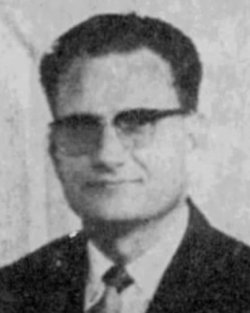
W.E. Best

Faith for the Storm

W.E. Best July, 1 1988 Audio
0 Comments
Best's Corner

Sermon Transcript

Auto-generated transcript • May contain errors

100%
to the 27th chapter of the Acts
of the Apostles. Tonight I want to give something
to show what is happening, and this is very timely. And so we'll
look at Paul's message to the men on board the ship as they
were seeking to go to Rome. We'll not read all the chapter.
It is a long chapter, if you'll notice, and we wouldn't have
time to read it all and give a verse-by-verse exposition of
it, but we will read a great portion of it that I want to
ask a personal question, and that question is, is my faith
strong enough to withstand the storm? Is my faith strong enough to
withstand the storm? I read a statement not long ago,
and it really attracted my attention. Statements like this really grabbed
me. What we take for granted, we
never take seriously. Think that through. What we take
for granted, we never take seriously. I'd like for us to begin reading
with the first verse. There are 44 verses. We will not read all the verses,
but we will read enough that we can get the basic thoughts
in mind to develop something that I want to share with you
this evening. And when it was determined that
we should sail into Italy, they delivered Paul and certain other
prisoners unto one named Julius, a centurion of Augustus' band,
centurion or commander of Augustus' band, and entered into a ship
of ad remedium, we launched, meaning to sail by the coast
of Asia, one Aristarchus, a Macedonian of Thessalonica, being with us. And the next day we touched at
Sidon. And Julius courteously entreated
Paul and gave him liberty to go unto his friends to refresh
himself. And when we had launched from
Thence, we sailed under Cyprus, because the winds were contrary. And when we had sailed over the
Sea of Cilicia and Pamphylia, we came to Myra, a city of Lycia,
and there the centurion found a ship of Alexandria, sailing
into Italy, and He put us therein. And when we had sailed slowly
many days, and scarce were come over against Nidus, the wind
was suffering us, or the wind did not permit us, to put it
in our vernacular. We sailed under Crete over against
Salmoni, and hardly passing it, came unto a place which is called
the Fair Havens, whereunto was the city of Lycia. Now when much time was spent,
and when sailing was now dangerous, because the fast was now already
past, Paul admonished them. Now we're getting into the heart
of our subject tonight. And he said unto them, Sirs,
I perceive that this voyage will be with hurt and much damage."
In other words, he was giving careful observation to the situation. Nevertheless, the centurion believed
the master and owner of the ship more than those things which
were spoken by Paul. Now, if I were choosing a text,
that would have to be it. Nevertheless, the centurion believed
the master and owner of the ship more than those things which
were spoken by Paul." Now you can see how popular God's man
is when he preaches the Word. He is not popular. He never has
been. Noah was not popular. People
didn't listen to him. And so God's man has never been
popular. and he's not popular today. Verse
12, And because the haven was not commodious or suitable to
winter in, the more part advised to depart thence also, if by
any means they might attain to Phanisee, and there to winter. which is an haven of Crete, and
lieth toward the southwest and northwest. And when the south
wind blew softly," watch this verse, this is another important
verse, "...supposing that they had obtained their purpose, loosing
thence they sailed close by Crete." Now we're going to see Paul,
who was destined for Rome, Now, beginning with verse 14, he's
going to be in a storm at sea. But not long after there arose
against it a tempestuous wind called Euryclidon. And when the
ship was caught and could not bear up into the wind, we let
her drive. And running under a certain island,
which he called Clodagh, we had much work to come by the boat,
which, when they had taken up, they used helps undergirding
the ship and fearing lest they should fall into the quicksand
strike sail, and so were driven. And we being exceedingly tossed
with a tempest, the next day they lightened the ship, and
the third day we cast out with our own hands the tackling or
the equipment of the ship. And when neither sun nor stars
in many days appeared, and no small tempest lay on us, all
hope that we should be saved was taken away." That's another
verse, don't forget. But after long abstinence, Paul
stood forth in the midst of them and said, Ye should have hearkened
unto me, and not have loosed from Crete. And you know about
how well that was accepted. And to have gained this harm
and loss. Now verse 22 is another important
verse. And now, I exhort you to be of
good cheer, for there shall be no loss of any man's life among
you but of the ship. For there stood by me this night
the angel of God, whose I am, and whom I serve, saying, Fear
not, Paul, thou must be brought before Caesar, and, lo, God hath
given thee all them that sail with thee. Wherefore, sirs, be
of good cheer, for I believe God. And it shall be even as it was
told me. How be it? We must be cast upon
a certain island. And when the fourteenth night
was come, as we were driven up and down in Adria about midnight,
the shipmen deemed that they drew near to some country. Drop
down to verse 30. And as the shipmen were about
to flee out of the ship, when they had let down the boat into
the sea under color, as though they would have cast anchors
out of the foreship, Paul said to the centurion and to the soldiers,
another tremendous statement, except or unless these abide
in the ship, you cannot be saved. Then the soldiers cut off the
ropes of the boat and let her fall off. And while the day was
coming on, Paul besought them all to take meat, saying, This
day is the fourteenth day that ye have tarried and continued
fasting, having taken nothing. Wherefore I pray you to take
some meat, or food, for this is for your health. For there
shall not an hair fall from the head of any of you." Quite a
promise, wasn't it? Look at verse 37. And we were
all in the ship, 203 score and 16 soldiers, 276 people. Now
drop down to verse 43. But the centurion, willing to save Paul. Well, we
need to read the verses between these, verses 37 and 43. 276 people aboard. And when they
had eaten enough, they lightened the ship, cast out the weed into
the sea. And when it was day, they knew
not the land. Verse 40, And when they had taken
up anchors, the anchors, they committed themselves unto the
sea, and loosed the rudder bands, and hoisted up the mainsail,
to the wind and made toward shore. And falling into a place where
two seas met, they ran the ship aground, and the fore part struck
fast and remained unmovable, but the hinder part was broken
with the violence of the waves. And the soldier's counsel was
to kill the prisoners." And Paul was a prisoner. Don't forget
that. "...Kept them from their purpose."
and commanded that they which could swim should cast themselves
first into the sea and get to land, and the rest some on boards
and some on broken pieces of the ship. And so it came to pass
that they escaped all safe to land, just as Paul had predicted." So how strong is our faith? That's
the question. Is our faith strong enough to
withstand the coming storm? Winds are already beginning to
blow at a pretty good pace. But they're going to get stronger.
I want to begin by saying, three times in the New Testament, the
Holy Spirit emphasizes that the just shall live by faith. The just shall live by faith.
We're familiar with these verses. Romans 1.17, Galatians 3.11,
and Hebrews 10.38, and these are quoted from the book of Habakkuk
2.4. But they're used in different contexts. Same verse taken from
the Old Testament, but used in three different books under three
different contexts. Now let's see the three different
contexts under which this statement, that just shall live by faith,
is found. First of all, Romans 117. In Romans 117, stress is on the
just. All the emphasis is on the just. The just shall live by faith. That's Romans. That's according
to the context of Romans. Thus teaching us that we are
to declare our righteousness through the manifestation of
the activity of our faith. Then when you go to Galatians,
Galatians is an entirely different book from Romans. It is not the
doctrinal book that Romans is. It's dealing with the flesh and
exposing the flesh. So in Galatians, the emphasis
shifts from shall live, reminding us, that having begun in the
spirit according to Galatians 3 in verse 3, we are not to be
made perfect in the flesh. So we are not to be perfected
in the flesh. Shall live is the emphasis. The just is the emphasis in Romans. Now shall live with emphasis
on living by faith. not depending on the flesh. Not
depending on the flesh. Then finally we come to Hebrews.
In Hebrews 10 and verse 38 we have another context, a different
context, where we have the just in the book of Romans, shall
live in the book of Galatians. Now then, in Hebrews we find
the principle of faith running all through the epistle, but
especially in the 11th chapter, because the 11th chapter is a
chapter that deals with the subject of the actions of faith, faith
in action. So, the just in Romans shall
live in Galatians, and then the principle of faith being made
manifest and running all through the book of Hebrews. Now, Paul
did not stop. with just preaching faith. He practiced it. And we see a
manifestation of the faith which he practiced right here in the
27th chapter of the Acts of the Apostles. Even though he was
a prisoner being taken to Rome to put in prison, he didn't get there the way that
a lot of men thought that he would arrive. And when he made the prediction
he did, and the captain of the ship and those who were in charge
did not like what he was saying, and then when the storm got so
bad and the shipwreck took place, they wanted all the prisoners
killed, but that didn't happen. So the providence of God is seen. So let's do a little reviewing.
By way of introduction now, some of the things we've already given
you, the high points and the reading of the greater portion
of this chapter, that there is more to this chapter than the
historical account of Paul's journey from Jerusalem to Rome.
And let's see this. After all, let us not forget
what Paul's position was. He had the care of all the assemblies
of Christ. He had a tremendous responsibility. He didn't belong to any one particular
assembly. He had the care of all of them.
So has there been a descent, a descent of the institutional
church, and I'm talking about the organization now, I'm not
talking about the body of Christ that he is preparing, but I'm
talking about the organizational, the local assembly. Has there
been a descent of the institutional church, and I'll use the word
church in connection with this statement, from Jerusalem to
Rome? There surely has been. Is it
not at Rome where the institutional church had its beginning? And
it could very well be at Rome where it will have its conclusion. I'm talking about prophecy now.
I said it could have its conclusion. I'm talking about the institutional.
So Paul is a prisoner along the road as well as at the conclusion
of the journey. So danger is always a test of
character, always a test of character. And I think we are about to see
more dangerous things than we have ever witnessed in our Christian
lives. So after the high state of the church in Ephesus, doctrinally
speaking, and the days of persecution in Smyrna, in one of the letters
to the seven in Asia in Revelation chapters 2 and 3, Rome appears
on the scene with its Judaizing rather than Christianizing influences. So the spirit of legality is
accompanied by bitter animosity against the gospel of God's sovereign
grace or the grace of the sovereign God. So taking a telescopic view
of this voyage, there is little fair weather. I don't see any
fair weather ahead. I see troublous times. And if
you've been reading and keeping up with the remarks made by the
religionists concerning what is taking place in Waco or near
Waco, you know what I'm talking about. I don't agree with them
any more than I agree with the man that they're trying to take. I don't know why they don't call
out the Army and the Navy and the Marine Corps. Man, it's certainly
taking a lot of people up there to take care of that situation.
That really makes a lot of sense, doesn't it? Really makes a lot
of sense. Making a big show. Got reporters
up there from all over the world. Sickening. Absolutely sickening. I'm voicing my comments. Now we come to the warning. We'll develop about three or
four major thoughts tonight from this 27th chapter of Acts. We
have the warning of God given by Paul which was rejected by
the people on board the ship. So Paul's warning is rejected. Paul foretold the future danger
in verses 9 and 10. I said he foretold the future
danger. So Paul did not stop preaching faith. He practiced it. We have a wonderful
demonstration of it in this chapter. The story is a study of contrasts. Here we see a man of faith in
the midst of men of the world. That's a contrast. a man of faith
in the midst of the men of the world. Paul could not speak as
a seaman. He was not a weatherman. Listen closely now. But he could
speak as a man of God. I'm not a weatherman. I'm not a politician. I can't
speak as a politician. I can't speak as a weatherman.
I can't predict what the weather is going to do a month from now,
a few days from now, or tomorrow for that matter. But I can speak
as a person who has spent a few years studying the Scriptures
and telling people what the Word of God has to say. So I can speak as a man of God.
So Paul warned them of the danger. He did not speak as a seaman.
He simply spoke as a man of God. He said, I perceive. And I perceive
means to obtain knowledge. So he had obtained knowledge. Now some of them doubtless said,
you're a pessimist. You see, when we say that things
are going to get worse before they get better, that's the language
of a pessimist. The thing that really amuses
me when they talk about people having millennial fever and that
people who interpret the Scriptures in that manner are out of their
mind. Well, the same people who are talking like that believe
we're already in the kingdom. They're having a terrible time,
aren't they? Now, which is worse? Think it through. Which is worse? Nowhere in the Scriptures can
you find the people as a whole receiving a true warning. Think that through. Not one place
in Holy Scripture, from the very beginning of the Bible to the
conclusion of the Scriptures, not one place will you ever find
where the majority of the people receive the warning that God
gave. Only a very very few. And when I say a very few, I
mean a very few. People would rather have you
preach a lie, if it is pleasing to the flesh, than to preach
the truth if it is contrary to their desires. And it's when people say peace
and safety, Sudden destruction shall come according to 1 Thessalonians
5 and verse 3. Now why do people reject God's
testimony? There are two major reasons that
I want to give tonight. Number one, the appeal of the
flesh led them to reject God's testimony. They said the haven
was not commodious to enter in. Individuals and nations alike
have rejected the testimony of God because of the sin known
as the lust of the flesh. The second reason is the appeal
of public opinions have led them not only to reject God's testimony,
But the appeal of public opinions led them to reject God's testimony.
When the south wind blew softly. Verse 12. When the south wind
blew softly. I think that it is perfectly
correct to say the pride of life. I think that the pride of life
far exceeds the lust of the flesh. Or the lust of the eyes. So why
are we as a nation so concerned about launching
a rocket to the moon or something else? It's pride, folks. I'm afraid that most of it is
out of pride. The man who walks by faith learns
to find the will of God before he takes each step. So this is quite different from
making our plans and then seeking God's blessings on them. But the centurion scorned the
wisdom that is from above, choosing instead the opinion of the people
aboard the boat. Paul was a lone voice. They didn't have any time for
what he had to say. Then we have the storm being the real test. So today we're witnessing the
greatest storm and it is not a hurricane, it is not a tornado,
but it is the winds of false doctrine. Ephesians chapter 4
and you need to study verses 13 through 16. So the winds of modernism, winds
of socialism, the winds of higher criticism, the winds of materialism,
the winds of sensualism, the winds of Phariseeism have left
us in the dark, madly driven upon storm-tossed
waves. It is interesting to find in
the scripture that there is a reason for all
this. And Ecclesiastes 7.29 says, Lo, this only have I found, that
God made man upright. Usually we stop there. The last
part of that verse says, But they have sought out many inventions. Many inventions. And we know
that many of the inventions are evil inventions. So it's the
humble man of nature whom God calls to proclaim the Word of
God to whom we are to listen if we expect to be blessed. God's men are not interested
in a lot of things that are taking place in our society because
they certainly do not enhance our spiritual lives. We're being told by some leading
educators that we're heading for the dark age. It will be
the dark age of human wisdom. It will not be a dark age if
it were the wisdom of God that people are learning, but they're
not learning it. They're going to and fro and ever learning
but never able to come to the knowledge of the truth, the scripture
tells us. So Paul describes this as a sign of the last days, ever
learning and never able to come to the knowledge of the truth.
Going to and fro in knowledge being increased, as we're told
in Daniel 12 verse 4. So the unprecedented educational
curriculum of schools today is becoming frightening, as we all
know. And then we have hope sustained,
those who really knew the Lord, and a hope that does not make
one ashamed. So it's refreshing that in the
very heart of a storm there is hope. Look at verse 22 again, or verse
21st. And when neither sun nor stars
in many days appeared, and no small tempest lay on us, all
hope that we should be saved was taken away. In verse 22,
And now I exhort you to be of good cheer, for there shall be
no loss of any man's life among you but of the ship. But of the
ship. So while the skeptic and destructive
critic are studying about the Word, trying to understand and
tear it down, and that's happening as never before in my lifetime
today, the reverent student of God's Word is looking into
the sure word of prophecy as to a light that is shining in
a dark world. So Paul warns of damaging storms
to come. He speaks of perilous times to
come. And men of great religious systems
are believed before the God called servants. So what about today
and the things that are taking place in our world? Is there
an application? So Paul's voyage began with a
soft breeze and ended with a tempest wind, one that caused shipwreck. So as Paul was permitted to choose
his companions, was he? No. He was not permitted to choose
his companions. And folks, we can't choose ours.
You can't even choose who you're going to work with, going to
live. Paul was on the ship. He didn't have any choice in
who was going to be on the ship with him. He had no choice in
the matter at all. So the vessel was filled with souls of a very
mixed character. And I want to give you some idea
of the mixed character of the people who were on board this
boat. And we can see what we are subjected to. Almost all the social forces
of any age were represented in this boat. I hadn't thought of that until
some time ago. I was looking at this passage.
First of all, labor. Let's look at labor. Was represented
in the sailors. Labor was represented in the
sailors. Secondly, war was represented
in the soldiers. Soldiers aboard, so war. represented
in the soldiers. Commerce in the merchants. Law
in the men who held the prisoners. There were those who held the
prisoners. Paul was one of them. So there you have law represented
in those who held the prisoners. Literature and science in Luke. And Christianity in Paul and
his fellow servants. Now, certain places will be forever
sacred as spots where contacts between God and men are made,
such places as Bethel, Sinai, Mount Carmel, Bethlehem, Jerusalem,
etc. This unknown spot where this
incident took place in the Adriatic Sea is among some of the other places
of importance from a spiritual point of view. A light shines
through the black cloud and a supernatural voice is heard. Now Paul heard. God spoke to him. God doesn't
speak to men in that manner today. This fellow made a promise that
he would surrender and come out, and then the Lord told him to
stay a little longer, wait until he got further word from Him.
See, I don't believe that any more than I believe the charismatics
and other people who claim that God speaks to us. We've dealt
with that many times. So the promise is as great as
the promiser. Verses 23 and 24. For there stood
by me this night the angel of God, whose I am and whom I serve. I don't have my Greek text with
me tonight, but I think there is a definite article before
the word God. So, whose I am, the angel of
the God, whom I am and whom I serve. saying, Fear not, Paul, thou
must be brought before Caesar, and, lo, God hath given thee
all them that sail with thee. Verse 25 should be cherished,
and I'm sure is cherished, by every true believer in Christ.
Sirs, be of good cheer, for I believe God. that it shall be even as it was
told me." Two things there. First of all, I believe God.
And if I believe God, I believe that it will be just as God said
it will be. Period. That settles it. So as we see Paul floating ashore
on a broken piece of ship, it might be seen that he shared
the tragedy of the others who did not have faith. Now, let's
make an application of that. Folks, we're in a world that's
witnessing a lot of things. And as Christians, we're going
to have to share some of the same things that they share. Even though they don't have faith,
we'll go through the same experiences. We'll be preserved. I said we'll
be preserved. That's the important thing. But
it doesn't mean just because we're Christians that we're going
to be kept from suffering many things along with those who will
also suffer that have no faith. So Paul did suffer. And we're
going to get into that in detail Sunday. And not just Sunday morning. It's going to take both services
Sunday to really understand, hopefully, as we have never understood
it before, what it means to be weak, and yet God's perfection
to be wrought out in us as weak individuals. Paul was a weak person. He wasn't
weak in the faith, but he was weak. He was weak in the flesh. And so we're going to see God's
purpose in it. And we'll be studying the entire
twelfth chapter in case you want to study it between now and Sunday. So as we see Paul suffering some
of the same and going through some of the same experiences
as those who did not have faith, yet he was preserved. So Paul
said, I believe God that he shall be even as it was told me. Apart
from divine revelation, things are certainly going to work out
as God promised. So Paul gave them what he had
been given by God, and that's the truth. They didn't hear him,
and they suffered, and Paul suffered along with them. Physically,
I'm talking about. Although the soldiers wanted
to kill the prisoners, Paul's life of faith had impressed the
centurion. So his life of faith impressed
the person in charge. And therefore this person, being
in charge, saw to it that they were not killed, and therefore
Paul's life was spared. But God had promised it, and
that's the reason. In this passage we see both man's
responsibility and God's sovereignty. Now let's look at this for a
moment. Where is this found? Verse 31, Paul said to the centurion
and to the soldiers, unless these abide in the ship, you cannot
be saved. You stay with the boat until. Don't you jump overboard. Now,
you stay with the boat. So here it is. That's enough
said, isn't it? So we have both God's sovereignty
and man's responsibility. That doesn't mean that God's
sovereignty is not capable of overruling whatever might come
up. But we do have a responsibility.
And our responsibility does not take from God's absolute sovereignty. So here's the harmony between
the two. And I'm talking about Christians. So unless these are
bowed in the ship, you cannot be saved. So Paul believed that
God had ordained a certain end, but not apart from means to secure
or bring about that conclusion. So all they had to rest on was
the word of God that they should get safely to shore. Safely to shore. But they were
saved with difficulty. Now what do you mean they were
saved with difficulty? They were saved through great trials. But
they were saved. Now in conclusion tonight, I
want you to turn with me to 1 Peter 4.18. 1 Peter chapter 4.18. Saved with
difficulty. It goes right along the same
line. that we're studying in the 20th chapter of Acts. I want us to begin reading with
verse 14. If ye be reproached for the name
of Christ, happy are you, or blessed are you. For the Spirit
of glory and of God resteth upon you. On their part He is evil
spoken of, but on your part He is glorified. Evil spoken of
actually refers to being blasphemed. But let none of you suffer as
a murderer or as a thief or as an evildoer or as a busybody
in other men's matters. Yet if any man suffer as a Christian,
let him not be ashamed, but let him glorify God on this behalf. So this suffering is a blessing. There is nothing in this of which
to be ashamed if we suffer for righteousness sake. I'm expanding
or interpreting. Now look at verse 17. For the
time has come that judgment must begin at the house of God. And
if the first begin at us, What shall the end be of them that
obey not the gospel of God? Verse 18, For if the righteous
scarcely be saved, that's not a good translation. I'll challenge
anybody on it, take the Greek text and check me out. That's
not a good translation at all. That sounds like just barely
get there by the skin of the teeth. So if the righteous scarcely
be saved, or if the righteous be saved with difficulty, what
kind of difficulty are we talking about? We just got through looking
at it in the life of Paul and all that he had to suffer. And
you and I are no better. And if we are as faithful to
the truth as Paul was, we're certainly going to suffer, not
as he did, but to a great extent. We'll suffer afflictions and
all kinds of things, as we'll see in the study of the 12th
chapter of 2 Corinthians, next Lord's Day. So if the righteous
be saved with difficulty, where shall the ungodly and the sinner
appear? Wherefore, let them that suffer
according to the will of God commit the keeping of their souls
to Him in well-doing as unto a faithful Creator. I think the 27th chapter of Acts
has a tremendous practical lesson for God's people, regardless
of the age in which we live.
W.E. Best
About W.E. Best
Wilbern Elias Best (1919-2007) was a preacher and writer of Gospel material. He wrote 25 books and pamphlets comprised of sermons he preached to his congregation. These books were distributed in English and Spanish around the world from 1970 to 2018 at no cost via the W.E. Best Book Missionary Trust.

Comments

0 / 2000 characters
Comments are moderated before appearing.

Be the first to comment!

Joshua

Joshua

Shall we play a game? Ask me about articles, sermons, or theology from our library. I can also help you navigate the site.