Bootstrap
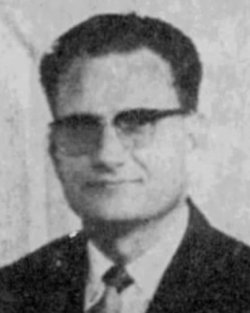
W.E. Best

The Temptation of Christ, Part 1

W.E. Best July, 1 1988 Audio
0 Comments
Bro. Best notes an error in doctrine by J. B. Moody, in his book, 'Sin, Service, & Salvation, concerning the 'peccability' of Christ.

Sermon Transcript

Auto-generated transcript • May contain errors

100%
The son of God during the days
of his flesh is one of the most important studies facing the
church today. Religionists, I didn't say Christians,
are saying, and I quote, the declaration that Jesus was
in all points tempted like as we are, does not really mean
much unless he was faced with an actual temptation. In his
elemental manhood, he at least had the possibility of yielding. It had a genuine appeal to him. I'm pausing for a moment because
I want that to sink in. Temptation had an appeal to Jesus
Christ. He could have chosen to do wrong.
Otherwise, no actual temptation took place. For a temptation
to be real, the forbidden must also be within the realm of possibility. If Jesus had a real human body,
a real human soul, and a real human spirit, it's inconceivable
to think of him as not having a choice between obedience and
disobedience to the law of God. By being born of a virgin in
whom the embryo was conceived by the Holy Spirit, he entered
this world with a sinful human nature. Get that blasphemous
statement, will you? In that respect, he was just
like Adam and Eve before they fell to the temptation of the
evil one. They fell. Jesus did not. Listen closely. But if he could
not have sinned, he could not have been the last Adam, Our
substitute and our representative, end of quote, taken from pages
three through eight of the little booklet, Could Jesus Sin, by
a heretic of the first order. I added the latter. Many of you know that I spent
nearly 10 years doing research work on this subject. What I
have in a little book entitled, The Personal Work of Jesus Christ,
is only a very small part of the material that I have in six
large notebooks at home. And I haven't stopped yet. I'm
doing additional research work at the present time and will
continue to do so as long as I'm alive and have the privilege
of studying and ministering God's Word. Let us consider the following
things in our present study of the temptation of Christ this
morning. Three points. Number one, God tries, but Satan
tempts. Do you know the difference? Pairazo has a two-fold meaning,
as we'll see in a moment. Point number one, God tries,
But Satan tempts. Notice the different words that
I used. Number two, Satan was the instrument of Christ's temptation,
but God ordained it. Did you know God ordained the
temptation of Christ? Finally, point number three,
the purpose of Christ's temptation was to prove that he was more
than a man. He was more than man. Therefore, to the God-man that
he is, temptability does not necessitate susceptibility. Now, we'll develop each point.
First of all, God tries But Satan tempts. We'll look at this statement
from two points of view. First of all, we want to see
that it is God who tries, he doesn't tempt. Satan tempts, God tries. So we
want to know what it means for God to try his people. Secondly,
we will see what it means for Satan to tempt. And what does
it mean, Satan tempts man? Turn with me, if you will, please,
to James, chapter 1. Let's read a few verses before
we begin our development of the first point. I want to read several verses.
I want to read, first of all, verse 2. Then I'd like to read
verse 12, and after the reading of these two verses, I want you
to see a change when we come to verse 13. And then we'll read
through verse 14. We'll begin with verse 1 and
read verses 1 and 2, then we'll drop down and read verses 12
through 14. James, a servant of God and of the Lord Jesus
Christ, to the twelve tribes which are scattered abroad, greeting.
My brethren, count it all joy when ye fall into divers temptations. That's your King James Version. Would you like me to read another
translation of this? counted all joy when ye encounter
various trials. That's a better translation.
Now drop down to verse 12. Blessed is the man that endureth
temptation. Notice the word temptation in
your King James Version. For when he is tried He shall
receive the crown of life which the Lord hath promised to them
that love him. Let me give you another translation. This is the New American Standard
Bible. Blessed is a man who perseveres under trial. For once he has
been approved, he will receive the crown of life which the Lord
has promised to those who love him. Now notice the change when we
come to verse 13. Let no man say when he is tempted, I'm tempted of God. For God cannot
be tempted with evil, neither tempteth he any man. James is talking about something
entirely different. You go from one meaning of paradozo,
in verses 2 and 12 to an entirely different meaning of pyrrhodzo
in verse 13. Look now at verse 14. But every
man is tempted when he is drawn away of his own lust and enticed. God tries man, but he does not tempt man. Listen to verse 13 again in the
New American Standard Bible. Let no one say when he is tempted,
I am being tempted by God. For God cannot be tempted by
evil, and he himself does not tempt anyone. That's a tremendous
translation of that verse. Let no one be so blasphemous
as to say that it was through the Lord that he sinned, or that
God caused him to sin. The Greek word for tempted here is a present passive participle,
a pyrazo, which means to test, to try, to subject, to trial,
and finally, to tempt. The word has a twofold meaning
and usage in scripture. That is seen within the context
of James chapter 1. I'm begging you, if you've never
made such a study, to do it now. Mark your Bible. Know the meaning
of these words. Trial is an instrument used by
God to develop Christian maturity. Hence the believer is to count
it all joy when he encounters various trials. Let me ask you a personal question.
Do you count it joy when you encounter all kinds of trials? I'm afraid not. That's true of
all of us. But we are to count it all joy
when we encounter various trials because each trial in the life
of the Christian is given to him by God for his own spiritual
development. And I'm going to prove it before
I get through this morning. Going to verse 12, the man who
perseveres under trial is a man who is blessed indeed. Do you persevere under trial?
Or are you one who is willing to give up and say, there's no
need? So the person who perseveres,
so James went on to say, blessed is a man who perseveres under
trial. Beloved, I know what it is to
persevere under trial, and I'll tell you why I persevered. I
persevered simply because God preserved me. I could not have
persevered if God had not preserved me. You couldn't either. Then James says, for once he
has been approved. He will receive the crown of
life, one of the crowns given to God's people. And we're not
discussing crowns this morning, which the Lord has promised to
those who love him. However, James referred to another
kind of trial in verse 13. Look at it. James had been speaking of outward
trials, outward trials, but now he spoke of inward allurement
or temptation. And notice I've used two words
to explain temptation. Allurement or temptation. God tries man. But it does not
try them with an evil intent. If you don't hear anything else
on this point, please get that. God tries men. He tries you. He tries me. He tries every Christian. But it is never with an evil
intent that he tries you and me. We're going to see the opposite
when it comes to Satan's temptation in a moment. God tried Abraham's faith. He tried Job's sincerity. He
tried Peter's dedication. And, beloved, if He tried the
faith of Abraham, and the sincerity of Job, and the dedication of
Peter, then, get ready, He's going to try your sincerity,
your faith, and your dedication. as he tries my faith, my sincerity,
and my dedication. If you're like I am, I'm so sick
and tired of mouth mercy. I get so sick and tired of words
without any meaning. I expect a person, when he says
he believes something, to act as though he really believes
it. And, beloved, if he does, he acts differently. He's molded by what he says he
believes, if it's genuine. So God is going to test us. He
does test us, and I'm grateful that He does test us. He's going
to see what kind of faith you have. He's going to test your
sincerity. He's going to test your dedication. God does not start man sinning
because Beloved, he is not the author of sin. God-given trials
are not to make us worse, but better. That's why we're tried,
to make us better. Now the very opposite of that
is true of Satan's temptation. Satan tempts not to make a person
better, but to make him worse. God tries us to make us better
and not worse. Let me give you just two or three
biblical examples of this. I know all of you are familiar
with the 6th chapter of the Gospel of John, but turn to it for a
moment. John chapter 6. You remember the multitude that
followed our Lord in John 6, records the feeding of the 5,000.
He represents himself as the bread of life that a man may
eat thereof and never die and so forth. Let's begin with verse
5. When Jesus then lifted up his
eyes and saw a great multitude coming to him, he saith unto
Philip, When shall we buy bread that these may eat? The sixth
verse is the one that I'm pointing to. And this he said to prove
him, for he himself knew what he would do. When God tests you,
He does not test you that God might find out about what kind
of faith you have, but that you might know what kind of faith
you have. When God tested Philip, He did
it to prove to Philip, not to Himself, because He knew what
Philip would do. When God tests your sincerity,
He doesn't do it, then He might know how sincere you are. He
knows! But He wants you to know how
sincere you are. And if your life doesn't measure
up to that which you profess to believe, then you know what's
wrong. You've learned. Let's look at another passage.
Turn to Hebrews chapter 11, verses 17 and 37. By faith, Abraham, when he was
tried, God tries his people to make them better. So when he was tried, offered
up Isaac. And he that had received the
promises offered up his only begotten son. Drop down to verse
37 of the same chapter of Hebrews and you'll find this illustration.
They were stoned. This is talking about the patriarchs
of the Old Testament. They were stoned. They were sawn
asunder. Were tempted. There it is. Were
tried. Would be better to say tried
in this instance. Were slain with a sword. They wandered about
in sheepskins and goatskins, being destitute, afflicted, tormented. They were tried. They were tested,
not that God might know about them, but that they might know
about themselves. Turn finally to Revelation 2
and verse 10. Revelation 2.10, and this is
really an interesting passage and one that we need to keep
in mind. It's the suffering church, the church at Smyrna. the persecuted
church, fear none of those things which thou shalt suffer. Behold,
the devil shall cast some of you into prison, that ye may
be," what? "...tried." There it is. "...and ye shall have tribulation
ten days. Be thou faithful unto death, and I will give thee a
crown of life." What are you saying, preacher? I'm saying
that God tries to make His people better. in order we might know ourselves.
And when we know ourselves, if we have grace, we're going to
improve in areas that need improvement. Let's look at the other side
of the coin. God tries to make us better. Satan tempts to make
us worse. We're still dealing with the
first point. Satan, the tempter, he is called in Matthew chapter
4, tempts man to make him worse. The one who tempted Christ is
called tempter in verse 3. Tempter. And the word for tempter
here is a nominative, singular, masculine, present, active, indicative,
participle of paradox. So we have a participle. It is
paradzone. You say, well now that isn't
necessary. Oh yes it is. First of all, it's a denominated
case. And it is a participle. So let's, let's translate it
like this, because it could be translated in this manner. It
could be translated, and approaching, that is, as Jesus Christ approached. Now we have a participle. Paradzone. We could say, and approaching
the tempting one. See, it's masculine, not neuter. It's masculine gender. The tempting
one are the one who tempts, said to Christ. So he's called tempter. Satan tempts for an evil purpose,
and only for an evil purpose. He is a liar. Everything he says
has an evil intent. Even when the devil says something
good, it is with an evil intent. That reminds me of politicians. A politician will go around and
he'll say a lot of good things and pat people on the back and
slap them on the back, but it's usually with an intent that he
becomes elected. It's even like a lot of preachers.
A lot of pussyfoot and fence-straddling preachers. They'll slap people
on the back. They will not take the stand
they ought to take. And they talk about being gracious and
tactful and all of these things. There's a time to be tactful.
But, beloved, there's a time when you're to call something
by its rightful name. So the devil, even when he says
something good, even when he does something good, it is always
with an evil intent. Never the reverse. And when God
tries, it's always with a good intent, not with an evil intent. The devil solicits to sin. He solicits to sin. The two elements
in any solicitation to evil are, number one, outward attack, and
secondly, inward attraction to the outward attack. Now please
get that. I'll illustrate it. And it's
necessary for you to understand what I'm talking about now in
order to appreciate what I'm going to say in a few minutes
when I get to the person of Christ. I'm laying the groundwork. I said there are two elements
in any solicitation, in any solicitation to evil, and they are, first
of all, an outward attack, and secondly, an inward attraction
to the outward attack. And I'm going to illustrate that
very vividly in a moment. So hold your seat. In the temptation
of man, the outward and inward work together. I said in the
temptation of man. But God cannot be tempted. Jesus
Christ could not be tempted. Therefore these two did not work
together in him. And I defy anybody, I defy anybody,
anywhere to refute that statement. by scripture or just logic based
upon scripture. Beloved, I'm ready for bear,
I want you to know. This is a subject, this is a subject worthy of our
deepest consideration. I said in the temptation of man,
the outward and the inward work together. Lure and lust, lure
and lust, are in collaboration. You want me to prove that to
you? Look at James 1 and verse 14. Here it is. 1 verse 14. But every man is tempted. In other words, he's attracted
to the solicitation by Satan when he is drawn away of his
own lust and enticed. There it is. Attraction and lust certainly work together. So lure and lust are in collaboration. James explained that when he
said every man is tempted when he's drawn away of his own lust
and enticed. Now, I want you to listen very
carefully. But I'm getting into a little
different avenue than I've developed it before. When man turns from God through
temptation, the fault is not in the temptation itself, but in the man who turns. I will repeat that because I'm
going to press that upon you this morning. I said, when man turns from God
through temptation, that's solicitation to evil, the fault is not in
the temptation itself, but in the man who turns. I'll give
you some biblical examples of this in a moment. Peter spoke,
first of all, in 2 Peter 1.4, of the corruption that is in
the world through lust. the corruption of the world through
lust. Notice this. If through lust
it becomes corruptible. The world is only the object,
object, the cause is lust. Now I'm getting right down to
where I think we all need to really do some investigating.
We're going to distinguish between things that differ now. I said
the world is only the object The cause is lost in the human
heart. Let me prove that. Turn now to
1 John chapter 2. This is a very familiar passage
to all of you, beginning with verse 15. You'll notice that
John gave neither a list of sins... By the way, this ties in with
our message last Sunday. See how it all ties together?
God doesn't have to give us a catalog of don'ts. You know why? You remember what
I said last Sunday? It is because divine principles
have been translated into subjective desires. Now listen to this. John gave neither a list of sins
nor named the objects in 1 John 2, 15 through 17. But he did
name the lusts. Here they are. Love not the world,
neither the things that are in the world. If any man love the
world, the love of the Father is not in him. Now, for all that
is in the world, he doesn't name a whole catalog of things. He
says the lust of the flesh. Secondly, the lust of the eyes. And the pride of life is not
of the Father, but is of the world, and the world passeth
away, and the lust thereof, but he that doeth the will of God
abideth forever." Now I want to explain that. In the providence
of God, a wedge of gold lay in Achan's way. I'm going to build on this, so
follow me. And there's a practical application in this for us. I
said, in the providence of God, a wedge of gold lay in Achan's
way. Furthermore, a bolt in Jonah's
path, and a naked Bathsheba before the eyes of David. Do
you know what I'm going to say now? I wonder if you're ahead
of me. I wonder if you're able to put things together and see
through this now, right now. Do you see where I'm going? I
hope you do. If you do, that's indicative
of the fact that you have been studying, and you are studying,
and you're doing some meditating, and you can see great biblical principles. Let's
run back through it. I said, in the providence of
God, a wedge of gold lay in Achan's way, a bolt in Jonah's path and
a naked woman before the eyes of David. But the sin committed by each man
cannot be attributed to these providential circumstances. Will you buy that? There's nothing wrong with that
wedge of gold. It was the lust in Akin's heart that left it
at that. There was nothing wrong with
a boat being made accessible to Jonah,
but it was his desire to be disobedient to God. Now, follow me. It was not naked
Bathsheba who was taking a bath on the rooftop. I'll deal with
the other side of that in just a moment. But it was the lustful
eyes of David that was attracted by what he saw. There was no sin either in the
wedge of gold or the boat or in naked Bathsheba. The sin originated
in the lustful heart of each one of the three. One who wanted
to go, the other who wanted to disobey God and run from being
obedient to God. run away from responsibility,
and the other, his lustful eyes attracted by a naked woman. He
said, well, now wait a minute, preacher. Now, wasn't she sinning
by being on the rooftop? That's another subject. After
all, I don't know what David did in order to see her. And
I'll admit that she probably was out of her place, taking
a bath. She might have been trying to
attract his attention, I don't know. But, you know, I could never
think about this in the study of this particular point. In
that day and time, there were very few women who flaunted their
bodies, their naked bodies. But today, all you do is turn
on the television, you see it. You go to the shopping center,
you see it. You walk down the street, you see it. Now, a woman is to dress modestly. She's not to flaunt herself.
But that is another subject that I'm not dealing with. I want
you to see the point. We have to say that the glitter
of the gold, the opportunity to run away from responsibility,
and attraction of a naked woman are all made corrupt by the lust
of a depraved heart. And I haven't gotten to some
other practical things I'll be giving you in a moment. The two other names by which
the tempter is called in the temptation of Jesus Christ are
Satan and also the devil. Now I wanted to develop those,
but I don't have time to do it this morning and complete what
I want to give. So we'll do that in a subsequent
lesson. I will say that, first of all, the word Satan, or the
title Satan, comes from Satanos, which means adversary, opponent,
or enemy. And then the word tempter is
also called the devil, and the name comes from Diabolos, which
means an accuser or slanderer, and that's Satan. That's why
everything he does, has an evil intent. You can't expect anything
else from him. So from the name devil, we may
observe that Satan's work and employment is to tempt, tempt
man with an evil intent. See the difference between tempting
and trying? God tries but not with an evil intent. He not only
gives himself wholly to his work, I'm talking about Satan the devil,
but delights in what he's doing. He loves every minute of it.
He loves to deceive. He has been a liar from the beginning
of his existence as Satan. Thus an evil tree can bring forth
nothing but evil fruit even though it is accompanied with some kind
of pleasure at times. Now, following Christ's baptism,
we get to the second point. It is true that the devil tempted
our Lord, but he was ordained to tempt Christ. Following Christ's
baptism, he was led by the Spirit, the record says, into the wilderness. Led. The word for led is an arius
passive indicative of anado. And I want to give you Matthew's
account, Mark's account, Luke's account, because each one used
a different word, different Greek words. We'll put them all together.
That'll just really increase its meaning. So Matthew uses
an arias passive indicative of anago, and anago means, I'm talking
about the meaning of the word led, which means to lead up from
a lower to a higher place. Now in this instance, of course,
it was only physical elevation. Mark used a different word than
Matthew. He used the word ekbalo, which
means to send away. And we'll not go into ekbalo
now. And then Luke uses even a different word, a different
word. We have a passive imperfect of
ago, which means to lead or to bring. Now I want to ask three questions.
Listen. Does this mean that the Son of God was not the master
of his own movements? Secondly, were his baptism and
anointing by the Spirit essential for his preparation for such
a test? I'm preparing for something that
I'm going to give subsequently to this. And thirdly, was he
sent into the wilderness for the development of his character These are things that have been
suggested by men. I abhor them. I abhor them. Let me now quote to you from
the great trench. Archbishop Trench. I quote. The history of our Lord's temptation
ought never to be contemplated apart from his baptism. The Church
of old did not shrink from calling our Lord's baptism his second
nativity. Here you see the rags of Rome.
Without any further statement, I said, you see the rags of Rome.
In that baptism he received his heavenly armor, and now he goes
to prove it, and try of what tipper it is. Having been baptized
with water and the Holy Ghost, he shall now be baptized with
the power of temptation. Even as there is another baptism,
the baptism of blood for him. for the gifts of God are not
for the captain of our salvation any more than for his followers,
the pledge of exemption from a conflict, but rather powers
with which he is furnished and, as it were, inaugurated thereunto." It must be stated at this point
that Christ's baptism was for John's benefit, not for his own. Beloved, please remember that. I said Christ's baptism was for
John's benefit, not for his own. I don't have time to develop
John chapter 1 beginning with verse 32-33 this morning, but
you can read it for yourself. Nothing was added to the Son of God at
his baptism. I said nothing was added to the
Son of God at his baptism. Furthermore, the open heavens
and the coming of the Holy Spirit like a dove upon the Son of God
dispel all doubts that John had concerning the Messiah. Read
the record in John 1, 32-33. Now there's something interesting
here I must develop briefly. It was a blessing to me in the
study of the original text here. There's a difference between
what Matthew says and Mark says concerning Christ. I'll give
you the difference. We know that the Holy Spirit
came to reveal the Messiah to the nation of Israel. And his
coming was in connection with the Lord's baptism. Mark said
I'm going out of Mark chapter 1 verse 12, he came, now I'm
going to give you three Greek words, et tu houdahs. To translate that it would be
this, out from within the water. In other words, Mark is stressing
something that Matthew did not stress. So Mark said he came,
et tu houdahs. out from within the water. Now, get the picture. Can you
see why I'm developing this? It has been pointed out that
Mark was speaking of something different from Matthew, and I'm
in agreement. Mark spoke of Christ coming out from within the water,
whereas Matthew spoke of Him going away from the water. Now, when you go back to Matthew's
account, here's what you have. A path to Thudales. away from
the water, away from the water. That's why
it's necessary to know the meaning of some of these words. Now,
here's the application. We know that the Lord Jesus Christ
came into the world to do the will of his Father. I want you to know that there
is no comfort whatsoever in these two statements, one by Matthew
and the other by Mark, for a pedo-Baptist. I thought I'd just throw that
in. Mark saw him coming out from within the water, and Matthew
saw him as he was going away from the water after having been
baptized. Two different things entirely. Two different things. The Lord
Jesus was in subjection to the Father's will. Satan was the
instrument of his testing, but God ordained it. It was not to
manifest Christ's ability, but his inability to see. Can I establish that? And anyone
who says anything to the contrary is a heretic. And I can't be
dogmatic enough about that. Furthermore, it was not revealed
that he was only a mere man, but it was revealed that he was
more than man. He was the God-man. You hear these fellas talk today?
Jesus Christ is no more than a man. They got a human religion,
a human Savior, and so it's all out of the pit
of hell itself. It's not from Holy Scripture. Jesus Christ was more than a
mere man. If He was not more than a mere
man, you're without a Savior this morning. There's no hope
for you. He was the God-man. Listen to this. The body Jesus
Christ assumed in the incarnation was subject, like ours, like
our own, to the infirmities which were free of the nature of sin,
brought into the world by the Father. Would you buy that? Let me run that by again. The
body Jesus Christ assumed in the Virgin of America, the Virgin
Mary, was subject like our own to the infirmities which were
brought into being by the fall. Listen to J.B. Moody in his little
book entitled Salvation, Sin, Salvation, and Service. Give
this quote from it, pages 9 and 10. Quote, The child of Bethlehem
was begotten of the Holy Spirit. But being born of a regenerated
woman with the remains of depravity still in the flesh, there may
have been a taint of the same kind of depravity imparted to
her child as blasphemy, which made it possible for him to sin
and to suffer for sin. He can sympathize with us in
this depravity which he could have gotten only by heredity." Whether you can see in my research
work, when I come across and I've read so much of this rotten
mess, I want you to know I become angry when I read it. And if
you can read and hear such rot without becoming angry, I'll
tell you something, you need grace this morning. You need
grace. Now you want to listen, I have
a few things to give you that are very important. The human
nature Christ assumed was not the nature, as some have fancied,
of Adam before the fall. How could he have obtained that
nature from the Virgin Mary, since Mary did not possess it? Mary did not possess a nature
like Adam before the fall. She possessed a fallen nature. You can think that one through
for a moment. Furthermore, if he had, for argument's sake,
how could he have been tempted in all points, or in all things,
as we are, yet without sin? Christ assumed a nature, not
a person, in the womb of the Virgin. Hence, a nature in itself
is not sinful. This is important. A nature in
itself is not sinful until it is embodied with a person or
invested with personality. That brings us to a very interesting
point. To his person, Christ assumed a human nature. Where
did he assume it? He assumed it in the womb of
the Virgin. Therefore, the flesh and the conjunction of the flesh
with God began at the same point in time, after the nature in
itself is not sinful until it is embodied with a person or
invested with personality. To his person, Jesus Christ assumed
a human nature. Therefore, the flesh and the
conjunction of the flesh with God began at the same point in
time in the womb of the Virgin. So there never was a depraved
sinful nature associated with Jesus Christ. He assumed it and
by his assumption. Because, you see, nature, apart
from person or personality, is not sinful. Hence, that which made our nature
in Christ uncorrupt, that which made our nature in Christ uncorrupt,
was not only the fact that it was without an earthly father,
which it was, but also by the fact that it was united to the
divine person, Jesus Christ, the second person of the Godhead.
Therefore Jesus Christ came into the world, Romans 8 verse 3,
in the likeness of sinful flesh, the likeness of sinful flesh,
not sinful flesh, but the likeness of sinful flesh, and for sin
condemned, sin in the flesh. Now in conclusion, men manifest
not only their ignorance of the person of Jesus Christ by saying
that he could have sinned, but they equally reveal their
spiritual ignorance by saying that if he could not sin, he
could not have been our substitute and our representative. The fact
is, beloved, listen, The fact is, if Jesus Christ could have
sinned, he could not have been my representative. He could not
have been my substitute, because he would have needed a substitute,
and he would have needed a representative. That's vital, beloved. That's
vital. If that's not the truth, I'll
tell you something this morning, if that's not the truth of Scripture,
you prove it to me that it is the truth and the Word of God,
and I'll walk out of this pulpit, I'll never open my mouth again. Christ's exposure to temptation
revealed the fact that there was no sinful avenues, no sinful
avenues, listen to this, for temptations and the fired darts of the tempter
could not penetrate the holy armor of the Son of God. Will you turn to Luke 1.35 for
a moment? Let me give you the Greek on
something and I'll try to explain it for you. Remember the statement, that
holy or the holy thing in Luke 1.35? The assumed holy thing
begotten. And I'm trying to translate it
just as it is in the original. Holy thing begotten. So I said
the assumed holy thing begotten revealed the fact that with Christ's
exposure to temptation, there was no spot of sin to be found. Now let's look at the statement,
that holy thing. We have in the Greek these words. Ta gnomonon hagion. Now the article ta is neuter
and agrees with gnomonon, a participle, present passive participle of
gnao. And gnao is the verb which means
to bear, to be fathered up, to give birth to, or to conceive.
Now it is neuter, and there's a lot of argument about this,
why is it neuter? Why is it neuter? I've read the
works of many men on this and the arguments that have given
back and forth as to why it's neuter. It is neuter because
it refers to the human nature which is a thing apart from the
person assuming it. Only thing it can mean. Only thing it can mean. If Jesus Christ could have sinned, sin would have been living in
the region of his desires. Would you buy that? I said if Jesus Christ could
have sinned, sin would have been living in the region of his desires. Listen now. But like death losing
its sting, this is my analogy, but like death losing its sting
as it lighted upon Jesus Christ, temptation was thwarted when
it made its attack upon the Son of God. When a mere man is subjected
to temptation, and that includes you and me, he never leaves without
a scratch. Now, beloved, I will be honest
with you this morning. If you want to be super religious, you
can be that, but I'm not going to be super religious with you.
I'm a man. I have the grace of God, but
I want you to know the flesh is still the same old flesh that
I had before the grace of God came into my heart and life.
And I'm thankful for the grace within that enables me to overcome
the temptations without. Now listen to my application
now. Every time a man is tempted, he never comes from a temptation
without a mark being left on him. I don't care if it's a man
or a woman. That means, beloved, I'll make it where we can all
understand it. If I'm driving down the street, and I see a
woman almost naked, I look, I've got to turn my head, because
my thoughts go in that direction. And don't tell me they don't
with you. Or you women. You drive by, you
see a beautiful house, and you see a beautiful car, you see
something you desire to have. And you don't have it. And so
your eyes are attracted. You cannot come away from temptation
without being marked, without receiving some scratches. That's
true of every human being. And don't you tell me anything
to the contrary, because I won't believe it. It's a lie. Every time I'm tempted, I come
away scratched. But, beloved, I want you to know,
and thank God for this, when the devil attacked Jesus Christ,
he came away unscathed. Do you know why? Because there
was no evil desire within him. There was nothing in him that
could be attractive, that made that outside of him attractive
to him. He was perfect. He was perfect. So every time man is subjected
to temptation, he never leaves without a scratch. Never leaves without a scratch.
And that'll do something to all these pious, super pious, religious,
so-called holy people. We're all tempted. We're all
tempted, I said by Satan. Tempted every day. We have to
fight it. But every day we receive scourges,
and that's why at the end of the day, and even before the
end of the day, we have to confess our sins. And he's faithful and
just to forgive us of our sins and cleanse us from all unrighteousness.
But, beloved, I can't compare myself with the Son of God. When
Satan attacked the Lord Jesus Christ, when he was subjected
to the tempted, no mark was left on His holy person, and don't
tell me there was. But I am grateful that when I am
tempted, the grace of God enables me to come out. I come out with
scratches, but I'm able to overcome. And I remember what Joseph said
when Potiphar's wife, you know, tried to get him to go to bed
with her. How can I do this thing? Sure he saw her, and sure I know
things came to his mind, but yet...
W.E. Best
About W.E. Best
Wilbern Elias Best (1919-2007) was a preacher and writer of Gospel material. He wrote 25 books and pamphlets comprised of sermons he preached to his congregation. These books were distributed in English and Spanish around the world from 1970 to 2018 at no cost via the W.E. Best Book Missionary Trust.

Comments

0 / 2000 characters
Comments are moderated before appearing.

Be the first to comment!

Joshua

Joshua

Shall we play a game? Ask me about articles, sermons, or theology from our library. I can also help you navigate the site.