Bootstrap
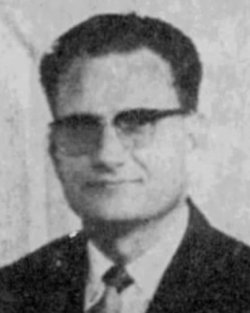
W.E. Best

Free Offer of the Gospel, Part 2

W.E. Best July, 1 1988 Audio
0 Comments
Best's Corner

Sermon Transcript

Auto-generated transcript • May contain errors

100%
the first and second chapters
of 1 Thessalonians. We're continuing our study tonight,
where we left off this morning. I have 20 arguments that I want
to give tonight against the, quote, free offer of the gospel
theory. I'm not going to give them to
you by just numbering them, that's too boresome. I'll just simply
go through the 20 and hope that you will be able to determine
when I'm going from one argument to another. Before we begin that study, I
want us to read together from the first chapter of 1 Corinthians. We have read from this chapter
before, but I want to read from it again in connection with our
present studies. And then when we get to the 18th
verse through about the 24th, I want us to look very carefully
at the wording. I want to give a personal testimony
after having read this section of Scripture, and then we'll
take up where we left off this morning. Paul said to the Corinthians,
Now I beseech you, brethren, by the name of our Lord Jesus
Christ, that ye all speak the same thing and that there be
no divisions among you, but that ye be perfectly joined together
in the same mind and in the same judgment. That can come about
only by each Christian in the Church searching diligently the
Word of God, listening to what is given by the pastor from the
pulpit, reading, being exposed to various and sundry ideas,
and then come up, of course, with what saith the Lord, and
what appears to be, without any contradiction, the clear teaching
of Scripture. That's the desire of every pastor. That's the desire we know of
the Lord for His Church. Now verse 11. For it hath been
declared unto me of you, my brethren, by them which are of the house
of Chloe, that there are contentions among you. I'm not reading this
with the idea that there are contentions among us. I've been
preaching long enough and I believe that we have the greatest overall
fellowship in this church of any that I've ever been associated
with in all of my ministry. But yet we need to be forewarned,
and that's to be forearmed. Verse 12, Now this I say, that
every one of you sayeth, I am of Paul, and I am of Apollos,
and I am of Cephas, and I am of Christ. Is Christ divided? Was Paul crucified for you? Or
were you baptized in the name of Paul? I thank God that I baptized
none of you but Crispus and Gaius, lest any should say that I had
baptized in mine own name. And I baptized also the household
of Stephanus. Besides, I know not whether I
baptized any other. For Christ sent me not to baptize,
but to preach the gospel." Isn't it strange, beloved, when you
see the truth of something, how when you read the Scriptures,
it just jumps out at you? I can remember many years ago
when I got into the subject of God's absolute sovereignty, and
I went all the way through the New Testament and made a chain
of references, every reference that indicated the absolute sovereignty
of God. And I can remember when I studied
the subject of divine election, I did the same again. Went all
the way through with that one particular thought in mind and
made a chain of references. And that has been true in my
study of the scriptures in reference to many different subjects. And
it would be so amazing as I would read and have that particular
subject on my mind, how it seemed like I wouldn't read very far
until it would just leap out at me. You know what I'm talking
about. Well, that's what I have found
in the last few weeks in the study of this subject that we're
now making some investigation about. Preaching the gospel. You may read all the Acts of
the Apostles and all the sermons, and Tom Baker told me he had
been reading the Acts and all the sermons, and Tom, you haven't
found anything to the contrary in all those sermons, have you?
I've already done that, and I was glad to hear him say he was doing
it, and you ought to do the same. You see, you're not to believe
what I say implicitly, blindly. But when you do it for yourself,
then you're convinced, you've investigated it. And that's the
responsibility of every Christian. I came to the conclusion a long
time ago, I'm not going to believe implicitly anything anybody says,
I'm going to investigate. And that should be the philosophy
of every Christian. But here he is preaching the
gospel. You can go through the Acts of the Apostles, you can
read every sermon recorded in the Acts of the Apostles, and
you will not find any reference whatsoever about offering Christ
to anybody. It is not the preacher's prerogative
to offer Christ. He can't do that. I said he can't
do that. He's to preach Christ. Now let's go a little further.
Let's look at verse 17 again. For Christ sent me not to baptize,
but to preach the gospel. Not with wisdom of words. That
doesn't mean now that we are not to use scriptural terms.
And many times when we use scriptural terms to a young Christian or
to one who has not had any training at all in the scriptures, even
though he's been a Christian for some length of time, it may
seem that the preacher's using big words when he's only using
biblical words like propitiation. substitution, for the nation. But we are to use biblical terms,
not with wisdom of words or speech, lest the cross of Christ should
be made of none effect. There are some people who think
that unless you just, every time you get up, you quote John 3.16,
you're not making it plain. You know what I'm talking about.
Now let's observe closely, beginning with verse 18. For the preaching
of the cross, not the offering of the cross, is to them that
perish foolishness. The preaching of the cross is
to them that perish foolishness. But unto us which are saved or
who are saved, it is the power of God. But unto us who are saved,
it is the power of God. Now, I didn't understand this,
and I want to give a personal testimony here. I didn't understand
that as I do now. I know that something took place
in my heart in life. It took place in the heart of
my wife. And it just seemed that the Lord
did something for both of us about the same time and about
nine months after we were married. And I'm grateful for that. But
you see, in the providence of God, He was ruling, He had His
hand on everything. He knew what He was going to
call me to do. And so in God's time, He revealed the Son to
me, and He revealed the Son to my wife, and so we were together
in this. Because He knew He was going
to use me, you see, from the foundation of the world, before
the foundation of the world, He knew what He was going to
do with me. But notice the expression here that Paul uses, unto us
who are saved, it is the power of God. Unto us who are saved,
this gospel, this preaching of the cross, which is foolishness
to those that perish, to us who are saved is the power of God. And I had been saved. There was
an aspect of my salvation that preceded my convergent experience.
Therefore, that gospel message one night came home to my heart
that had been, what, awakened, made alive, a new heart, if you
please, by the grace of the sovereign God. And there was response on
my part. In other words, I heard the call
through the gospel. Now notice verse 19, for it is
written, I will destroy the wisdom of the wise. I want you to know
all the wisdom of this world shall eventually be destroyed.
And the only wisdom that will remain throughout eternity is
the wisdom of God. And will bring to nothing the
understanding of the prudent. Where is the wise? Where is the
scribe? Where is the disputer of this
world? Hath not God made foolish the wisdom of this world? And
I'll tell you, God has, God is, and God will continue to make
foolish the wisdom of this world. Verse 21, For after that in the
wisdom of God the world by wisdom knew not God. The world by its
wisdom does not know God, can never know God. That's what he
means. It pleased God by the foolishness
of preaching. No offer. No offer. Just by the foolishness of preaching
to save them that believe. Now you see there are two aspects
of salvation presented to us in this section of scripture
which we've already read. There's an aspect of salvation that precedes
being saved by believing the gospel. So there's one aspect
of salvation that is related to regeneration. And the second
aspect of salvation is what? A conversion experience. Verse 22, For the Jews require
a sign, and the Greeks seek after wisdom. But we preach Christ
crucified, not offering Christ, preaching Christ. Unto the Jews
a stumbling block, but unto the Greeks foolishness. But unto
them which are called, both Jews and Greeks, Christ the power
of God, and the wisdom of God. Because the wisdom of God is
wiser than men, and the weakness of God is stronger than men,
for ye see your calling, brethren, how that not many wise men after
the flesh, not many mighty, not many noble are called. But God
hath chosen the foolish things of the world to confound the
wise. And God hath chosen the weak
things of the world to confound the things which are mighty.
And base things of the world, and things which are despised,
hath God chosen ye, and things which are not, to bring to naught
things that are, that no flesh should glory in his presence. But of him are ye in Christ Jesus. I can remember so well When I
was made to realize, as a result of having heard the gospel, that
Jesus Christ was my Savior, and I was in Christ, and Christ was
in me, and Jesus Christ had been made by God the Father unto me. Notice these things that are
mentioned. Wisdom. Wisdom. Beloved I would not exchange
the wisdom of God if I could for all the wisdom of the world All the Einstein's and so forth
and Righteousness that righteousness brought out the Christ on the
cross and sanctification and redemption that according as
it is written he that glorieth and Let him glory in the Lord. I would like for us to keep this
section of scripture in mind tonight as I'm discussing the
subject with you. Now before I begin, I want you
to know that I will be classified, I'm already classified, I have
been classified by a great number of preachers, even grace preachers,
over a number of years as being a hyper-Calvinist. I used to
resent it, but I don't anymore. After having thought it through,
I do not resent it anymore. And I want to show you something.
There is not an Arminian who is not a hyper-Calvinist. Listen
carefully. I want to illustrate something.
Every Arminian is a hyper-Calvinist. He goes beyond Calvin, doesn't
he? He goes beyond Calvin. Can you
argue with that? So I want to give you some fodder
now to use. And I had to think a long time.
It took a lot of studying for me to come to this realization.
So I do not mind at all for anyone to accuse me of being a hyper-Calvinist. I am a hyper-Calvinist. I have
knowledge I'm a hyper-Calvinist. Now I want to illustrate it.
I do not believe in covenant theology. So that's going beyond
Calvin. Listen carefully. I do not believe
in pedo-baptism. Now that may be a new word for
some of you, so I'll explain it. What do you mean by pedo-baptism? I do not believe in infant baptism.
So therefore I'm a hyper-Calvinist. So each and every one of us is
a hyper-Calvinist in some sense. You see Calvin didn't have all
the truth. So when someone accuses you of being a hyper-Calvinist,
say, I surely am, and then you ask that individual a few questions,
ask him if he believes in infant baptism. If he says no, well,
you too are a hyper-Calvinist. You've gone beyond Calvin. So don't let that disturb you. I'll tell you what the problem
is with too many of us, and I've been guilty of this. I can remember
back 10, 15 years ago, I would resent it for someone to accuse
me of being a hard-shell Baptist. Oh, I resented it. And I've had,
when I was pastoring Southern Baptist churches, I can remember
very well when some person would come into the church and he'd
hear some message that I would preach on divine election and
so forth. That's hard-shellism. And so I've had a number of arguments
with individuals. And I'd turn right around and
I would ask the question, what is hardshellism? And then you
would hear them spit and sputter trying to explain what hardshellism
is. And I used to do that. So for a long time I was resentful
when anyone would accuse me of being a hardshell. Beloved, you
cannot keep people who are not willing to study and apply themselves,
who are prejudiced, and as I stated this morning, will not investigate
to get the facts. You have no control over accusations
that people bring against you. He had no control over that.
But I want to say tonight, and I've come to this conclusion,
it doesn't bother me at all. I am a hyper-Calvinist. So don't let that bother you.
I thought I'd just throw that out for you to think about. Now,
for our study tonight. And we'll present the subject
in the form of a question to begin with. I've already stated
that I have 20 arguments. I'll not name them as such. I'll
just go through and give to you the high points of my findings
thus far, but I'm not through yet. I assure you of that. The question, is the gospel to
be offered to every person or is it to be preached to every
creature? Very simple question. It has
a biblical answer. And the biblical answer is found
in Mark 16, verse 15, when Christ gave the commission to the church. Preach the gospel to every creature. Now, the noun for creature, the
Greek noun for creature, is katisis. Katisis. If you want me to spell
it, it's not real easy to pronounce. It's K-T-I-S-I-S. And the accent
is on like K-T-I-S, K-T-I-S-S. What does the word mean? Now
that's the word used for creature in Mark 16, verse 15. It means
human race. The word means a created being,
and of course in this sense, rational creatures. Rational
creatures, human beings. The gospel is not to be preached
to animals. So rational creatures. Now we
have the verb form, which is K-T-I-S-D-O. Ktidzo. And it means to create. Ktidzo. To create. It is used in Colossians 1 16.
Ephesians 2.20, and again it is used in Ephesians 2 and verse
15. It means not only to create,
in Colossians 1.16 and Ephesians 2.20, we're new creatures in
Christ Jesus, and he's created us for the purpose of good works,
but it's also used in the sense of the individual existence that
is to frame in Ephesians 2 and verse 15. Now I want us to look
at some words, Greek words, that are translated offer, offereth,
or offering in the Scriptures. And I've gone through the entire
New Testament, and I have not found one single reference, even
in the original language, that would indicate the offer of the
gospel or the offer of Jesus Christ by the preacher or by
the Christian. All right, let's take a few words
before I give you the 20 arguments. The word most commonly used in
the New Testament is the Greek verb prosphero. P-R-O-S-P-H-E-R-O. Prosphero. Now this word is used
48 times in the New Testament. And it is translated in the following
ways in your King James Version. Same word, but translated in
the following ways. Presented, brought, bring, offer,
offering, offered, doeth, dealeth, and so forth. Now to give you
a few examples of this word. Prospero. You say, well, is it
necessary to do this? It is if one wants the truth.
And it takes hard work, you see, to arrive at what the truth of
the Bible teaches. Now let me give you a few examples of how
this word, this Greek verb is used. Prospero. It means to bring
to our bear. Here's the reference, Matthew
4, 24. I can't give you all 48 references. To our before magistrates. Luke 12, verse 11. When they
bring you unto the synagogues and unto the magistrates and
powers, take ye no thought how or what thing ye shall answer
or what ye shall say. This is what Christ said to his
disciples. Another, to bring or present
a thing. Matthew 25, 20. He that had received
five talents came and brought other five talents. Another example, it means to
offer, to tender, as money. And you remember, I'm sure, the
case of Simon the sorcerer in the 8th chapter of the Acts of
the Apostles. He offered people money for the power. You remember
the case, the incident. Here it is, Simon offered them
money. Acts 8 and verse 18. It is used
in this sense, to offer up anyone as a sacrifice to God. And this is found in several
references in the book of Hebrews and you can understand why. Hebrews
9, 25 and 28 and 11 verse 17. Now that's one word. Alright,
now let's look at another Greek verb. The next Greek verb is
on a A-N-A-F-E-R-O. A-N-A-F-E-R-O. A-N-A-F-E-R-O. A-N-A-F-E-R-O. A-N-A-F-E-R-O.
A-N-A-F-E-R-O. A-N-A-F-E-R-O. A-N-A-F-E-R-O.
A-N-A-F-E-R-O. A-N-A-F-E-R-O. A-N-A-F-E-R-O. A-N-A-F-E-R-O. Now, this word is used ten times,
and I don't have the time to give you all the references tonight.
I have them in my notes. But that word is used ten times
in the New Testament. Let's listen now to another Greek
verb. The verb spindo, S-P-E-N-D-O. Now, you're going to be familiar
with this one. In fact, it's only used, or it's equivalent,
spindome, used only twice in the scriptures. Philippians 2.17
and 2 Timothy 4.6, and I'm assuming now you're familiar with 2 Timothy
4.6, when Paul said that he was what? A drink offering, ready
to be offered, as a drink offering. So the verb spindle means to
pour out as a libation or drink offering, ready to be offered.
So you see what it has reference to. Nothing that pertains to
the offer of the gospel or the offering of Jesus Christ. Now
let's listen to another Greek verb. You can see that this is
not for lazy people. The verb parecho. That's P-A-R-E-C-H-O. Parecho. And the accent is on
the E-C-H. What does it mean? It means to
hold out to, offer, present, to be the cause of, occasion. This word is used sixteen times
in the New Testament. I can't give you all the references.
Now listen to another one that is used nine times. The next
word, and this is a noun, a Greek noun, and it is prosphorite. Prosphorite. P-R-O-S-P-H-O-R-A. What does it mean? P-R-O-S-P-H-O-R-A. It means an offering, an act
of offering up or sacrificing, a sacrifice, a victim that is
offered. This word is used nine times.
Now listen to the last one. Here is a word that is used a
number of times in the Acts. and also in Revelation and in
1 Corinthians. In fact, it is used a total of
10 times. It is Aido Lauten. Aido Lauten. And what does it
mean? It means sacrifices offered to
idols. Sacrifices offered to idols.
So you can see why Paul speaks of this in his Corinthian letters.
Why it's used in the Acts of the Apostles and it is also found
in the book of Revelation. Now here's the conclusion. None
of these words that I've given to you hint at such a thing as
the free offer of the gospel. I've checked every one of them.
I had to satisfy myself on it. Thus to preach Christ is not
the same thing as to offer Christ. The offer of grace to sinners,
listen carefully, supposes ability on the part of sinners to respond
thereto. You can't deny that. And to believe
that is a denial of depravity. Now you can see when you say,
well that sounds good, you have to take that in the light of
all biblical truths. And if something is presented
that contradicts some other plain, established, biblical truth,
you have to reject it and start all over again. And start all
over again. Those who offer salvation indiscriminately
deny the sovereignty of God in salvation. We're using now the
word salvation in the sense of the application of redemption,
and I'm hoping that you understand how I'm using it. Now here are
a few basic principles that must be understood by us. I was looking
in the library tonight. Brother Joe Ashwood brought me
a book that he's had in his home library. He wanted me to read,
and I read everything I can get a hold of. But I found this one.
I'm going to take it home and read it word for word when I have
time. But I'm a little behind with my reading. It does take
time, you know. But I want to read it. So I'm
now going to share with you 20 things, and I'm not going to
number them. But these are principles that must be understood by us.
And I'm giving to you the conclusion to which I can come as a result
of having gathered all the data that I know of that's available
to me right now. And beloved, I have done this
ignoring the scriptures. The Word of God has been my primary
source and that's why I gave to you these Greek verbs and
nouns and so forth tonight. All right, I'll begin. Paul was ordained a preacher.
We discussed that with you last Sunday. 1 Timothy, chapter 2,
verse 7. 2 Timothy 1, 11. 1 Timothy 1, 11. 1 Corinthians
2, 1 through 5. He was appointed a preacher. And you remember I gave you the
meaning of the word keruchs last Sunday night. It means a herald. a public messenger, a proclaimer,
a publisher, a preacher, if you please. That doesn't mean that
he was one who was authorized by God to author Christ, but
he was a herald. He was a preacher of the gospel,
as we've indicated tonight. Noah was a preacher of righteousness. 2 Peter chapter 2 and verse 5. The Apostle was not appointed
by God to offer the Lord Jesus Christ to people, but to preach
Jesus Christ to people. I hope you can tell when I go
from one to the next principle that we must understand. Paul
was appointed a teacher, a teacher. 2 Timothy 1 verse 11, and the
word for teacher is didaskalos. means a teacher, a master, an
instructor. Paul was appointed by God to
instruct people concerning Jesus Christ, his person and his work.
I know of no greater work than that. But the tragedy is today
most people are not willing to be instructed. They feel they ought to know,
even though they haven't given any concern or consideration
to the subject under discussion. Instructing in the doctrine of
Christ is not the same as offering Christ. Preaching Christ fills the regenerate. Notice what I said, fills the
regenerate with joy. Preaching Christ fills the regenerate
with joy, and I know from my own experience, and I'll tell
you something, if you have grace, you know it too. I can remember the joy of hearing
preaching in the exaltation of Christ, His person and His work,
and what He accomplished on the cross for me, and what a joy
it was to my heart. So it filled my heart with joy.
Why? Because I was regenerated. I'm
not through with this point. While the preaching of Christ
fills the heart of the regenerated person with joy, It fills the
heart of the unregenerated person with hatred. You say, I don't
believe that. Then you don't believe the Bible.
John 3, 19 and 20. Many other verses, but that will
suffice for the time being. Luke chapters 4 and 5. In other
words, the unregenerate person is filled with hatred when the
person and work of Christ is proclaimed, when it is heralded.
So it has a two-fold effect. It fills the regenerated person
with joy. And it fills the unregenerated
person's heart with hate. You know why? He's exposed. His
evil deeds are exposed. He has revealed to himself what
he is, and he doesn't like it. He's living in a fantasy world.
He wants to continue to live in a fantasy world. He wants
to feel that everything is right for him. He wants to have a good
image of himself or she wants to have a good image of herself. So he doesn't like it or she
doesn't like it. So he's filled or she's filled
with hate and will continue to be filled with hate until the
heart has been changed by the grace of God and then the same
preaching that once filled that heart with hate fills that heart
with joy. Is that your experience? You
say, well it wasn't mine. You don't understand the gospel.
I just have to say to you, you don't understand the gospel.
Now listen to something else before we leave this principle.
I want you to see the difference again in preaching Christ and
offering Christ. Preaching Christ, as I've already
stated, fills the unregenerate heart with hate. Offering Christ, listen carefully,
appeals to the sinner. Listen carefully, please, and
I challenge you to refute this. Beloved, I want to be compassionate.
I want you to see something here. And I may not get through with
these 20 principles tonight. Offering Christ excites the unregenerate. I want you to see the difference
between preaching Christ and offering Christ. When someone offers Christ
to an unregenerate person, he feels good. Do you know why? He says, do you mean to tell
me that I can control God? He likes that. Do you mean Christ
is offered to me and I have the ability to either refuse or reject
Him? You mean it is up to my will
to determine what I'm going to do with the sovereign God of
the universe? Now listen, I'm going to carry
this to its logical conclusion, and it gets bigger the more I
say it. Preaching Christ fills the heart
of the unregenerate person with hatred. Offering Christ to that
same person makes him feel big and proud. Look who I am. I can
manipulate God. Offering Christ gets the crowds. Listen carefully. Offering Christ
gets the crowds in these crusades. Offering Christ gets success
in the eyes of the religious world. Preaching Christ is just to the
contrary. I was reading a little work this
afternoon, and this person was taking a whack at John Gill.
Well, I want you to know I think John Gill was a great man of
God. And when I say statements, and
when I bring out statements with which I disagree with John Gill,
that doesn't mean that I'm using them in a derogatory manner. But he said, John Gill's church
began to dry up when he got into these doctrinal things and began
to teach in this manner. And then they would appoint these
same persons, would appoint to that same church years and years
later when Charles Haddon Spurgeon was there. And beloved, I must
say Charles Haddon Spurgeon was a weak chicken in many things.
And that may surprise some of you. And the crowds came. And even Spurgeon talked about
the free offer of the gospel. But John Gill did not. Listen
now, I want to show you something. Let's bring it down to the modern
day. All these evangelistic campaigns where Jesus Christ is offered
the free offer of the gospel. Offering Christ appeals to the
unregenerate heart. Offering Christ does not bring
him to the dust of the ground at the feet of the sovereign
Savior beloved And I know where I must speak. I've been on both
sides of the fence. I Know what it is Listen, I know
what it is to be an unsaved church member. I was for a number of
years I I was pulled into a Baptist church when I was 14 years of
age in one of their make-decision campaigns and did not know, had
no experience. You know why? Well, I thought
with the very idea, you mean by my faith I can manipulate
God? It appealed to me. Oh, I shed
a few tears. You know why? Because I saw others
doing the same. But it didn't last. But when
the grace of God came into my heart of life, I was truly regenerated,
then the gospel came in, and was received with joy, and I
hit the ground running, and by the grace of God I haven't stopped
yet, and don't intend to. And I'll have to say it on my
dying bed, if I'm capable of saying anything, if I'm rational,
It's been by God's grace that it's brought me to this place,
and it'll be by the grace of the sovereign God that'll take
me into the portals of his presence. I couldn't manipulate God. Preaching Christ. Preaching Christ. It cannot be equated with offering
Christ. Listen now. From the preacher's
point of view, I'm not going to leave anything out of this.
If you'll follow me, and you'll not go off and misquote me, from
the preacher's point of view, the message must be given indiscriminately. I can't discriminate. That is
not my prerogative. And I have books in my library
where they want to accuse people who believe what I believe and
those who believe as I believe. And I want you to know there
is a little revival on the way in this country today. Men are
beginning to embrace the doctrines of grace. Brother Hubert just
gave me a couple little pamphlets that he's gotten from some G.A.R.B.
men, General Association of Regular Baptists. And these men have
come out and taken a strong stand in favor of the doctrines of
grace. Mrs. Baker was telling my wife this
morning about a friend of Tom's, and is he a preacher, Tom, in
California? He is a preacher, Southern Baptist
preacher, and has just seen the truth concerning the doctrines
of grace. Well, I'll tell you something,
he can't really preach them and stand for them and remain therein. The pressure will become so great
he'll have to do something, and he won't want to continue therein.
He'll have to get at it. He cannot cooperate with Arminianism
when one truly sees the meaning of the Doctrines of Grace. And
that's why, beloved, I'm so concerned about you studying and knowing
what the Bible teaches. And I'm hopeful that all of you
know, but I'm not too sure that all of you have the same conviction
that I have. And you may never. But it's your responsibility
to have a conviction. And you'll never have such a
conviction if you don't study the Scriptures. From the preacher's
point of view, the message is given indiscriminately. I read
a book not too many weeks ago and this preacher said people
who believe, as he called them, hyper-Calvinists, they go around
trying to pick out who God has elected. Now see, that's his
foolish statement. I don't go around, let me say
this, there have been people to whom I've preached And I've
been amazed that God reached down. I've been surprised that
God reached down and saved them. There are others, on the other
hand, that I've expected something from, and yet I haven't seen
anything. You see what I'm talking about?
We cannot discriminate. So from the preacher's point
of view, he cannot discriminate. He must preach the message of
Christ to all indiscriminately. Listen now, another principle.
From the Holy Spirit's point of view, the message is one that
discriminates. I said from the Holy Spirit's
point of view, the message is one that discriminates. Preaching is effectual in the
hearts of the regenerated. You see, I don't have to worry
about the preaching being effectual. When I'm faithful to God, you
may not like me personally. You may not like some of my mannerisms.
You may not like certain things about me personally. When I'm
faithful to God, you may not like me personally. You may not
like some of my mannerisms. You may not like certain things
about me personally. But yet, if you are exposed to
the truth of God, and there is nothing immoral in my life, And
you know that I'm sincere in the declaration of the truth.
I'm not worried about the message not being effectual in your heart.
So preaching is effectual in the hearts of the regenerated.
The regenerated heart recognizes the voice of Jesus Christ when
the message of Christ is proclaimed indiscriminately by the preacher.
And it becomes effectual in the heart of every regenerated person.
another principle. Now I want to stress this with
you. I had something to say about it this morning. The gospel preached
is the power of God unto salvation. That's Romans 1, 14 through 17. The greatest work I have ever
read by any man, and I'll always share these things with you because
I don't mind you reading them, and I don't care for you knowing
where I get some of my information, I just want you to get it too.
But the greatest exposition, and I don't recall the book,
I have all of his books, and we now have them in the library,
but the greatest exposition that I've ever read on this passage
of Scripture has been by Burkauer. And I wish I knew the exact book,
the volume, and the page number for you. The person converted, I didn't
say regenerated, I said converted, by preaching is evangelized. He is evangelized. The person
to whom the gospel is merely offered is not evangelized. He is not evangelized. Now I
want you to listen to this statement. Preaching Christ does not tease
people by arousing expectations that can be brought to fruition
by their ability. Now I thought some time before
I put that down, had to think that through, listen to that
statement a moment. Preaching Christ does not tease people
by arousing expectations that can be brought to fruition by
their ability. The gospel is the power of God
unto salvation. The Holy Spirit makes the message
effectual. The gospel preached, this will
take us back to our message last Sunday morning, Luke 4.18. The gospel preached binds up
the brokenhearted, proclaims liberty to the captives, opens
the prison to those who are bound. Listen carefully. The gospel
is believed by the elect who have been regenerated. Now we must observe something
else. This statement is made about our Lord Jesus when he
began his public ministry. The purpose for his coming was
not only to preach, of course, but to die. But it began by preaching. It does not, that is the gospel,
does not bind up all broken hearts It does not proclaim liberty
to all the captives. You see what I'm talking about?
So there's a principle we must understand.
The gospel preached is not an offer, but a power infused. That's why we read tonight from
1 Corinthians 1, 23 and 24. And I called attention to those two
verses. The gospel priest is not an offer,
but a power infused. Infused by the sovereign spirit.
Religion teaches, redemption's application is from without to
within. Listen to this. Religion's teaching, or religion
teaches, redemption's application is from without to within. Christianity,
on the other hand, teaches the very opposite. It begins within the changed heart. An external
offer is not the Holy Spirit's internal work. That's a very
important principle. An external offer of the gospel
is not the Holy Spirit's internal work. The offer of grace is not
a means of a saving ability to close with Christ in a conversion
experience. Listen to that. You and I know
that by personal experience if we have experienced the grace
of God. I'll repeat it again. The offer
of grace is not a means of a saving ability to close with Christ
in a conversion experience. The offer of the gospel is not
a means to work God's grace. The Holy Spirit makes the preaching
of the gospel effectual in the heart, but he does not make it
effectual in a mere offer of the gospel. I hope you see the importance
of this study. It's bigger than I ever dreamed it to be. Another principle. God's power
is sent by means of his purpose through the righteousness of
Christ, and not by means of man's offer of the gospel. Oh, that
one ought to just shake us to the end of our feet. God's power is sent by means
of his purpose, his eternal purpose, through the righteousness of
Jesus Christ, not by means of man's offer of the gospel. I want to read a comment that
I read on this one, or applies to it. Religionists act as though
the Spirit is sent in their offer. Religionists act as though the
Holy Spirit were sent in their offer, or their offer is a means
of sending the Holy Spirit. The Holy Spirit reveals the Lord
Jesus to the heart of the regenerated person with power, and the regenerated
person says in the power of the spirit of regeneration, Jesus
Christ is my Savior and my Lord. Now, beloved, that's preaching
the gospel. That's preaching the gospel.
The spirit of regeneration is the living principle of a saving
ability. Thus the principle of life, for
my closing with Christ in a conversion experience, can never be offered
by man. It takes the principle of life
in you to close with Christ in a conversion experience, and
it's not in my mere offer. The offer of grace is not the
gift of grace. It must be understood that giving
and receiving are synonymous terms. Giving and receiving are
synonymous terms. God never gives anything that
is not received, and whatever is received from God has been
given by God. How could something be given
that was never received? A gift is effectual, an offer
is ineffectual. The gospel is to be preached
generally but not in the sense of offering. The facts of the
gospel are to be preached indiscriminately, however the salvation of it will
reach only those who have been regenerated by the Sovereign
Spirit. To offer Christ in the gospel, listen to this one, supposes
concurrence. You may not be familiar with
that word, but that's Arminianism, that's cooperation. to offer
Christ in the gospel supposes concurrence. It supposes that
the sinner is capable of cooperating with what God offers and thus
become a Christian by such cooperation. That's not grace, beloved. That
is not grace. That is rank Arminianism, because
it is suited to human cooperation. Well, let me give to you Webster's
definition of the word offer. I thought that would be good
to bring in in our study of this. I've given you the Greek words.
Let's just go to Webster's dictionary for a few minutes. What does
the word offer mean? Here's what Webster says. To
present for acceptance or rejection. To propose for consideration. to make a show of willingness
to perform or give, to tender or bid as a price, something
offered, a proposal which requires only acceptance in order to create
a contract, a show of intention or willingness." Sometimes it
would be good for us to just find out what Webster says and
know the meaning of words with it. The answer to this is simple. Since the grace of God is wrought
in the heart of the sovereign God, the gospel is not offered
for either acceptance or rejection. It is the power of God unto salvation,
saith the scripture. It is the spirit's operation
in man that turns him to Jesus Christ. The spirit of regeneration
is the principle of life, therefore grace does not dwell separately
from the spirit who is the principle of life. Regeneration cannot
be offered men. Listen to this. Regeneration
cannot be offered men. I can't offer regeneration to
anybody. The Holy Spirit sovereignly regenerates,
and He does it without man's cooperation, but that is not
what Arminianism teaches, but that's what the Bible teaches. You say, well, now that goes
against the grain. I've been taught differently
and I believe differently. Let me tell you something, I'm
not concerned about what people think or believe. Let's investigate
the scriptures. What is there in the brave man
that can bring him to gospel compliance with a so-called gospel
offer? Will you answer that question?
What is there in depraved man that can bring him to gospel
compliance with the so-called gospel offer? What is granted
freely by God can never be bargained for by depraved man. It takes something more than
a gospel offer to make the gospel effectual. Ephesians 1, 19 and
20. Let me illustrate this principle
further. As God did not offer to create
the world of the heavens and the earth, did He offer to do
it? Did God offer to create? Have you forgotten that regeneration
is a creative act of God? As God did not offer to create
the heavens and the earth, neither does He offer to create a person
anew. He creates. He doesn't offer
to do it. Preaching is a command, 2 Timothy
4.2, but there is no command to offer. No command to offer. The gospel
is to be presented higher than the natural, any natural man
can reach. Now I want you to think about
this one a little bit. Here's the heart of gospel preaching. You hear the accusation brought
against the preacher continually today. He preaches above the
heads of people. Above the heads of people. When the truth of Christ, his
person and work are proclaimed, that message is always and ever
will be above the heads of those who are unregenerate. So any message that is within
the reach of the natural man is not the gospel. Listen to
that. Any message proclaimed from the
pulpit that is within the reach of the natural person is not
the gospel of Jesus Christ. So this is important. I don't
know whether we'll all wake up to the importance of this or
not, but I know its importance. You want me to prove that statement
that I've just made to you? I said when the true gospel is
preached, it's always above the ability of the unsaved person
to understand, the natural man to understand. 1 Corinthians
2.14. The natural person understands not the things of the Spirit
of God because their food is under him. Now I'll ask you a
question. Is the gospel spiritual? Is the
gospel spiritual? The gospel is a spiritual message.
And every spiritual message cannot be comprehended by the natural
mind. That's what Paul said. I know from experience. I don't
argue with it. When I was going with Juanita,
I'd go to church with her. I sat there like a bump on a
log, just like I see a lot of people sometimes today who sit
like a bump on logs. And it didn't mean a thing to
me. It was clear over my head. But I'll tell you what. When
the Lord brought a work of grace in my heart, and when the message
was proclaimed, it struck home. It struck home. Christ is never offered to the
non-elect. But the doctrine of Christ is
sent to them for another purpose. Oh, how humbling this is, and
I wish I had time to give you many scriptures on both sides
of this particular point. I'm sure we'll cover them in
time. Paul did not offer Christ in his message in Acts 13, 38
through 52, and I challenge you to read that sermon when you
have time. And in the 48th verse of that
passage, all who were ordained to eternal life believed. But
please observe within the context of that message that those who
were not ordained to eternal life, notice the purpose of the
message. Paul's message in Acts 13, 45,
and especially in that verse you need to read it. God did
not offer life and breath in Paul's message on Mars Hill,
Acts 17. He did not offer life and breath
As God gives life and breath to every creature, He gives eternal
life to whom He pleases. Now, my last principle. What about this sharing Christ
that we hear so much about today? I hear it almost every time I
turn the radio and listen. for any length of time to some
religious program, sharing Christ, sharing Christ. This is a common
expression heard in the religious community of our time. How can
a Christian share Christ with a non-Christian? How can Christ be shared with
anyone? I hope you listen to this. What does the word share mean?
Well, let's go to Webster again. Since there's no Greek word for
this, at least I haven't found it, I'll just have to rely on
the English. So it's an English word. The
word share, what does it mean? Listen to this. A part of a whole. Especially a portion allotted
or assigned to a member of a group. one of the equal factional parts
into which the capital stock of a joint stock company or a
corporation is divided, to divide and distribute in shares. It must be understood at this
point that Jesus Christ cannot be divided. Did you know I have all of Christ?
Listen to this. I have all of Christ. I have
every bit of Christ. I'm not through. Each one of
you who is a Christian, you have all of Christ and not a part
of Christ. Each child of God has all of
Christ. He's mine. He's mine. Instead of using the word share,
I do know a Greek word that ought to be used. It's koinonia. I can have fellowship
with you as one Christian can have fellowship
with another Christian. That's koinonia. I can't share
Christ, but I can have fellowship with you in Christ. I've given to you tonight 20
principles that must be understood, boss. And I know that we've gone over
some new territory for some of you. All I ask you to do is to search
the scriptures.
W.E. Best
About W.E. Best
Wilbern Elias Best (1919-2007) was a preacher and writer of Gospel material. He wrote 25 books and pamphlets comprised of sermons he preached to his congregation. These books were distributed in English and Spanish around the world from 1970 to 2018 at no cost via the W.E. Best Book Missionary Trust.

Comments

0 / 2000 characters
Comments are moderated before appearing.

Be the first to comment!

Joshua

Joshua

Shall we play a game? Ask me about articles, sermons, or theology from our library. I can also help you navigate the site.