Bootstrap
W.E. Best

#7 - Isaiah 53 - The Sinless Savior Smitten unto Death

Isaiah 53:8-9
W.E. Best July, 1 1988 Audio
0 Comments
Best on Isaiah 53

Sermon Transcript

Auto-generated transcript • May contain errors

100%
that we will be discussing. And
as I read the 8th verse, I will give to you the major point that
will be discussed in the 8th verse. In fact, I'll give you
the titles of the two verses to begin with. As you know, we
have been giving a title to each one of the verses of this chapter.
In verse 8, I have given the title to this verse, Christ is
smitten unto death. Christ is smitten unto death. Then in verse 9, Christ is the
sinless sufferer. Christ is the sinless sufferer. Now let's look at the two verses
once again. He was taken from prison and
from judgment. And who shall declare his generation? For he was cut off out of the
land of the living, for the transgression of my people was he stricken,
and he made his grave with the wicked and with the rich in his
death, because he had done no violence, neither was any deceit,
in His mouth. In looking at verse 8 this morning,
Christ smitten unto death, there are four divisions of the 8th
verse. We'll look first of all at the
first division. Christ was taken from prison
and from judgment. What does this really mean? I'm
going to give to you several different views of this phrase. And then, of course, before I
will have completed the study of the first phrase, I think
that you will be able to understand what my view is. That doesn't
mean that you have to agree with the view which I take, but this,
after much study and deliberation on these two verses, After having
done a great amount of research, I will give to you what I believe
that the verses teach in the light of the context. For instance,
as we look at the very first statement made in verse 8, the
Lord Jesus was taken from prison and from judgment. Here are some
of the views held by great men of the past. This is translated in this manner. Without hindrance and without
right, Jesus Christ was taken away. Without hindrance and without
right, He was taken away. Here is another view. He was
put to death without opposition from any quarter. and in defiance
of justice. Here's a very common view held
of this phrase. From oppression and from judgment,
he was taken away. And the meaning of being taken
away has been interpreted by some to mean that he was released
by his death on the cross are taken by God the Father unto
himself. That is one of the common views
held of this particular phrase. The interpretation of this phrase,
which seems most feasible to me, is as follows. I'll have several things to give
by way of introduction, and then as we conclude our study of this
first phrase of the first part of the text, I'm sure that you'll
be able to see why I believe what I do concerning this very
first statement of verse 8 of Isaiah chapter 53. There is no
evidence to show that the Lord Jesus Christ was ever incarcerated. In fact, we find nothing in Holy
Scripture. I'm talking now about the harmony
of the Gospels. Matthew, Mark, Luke, and if you
want to include the Gospel according to John, I find nothing in the
Gospels that would indicate that the Lord Jesus Christ was ever
incarcerated or ever placed in a prison cell. You remember last
Sunday morning in the discussion of verse 7, we showed how the
Lord Jesus Christ was silent in the presence of Cophus, the
high priest, he was silent in the presence of Pilate, the governor,
and he was silent in the presence of Herod, the king. Since I have
mentioned to you this morning that there isn't anything to
indicate that he was ever actually placed in jail, that he was ever
actually imprisoned in a prison cell, Let us give to you the
order in which I think we have the life of the Lord Jesus Christ
presented from his betrayal in the Garden of Gethsemane until
he was taken and placed on Calvary's cruel tree. I'll give them to
you in the order And even though I give them to you in the order,
that does not mean that you can trace this order in either one
of the Gospels. You must take all of the Gospels
as a whole to see the order in which I am going to give these
events. First of all, he was taken by
Annas and delivered to Caiaphas. I'm only giving you the references
for your home study. John 18, 19 through 24, and Matthew
26, verses 59 through 68. After he was taken from Annas
to Caiaphas the high priest, and it was before the high priest
that we saw last Sunday morning that the Lord Jesus Christ remained
silent. He did not answer a word, and
the point we sought to establish in our message last Sunday morning
was that his silence proved his deity. And I'm not going to repeat
what we said last Sunday. Then, number two, he was taken
from Caiaphas to the hall of the Sanhedrin. Taken from Caiaphas
to the hall of the Sanhedrin. Then he was taken from the Sanhedrin
to Pilate. We have John 8, 28-38, Luke 23,
verses 1-7, Mark 15, verses 1-5, and Matthew 27, 11-14. Then the
Lord Jesus Christ was taken from Pilate to King Herod. Luke 23, 8-12. After that, he
was taken from Herod back to Pilate, Luke 23, 13-25, Matthew 27, 15-26,
and Mark 15, 6-15. And finally, he was taken to Calvary Matthew 27, 27 through 50. Now let me just go through this
hurriedly. First of all, from Annas to Caiaphas, from Caiaphas
to the hall of the Sanhedrin, and from this hall into the presence
of Pilate, and from Pilate to Herod. and from Herod back to
Pilate, and from Pilate to the cross of Calvary. And in the
study of this part of the life of Jesus Christ, you will not
find any indication where he was ever incarcerated. So Christ's unjust treatment
by wicked men was, I should emphasize, the most wonderful enigma in
the government of God. I would like to raise three questions
at this point. Let us not forget that the one
who was treated in this manner was the spotless Lamb of God. He was the Holy One of Israel. Not a thing ever came from his
lips that would indicate that there was anything in him but
absolute holiness. And yet when we think about the
unjust treatment that Jesus Christ received from the hands of wicked
men, and yet he received this treatment without any defense
whatsoever, at this time on the part of God the Father. It has
been said that this offers to us the most wonderful enigma
in the entire government of Jehovah God. And then three questions
have been raised concerning this. Number one, why does eternal
justice allow unsullied holiness thus to suffer? Why? Why? Now, we have already seen
to some extent why, but we haven't arrived as yet, because we're
going to see not only in the study of these two verses this
morning, but especially when we get to verse 10, which is
the real climax to the sufferings of the Lord Jesus Christ. His
soul was made an offering for sin. And who was it that made
his soul an offering for sin? It was none other than God the
Father. So the question, why does eternal
justice suffer the Holy One to go through such treatment as
He received from the hands of wicked men? Question number two,
why does God give the power to perpetrate such enormities? Why does God give such power
to perpetrate such enormities? Now let me magnify that thought
for a moment. We know that those who treated
him wickedly, They did it by power which had been given to
them by God. And the proof of it is found
in John 19, 11, when the Lord Jesus Christ said that if you
do whatever that you attempt to do, keep in mind that you
can do nothing except power were given to you to do it, and that
power should come from heaven. So even the power by which Wicked
men mistreated Jesus Christ. It was power that was given to
them by God Himself. Now you can see why this has
been stated as being the most wonderful enigma in the entire
government of the sovereign God of the universe. And question
number three, why does the Lord Jesus Himself submit to such
enormities? Why does he submit to such enormities? Now, what do we see in this?
One great principle should stand out. If we have not seen it by
this time, I'm afraid that it is because of a lack of grace.
If we do see it, then that is indicative of the fact that we
do possess the grace of God. The vicarious or substitutionary
work of Jesus Christ is displayed in all these things that I have
mentioned. So we should emphasize that the
vicarious or substitutionary principle stands out in unclouded
prominence in all the things which we have mentioned thus
far. Now looking at the phrase. The
Lord Jesus Christ was taken. How was he taken? He was taken
by distress. I think personally that what
you have in your marginal reference at this point is a good translation. I think it is helpful. And there
are many men who hold to this view. The Lord Jesus Christ was
taken by distress and judgment. That is the marginal reading
in your wide margin Bible. That is, the Lord Jesus Christ
was taken, how? In a violent manner. He was taken,
I said, in a violent manner, taken by the hands of wicked
men under a pretense of justice. Notice what I said, under a pretense
of justice. And we get that from the word
judgment. So he was taken in a violent
manner under the pretense of justice, which means that he
suffered under the form of law, and then in accordance with that
form of human law, he was led forth to his death on the cross. That, to me, is the simple answer.
So look at the first part of it again, and we will emphasize
it. He was taken from prison and from judgment. What does
it mean? It simply means that he was taken
in a violent manner. And he was taken under the pretense
of justice. And that's why we find the word
judgment. And having been judged according to what they would
call human law, he was led forth to be crucified on the cross
of Calvary. Now, how many people are going
to spend time to really investigate that phrase to see what it really
means? I mentioned to my wife the other
morning. We got up and we had our breakfast and I got into
my study about 7.30. And I spent almost all of the
morning, in fact, before I realized it, it was nearly 12 o'clock.
And I was still doing research work, still studying, still meditating,
and trying to put these things together in the first part of
the 8th verse, the verse which we're studying now. Why the average
person would say, I think that's foolish. Why can't you just simply
read and can't you make up your mind? Beloved, not if you want
to arrive at truth. Not if you have a real concern
to know what the Word of God actually teaches. It is true
that I have read great men, men that I believe have been used
greatly by the Lord. But that does not mean that I
stop after I have read someone who has been used of the Lord
and I say, well, he has the final word on that. That is not my
responsibility. In other words, I am duty-bound
under God. not to rely solely on what someone
else has said, but I am to search, I am to read, I am to study,
and I am to consider and then seek by the help of the Spirit
of God to put things together as I see them in the light of
all the research work that I have done on the subject. So what
do we have? The Lord Jesus was simply treated
violently by the hands of wicked men. and under the pretense of
justice. And after having been judged
according to what they call law, then he was taken out and crucified
on the cross of Calvary. That's what we have in the first
part, I believe, of this text of Scripture. Now let's look
at something else before we pass on. There are those who say that
the word taken, and there are many who hold to this view. And
I have read them in the past, and I can remember several years
ago after having read one man in particular, whose works that
I admired greatly. After I read his exposition,
I thought it sounded good, and I accepted it. And here is what
some say. Some say the word taken simply
means that God the Father took unto himself the Lord Jesus Christ
after he was released by death. Now, is that what it really means?
Let's look at the statement again. He was taken from prison and
from judgment. They say the word taken means
he was taken by God the Father after he was released by death. Now, even though that sounds
good and there is truth in it, But that statement is not a false
statement. But the question is, is that
what this particular verse teaches? You see, all the things that
I'm going to give to you this morning, they are not false statements. They are true doctrinal statements.
But the question is, is that what this particular verse teaches?
That's the question that we must settle in our own minds. Personally,
after giving much consideration to this, and I'm talking now
about the word taken, as having to do with a father taking unto
himself his son after he was released by death, and many have
gone into the scriptures and they have given several references
and they have shown how the word taken is translated and used
in different places. And it does have that meaning
in some places. But the question is, does it
mean that here? I affirm that it would be out
of context. Now I want to show you why it
is out of context. Or I should say, why I believe
it is out of context. Look at the verse again. He was
taken from prison and from judgment, and who shall declare his generation? For he was cut off out of the
land of the living. Now look at something. The third
statement in verse 8 refers to Jesus Christ being cut off. That
refers to his death. Now, would it not be out of context
and would it not destroy the continuity of thought to say
that the first phrase means that Jesus Christ, after he had been
released by death, was taken by God the Father unto himself.
And then the next statement, who shall declare his endless
days? That's the interpretation they
placed on the second point, and we haven't gotten there yet.
But when we look at the third statement of verse 8, which specifically
states, he was cut off out of the land of the living. Beloved,
that is the statement that refers to his death. That cannot be
contradicted. Every person who knows anything
about the teaching of Scripture knows that in Daniel 9, verse
26, the same statement is made in reference to the death of
Jesus Christ. He was cut off, but not for himself,
the prophet Daniel said. Here is a reference to his death.
Now, if the first part of verse 8 refers to Jesus Christ being
released by death and then taken unto the Father in glorious resurrection,
and who should declare the endless days of Jesus Christ, if that's
what it means, then what about the continuity of thought in
the very next phrase which says, he for, notice this, for he was
cut off out of the land of the living. You see, that destroys
the continuity of thought. And that's why I said that we
have to be careful in our interpretation of it. Now, I'd like to state
something else. I would like you to go with me
to the 8th chapter of the Acts of the Apostles. This same passage
is quoted by Philip as he preached unto the Ethiopian eunuchs. And all of us are familiar with
that portion of Scripture. I'd like for us to begin with
the 28th verse of Acts 8. It is the 33rd verse, which I
believe is a divine commentary on the very thing that we are
now investigating in Isaiah 53, verse 8. Let us begin reading
with verse 28. The eunuch had been to Jerusalem.
He was returning and sitting in his chariot. And he read Esaias
the prophet. Now, verse 29, The Spirit said
unto Philip, Go near, and join thyself to this chariot. And Philip ran thither to him,
and heard him read the prophet Esaias, and said, Understandest
thou what thou readest? And he said, How can I, except
some man should guide me? And he desired, Philip, that
he would come up and sit with him. The place of the scripture
which he read was this. He was led as a sheep to the
slaughter, and like a lamb dumb before his shearer, so openeth
he not his mouth. We studied that, you remember,
last Sunday in Isaiah 53. Now verse 33. In his humiliation. Now, here we have an interpretation.
in his humiliation. In whose humiliation? In Christ's
humiliation. Christ's humiliation refers to
his condescension. It takes in the whole time of
his earthly life and ministry. That was the time of Christ's
humiliation. Then it says, in his humiliation,
his judgment was taken away. His judgment was taken away. You can see that as I was studying
this passage and got all the references that related to it,
this was helpful to me, along with many things I read, to better
understand the first statement of Isaiah 53 and verse 8. Look
at the phrase once again. In his humiliation, his judgment
was taken away. What does that literally mean?
It literally means Christ's legal rights or his rights of legal
justice were denied him. Now, we know that was true. His
legal rights to justice were denied him. So during the time
of his humiliation or his condescension, which was climaxed, of course,
in his substitutionary death on the cross, but even the judgment
that led up to that crucifixion, his legal rights and legal justice
was denied the blessed Son of God. And then it states, and
who shall declare his generation, which actually means who in his
generation shall stand up in his behalf. Who shall stand up
in his behalf. Now go back to Isaiah 53 and
verse 8. So the simplicity, I believe,
of the first part of verse 8 is this. The Lord Jesus Christ was
treated violently. His rights were denied him. Justice
was denied him during the time of his humiliation. And he was
taken from a mock tribe out to Calvary to be crucified for you
and for me. Now we come to the second part
of the text. who shall declare his generation."
This is as controversial as the first part of the verse. Let me give to you now four different
interpretations of this statement, all of which are true statements,
but statements which I do not believe should be used in connection
with this verse at this particular point in time. Number one, as to Christ's generation,
who shall set it forth? As to Christ's generation, who
shall set it forth? Now, what is the meaning of that?
Men like John Trapp and others believe
that it refers to the eternal generation of Jesus Christ. as to Christ's generation, and
they're talking about the eternal generation of Jesus Christ. In other words, the eternal Sonship
of Christ. Who shall set it forth? Here's another view. Who shall
declare Christ's life? That is, who is capable of declaring
the mystery of His being? Well, beloved, no one is capable
of declaring the mystery of the person of Jesus Christ. Paul
says in 1 Timothy 3, 16, without controversy, great is the mystery
of Godliness. God manifests in the flesh, justified
in the Spirit, preached unto the Gentiles, received up into
glory. Now, all of these things are
given us by Paul, and yet, even though he could explain to a
point, yet he said it's a mystery. It is a mystery. The person of
Jesus Christ is a mystery to you and me. I'll never be able
to fully understand the mystery of the person of Jesus Christ,
the hypostatic union. That means the union of the divine
nature with the human nature in one person, Jesus Christ. There will always be a mystery.
It will take all eternity for you and me to comprehend such
a mystery. I say it will take all eternity.
So there is truth in that statement, but the question is, is that
what this means? Who shall declare his generation?
In other words, who is capable of declaring the hypostatic union
of Jesus Christ, the mystery of His person? That's another
view. Now, there's truth in this statement.
If I had time this morning, I could give you many quotations. And,
beloved, if you were to read them and not study them, if you
were to read them and not concentrate upon them in the light of the
passage, certainly truth is found in all these statements. But
the question is, is that what it means here? Here's the third
view. Who can declare the number of
his generation? Now, what they mean by that,
who is capable of telling us how many persons will be the
recipients of the grace of God. And they believe it refers to
the spiritual seed. But I personally do not believe
that that is what it's talking about in this particular passage.
Now, it is true that we find that statement in the 10th verse,
he shall see his seed. Now, in that statement, Jesus
Christ is referring to whom? To all of the recipients of grace,
to all of those whom the Father gave to Him in the covenant of
redemption, to all of those for whom He died, to all who shall
be brought into the ark of safety. He shall see His seed and be
satisfied. But the question is, Does this
question here, who shall declare his generation, does it refer
to all the recipients of grace? Is that what it's talking about?
Personally, I do not believe it is. Now that's the third view. Here's still another view. Who
can declare the length of his life hereafter? Now there are
a great number of people. There are many commentators,
sound men in the faith, grace men if you please, who believe
this is what it refers to, who is capable of telling us how
long eternity really is. And then they go back and say,
since he was taken by the Father unto himself, after he had been
released by death, who is capable of telling us how long eternity
is? And he has the power of an endless
life. Now, there's truth in those statements.
They're all true. We subscribe to them. But the
question is, is that what the prophet is talking about here?
Personally, I do not believe it is. Now let's look at the
second statement. Who shall declare his generation? As for Christ's generation, that
is, as for Christ's race, that is, as for the Jews themselves,
I believe the word generation is to be restricted to the people
of Jesus Christ, in other words, to His own, to the Jews, if you
please. Now, follow me closely, and what
I'm going to say will not contradict Scripture. If you have any different
opinion, it will be only the way that I'm applying it. It
will not be what I'm saying, but the application that I'm
making. But let's look at it now closely. The Jews of Christ's
time constituted a wicked generation. Matthew 12 and verse 45, the
Lord Jesus speaking to the Jews, His own people, during His public
ministry, said, You are a wicked generation. That means you are
a wicked and a adulterous race of people. Well, let me give
another verse. That's familiar to all of us.
The Lord Jesus came unto His own. What does that mean? And His own received Him not. He came unto the Jews, but the
Jews received Him not. But to as many as received Him,
for the Jews are Gentiles, to them He gave the power of God. You see what I'm talking about?
Now, one outstanding Hebrew scholar has translated the word in this
manner. Who shall think upon Christ's
career? Who shall think upon Christ's
career? The Septuagint version, which
is the Greek translation of the Hebrew, here is the way it is
rendered by the Septuagint version. who shall describe or recount
his race or generation." In other words, when we look at these
two, that is, the Hebrew meaning, who shall think upon Christ's
career, or the Septuagint version, Who shall describe or recount
his race or generation? One refers to Christ's lifetime
and indirectly to his posterity. And I said indirectly to his
posterity, but both questions are answered, you see, in verse
10. He shall see his seed, he shall
prolong his days. Now, we'll get there, you see,
later. Let's take it in the order in which it occurs. Now, what
is the simple meaning of this? Personally, I do not believe
it refers to Christ's eternal generation. Secondly, I do not
believe that it refers to His incarnation or the mystery of
the hypostatic union. Three, I do not believe it refers
to His Holy Seed But I do believe it does refer to the Jewish people
who were living at that time, the people to whom he had come,
and the very people who rejected him, the very people about whom
he said, you are a wicked and adulterous generation. It was
the Jews who took him, it was the Jews who mistreated him,
it was the Jews who turned him over to a Roman court, and it
was the Romans who actually put him to death. But the Roman soldiers
were simply the instruments in the hands of the wicked Jews
who put him to death. And the proof of that beloved
is found in Acts 2, beginning with verse 21. Now what's the lesson for us?
He came unto his own, his own, but his own received him not,
his own received him not. Now before I go any further,
one would think that the Jewish people, there would have been
some of the Jews who would have stood up for him. but there was
none who stood up for him. I want to make an application
now. The Lord Jesus Christ is still on trial, beloved. He's
on trial today. Are we, his professed followers,
are we ready to take a stand for him in this hostile world
in which we live? Are we really willing to stand
up? He's on trial. If you do not
believe that Jesus Christ is on trial today, I challenge you
to witness for Jesus Christ during the week. People are not opposed to religion.
People are not opposed to Jesus Christ as a good prophet. The
religionists are not opposed to him. But whenever you talk
about the holy person, the holy one of Israel, when you really
magnify the person of Jesus Christ, I assure you, you'll meet opposition. He's on trial. Are we, his professed followers,
are we ready to be counted for Jesus Christ? Are we ready to
stand up and stand up in His defense in this hostile world
in which we live? You know, I was thinking about
something this past week. When you witness to people today,
it is different from what it was ten years ago or twenty-five
years ago. It's becoming increasingly harder
to really witness for the Lord. And you know what I'm talking
about, those of you who do any witnessing. If you do not do
any witnessing, then you wouldn't know. And this came to my mind. The
word, few. Few. That's an interesting word,
and it is found many times in the Scriptures. Many are called,
but few chosen. Few. Broad is the way that leads to
destruction, and many are going that way. Straight or narrow
is the way to eternal life, and few find it. I'm giving you scriptural quotations. In talking about the laborers,
there are few laborers. There are few names and sardars
that have not defiled themselves, just a few. I have been thinking
about all the things that we have to combat against today. The men of God who will stay
true to the book and preach the whole counsel of God, here are
some of the things that he has to contend with. For instance,
on the political scene, you have Democrats and you have Republicans.
And I'm sure that there are some Democrats and some Republicans
in every New Testament church. And so, when the preacher preaches,
he has to be careful, you know, and he tries to be careful. I
don't want to offend the Democrats, neither do I want to offend the
Republicans. So he treads softly. And if he
comes right down the middle, you see, he's going to make somebody
mad. Then we're living in an age when there's a lot of organized
labor. And men are so wrapped up in
organized labor that you better not say anything, preacher. And
I know I was talking to the preacher not too long ago who's pastoring
out in the Pasadena area, and he said, you have to be very
careful, he said, most of the men out here, they belong to
some kind of a union. And you make them mad if you
say anything that looks like you're against organized labor.
And so you've got that to contend with. Then you've got all the
fraternal organizations. So the preacher has to be careful,
you know. Now this is the world's way of looking at it. If you
tread a little bit strong on this, you're going to make some
who are affiliated with some fraternal organization, you're
going to make them angry. And then you have some people
who are so family-oriented. Now, truth's all right for somebody
else, but if it touches one of the members of my family, you
make me mad. Beloved, I could go on and on
for an hour. Are you following me? You see what I'm talking
about? Phew! Phew! How many are there
today who are willing to stand up for Jesus Christ, who are
His professed followers? in this hostile world in which
we live. Few, few. Beloved, I believe
there are only a few. I believe there are only a few. Now, what do we see? Now, let
me summarize the first two parts of this text. The Lord Jesus
Christ was treated violently, and he was judged by human law
under the appearance of justice, and then taken out for punishment. And his own people, the Jews,
would not stand up in his defense. His own race, his own generation. Let me give you something else.
The Hebrew word for generation may mean two things. One, the
time in which Christ lived. And two, the circle of his contemporaries. Now, look at the simplicity of
this. And, beloved, I believe we're putting it in the proper
order. So here he was treated violently and under the pretense
of justice. No one would even stand up in
his defense. And now we come to the third. To the third. He was cut off
out of the land of the living. Cut off out of the land of the
living. Now we have his death. Do you
see the harmony? There is truth in all of the
views that I've given you. But the question is, Does the statement, who shall
declare his generation, does that refer to his eternal generation
or his eternal sonship? Does it refer to the mystery
of his hypostatic union? Does it refer to the holy seed,
the recipients of grace? Does it refer to the length of
his days or to his eternality? Or does it refer to his contemporaries? people who were living and people
among whom he walked, there were none who was willing to stand
up in his defense. So the religionists wouldn't
stand up. Others wouldn't stand up. His own relatives wouldn't
stand up. in his defense. So it refers
to a wicked generation. Now, time has come for his crucifixion. So he was led out to Mount Calvary,
and he was cut off out of the land of the living. You see the
order? And if this order is not followed,
then you break the continuity of thought. Daniel 9.26 says
he was cut off not for himself, not for himself. Cut off denotes
not a peaceful but a violent death. He was cut off as if he
had been a malefactor. And we all know that he was nailed
on a cross, and that cross was raised between two other crosses. And on those two other crosses, that were hanging two thieves. So the Lord Jesus Christ was
treated as a common criminal, suspended between heaven and
earth, between two malefactors. It denotes a violent death. Now
we come to the next statement, and here is really a controversial
one. And what does it say? For the transgression of my people
was he stricken. There are two principal views
of this last phrase. I'll give them both to you, and
then I'll give you the one which I believe is in harmony with
the text and the context. What does it really mean? Was
it for the transgression of Christ's people? that he was stricken. Now, that's a common view held
by many grace men. And let me say to you, I held
that view for many years due to the fact I had never really
studied it out for myself. Now, it's true that Jesus Christ
did die for his people. That's a fact. But the question
is, is that what it's talking about here? Now, let's go into
the two views of this phrase. You may not be interested enough
in it, I hope you are, to want to investigate it. If this refers
to Jesus Christ dying in behalf of his own people, then, beloved,
that proves the penitential confession of the Jews being genuine, and
this is a strong argument that is given by some on this phrase. In other words, the Jews, in
their penitential confession, we know that now they have come
to the place that they realize the purpose of Christ's death. Their minds had been enlightened.
Now they saw things in their true perspective. Now, if that be true, let's notice
this statement. It is my people rather than his
own. Now, that is a very important
distinction, and there is great truth in what I'm saying. But
personally, I do not believe that this interpretation, even
though it has truth, it is truth, it is applied in the wrong manner. Now, those who believe this say
that, you'll notice the expression, is my people, not my own. Now, why the distinction? Well,
let me give this, because this is interesting. In John 1, in
verse 11, we're told that the Lord Jesus Christ came unto his
own, and his own received him not. Now, that refers to all
the Jews, whether elect Jews or non-elect Jews. But when he
says here, for my people, those who take the first view that
I'm giving you, which I do not hold to. Then he says, my people
in distinction to my own. My people would refer to the
elect people. Now there's truth in that, there's
merit in that, from the point of view that these men have written. But the question still remains,
is that what it's talking about? Is that what it's talking about?
Now look with me, please. Let's read the first part of
the verse and then come to that word or that particle form. He
was taken from prison and from judgment, and who shall declare
his generation? For he was cut off out of the
land of the living. For the transgression of my people
was he stricken. The particle rendered for here
can also mean on account of or through means of. On account
of or through means of. Now let's keep it in the light
of what we have said thus far. Let's come down now to the last
part of the text. And what do we see? The Lord
Jesus Christ was treated violently. The judgment refers to that which
had the pretense of being justice. His own people would not stand
up in his defense. Who shall declare his generation? Cut off out of the land of the
living. And we know that his own people
would not stand up in his defense. Listen to the confession of the
Jews within the context of Isaiah 53. When you go back to verse
3, he esteemed, we esteem him not, that is the Jews esteemed
him not. I'm helping you, are you listening?
And then in the fourth verse, they did esteem him as being
smitten by God for his own sins. That's what they thought about
him. That's what they thought about him when they were unsaved
before regeneration. And now, on account of or by
means of what? In other words, was Isaiah repeating
the doctrine of the vicarious suffering of Jesus Christ in
this particular verse, or was he saying that it was by the
wickedness of that generation that Jesus Christ was smitten? Beloved, he was saying that it
was on account of the wickedness of that generation that he was
slain. That he was slain. The Romans
were simply the instruments in the hands of the Jews for his
having been cut off from the land of the living. Now, let's
look at verse 9. You see, I can't stop there.
I may go over an hour a little bit, but I can't stop here, because
I want you to see the beauty of this passage. Now in verse
9, Christ is the sinless sufferer. The stroke of death came upon
Jesus Christ by his wicked countrymen, as we have seen in the 8th verse.
They also intended that his burial be disgraceful. But God's intervention
made it glorious. They had every intention that
his burial would be as disgraceful as his death. And look at what
it says in the first part of the ninth verse. And he made
his grave with the wicked and with the rich in his death. You see, the Lord Jesus Christ
was brought to a violent death by the wickedness of his contemporaries,
a generation or a race of people whose wickedness cannot be conceived. Now, do you know what a lot of
people say about this? There are two principal views
of this verse, and that which I'm going to discuss with you
at the last part of the message would be what I hold to as being
the truth of the text in the light of verse 8. All right,
look at the 9th verse again. He made his grave with the wicked. Some say God made his grave with
the wicked. This was an act of God. This
was an act of God. So was this God's own act? If
so, it refers to the same state of death, as some Puritans have
said, rather than the place of death. Because David prayed,
gather not my soul with sinners. Now if, notice what I'm saying,
if it was God's act, then the Father, delivered Jesus Christ
into the hands of wicked men. And many of the Puritans have
said that the word grave is a metaphorical expression for death, and that
the word rich stands for wicked, just as the word poor stands
for the godly. Now, beloved, that is stretching
the interpretation. I must hasten to say that is
stretching the interpretation. And don't go off and say that
the preacher has now started criticizing the Puritans. I just
don't believe that that's what it teaches. Now, here's a translation that
is given of this by many Hebrew scholars. They made his grave
with the wicked. The Revised Version has translated
it in that manner. They made his grave with the
wicked. Who made his grave with the wicked? In other words, those
wicked people, the wicked generation who had a part in his death.
And notice I said had a part in his death, and I said that
for a reason. They made his grave with the
wicked. It was their intention that his burial be as disgraceful
as his death. But God intervened. And the intervention
by God saw to it that his body was bathed by Joseph of Arimathea,
a rich man who embalmed his body, and his body was placed in the
borrowed tomb of the rich man Joseph. And you notice the word death
is plural. Paul used that expression in Romans 11, 23, in deaths oft. In other words, Jesus Christ
suffered many deaths in one. Now, the Lord Jesus Christ was
honored in his burial. Why was he honored? He was honored
because he was the sinless one. Look at the last part. So in
the first part of verse 9, They wanted his burial to be as disgraceful
as his death. But God intervened, and a rich
man came, a rich godly man came, and begged for his body, took
his body, and gave him a glorious burial. You know why? Listen
to this. His humiliation ceased. His humiliation was finished
when he died. Don't forget that, please. His
humiliation was finished in his death. And so God intervened,
and he was given a glorious burial, a glorious burial. The proof
of that is Matthew 27. verses 57 through 60. So Isaiah,
if you'll notice, hastens to say that Jesus Christ made his
grave with the rich because he was, he is, the sinless one. In Christ's death, he had been
put on a level with the malefactors. Listen, in his death, he had
been put on a level with the malefactors. But in his burial,
he was raised above the malefactors. Christ's death had been pictured
as the act of men up to this point. But the resurrection is
called a divine act, for we are told in Acts 2.24, which is a
quotation of Psalm 16, death could not hold Jesus Christ. I close with this remark. Many
people today evidence more interest in the anthropology than in the
soteriology of Christ's humiliation. What a tragedy. When you listen
to a lot of religionists today, they evidence more interest in
the anthropology of his sufferings than they do in the soteriology
of his sufferings. What is your interest? Beloved,
as I think about the sufferings of my Savior, I know that they
were terrible, that the pain was excruciating. But I'll tell
you what really comes to my mind, first of all. As a recipient
of grace, it is not the anthropology of His suffering But it is the
soteriology, it is what was accomplished in his sufferings for me, whereby
I can be saved. And I am saved by the grace of
the living God. Now let me just summarize these
two verses with just a few words. and give you what I believe to
be the simplicity of this passage, but you will not arrive at this
until you have given a great deal of study and meditation
on these verses. In verse 8, the Lord Jesus Christ
was treated violently. Under the pretense of justice,
he was judged. None of his own countrymen or
his contemporaries would stand up in his defense. But they took him out to Golgotha's hill. There his life was cut off from the earth by the hands of
wicked men. And I'm not going into the 10th
verse this morning. I'm holding back. We're looking at it from
man's point of view now, from man's part. All of this, however,
was under the direction of God. And they sought to give to him
a disgraceful burial, as he had experienced a disgraceful death. But God intervened because his
humiliation was over in his face. And he was not about to be buried
with the wicked. Even the psalmist David prayed,
O Lord, gather me not to the wicked. He was not buried with
the wicked. Why? Because his humiliation
was completed, and God intervened. And Joseph of Arimathea came
and begged for his body, and took his body and buried it in
his own borrowed tomb. He was given a glorious burial. When He died, He died on the
level of the malefactors. But in His burial, He was raised
above the malefactors. Why? He's the spotless Lamb of
God. What is He to you? I'll tell
you what He is to me. He's everything to me. We're
going to stand and sing. Is He everything to you? Is He
your Lord? Is He your Savior? Are you ready to stand up for
Him today in this wicked and evil world? Are you a professed
follower? If you are, are you obedient
to His commands? Let's sing.
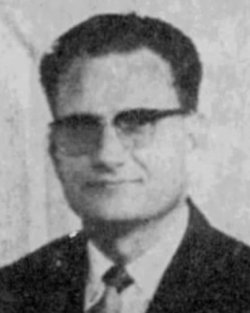
W.E. Best
About W.E. Best
Wilbern Elias Best (1919-2007) was a preacher and writer of Gospel material. He wrote 25 books and pamphlets comprised of sermons he preached to his congregation. These books were distributed in English and Spanish around the world from 1970 to 2018 at no cost via the W.E. Best Book Missionary Trust.

Comments

0 / 2000 characters
Comments are moderated before appearing.

Be the first to comment!

Joshua

Joshua

Shall we play a game? Ask me about articles, sermons, or theology from our library. I can also help you navigate the site.