Bootstrap
W.E. Best

#12 Isaiah 53 - The Necessity of the Savior's Death, Part 1

Isaiah 53:12
W.E. Best July, 1 1988 Audio
0 Comments
Best on Isaiah 53

Sermon Transcript

Auto-generated transcript • May contain errors

100%
to Isaiah chapter 53. Today we're
looking at the last verse. Verse 12 is another verse about
which there is much controversy over a couple of statements found
within the text. I do not think that we can be
real dogmatic about especially the first part of the verse. I will do this morning what I
have done in the past in our study of these difficult verses
of Isaiah 53. I will give to you several different
views that great men, and when I say great men, I mean men who
embrace the doctrines of grace, hold on this particular verse.
I want us to read the entire chapter. We should almost know
it by memory now after having spent several weeks and having
read the chapter or the greater portion of the chapter almost
every week. We should be familiar with it.
And yet, I'm sure when we come to verse 12 this morning, if
you have not really made a study of the verse, some of the questions
that I will ask will startle you. Let's read beginning with
verse one. Who hath believed our report? And to whom is the arm of the
Lord revealed? For he shall grow up before him
as a tender plant and as a root out of a dry ground. He hath
no form nor comeliness, and when we shall see him there is no
beauty that we should desire him. He is despised and rejected
of men, a man of sorrows and acquainted with grief. And we
hid as it were our faces from him. He was despised and we esteemed
him not. Surely he hath borne our griefs
and carried our sorrows. Yet we did esteem him stricken,
smitten of God, and afflicted. But he was wounded for our transgressions. He was bruised for our iniquities. The chastisement of our peace
was upon him, and with his stripes we are healed. All we like sheep
have gone astray. We have turned every one to his
own way, and the Lord hath laid on him the iniquity of us all. He was oppressed, and he was
afflicted, yet he opened not his mouth. He is brought as a
lamb to the slaughter, and as a sheep before her shearers is
done, so he openedeth not his mouth. He was taken from prison
and from judgment, and who shall declare his generation? For he
was cut off out of the land of the living. For the transgression
of my people was he stricken. And he made his grave with the
wicked and with the rich in his death. Because he had done no
violence, neither was any deceit in his mouth. Yet it pleased
the Lord to bruise him. He hath put him to grief. when
thou shalt make his soul an offering for sin. He shall see his seed,
he shall prolong his days, and the pleasure of the Lord shall
prosper in his hand. He shall see the travail of his
soul and shall be satisfied. By his knowledge shall my righteous
servant justify many, for he shall bear their iniquities."
There are five parts to verse 12. Notice them, please. Therefore
will I divide him a portion with the great, and he shall divide
the spoiled with the strong, because he hath poured out his
soul unto death. And he was numbered with the
transgressors, and he bare the sin of many, and made intercession
for the transgressors." Mrs. Dixon went home yesterday, and
we're grateful for that. She seems to be doing real well,
for which we are thankful. Let's go to the Lord in prayer,
ask the Lord's continued blessings upon her, if it's in harmony
with His divine will. And let's remember some of our
members who are out of the city today, that they might be kept
from harm in this inclement weather. Brother Pennington, would you
lead us as we pray? Amen. Isaiah 53, like Psalm 23, is a portion of Scripture that
has been memorized by a great number of believers. Yet I wonder how many who have
memorized Isaiah 53 really know the meaning of some of the statements
contained therein. It is befitting, as we come to
the close of Isaiah 53, that the Sovereign Savior who was
introduced in the first part of the chapter now is being rewarded by the
Father for the work accomplished by him in his substitutionary
work. The word therefore stands out.
Therefore will I divide him a portion with the great. What do you think
that means? I'm sure that if you and I were
sitting in your living room and I were to look at you and ask
the question, What does that mean? That you would look at
it, and then after having looked at it, I believe I know what
you would say unless you had really spent some time studying.
I'm not talking about reading. I'm not talking about memorizing.
I'm talking about studying. That if you had not really studied
it, You would have to confess, I am not at all sure about what
it means. Beloved, that was my idea a few
days ago, after years of Bible reading
and Bible study. My study of Isaiah 53 over the
last several weeks has really made me want to study
Isaiah 53. Do you know what I mean? I've
learned just enough about this chapter to know that it contains
much, much more than I've been able to see. Much more than I will ever be
able to see in this life. In fact, it will take all eternity
to reveal the depths of Isaiah 53 to my own heart. That's how
great this passage is. I think you can understand now
why I've been wanting to evaluate my own ministry, my own teaching,
my own preaching. I certainly want it to be more
beneficial, more instructive. filled with doctrine as well
as practical teaching. Now look at the five things in
this verse. Number one, therefore will I
divide him a portion with the great. And he shall divide the small
with the strong. What do you think that means? Really, what does it mean? He.
Now, let's go back to the first part again. Therefore will I,
the pronoun I would refer to the first person of the Godhead,
the Father. Because the Father had a part
in the death of His Son. The Father made His soul an offering
for sin. We not only see the external
cross, And that's the best way I know of stating it. What men
did to Jesus Christ when they crucified Him, when they put
Him to death. But we also see the internal
cross. His soul being made an offering
for sin. And that's why the message last
Sunday morning was so important in our studies of Isaiah 53. So I will divide him, that is
Christ, a portion with the great. To whom does the word great refer? And then the next part, and he,
that is Christ, shall divide the spoil with the strong. Dividing the spoil with the strong.
Who are the strong? In other words, to whom does
the word strong refer? You see, that's not easy to answer,
is it? And you've already admitted that in your own mind. Now let's
look at the next part. Because he hath poured out his
soul unto death. That is the Lord Jesus. who willingly
gave himself, poured out his soul unto death. Now look at
the next. There's no difficulty, really,
with Christ pouring out his soul unto death. That's easily understood. The next statement, he was numbered
with the transgressors, and that refers, of course, to the external
cross. Whereas his soul being poured
out unto death refers to the internal cross. I'm sure you
know what I'm talking about. Now the next phrase is not really
difficult either. And he bare the sin of many. But now this next statement is
not so easy to understand or interpret. and made intercession
for the transgressors. Now, we're not going to spend
as much time in the middle of this verse as we are with the
first part and the last part. We have already made a study
of many things that are related to the middle part of the text. But we will, however, go a little
bit further into the study of some things which we have already
mentioned. Now, what do you think it refers to? You say, well,
I don't really see any difficulty with the last part of the text,
made intercession. It simply refers to the intercessory
work of Jesus Christ. Now, that sounds real good, but
now let me ask you a question. Does this refer to the intercessory
work of Jesus Christ during the time of His humiliation? Or does
it refer to the intercessory work of Jesus Christ now during
the time of His exaltation? You didn't think I'd ask that
question, did you? Now that does confuse you, doesn't
it? Now the reason I ask that question is because there are
many commentators who say, that the intercession here refers
to His intercessory work on the cross when He prayed, Father,
forgive them, for they know not what they do. Does it refer to
that which is found in Luke 23, 34? Or does it refer to the intercessory
work of Jesus Christ after having finished the work which he came
to perform, that is described by his own high priestly prayer
in John 17. Now, I could very easily say,
well, it doesn't really make any difference. Oh, yes, it makes
a difference. It makes a big difference, if we want to understand
the Scripture. And the tragedy of a false interpretation
of this is that it creates Something that is erroneous concerning
the view of Luke 23, 34, when Christ prayed, Father, forgive
them, for they know not what they do. Could you really explain
that passage? There is a lot in this chapter,
isn't there? There surely is. Before
I go any further, let me make another statement. I found this
last week in the study of this chapter, and in considering the
offering of Jesus Christ, that all five offerings of Leviticus,
chapters 1 through 5, including the burn offering, the meal offering,
the peace offering, the sin offering, and the trespass offering, they're
all included in this prophetical statement by Isaiah concerning
the suffering Savior. Now, if we were to do justice
to the study of Isaiah 53, we would drive down a peg and before
we would leave our studies of Isaiah 53, we would go back and
make a study of those five offerings and see how that each one portrays
a particular aspect of the sacrificial work of Jesus Christ. And yet
each particular phase of the work of Jesus Christ on the cross
is given us in this chapter, Isaiah 53. There is no end to
the study of any portion of Scripture. in evaluating my studies of the
past and my preaching of the past, I think I'm going to concentrate
more for the rest of my lifetime on great books, outstanding chapters,
outstanding texts that will include not only all the great doctrines,
but also practical teaching as well. Isaiah 53 is such a passage. I said it is such a passage.
Now let us look at the verse. I said it is befitting that the
chapter closes with the reward that Jesus Christ was given because
of his vicarious suffering. In other words, the success of
Jesus Christ is given us in this verse. Now the five things are as follows. Greatness, this is number one,
greatness is awarded Christ for his obedience to death. For his obedience to death or
unto death. Two, Christ poured out his soul
unto death. And this morning, if we have
time, we will discuss for a short period of time the necessity
of his death. But even in discussing the necessity
of Christ's death, a question must be raised. Was his death
an absolute necessity, or was it a conditional necessity? Now, can you answer that question?
I'll repeat it. Was Christ's death an absolute
necessity or was it a conditional necessity? Could you answer that
question scripturally? Now that's number two. Number
three, Christ did bear the sin of many. He bared the sin of
many. That's number three. This gets
into the subject of particular redemption. He bear the sin of
many, he did not bear the sin of all. Number four, Christ was numbered
with the transgressors. The fulfillment of this is given
us in Mark 15, 27, and 28. And finally, Christ made intercession for
transgressors. Does this refer to his intercessory
work during the time of his humiliation when he said, Father, forgive
them, for they know not what they do, or his intercessory
work after his death, which he is now performing at the right
hand of God the Father? We'll now discuss the first point.
Beloved, this necessitates thinking. And I'll tell you, it behooves
us as Christians to think. And I believe with all of my
heart that a person who is saved, who has the grace of God, he
wants to know the truth. He never wants to misrepresent
the Lord. He never wants to misrepresent
any aspect of biblical truth. To the Christian, he is not going
to say, it does not make a difference. That is a statement that comes
only from an ignorant religionist, but it never comes from the heart
of one who knows Jesus Christ as Lord and Savior. The more
you and I know about the death of Christ, the greater appreciation
we have for Him and for our relationship to Him. Greatness is awarded the Lord
Jesus. for his obedience unto death. As we look at the first part
of this text, let me give to you another translation by a
Hebrew scholar of the first part of this verse. Here is his translation
of the Hebrew into English. Therefore will I divide. Then he is placed, within parentheses,
are a lot. Therefore will I divide, or a
lot, to him, that is to Christ, a portion among, and then he
has in parenthesis again, or in, using the preposition in,
the many, and then he has once again another parenthesis, are,
and he uses the word great, And with the strong shall he divide
the spoil." Now let's look at this for a
few minutes. I'll give to you, before we will have finished
our study of this, several different views. I think you'll be able
to tell which way I lean, but I'm not dogmatic. And don't tell
me that you are, because if you tell me you're dogmatic and you
make a statement, I may have several questions to ask you
concerning that particular statement of dogmatism. Now, when I mention
that men disagree as to their understanding of this and their
interpretation thereof, I'm talking about men like John Gill, John
Calvin, John Brown, Albert Barnes, and I can go on and on and on,
Denich, and Kyle, and many, many others, Trapp, Poole, Matthew,
Henry. You see, I can spend quite a
time, and I've looked into all of these works plus additional
works. With whom does Jesus Christ divide
His fall? I think that is the central question.
With whom does the Lord Jesus Christ divide His spoils? Confusion over this statement
has led to some strained translations and interpretations. Let me give
several examples. Martin Luther, for instance,
says, He shall have strength for a prey, He shall have strength
for a prey." Now listen to this. Some say the strong, the word
strong here, represents the powers of darkness that have spoiled
the human race, and the division of the spoiled by Messiah, or
Christ, is the rescue of souls from their grasp. Now that, beloved,
is a strained interpretation. I can't help but comment on that.
Now look at the first part of the verse. Therefore, the Father
speaking, I will divide him a portion with the great. So some say it
refers to what? It refers to the powers of darkness
that have spoiled the human race and the division of the spoils
by Messiah. is the rescue of those souls
from the grasp of the powers of darkness. Some have even gone
so far as to say it refers to Ephesians 4, 10 and 11. Oh, that would be a good commentary.
You remember the passage, when Jesus Christ ascended and led
captivity captive. But is that what it refers to?
Now, there are others who say it means I will assign him, that
is the Father, will assign the Lord Jesus Christ multitudes
as his possession, and he shall have the mighty as his prey,
in exchange for and the reward of his pouring out his soul unto
death. Now, when I read that interpretation,
The individual who gave that explanation referred to the 15th
verse of chapter 52. Now when we read the 52nd chapter
and verse 15, you're going to see that there seems to be some
indication that it could mean that. Now let's read the 15th
verse, chapter 52. You remember that the context
of this passage begins with the 13th verse of the 52nd chapter
and not with the first verse of Isaiah 53. So shall he sprinkle
or startle many nations. And this refers to the Gentiles,
really. The king shall shut their mouths
of him, for that which had not been told them shall they see.
and that which they had not heard shall they consider." Now look
at the first part of the verse, "...so shall he startle many
nations, and even the great ones among those nations." Now it
is true that the time is going to come, beloved, according to
Revelation 11, 15, when the kingdoms of this world will become the
kingdom of Jesus Christ, and he shall reign forever and ever.
It is true that the time is going to come when the Lord Jesus comes
as King of kings and Lord of lords, that his coming, his power,
and his glory will startle the nations of the world. That's
true. But the question is, is that
what it's talking about? Now, let me give this man's quotation
again. And he refers to this verse, 15th verse, as his proof
text for what he said. Now, what did he say? He said
that the Father is going to assign to Jesus Christ multitudes as
His possession. Well, there's no doubt about
that. There's truth in that. That's why you cannot call a
man who gives this interpretation heretical in his view, because
the statement that he has made is true, but the question is,
does it fit this particular passage of Scripture? It is true that
Jesus Christ is going to be given many for His possession. Now
hold this just a moment and go back to Psalm 2. This verse comes
to my mind, and one man referred to this passage in the 2nd Psalm,
which is one of the kingly Psalms. Verse 8, "...ask of me, and I
will give thee the heathen for thine inheritance, and the uttermost
parts of the earth for thy possession." The time is going to come when
that will literally be true. So what the man said is true,
but does it fit this passage? That's the question. So he says,
the Father is going to assign to Jesus Christ multitudes as
His possession, and He shall have the mighty as His prey in
exchange for, as a reward of, His pouring out His soul unto
death. He gave His soul as a sacrifice,
and He receives souls as His reward. Now it is true that Jesus
Christ will receive souls as his reward, as his reward, and
that's why he saw his seed and was satisfied. He saw the accomplishment,
the accomplishment of his work on the cross. Now I'm going to share with you,
I could give some other things, but I'm going to share with you
what I really believe it teaches. Dividing the spoil with the strong
seems more likely to refer to the cooperation of the Godhead. And I had to give this a lot
of thought, along with all of those other views. Now listen
carefully. I said the dividing of the spoil
with the strong seems more likely, that is to me, it may not seem
that way to you, and I'm not going to fall out with you if
you do not accept it, but it seems more likely to refer to
the cooperating Godhead. Now let me manifest what I'm
really getting at. In the first part of the text,
look at it now carefully, in the first part of the text, therefore
will I divide him, that is the father, dividing Christ a portion
with the great. That's what the father gave to
the son. Now that is followed by Jesus
Christ enjoying what was given him by the father. Now the next
phrase. He shall divide the spoil with
the strong." The first part referring to what the Father gave to the
Son, and the second part that we're now studying, the enjoyment
of that by the Son. Now, I'm not through. If I were
to stop there, I would fail to emphasize something which I believe
to be very important. The Lord Jesus Christ enjoys
what the Father gave to Him, not on His own account, but on
our account. Notice what I said, on our account,
because after all, we're going to share with Him in the Kingdom,
which is to come. Heirs of God and joint heirs
with Jesus Christ. Now let me give you a statement
that another man made that actually amplifies that. What the Father
divided to Jesus Christ, Jesus Christ divided among His followers. Now when we put it all together,
I think we see the cooperation of the Godhead. We see the cooperation
of the Father with the Son, and the Son with the Father. And
there isn't anything wrong with that, because if you're familiar
with I Corinthians 15, the time is going to come when the Son
shall give up the kingdom to the Father. So there's cooperation
among the persons of the Godhead. So in the first part, we have
the Father giving to the Son. And in the second part, the enjoyment
of what is given to the Father by the Son, but He does not enjoy
it alone, alone, but with you and with me, because He divides
it with His followers. There is just a little bit in
that passage, isn't there? I said there is just a little
bit in it. Now, we could go into it even more. But I think that
will suffice for the time being. Now look at the next statement.
After Christ being awarded by the Father for His obedience
unto death, and this because, here it is, here's the reason
for it. So you see, we're summing up
now. We're bringing to a conclusion. all of the great things contained
in this chapter. And we have a summary of all
these things here in verse 12. Now all of this is because He
has poured out His soul unto death. So we have the death of
Jesus Christ. I'd like you to turn with me
to the 24th chapter of the Gospel According to Luke. Now we want
to discuss, for the remaining period that we will be studying
this morning, the necessity of Christ's death. I'll have time
to get into the last three things this morning. The Lord willing,
we'll do that tonight. The 24th chapter of the gospel according to Luke.
The necessity of Christ's death. I want us to look at verse 26.
In order to get the meaning of this, you'd have to go back and
begin reading, if you had time, with the 13th verse. And I think
we shall call attention to something throughout the remaining verses
of chapter 23. Now, if you're doing any marking in your Bibles,
you need to do it now. Let's begin with verse 13, and
I'll call attention to several things before we read and start
giving an interpretation of verse 26. The necessity of Christ's
death. Pouring out His soul unto death. It's necessity. Verse 13, And
behold, two of them went that same day to a village called
Emmaus, which was from Jerusalem about three score furlongs. And they talked together of all
these things. Underscore the three words, all
these things, which had happened. Now, what things? His betrayal? His trial? His crucifixion? His resurrection? These are the
things that were discussed, and you can understand why they were
being discussed by these two men on the road to Emmaus. Verse 15, And it came to pass,
that while they communed together and reasoned, Jesus himself drew
near, and went with them. Now when the Lord Jesus drew
near, they didn't even recognize it. And yet they'd been talking about
Him, His betrayal. Think about this. His trial, His crucifixion, His
resurrection, and yet, when He stood by their side, they didn't
even recognize Him. Now, you know what lesson we
need to get from that? Beloved, it is possible for you as a Christian,
just as these two men on the road to Emmaus, did not even
recognize the presence of Jesus Christ, it is possible for you
and me to be in the very presence or in the place where Jesus Christ
is present and not even recognize His presence. That's a tragedy,
isn't it? That's a tragedy. Now let's go
a little further. Look at verse 18. And the one
of them whose name was Cleopas, answering said unto him, Aren't
thou only a stranger in Jerusalem? The very idea of these two Christians
making a statement like that, are you a stranger in Jerusalem?
And hast thou not known the things? Now in the score of the two words,
the things, I want you to connect all of these references that
I'm going to give to you concerning things. not knowing the things
which are come to pass there in these days. Verse 19, And
he said unto them, What things? What things? May I say in the
form of a question, what a text. What things? Christ brings them
back to active memory and active study again. Just as I am to
do you every time we come together, I'm to bring you back to active
memory and active study in the things of God." What things? And they said unto him, concerning
Jesus of Nazareth, which was a prophet, notice which was a
prophet, but he was more than a prophet, wasn't he? mighty
in deed and word before God and all the people, and how the chief
priest and our rulers delivered him to be condemned to death
and have crucified him. But we trusted, aren't you grateful
for that? But we trusted that it had been
he which should have redeemed Israel. Now you see the ignorance. The ignorance of these two men,
these two Christian men. And beside all of this, today's
the third day since these things are done. We're done. Now drop
down, if you will, to verse 24. And certain of them which were
with us went to the sepulcher, and found it even so as the women
had said. But him they saw not. Now that
was a sad confession, wasn't it? Verse 25. Then he said unto
them, O fool, are foolish ones, and slow of
heart to believe all that the prophets have spoken." In other words, all that the
prophets have spoken without understanding. Now is our text
on the necessity of his soul being poured out unto death.
Ought not Christ to have suffered these things? There's another
reference to these things. Ought not Christ to have suffered
these things, and to enter into His glory? And beginning at Moses
and all the prophets, He expounded unto them in all the Scriptures
the things concerning Himself." Now notice, if you will, verse
35. And they told what things were
done in the way, and how he was known of them in breaking of
bread. Verse 44, And he said unto them,
These are the words which I spake unto you while I was yet with
you, that all things must be fulfilled. And then, notice verse
45, Then opened he their understanding. Unless the Lord opens your understanding,
unless He opens my understanding, we'll not understand. It's just
that simple. Verse 48, and ye are witnesses
of these things, these things. You see the importance? Now let's
look at the verse 26. Ought not Christ to have suffered
these things? The necessity of Christ's death
on the cross. The death of Jesus Christ supposes
a party offending and a party offended. It supposes that the
offended hold the offender justly bound to suffer the penal consequences
as merited by the offense. Now the question proposed for
our study at this time regards the necessity of Christ's death
in order for God to forgive the sin of the offender. Forgiveness of sin is the heart
of our whole study. Forgiveness of sin depends on
the whole character of God. Notice what I say. There are
moral reasons which require that sin should be punished. I said
there are moral reasons that require sin to be punished. These
moral reasons render the death of Jesus Christ necessary for
the forgiveness of sins. But that raises, that poses a
question. And what is it? The statement,
ought not Christ to have suffered, is not absolute, but conditional. Now, before you judge me too
harshly, hear me out. You say, well, what do you mean
when you say that the death of Christ is conditional and not
absolute? All right, I'm going to prove
my point. And we'll have to prove it by approaching it from this
point of view. God is subject to no laws outside
of himself. Do you agree with that? Now here
we are, we say we believe in the absolute sovereignty of God.
And sometimes, even though we say it, we turn right around
and make statements that are in direct contradiction to that
position. If I tell you this morning it
was absolutely necessary for Jesus Christ to die and stop
there, then I would be denying the sovereignty of God. Now think
that through for a moment. You say, well now preacher, is
it necessary for us to go into all of these things in order
to understand it? It surely is. And you will see
how it will clarify itself in just a moment. I said God is
subject to no laws outside of himself. That's why he's sovereign. That's why he's sovereign. And
there is but one absolute sovereign. And the one absolute sovereign
is Jehovah God. And as Jehovah God, he is not
bound by the laws of men or the wishes of mankind. Let me illustrate
it. There was necessity, we might
say, in the death of Jesus Christ for the forgiveness of sin. But
God was not absolutely bound to forgive any person his sin.
Do you see what I'm talking about? God was not obligated to forgive
any of us of our sin. So that's why you cannot say
that the death of Jesus Christ was an absolute necessity. His
death was a conditional necessity, as I'm going to show in a moment.
Yes, there was necessity for the forgiveness of our sins,
but there was not absolute necessity because God was not obligated
to forgive any of us of our sins. Now, if we do not see that principle,
We haven't gotten very far in our studies of the great truths
of God's Word. Let me give some examples of
that. God is necessarily holy, but not unwillingly holy. Do you follow me? I said God is
necessarily holy, but not unwillingly holy. You see, there was no compulsion
on the part of God to forgive me of my sins. He didn't have
to. He didn't have to send His Son. That's the point I'm trying to
emphasize. Let me use another illustration. The Apostle Paul,
for instance, according to the law of physical death, it is
appointed unto man once to die. must die. But Paul was not unwilling
to experience death. He said, I'm willing to depart
from this life and be with Jesus Christ, which is far better.
It was not a matter of compulsion. Do you know what I believe as Christians?
I got into the study of this and I can't get into it this
morning because I'd spend an hour on this point because it
is so great and I'm going to spend one message on it. You
and I as Christians enjoy life in Christ. We enjoy life because
he is our life. There is a sense in which we
don't even, I'm going to stagger some of you now, there is a sense
in which we don't even die physically. I'm not going to say any more
about that. I'm going to let you wrestle with that until I preach on it. But you see, I do believe this.
I believe that the grace of God makes His people willing to go
through the, I'm giving it away already, the shadow of it. The shadow of it. The shadow of death. I hate to
leave you hanging. It's kind of difficult to keep
just going ahead and saying really what it is. See, you remember
my statement? I do not believe in life after
death. I don't. I believe in life instead of
death. See what I'm talking about? I don't believe in life after
death. If I were to stand before the average congregation and
say, I don't believe in life after death, I'd have some religionist
ready to tar and feather me. I don't. The Bible doesn't teach
life after death. It teaches life instead of death.
We pass out of death into life. And we do that here. That is experienced by us now.
But the Lord does make us willing to go home and be with Him. I
won't go any further with that, but I want you to see there is
no compulsion. There was no compulsion on the part of God to forgive
us of our sins. God was not bound absolutely,
but conditionally to give His Son as an offering for sin. Are
you following me? It was not until after the covenant
between the Father and the Son that it was necessary for Jesus
Christ to die. So, the necessity of Christ's
death is not absolute, but it is conditional, conditioned upon
the covenant made between the Father and the Son. The death
of Christ being the only means by which the Father could forgive
us. He didn't have to, but in grace
He chose to. You see, I'm not off on some
limb. So when you hear someone talk about the absolute necessity
of Christ's death, you need to pin them down and get them to
define it. Say, explain to me what you mean. Are you saying
that the sovereign God is absolutely bound to sin His Son? He's absolutely bound to forgive me of my sins? If
you say that, you're denying the absolute sovereignty of God. God is not bound to do anything. What he does is out of the good
pleasure of his own heart. That's grace. Is that the teaching
of Scripture? So justice demanded punishment,
proportionate to the crime. Now we're getting to the necessity
of Christ's death. So when the statement is made
by the Lord Jesus, ought not Christ to have suffered these
things? The necessity of his death. was based upon what? The choice
of the Father to forgive sinners of their sins. There was no necessity on God's
part for sin to even enter into the world, but wisdom thought
it good that it did enter. Now that takes us back, you see,
to Genesis. And you must make this harmonized
with all the other scripture. God created man with a possibility
of sinning, but not with a necessity to sin, because he created him
upright. Ecclesiastes 7.29. Transgression, however, against
God demands no less than death. So justice demands punishment
proportionate to the crime. Now let's look at this a few
moments. Transgression against God demands
no less than death, capital punishment. Capital punishment. An infinite
crime demands an infinite punishment, and that means eternal punishment.
And man cannot pay for his crime because he's a finite creature. Therefore, it necessitated after
the covenant for the father to send his son to die on the cross. So the necessity is conditional
and not absolute. Conditioned on the covenant made
between the father and the son. Now when we think about the punishment
being death, It's a capital crime because it is against God. And
the punishment, justice demands that punishment should be proportionate
to the crime. And the crime is infinite, therefore
it's eternal, and must be suffered, must be paid for by the infinite
Christ, who alone, in a short period of time, could pay the
debt against all whom the Father gave to him. In his one death,
he suffered the deaths of many. Now let's think about the crime.
Beloved, if you and I don't have a greater appreciation of our
relationship with the Lord, we get through something wrong with
our spirituality. Yes, payment should be as great
as the crime. To order punishment greater than
the crime is tyranny. To order punishment less than
the crime is foolishness manifested in government. However, to not see it as it is, in its
true perspective, is to miss the point altogether. Sin against
God should deprive man of his highest good. And what is man's
highest good? Being with God throughout eternity,
enjoying the glory and the majesty and the greatness of God, praising
God. That's man's greatest good, as
the old Puritans used to say. And sin against the infinite
person It deserves the greatest punishment,
and its greatest punishment is to be deprived of man's greatest
good, the presence and glory of God. The vileness of the offender
is reflected in the dignity of the one offended. Your sin and
my sin is against God. Most people today don't think
that. Now, the death of Jesus Christ supposes that after transgression,
God would redeem the offender. Notice, Christ's death supposes
that God would forgive the offender. There was no necessity, however,
incumbent on God to redeem the sinner, as we've already As God
was not obligated to prevent the fall, then He is not obligated
to redeem man after his fall. In order to redeem man, however,
it was necessary for Jesus Christ to die, because sin against God
is an awful crime. God could not pardon the transgressor. without being unjust to justice. God is immutably righteous and
can no more absolve the guilty than he can condemn the innocent,
according to Exodus 34, verse 7. Now, when we look at this,
what do we see? Salvation of the lost was of
absolute necessity, but what? was of an absolute necessity
because of God's choice to redeem or to forgive some. So it is conditional, not absolute. Now let's look at the second
point. Decreed death is absolutely necessary. And this is decreed death. Now
when we look, ought not Christ to have suffered? It is decreed
death that is absolutely necessary. It is absolutely necessary in
this sense because it is based upon the covenant made between
the Father and the Son. That makes it absolutely necessary. From the Father's point of view,
not necessary until He chose. until he chose to forgive some
of their sins. The Lord Jesus Christ was free
from all bonds until he was bound by the covenant. But now let's
see the willingness of Christ. You see, there was a willingness
on the part of the Father to forgive some And there must be
a willingness on the part of the Son to lay down His life
to pay the price of redemption in order that the Father might
forgive us. He was not forced to. There was no compulsion upon
Him. But He willingly did it, just
as the Father was willing to forgive some. And that's why
the Lord Jesus said, I lay down my life. I have power to lay
it down. I have power to take it again.
What he did, he did voluntarily. So the Lord Jesus Christ was
free from bonds until he was bound by the covenant. And once
the covenant between the Father and the Son were established,
then the Son was bound. Bound by the covenant. Let me
illustrate it. As there was no necessity upon
God the Father, so there was none upon the Son until the covenant
was established, Hebrews 13, 20 and 21. Now after the covenant,
the Son was absolutely bound to die. I can illustrate that in this
manner. Here is a person who has committed a crime. and he is suffering a time in
the penitentiary. An individual is willing to become
the surety of that person. Now, as soon as the individual
says, I am willing to become the surety of that man in prison,
I'm willing to pay the debt against him, Then that person is bound
by his oath to carry out what he said he would do in being
a surety for the prisoner. Now let's take ourselves. We
were all in sin. Dead in trespasses and in sin. But in the covenant between the
Father and the Son, the Lord Jesus said, I'm willing to become
a surety. for all of those whom you will
forgive. And just as an earthly man is
bound by his oath when he has said, I will become a surety
for an individual, so the Lord Jesus Christ, when he said to
the Father, I am willing to become surety for all of those whom
you will forgive of their sins, I'm willing. I'm willing." And
so he carried out his oath. But he did it willingly. So he was bound by the covenant.
In that sense, he was absolutely bound. Now look at the statement
again. Ought not Christ to have suffered
these things. These things. The virtue of the
covenant must be considered. And by virtue of the covenant
between the Father and the Son, it was necessary that Jesus Christ
suffer under the imputation of sin. Notice what I said, under
the imputation of sin. Let me explain something at this
point. Now, the next two statements
I'm going to give are very important, please make notes on them. Death
was threatened by God as a sovereign. When God said to Adam in the
garden, the day that you eat of the forbidden fruit, you will
die, death was threatened. That's all that God could do. Because, you see, sin had come
into the world. Sin had already entered the universe
by means of Lucifer, and it would be brought into the habitable
part of the earth. And man would sin. But the day
that you sin, you're going to die. Now, death was threatened
by God as a sovereign. Now, secondly, death was merited
by man as a sinner. Now if you think that you do
not deserve eternal separation from God, then you know nothing
about grace. If you and I deserved, or if
we got what we deserved, we would all be in hell. And that has
been the testimony of every person who has ever been a recipient
of grace. Now, religionists don't talk that way because they don't
know anything about grace. And don't expect them to talk
like that. You and I merited eternal separation
from God by virtue of our sin. Now, God threatened death as
the sovereign. You and I have merited death
by the fact that we are sinners. I'm not through yet, the third
thing. Death was executed, executed
by God as the righteous judge. And Jesus Christ suffered that
death when he died on the cross. Now I can understand, and if
you haven't read the book by John Owen, Death of death by
the death of Christ. The death of death by the death
of Christ. A great work. Jesus Christ has suffered that
death. Now, what did I say? I said,
number one, death was threatened by God as the sovereign. Death
was merited by man as a sinner. And three, death was executed
upon Jesus Christ for those whom the Father gave to Him. That's
why Christ died. Now, there's still another point,
and this one is just as important as the one that I just completed.
Sin may be considered three different ways. Please get this. I said sin may be considered
three different ways. Number one, as a moral quality
in man. It may be considered as a moral
quality in man. And I'm talking now about depravity.
This woman with whom Juanita talked Friday night knew nothing
about depravity. She knew absolutely nothing about
depravity. And yet, she knew the Roman road,
all this sin had come short of the glory of God. At least she
thought she did until it was explained, and she didn't want
to listen to it. She didn't want to listen to
it. I said death may be considered,
first of all, as a moral quality. I'm talking about depravity.
Two, it may be considered as a transgression of the law. And three, it may be considered
in respect of its legal obligation to punishment. Now, you're going to see why
I've given these three, as I explained the last. Alright, sin may be
considered first of all as a moral quality in man, as transgression
of the law, and as a punishment in respect of its
legal obligation to punishment. Only in the last sense, follow
me now, Only in the last sense can it be said that the sin of
one can be laid upon another. Now, it cannot be in the first
in its moral quality. It cannot be as transgression
of the law, but only in the latter, that is, in respect to its legal
obligation to punishment. Only in that sense could our
sin be laid upon Jesus Christ, and Jesus Christ bear our sin
in our stead on the cross. The Lord Jesus Christ, by a free
act of His own, became the surety of all of those whom the Father
gave to Him. Thus he was counted by the Father
as one with those for whom he must die. A surety is liable
for the death of his client. And Jesus Christ took us, as
it were, as his clients, having received us. from the Father
and became our surety, and as our surety, he was liable for
our death, and he paid that debt in his own death on the cross.
Thus you and I experience the death of death in the death of
Christ. In closing, I've gone too long
already. Satisfaction must be by death
because death was threatened. The death of all the sacrifices
throughout the Old Testament pointed to the death of the testator. The father was not pleased with
any of the sacrifices according to Hebrews 10, with any of the
animal sacrifices, but he was pleased with the sacrifice of
his son. I close with this. Christ alone
could satisfy justice as the incarnate Savior. Man is incapable of effecting
divine satisfaction. You and I could never. Even those
who go to hell and spend eternity in hell, they can never, with
all of their For all eternity can never satisfy justice. That's
why they'll spend eternity there. You and I, by all of our suffering
and by death, could never, could never satisfy divine justice. It took the infinite sacrifice
of the Son to satisfy divine justice. And He, He stood in
our place. And justice was satisfied, and
since the Father is satisfied, and justice is satisfied, and
the Son is even satisfied with His accomplished work, you and
I as the recipients of His death are also satisfied. That's why
we can see we're satisfied with Jesus Christ. Are you? Let's stand as we sing.
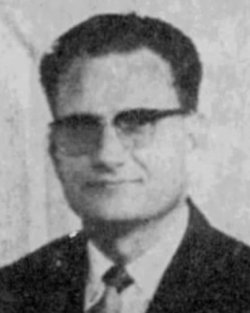
W.E. Best
About W.E. Best
Wilbern Elias Best (1919-2007) was a preacher and writer of Gospel material. He wrote 25 books and pamphlets comprised of sermons he preached to his congregation. These books were distributed in English and Spanish around the world from 1970 to 2018 at no cost via the W.E. Best Book Missionary Trust.

Comments

0 / 2000 characters
Comments are moderated before appearing.

Be the first to comment!

Joshua

Joshua

Shall we play a game? Ask me about articles, sermons, or theology from our library. I can also help you navigate the site.