Bootstrap
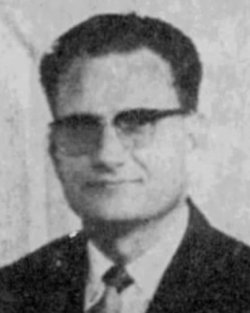
W.E. Best

#6 Isaiah 53 - The Silent Savior

Isaiah 53:7
W.E. Best July, 1 1988 Audio
0 Comments
Best on Isaiah 53

Sermon Transcript

Auto-generated transcript • May contain errors

100%
Sit through the service this
morning and say that he has not heard what the gospel really
is. He was oppressed, and he was
afflicted, yet he opened not his mouth. The first phrase,
he was oppressed, Luke 22, verse 14, being in agony, he prayed
more earnestly, and he was afflicted. We find in Matthew that he was the suffering one. We find in John 19, He was crowned
with a crown of thorns. And then we find in Philippians
2 that he was obedient unto death, even the death of the cross.
Actually, the second phrase refers primarily to his submission,
his absolute submission to the will of the Father. And then
the last part of the first major part of the verse, and he opened
not his mouth. 1 Peter 2, verse 23, when he
was reviled, reviled not again. Then we look at the second division
of this verse. There are two major divisions
of the text. In fact, there are two outstanding
subjects in verse 7, and each subject has two parts, as you
will see in the study of this verse this morning. Now looking
at the second subject, he is brought as a lamb to the slaughter,
and as a sheep before her shearers is dumb, so he openeth not his
mouth. In the first part of the last
major division of the text, Matthew 27, 31, he was led away to be crucified. And then in the next part, the
next statement, he answered him never a word. We know that the Lord Jesus was
brought before Caiaphas, the high priest. He was then taken
before Pilate, the governor. And finally, he was led before
Herod, the king. Before all three, he opened not
his mouth. So the outstanding statement,
I think, in this text is the silent sufferer. Now for the
major divisions and then the two parts of each major division.
I stated there are two subjects in this text. First, we have
the suffering substitute, the suffering substitute. And secondly,
we have the disposition by which the Lord Jesus endured his sufferings. Now look at these again. First
of all, we have the suffering substitute, and secondly, the
disposition by which he endured the sufferings. Now as we look
at these two divisions again, we observe that in the first
there are two things that come to our mind. in the study of the suffering
substitute. He suffered, first of all, because
of man's sinfulness, and secondly, he suffered because of God's
appointment, that is, because of the Father's ordination. Now,
as we look at the second part of this text, there are two distinct
statements here. He is presented, first of all,
as a lamb being led to the slaughter, and secondly, as a sheep that
is dumb before her shearers. So the subject The second subject
is represented, first of all, by a lamb going to the slaughter,
his willingness to go. And then we have the next statement. He is presented or represented
as a sheep that is dumb before her sheriffs. So we have two major divisions,
and then there are actually two things to be considered under
each major division of the text. This is the way that I enjoy
studying the scriptures. And whenever I come to a verse
or a passage of scripture that just automatically outlines itself,
it makes it very easy to study that particular passage. Let
us look to the Lord in prayer. We recognize, Heavenly Father,
that unless we hide thy word away in our hearts, we'll not
be able to give a reason for the hope which we have when we
seek to witness to those with whom we come in contact. We thank
thee, Heavenly Father, for the Holy Spirit. who indwells our
hearts and brings things to our memories, things which we have
studied when we are in a position to witness for thee. We are also
cognizant of the fact, Heavenly Father, that unless we do study,
unless we do hide the Word of God away in our hearts, the Holy
Spirit will not bring that to our minds which we have never
investigated. Therefore, it is imperative that
we study to show ourselves approved unto thee. We thank the Heavenly
Father for the glorious gospel that is presented in this great
text of scripture. May we be able this morning to
dig into the depths of the riches of this verse and portray some
of the great treasures contained therein. Prepare our hearts and
minds now for this period of study, and we'll give to thee
the praise because we ask it in the name and for the sake
of Jesus Christ, our Lord and Redeemer. Amen. Jesus Christ suffered vicariously. We stated that he suffered, first
of all, because of our sinfulness. You say, well, now it doesn't
state that in the text, but it surely does in the context. You
see, we fail to get from the study of the scriptures what
we should when we isolate a text from its context. Going back
to verse 6, and it has been several days since we made a study of
the 6th verse, but I'm sure we remember some of the outstanding
things that we studied at the time that we investigated the
sixth verse of Isaiah 53. All we like sheep have gone astray. We have turned everyone to his
own way, and the Lord hath laid on him, that is, the Father hath
laid upon his Son, the iniquity of us all. We saw in that verse
of Scripture the subject of depravity, We also have seen that the sheep
went away. They were once in the fold, but
they strayed away. They went away from the Father
and from the fellowship which they had with the Father. You
ask, how was this done? This was done by the very fact
that they went away or strayed in Adam. We have to see ourselves
in Adam. So the subject of depravity is
emphasized. All we like sheep have gone astray.
We have also seen that mankind in general is divided into two
categories, sheep and goats. Yet, when we think about sheep,
there are lost sheep and saved sheep. You and I who are saved
this morning were lost sheep before we were regenerated. But
after having been regenerated by the Spirit of God, we are
now saved sheep. We remember that our Lord said
to his disciples, go to the lost sheep of the house of Israel. They went to the lost sheep.
And when they were regenerated and converted, of course they
became saved sheep. So mankind in general is divided,
I said, into two categories, goats and sheep. But yet, when
we think about sheep, sheep are also divided into two categories,
lost sheep and saved sheep. This is not emphasized as much
as it should be in the day in which you and I live. But we
know from the study of all of Scripture that this is simplified,
and anyone who denies it denies the Word of the living God. We
not only have the subject of depravity in verse 6, but we
have the individual going his own particular way. Therefore,
each person is responsible for his own sin. All we like sheep
have gone astray, and we have turned every one to his own particular
way. That's what it means. So we see
the subject of the sinfulness of men. Now, the Lord Jesus Christ
suffered vicariously. And when he suffered vicariously
for the sheep, when he became the substitute for the sheep,
he suffered silently. And that's the point that we're
emphasizing in the seventh verse of Isaiah 53. Coming now to the
second thing that we want to discuss under the first major
division of the text, the disposition under which the Lord Jesus Christ
suffered for you and for me. There are two statements given
here concerning the disposition which Jesus Christ manifested
while he was suffering for your sins and for mine. Now we'll
look at them. Number one, he was oppressed. He was oppressed. What does that
mean? It means exaction was made. In other words, there was a demand
made upon the Lord Jesus Christ. He was called upon by God the
Father, or he was required to go to the cross and become the
substitute for the sheep That is, those whom the Father had
given to the Son in the covenant of redemption. Now, please follow
me, because this is precious truth, and we do not want to
miss a single thing that is given us in this great text of Scripture
that relates to the glorious gospel of the blessed Son of
God. So, first of all, He was oppressed. That is, exaction was made. Our liability to punishment,
punishment to which we were liable, was exacted or called for or
demanded or required of Jesus Christ. He is the divine substitute. If he had not stood in our place,
then, beloved, exaction would have been demanded of us. Now,
think about that. Had it been demanded of us, there
would have been no hope in this life or in the life to come,
as I'm going to prove from Holy Scripture this morning. And the
discussion of the subject of exaction was made. We hear a
lot today about amnesty. We know during the presidential
race, There have been some things said about amnesty. There have
been those who would have President Ford to grant amnesty to all
of the evaders of service in the past. But he did not grant
amnesty. There are those who do not like
it. They think that amnesty should
be granted for all who were conscientious objectors. And I'm sure there
were some who were not so conscientious, but I'll not go into that. But
let us use the word amnesty for a moment. Salvation, beloved,
is not amnesty. Now, first of all, what is amnesty? The dictionary defines amnesty
in this manner. Amnesty is a general pardon to
a class of persons as a whole. Now let's look at that for a
moment. Now that's exactly what religionists
want today. That's exactly what people who
are ignorant of the teaching of Holy Scripture want. They
want amnesty. They want to live a wicked life
and then just hope that God will grant general amnesty to all
of the human race. But I'm here to tell you that
God will not grant amnesty. That would be contrary to divine
holiness if he were to do so. He is not about to do it. The
Scriptures do not teach it. From the very beginning of God's
Word to the very last sentence in Holy Scripture, there is nothing
in the Word of God that would indicate that God grants amnesty. So the dictionary defines amnesty,
and listen to it again. It is a general pardon to a class
of persons as a whole. Now, we know during this time
when men are politicking for the higher office in the United
States of America, there are some that are trying to push
one person who is running for the office to grant a general
amnesty to all draft evaders. And then there is the other who
says, no, I will not do it. So we know that salvation is
not amnesty. What is salvation? Salvation,
beloved, is redemption. Now, is that what the Bible teaches?
I said salvation is redemption. And since salvation is redemption,
that means that sinners had to be bought out of the slave market
of sin. And the only way that they could
be bought was by the suffering of Jesus Christ, who suffered
vicariously on the cross. And that's why we find this statement
we do in 1 Peter 1 and verse 18. We have been redeemed, not
with corruptible things such as silver and gold, but with
the precious blood of Jesus Christ. So the cost The price of our
redemption was the blood of Jesus Christ. And where there is the
shedding of blood, there is remission of sins. And without the shedding
of blood, there is no remission of sins, we're told in Hebrews
9 and verse 22. So salvation is redemption. Salvation
is not amnesty. So you see, liberalism that prevails
in our society today is also creeping into religious circles. Now, one is saved not by the
penalty of sin being dismissed. Notice what I'm saying. A person
is saved not by the penalty of sin being dismissed, but by someone
paying the penalty for the guilty. And Jesus Christ is the someone
who stood in my place, and he paid the penalty which I deserved
to pay, and which you deserved to pay. Beloved, that's gospel.
That's gospel. So the Father was satisfied as
a result of exaction being made. Yes, exaction was made, as a
Puritan said. Judgment was done. Law was magnified. The Father was satisfied. And
all of these things are true because justification is through
righteousness. Let us not forget that great
verse of scripture in Romans 5 21 that grace reigns through
righteousness. Reigns through righteousness. So exaction was made. Now let's
look at this for a moment. Exaction being made indicates
three things. Number one, origin. Number two, nature. And number
three, results. We look first of all at the origin
of exaction having been made. The origin is found in God Himself. Let us listen to the statement
made by the Apostle Peter as he was preaching on the day of
Pentecost. As he was addressing the Jews, he said, You have taken
and you are responsible for putting to death the Lord Jesus Christ
who was, verse 23 of Acts 2, who was offered up by the determinate
counsel and foreknowledge of God. That means by the foreordination
of God. That's why I said that the sufferings
of Jesus Christ He suffered because of our sinfulness, and he suffered
secondly because of God's poor ordination. Last night, I was
listening to this Bible exposition by the Chancellor of Dallas Bible
College, and the reason I was listening to that particular
program, I wanted to take three or four numbers that are usually
good on another program that follows that one. Usually this
man doesn't have a great deal to say. He teaches the International
Sunday School lesson. You can tell by the tone of his
voice that he is an elderly man. And so he announced his subject
and the passage of scripture from which he would be speaking.
I mentioned to Waddy that she was reading. I said, let's listen
to see what he has to say. I'll be anxious to find out what
he's going to say on Romans 8, 28, 29, and 30. And when he came to Romans 28,
he did a good job, of course, in the time that he had to spend
on that particular verse. When he came to verse 29, I wondered
what he was going to do with the word foreknew, whom he foreknew. Beloved, I'm happy to tell you
that he gave the biblical answer to it, and I was greatly surprised.
He said, now way back, way, way, way, way back, that's the way
he expressed it. He said, God foreknew us. Now
he said, before I go any further, that does not mean that God just
simply foreknew that we would believe, but it means that God
foreordained it. I said, well, praise the Lord.
Well, of course, he's a Greek student, and being a Greek student,
he could not deny the meaning of the verse and that word. And
then he went on and predestinated us, and he gave a true definition
of predestination. I said, thank God for that. And
so he did, and I'm thankful for it, give a biblical answer to
those statements found in that particular passage of Scripture.
So the Lord Jesus Christ suffered because it was foreordained by
God the Father that he would suffer for you and for me. So exaction was made. The Father
is the origin of this exaction. Then look at the nature of the
exaction having been made. And I know of no greater text
of scripture than that found in 1 Peter 3, verse 18, which
states that the just one died for the unjust, that we might
be brought to God the Father, having been put to death in the
flesh, but quickened by the Spirit. Now, look at one statement in
that verse, the just dying for the unjust. I like what John
Trapp said on that, and I'll quote him. He said, the just
one suffered with the unjust, and the Lord Jesus Christ did
suffer with the unjust. He went on to say, not only did
he suffer with the unjust, but he suffered upon unjust causes. under unjust judges and by unjust
punishments. I like that so much that I put
that in my Bible. Listen to it again. The just
one suffered for the unjust. You and I, unjust ones. Jesus Christ suffered in our
place. He's the just one. who suffered
in our place. So he suffered with the unjust,
upon unjust causes, under unjust judges, and by unjust punishments. What was the result of the exaction
having been made? We have seen its origin. And
we have seen its nature. Now, what are the results? The
results are, of course, first of all, salvation, secondly,
sanctification, and ultimately, glorification. Exaction must be made. Must be
made. Not, if not upon Jesus Christ,
it must be made upon mankind. You and I had better be thankful
this morning that exaction was made not upon you and not upon
me, those of us who are the recipients of grace, but exaction was made
upon Jesus Christ. He stood in our place. You ask
the question? Is all of that to be considered
under the phrase, he was oppressed? Yes, beloved, which means exaction
was made. If exaction is made on us, then
it must be made on us forever. Notice what I said, forever. However, in infinite wisdom,
righteousness, and love, our guilt, The guilt of all the elect
of God was laid on Jesus Christ, and he was willing and able to
bear it. All we like sheep have gone astray. We have turned every one to his
own way, and the Lord hath laid on him, made to meet upon him
the iniquity of us all, that is, all the elect of God. Now
we're going to look at the next statement. He was oppressed. That is, exaction was made. Now it says, Christ was afflicted. That is, he submitted himself. Christ became responsible for
the demand of God. He fully paid the debt. for life. Therefore, when Jesus Christ
died on the cross and the last of the seven utterances of our
blessed Lord on the cross was, it is finished. And, beloved, it is finished.
It is finished. Exaction has been made. So the
Lord Jesus Christ, His sufferings were voluntary. No one forced
him to. Now let's look at the second
point, which is as important, follow me now, which is as important
as the appointment or the ordination of God. You'll notice in the
study of the New Testament, Jesus Christ was not dragged to the
cross. Are you following me? He was
not driven to the cross. The book says he was led to the
cross. And he was willingly led to the
cross. If he had wanted to, he could
have spoken one word, and one word would have shaken the world,
one word would have caused all his enemies to die immediately,
but he opened not his mouth. He was led. He was led. You have the word here in Isaiah
53, 7, he was brought. And when it is interpreted in
the New Testament, he was led. He went voluntarily to the cross. And that's exactly the expression
we find in John 10, 17, and 18. He willingly, he voluntarily
laid down his life. And he voluntarily took it up
again. He had the power to lay it down,
and he had the power to take it again. So Jesus Christ suffering
or submitting himself voluntarily was as important as the divine
ordination on the part of God the Father. Let me illustrate
it. Mere suffering, beloved, will
not atone for sin. I said mere suffering will not
atone for sin. I can prove that easily. The
eternal sufferings of the wicked in hell will never satisfy divine
justice. Will never satisfy divine justice.
That's why those who go to hell and they suffer in hell forever
and ever and ever and ever. Yet their eternal sufferings
will never satisfy divine justice. It took the substitutionary,
vicarious work of Jesus Christ on the cross to atone for our
sins. So man, by his sufferings, cannot
atone for his sins. It took the sufferings of Jesus
Christ, the Infinite One, to pay the supreme penalty against
sin, which is infinite, because it is against an infinite God. Will we let that soak in? He was oppressed. Exaction was
made upon Him. It was the demand of God the
Father that exaction be made by Him. And He suffered. And in His sufferings, we have
the Infinite One suffering for finite human beings. Yet our
sins are against God, the Infinite One, and therefore our sins are
infinite, and it takes an infinite sacrifice to atone for infinite
sin. When that is understood, you'll
never hear a person question the fact that those who die outside
of Jesus Christ deserve to die and suffer eternally, and they
shall. They shall. Jesus Christ went
to the cross voluntarily. We find in John 4, verse 34,
It was his will and his desire to do the will of the Father.
We find a prophecy in the 40th chapter of the Psalms, the 40th
division of the Psalms. I delight to do thy will, O God. When the Apostle Paul, in writing
to the Philippian saints, discusses this subject when he talks about
the coming and the humiliation of Jesus Christ, he humbled himself
and became obedient unto death, even the death of the cross. So he willingly gave himself,
and the voluntariness by which he suffered is as important as
a divine ordination on the part of God the Father. He was not
forced to, he was not dragged to the cross, he was not driven
to the cross, he was led to the cross. Now look, if you will,
at the next. Christ opened not his mouth. Here we see the disposition with
which Jesus Christ endured his sufferings. There's a repetition
of that statement. It is stated first in the first
division of the text, and then it is repeated in the last division
of the text. And you see why. We know that
he suffered vicariously, so we have the sufferings of the Lord
Jesus Christ in the first part of the verse. And then in the
second part, the disposition by which Jesus Christ suffered. Much has been said of Christ's
miracles, but not enough has been said about His silence. I think the thing that I enjoyed
more than any, because I hadn't gone into it this deeply in the
past, is my study of this one particular point. I was, of course,
acquainted with many of the things that I've already given. In fact,
I've preached them many, many times. But this particular point
is silence. And we know that much of the
New Testament is devoted to the person of Jesus Christ, the public
ministry of our blessed Lord. Much is said about his miracles,
and a great number of his miracles are recorded for our consideration. But not much is said about his
silence by people today, and yet that subject is as important
even as the study of his wonderful miracles. Now, follow me, because
here's a statement that might take you, might catch you off
guard. Did you know the silence of Jesus
Christ is one of the greatest proofs of His deity? Now, think
about that for a little bit, and I'll explain it. I said the
silence of Jesus Christ is one of the greatest proofs of His
deity. I'm going to prove that. We'll
begin, first of all, by saying that silence on the part of an
individual in this world denotes weakness. I said silence on your
part and my part usually denotes weakness. But silence in the person of
Jesus Christ does not denote It denotes strength. It not only
denotes strength, but it proves His deity. Someone said, The Lord Jesus
was nothing in show, this is a Puritan statement, but mighty
in power. nothing in show, but mighty in
power." In other words, he did not perform for the convenience
of men. He was not a performer. The religious
world today wants a performer. The religious world wants a performer
for preaching. The religious world is always
climbing for a performer. I get amused when I listen to
some of the advertising on the religious radio station here
in Houston. They'll talk about the performance
of this individual or the performance of that individual. Well, the
religious world is desiring and always has and always will a
performance. Our Lord was not a performer.
He was the Savior. And many times when men thought
he should speak, he remained silent, and rightly so. It denoted
strength in him and proved his deity. Let's begin our investigation
of this in this manner. Someone has said, and I quote,
Christ's silence was one of his great manifestations of deity. Was it not the very question
under dispute and for which he had been accused of making himself
equal with God, John 5, 18, that he remained silent? Now listen
to that for a moment. Let that sink in. I'll quote
it again. Christ's silence was one of his
greatest manifestations of deity. Was it not the very question
under dispute and for which he had been accused of making himself
equal with God, that is, the Father, John 5, 18, that he remained
silent? Now let's make a comparison between
Christ and Peter. In the 10th chapter of the Acts
of the Apostles, and all of us are familiar with this, there
was a man by the name of Cornelius to whom Peter was to go and preach
the gospel by which he could be converted, not regenerated. When Cornelius heard Peter and
recognized him to be a man of God, he fell down on his knees
before him. Peter, unlike Catholic popes
and many Protestant ministers said, get up from off your knees. I'm just a man. Peter was not
about to let Cornelius pay homage to him, such homage which could
be paid only to the Lord God of heaven. The Lord Jesus, however, never
did rebuke anyone for paying him homage. Are you listening? He never did, while he was walking
among the sons of men, performing miracles or working miracles. And when men came and some bowed
before him, And those that were so concerned about him and their
love for him even would break alabaster boxes of expensive
ointment and anoint his feet and wipe his feet with the hairs
of the head. He never did say, don't do that. Don't do that. Why? Because he
was the son of the living God, the son of God and God the Son. The Lord Jesus opened not his
mouth before the Sanhedrin. He opened not his mouth before
the governor. He opened not his mouth before
the king. Now let's look at the account
given us in Matthew and in Luke. of the three times at the close
of his earthly career before he went and paid the supreme
sacrifice on the cross for your sins and for mine. Turn with
me first of all to Matthew 26, the 26th chapter of the gospel
according to Matthew. Look at verses 63 and 64. I think we should begin, however,
with verse 57. And let's look at the order in
which these events transpired. And they that had laid hold on
Jesus led him away to Caiaphas. Caiaphas was the high priest,
where the scribes and the elders were assembled. And this, of
course, constituted the Jewish Sanhedrin. But Peter followed
him afar off. Well, if you'd underscore that,
notice where Peter was, afar off. Unto the high priest's palace,
went in and sat with the servants to see the end. Now look where
Peter was. Now the chief priest and the
elders and all the council, that is the Sanhedrin, sought false
witnesses against Jesus to put him to death. But Thelmonye, though many false
witnesses came, notice, false witnesses can always be brought
in, they can always be paid, you know, to bring a false witness. At the last came two false witnesses,
and said, this fellow said, I am able to destroy the temple of
God and to build it in three days. And the high priest arose
and said unto him, Answerest thou nothing? Look at this now. Answerest thou nothing? Beloved,
to answer every accusation is servile. Here's a good lesson
for you and me in this. I said to answer every accusation
is servile. The hypocrites were not worthy
of an answer from Jesus Christ. He knew that they were prejudiced. He knew that they were false
witnesses. Why should he waste one word? Whatever he said would be turned
against him by these prejudiced minds. You know, I get amused
listening to some of these debates, and then the people who are interviewed
after them, Why, the Republican is a Republican still, and the
Republican candidate is the winner. The Democrat is a Democrat still,
and the Democrat is the winner. Don't you get amused? So the
Lord Jesus knew that regardless of what he said, he wouldn't
alter their opinion one bit. They were prejudiced. He knew
their hearts. He was not about to open his
mouth, and his silence was a proof of his deity. And the high priest
answered and said unto him, I adjure thee by the living God. Don't
forget, beloved, according to Mark 3, verse 7, the devil had
done that on a previous occasion. The devil had said, I adjure
thee. So here we have the high priest talking just like the
devil. And the account of it is, as
I've already given you, in Mark 3 and verse 7, "...I adjure thee
by the living God, that thou tellest whether thou be the Christ,
the Son of God. Jesus saith unto him, Thou hast
said, Nevertheless I say unto you, Hereafter shall ye see the
Son of man sitting on the right hand of power, and coming in
the clouds of heaven." Look at what he said. Look at the answer
he gave. And the high priest rent his
clothes, saying he hath spoken blasphemy. See, it didn't do
any good for him to say anything. What further need have we of
witnesses? Behold now, ye have heard this blasphemy. Why, he
said, I'll come in the clouds of glory. He speaks blasphemy. Here he stood before the Sanhedrin.
He answered nothing except to say at the close, what? I'll come on the clouds
of glory. Now turn to the 27th chapter
of Matthew. He's taken from the Jewish Sanhedrin
before the governor and Pilate was the governor. Let's begin
with verse 1 and then we'll drop down to verse 11. When the morning
was come, well, before I do that, let's notice a few more statements
about Peter here, will you? Drop down to verse 69. After
all of this took place, after Peter followed the far off, then
we notice in verse 69, now Peter sat without in the palace. He followed the far off and then
sat without. Sat without. And then look at
verse 72, and again he denied with an O. I do not know the
man." And then what happened? We know
what happened. And as a result of the cock crowing,
Peter knew that what Jesus Christ had said to him previously was
true, and Peter remembered the word of Jesus. I would to God
that we could remember the words of our blessed Lord, and they
would have the same effect on us. as they had on Peter. And then beginning with verse
1 of chapter 27, When the morning was come, all the chief priests
and elders of the people took counsel against Jesus to put
him to death. They took counsel to put him
to death. Now drop down to verse 11, And
Jesus stood before the governor. Look at this, Jesus stood before
the governor. This was a part of his humiliation. He who is life expects the sentence
of death. Listen to this. Here the Lord Jesus stood before
the governor. He is the life, and as the life,
he expects the sentence of death. He who shall judge the nations
of the world stands to be judged by human beings. Listen to that. Pilate was influenced by the
fear of man. He recognized that there was
nothing wrong with him. I find no fault in him. But he
was influenced by the fear of man, just like most political
leaders are influenced by men. Verse 11, Jesus stood before
the governor, and the governor asked him, saying, Art thou the
king of the Jews? And Jesus said unto him, Thou
sayest. And when he was accused of the
chief priests and elders, here it is again, he answered nothing. I say to you this morning that
his silence was wonderful, was wonderful. When we think about
it from this point of view, He came not to be his own advocate,
he came to be our advocate. Will you let that sink in? His silence was full of suffering,
suffering that was vicarious and expiatory. Christ answered nothing because
his enemies alleged nothing but lies. You see, there is a time when
a person should be like David who said, listen, Psalm 38 verse
13, But I as a deaf man heard not, and I was as a dumb man
that opened not his mouth. Or we should be like Amos who
said in Amos 5.13, Therefore the prudent shall keep silence
in that time, for it is an evil time. This was an evil time,
and the Lord Jesus knew their hearts. He knew their prejudiced
minds. And he kept silent. There was
silence on his part. He answered him never a word,
insomuch that the governor marveled greatly. So the Savior knew that
his enemies were resolved to have his blood, and that God's
appointed time for him to die was near. After all, the life
which he had lived and the doctrine which he had proclaimed, were
they not sufficient? What I say any more, regardless
of what he would have said, it would not have satisfied them.
So verbal defense does not convince a prejudiced mind. Beloved, it takes an inner work
of grace to be convinced. I want us to think about that
for a moment. There are too many religionists
today who think that by their influence they will get people
into the kingdom of heaven. A prejudiced mind can never be
influenced. It takes the work of grace in
the heart to influence the mind of any individual. I can't convince
you of anything, beloved, and I'll tell you something else,
you can't either, unless the grace of God is working
in you and in me. It takes the grace of God in
your mind, it takes the grace of God in my mind, to convince
us of anything. So, to be convinced is the inner
work of grace. The Lord Jesus Christ was never
silent while he was blessing people, but in his own defense,
he was silent. Why? Because he came not to be
his own advocate, but to be our advocate, our advocate. So he was piloted. Turn now, if you will, to Luke,
chapter 23. He was taken from the hall where
Pilate was, first before the Sanhedrin, then before the governor,
and finally he is brought before the king, King Herod. And this is given us in the 23rd
chapter of Luke. And listen to this. Beginning
with verse 1, let's look at several verses. And the whole multitude
of them arose and led him unto Pilate. Notice, they led him. They didn't drag him. He was
not driven. He went voluntarily. Why, by
one word, he could have caused all of them to die. And they
began to accuse him, saying, we found this fellow perverting
the nation. Now they're going to accuse him
of sedition, and forbidding to give tribute to Jesus, saying
that he himself is Christ the King. And Pilate asked him, saying,
Art thou the king of the Jews? And he answered him, and said,
Thou sayest it, verse 5. And they were the more fierce.
Notice in verse 2, they began to accuse. Now tie that with
the first part of verse 5. They were the more fierce. And
then tie that, if you will please, with verse 10. And the chief
priests and scribes stood and vehemently accused him. But go back up to verse 9, if
you will, please. Then he questioned with him in
many words. Now this is Herod, the king,
but he answered him nothing. Let me share with you a blessed
thought I got from a Puritan, one who wrote many, many years
ago. I like the expression, I like
the statement. Here's what it says. It is said
that Christ answered not Herod, because Herod had taken away
his boy. Now, I want you to think about
that a little bit before I explain it. He answered not Herod, because
Herod had taken away his boy." And the emphasis was on the word
boy. Did you know what he was talking
about? What was he talking about? Well, go back with me in your
minds to Matthew 3. John the Baptist, who preceded
our blessed Lord by a period of six months, He came to prepare
the way of the Savior. And what did he say? John said,
I am the voice of one crying in the wilderness. John the Baptist
was Christ's voice. Now what did Herod do to John
the Baptist? He had him beheaded. So the Puritan
said, Jesus Christ was not about to answer Herod, because Herod
had beheaded his voice. I like that. I like that. There's a beautiful lesson in
that. Had beheaded his voice. And he was not about to answer
such a person. Go back to verse 8. When Herod
saw Jesus He was exceedingly glad, for he was desirous to
see him for a long season, because he had heard many things of him,
and we hope to have seen some miracle done by him. But you
see, the Lord Jesus Christ was not a performer. All Herod was
interested in was seeing some miracle performed by him, but
he was not a performer. He had come for the purpose.
of seeking and to save that which was lost." Now, go back, if you
will, please, to Isaiah 53, 7. He opened not his mouth. He opened
not his mouth before the Sanhedrin. Opened not his mouth before power. Opened not his mouth before heaven. When you and I suffer, it's hard
for us to be silent. Are you following me? We're thinking
about the disposition by which our blessed Lord died. If you know patience, patience. When we suffer, it's difficult
for us to be silent. If there is silence on our part,
I'm afraid that too many times it is related to Stoicism. In other words, we are so proud
and we are so determined that other people do not really know
what our feelings are. That there is a spirit of Stoicism
there. Now let's look at the last two
things in the last major division of the verse. We see the Lord
Jesus, first of all, as the victim, and we see him as the example. Look at this. First of all, he
is represented as what? As a lamb led to the slaughter. As the lamb led to the slaughter,
Jesus Christ is the victim. The victim. This is the prophecy
of the self-oblation of Jesus Christ. He willingly laid down
his life. I have power to lay it down.
I have power to take it again. I've told this before, but I
want to repeat it again. It's been a long time since I've
used it. While I was pastor in Big Spring,
Texas, we had a man who was a member of our church who had a little
slaughterhouse. And he had a large building where
they had storage bins for people who wanted to store their food
in frozen food lockers. You see, there were not as many deep freezers then as there are
today. This was back in between 43 and
47. One day I went down to talk to
him, and while I was there they were killing sheep, they had
brought some sheep in. He said, um, you want to see
something interesting? And I said, yes. He said, you
know that the Lord Jesus Christ is represented as the sheep,
or a lamb. And he is represented in both
the Old and New Testaments as the lamb. Exodus 12, John 129,
Behold the Lamb of God that taketh away. Notice, taketh away the
Son of the World. I can't go into that in detail
this morning. But he said, I want you to notice, when these men
kill the sheep, there is no resistance. And he said, if you wait around
a while, we have some goats. He said, now when one of the
men did a, when he gets ahold of a goat, he said, he has a
handful. But that's no resistance. And sooner, I watched it. It was kind of hard to watch.
A man would just get ahold of his feet, no resistance. He'd
kill the people. When he'd get ahold of a ghost,
why, the awfulest mad scrambling he ever saw and heard. Jesus Christ was led. This is
his ballin', errant son. He did it voluntarily. He was led, not dragged, not
driven, but voluntarily, without any resistance, as a lamb to
the flesh. So in that statement we have
Jesus Christ as the disciple. Now notice the last part. He
is represented as the sheep that is done before her sin. Here we have the example. As the example, Jesus Christ
was received, done, before her sin. Stand with me, if you will,
please, to 1 Peter 2.41. For even here unto where ye call, because Christ also suffered
for us, leaving us an example that we should follow his steps. So as the lamb led to the slaughter,
he was the fifth one. As the sheep dumbed before
her stairs, he was the example. The Lover, He is not only our
substitute, but He is our example. And this in closing. We do not see this in this country,
but I've read the story that in the East, in the Eastern countries
where there are many sheep and shepherds, that many of these
people just, they come with longing and desire, without any resistance,
to be saved. To be saved. And they just as still, the Lord
Jesus Christ didn't move, not a word. That's the example He
has left for you in this. Now, if we do not want the sharers
to really cut our skin, under suffering, we'd better be sinned. That's the lesson. We'd better
be sinned. So, as the lamb, he's the victim. As the sheep, done before her
sharers, he's the advancer. Opened, not as now. Opened, not
as now. He's the attacker. And if we do not vote to share,
to corrupt, we'd better be still while we're suffering. A suffering
people need the example of the suffering substitute, and that's
what we have in the five chapters of 1 Peter. Suffering. Suffering. Look at the outline again in
the first part of this verse. Jesus Christ is the suffering
substitute. In the last part of the text,
we have the disposition by which He suffered. Is He your Savior? Do you really
know Him, whom to know is life eternal? Is there a desire in your heart
for spiritual things? Is your desire for spiritual
things greater than your desire for anything else? In other words,
He comes first. He comes first. We're going to
stand and sing. Watch the song, Brother Brennan.
W.E. Best
About W.E. Best
Wilbern Elias Best (1919-2007) was a preacher and writer of Gospel material. He wrote 25 books and pamphlets comprised of sermons he preached to his congregation. These books were distributed in English and Spanish around the world from 1970 to 2018 at no cost via the W.E. Best Book Missionary Trust.

Comments

0 / 2000 characters
Comments are moderated before appearing.

Be the first to comment!

Joshua

Joshua

Shall we play a game? Ask me about articles, sermons, or theology from our library. I can also help you navigate the site.