Bootstrap
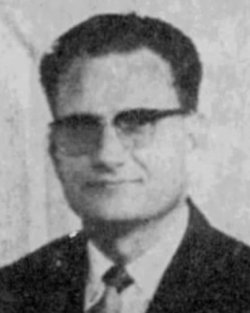
W.E. Best

#11 Isaiah 53 - The Savior's Satisfaction

Isaiah 53:11
W.E. Best July, 1 1988 Audio
0 Comments
Best on Isaiah 53

Sermon Transcript

Auto-generated transcript • May contain errors

100%
Tonight we'll study the 11th
verse. And as I stated, it'll be anticlimactic,
really, what we had to give this morning. I'm not apologizing
for it, but you cannot, you just cannot, go beyond and excel not the way it was presented,
but the truth that we sought to portray this morning. Let's read beginning with verse
1. Who hath believed our report,
and to whom is the arm of the Lord revealed? For he shall grow
up before him as a tender plant, and as a root out of a dry ground,
He hath no form nor comeliness. And when we shall see him, there
is no beauty that we should desire him. He is despised and rejected
of men, a man of sorrows and acquainted with grief. And we
hid as it were our faces from him. He was despised and we esteemed
him not. Surely he hath borne our griefs
and carried our sorrows. Yet we did esteem him strict
and smitten of God and afflicted. But he was wounded for our transgressions. He was bruised for our iniquities.
The chastisement of our peace was upon him, and with his stripes
we are healed. All we like sheep have gone astray. We have turned every one to his
own way, and the Lord hath laid on him the iniquity of us all.
He was oppressed and he was afflicted, yet he opened not his mouth.
He is brought as a lamb to the slaughter and as a sheep before
her shearers is done, so he opened if not his mouth. He was taken
from prison and from judgment, and who shall declare his generation? For he was cut off out of the
land of the living, for the transgression of my people was he stricken. And he made his grave with the
wicked and with the rich in his death, because he had done no
violence, neither was any deceit in his mouth. Yet it pleased
the Lord to bruise him. He hath put him to grief. When
thou shalt make his soul an offering for sin, he shall see his seed,
he shall prolong his days, and the pleasure of the Lord shall
prosper in his hand. Now for the verse that we will
study tonight. He shall see of the travail of his soul, and
shall be satisfied. Now for a controversial statement. Commentators as a whole do not
agree. There is much discussion on this
phrase. By his knowledge shall my righteous
servant justify many, for he shall bear their iniquities." This past week, when I went into
the intensive care to visit Mrs. Dixon, knowing that she didn't feel
like reading, She said, how wonderful it is
that I've heard, of course, recently, much on Isaiah 53, and the way
we have tried to portray it, she said, I can almost quote
it by memory, and how refreshing it is, while I'm lying here unable
to read, to be able to go through and quote, almost quote it word
for word, and other passages of scripture which she can quote
by memory. That's the advantage, beloved,
of being well acquainted with Scripture. You and I do not know
when the time will come when we may not be able to see, we
might not be able to read, and how wonderful it is to be able
to quote the Scripture which alone gives comfort, gives strength, quoting the Scripture
which we have hidden away in our hearts lest we sin against
the Lord. Now for the New Testament verses
on the parts of verse 11. He shall see of the travail of
his soul and shall be satisfied. Can you think about a verse of
Scripture in the New Testament, one that is a great commentary on that
statement. Hebrews 12 and verse 2, For the
joy that was set before him, he endured the cross, despising
the shame. Quoting only a portion of that
verse. Now, I'm not going to give to
you the verse on the next phrase. I am omitting it for a reason. Because of so much discussion
on this particular phrase, you may not have even thought about
there ever being any discussion. Beloved, I don't want to hold myself above you in the
sense of implying that I know so much more than you do. I do
not mean it in that sense yet. If I do not study, if I do not
prepare, if I am not in a position to give something to you, then
I am not fulfilling my office as elder, as a teaching elder. I do not expect you to have the
time to do all the research, to do all the study that I do. You don't have that time. That
doesn't mean, however, that there is to be an excuse for not having
done more studying and more meditating upon the Scriptures. But the
man of God is to be in the position of instructing the people under
his watch care. In order to do that, he has to
study. And I wouldn't give you a dime a dozen for preachers
who do not study enough that they can stay at least a step
ahead of the people. He is not worth the salt that
goes in his bread unless he studies to the extent that he is a step
ahead of the people to whom he ministers. And if he is a step
ahead in his presentation of the Word, then there is always
something to be gained by the sheep when they come to listen
to the under-shepherd of God. Now, some say that this next
phrase is to be understood in the sense of our knowledge of
Christ, and a great number of commentators believe that. There
are others who say, that it does not refer to our knowledge of
Jesus Christ, but His knowledge. His knowledge. Now look at the
statement. By His knowledge shall my righteous
servant justify many. There are some who take a neutral
position on this, saying there is difficulty in interpreting
the Greek, I mean the Hebrew, or the Septuagint version of
the Greek, which is the Greek translation of the Hebrew on
this. So they say the Hebrew scholars do, there is difficulty.
And then the Greek scholars who consider the Septuagint version
of the Old Testament Scriptures, they say it's difficult to ascertain
as to whether it's talking about the knowledge of Jesus Christ,
whether it is subjective or objective. Now, I'll give you both views
tonight and then share with you what I believe to be the better
view in the light of the context, and that's all I'm capable of
doing. By his knowledge shall my righteous
servant justify many. Then the last phrase, for he
shall bear their iniquities. Personally, I think, when we
come to verse 11 of Isaiah 53, that we have departed from the
penitential confession of the Jews, and we're now face to face
with the prophetic organ of God Himself. In other words, God
puts His own seal on the confession. in the last two verses. Personally,
I believe that, and that is the view that many hold on the last
two verses of this chapter. Now looking at verse 11 and its
different parts. First of all, he shall see of
the travail of his soul and shall be satisfied. There is much in
that. Even though we have already considered
in verse 10 that he shall see his seed, there is the omission
of something which we find here that really does add something
to a statement already made. Satisfaction. Satisfaction. When I think of satisfaction
here, I'm not only thinking of the satisfaction of God the Father
in the work of His Son, but the satisfaction of the Son himself. And then I will add to that,
whatever satisfies the Father and the Son surely does satisfy
every recipient of grace. So here is a threefold satisfaction. The satisfaction of the Father
in that the Son has performed the work for which he was sent
into the world. the satisfaction of the Son as
He considered His own sacrificial work upon the cross. And, of
course, that results in our satisfaction because if the Father is satisfied
and the Son is satisfied, then how foolish it would be for you
and me to say that we are not satisfied with that which does
satisfy the Godhead. That would be a statement too
ridiculous to consider. Let's break this up. The travail
of soul includes all of the suffering and sorrow of the Savior. It's all included in that word
travail. We'll break that word down in
a moment. In other words, it all culminates in Jesus Christ
being cut off from the land of the living, a statement made
in a previous study and taken, of course, from a preceding verse.
Let us look now at the word travail. What does it mean? Travail conveys
the idea of trouble of any kind. In other words, it does not refer
only to the death of Christ upon the cross, but to all of the
trouble he encountered in life, and then its culmination or climax
in its death, in his death. So the word tridel covers the
idea of trouble of any kind. Listen to two verses from the
Old Testament Scripture that will help us to interpret this.
All of us are familiar with the book of Job, and Job talks about
trouble. Many statements are made in the
book concerning the trouble that he had to endure. One of his
so-called friends, Elias, has this to say, and we find it in
Job 5, verse 7, which reads, God, rather, man is born to trouble. Man is born to trouble. This
is a statement made by Elias as he sought to tell Job all
about his problem and the reason for his own trouble or suffering. Man is born to trouble, trouble
of any kind. And then there is another verse
found in Genesis 41 and verse 51. This statement is made by
Joseph. And Joseph said, God made me
forget all my toil. Hebrew scholars tell us that
the word translated, toah, in Genesis 41, 51, is the same as
the word translated, trouble, in Job 5 and verse 7. The word denotes strong effort. attended with pain and grief. So the Lord Jesus shall look
out from his trouble. He shall look out from his sorrow
and grief. And looking out from his sorrow,
from his trouble and his grief, he shall be satisfied. That's the simple interpretation
of the phrase. No amount of physical suffering
could satisfy this expression. Therefore, this expression does
not refer to the physical torture that Jesus Christ endured. We know that he did endure physical
torture. And I believe that you will agree
with me that when you hear sermons on the crucifixion of Christ,
and the torture that he suffered, there is always more emphasis
on his physical torture than on the torture of his soul that
we talked about this morning, which is much greater. In fact,
no comparison whatsoever between physical torture and the torture
of one's soul. Let me illustrate it. Usually,
when we hear a message on the crucifixion of Christ, we are
told how that He suffered at the hands of evil men, how they
buffeted Him, how they slapped Him, and how they put a crown
of thorns on His head. And then they'll go into great
length to describe how the thorns will puncture the sensitive nerves
of the head. And that is one of the worst
of all tortures that can be inflicted upon man. And then they'll go
from the crown of thorns to the nails driven through his hands,
and the spikes through his feet, and so forth. And then they'll
take the cross, and they'll lift it up, and with a thud, you heard
it said like this, with a thud, and the hole has been dug. And
then when the cross is dropped into the hole, you can imagine,
and there is a lot of physical torture to that, as the weight
of his body, held by nails or spikes in his hands and in his
feet, and then when the cross hits the bottom of the hole,
how excruciating the pain must have been. And they don't stop
there. All of this taking place in the
heat of the day, And he wants some water, but no water is given. I thirst. I thirst. That was one of his cries, one
of the seven cries of Christ. And then they completed by saving.
Finally, they took a spear and pierced his holy body. Now, beloved,
I know there was physical torture and all of that, and you and
I can't say maybe too much for that, but whatever is said, about
the civic, the physical sufferings of Jesus Christ. Beloved, one
has not reached the real point of the sufferings of Jesus Christ.
Many martyrs have suffered excruciating pain as a result of what they
had to endure before their death. But they were martyrs for Christ,
much more than that. even though the martyrs who died,
yet most of them rejoiced even in their dying moments, because
they relied on the strength and grace that God gave to them in
their dying hour. But Jesus Christ, as He suffered
in His soul, and this is what it's talking about. Look at the
verse again. He shall see of the travail,
the sorrow, the pain, the intense pain, the suffering of his soul. He shall look out from this suffering
and be satisfied. In other words, he sees the goal.
He sees what is accomplished by this torture of soul, and
he's satisfied with the accomplishment of all that he endures as he suffers untold agony of
soul. That's why I said that when one
looks at this verse and the first part thereof, he cannot say that
it describes the physical sufferings of Jesus Christ. It goes beyond
that. It has a seat within, within,
and explains such statements as we dealt with this morning.
My soul is exceeding sorrowful unto death. Or, my God, my God,
why hast thou forsaken me? Even in the midst of sorrow,
Jesus Christ could and did look above and beyond that sorrow. The particle here, translated
ob, in your King James Version, is rendered back in verse 8 by
the word from, and can mean this, on account of, by means of, or
because of. because of the travail of his
soul, or on account of the travail of his soul. He looked beyond
and saw the fulfillment, saw the fruit, and was satisfied. Let's look at the word travail
again. You see, in the study of the Scriptures, you want to
take a word and consider it how it's used in other places in
the Scriptures. Trevail is used for the birth
pains of a woman that precede the birth of a child. There is
not a mother here tonight who has not given birth to a child,
that even though she suffered the birth pains, and yet while
she was experiencing the birth pains, any mother, if she's any
mother at all, looks out beyond and above those birth pains and
sees what? The fruit of those pains. What? A child. A child. A baby. My own flesh and blood. So she sees the fruit of her
suffering. And she is satisfied when she
considers the fruit of her suffering. Now, that's not a good analogy,
but it helps you a little bit to see the meaning of this. How that Jesus Christ, because
of his travail, looked beyond the travail, just as a mother
would as she is feeding the birth pangs, looks beyond the pangs
of birth, and sees the fruit of the pangs, what? a child,
the fruit of all her sorrow. In the study of the Scriptures,
the word is used in another sense. It is used as the figure of a
husbandman who tills the ground, prepares the soil, and plants
the seed, and in the midst of all of his work and toil, he
looks beyond the toil, he looks beyond the work, and sees what?
He sees the fruit of his labor. So because of his labor, he looks
beyond it and sees the fruit thereof. That'll give you some
idea. of what our Lord meant by this
statement. This travail did not consist
of impatience. There was no impatience on His
part. Now, with a mother in travail, many times there is impatience,
but no impatience with Jesus Christ. I want us to see the
difference now. With a person who has prepared
the soil and plants the seed, many times there is impatience
waiting for the fruit. I plan to have a garden this
next spring. I want a little garden in my
backyard. And the most important thing is to prepare the soil,
and it must be adequately prepared. Now, I know what my nature is.
I'm going to prepare the soil. I'm going to do it right. I like
to have a few things growing in the backyard. But when I have
prepared the soil and planted the seed and have done a little
work, I know how impatient I am. I'm going to look out there every
morning, just can't wait until I go out there and pick a real
juicy ripe tomato off of the vine or something else. So there
is a certain amount of impatience, you see. But there was no impatience
with Jesus Christ. So this travail on the part of
Christ did not consist of impatience. It did not consist of confusion. Many times in our sorrow, in
our travail, there is not only impatience, but there is what? But there is confusion. And sometimes
there is even distrust. So when the woman is in travail,
sometimes there is distrust. She might distrust the doctor,
or she might distrust something else, or somebody else. But with
Jesus Christ, when it says here, he shall see of the travail of
his soul, no impatience, no confusion whatsoever, and no distrust because
of his suffering, He sees the seed. He sees the accomplishment
of his suffering and is perfectly satisfied. Now, once again, let's
look at something else. As we look at the word travail,
the mother who is travailing in pain, waiting for the delivery
of the child, she may be disappointed. She may be confused. When the
child comes, there may be something wrong with the child, or the
child may be stillborn. But with Jesus Christ, beloved,
no disappointment. He shall see his seed. No Arminian, if he'll really
read this verse and believe what it says, can believe what he claims to
believe. And that is that Jesus Christ
died for many who shall never be saved. Beloved, that is wrought,
that is religious wrought, wrought out of the bottomless pit of
hell. Let's look at it again. Jesus Christ shall see of the
travail of his soul, and seeing it, he'll be satisfied. I want
to ask you a question, and let's be sensible about it. Do you
think that Jesus Christ could be satisfied if He saw one soul
for whom He died going to hell and spending an
eternity in hell? Could He be satisfied? He could
not. There could be no satisfaction.
But every one whom the Father gave to Him He died for everyone,
and everyone for whom He died will come to the knowledge of
Jesus Christ and will spend eternity with Him. Why? Because there's
no confusion. He did not die in vain. Now,
will you look at something in Isaiah 53? We've spent weeks,
but we're not through yet. Will you go back to verse 6 and
let me call attention to something? All we like sheep. Will you take
the word sheep and will you connect the word sheep with the statement
in verse 8, my people? For the transgression of my people
was he stricken. Then will you leave the statement
my people in verse 8 Go to verse 10 yet. It pleased the Lord to
bruise him He hath put him to grief when thou shall make his
soul an offering for sin. He shall see his seed That refers
to his spiritual seed connect the word sheep with the statement
my people and Next with the word seed in verse 10. We're not through
yet now verse 11 He shall see of the travail of his soul and
shall be satisfied. By his knowledge shall my righteous
servant justify many. Doesn't that harmonize with the
statement of the New Testament? Like Matthew 20, 28, he became
a ransom for many. The word many is to be connected
with seed, my people, and sheep. For whom did he give his life?
He laid down his life for the sheep, for his people, Matthew
121, his seed, his spiritual seed, the many sons whom he shall
bring to glory, and the many whom he shall justify in verse
11. I'm not through yet. Now look
at verse 12. Connect the word many then Notice
the word there, the pronoun there in the last part of verse 11.
For he shall bear their iniquities. So the word sheep, the words
my people, the word seed, the word many, the pronoun there,
and now go to verse 12. Therefore will I divide him a
portion with the great, and he shall divide the small with the
strong, because he hath poured out his soul unto death. And
he was numbered with the transgressors, and he bared the sin of many. Connect the word many in verse
12 with the word many and the pronoun there in verse 11. But I'm not through yet. Look
at the last phrase of verse 12. and made intercession for the
transgressors. And the word transgressors is
to be connected with all the other words to which I've called
attention. Jesus Christ said in John 17, verse 9, I pray not
for the world, but I pray for those whom thou
hast given me. whom thou hast given me. Jesus
Christ does not intercede for all transgressors, but for those
whom the Father gave to him in the covenant of redemption. Now
look at the first part of verse 11 again. He shall see of the
tridel of his soul, and shall be satisfied. Satisfied! Satisfied. Just think about that
for a moment. Perfect satisfaction. Absolute
satisfaction. Because of Christ's travail of
soul, he shall see the fruit of his travail and be satisfied. What did he see? He saw the seed. As was said last Sunday night
in the discussion of the 10th verse, he saw his seed of those
whom the Father had given to him in the covenant of redemption,
a statement found seven times in the 17th chapter of John.
Seven times he speaks of those whom the Father had given to
him. So he sees his seed born of the
flesh, He sees his seed born again, but he sees his seed preserved
until born again. Did you know the Bible teaches
that? Turn with me to Jude, verse 1. I want to show you how many
religionists will take a verse of Scripture clear out of context
and build a doctrine on it. What Peter is talking about,
I mean, what Jude is talking about, here, is not eternal security
of the believer. And this is the usual interpretation
placed on this verse. Let's read the entire verse.
"...Jude, the servant of Jesus Christ, and brother of James,
to them that are sanctified by God the Father," here it is,
"...and preserved in Jesus Christ and called." He sees what? His seed born of
the flesh. He sees the seed born of the
flesh preserved until born of the Spirit. And here it is. Sanctified by God the Father. Now what do you think that phrase
means? Sanctification by God the Father is the same as divine
election. Same thing. Now notice the second
part of this, and preserved in Christ. Now don't forget, we
are elected in Christ, Ephesians 1-4, and that before the foundation
of the world. But the preservation spoken of
here is preservation prior to being born of the Spirit and
does not have reference to the eternal security of one who has
been born of the Spirit, even though the Bible teaches that. Now, how do I know that to be
true? Look at the last part, and called, and called. The calling here is the effectual
call of God, not the general invitation, but the effectual
call of God. Now look at the verse. I challenge
you to refute it. Sanctified by God the Father,
that is, set apart in the eternal counsel of God the Father, and
preserved, you know what the Puritans call this? They called
it prevenient grace. That's an expression you don't
hear today from the average pulpit because the average preacher
doesn't know anything about it. Prevenient grace, that means
preserving the individual whom God has set apart until he is
born of the Spirit of God. Does that sound like, let me
ask you a question, does that sound like that Jesus Christ
died for some who shall never be saved? Does that sound like it? No,
everyone whom the Father gave to the Son will be preserved
until he is saved. And then call, this is the effectual
call of God. Many are called, but few chosen. There's a general call, and there
is the effectual call, and the effectual call is what is discussed
here in the last part of this text. Now go back to Isaiah. I said, because of the travail
of Christ's soul, he shall see the fruit of his suffering and
be satisfied. Let's look now at the verb satisfied. Satisfied means not only to be
contented, but it means to be filled or abundantly supplied. It behooves the students of God's
Word to learn the meaning of biblical words. So satisfaction
here means not only to be contented. Jesus Christ was contented with
what he saw. But it goes beyond that contentment,
and it means to be filled. It simply means that when he
was satisfied with what he saw, everything that he did, everything
was filled full, or abundantly supplied. It stands for the fullest
fullest, notice what I'm saying, realization of expectation. The fullest realization of expectation. Now, I've given you some illustrations
which will not hold up all the way through. I've talked about
the travailing of the mother before giving birth to the child.
I've talked about the farmer or the gardener who prepares
the soil and plants. But, beloved, it cannot be said
of the mother or of the gardener that he is contented, always
contented, with what he sees. It cannot be said that there
is satisfaction to the extent that there is perfect realization
of the goal being accomplished. When I stand before you, I can
never say when I get through that I'm perfectly satisfied
with the presentation of the message. It doesn't make any
difference what one does. If he's satisfied with what he's
done, then there's something wrong with him. Whatever a human
being does, there can never be satisfaction in this sense. But
there was perfect satisfaction with Jesus Christ in the accomplishment
of his sufferings on the cross, when his soul was poured out
unto death. You see, the Lord Jesus had an
infinite satisfaction, an infinite satisfaction. Now, how in the
world are you going to explain infinite satisfaction? How can
you describe infinite satisfaction? You and I are finite. We cannot
comprehend infinite satisfaction. But this satisfaction on the
part of Jesus Christ was infinite. It was absolute. It was perfect. It was complete. Fully realized was His goal. Now do you see why he could say
what he said in his high priestly prayer in
John 17? Father, I have finished the work
which thou gavest me to do. And since he had finished the
work the Father had sent him to perform, he was ready to go
back. and enjoy the glory which he
had with the Father before the foundation of the world, because
he was perfectly satisfied with the accomplishment of his work.
Infinite satisfaction. No person can be an Arminian
and believe this verse. When he says he believes this
verse and turns right around and says that he believes that
Jesus Christ died for all men and there are many in hell for
whom he died, then he doesn't believe this. He doesn't believe
it at all. Let's go a little further. When we compare this satisfaction
with that of the prophet Isaiah, who gave to us this great prophecy
of Christ's sufferings, we see that he was not satisfied. The
very first verse, who hath believed our report? Who hath believed
our report? You see, I'm never satisfied. when I have preached the message
with the response that is given thereto. I'm never satisfied. I can't be satisfied. So Isaiah was not satisfied.
Who hath believed our report? To whom is the arm of the Lord
revealed? What does Jesus Christ see? He
sees justice satisfied. He sees grace reigning through
righteousness unto eternal life. He sees the works of the devil
destroyed. He sees many sons brought to
glory. He sees his own for whom he died
reigning with him throughout eternity in the kingdom which
shall never have an ending. It has been suggested by some
that the fruit of Christ's sacrifice include, number one, the glory
that should accrue to the Father from the new splendors reflected
on the perfections of His character by the work of human redemption,
and two, by the reward that should accrue to the Savior Himself,
and number three, to the benefit that should accrue to the elect
for whom Jesus Christ died. That's one way it has been expressed. Now look at the verse. He shall
see of the travail of his soul and shall be satisfied. Now for
the last part of the verse, and there are two parts to this. by his knowledge shall my righteous
servant justify many." I'm not going to spend any time tonight
discussing justification. We spent about a year ago, about
six months, in the study of the doctrine of justification, and
we'll have a booklet or a book on that before too long. But
we do know that justification is forensic, it is a legal term.
And so we'll not say any more about that, because we've already
covered the subject of justification to the extent that it is not
necessary. Justification is the great benefit, we know, that
flows from the sufferings of Jesus Christ. And you and I who
have been justified stand before the Lord just as if we had never
sinned. That's an old cliché. An old
interpretation of justification, but it is true, and I do not
mind repeating it. Then notice, he'll justify many. But let's take this step by step
because this is a controversial statement. I've read a great
number of commentators, as I've already stated, and most of them
disagree as to the real meaning of this statement by his knowledge. by his knowledge, my righteous
servant shall justify many." Now we have already seen that
the word many is to be associated or connected with the words that
I have mentioned beginning with verse 6 through verse 12. It
does not mean all of mankind. Because all certainly have not
been justified, all are not justified, so it is a restricted word, is
it not? But look at the statement, My
righteous servant, the Apostatic Union, that is, in
his having assumed the nature, or human nature, And so it refers
to the hypostatical union. Jesus Christ was the servant
of Jehovah. And it refers, of course, and
is connected with the first advent of Jesus Christ, when he came
as the servant to perform a work. And the work was the work of
redemption, which is discussed throughout this chapter. But
notice, my righteous servant. This is the foundation from whom
the great benefit flows to the many or to the elect of God. The word righteous, you'll notice,
is not placed after the word servant. It stands before the
word servant, and that without an article in the original, and
this is so important. He just says, My righteous servant.
He doesn't say, The righteous servant. The article is omitted. You might ask what the significance
is of the omission of the article here. Righteous servant. The omission of the article denotes
what? It indicates that the person
spoken of here in earth, while he's here in the
earth, on the earth, performing the work of the Father, indicates
that the person spoken of held in earth a position of righteousness
that was singular and isolated. In other words, Jesus Christ
is the unique person. There are righteous men. As we
go through the Old Testament, there are many righteous men
referred to, but Jesus Christ is righteous, and the omission
of the article denotes that He is righteous in a peculiar sense. His righteousness is unique. There has never been one righteous
like him, and this refers to what? The inherent righteousness
of the Godhead. Now, it is not by the inherent
righteousness of the Godhead that he justifies many. But it
is by virtue of the inherent righteousness of the Godhead
that makes him capable of working out a righteousness on the cross
by which we are justified. Now look at that. What does it
say? By his knowledge shall my righteous
servant justify many, for he shall bear their iniquities."
And Jesus Christ has borne the iniquities of all of those whom
the Father gave to him in the covenant of redemption. Now let's look at the statement
in the first part of the last division of the verse. by his
knowledge. How is this to be understood?
It is thought by some that the knowledge here is the knowledge
which we have of God's righteousness. Personally, I can't accept that. And yet there are many who hold
to this view and there are many sound men who hold that view.
There are others who say it refers to the knowledge of Jesus Christ
Himself. Now, what does it mean? I read
one man who said, because of a difficulty of both the Hebrew
and the Greek translation of the Hebrew, he said, I say this,
and let me give you his quotation. either by his own knowledge or
by our knowledge of him, may have been purposely used since
Jesus Christ is included in both expressions. Now, I'll repeat
that again, I want you to think about it. He said, because of
the difficulty involved, as to whether it refers to our knowledge
of Christ or His knowledge, whether it be subjective knowledge or
objective knowledge. He said, I say that the Holy
Spirit, without a doubt, led Isaiah to write in such a way
that either it spoke of the knowledge of Jesus Christ or our knowledge
of Him, but the important thing is that Jesus Christ is the subject
of that knowledge. In other words, it's either His
knowledge of us or our knowledge of Him, therefore we do not lose
sight of Jesus Christ in the discussion of knowledge. But
I'll tell you what I believe it means. I think, personally, it is stretching
the interpretation to say it refers to our knowledge of Jesus
Christ. Now, it is true that you and
I know Jesus Christ, who had been born of the Spirit of God.
Turn with me to John 17. And objective knowledge becomes
subjectively realized in the heart of every person who has
been born of the Spirit of God. Now, follow that statement. I
said objective knowledge of Jesus Christ and his righteousness
becomes subjectively realized in the heart of every recipient
of grace. And I want to close by magnifying
that thought, but I'm not ready yet. Begin with me as we read
John 17, verse 1. These words spake Jesus and lifted
up his eyes to heaven and said, Father, here is that enduring
term that we talked about this morning. You see, now he is not
suffering as the substitute. He approaches
him as his father. The hours come, glorify thy son,
that thy son also may glorify thee, as thou hast given him
power over all flesh, that he should give eternal life to as
many. Don't you like that? That confirms
what we've been talking about tonight. The Lord Jesus Christ
has been given power to the extent that he will save everyone that's
been given to him. Look at verse 2. You can't read
this as a child of God without rejoicing and without being humble.
As thou hast given him, that is the Lord Jesus, power over
all flesh, that he should give eternal life to as many as thou
hast given him. Verse 3 is the text. And this
is life eternal, that they might know thee the only true God,
and Jesus Christ, whom thou hast sent. Thus the objective knowledge
of Christ and his righteousness becomes subjectively realized
in the heart of every person who has been born of the Spirit
of God. But I don't think this is talking about our knowledge
of Jesus Christ and his righteousness. It says, by his knowledge, by
Christ's knowledge, my righteous servant shall justify many. Now
let me give you a quotation of one man whose work I have. He
says, and I quote, some say the knowledge is that of our knowledge
of Christ. But he said, I do not believe
it refers to our knowledge of Christ. The Word attributes the knowledge
to Christ who acts prudently as he learned the path laid out
for him. You say, I don't understand that.
Beloved, in studying this and even continuing to study it,
here it is. Turn to the 50th chapter of Isaiah.
Here's the answer. Here's the answer. I'd like to begin with verse
1 of the 50th chapter. Thus saith the Lord, Where is
the bill of your mother's divorcement? Now this is the Lord speaking
through Isaiah to the people of Israel. Whom I have put away
are which of my creditors is to whom I have sold you. Behold,
for your iniquities have ye sold yourselves, and for your transgressions
is your mother put away. Wherefore, when I came, Was there
no man when I called? Was there none to answer? Is
my hand shortened at all that it cannot redeem? Or have I no
power to deliver? Behold, at my rebuke I dry up
the sea, I make the rivers a wilderness, their fish stinketh, because
there is no water, and dryeth the thirst. I clothe the heavens
with blackness, and I make sackcloth their covering." Here it is. Verse 4, here's the answer. The
Lord God hath given me the tongue of the learned. Now, who's the
subject of this? The Lord Jesus Christ. This is
a prophecy of Jesus Christ. The Lord God hath given me the
tongue of the learned. This refers to Jesus Christ as
the servant of Jehovah. And this is the same thing that
Luke 2 talks about when it speaks about Jesus Christ growing up
and increasing in knowledge and wisdom. Talking about the servant, Jesus
Christ. Now listen to it, all of verse 4. The Lord God hath
given me the tongue of the learned, that I should know how to speak
a word in season to him that is weary, he wakeneth morning
by morning, he wakeneth my ear to hear as the learning." Here
is a prophecy concerning Jesus Christ. Beloved, the Lord Jesus
Christ as the servant of Jehovah learned. Now, we know as God,
He knew all things. So you have to consider the Lord
Jesus Christ as the God-man, as the servant. And this is what
is being discussed in Isaiah 53, the servant of Jehovah. The
work which he accomplished as the Lord Jesus Christ, the God-man,
the mediator between God and man, the one who came to give
his life a ransom. Now it says, By His knowledge,
the knowledge of Jesus Christ, in Isaiah 50 and verse 4, as
far as I'm concerned, is the divine commentary on this. And
then notice the last part. He shall justify many, for He
shall bear their, that is, the sins of the many whom He justifies. Now I want to close with this. Since I believe the emphasis
is on the knowledge of Jesus Christ of the elect, he knows all things, but this
has particular reference to his own people. It is true that he
knows us, and beloved, you and I know him because he first knew
us. We sought him because he first
sought us. We chose him because he first
chose us. We love him because he first
loved us. And now for this closing statement. The justified become interested
in Christ's merits just as Jesus Christ became interested in all
of our demerits, even before the foundation of the world.
Now, if you don't get anything else, get that. And I want to
emphasize that last point tonight. That's why I have no confidence
in anybody's religious profession who says he has been justified
by God if there is no interest manifested on his part for the
merits of Jesus Christ. If we have been redeemed, if
we have been justified by Christ, then as the recipients of the
grace of God, there is an interest on our part for the merits of
Christ, just as he came to have an interest in our demerits and
provided the means of our redemption. But I don't see how. that we
could come to the Lord's house on the Lord's day, when we have
discussed the person and work of Jesus Christ, and without
a desire to dig deeper into the depths of the meaning of his
redeeming work on the cross. So as justified persons, we have
an interest, an interest, in Christ's merits. I have such
an interest in Christ's merits that I don't just go on what
I have learned years ago. I know there is much that I have
not found, and as long as God gives me breath and mentality
enough to study, I assure you that I shall continue to show
an interest in the merits of Christ. when I think about his
interest in all of my demands to the extent that he made provision
for my salvation. Let's stand. As we sing in the
song,
W.E. Best
About W.E. Best
Wilbern Elias Best (1919-2007) was a preacher and writer of Gospel material. He wrote 25 books and pamphlets comprised of sermons he preached to his congregation. These books were distributed in English and Spanish around the world from 1970 to 2018 at no cost via the W.E. Best Book Missionary Trust.

Comments

0 / 2000 characters
Comments are moderated before appearing.

Be the first to comment!

Joshua

Joshua

Shall we play a game? Ask me about articles, sermons, or theology from our library. I can also help you navigate the site.