Bootstrap
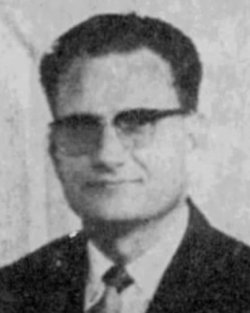
W.E. Best

King of the Ages, The Subject of the Eschatological Kingdom

W.E. Best November, 10 1985 Audio
0 Comments
Best on Eschatology

Sermon Transcript

Auto-generated transcript • May contain errors

100%
Open your Bibles this morning
to 1 Timothy, chapter 1. Our subject is entitled, King
of the Ages. I've already stated, but I will
repeat, we are establishing our premise for a lengthy discussion
on the subject of the eschatological kingdom. Our scripture reading
this morning is found in 1 Timothy chapter 1, beginning with verse
12 and reading through verse 17. Verse 17 is our text. And I thank Christ Jesus, our
Lord, who hath enabled me, for that he counted me faithful,
putting me into the ministry, who was before a blasphemer and
a persecutor and injurious, but I obtained mercy because I did
it in unbelief. I did it ignorantly in unbelief. And the grace of our Lord was
exceeding abundant with faith and love which is in Christ Jesus. This is a faithful saying and
worthy of all acceptation that Christ Jesus came into the world
to save sinners of whom I am chief. How be it for this cause,
I obtain mercy, that in me first Jesus Christ might show forth
all longsuffering for a pattern to them which should hereafter
believe on him to life everlasting. Now unto the King Eternal That's not a good translation.
The word for eternal in verse 17 of 1 Timothy chapter 1 is
a genitive plural of the Greek verb aion. Aion means a period of time of
special significance or of a significant character. It means an age. It also means eternity. Since it is a plural word and
not a singular, you would not say, now unto the king of eternities,
would you? It should be translated ages. Now unto the king of the ages,
immortal or incorruptible, imperishable or undying, invisible, the only God. You will notice
I omitted a word. The word wise is not in the Greek
text. be glory and honor forever and
ever." Now notice the two words in the last part of the text,
ever, and then it's repetition, ever. Here you have the same
word for eternity up in the first part of the text. So it would read like this, now
unto the king of the ages, immortal, invisible, the only God, be honor
and glory unto the ages of the ages. That would be the correct
translation of the Greek text. King of the ages is our subject. Kiliasm is the theological doctrine
that Jesus Christ will set up a theocratic kingdom on earth
for a thousand years. You may not be familiar with
the word Kiliasm. That's C-H-I-L-I-A-S-M. The word Kiliasm comes from the
Greek word Kilioi, which means a thousand. It is used ten times
in the New Testament. 2 Peter 3, verse 8, and that is
the only reference outside of Revelation where Kilioy is used. The references in Revelation
are Revelation 11, 3, chapter 12, verse 6, chapter 14, verse
20, and then it's used six times
in Revelation chapter 20, verses 2, 3, 4, 5, 6, and 7. The word
millennium, a Latin word which means the same thing, has taken
the place of Kiliasm in the realm of theology. One is mistaken to think Christ's
reign will be consummated at the conclusion of the millennium
or a thousand years. He is the king of the ages. Now you see why I have chosen
this verse in 1 Timothy 1, 17 as our text today. Opponents
to millennialism stress the fact that outside of Revelation chapter
20, there is no reference to a millennium. To the surprise
of some pre-millennialists, these opponents are correct to say
there is no limited reign of Christ on the earth for a thousand
years. The scriptures nowhere declare that Jesus Christ's reign is
limited to a period of 1,000 years. Beloved, I'm making some
very important statements at the outset this morning, and
I hope that we get them. On the contrary, the Bible speaks
of His reign lasting forever. In Luke 1, 32 and 33, I read,
He, that is the Lord Jesus, shall be great and shall be called
the Son of the Highest. And the Lord God shall give unto
him the throne of his father David. And he shall reign, not
a thousand years, but forever. and of his kingdom there shall
be no end. Now keep those two statements
in this passage in mind, please. The mistake of most premillennialists
is placing emphasis on the millennium rather than on the kingdom. It took me a long time to learn
that lesson. but I think I have learned it.
It is my responsibility over the next two years or less to
establish that fact beyond any opposition. While there are only
six references to the millennium in Revelation 21 through 7, There are many references in
the scriptures to the king and his kingdom. You would be amazed
to find out how many times reference is made to the king and his kingdom. The idea that Christ will establish
a kingdom to last a short period of 1,000 years should be denounced. Scripture often speaks of the
coming kingdom of Jesus Christ, which is associated with His
second advent. That's why we are referring to
our subject as the eschatological kingdom. The millennium, a thousand
years of Revelation 20, is the period which serves as the transition
between the church age and the eternal state. Christians are waiting for not
only the redemption of the body, but the renewal of the earth. Remember what I said. I'd like
for you to open your Bibles to Romans 8, and let us read together
verses 18 through 24. While you're opening your Bibles
to that portion of Scripture, keep in mind what I just said.
Christians are waiting for not only the redemption of the body,
but also for the renewal of the earth. Paul said, For I reckon that
the sufferings of this present time are not worthy to be compared
with the glory which shall be revealed in us. For the earnest
expectation of the creature waited for the manifestation of the
sons of God. For the creature was made subject
to vanity, not willingly, but by reason of him who has subjected
the same in hope. because the creature itself also
shall be delivered from the bondage of corruption into the glorious
liberty of the children of God. For we know that the whole creation,
notice that statement, the whole creation groaneth and travaileth
in pain together until now. And not only they, but ourselves
also, which have the firstfruits of the Spirit, even we ourselves,
grown within ourselves, waiting for the adoption, to wit, the
redemption of our body. For we are saved by hope, better
still, we are saved in hope. But hope that is seen is not
hope, for what a man seeth, why doth he yet hope for? Keep in
mind the whole creation is groaning. Why? Because the whole creation
is under the curse. Since the whole creation is now
under the curse, the animate and inanimate world is subject
to vanity. All millennialists ask, where
does it say there will be a millennium? The millennium is not mentioned,
of course, in Romans 8, but reference is made to lifting the curse and in companion
scriptures the establishment of His kingdom. There will be
a change in the material world when Jesus Christ comes. The
main idea for you and me to keep in mind is not extinction, but
transition. Please keep in mind the word
transition. I do not believe that the heavens
and the earth will become extinct. The Bible does not teach that. But there will be a transition.
we're waiting for the transition. That's the hope of the believer,
not only to have a new body, but also a new earth. Perishing signifies termination
of the present condition. If you'll turn to 2 Peter 3 verse
6, Peter, speaking of the old world, said, whereby the world
that then was, being overflowed with water, perished." Look at
the word perished. The planet Earth did not perish,
but the condition of things that existed did perish. The dissolving that Peter described
is deliverance rather than annihilation. The Greek word for dissolved,
within the context of 2 Peter chapter 3, is a future passive
indicative of the verb luo, which means to loose or set free. It also means to destroy or demolish. Now what does it mean in the
text in which the word is used? You and I know that the earth
is not going to become extinct. Revelation 21.1 disproves that
idea. There is going to be a new heaven
and there is going to be a new earth. and the new Jerusalem
shall come down from God out of heaven and be right here on
the earth that is renewed for the new Jerusalem. Therefore the word does not mean
that there will be an extension and the earth will cease to be. It will pass into nothingness,
so to speak. But it does mean, according to
the verb that is used, luo, to loose or set free. So the earth
is going to be set free from the curse that is now upon the
earth. Earth's present condition will
give place to a better one. groaning and travailing will
give place to glorying and triumphing. The kingdom that is to come will
be filled with righteousness. Righteousness will cover the
earth as the waters cover the sea, saith the scriptures. Every blessing
of the Christian is the fruit of Christ's redemptive work.
We often hear the question, is divine healing in the atonement? I'm using this for an illustration.
Some answer in the affirmative, others answer in the negative.
The affirmative biblical answer, notice what I said, the affirmative
biblical answer, however, needs explanation, and I propose to
do that for just a moment. By virtue of the merit of Jesus
Christ, every good and perfect gift comes down from the Father
of lights, with whom there is no variableness, neither shadow
of turning, James 1 17. The resurrection of the body
of the believer is included in the atonement. Our hope of a new body, that
work is included in the atonement, but it is not yet ours, Notice
what I said, it is not yet ours. The request for healing may or
may not be presently granted. Restoration to health is subject
to the will of God. Christians await the glorification
of their bodies. They will be perfected, that
is Christian's will, be perfected not only spiritually but also
physically where? In the kingdom and not until
we come into our inheritance. The kingdom will involve the
whole world, not Palestine, not a little segment of the Earth's
surface in the Middle East, The kingdom is going to cover the
entire universe. Keep that in mind. It will encompass
eternity as well as the whole universe that has been brought
into being by God's creative act. Abraham shall become heir of
the world we are told in Romans 4 13. The promise to Abraham
according to all millennialists, was not given on the natural
but the supernatural plane. They say that whatever may be
involved in the numerous seed, you remember back in the book
of Genesis where references made that his seed shall be as the
sand by the seashore innumerable, and also likened to the stars
in the heavens, innumerable. The Amillennialists, however,
do not make the proper distinction between the stars in the heavens
and the sand by the seashore, which we will not do this morning.
But they do say that promise to Abraham, according to their
view, was not given on the natural but the supernatural plane. They ridicule what they call
the segmentary and fragmentary interpretation of the Bible. I'd like you to keep two words
in mind. Fragmentary and segmentary. The millennial argument for the
supernatural is commendable. I said the millennial argument
for the supernatural is commendable. They begin by showing that God
promised Abraham the humanly impossible. Isaac was supernaturally conceived
by a womb that was already dead. Sarah was 90 years of age. Not
only was her womb dead, but the loins of Abraham, who was 100
years old, were also dead. All the saved have been supernaturally
born. You sit here this morning as
a recipient of God's grace, having experienced the supernatural
birth. You have been born from above.
It is called the new birth, born again, quickened, a regeneration. There is no argument with these
scriptural facts. But the theory of amillennialism
breaks down when it states that the promise to Abraham did not
include the earth. Please remember that. The land
promise, they say, was conditional but every condition has been
violated. That's amillennialism. Now let's go a step further.
Truth reveals whether amillennialist or millennialist are fragmentary
and segmentary in biblical interpretation. Amillennialist who embrace the
doctrine of free grace, most of them, teach that God's covenant
with reference to soteriology, salvation, as we saw last Sunday
morning, is unconditional. On the other hand, they state
that the covenant with reference to eschatology, last things,
is conditional. This is dividing God's eternal purpose into contradictory
segments, thus reducing the purpose of
God into incomplete forms or parts. Will you remember that? Millennialists, on the other
hand, adopt the doctrine of free grace, that is those who adopt
the doctrine of free grace, espouse the unconditional covenant of
God with reference to soteriology and eschatology. Thus they do
not divide God's purpose into incomplete segments. Will you
think that through please? God's purpose clearly shows that
he intended to set up a visible kingdom on the earth. I'm talking about the king of
the ages and the establishment of his kingdom in the future
on the earth. Now we're going to have to begin
at the beginning. So I'm calling your attention
to the first chapter of Genesis. I've just stated that God's purpose
clearly shows that He intended to set up a visible kingdom on
this earth. Proof of this is found in Genesis
1, 26 through verse 28. Man's power to govern, however,
was lost by the fall. Adam was given dominion over
all the lower creations. but Adam's dominion was lost
in the fall. Immediately after the fall of
man, God revealed his purpose to save. That takes you to Genesis
chapter three, verse 15, which is the great seed text of Holy
Scripture. God's plan was revealed in the
significations of the names of the men from Adam to Noah. Now some of you have not been
subjected to this thought and so I ask you to listen closely
to what I'm now going to give. This is found in the fifth chapter
of Genesis when you have time to read it. You have all ten
names beginning with Adam and concluding with Noah in that
chapter. Now first of all this morning
I want to give you the name and then the meaning of the name.
I want to show you that God's plan for the ages was revealed
in the significations of the names of the men from Adam to
Noah. Now let me give them briefly.
Number one, Adam, means man. Number two, Seth, means appointed. Number three, enos means mortal. Number four, kainan means fixed
or objective mercy. Number five, mahalelio means
the praise of God. Number six, jarid means shall
descend. Number seven, Enoch, means dedicated
or under God's discipline. Number eight is Methuselah, the
oldest man you know, means long-suffering or when he is dead it shall come. Number nine is Lamech, Lamech
means brought low or overthrown. And number 10, Noah, whose name
means rest. Now I want to give you the substance
of these names in two sentences. And as I give these two sentences,
I'm going to cover each one of these significations. And I want
to show you how God's purpose for the ages is set forth here
in Genesis chapter 5 in the names from Adam to Noah. Listen to these sentences. When
these names, first of all let me explain something, when these
names are connected as a chain of historical events, they reveal,
here it is, they reveal that man appointed to die, that's
what you have in the first three, man appointed to die, stands
before objective mercy, praises God, descends and becomes dedicated. Beloved, surely you can rejoice
in that. Let's do it again. I've taken
all these first seven for one long sentence. Let me give it
again briefly. When these names are connected
as a chain of historical events, They reveal that man appointed
to die stands before objective mercy, praises God, descends,
and becomes dedicated. What a sentence. I can relate
with that. Because that describes my experience
of grace. I was appointed to die. but by grace I stood before objective
mercy and descended at the feet of
the sovereign Savior, praised him for saving grace, and I trust
became a dedicated follower. Now look at the last three. Here's
where we get into prophecy, the last three. And the last three
are Methuselah, Lamech, and Noah. And I have divided these into
seven and three, the last three, which will give to us a prophetical
picture. And what is this prophetical
picture? God is long-suffering in Methuselah. The long-suffering of God waited
in the days of Noah. There are references to the long-suffering
of God. God is not willing that any should
perish, but that all should come to repentance. All the elect
should come to repentance. He's long-suffering. Therefore, when we put it together,
God is long-suffering for the elect's sake. And when the lawless
Lamech when the lawless have been brought low rest rest will
be experienced where in the eternal kingdom now let's go a step further the
divine purpose that we've already referred to in these names from
Adam to Noah becomes more detailed, specific, and certain in Abraham. God revealed more of the particulars
of his purpose in salvation by distinguishing Abraham from others
of the human race. He made a covenant with him concerning
his seed and not only his seed but also the land. and confirmed
it with an oath. In Galatians 3 verse 16, Jesus
Christ is the seed of Abraham. He is the appointed heir of all
things, Hebrews 1 verse 2. Christians, the spiritual seed
of Abraham, are joint heirs with Jesus Christ. Romans 8 verse 17. Now, what
about the future for us? All millennialists question the
attractiveness of Christ reigning on David's throne. And all millennialists told the
story of a man who sat on the throne of the greatest empire
known. Now I want to use their illustration.
Listen to it carefully. I was subjected to this man's
works many years ago, and I came across this in my recent compilation
of my studies on this subject. So this is an amillennial story
to show their objection to Jesus Christ sitting on the throne
of his father David, which is found in Luke chapter 1 verses
32 and 33. The prediction is that he will
sit on the throne of his father David. And his kingdom will never come
to an end. The story goes like this. that the
odd millennialist gave. He said, there was a man who
sat on one of the greatest empires, the throne of one of the greatest
empires known. He was the titular head of millions. However, he laid aside his crown
and stepped down from his throne for the illicit love of a woman
who was not his wife. No one knew what to do with him.
Here was a king ruling over the greatest empire of his day, and
yet for illicit love of another woman, he was willing to step
down from his throne. The people did not know what
to do with him, but eventually he was made a governor of a very
small island in the West Indies. Listen to this. What a step down,
this Amillennialist said, when Christ ascended and led captivity
captive and gave gifts unto men. He sat down on the right hand
of the majesty on high. Before his ascension he said,
all authority is given unto me in heaven and in earth. Go ye
therefore and disciple all nations. Would anyone be foolish enough
to say the Lord of glory and ruler of the world will condescend
to a material throne in a little city of Palestine. Can anyone be more absurd? He
said. The promise to Abraham was that
he should be the heir, not of Palestine, but of the world. Abraham had a greater idea of
the promises of God than some of his present day protagonists. premillennialist. He looked for a city which had
foundations, whose builder and maker is God. He was waxing eloquent
about that time. His seed would be as the stars
of the sky in multitude, and as the sand which is by the sea
side innumerable. Who are they, he asked. His seed according to the flesh?
No. These all died in faith, not
having received the promises, but having seen them afar off
and were persuaded at them and embraced them. They did not confess,
said he, we are waiting for the millennium. We're going to live in the millennium.
They confessed that they were strangers and pilgrims on the
earth. They said, we do not belong here. This sin-cursed earth is
not our home. It is not our place. They look
for a city which has foundations, whose builder and maker is God. What do you think about the illustration
and its application? I'm asking you. I repeat, what
do you think about the illustration and its application? Listen closely. This illustration and application
fails to distinguish Christ's absolute sovereignty, which is
His eternally as the Son of God. from his kingship, which is given
to him by promise as the Son of Man. Are you listening closely? Biblical
millennialists, and I consider myself among them, do not believe
the reign of Jesus Christ will be limited to the little city
of Palestine, but he shall reign over the entire
renewed universe, including the new earth. Beloved, I have no difficulty
with that. Absolute authority is Christ's eternally and He
will not step down from that authority over all things to
reign as King over a limited area. His absolute authority
over all things as Son of God will be visibly recognized in
His kingship as the Son of Man. the son of David who was sent
upon the throne of his father David when I when one argues that the
patriarchs waited for the kingdom we offer no objection let me
run that back by again I said when one argues that the patriarchs
waited for the kingdom We offer no objection if he does not mean
that the kingdom will be either the church or a period of only
a thousand years. If someone says he's waiting
for the church, object. If he says that we're waiting
for Jesus Christ to reign for a limited period of 1,000 years,
object. The hope of both the Old Testament
patriarchs and the New Testament saints is the coming kingdom. Listen to Hebrews 11, 39 and
40. And these all, having obtained
a good report through faith, received not the promise, God
having provided some better thing, for us, that they without us should not be made perfect. That
they without us should not be made perfect. The Old Testament patriarchs
and the New Testament saints will enjoy together the coming
kingdom that will last forever. Let's go back for a moment into
the Old Testament again. Adam's dominion over the earth
proves God's purpose to reign through the Son of Man on earth.
So go back once again to Genesis 1, 26 through 28. I said Adam's
dominion over the earth proves God's purpose to reign through
the Son of Man on earth. The reign of Jesus Christ as
the Son of Man points backwards to Adam's failure in the garden
and forward to Jesus Christ through whom the forfeited blessings
are restored. Did Jesus Christ restore what
the first Adam forfeited by his fall? He surely did, and that's
our hope. Man was made a little lower than
the angels. And he was the undisputed ruler of the lower world, Genesis
128 and Psalm 8, 4-9. In the capacity of ruler, Adam
wore God's image. He represented God on earth. Adam's dominion was universal
as far as the lower creation was concerned. However, that
dominion was lost in the fall. The dominion that was lost in
Adam shall be restored in Jesus Christ, the second Adam. And he's called the second Adam
in 1 Corinthians 15. Psalm 8 is applied directly to
Jesus Christ according to Hebrews 2 verses 6-7. Hence, Christ's
reign will be universal, not limited to a little piece of
ground called Palestine. As the land and the creatures
upon it were to participate in the Sabbath rest, how much more
shall there antitype? Romans 8, 18-24, and that's why
we read that passage. at the beginning of our study
this morning. Christ's visible reign must not be enfeebled by
making it to mean nothing more than His reign in the human heart. The writer of Hebrews teaches
us that Psalm 8 is not yet fulfilled. In the preeminent man, Jesus
Christ, the Son of David. Listen to Hebrews 2, 8 through
9. Here's the proof of it. The writer
of Hebrews said, But now we see not yet all things put under
him, that is, Jesus Christ. But we see Jesus, who was made
a little lower than the angels for the suffering of death, crowned
with glory and honor, that he by the grace of God should taste
death for every man. The extent of Adam's fall will
be regained by Jesus Christ, the second Adam. As the second
Adam, Jesus Christ will overthrow the empire of Satan and regain
the dominion Adam lost. Therefore, his redemption carries
as far as the consequences of the fall have reached. Since
the curse will be annulled, its extent must be ascertained. Man is literally depraved, Romans
5.12. The lower creation is literally
under the curse. I'm emphasizing the word literal
or the adverb literally. Hence there was a literal Eden
there was a literal serpent there was a literal fall there was
a literal curse woman's sorrow today brought about by childbirth
is literal if you don't believe it as some woman some mother
who's given birth to children these are literal facts the Torah and corruption of man
are literal. The thorns and the thistles of
this earth are literal. We're talking about the earth
being under the curse. Please don't forget the word
literal. You can't spiritualize those statements, can you? Let's look at the other side
of the coin for a minute. Christ regained by his redemption the
consequences of the fall. Therefore man is literally renewed
by grace. Regeneration is from the Father
through the Son and by the Holy Spirit. The Father is literal. The Son is literal. The Holy
Spirit is literal. All the departments of the lower
creation involved in the consequences of the first man's shameful defeat must exhibit the fruits of the
second person's or man's mightiest victory. I'm talking about the
victory of Jesus Christ at Calvary. Romans 8, therefore, advocates
the deliverance of the whole visible creation. The whole creation
is groaning. Why? Because it's under the curse,
waiting for deliverance. And beloved, deliverance is going
to literally come to the whole creation. So when you consider this, it
magnifies going from the promise that God has given to its fulfillment. A kingdom of rule apart from
the renewed creation The new heaven and the new earth would
be inconsistent. Now I'd like you to open your
Bibles again to 1 Timothy chapter 1. Paul concluded his glorious testimony
of saving grace with a doxology. Now unto the king of the ages. Unto the king of the ages, that's
the literal translation and I'll go into it more He was filled with adoration
Not only for his Savior, but also for his King Savior and
King Now unto the king of the ages The word used here for eternal,
as I stated at the beginning this morning, is the Greek word
aionon, which is a genitive plural of aion. And I've told you this
word means either a period of significant character, an era,
age, or it's even used for eternity. I went through for my own benefit
to refresh my own mind. 105 references where I own is
used in the New Testament. Now we can't do that this morning
and I can give you only a few of the different translations
of I own in the New Testament. but I'll just mention them. I
own is translated ever, world, evermore, ages, ever and ever,
eternal, etc. It speaks of ages past. It speaks of the age that is
present. It speaks of the ages of the
future. Paul in his doxology said, now
unto the king of the ages. In this sense, it would have
to be a reference to his endless reign. That was Paul's way of expressing
the endless reign of the king of kings. and the Lord of lords. So he says, now unto the king
eternal, no, unto the king of the ages, incorruptible, invisible, the
only God, be honor and glory and notice forever, that's aon. And ever, that's another time,
aon is used. And so it can be translated unto
the ages, and each one is plural, by the way. Ever and ever, both are plural
words in the Greek text. Unto the ages of the ages. Now let's look at this in conclusion.
Is this not the testimony, not only of the Old Testament, but
also of the New Testament? that Christ's reign will not
be limited to a period of a thousand years, that transitional period
between the church age and the eternal state, but His reign
will be for eternity. I'm going to give just one verse
from the Old Testament and one from the New. In Daniel 7.14,
here's the prophecy. and there was given him dominion
and glory and a kingdom that all people, nations and languages
should serve him. His dominion is an everlasting
dominion which shall not pass away and his kingdom that which
shall not be destroyed. In Revelation 11, 15, And the
seventh angel sounded, and there were great voices in heaven,
saying, The kingdoms of this world are become the kingdoms
of our Lord, and of his Christ, and he shall reign forever and
ever. Now listen closely in conclusion.
Christians in the early churches waited for Jesus Christ, the
King of the Ages. How can you make the word church
and the word kingdom synonymous? I'm going to prove to you now
from scripture that Christians in the early churches waited,
waited, waited for the coming of the King of the Ages. There is a double compound Greek
verb. It is apekdekamai. You have two prepositions to
precede dekamai. Listen to these references. Romans
8.23, I'll just give them to you. We don't have time to turn
and read them. Romans 8.23, we've already read that one this morning. 1 Corinthians 1.7, Philippians
3 and verse 20, And Hebrews 9 and verse 28, this double compound
Greek verb, apekdekamai. And what does it mean? It means
to wait tirelessly. Listen to that. To wait tirelessly. Are you waiting tirelessly? It
means more than that. It means not only to wait tirelessly,
but to wait eagerly, eagerly for Christ. the king of the ages. I said Christians in the early
churches and we prove that from Romans, Corinthians, Philippians, these
are church letters. Thus we have Christians in the
churches waiting patiently eagerly for the coming of the king of
the ages. Would they be waiting if he was
already king of the church kingdom? Would they be waiting? Now listen closely. The hope of the early Christians
was not in the betterment of society, but in the coming of the King
of Kings and Lord of Lords. Am I telling you the truth or
not? They were not waiting for the
betterment of society, and neither am I, because it isn't going
to get better. It's going to get worse. They waited for the coming of
Jesus Christ. Apec Decemi. Secondly, their hope was not
so terriological. They were already Christians.
It was not the reigning of Christ in their hearts by grace. They
were already saved. They were waiting for the coming
of Christ eagerly. patiently, expectantly. And lastly, a visible church
kingdom was not the hope of these early Christians. That would
be a source of untold error and disaster in church history. They waited for Christ, the King of the ages. and his
eschatological kingdom. What is your hope? Our subject
this morning, the king of the ages. Tonight, the eschatological
hope, the eschatological kingdom and
energizing hope. Let's stand.
W.E. Best
About W.E. Best
Wilbern Elias Best (1919-2007) was a preacher and writer of Gospel material. He wrote 25 books and pamphlets comprised of sermons he preached to his congregation. These books were distributed in English and Spanish around the world from 1970 to 2018 at no cost via the W.E. Best Book Missionary Trust.

Comments

0 / 2000 characters
Comments are moderated before appearing.

Be the first to comment!

Joshua

Joshua

Shall we play a game? Ask me about articles, sermons, or theology from our library. I can also help you navigate the site.