Bootstrap
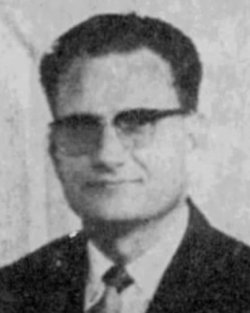
W.E. Best

The Eschatological Kingdom, An Energizing Hope

Titus 2:11-14
W.E. Best November, 10 1985 Audio
0 Comments
Best on Eschatology

Sermon Transcript

Auto-generated transcript • May contain errors

100%
Now open your Bibles for our
study tonight, The Eschatological Kingdom and Energizing Hope,
the book of Titus chapter 2. Let's read verses 11 through
14. For the grace of God that bringeth
salvation hath appeared to all men. are all classes of men. Teaching us that denying ungodliness
and worldly lust, there you have the negative. There are some
things we are to deny. When we deny self, then the other
things are not difficult to deny, are they? Denying ungodliness
and worldly lust We should, now we have the positive, we should
live soberly, righteously, and godly in this present world. Even in this present world that
is apart from God. Verse 13, looking for that blessed
hope And here we have decami again, not a double compound
decami, but we have a compound decami, and it is preceded by
the preposition pros, pros decami. It's a present middle participle
of pros decami, looking for that blessed hope and the glorious
appearing of the great God and our Savior, Jesus Christ, who
gave himself for us, that he might redeem us from all iniquity
and purify unto himself a peculiar people." Zealous. Zealous. Does this fit you? Zealous of good works. Now for our subject. The eschatological
kingdom, an energizing hope. The eschatological kingdom is
an energizing hope to Christians. Proof of it is found within the
context of the passage of scripture we just read. All other views
of the kingdom are disappointing dreams. I cannot emphasize that
too much. All other dreams, all other views
of eschatology are dreams. They're disappointing dreams.
There is no greater stimulant to Christians than a living hope. Do you have a living hope? We're
told in 1 Peter 1, beginning with verse 3 through verse 5,
that we have been begotten again unto a living hope. by the resurrection of Jesus
Christ from the dead, to an inheritance that is incorruptible, undefiled,
and fadeth not away, reserved in heaven for those who are kept
by the power of God through faith unto salvation, ready to be revealed,
when? In the last day, the last time. On the other hand, there is no
greater disappointment than a false hope. Every worthwhile Christian
philosophy should have three ingredients. What are they? Number
one, it should be able to give due
recognition to every aspect of reality of both soul and body. Not just
the soul, but also the body. Number two, it should have practical
effects in time. Of what value is a philosophy
that does not have a realistically sanctifying effect not only upon
the soul, but also the body? That does away with antinomianism. And thirdly, it should give assurance
of better things in the future for soul and body in the realm
that was made for man. And we've already seen that the
earth was made for man. As the promises concerning the
soul are realistically experienced, those pertaining to the eschatological
kingdom will be realistically experienced. The vain philosophies such as
no eschatological kingdom, a soteriological kingdom, A church kingdom and a social kingdom will all
be swept away someday by stark reality. None of the aforementioned views
offer an optimistic view of either man or history, human history, or the
church. The only hope of the elect and
creation is Christ coming as King of kings and Lord of lords
to reign in his kingdom, where? On earth. I'm not talking about reigning
in the heart. I'm not talking about reigning in the church.
I'm not talking about reigning in an evil society. I'm talking
about reigning in His kingdom, the kingdom He will receive from
the Father, the kingdom that has been prepared from the foundation
of the world. A true biblical philosophy does
not make light of God's promises either for the present or for
the future. the love of wisdom, cannot be
discarded except when it serves error without positive injury. The Greek word philosophia is
used only one time in the New Testament. Colossians 2.8, listen
to it. Beware lest any man spoil you
through philosophy and vain deceit. After the tradition of man, after
the rudiments of the world and not after Christ. Philosophy
is not wisdom's judge. It is her servant. I'm not against
wisdom. I'm not against philosophy, true
philosophy. Neither are you. We often speak
of some writers of the past, such as Jonathan Edwards, as
being philosophical, and he was quite philosophical. But his
philosophy, much of it, most of it, is based on truth. Nothing wrong with such philosophy.
It's the love of wisdom. But I repeat again, philosophy
is good in its place, but out of its place, it can be very
bad. It requires facts given by revelation. I'm talking about true philosophy.
Hence, a clear perception of the historically given divine
purpose must precede all our efforts. From the mouth of God,
not from the mouth of philosophers, we embrace Christianity. Paul
encountered the empty deceit of certain philosophers, of the
Epicureans in Athens, according to Acts 17 and verse 18. If you
want to know what he thought about them, read that when you
have time, his message on Mars Hill. Apart from the truth of
Scripture, philosophy is empty of both power and hope. It leads
away from the divine truth into the darkness of human speculation. Furthermore, it is deceitful.
because its attractive presentation seduces the minds of those who
are drawn away by it. God-given faith, however, ascends
above human reason, above human philosophy, but it is not irrational. God-given faith is not irrational. The Bible divides human existence
into two stages. And this is important. Very simple
outline, four points. I said the Bible divides human
existence into two stages. Number one, one is natural and
the other is spiritual. 1 Corinthians 15, 46. Secondly, one is earthly and
the other is heavenly. And you'll find this also in
1 Corinthians 15. Thirdly, one is temporal, in
duration, and the other is eternal. 2 Corinthians 4, 18. And finally, the destiny of one
is heaven, and the destiny of the other is hell. We'll be talking
about those two this coming Wednesday evening. Luke 16, 19 through
31. There are two extreme views of
life. Some place all the emphasis on
the present life and scorn life that is to come. Communism and
socialism fall into this category. I have no time for either one.
I have no more time for a socialistic form of government than I do
for a communistic form of government. There's only a step between them,
and it's a very short step at that. Others are so taken up
with life to come that they neglect their present responsibilities.
The Thessalonians were guilty of that and Paul had to condemn
them. I'm sure there are religionists today, and notice I said religionists,
who are so taken up with the life that is to come that they
neglect present responsibilities. Some religionists fall into this
category. Over against these one-sided
emphases, the Bible gives a philosophic balance. Hence, the informed
Christian recognizes the value of the life that now is and the
life that is to come. And that's based on scripture,
1 Timothy 4, verse 8. The life that now is becomes
the preparatory stage for the life that is to come. The philosophy
of an eschatological kingdom alone makes sense. I'm pausing for a purpose. What
did I say? I said the eschatological kingdom
alone makes sense. I think I proved it this morning,
if not, I hope to establish it tonight in case I didn't prove
it to your satisfaction this morning. It has a biblical basis
for a truly optimistic view of human history. The first Adam
was created in God's image and given dominion over the lower
creatures. When one seeks to take man's uniqueness out of
its proper relationships, he makes man a primary creature
with the non-human world. This is the fallacy of the devil's
theology, and I'll use the word hisology anyway, devilology I
should say, of evolution. The uniqueness of man is not
only his relationship with God, but his ordained dominion over
creation. Don't forget that these people
who believe in evolution, they have a God, and they are themselves
their own God. By the way, having mentioned
that, I heard something on the radio this last week while Juanita
and I were in the car. We were listening to KHCB, The I knew that the man who was
teaching was a Dallas Theological Seminary Preacher I could tell
the way he talked you can you don't have to hear one But just
a little bit you recognize them you all talk alike and they use
the same same lingo But he made some great statements, and I
wondered how he was getting by with his condemnation of many
calls today And he didn't pull any punches He told about the
pastor the first Baptist Church of Seattle, Washington And I
think this preacher's name was Henderson. He is meeting with
what is called the Houston, I think it's Houston, or Fellowship of
Believers or something, meeting someplace here in Houston. And
having called the name of the pastor of the First Baptist Church
of Seattle, Washington, in condemning his book, he said, finding God,
how do you find God? By looking within yourself. And then he blasted that man
and his book, giving some excerpts from it. He was blasting another
cult, and rightly so. He said, you know, there are
many today who say that you should not tell people that they're
sinners because if you tell them they are sinners, you restrict
evangelism. Get that one. I could commend
the young man for doing what he was doing on radio. I wonder how long KHCB will keep
him on by giving that kind of a talk. But think about it for
a moment. He was really wound up. Of course,
I could ask him some questions about God's absolute sovereignty,
but I won't take time to do that. But anyway, he was doing that
subject justice. So these persons all have their
own so-called theology, and they make themselves God. Just like a lot of doctors today,
they think they're gods. Now although the first man, Adam,
fell, God's plan for man's dominion over creation was reasserted
after sin came into the world. This is found beginning with
the 15th verse of the 8th chapter of Genesis, and when you read
through the 9th chapter, verse 17, you'll see what I'm talking
about. We don't have time to read all that passage. The commission
of Genesis chapter 9 was no longer given in a setting of sinlessness,
but against a background of sin. I want you to see the difference
now. When God gave the commission first to Adam, in Genesis 1 to
replenish and populate the earth and he gave him dominion over
it and then giving this commission to man after, after man was destroyed with the exception
of Noah, his wife, three sons and their wives. So the earth
had been laid waste by the flood. and mankind, with the exception
of the persons whom I have already referred to, had been destroyed. Murder would occur and must be
dealt with by force in the new beginning, according to Genesis
9, 6. Drunkenness and indecency would
appear, Genesis 9, 20 through 27. Men would unite in their
resistance against God's sovereignty. Genesis chapter 11 verses 1 through
9. Nevertheless, observe this. God
maintained his covenant relationship with man according to Genesis
9, 8 through 17. What am I doing? Beloved, I'm
establishing our premise. Man in his state of depravity
will not achieve complete domination over the earth in this age as
God's vicegerent. That is, as God's deputy, as
God's appointed officer. I want you to turn to Romans
13, one through seven for a few minutes. I'll mention just a
few things within the context of these verses. We find that
we are to be subject to the powers that be because the powers that
be are ordained of God. I want you to look at the word
ordained. The word ordained is a perfect passive participle. And it is the perfect passive
participle of the verb tasso, which means to set or to appoint. Now what is meant by this as
we look at the inflected form? The perfect passive participle
denotes God's completed action, that's perfect tense, with continuing
results in His ordination of human government. We're still
living under human government. Since God did not specify a certain
kind of human government, Any is better than none, even communism. Even communism is better than
none. The institution of government
after the flood was a blessing according to Genesis 9. A correct
estimate of human government is formed only in the proper
concept of Christ's kingdom. Now, beloved, you and I do not
live under an ideal form of government. And I don't think any of you
are foolish enough to go off and say that I am condemning
the government of the United States. I would rather live here
than under communism. I would rather live here than
even in England, for that matter. I would rather live here than
to live in a lot of places in the world today. But we are not
living under an ideal form of human government, and there never
will be an ideal form of human government. Some are so foolish to say, oh,
I love democracy. Well, look what democracy is
doing to us. Look at what democracy is doing
to us. Now follow me closely and you'll see where I'm going
in just a minute. Now present-day ministers, look
at verse 4 of Romans 13, the word ministers, can only preserve
peace and property from the external actions of man. Man's obedience
to the higher powers, as you find within the context of this
passage, which means governing authorities, is enjoined not
only on the ground of the personal merit of the magistrates, but
their office. There are many in this country
today that I do not have a great deal of respect for, but I am
to respect the office. I am to respect the office. Since the days of Greek philosophers,
many have hoped for a one-world government. We're on the way. We're on the way. Modern inventions
are bringing about the nations of the world into closer contact
with each other. The Babel spirit, self-exaltation,
which grew to such an alarming height in Babel, Genesis chapter
11, is becoming more and more the spirit of the day in which
you and I live. This spirit will eventuate in
three things. I'm talking about the Babel spirit.
Number one, Listen to this. World education, with emphasis
on the word education, will ultimately involve an attitude toward religions,
and I'm using the word religions now, plural, that will lead to
the suppression of one's own deep convictions. That's why I had Dr. Ting to
give that brief report just a few minutes ago. Listen to this again. World education, I said, will ultimately involve
an attitude toward religions that will lead to the suppression
of one's own deep convictions. Secondly, World government, it's
government now, not education. World government will ultimately
involve an attitude of peace, peace when there is no peace. The meeting of our president
with Khrushchev this month will actually be a waste of time. I wouldn't believe the Russians
if they were to tell us that they are going to really cut
back on their weapons. I wouldn't believe them. And the thing that burns me up
when I listen to newsmen, it seems like that they are downgrading
our own president by talking about what Krobuchov is saying
and what they would like to do, and let's negotiate. You can't negotiate with the
devil. Such negotiation, if there is
any, will lead to our own downfall. And thirdly, world religion. I'm talking about world education,
world government, and world religion. World religion will become a
reality at the time of universal restlessness. The Bible clearly reveals that
at the end of this age, the nations of the world will be bound together
in one world government. Daniel 2 and Revelation chapters
13 and 17. Going back to Daniel chapter
2, the parts of Nebuchadnezzar's image that are unfulfilled are
the feet and the toes. Listen closely. As the first
parts have been fulfilled, the last parts will be fulfilled. They are as much a part of the
same image as the head of gold, the chest and arms of silver,
the belly and thighs of brass, and the legs of iron. The feet and toes that were part
of iron and part of clay will be a continuation of the rule
of man upon earth during the times of the Gentiles. The iron of totalitarianism and
the clay of socialistic democracy will mix but never unite. I'd like to repeat that one. I said the iron of totalitarianism
and the clay of social democracy will mix but never unite. There will be a confederation
rather than a great conquest. A great number of international
organizations already exist and there will be many, many more.
There are three basic things represented by the Tower of Babel.
Three basic things represented by the Tower of Babel Genesis
chapter 11. Number one, the purpose was unity. Read it for yourself. Secondly,
the program was united effort. And thirdly, the principle was
human glory. I would like for you to think
about those three things today. Please think about those three
things today. unity, united effort, and human
glory. Study Genesis 11 when you have
time. It was a dream of the solidarity of humanity. We hear a lot about
solidarity today, so here's a good place to use it. And the same
is true in the dreams that men have in the day in which we live. Martin Luther King's statement
that he had a dream has made history. If you want to call it history.
The politicians have made it history. A special holiday has
been set aside in his honor. I want you to know that Nebuchadnezzar
also had a dream. His dream must not be compared
with Martin Luther King's in prophetical importance. Political
pressure, I think, has influenced politicians to honor Martin Luther
King. But God saw fit to record Nebuchadnezzar's
dream for our eschatological enlightenment. Valuable lessons to learn from
Nebuchadnezzar's dream. I'd like to point out three.
Number one, God is ruling over all. Read His dream for yourself.
Number two, He judges among the nations. And number three, the
Sovereign Lord is Savior. He provides the way, His truth
shall be preserved in the midst of wickedness, and He will in
His appointed time subdue and renovate the whole earth. The dignity of man consists not
in what he is by nature, alienated from God by his position in sin,
in his fallen condition, man can rule neither himself nor
the world. How can we expect fallen man,
depraved man, who cannot even rule himself, rule a nation? When you have lost, depraved,
sinful men in places of high office, their one motive is the
exaltation of themselves, even at the expense of you and me. I don't know about you, but the
last couple of weeks, some of the things that I've heard have
made me very angry. when they talked about dipping
into the Social Security Trust Fund to get enough money to run
the nation for a while, while the Democrats and the Republicans
are going back and forth in their controversy about balancing the
budget, and believe me, it needs to be balanced. I agree with
that. We cannot continue in the same
way we're going. But the thing that made me angry
was this. There are many elderly folk out
there who are living on the social security and when they hear news
like that, it scares them to death. They just know in the
next few weeks or a few months, the social security trust fund
will be depleted and they'll not be getting anything to live
on. And then these politicians, these
slick politicians talk about being interested in humanity. They're interested only in themselves. Beloved, I make no bones about
it. If they were interested in the
elderly folk as they claim they are, They would not be making
such statements as that to scare the living daylights out of a
lot of elderly people who are not Christians and they're living
just from hand to mouth on what they have paid in to Social Security
for 35 years or more. So man is not capable of even
ruling himself in his depraved condition, much less a nation
In man's fallen condition, we know that he's interested only
in himself. Man's dignity is not completely restored when
he is saved by God's grace. You and I sit here tonight as
the recipients of God's grace, most of us, but our dignity is not completely
restored. And I want you to know that dignity
of man will not be completely restored until man sets foot
in the eternal kingdom. He will then be viewed as God
viewed him at the beginning in Christ, in grace, in the kingdom. So dignity will be completely
restored. to man when he sees Jesus Christ
as he is. 1 John 3, 2. Only redeemed and
glorified man can rule and reign with Christ. Where? On earth. Revelation 5 and verse 10. Man's dominion over the earth
has not yet been realized. God's purpose for man, however,
cannot be nullified. Although man's government over
the world has been catastrophic because of sin, his dominion
will come to its full realization in the eschatological kingdom
of Jesus Christ when the Lord Jesus Christ reigns, and we reign
with Him in the kingdom. Now I'd like to point out something
that's very important. All millennialists teach that
Christ's church is the custodian of the kingdom of God. Let that
soak in. I'm quoting from their works
now. I said all millennialists teach that Christ's church is
the custodian of the kingdom of God. The two are one, they
say. To enter the kingdom of God is
to enter the church and vice versa. They say the church holds the
keys until Christ comes and shuts the gates of hell forever over
all enemies. I'm not misquoting. Do you believe that the church
holds the keys of authority until Christ comes and shuts the gates
of hell forever over all enemies? Beloved, do you really believe
that tonight? I don't. Now it's my purpose to prove
it, and it's my responsibility to prove it. They further state,
I'm talking about the Amillennialists, this is the kingdom foretold
by all the prophets in the Old Testament and which Jesus Christ
set up at His first advent. I am enjoying the study of this
subject. I am enjoying assembling the
material and putting it together. I don't know when I've been as
fascinated over a subject As I have this, you say, well,
what about the person of Christ? You can't have a kingdom without
a king. You can't have a kingdom without
a king. What about soteriology? I couldn't
have any hope of the kingdom if I were not saved. I could mention many other things. The statement that the church
holds the keys to the kingdom until Christ returns to shut
the gates of hell forever over all enemies is unscriptural. The keys of Matthew 16, 19 are
associated with the kingdom and not with the church. I want you to open your Bibles
tonight to Matthew chapter 16. We're going to look at a few
verses. We'll give an in-depth exposition
of this passage in subsequent weeks and months, but not tonight. I'm only establishing our premise
today. The king of the ages and his
eschatological kingdom. In verse 18, Matthew chapter
16, and I say also unto thee, Christ speaking to Peter, and
thou art, Peter, Petrus, a piece of rock. And upon this rock,
Petra, distinguished from the small piece of rock, I will build
my church Peter is the pebble and Jesus
Christ is the massive living rock. He is the foundation of
the church. Other foundation hath no man
laid than that which is already laid, as we're told by Paul in
Corinthians. Notice now what he says, I will
build my church and the gates of hell shall not prevail against
it. And I will give unto thee the keys of the kingdom of heaven. You say he was speaking to Peter,
who was the spokesman for the disciples, and that's true. And then notice in verse 20,
he charged his disciples that they tell no man that he was
Jesus the Christ. Isn't that strange? We'll get
into that more later. Now, what kind of authority did
Peter exercise that was given to him? Listen closely. The keys of Matthew
16, 19 are associated with the kingdom, not the church. Look, if you will, at verses
27 and 28 of Matthew 16. For the Son of Man shall come
in the glory of His Father with His angels, and then He shall
reward every man according to his works. Verily I say unto
you, there be some standing here which shall not taste of death
till they see the Son of Man coming in His kingdom. I would
like very much for you to connect the kingdom of heaven of verse
19 with the kingdom of verse 28. And then beginning in the
first 13 chapter, first 13 verses of chapter 17, you have what? The mount of transfiguration
scene. A miniature picture a foretaste,
if you please, of the kingdom that is to come. And this is
what the disciples saw. They would not die until they
had seen this, until they had gotten a foretaste. Now let's
develop this just a little further. Would it not be strange for the
keys that denote authority to be in the hands of imperfect
Christians? I do not have such authority
as that. No one else does in his imperfect
state. This is proved, beloved, follow
me now closely, by the terrible blunder Peter made immediately
after Christ's statement to him. Where is that found, preacher?
The Lord Jesus said to Peter, Thou art Peter, upon this rock
I'll build my church. In verse 19, I will give unto
thee the keys, the authority of the kingdom of heaven. Now
listen closely. Will you consider the blunder
that Peter made immediately after that? What was his blunder? Verse 23, after the Lord Jesus
had told him that he was going to die, he would be buried, but
he would rise again the third day. Peter said in verse 22,
be it far from thee. Here he was, exercising authority,
according to Psalm. What authority? He made a blunder,
did he not? So this is proved by the terrible
blunder Peter made immediately after Christ's statement. Keys
denote authority. By what authority did Peter rebuke
Jesus Christ? Think that one through, please. If he was using properly delegated
authority, Why did Jesus Christ say, Peter,
get thee behind me, Satan? Thou art an offense unto me, for thou savest not the things
that be of God, but those that be of men. Every Christian, regardless of
the depth of his spirituality, is imperfect. and the Lord has never delegated
such authority to imperfect people. The authority symbolized by the
keys will be exercised by the glorified church when she reigns
with Jesus Christ in the kingdom. Does that make sense? According to the context, the
kingdom is associated with Christ's second coming. Verses 27 and
28 of the same chapter. Christ's kingdom is associated
with his second advent, not his first advent. The all-millennialists, listen
closer to this. The all-millennialist idea of equal authority on earth
and in heaven at the present time should cause us to question
their view. Now look at verse 19 again. And I
will give unto thee the keys of the kingdom of heaven. It's
the keys of the kingdom of heaven. It is not the keys of the authority
exercised in the church. Now to prove that beyond a shadow
of a doubt, turn to the 18th chapter. The 18th chapter of
Matthew, a passage familiar to all of us. I want us to read
beginning with verse 15. Our Lord was talking about the
universal church in Matthew 16, 18, upon this rock I will build
my church. The invisible, the mystical church,
or whatever you want to call it. The body of Christ, if you
please. Now, in chapter 18, he's talking
about the local church. Let's read, beginning with verse
15. Moreover, if thy brother shall trespass against thee,
go and tell him his fault between thee and him alone. If he shall
hear thee, thou hast gained thy brother. But if he will not hear
thee, then take with thee one or two more, that in the mouth
of two or three witnesses every word may be established. And
if he shall neglect to hear them, tell it unto the church. But
if he neglect to hear the church, let him be unto thee as an heathen
man and a publican. Verily I say unto you, whatsoever
ye shall bind on earth shall be bound in heaven, and whatsoever
ye shall loose on earth shall be loosed in heaven. But there
is no reference in this verse to the keys. But there is. There is in chapter
16 verse 19, because he's talking about the kingdom in 1619, but
he's talking about the local aspect of the church. And there
is no such authority exercised in the local aspect of the church.
Now go back for a moment to verse 19. The all-millennialists look
at this verse, chapter 16 verse 19, they say there is equal authority
on earth and in heaven at the present time exercised by this authority that
is given to the church, the keys of the kingdom. I repeat the all-millennialist
idea of equal authority on earth and in heaven at the present
time should cause us to question their view of Believing there
is perfect identity between human and divine authority is unthinkable. Unthinkable! Let me repeat it. Believing there
is perfect identity between human and divine authority is unthinkable. And that is set forth in these
two passages. 1619 and chapter 18, the difference
between the church, the church in a perfected state and the
local aspect of the church today, which is imperfect. Listen to this. The fact of declining
spirituality in churches should be sufficient proof to
convince an unprejudiced mind that Christians today do not
exceed even Peter in spirituality. In conclusion tonight, the eschatological
hope of saints has negative and positive sides. On the negative side, believers
deny the lusts of unlawful things, first of all. I'm going back
now to Titus 2. I said on the negative side,
believers deny the lusts of unlawful things. Is there any doubt about that?
But I'm not stopping there. The sentence would not be complete
unless I added with a conjunction and, and the immoderate desire
for lawful things. It is just as wrong for you and
me to have an moderate desire for lawful things. And we can be harmful in our
Christian testimonies as if we lusted after unlawful things. This is the negative side. So we deny the lusts of unlawful
things and the immoderate desire of lawful things. You see, there
are some things that just take precedence over everything else. On the positive side, I'm emphasizing
one thing in conclusion tonight. We look for that blessed hope. That's positive. We look for
that blessed hope, verse 13, and the glorious appearing of
the great God and our Savior, Jesus Christ. What is hope? Hope is the expectation of good. Jesus Christ is the object of
everything good. in the life of the Christian.
And since Jesus Christ is the object of the good, we must include
His Kingdom, which is the consummation of the believer's hope. The coming of Christ, the King
of the Ages, and His eschatological Hence, listen closely, the grace,
going back to verse 11 of Titus 2, the grace that saved us, past
tense, and the grace that comes to you
and me by drops, D-R-O-P-S, in our pilgrimage journey, present
tense. shall be poured upon us as a
river in the kingdom future tense that'll make you rejoice within
the grace that has saved me past tense The grace that meets my
every need in my pilgrimage on earth, present tense. That grace
that comes as drops when I need it will just overflow like a
river upon me in the kingdom. That's future tense. Is that what Paul is talking
about in his message to Titus looking for looking for that
blessed hope and the glorious appearing of the great God and
our Savior Jesus Christ the king of the ages and his
eschatological kingdom is the hope of the believer.
W.E. Best
About W.E. Best
Wilbern Elias Best (1919-2007) was a preacher and writer of Gospel material. He wrote 25 books and pamphlets comprised of sermons he preached to his congregation. These books were distributed in English and Spanish around the world from 1970 to 2018 at no cost via the W.E. Best Book Missionary Trust.

Comments

0 / 2000 characters
Comments are moderated before appearing.

Be the first to comment!

Joshua

Joshua

Shall we play a game? Ask me about articles, sermons, or theology from our library. I can also help you navigate the site.