Bootstrap
W.E. Best

An Overview of Acts

W.E. Best September, 25 1985 Audio
0 Comments
Best's Corner

Sermon Transcript

Auto-generated transcript • May contain errors

100%
I'd like for us to read the first
four verses of Acts chapter 1. Last Wednesday evening, we studied
the narrative given us by Luke in his gospel, and you will see
that the first four verses of Acts chapter 1 is also a narrative
in the study of the Acts of the Apostles. The former treatise
have I made, O Theophilus. We took that part of verse 1
last Wednesday night and then went back to Luke chapter 1.
Now let's read the whole verse. The former treatise have I made,
O Theophilus, of all that Jesus began, both to do and teach. I want you to notice the word
began. What he began after his resurrection and ascension hasn't
been concluded. What he began, with emphasis
on what he began, it will not be concluded until the consummation
of his work. And that has to do with the subject
which we are now studying. So you can see how interrelated
the subject is with every aspect of biblical truth. Of all that Jesus began both
to do and teach, until the day in which he was taken up, after
that he, through the Holy Ghost, had given commandments unto the
apostles whom he had chosen. to whom also he showed himself
alive after his passion by many infallible proofs, being seen
of them for today's and speaking of the things pertaining to the
kingdom of God. And being assembled together
with them, commanded them that they should not depart from Jerusalem,
but wait for the promise of the Father, which saith he, ye have
heard of me." That's the conclusion of what I would call, it's really
the conclusion of the sentence if you'll notice in your King
James Version, and that is the narrative as the introduction
to the study of the Acts of the Apostles. Tonight what I would
like for us to do is get more or less a bird's eye view of
the Acts of the Apostles. We're not going to actually teach
these verses that I've read verse by verse. We'll be doing that
later. But tonight, let's kind of get
a bird's eye view or a telescopic view of the Acts of the Apostles,
the purpose of the Acts of the Apostles, and what is set forth
in this transitional book. Notice I said this transitional
book. Luke is the author of the Gospel
of Luke and also the Acts of the Apostles. We've already stated
that the first four verses of each book, that is the Gospel
and also the Acts, record the prologue to them. Many had previously unsuccessfully
attempted to give a singular narrative, embracing the whole
evangelistic matter of Christ's public ministry. Luke stated
that he was attempting a difficult undertaking. We're going back
and thinking about some of the things that we discussed last
Wednesday evening. Have taken in hand. He was orderly
arranging the facts, as we saw last week, of the public ministry
of Jesus Christ from its very beginning. You notice that in Luke, in the
narrative, the word perfect is found, but that's not a good
translation as we called attention to it last week. Luke's perfect
understanding, as it is stated in the King James Version, meant
that he had accurately traced the facts. He did not have perfect
understanding of the Scriptures any more than you and I have
a perfect understanding of the Scriptures. We do not. We never
will have. However, by the grace of God,
Christians should follow closely to the facts that have been given
to us by God's men who were inspired to collect the facts and give
them into a book called the Holy Scriptures. The first four verses of the
Acts of the Apostles state that a former treatise was written.
That former treatise, of course, being the gospel that bears Luke's
name. Therefore, the Acts is a sequel
to the gospel according to Luke. I'd like first of all to look
at the title of this book. In all the Bibles that you get,
regardless of the translation or who puts it out, I think they
all have the same title, that is, the Acts of the Apostles.
This is not an inspired title, and I'm sure all of you realize
that. The Acts of the Apostles is not a good title. It is not
an accurate title. Now we have all the apostles
mentioned in the first chapter of Acts. They're just mentioned
by name. But when it comes to the Acts
of some of the apostles, you only have Paul and Peter as the
main ones throughout the Acts. So it is not all the acts, even
of some of the apostles, and it's not some of the acts of
all the apostles. Therefore, it's not a good title.
Not a good title at all. Well, what would be a good title?
Different men have shared their view on what should be the title,
and I think this is a good title, personally. We have the acts
of the Lord Jesus Christ. Keep in mind, He is the risen
Christ, He is the ascended Christ. Therefore, we have the acts of
the Lord Jesus Christ by the Holy Spirit through His servants,
through His servants, or through some of His servants. The acts of the apostles, of
course, is a transitional book, and we must keep that in mind.
And I think that we can see that in the development of the chapters
that we will be studying in detail in our present studies on the
subject of the Holy Spirit. So the title is not inspired.
The book does not record all the acts of all the apostles. And another thing that is really
interesting about the Acts is that it began, the work really
has its beginning in Jerusalem and it is concluded in Rome.
For you have in the last chapter, the 28th chapter, of course Paul
going to Rome. Now some have called this book
the fifth gospel. And they have likened Matthew,
Mark, Luke, John, and Acts as the Pentateuch of the New Testament.
Well, that's a good thought. Just like you have a Pentateuch
of the Old Testament, Genesis, Exodus, Leviticus, Numbers, and
Deuteronomy. It's called, of course, the Pentateuch.
And some have likened the first five books of the New Testament,
including Acts, as the Pentateuch of the New
Testament. Chapter 1 supplies us with a
narrative of that which relates to the Lord Jesus Christ as the
risen and seated Savior at the right hand of God the Father.
And then, of course, in chapter 2, this chapter records the actions
of the apostles before the descent of the Holy Spirit. Now we look
at some important points. First of all, Christ is the actor. and men are only the instruments
in his hands. The former treatise have I made,
O Theophilus, of all that Jesus began both to do and teach. So the
Lord Jesus is the actor, and men are the instruments in the
hands of the Lord Jesus, who is the head of the church. The Lord Jesus, the risen Savior,
acts and speaks, how, today? By the Holy Spirit, after His
resurrection, of course, as well as before it. And He continues
to do what He began. The work of Jesus Christ was
actually limited while He was here in person. He was, as it were, imprisoned
until His redemptive work was completed. He worked only with
people with whom He came in contact. Now there is no contradiction
between Christ's statement in John 19, verse 30, it is finished,
and all that He began to do and teach of Acts 1, verse 1. Luke
did not say all that Christ did and all that He said. That would
have been incorrect. He said all that He began to
do and teach. Christ's work of redemption is
a completed act, whereas His work of regeneration continues. You and I know that His work
is not complete yet. His work will not be complete
until the last one has been brought into the ark of safety and until
the kingdom is established and He reigns as King of kings and
Lord of lords. So we have in the Gospels the
foundation, so to speak, and now we're beginning to see the
superstructure added to the foundation that was laid by the Gospel writers. The book of Acts is the unfinished
record of an incomplete work. That may be an unusual statement,
but that's the truth of this book. I said the Acts is the
unfinished record. of an incomplete work. No complete account of a person's
life and work can be given as long as he lives. Now let me
finish that. Therefore there is no complete
account of Christ's life and work. He ever lives. He is the eternal Son of God. There is another statement we
need to look at very carefully because of the teaching that
the Charismatics are frequently proclaiming, and
there is a misunderstanding. I'd like to go back to John 14,
verse 12 for a moment. This is a favorite text of all
the Pentecostals. You don't have to listen to one
of them speak, really, I don't think, over two or three times
until you hear some reference to John 14, 12. Especially if
they're talking about healing, talking about baptism of the
Holy Spirit, talking about a lot of other things. In John 14, 12, Verily, verily,
I say unto you, Christ speaking, He that believeth on me, the
works that I do, shall he do also. And greater works than
these shall ye do, because I go unto my Father. Greater works. The Pentecostals think that they're
doing greater works than Jesus Christ ever did while he was
here on the earth. And this is their so-called proof text. Greater
works shall ye do. Greater works are now accomplished
not greater from the standpoint of character, but from the standpoint
of extent, extent. The book of Acts does not end,
it doesn't end, it just stops. Another unique feature about
the Acts of the Apostles. I said it doesn't end, it just
stops. The 28th chapter of Acts proved, The 28 chapters of Acts prove
that it is not a completed work. It begins at Jerusalem, as I've
already mentioned. It does not actually end in Rome. It just stops there. It begins
exclusively with the Jews in the first part of Acts, but it
stops with a barrier between the Jews and the Gentiles being
broken down. Several years ago when we were
getting some things from the Acts of the Apostles, you remember
I made a statement. I think it is the accurate way
to teach the book, and we did it up to a point. I remember
a professor who said that the only correct way to teach the
Acts of the Apostles is to start with the very first, and when
you come to a historical setting, where the Apostle Paul went,
like Corinth or Ephesus or someplace, and there he established the
church of Thessalonica, you need to stop at that very point, forget
about going any further than the Acts of the Apostles, and
go to that epistle, like Ephesus, if you're stopping in the 19th
chapter, or if you're in the 17th chapter, Thessalonica, and
teach or study 1st and 2nd Thessalonians or Ephesians. Or when he comes
to Corinth, like in the 18th chapter, stop and teach Corinthians,
both 1st and 2nd. I think that's good. And he said,
when you get through studying the Acts, you will have gone
through the major epistles of the New Testament. He said that's
the only correct way, really, to study the Acts. I think it's
a good statement. Now here's another statement
that is very important in the proper understanding of Acts.
It is a transitional book. People wouldn't have any mistaken
views if they just considered the fact that this is a transitional
book. The charismatics need to understand
this, but I don't think they'll understand it. They don't want
to because it would destroy their theory. And they do not want
anything or say anything that would destroy their theory. It is proper that the book of
facts, as we said last week, that's Luke, should be followed
by the book of acts, and acts always follow facts. We not only
embrace doctrine, but we manifest doctrine by acts. Throughout this book, men are
acting. The Lord is working through them, manifesting His grace that
was shed abroad in their hearts by the Holy Spirit in regeneration.
Faith is proved by works. The Gospels unfold the life of
Christ and the acts follow, follows with an account of the life of
Christ through believers as they live in the power of the Holy
Spirit. The Gospel of Luke records acts
and words of Jesus Christ. And the Book of Acts records
acts of Christ through the apostles by which promise and injunction
were fulfilled. Let us observe a few things along
that line. The Gospel of Luke is one of
four, whereas the Book of Acts stands alone. Without the Book of Acts, the
first 20 years of the Church's history would be a blank. That's why it's transitional.
There would be a complete blank in the first 20 years of the
history of the Church. When one studies the book of
Acts, he looks back to the Gospels, but he looks forward to the Epistles.
That's why it's transitional. So when he's throughout the book
as he studies it, he can't help but look back to the Gospels.
But as he looks back to the Gospels, then as he studies Paul's journeys,
his missionary journeys, three of them, and the different places
where he stopped, then you have to look into the future, that
is, to the epistles that are coming. So the relation of the
Acts and the Gospels is important. It is not enough to say the Gospels
contain the history of Christ's ministry and the Acts record
that of the apostles. Both narrate the work of Jesus
Christ. And that's proved by the first
verse. This is found in the opening verse of the first chapter. The
Gospels record what Christ did in person while he was here walking
among the sons of men. The Acts record what he did by
chosen witnesses. Chosen witnesses. So the Acts
is a very important book. Transitional book. We look back
to the promises that Jesus Christ gave And then we look to the Acts
for the fulfillment of those promises. After Christ's ascension
in chapter 1, verses 9 through 11, the disciples did not return
to the temple, but waited in the upper room, Acts 1, verse
13. They did not go into the temple
until after Pentecost. Luke is the gospel of fellowship. And in Acts, the result of that
fellowship is put into action. I believe in fellowship, but
I tell you, a fellowship that doesn't result in holy activity
in accomplishing God's purpose in our lives before others is
no fellowship. So when you see people that talk
about fellowship, Christian fellowship, they don't know what fellowship
is. Don't know what it is. So the
fellowship that is seen in the gospel of Luke is manifested
by the actions of the persons in the Acts. Luke was the author of this book.
Luke was not one of the twelve apostles. Indications are that
Luke was one of the seventy. Not one of the twelve, but one
of the seventy. Luke chapter 10 and verse 1. The commission
given to the 70 was not far below the commission that Christ gave
to the 12. Luke devoted his attention in
the Acts to deeds rather than doctrine. Now think about that
for a moment. You don't have a great deal of
doctrine in the Acts. Now I'm not saying there is not
doctrine. But doctrine is not expounded
in the Acts like it is in the epistles, church epistles, general
epistles, and pastoral epistles, but especially in the church
and general epistles, more so than even the pastoral epistles. So Luke did not deal with doctrine
in the same manner that Paul did. I don't care how much you
read in the gospel that bears his name or in the Acts, you
do not find doctrine systematically set forth as you do in the church
epistles given us by Paul, like Romans, Ephesians, those two
especially. So that's a tremendous thought. Why did Luke do this? Well, he
left it to the writers of the epistles. In other words, Luke
gave us the history and left the exposition of doctrine to
the apostles. He was not an apostle. He was
a servant of the Lord. No doubt one of the seventy,
but not one of the twelve. And therefore, he doesn't deal
with doctrine. We have history. More history than doctrine. He was not only the author of
this book, but he was also the physician. He was Paul's companion
in travels. This is mentioned in Acts 16.10
and especially in Colossians 4 and verse 14. Luke did not write a biography
of either Peter or Paul, and yet these are the two prominent
servants used by God in the Acts. No biography is given. The history of both men is actually
left, as someone has said, in mid-air. Luke went along with the Apostle
Paul as his personal physician. You see, Paul was not a well
man. And of course the charismatics really have problems with that,
but they ought to. And I'm sure that's why we have this. To let every person who is sincere
in truth know what the Bible has to say, not what people say
the Bible says. So Luke was his personal physician. He is referred to as the beloved
physician. Luke was enumerated among those
who were not of the circumcision. He was not a Jew, neither was
he like Mark, part Jew and part Gentile. All indications are he was a
Gentile. And that is the reason he was
enumerated among those who were not of the circumcision, Colossians
4 verse 14. Luke was one who nobly stood
with the Apostle Paul. Notice I said, nobly stood. You know, there never have been
very many who have nobly stood by God's man. Never have been
many. Never will be many. But I'll
tell you, those who nobly, nobly stand, they are greatly appreciated. And they will be rewarded for
their stand if he's God's man, doing God's will, preaching God's
truth. So this is of great interest
when you consider the persecution that Paul endured. Many of Paul's
companions forsook him when persecution became severe. But Luke was one
of the last ones to leave him. Last ones. And you have the record
of this actually in the fourth chapter of 2 Timothy if you want
to read it. Luke is a model for all Bible
students, and that's why we took time last week going back to
the narrative of the gospel of Luke. And we're looking at a
few of those statements again tonight. So he's a model for
all Bible students. where I made a mistake, and what
I should do, really, is give some of these things, and maybe
I can incorporate them in the next few Sundays to show the
importance of persons studying the Scriptures, and listening,
and giving attention, and so forth. When you compare Luke
1, 1 through 4, with Acts 1, 1 through 4, you see what I'm
talking about. The New Testament is built on
the form of a Pentateuch. Whether one wants to call it
a Pentateuch or not, it is built on the form of a Pentateuch,
patterned after the Pentateuch of the Old Testament. The Gospels
answer to the book of Genesis. They give the beginning of things.
The Acts give the going out of God's people, as Exodus gives
the going out of the children of Israel from Egyptian bondage. We do not go out of physical
bondage as the Israelites did, but we do go out from under the
bondage of the law, Acts 15. Every Christian should gather
all the facts he can on any given subject. I've decided that all the rest
of my ministry I'm going to preach in series, dealing with subjects
with a series of messages. after which I'm going to ask
for themes by all the members of the church. They last several
months. It's for your good. And you know
what I really appreciate? I've had a number who have told
me how much that they have enjoyed working up these themes because
it's helped them to correlate things and to frame things in
their own words which will make them better witnesses for the
Lord. That's the purpose. That's the purpose. So let's look at a few things
concerning Luke being a model for all Bible students. We have mentioned that when we
compare these two, the narrative of Luke and the narrative of
Acts, we see the importance. Secondly, Luke's collection of
material was limited by the boundaries of Revelation. If there is a danger in a partial
knowledge of Scripture, there is also greater danger, I should
say, in adding to the Scriptures. But there is a danger in a partial
knowledge of any subject. Just a partial knowledge of any
subject. Thirdly, Luke recognized that
a knowledge of all that Jesus began to do and teach however
comprehensive and free from error, would never benefit a man unless
conveyed to the soul of God by the power of the Holy Spirit. Luke's complete knowledge of
all Jesus began to do and teach suggests to us the importance
of gaining a more complete knowledge of the Word of God. So the Scriptures are perfectly
outlined However, the Lord alone can open eyes and enlighten a
person's understanding. No preacher can do that. Another point is the Acts was
addressed to Theophilus. That seems a little strange,
doesn't it? The friend or the lover of God. There is nothing certain about him. His name is of Grecian origin. I'm talking about Theophilus.
He is a man who loved God. That's all that's known. Nothing
else. His history, his background, nothing is known. Nothing is
revealed. It isn't necessary. Why is it necessary to know about
a person's background if he is a child of God and he has the
grace of God? That's all that's necessary. I think that's why
many times we find illustrations like this set forth in the Scriptures.
We have a person's name mentioned without any background whatsoever.
We have Paul's background, that's important when you think about
Paul having been a Pharisee of the Pharisees and so forth and
what the grace of God did for a religionist. But Theophilus,
no background. Although the name is sometimes
used by Jews, we are led to believe this friend of God was a Greek.
What we've been able to find out. The prevailing opinion is
that Theophilus was one Christian Gentile in some high position. May be true, might not be true.
Now it is based on the way he was addressed by Luke. Most excellent
Theophilus. That does give indication that
he must have had some high position. So this book is addressed to
only one man. Isn't that unusual? How many
of you have thought about Acts as being addressed just to one
man? Unless you really look at the narrative, you don't think
of it. Paul's epistles were addressed
to churches. But here is a book that is addressed
to Theophilus, one man. And I think what we should see
in this is that God speaks to individuals. He speaks to you
individually. He speaks to me individually. Great letters cannot be kept
private. Luke's account of the Gospel
and the Acts is in our possession, and we ought to be thankful for
that. Luke divides the ministry of Christ into two divisions,
action and doctrine, miracles and truth. Now let's reflect a little on
the purpose of the Acts. The purpose of the Acts is to
show that the things Christ began to do and teach on earth are
now performed from heaven by the Holy Spirit through His extraordinary,
that's the apostles, and ordinary, that's you and that's me, servants. So the plan was through witnessing. First of all, he began in Jerusalem
among the Jews, verses 1 through 7 of chapter 1. Verses 8 through
11, it continued in Samaria and Caesarea. And it further continued
in Antioch and to the uttermost parts of the earth in the last
part. So actually, you could divide
the book like this. There are three major divisions,
really. Chapters 1 through 7, it began in Jerusalem among the
Jews. 8 through 11, Sumerian and Caesarean
and then 12 to 28 Continued in Antioch to the order most parts
of the earth three major divisions of the acts the method for carrying
out God's plan is illustrated through this book and throughout
the book now we want to spend a little time here because this
will eliminate a lot of Things today that are being done in
the name of the Lord that God doesn't have anything to do with
What is the method of carrying out God's purpose? Could you,
in just a few words, state how this is done? We have
three points. The gospel was publicly proclaimed
by God-ordained men. And there are a lot of people
who hate that point. They try to explain
it away. But I maintain this is biblical. And notice what I said, God appointed
men. So the gospel was publicly, publicly proclaimed by God-ordained
men. Now these are the methods set
forth in the Acts 2. All believers were private witnesses. Not public, but private. Most people today want to be
public, not private. And thirdly, and this gets right
down to the base, I mean the very foundation, local churches
were established for edification of saints and the dissemination
of truth through the local churches. That eliminates every para-church
organization, period. Now look, just search the Acts. Does this book mean anything
to us? This book gives to you and me the methods of fulfilling God's purpose after
the resurrection and ascension of Jesus Christ through His people. One, the Gospels were publicly
proclaimed by God-ordained men. Secondly, privately proclaimed, if you want to use
that statement, by all believers. And thirdly, local churches,
local churches were established for edification of saints and
the dissemination of the truth. Last night I talked with a preacher
in Ohio for a little while, and I was questioning him, and he
was me. Dr. Good asked me to give him a call.
And I did. And we had a delightful conversation. By the way, he was subjected
to the truths of grace under the teaching of Peter Connolly.
It's amazing, isn't it? In Springfield, at an Armenian
school where Dr. Connolly didn't last very long.
And he is right down the line. I mean, we discussed every major
facet of biblical doctrine. And as to where we stood, I was
informed to kind of approach him on one point that he might
be weak on. And I didn't tell him that I
was doing that, but I brought it around in my conversation
to bring up that point. And he didn't hesitate, not at
all. But during the conversation,
I want to emphasize this. because it has to do with the
church, the local church. I asked him if he was a strict
localist. He said, you mean a Baptist bride? I said, yeah. He said,
no, no, I'm not a Baptist bride. And so he gave his explanation
of where he stood on the church. And he said, but I surely do
believe in the local church. I said, so do I. So do I. So strongly that I said something
like I've just given to you. how important the local church
is. He said, you have a lot of problems in the local church.
I said, yes, but they can always either be preached out or taken
care of some way. I could tell from the conversation
with this person. He's in his middle forties. He's
a very mild talking person, and I was told that he's the teacher
type more than a preacher type minister. He said, he just happened
to mention to me he was having some real serious problems right
now. One fellow had left, he was a preacher that had come
in, and he was a landmark. And he said he had given his
views to a few that he could get around him and had influenced
some others to embrace his view. And I said, you do have problems.
He said, I finally, this man left, that is the preacher left,
But he said, I'm now having problems with two men especially, with
whom he was very close, and they have taken up where he left off.
I said, let them have it with both barrels from the pulpit.
He laughed and he said, you know, I said, of course I'm older than
you are. He said, but I'll tell you something, Brother Best,
when you have troubles, after a while you get where that's
the only thing you can do, you just have to let people have it with
both barrels. I said, you're exactly right. I said, whether
they understand it or not. The church is important, and
it's too important to let things fester and build. You've just
got to get rid of it. You've got to take a knife. You've
just got to cut that old, just open up that sore and let the
corruption run. So the church is important. It
is very important. And the Holy Spirit is easily
grieved. And when He is grieved, He doesn't
operate. He doesn't operate through the church as he should. So we see the importance of the
local church. I'll conclude just briefly. There
are some important characteristics in the Acts that I'd like to
point out in conclusion tonight. Important characteristics. What
are they? The work of the Holy Spirit is
preeminent. And this is as far as we'll be
able to get with just this one. The work of the Holy Spirit is
preeminent. At every stage, His action is
recognized. Reference to the Holy Spirit
is made in each chapter of the Acts of the Apostles, if you
have time. Now let me just mention a few by way of illustration.
In chapter 1, the Holy Spirit is the Spirit of promise, promise
for the Father. We will go all the way through.
I'll let you do that when you have time. In chapter 2, we have
the Spirit of Power. The Holy Spirit came and empowered
the infant church. In chapter 3, we might say, He's
the Spirit that performs miracles. That's in the first part of chapter
3. Remember the man who was healed and jumped up and leaped. Not
like a lot of fellas today that are supposed to be healed, that
get up and throw their crutches away, then they have to service
over and start looking for them. or throw their glasses away and
then can't even see how to put on their glasses. Pitiful, isn't
it? In chapter 4, he's the spirit
of boldness. Boldness. Now there's a difference
in being bold and just being cantankerous. Be bold for truth. As in chapter
4, the apostles spoke boldly because they were empowered by
the Holy Spirit. So there is a vast difference between manly
and holy boldness. In chapter 5, there is a spirit
of judgment. Now go back a minute and I want
you to see what you have in the Acts. In chapter one, the promise. Chapter two, the power. In chapter
three, he works miracles. In chapter four, he gives boldness.
In chapter five, there's what? Judgment. Judgment upon Ananias
and Sapphira. In chapter six, he's the administrator. So he is the spirit of administration. That's in chapter six. There
was a lack of administration in the church at Jerusalem. Therefore
they selected seven men full, full. In other words, they were
full of the Holy Spirit for the purpose of what? Administration. You've got to have administration. In chapter seven, he's the spirit
of steadfastness. Remember Stephen. In chapter eight, the spirit
of witnessing. In chapter nine, the spirit of
regeneration. In chapter 10, the spirit of
conversion. That also takes in chapter 11. We might say chapters 10 and
11, because those two chapters go together. Not too much in chapter 12, but
in chapter 13, the spirit of missions. In other words, getting
out the Word in various ways. Then jumping over to chapter
16, he's a spirit of restraint and constraint. In chapter 20, he's a spirit
of ordination. But you can go through each chapter
and find something concerning the work of the Holy Spirit when
you have time. So there are important characteristics
in the Acts. But there are a few things that
we discussed tonight which I hope will be helpful. And I think
one of the most important things is to view the Acts as a transitional book. A transitional book. And I stand for the benediction.
W.E. Best
About W.E. Best
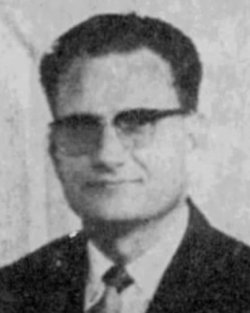
Wilbern Elias Best (1919-2007) was a preacher and writer of Gospel material. He wrote 25 books and pamphlets comprised of sermons he preached to his congregation. These books were distributed in English and Spanish around the world from 1970 to 2018 at no cost via the W.E. Best Book Missionary Trust.

Comments

0 / 2000 characters
Comments are moderated before appearing.

Be the first to comment!

Joshua

Joshua

Shall we play a game? Ask me about articles, sermons, or theology from our library. I can also help you navigate the site.